
Introduction Spark Ignition SI Engine Control Control of
- Slides: 6
Introduction • Spark Ignition ( SI ) Engine Control : Control of a SI engine for the best fuel efficiency, low emission and good drivability is a demanding control system problem. • Classical control techniques like PID control can’t provide the best performance over the entire operating envelop due to highly non-linear behavior of the engine. OBJECTIVES • To design and develop the Engine Management System (EMS) based on Neural Network based Fuzzy Logic Control (FLC) / Model Reference Control (MRC) techniques to improve the engine performance and reduce pollution. • To reduce the controller tuning time with minimal number of experiments
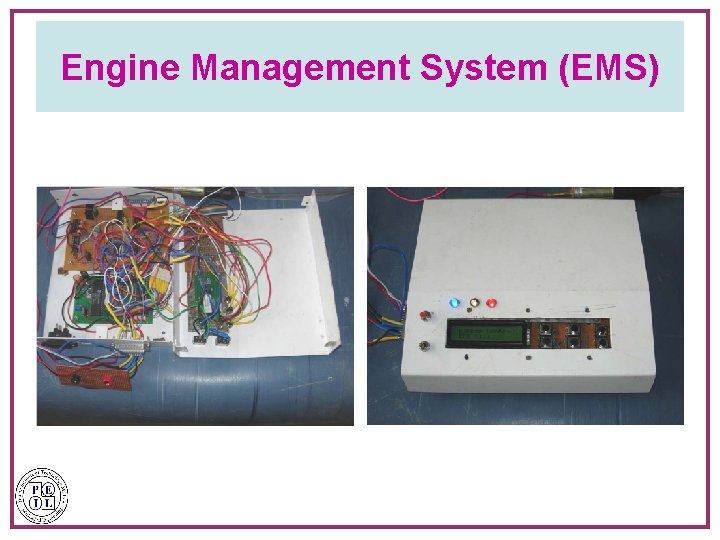
Engine Management System (EMS)
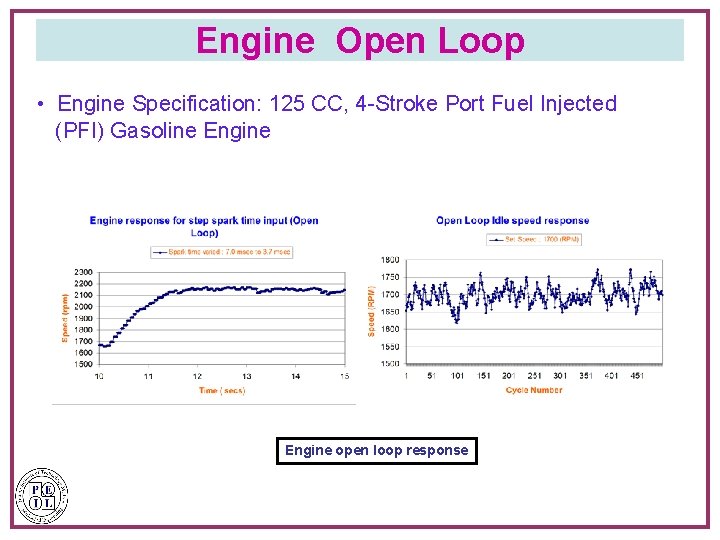
Engine Open Loop • Engine Specification: 125 CC, 4 -Stroke Port Fuel Injected (PFI) Gasoline Engine open loop response
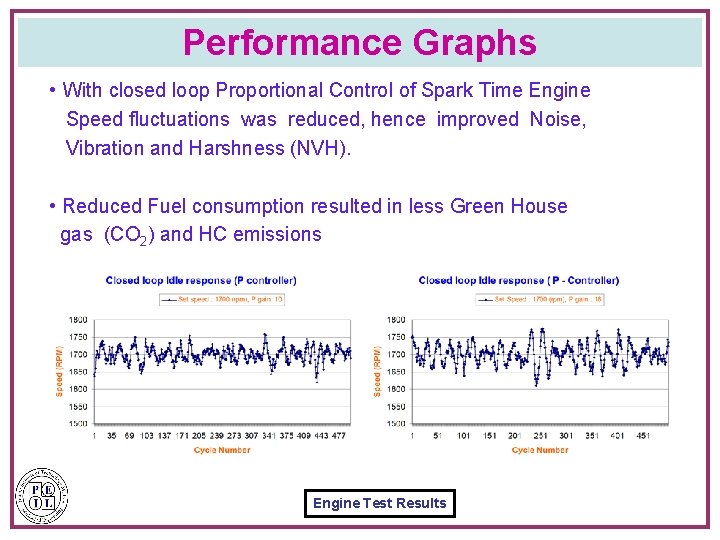
Performance Graphs • With closed loop Proportional Control of Spark Time Engine Speed fluctuations was reduced, hence improved Noise, Vibration and Harshness (NVH). • Reduced Fuel consumption resulted in less Green House gas (CO 2) and HC emissions Engine Test Results
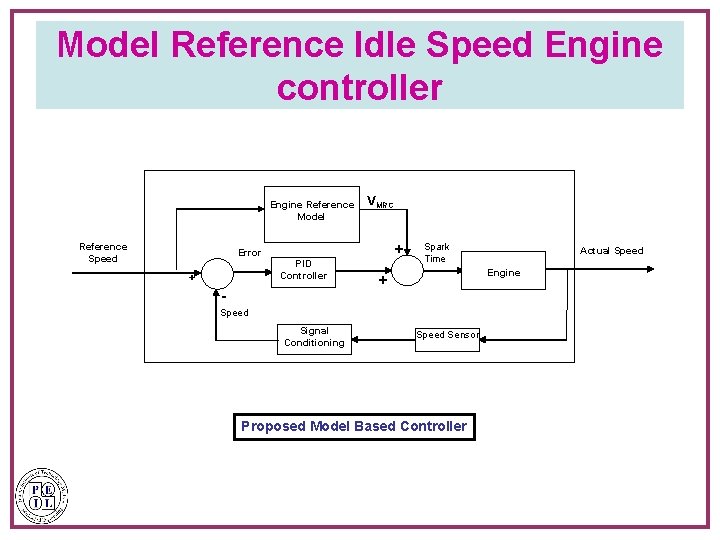
Model Reference Idle Speed Engine controller Engine Reference Model Reference Speed Error + PID Controller - VMRC + Spark Time Engine + Speed Signal Conditioning Actual Speed Sensor Proposed Model Based Controller
Summary • A low cost Microcontroller based Engine Management System (EMS) for a single cylinder Spark Ignition (SI), Port Fuel Injected (PFI) was designed and developed. • The control algorithms for Classical PID and Fuzzy Logic control techniques have developed and tested. • The closed loop performance shows improvement in terms Idle Speed, Fuel Consumption and Emissions. • Test will be conducted to evaluate the performance of the Model Reference Control algorithm over the conventional techniques.