
Introduction Roles and Responsibilities Within a ProblemSolving Team

Introduction Roles and Responsibilities Within a Problem-Solving Team
Overview • Implementation of a multi-tiered system of supports (MTSS) framework • Members of MTSS problem-solving teams • Roles of problem-solving team members • Planning effective meetings • Effective problem-solving team practices • Team’s role in creating consistent expectations
Implementation of MTSS
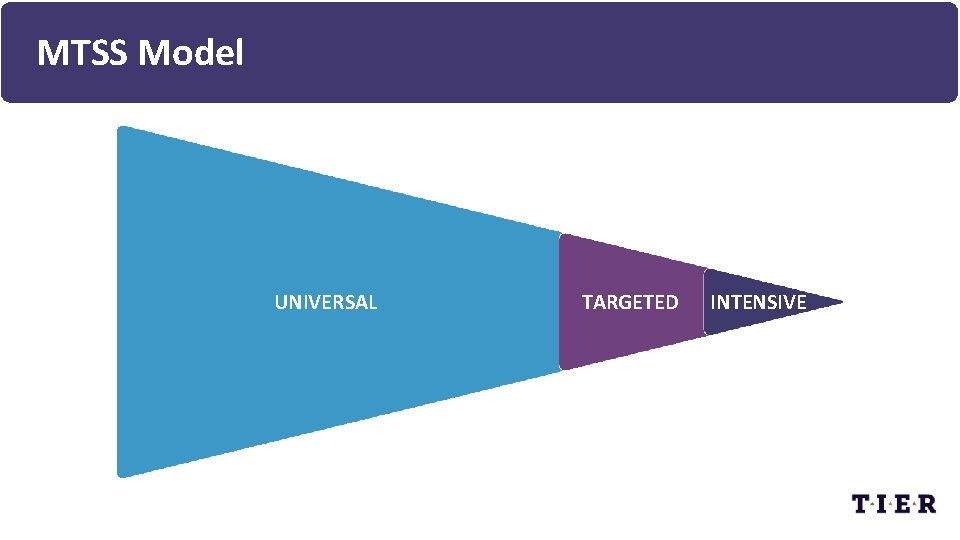
MTSS Model UNIVERSAL TARGETED INTENSIVE
Tailoring the MTSS Plan • Identify targeted area: reading, writing, mathematics, behavior, and/or mental health • Develop a plan for each targeted area. • Consider uniqueness of each campus: • Staff expertise • Resources • Student needs
Planning for Implementation • Adequate time is needed for planning. • Planning can begin at any time: • Spring or summer planning for fall startup • Fall planning for spring startup • Build in opportunities for teachers to provide input and feedback during design and implementation.
Forming the Campus Problem-Solving Team
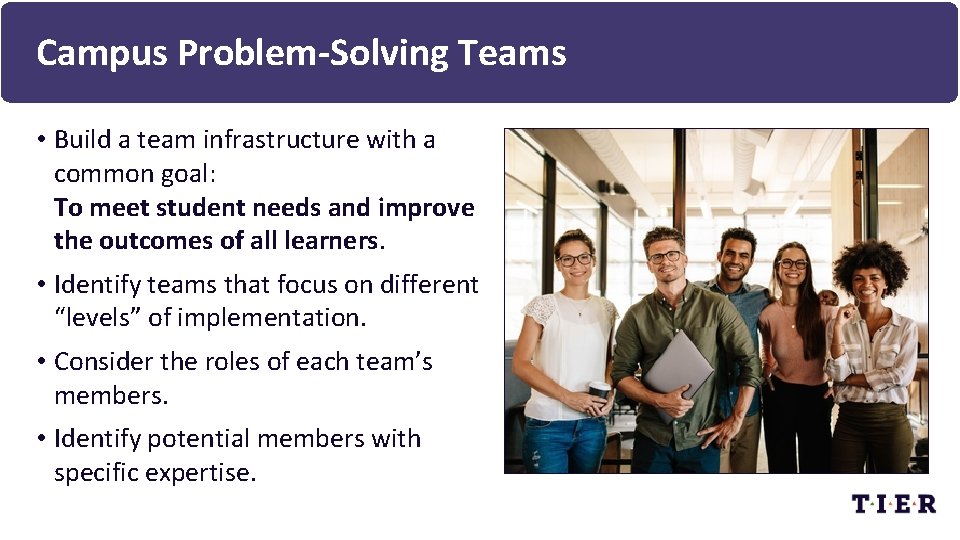
Campus Problem-Solving Teams • Build a team infrastructure with a common goal: To meet student needs and improve the outcomes of all learners. • Identify teams that focus on different “levels” of implementation. • Consider the roles of each team’s members. • Identify potential members with specific expertise.
Characteristics of Team Members • Committed to data-based decision making • Open to new evidence-based practices • Willing to explore new ideas and share them with colleagues • Reliable, positive, and skilled communicators What other characteristics do you think are important? What characteristics are important for your MTSS problem-solving team?
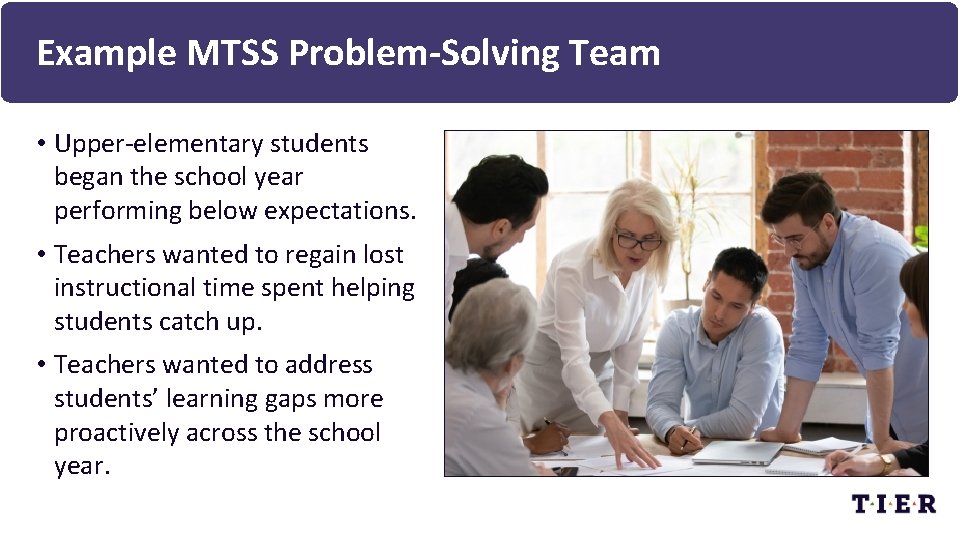
Example MTSS Problem-Solving Team • Upper-elementary students began the school year performing below expectations. • Teachers wanted to regain lost instructional time spent helping students catch up. • Teachers wanted to address students’ learning gaps more proactively across the school year.
Example MTSS Problem-Solving Team To address student performance, the principal convened a campus problemsolving team meeting with the following attendees: • Grade-level teacher team leaders • Reading interventionist • Data expert What other roles could the principal have included?
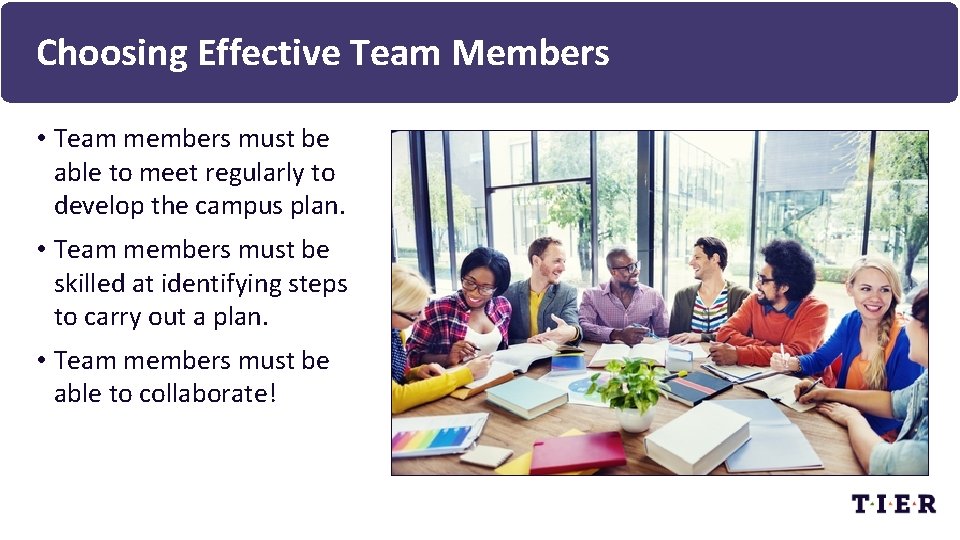
Choosing Effective Team Members • Team members must be able to meet regularly to develop the campus plan. • Team members must be skilled at identifying steps to carry out a plan. • Team members must be able to collaborate!
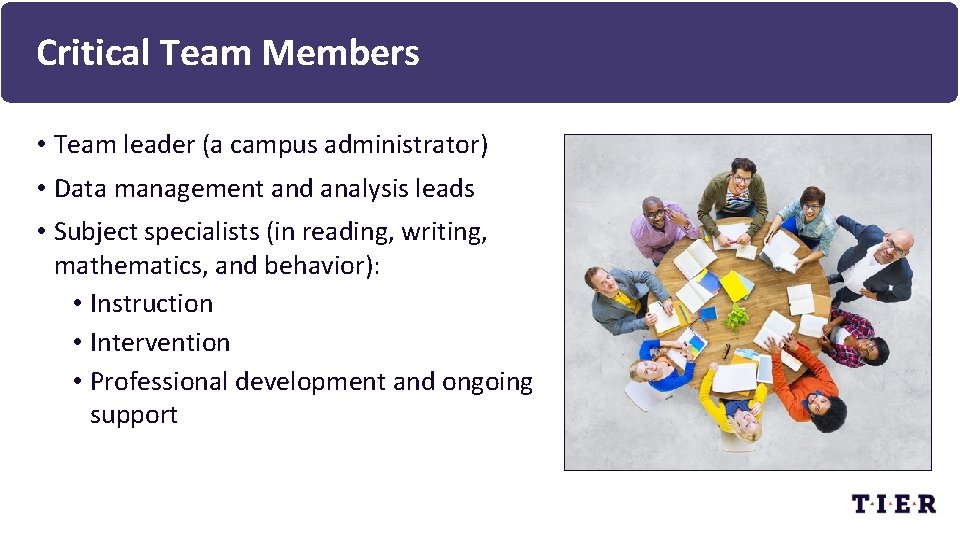
Critical Team Members • Team leader (a campus administrator) • Data management and analysis leads • Subject specialists (in reading, writing, mathematics, and behavior): • Instruction • Intervention • Professional development and ongoing support
Defining Different Roles
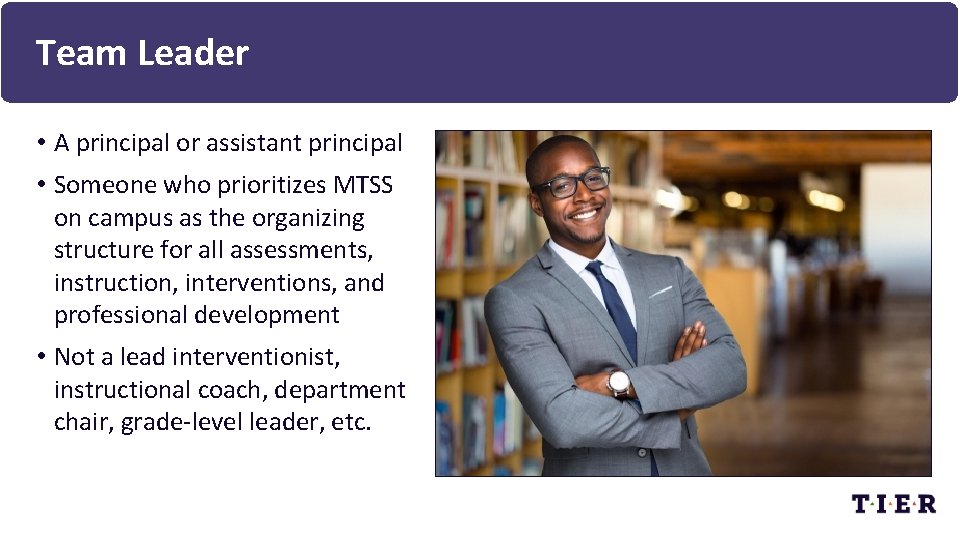
Team Leader • A principal or assistant principal • Someone who prioritizes MTSS on campus as the organizing structure for all assessments, instruction, interventions, and professional development • Not a lead interventionist, instructional coach, department chair, grade-level leader, etc.
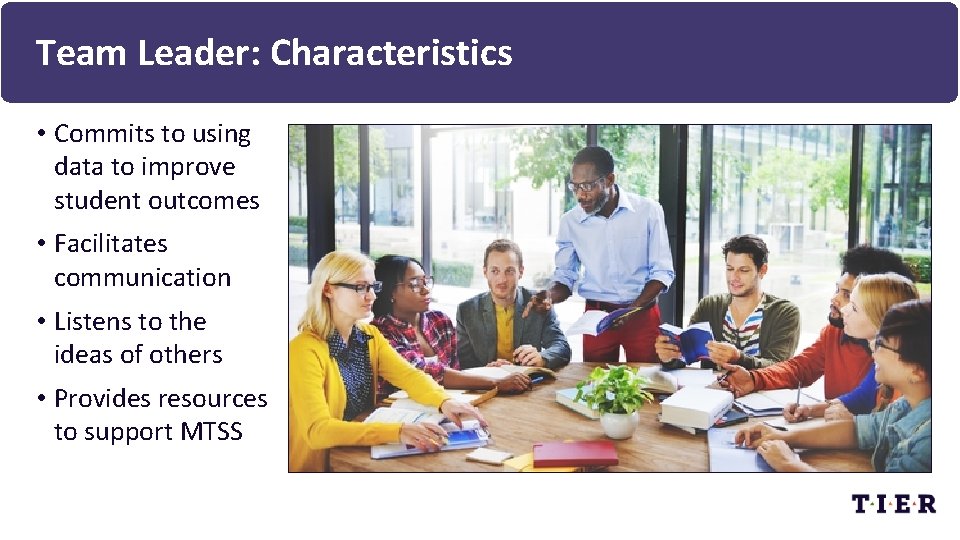
Team Leader: Characteristics • Commits to using data to improve student outcomes • Facilitates communication • Listens to the ideas of others • Provides resources to support MTSS
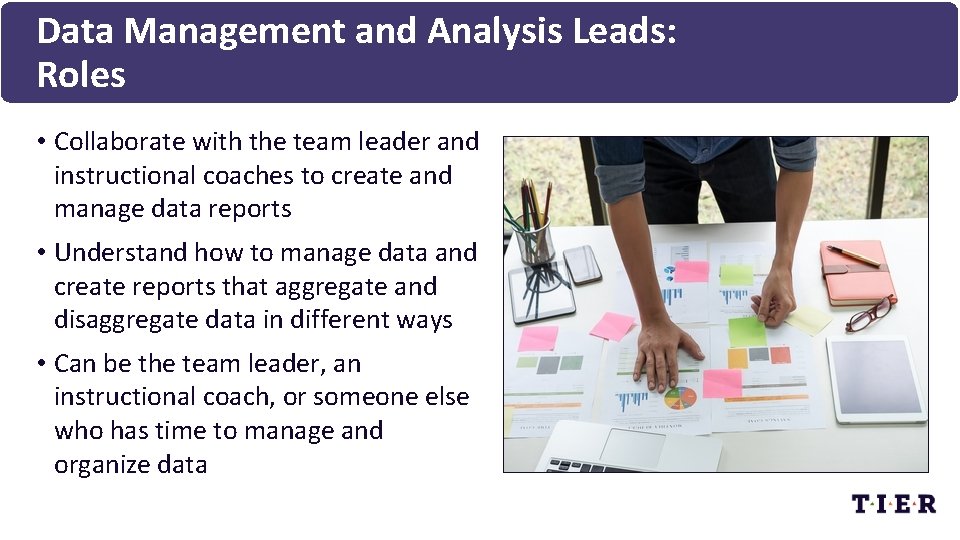
Data Management and Analysis Leads: Roles • Collaborate with the team leader and instructional coaches to create and manage data reports • Understand how to manage data and create reports that aggregate and disaggregate data in different ways • Can be the team leader, an instructional coach, or someone else who has time to manage and organize data
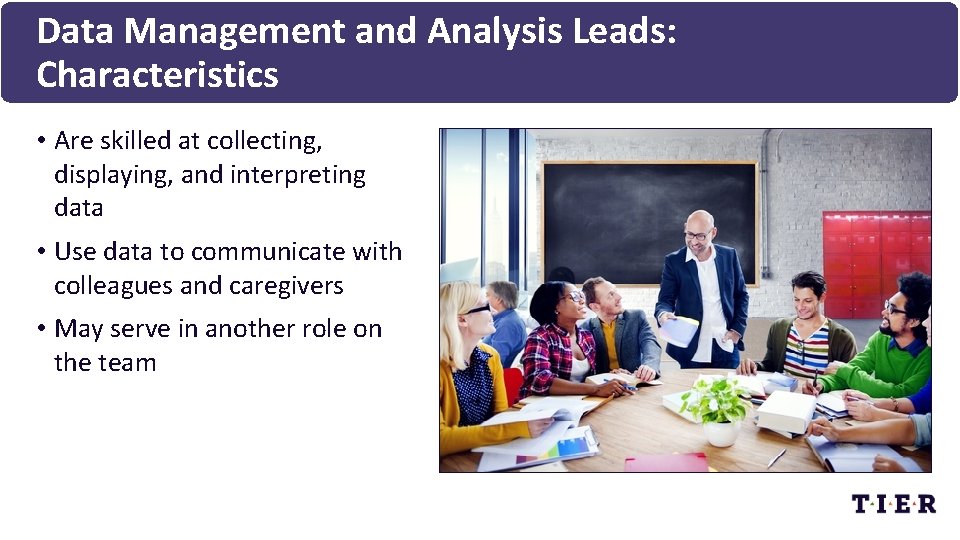
Data Management and Analysis Leads: Characteristics • Are skilled at collecting, displaying, and interpreting data • Use data to communicate with colleagues and caregivers • May serve in another role on the team
Subject Specialists: Instruction • Understand the importance of implementing the features of effective instruction to support all students’ learning • Understand both universal (i. e. , core or content area) instruction and interventions • Know the instructional requirements and standards • Serve as liaisons to grade-level teams • Collaborate with interventionists to promote evidence-based strategies • Depending on a campus’s resources and personnel, may be different people for reading, writing, mathematics, and/or behavior
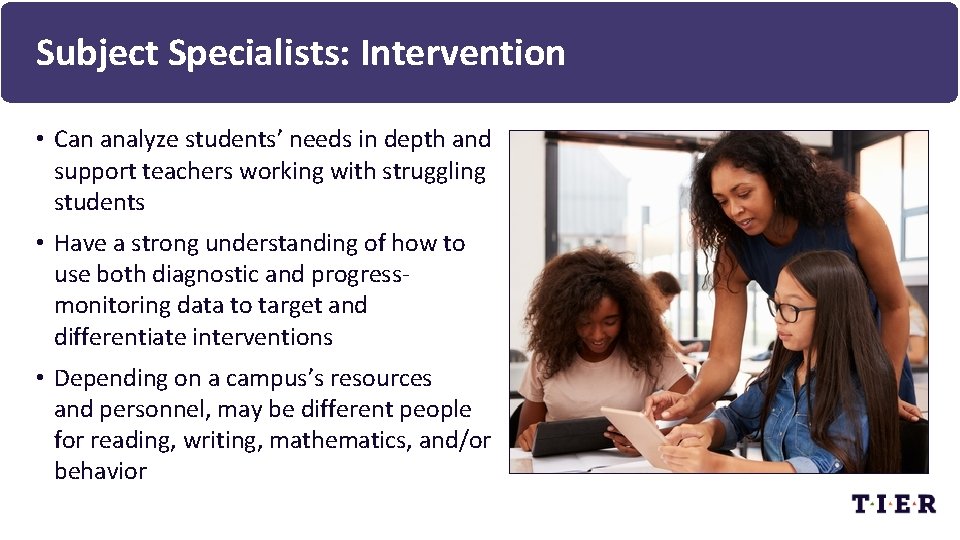
Subject Specialists: Intervention • Can analyze students’ needs in depth and support teachers working with struggling students • Have a strong understanding of how to use both diagnostic and progressmonitoring data to target and differentiate interventions • Depending on a campus’s resources and personnel, may be different people for reading, writing, mathematics, and/or behavior
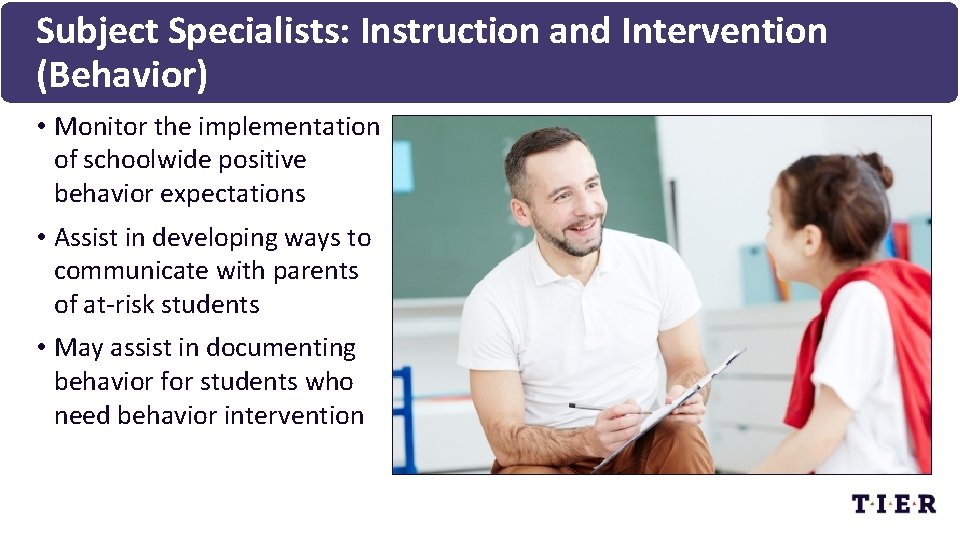
Subject Specialists: Instruction and Intervention (Behavior) • Monitor the implementation of schoolwide positive behavior expectations • Assist in developing ways to communicate with parents of at-risk students • May assist in documenting behavior for students who need behavior intervention
Subject Specialists: Professional Development and Ongoing Support • Instructional coaches or lead teachers who have the ability and time to do the following: • Analyze data • Meet with teachers about data and instruction • Conduct observations and provide feedback • Model lessons and coteach • Support administrators in understanding data and instruction • Depending on a campus’s resources and personnel, may be different people who support reading, writing, mathematics, and/or behavior
Other Members as Needed Other individuals can join the campus team as it addresses specific activities that call for their expertise: • Student evaluation personnel • Family liaison • District representative
Potential People to Add to Your Problem-Solving Team • Coaches • Librarians • Music teacher • Band director
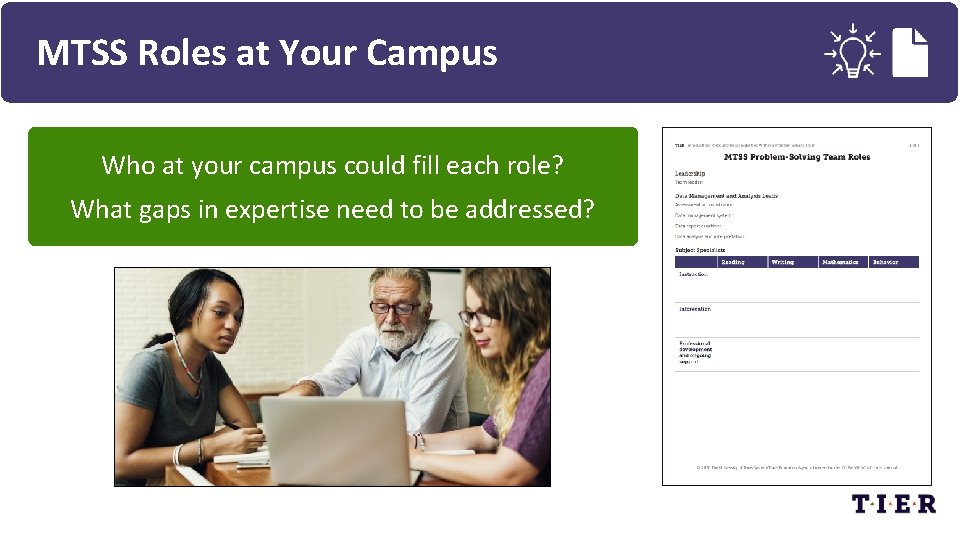
MTSS Roles at Your Campus Who at your campus could fill each role? What gaps in expertise need to be addressed?
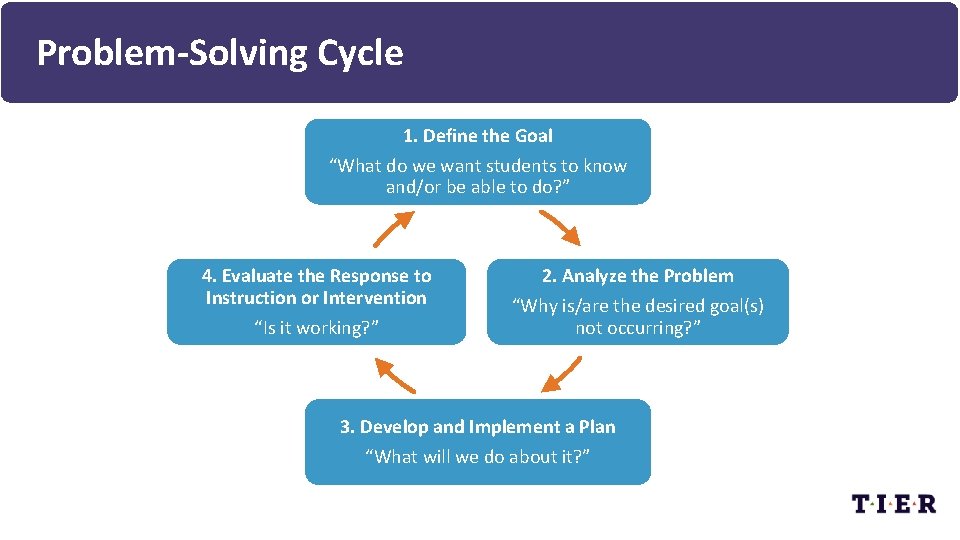
Problem-Solving Cycle 1. Define the Goal “What do we want students to know and/or be able to do? ” 4. Evaluate the Response to Instruction or Intervention “Is it working? ” 2. Analyze the Problem “Why is/are the desired goal(s) not occurring? ” 3. Develop and Implement a Plan “What will we do about it? ”
Planning Effective Meetings
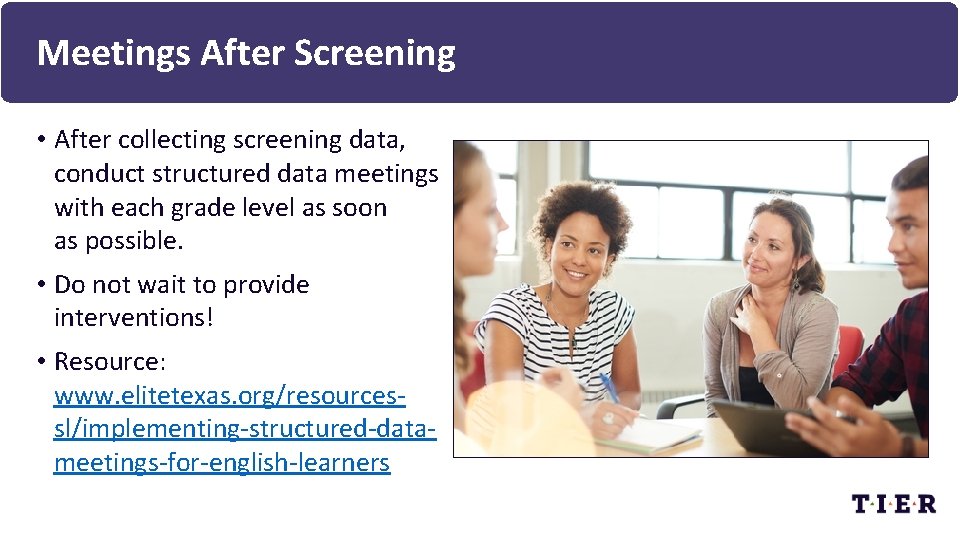
Meetings After Screening • After collecting screening data, conduct structured data meetings with each grade level as soon as possible. • Do not wait to provide interventions! • Resource: www. elitetexas. org/resourcessl/implementing-structured-datameetings-for-english-learners
Meetings to Analyze Ongoing Data • Plan meetings across the year (e. g. , monthly, biweekly) to examine ongoing data, including the following: • Screening, diagnostic, and progress-monitoring data • Core and intervention observation data • Professional development data (e. g. , model lessons, professional learning community meetings) • All members of the MTSS problem-solving team should attend.
Set an Agenda • Identify the meeting goals, such as the following: • Identifying students for interventions • Examining data for student progress or instructional effectiveness • Setting goals at different levels • Identify agenda items, such as the following: • Analyses of student data • Analyses of instructional observations • Discussion of instructional support provided or needed
Prepare Data Reports • Student assessment data • Screening and diagnostic data • Progress-monitoring data • Observation data • Universal (core/content area) instruction, including teacher-led smallgroup instruction • Intervention provided • Connections between student assessment and observation data, including teacher documentation of how data have informed instruction
Examine Data • Higher-level analyses relate to broader issues (e. g. , gaps in core instruction). • By grade level • By classroom • Targeted analyses relate to issues specific to small groups of students or individual students. • By intervention • By individual student • For examples of student data reports and analyses, see the Creating an Assessment Plan pathway in the Leadership module.
Effective Team Practices
Core Observation Data • Collect data using observation forms such as the following: • Core observation tool: https: //buildingrti. utexas. org/leadership-tools/observation-tool-corecontent-areatier-1 • Fidelity checklist: https: //buildingrti. utexas. org/documents/pact-implementation-fidelitychecklist • Aggregate data to look for patterns across instructional components and the features of effective instruction. • Connect observation data with student assessment data.
Intervention Observation Data • Collect data using observation forms such as the following: • Intervention observation tool: https: //buildingrti. utexas. org/leadership-tools/observation-toolintervention • Fidelity checklist: https: //buildingrti. utexas. org/documents/pact-implementation-fidelitychecklist • Aggregate data to look for patterns across instructional components and the features of effective instruction. • Connect observation data with student assessment data.
Progress-Monitoring Data • Use line graphs to track student progress-monitoring data. • Connect progress-monitoring data to documented instruction and interventions. • Resource: Collaborative instructional logs https: //buildingrti. utexas. org/resource-pages/collaborative-instructional-logs • For more information about progress monitoring and making data-based instructional decisions, explore the following TIER modules: • Progress Monitoring • Decision Making
Determine Criteria for Movement Across Tiers • As a team, consider how you will determine movement across tiers of instruction. • Beginning-of-year assessments can identify students who are struggling or at risk and need targeted intervention. • Middle-of-year and end-of-year assessments can identify the following: • Students who no longer need intervention • Students who need to continue with an intervention or change interventions
Questions to Consider for Universal Intervention (Tier 1) • What percentage of students meet expectations? • Which students require additional intervention? • Are our Tier 1 interventions effective? How do we know? • To what degree is instruction implemented with fidelity? UNIVERSAL
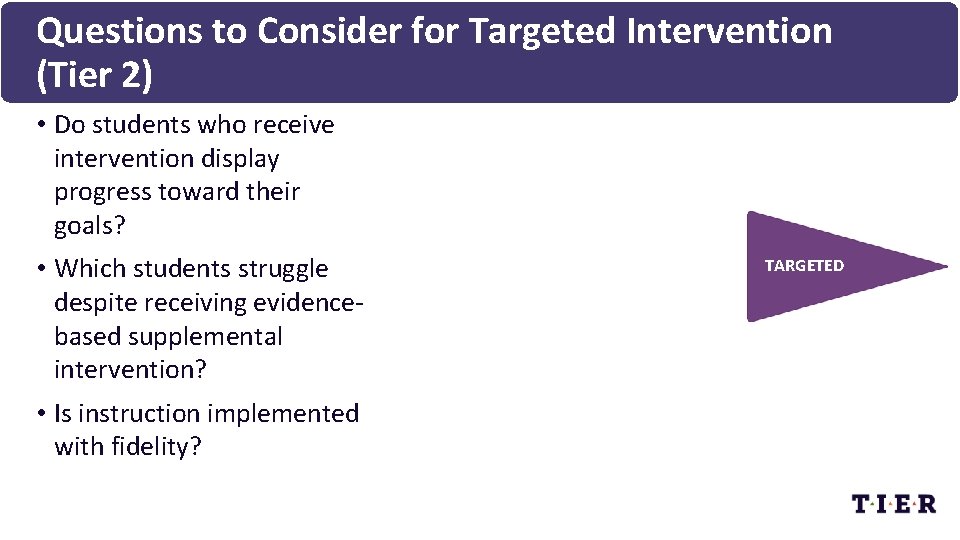
Questions to Consider for Targeted Intervention (Tier 2) • Do students who receive intervention display progress toward their goals? • Which students struggle despite receiving evidencebased supplemental intervention? • Is instruction implemented with fidelity? UNIVERSAL TARGETED
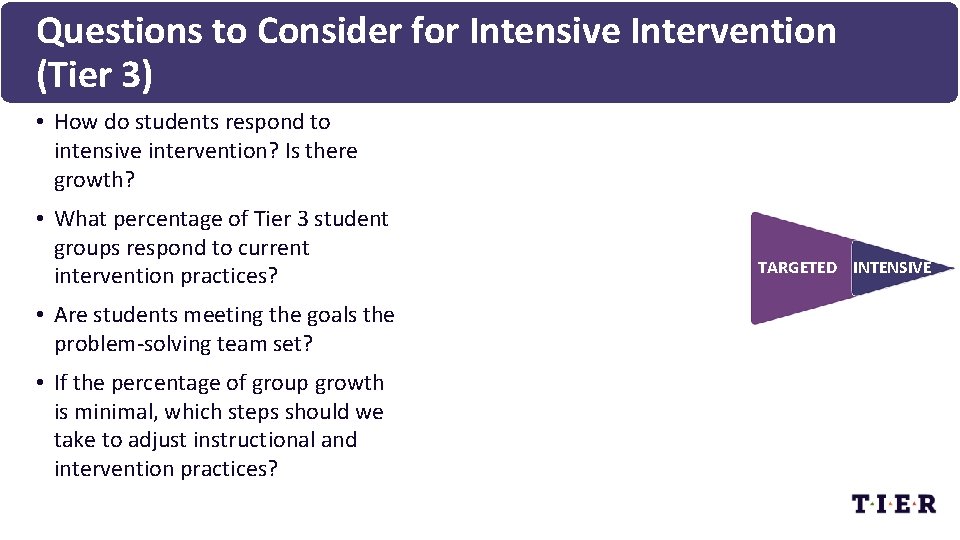
Questions to Consider for Intensive Intervention (Tier 3) • How do students respond to intensive intervention? Is there growth? • What percentage of Tier 3 student groups respond to current intervention practices? • Are students meeting the goals the problem-solving team set? • If the percentage of group growth is minimal, which steps should we take to adjust instructional and intervention practices? UNIVERSAL TARGETED INTENSIVE
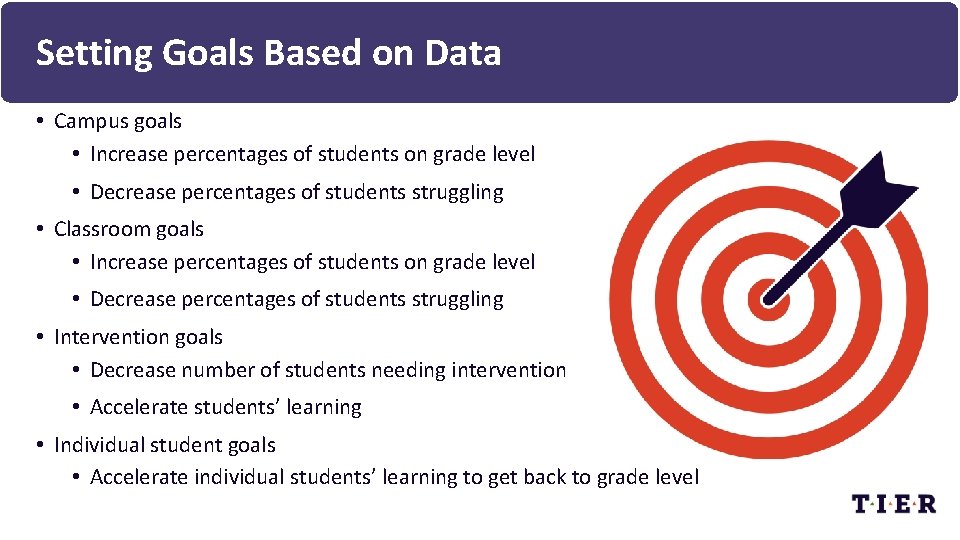
Setting Goals Based on Data • Campus goals • Increase percentages of students on grade level • Decrease percentages of students struggling • Classroom goals • Increase percentages of students on grade level • Decrease percentages of students struggling • Intervention goals • Decrease number of students needing intervention • Accelerate students’ learning • Individual student goals • Accelerate individual students’ learning to get back to grade level
Creating Consistent Expectations
Creating and Sharing Observation Checklists • Use or create checklists that focus on specific aspects of instruction, such as the following: • What is done in small groups to differentiate? • What is done in workstations to extend students’ practice opportunities? • How is automaticity developed with different skills? • Meet with teachers to go over the checklists, discuss expectations, and model implementation as needed.
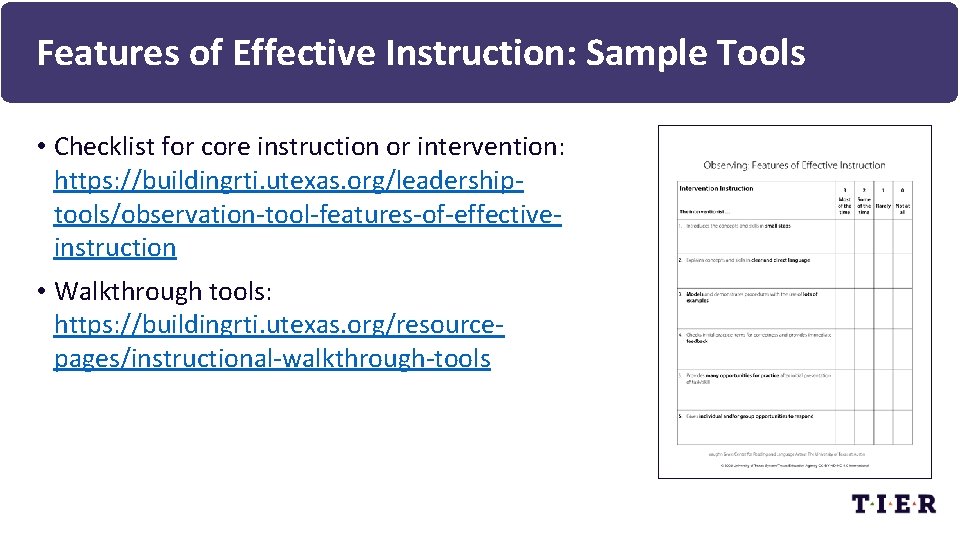
Features of Effective Instruction: Sample Tools • Checklist for core instruction or intervention: https: //buildingrti. utexas. org/leadershiptools/observation-tool-features-of-effectiveinstruction • Walkthrough tools: https: //buildingrti. utexas. org/resourcepages/instructional-walkthrough-tools
MTSS Planning on Your Campus Use the Problem-Solving Team Meeting Planner handout to consider next steps in MTSS planning at your campus.
Conclusion: Your To-Do List • Form your MTSS problem-solving team. • Define the different team roles. • Plan effective meetings. • Use effective practices to examine data and set goals. • Create consistent expectations.

- Slides: 47