
Introduction Project cycle management for international development cooperation

- Slides: 36
Introduction Project cycle management for international development cooperation Macerata, 27 th September Andrea Gramillano
AGENDA - Lecturer - What we’ll study here - How the course is organised - What about the exam
Andrea Gramillano Programme evaluator, expert on indicators a. gramillano@t 33. it
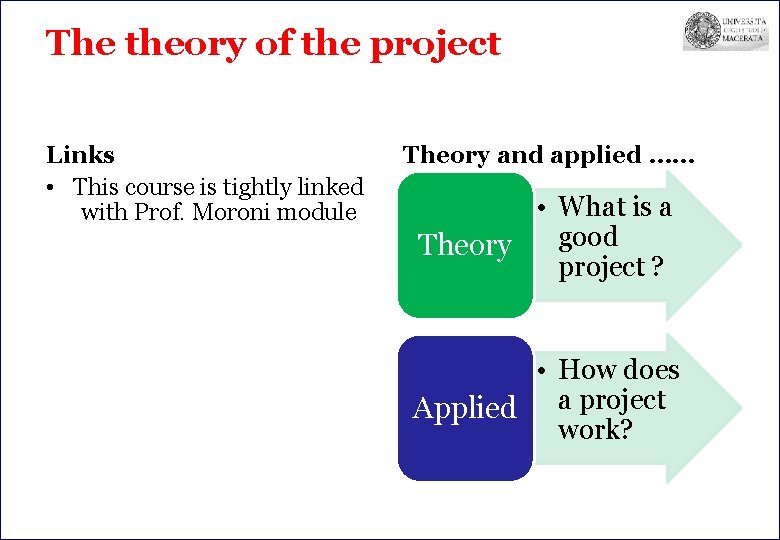
The theory of the project Links • This course is tightly linked with Prof. Moroni module Theory and applied …… • What is a good Theory project ? • How does Applied a project work?
Theory ? • We will see where the “project” takes place (policy, programme, plan, projects) • Its life (cycle) • Its main features: – When it is useful – When it is well placed – When it works – When it achieves its goals – When it makes a change
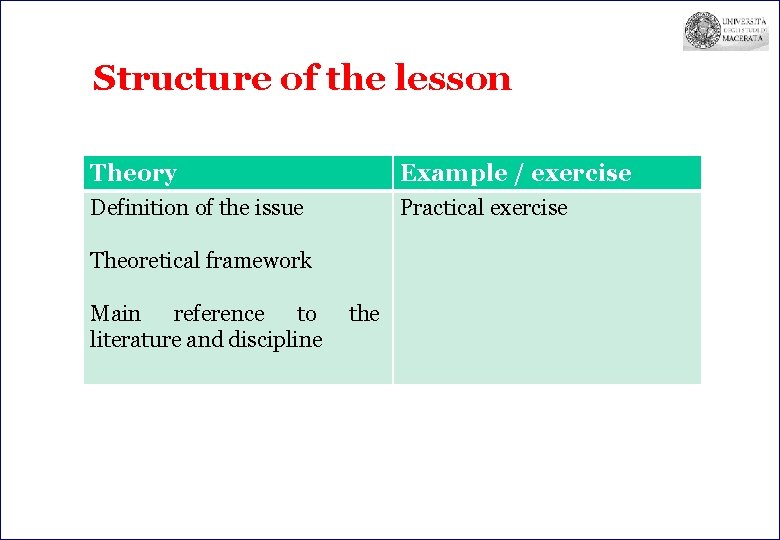
Structure of the lesson Theory Example / exercise Definition of the issue Practical exercise Theoretical framework Main reference to literature and discipline the
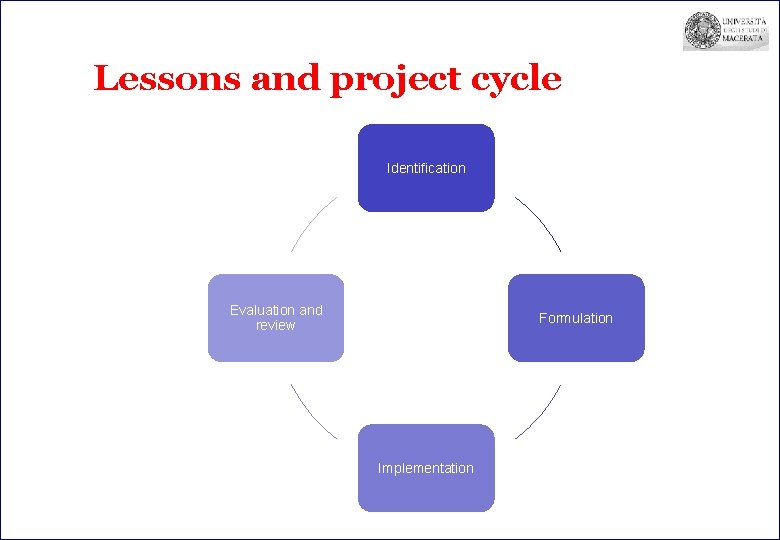
Lessons and project cycle Identification Evaluation and review Formulation Implementation
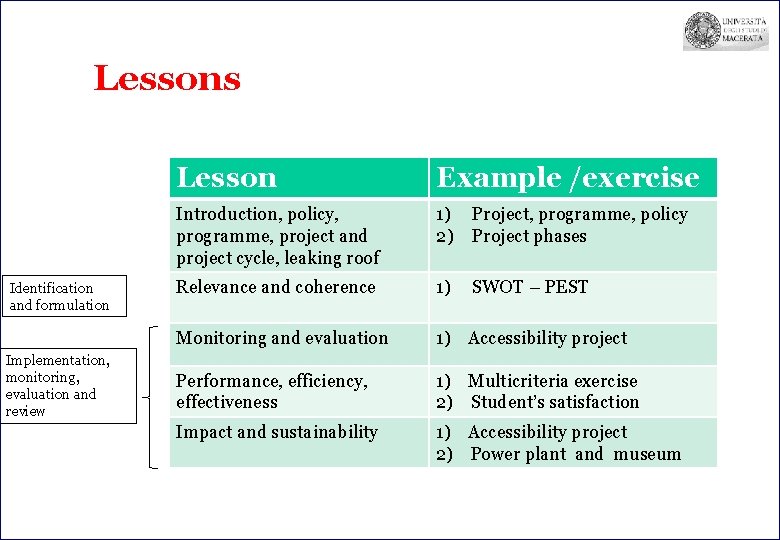
Lessons Identification and formulation Implementation, monitoring, evaluation and review Lesson Example /exercise Introduction, policy, programme, project and project cycle, leaking roof 1) 2) Project, programme, policy Project phases Relevance and coherence 1) SWOT – PEST Monitoring and evaluation 1) Accessibility project Performance, efficiency, effectiveness 1) Multicriteria exercise 2) Student’s satisfaction Impact and sustainability 1) Accessibility project 2) Power plant and museum
Useful information • The course provides the students with an overview of the Project Cycle Management, with particular regard to the 'Identification', 'Programming', and 'Monitoring and Evaluation" phases. • Source: European Commission Project Cycle Management Guidelines European commission 2004 • Credits: 4 CFU • Lessons: - case histories; - working groups doing exercises.
Exam • Two separate courses (Theory and practice) Two separate exams (with one mark) • Written exams (some practical exercises) Homogeneity Clarity A set of questions in a limited space and time
Exam (1) – examples (theory) • Provide the definition of the formulation phase in the project cycle • Provide the definition and at least an example of output and outcome indicators • What is the possible use of the SWOT analysis? • What is the focus of the project evaluation in the on-going phase? • Provide the definition of efficiency and effectiveness?
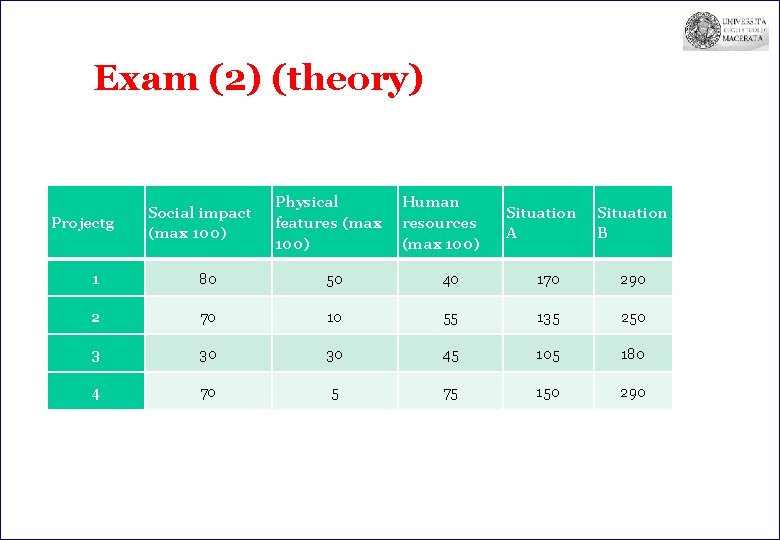
Exam (2) (theory) Projectg Social impact (max 100) Physical features (max 100) Human resources (max 100) Situation A Situation B 1 80 50 40 170 290 2 70 10 55 135 250 3 30 30 45 105 180 4 70 5 75 150 290
Lesson 1: Policy, Programme, Project Macerata, 27 th September Andrea Gramillano, t 33 srl
AGENDA - Policy and delivery tools - Policy, Program, Plan and Projects - Policy cycle and Project cycle
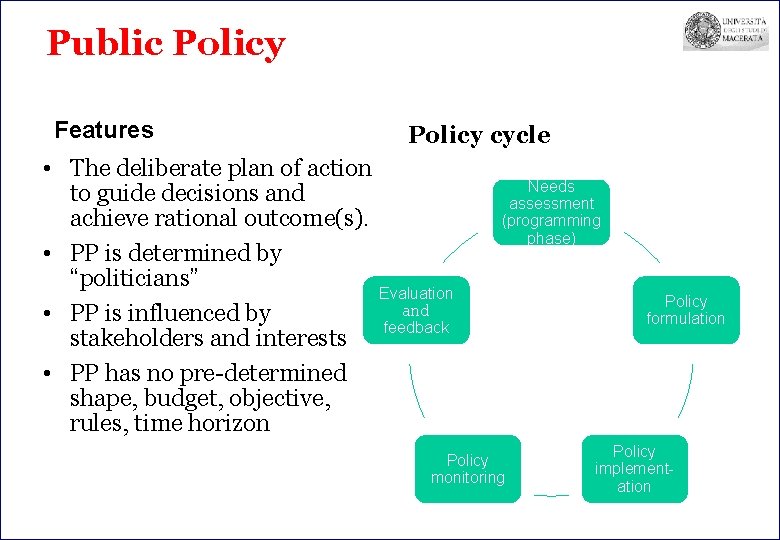
Public Policy Features Policy cycle • The deliberate plan of action to guide decisions and achieve rational outcome(s). • PP is determined by “politicians” Evaluation and • PP is influenced by feedback stakeholders and interests • PP has no pre-determined shape, budget, objective, rules, time horizon Needs assessment (programming phase) Policy monitoring Policy formulation Policy implementation
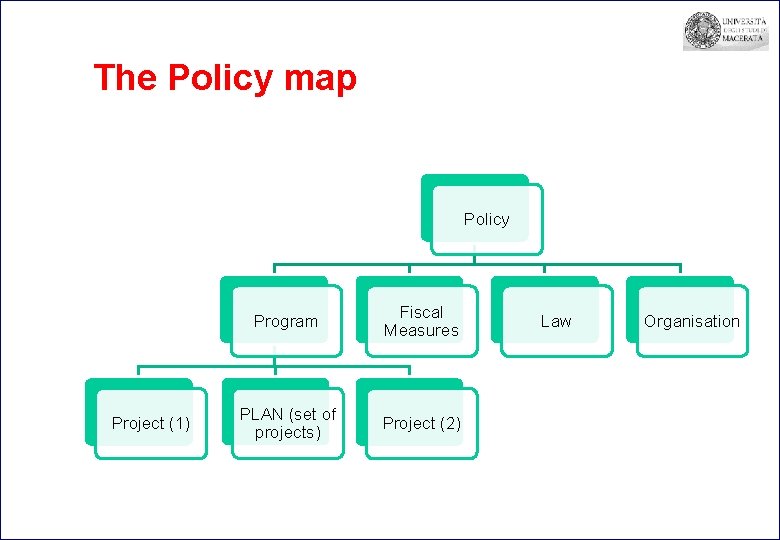
The Policy map Policy Project (1) Program Fiscal Measures PLAN (set of projects) Project (2) Law Organisation
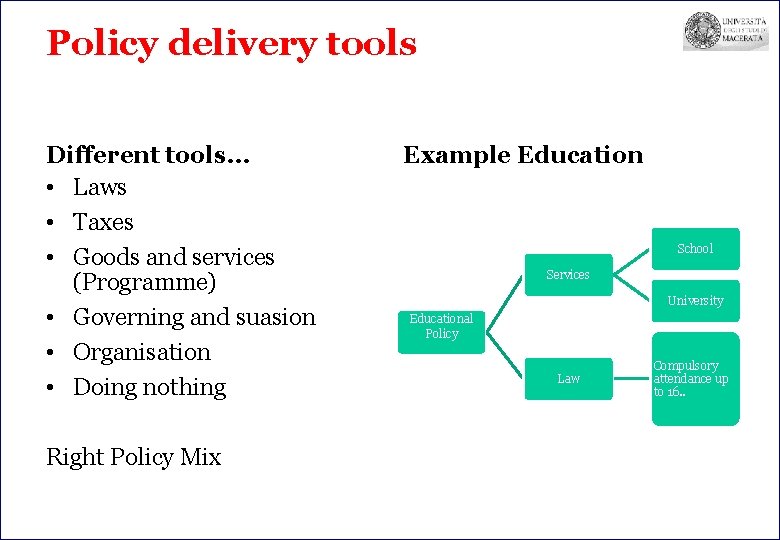
Policy delivery tools Different tools… • Laws • Taxes • Goods and services (Programme) • Governing and suasion • Organisation • Doing nothing Right Policy Mix Example Education School Services University Educational Policy Law Compulsory attendance up to 16. .
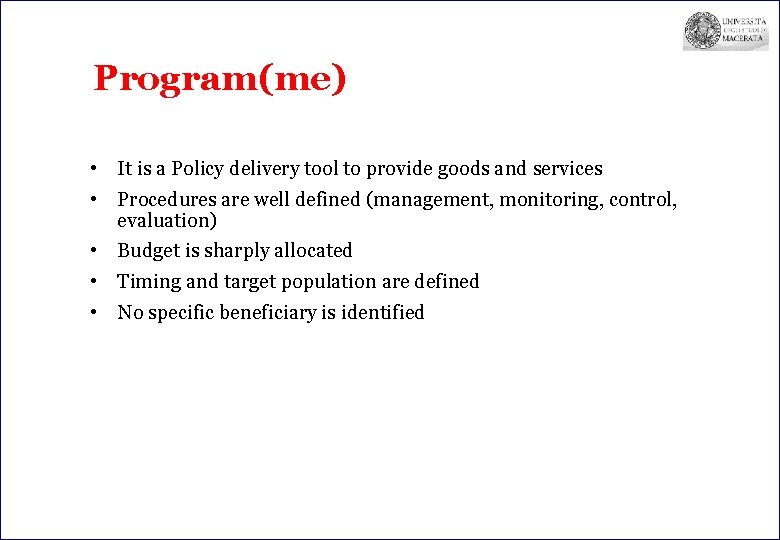
Program(me) • It is a Policy delivery tool to provide goods and services • Procedures are well defined (management, monitoring, control, evaluation) • Budget is sharply allocated • Timing and target population are defined • No specific beneficiary is identified
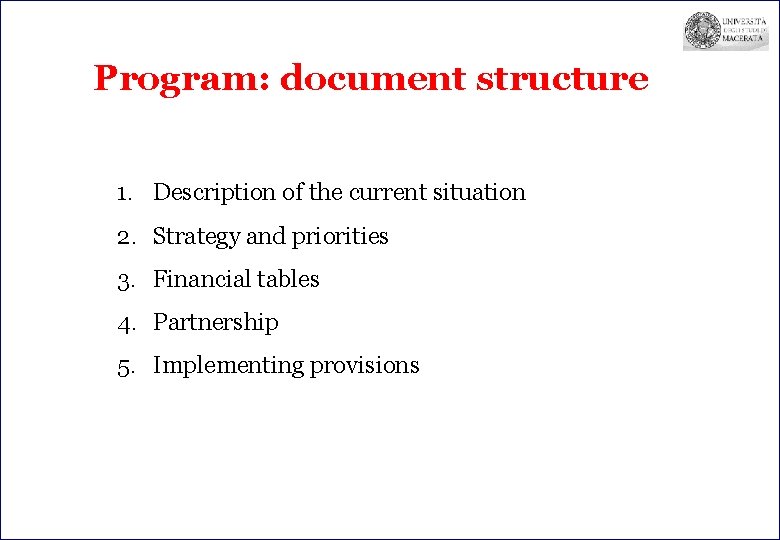
Program: document structure 1. Description of the current situation 2. Strategy and priorities 3. Financial tables 4. Partnership 5. Implementing provisions
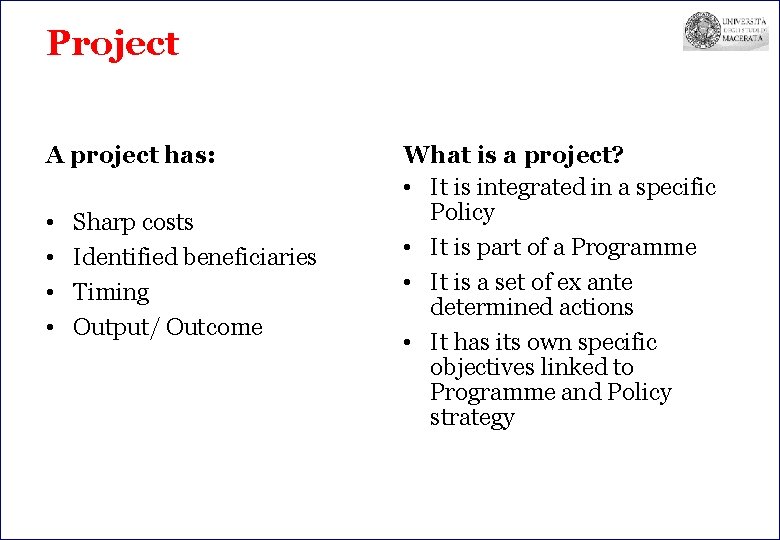
Project A project has: • • Sharp costs Identified beneficiaries Timing Output/ Outcome What is a project? • It is integrated in a specific Policy • It is part of a Programme • It is a set of ex ante determined actions • It has its own specific objectives linked to Programme and Policy strategy
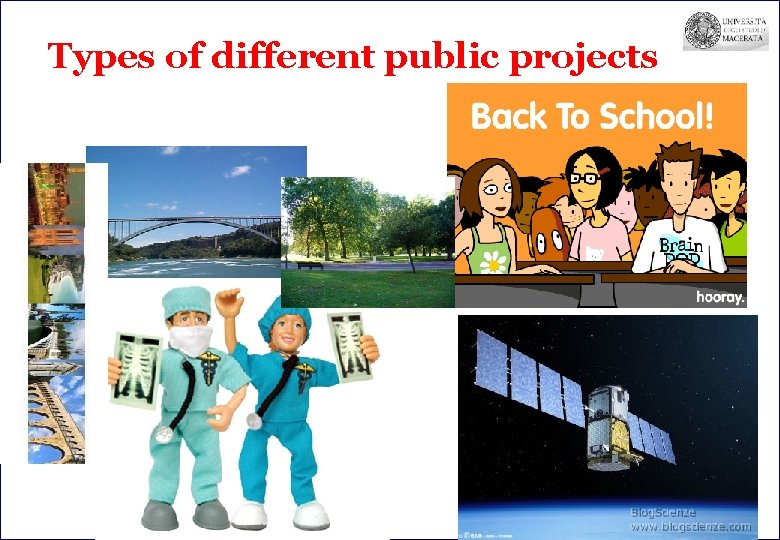
Types of different public projects
Some references for defining theoretical concepts • • • Policy: A deliberate plan of action to guide decisions and achieve rational outcome(s). The term may apply to government, private sector organizations and groups, and individuals. Presidential executive orders, corporate privacy policies, and parliamentary rules of order are all examples of policy. Policy differs from rules or law. While law can compel or prohibit behaviours (e. g. a law requiring the payment of taxes on income) policy merely guides actions toward those that are most likely to achieve a desired outcome. Programme (policy delivery tool): the donor defines criteria, priorities, objectives, call for projects and allocate a budget for a set of projects, without saying which projects Projects: have sharp costs, clearly identified beneficiaries, timing and activities, output and outcomes
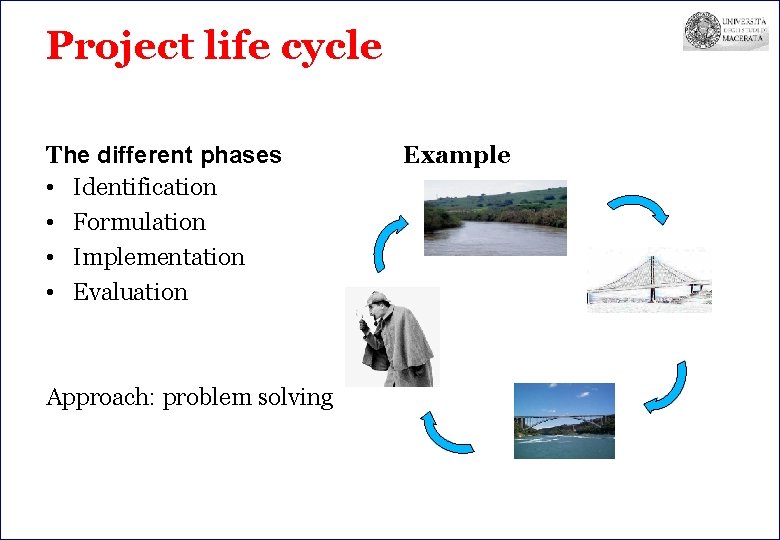
Project life cycle The different phases • Identification • Formulation • Implementation • Evaluation Approach: problem solving Example
Some references for defining theoretical concepts • The identification phase delivers a project idea (a pre-feasibility study) and identifies all the problems and possible solutions. • The formulation phase is after the identification phase: project applicants’ delivery is a sort of feasibility study, explaining why and how the proposed project is well-grounded and is likely to reach the objectives, outputs and outcomes and in particular to address the challenges and needs of beneficiaries and target groups. The main purposes are: confirm the relevance and feasibility of the project idea (see identification phase); provide more details about technical, operational, economic, financial aspects…; prepare a financial proposal and a financing decision.
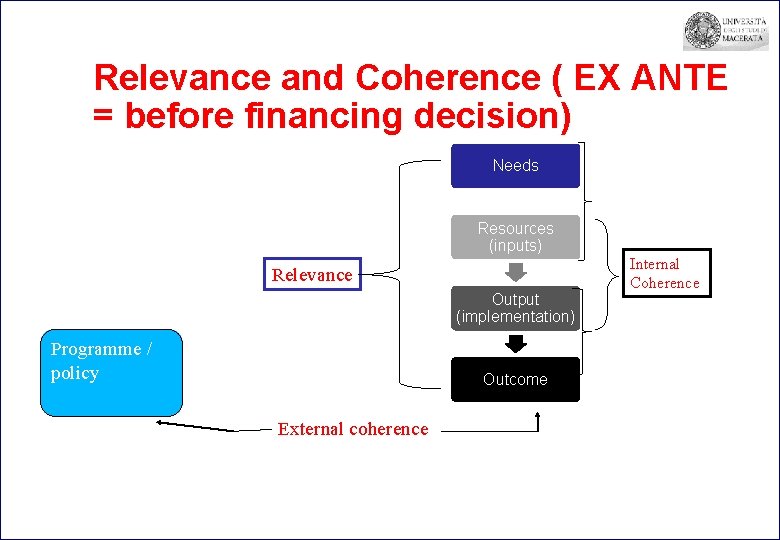
Between the identification /formulation and implementation phase there is the financing decision Before making a financing decision, the donor usually conducts an exante assessment of the • relevance and coherence of the project. The financing decision defines the end of the formulation phase and start-up of the implementation.
Relevance: Definition The term RELEVANCE refers to the appropriateness of the explicit objectives of the project in relation to the socio-economic problems it is supposed to address. Is the project justified in relation to the needs? Can their raison d'être of the project still be proved? Are the expected or unexpected effects globally satisfactory from the point of view of direct or indirect beneficiaries? Sources of information: interviews, context indicators, documents and studies Tools: SWOT - PEST
Analytical tools: PEST • PEST analysis is a tool from business science. It is a useful tool for understanding the general feature of the Context. • PEST is an acronym for Political, Economic, Social and Technological factors which provide a framework for reviewing a situation, or a strategy. • It is very simple, and is a good subject for work group session or brainstorming meeting. • PEST factors are essentially external, PEST analysis is useful to a SWOT analysis.
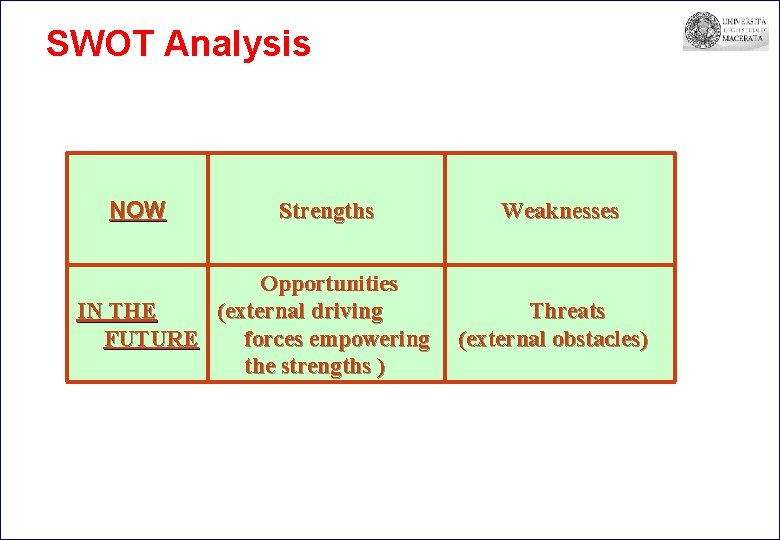
Analytical tools: SWOT • SWOT is an acronym for Strengths, Weaknesses, Opportunities, Threats. • A SWOT analysis is a subjective assessment of data which is organized by the SWOT format into a logical order that helps understanding, presentation, discussion and decision-making. The four dimensions are a useful extension of a basic two heading list of pro's and con‘ • Strengths and Weaknesses are internal factors , whereas • Opportunities and Threats might be: Obstacles or Advantages for strengths and weaknesses coming from external factors The evolution in the near future
SWOT Analysis NOW Strengths Opportunities IN THE (external driving FUTURE forces empowering the strengths ) Weaknesses Threats (external obstacles)
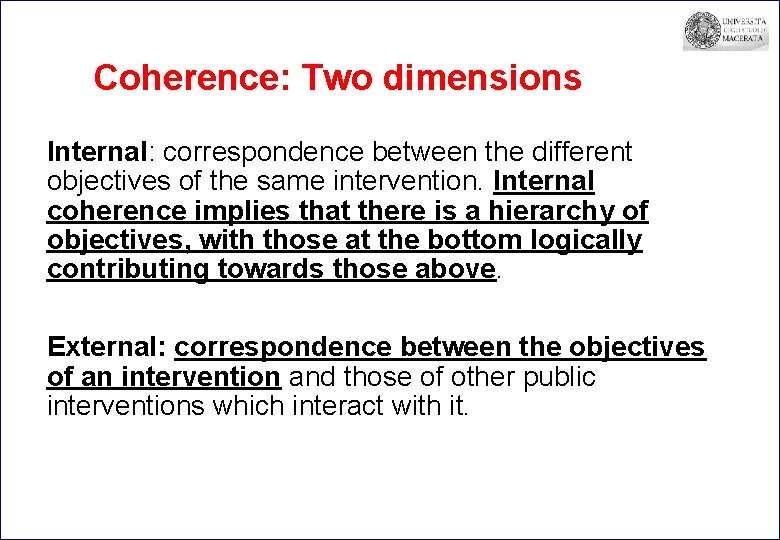
Coherence: Two dimensions Internal: correspondence between the different objectives of the same intervention. Internal coherence implies that there is a hierarchy of objectives, with those at the bottom logically contributing towards those above. External: correspondence between the objectives of an intervention and those of other public interventions which interact with it.
Relevance and Coherence ( EX ANTE = before financing decision) Needs Resources (inputs) Relevance Output (implementation) Programme / policy Outcome External coherence Internal Coherence
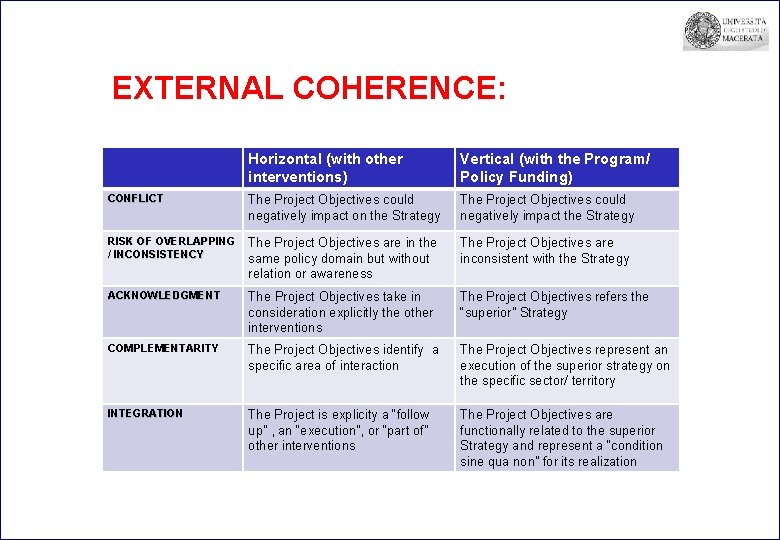
EXTERNAL COHERENCE: Horizontal (with other interventions) Vertical (with the Program/ Policy Funding) CONFLICT The Project Objectives could negatively impact on the Strategy The Project Objectives could negatively impact the Strategy RISK OF OVERLAPPING / INCONSISTENCY The Project Objectives are in the same policy domain but without relation or awareness The Project Objectives are inconsistent with the Strategy ACKNOWLEDGMENT The Project Objectives take in consideration explicitly the other interventions The Project Objectives refers the “superior” Strategy COMPLEMENTARITY The Project Objectives identify a specific area of interaction The Project Objectives represent an execution of the superior strategy on the specific sector/ territory INTEGRATION The Project is explicity a “follow up” , an “execution”, or “part of” other interventions The Project Objectives are functionally related to the superior Strategy and represent a “condition sine qua non” for its realization
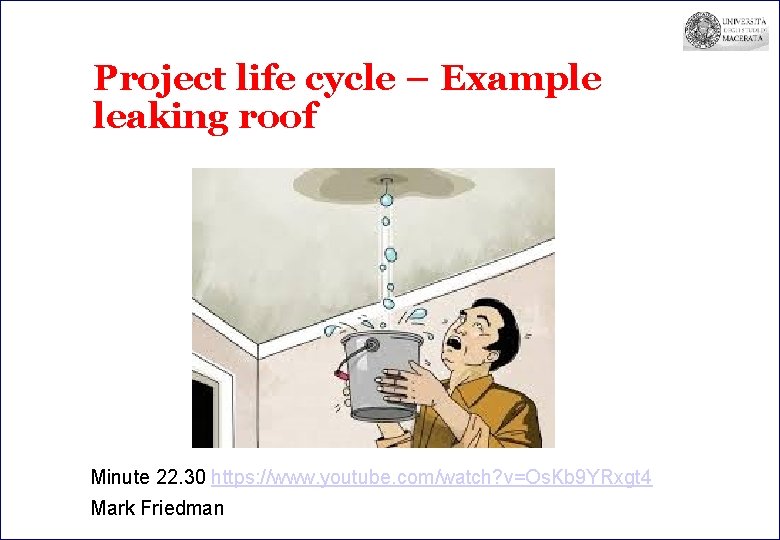
Project life cycle – Example leaking roof Minute 22. 30 https: //www. youtube. com/watch? v=Os. Kb 9 YRxgt 4 Mark Friedman
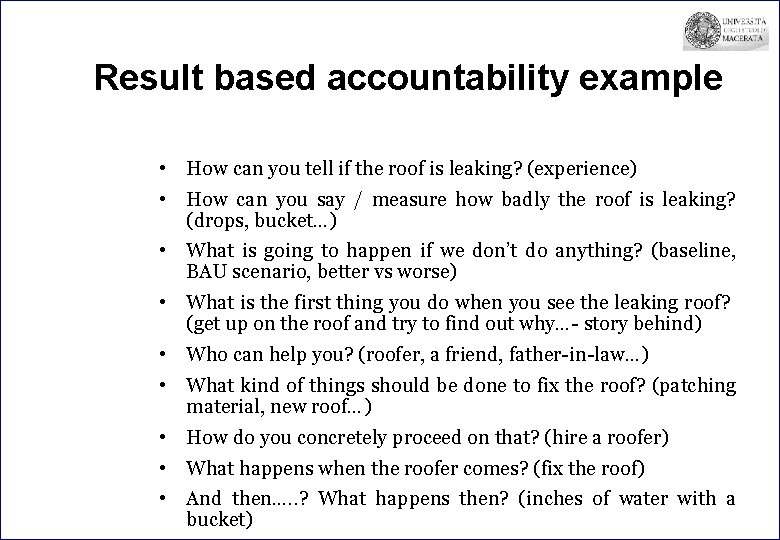
Result based accountability example • How can you tell if the roof is leaking? (experience) • How can you say / measure how badly the roof is leaking? (drops, bucket…) • What is going to happen if we don’t do anything? (baseline, BAU scenario, better vs worse) • What is the first thing you do when you see the leaking roof? (get up on the roof and try to find out why…- story behind) • Who can help you? (roofer, a friend, father-in-law…) • What kind of things should be done to fix the roof? (patching material, new roof…) • How do you concretely proceed on that? (hire a roofer) • What happens when the roofer comes? (fix the roof) • And then…. . ? What happens then? (inches of water with a bucket)
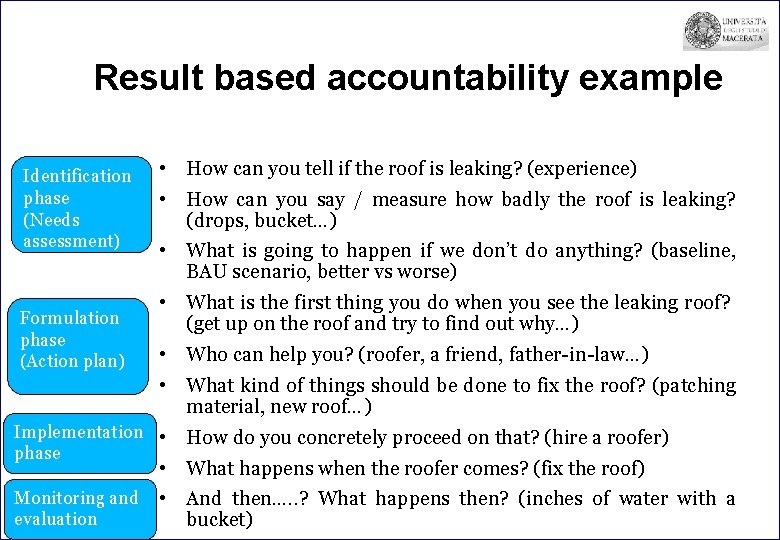
Result based accountability example Identification phase (Needs assessment) Formulation phase (Action plan) • How can you tell if the roof is leaking? (experience) • How can you say / measure how badly the roof is leaking? (drops, bucket…) • What is going to happen if we don’t do anything? (baseline, BAU scenario, better vs worse) • What is the first thing you do when you see the leaking roof? (get up on the roof and try to find out why…) • Who can help you? (roofer, a friend, father-in-law…) • What kind of things should be done to fix the roof? (patching material, new roof…) Implementation • phase How do you concretely proceed on that? (hire a roofer) • What happens when the roofer comes? (fix the roof) Monitoring and evaluation • And then…. . ? What happens then? (inches of water with a bucket)
See you www. t 33. it a. gramillano@t 33. it