
Introduction Principles of Information Security 2 nd Edition



- Slides: 20
Introduction Principles of Information Security, 2 nd Edition 1
Learning Objectives Upon completion of this material, you should be able to: § Understand the definition of information security § Understand the key terms and critical concepts of information security § Comprehend the history of computer security and how it evolved into information security Principles of Information Security, 2 nd Edition 2
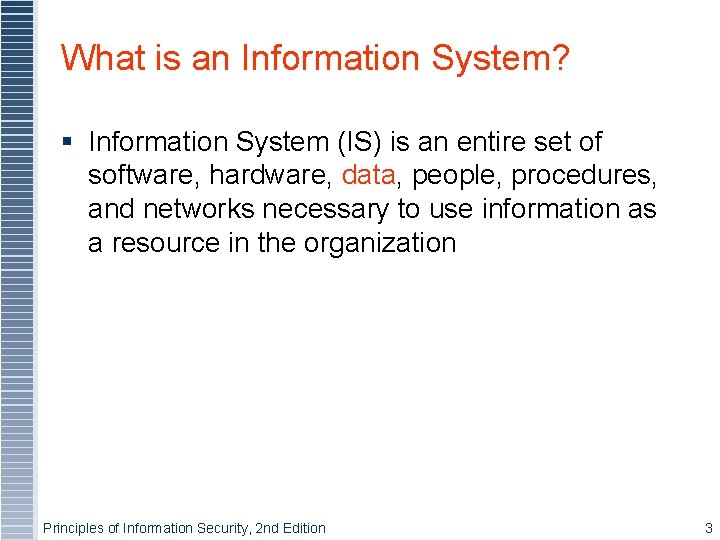
What is an Information System? § Information System (IS) is an entire set of software, hardware, data, people, procedures, and networks necessary to use information as a resource in the organization Principles of Information Security, 2 nd Edition 3
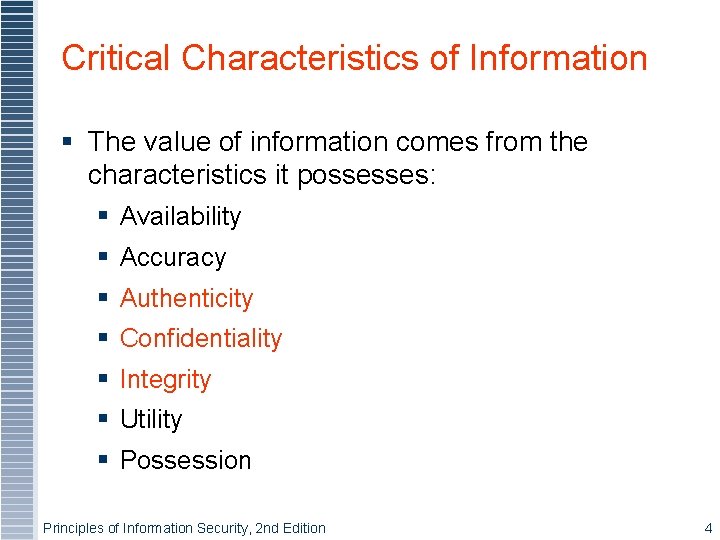
Critical Characteristics of Information § The value of information comes from the characteristics it possesses: § Availability § Accuracy § Authenticity § Confidentiality § Integrity § Utility § Possession Principles of Information Security, 2 nd Edition 4
What is Security? § “The quality or state of being secure—to be free from danger” § A successful organization should have multiple layers of security in place: § § § Physical security Personal security Operations security Communications security Network security Information security Principles of Information Security, 2 nd Edition 5
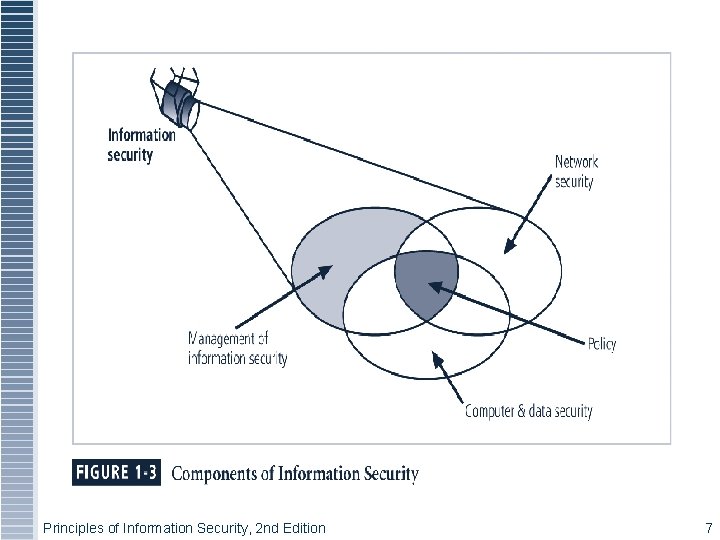
What is Information Security? § The protection of information and its critical elements, including systems that use, store, and transmit that information § Necessary tools: policy, awareness, training, education, technology Principles of Information Security, 2 nd Edition 6
Principles of Information Security, 2 nd Edition 7
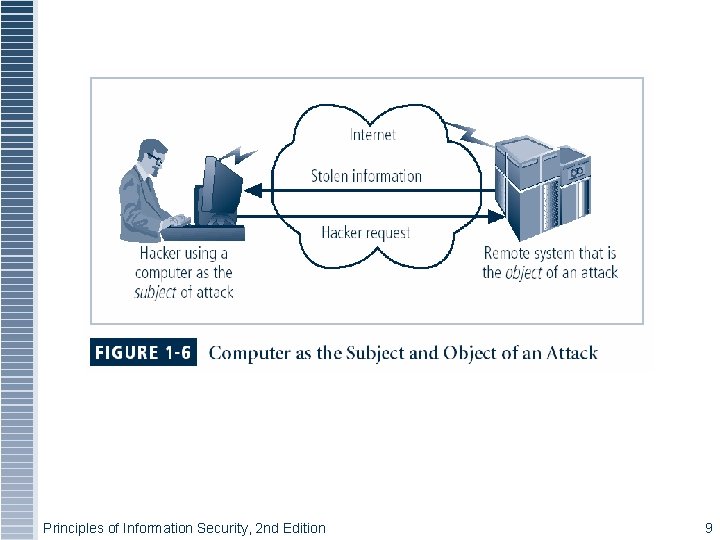
Securing Components in an Information System § Computer (software and hardware) is the key component in an information system § Computer can be subject of an attack and/or the object of an attack § When the subject of an attack, computer is used as an active tool to conduct attack § When the object of an attack, computer is the entity being attacked Principles of Information Security, 2 nd Edition 8
Figure 1 -5 – Subject and Object of Attack Principles of Information Security, 2 nd Edition 9
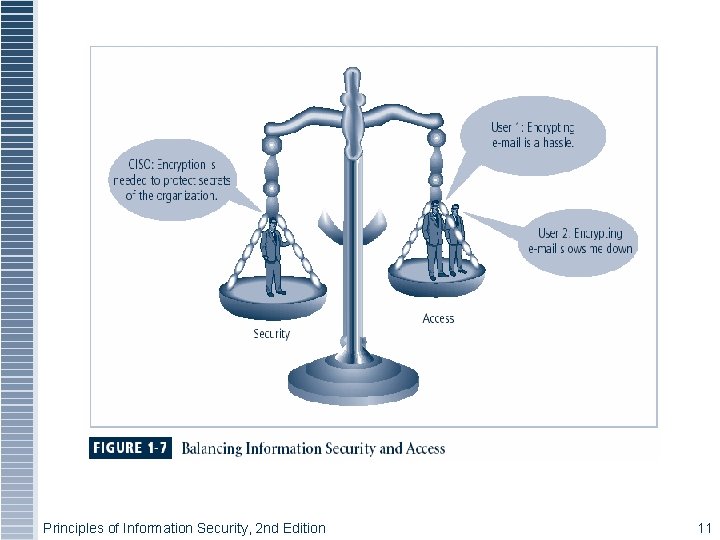
Balancing Information Security and Access § Impossible to obtain perfect security—it is a process, not an absolute § Security should be considered balance between protection and availability § To achieve balance, level of security must allow reasonable access, yet protect against threats Principles of Information Security, 2 nd Edition 10
Figure 1 -6 – Balancing Security and Access Principles of Information Security, 2 nd Edition 11
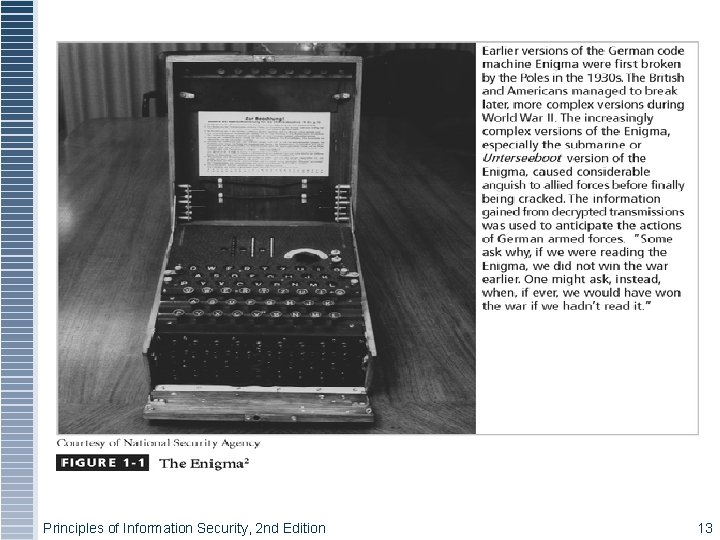
The History of Information Security § Began immediately after the first mainframes were developed § Groups developing code-breaking computations during World War II created the first modern computers Principles of Information Security, 2 nd Edition 12
Figure 1 -1 – The Enigma Principles of Information Security, 2 nd Edition 13
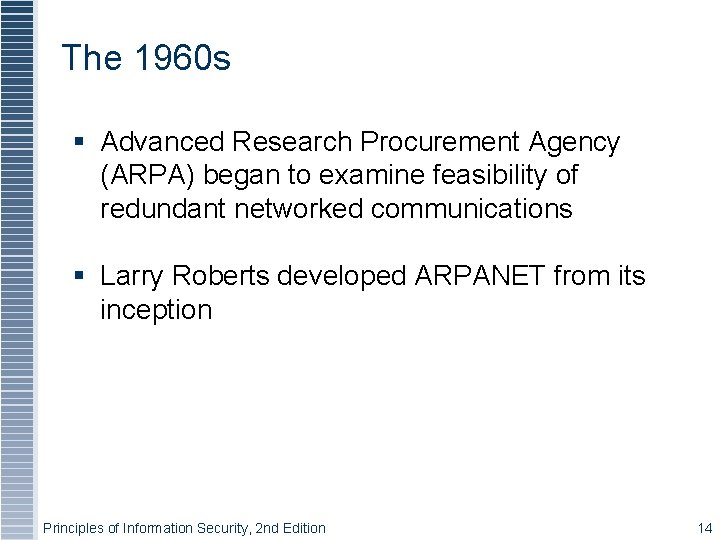
The 1960 s § Advanced Research Procurement Agency (ARPA) began to examine feasibility of redundant networked communications § Larry Roberts developed ARPANET from its inception Principles of Information Security, 2 nd Edition 14
Figure 1 -2 - ARPANET Principles of Information Security, 2 nd Edition 15
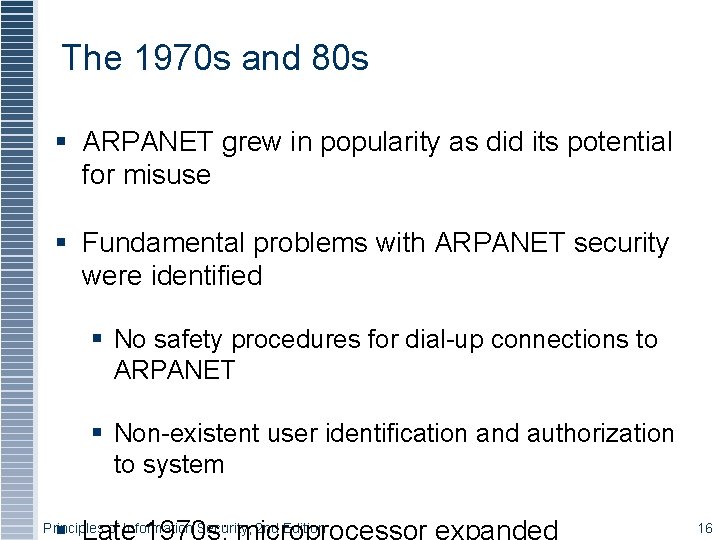
The 1970 s and 80 s § ARPANET grew in popularity as did its potential for misuse § Fundamental problems with ARPANET security were identified § No safety procedures for dial-up connections to ARPANET § Non-existent user identification and authorization to system § Late 1970 s: microprocessor expanded Principles of Information Security, 2 nd Edition 16
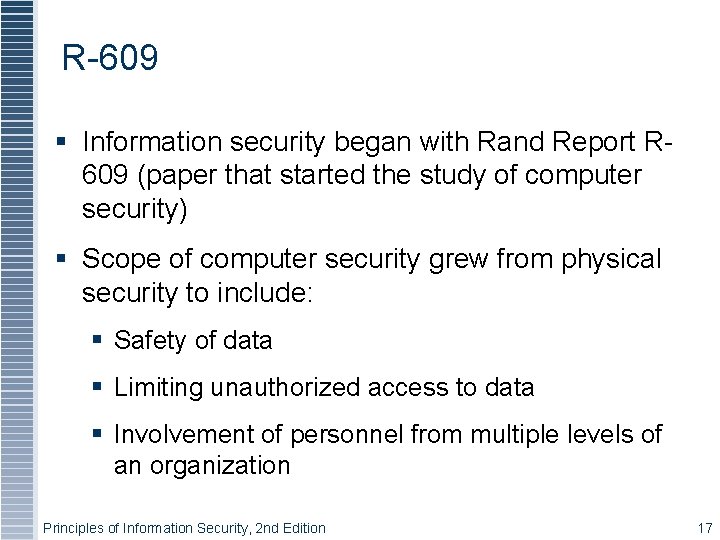
R-609 § Information security began with Rand Report R 609 (paper that started the study of computer security) § Scope of computer security grew from physical security to include: § Safety of data § Limiting unauthorized access to data § Involvement of personnel from multiple levels of an organization Principles of Information Security, 2 nd Edition 17
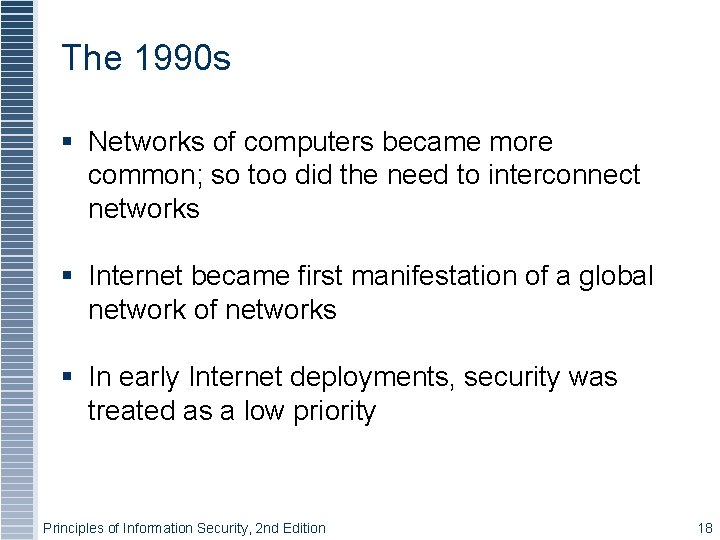
The 1990 s § Networks of computers became more common; so too did the need to interconnect networks § Internet became first manifestation of a global network of networks § In early Internet deployments, security was treated as a low priority Principles of Information Security, 2 nd Edition 18
The Present § The Internet brings millions of computer networks into communication with each other —many of them unsecured § Ability to secure a computer’s data influenced by the security of every computer to which it is connected Principles of Information Security, 2 nd Edition 19
Summary § Information security is a “well-informed sense of assurance that the information risks and controls are in balance. ” § Security should be considered a balance between protection and availability. § Computer security began immediately after first mainframes were developed Principles of Information Security, 2 nd Edition 20