
Introduction Physical Examination Health Assessment Why do I
- Slides: 20
Introduction Physical Examination Health Assessment
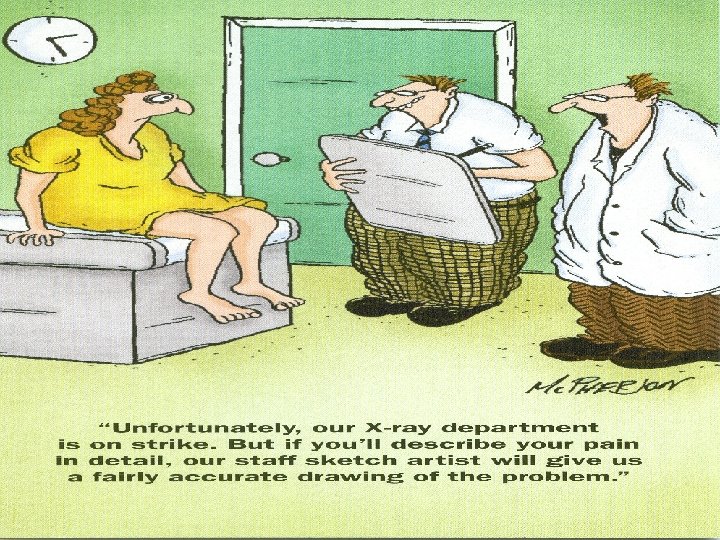
Why do I need to know Physical Assessment?
“What is your reason for coming here today? ”
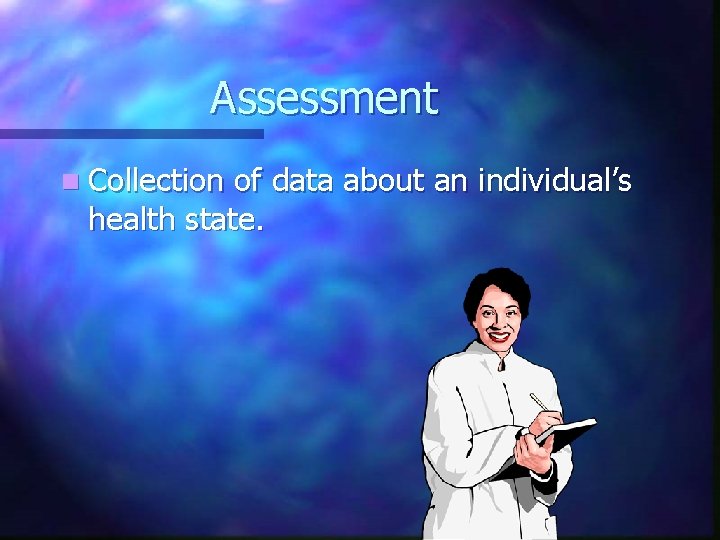
Assessment n Collection of data about an individual’s health state.
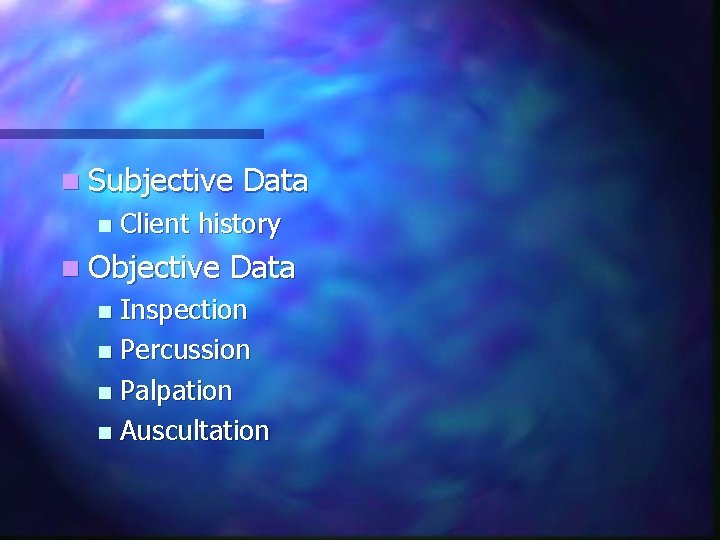
n Subjective n Data Client history n Objective Data Inspection n Percussion n Palpation n Auscultation n
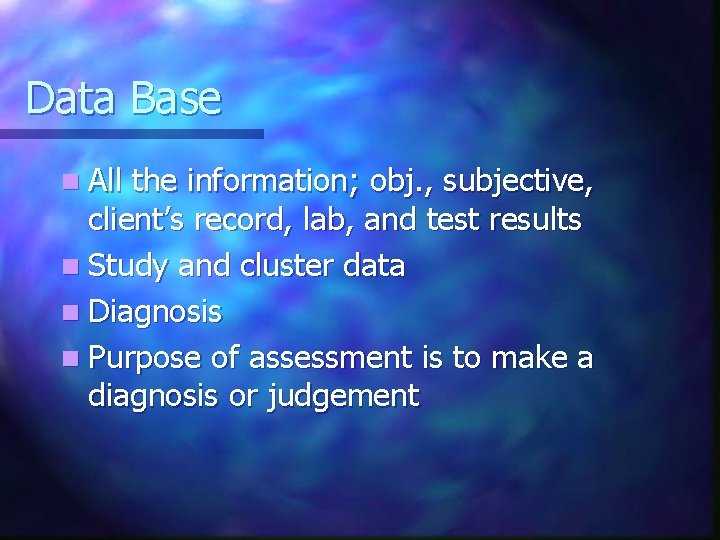
Data Base n All the information; obj. , subjective, client’s record, lab, and test results n Study and cluster data n Diagnosis n Purpose of assessment is to make a diagnosis or judgement
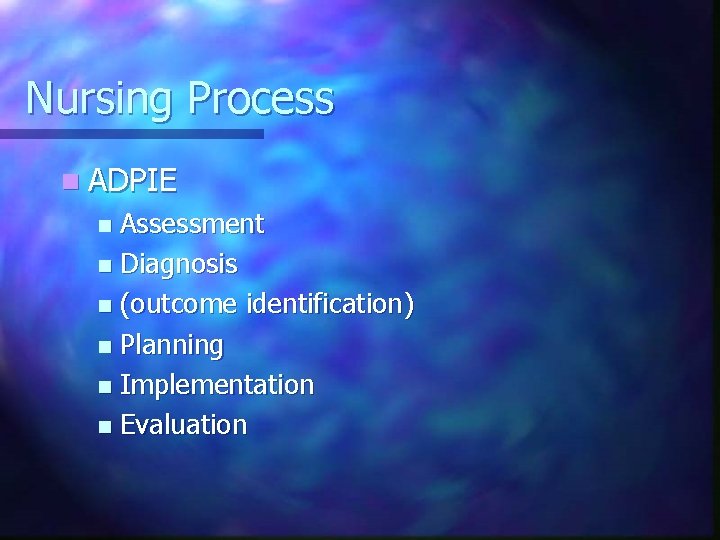
Nursing Process n ADPIE Assessment n Diagnosis n (outcome identification) n Planning n Implementation n Evaluation n
Critical Thinking n Problem solving – the puzzle – the big picture n Processing information – use theory learned, experience, intuition, intellectual and manual skills
Priority Setting n First level problems n n n ABC’s Vital Signs Second Level n n n Mental Status changes (LOC) Acute pain Acute urinary elimination Untreated medical problems Abn. Bld. Values Risks of infection, safety, security
n Third Level Priority Knowledge deficit n Activity, rest n Coping n
4 Types of Data Base 1. 2. 3. 4. Complete ( Total ) Episodic or Problem Centered Follow – up Emergency
Consideration of: n Developmental States n Cultural Assessment n Beliefs, values, practices
The Interview n “Spend more time listening” n Open /Closed ended questions n Interpreter n Family/ professional
Communication Skills n Collecting information with understanding n Verbal/Nonverbal
Factors that impact on Communication n Internal Personal attributes – acceptance of client (Nonjudgemental) n Respect n Empathy n Listening n
Factors that impact on Communication n External Factors Privacy n Interruptions n Comfortable environment – temp. , noise, lunch, bloody mess n
10 Traps of Inteviewing pg 57 1. 2. 3. 4. 5. 6. 7. False Assurance Unwanted Advice Using Authority Avoidance language – dead is dead Engaging in distance “the Friend” Professional jargon Leading or biased questions; “you don’t…? ”
Too much talking 9. Interrupting 10. Why? 8.
Threat of Violence!!!! n CPI training