
Introduction Once a target market has been identified
Introduction
§ Once a target market has been identified and a product developed to meet the needs of the target, the next step is to position the product § Positioning refers to the place a product occupies in the customer’s mind in relation to competing products § It involves: § Designing and marketing a product to meet the needs of a target market § Creating the appropriate appeals to make the product stand out from competition in the minds of the target market § How a consumer perceives a product is influenced by the initial (pre-purchase) and actual experience with a product (post-purchase)
§ Harvey’s position is very unique in the fast food industry § While most underdogs in the industry focused on healthy products to compete with Mc. Donalds, Harvey’s focuses on creating unapologetically greasy food § Harvey’s created burgers like “The Big Harv” and created the slogan “Long Live the Grill” in an era where most fast food restaurants were introducing salads and healthy options on their menu § By doing so Harvey’s positioned itself differently from other fast food restaurants and created a strong customer base
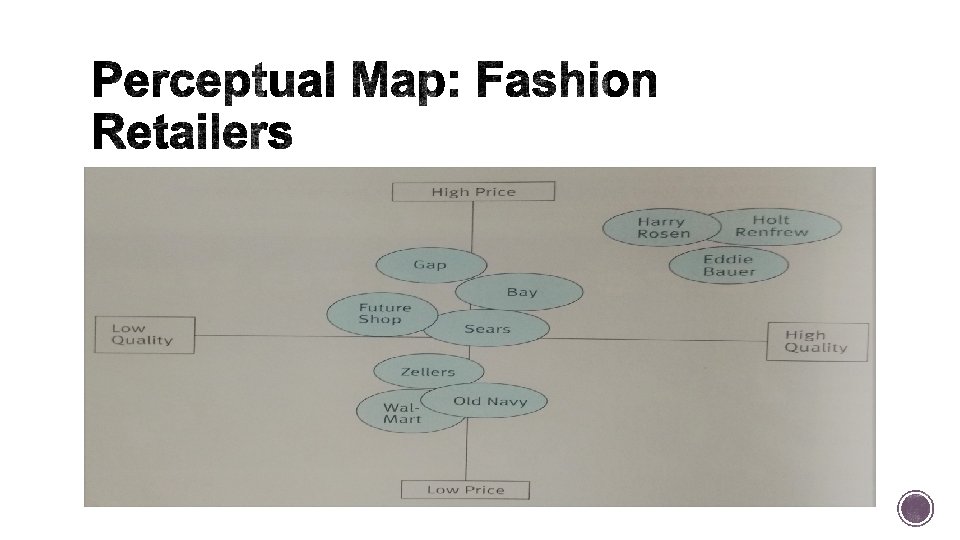
§ The positioning a company desires and the perceived positioning of a product by its customers are often quite different § To “find out who they are” companies will compare their attributes with other competing brands. They will plot this data on a perceptual map § Once plotted, a marketer can see where changes in marketing strategy are necessary if a brand is to improve or alter its image with customers § Gaps on a perceptual map also may show where new marketing opportunities exist
- Slides: 5