
Introduction on Infrastructural Development in Ethiopia Presented to

- Slides: 22
Introduction on Infrastructural Development in Ethiopia Presented to SEMINAR on “ETHIOPIAN-KOREA ENERGY AND INFRASTRUCTURE” November 29, 2012 Hilton Addis Hotel Addis Ababa
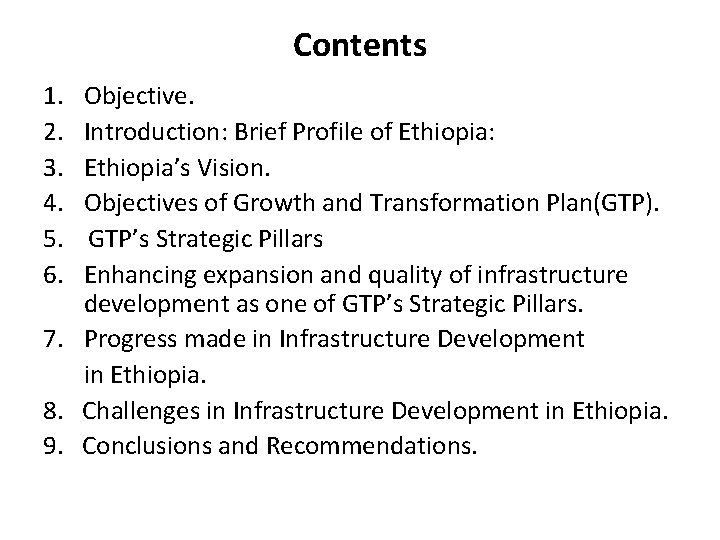
Contents 1. 2. 3. 4. 5. 6. Objective. Introduction: Brief Profile of Ethiopia: Ethiopia’s Vision. Objectives of Growth and Transformation Plan(GTP). GTP’s Strategic Pillars Enhancing expansion and quality of infrastructure development as one of GTP’s Strategic Pillars. 7. Progress made in Infrastructure Development in Ethiopia. 8. Challenges in Infrastructure Development in Ethiopia. 9. Conclusions and Recommendations.
1. Objective To provide an introduction on infrastructural development in Ethiopia to participants of the Korean-Ethiopia Seminar on Engineering.
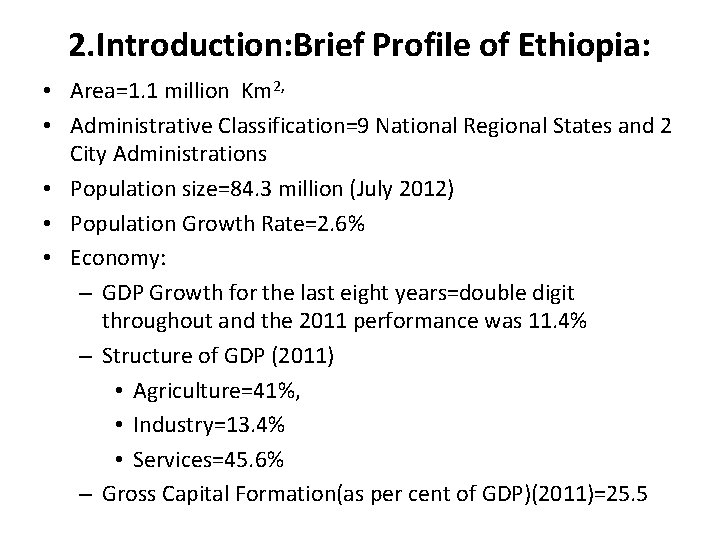
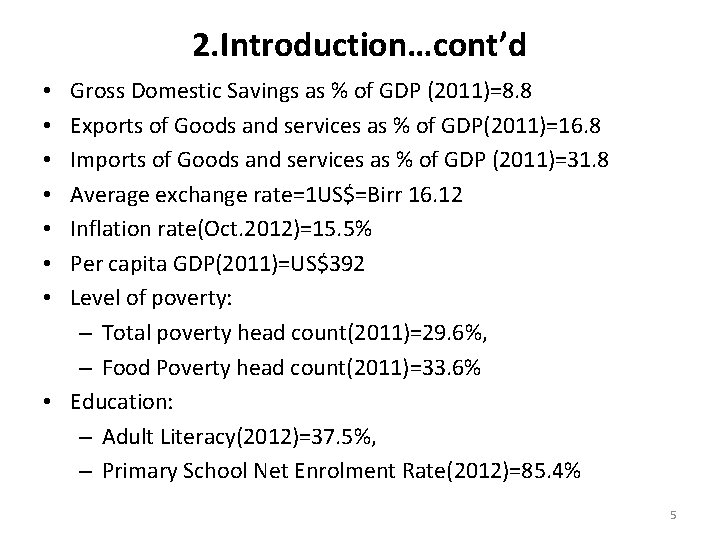
2. Introduction: Brief Profile of Ethiopia: • Area=1. 1 million Km 2, • Administrative Classification=9 National Regional States and 2 City Administrations • Population size=84. 3 million (July 2012) • Population Growth Rate=2. 6% • Economy: – GDP Growth for the last eight years=double digit throughout and the 2011 performance was 11. 4% – Structure of GDP (2011) • Agriculture=41%, • Industry=13. 4% • Services=45. 6% – Gross Capital Formation(as per cent of GDP)(2011)=25. 5
2. Introduction…cont’d Gross Domestic Savings as % of GDP (2011)=8. 8 Exports of Goods and services as % of GDP(2011)=16. 8 Imports of Goods and services as % of GDP (2011)=31. 8 Average exchange rate=1 US$=Birr 16. 12 Inflation rate(Oct. 2012)=15. 5% Per capita GDP(2011)=US$392 Level of poverty: – Total poverty head count(2011)=29. 6%, – Food Poverty head count(2011)=33. 6% • Education: – Adult Literacy(2012)=37. 5%, – Primary School Net Enrolment Rate(2012)=85. 4% • • 5
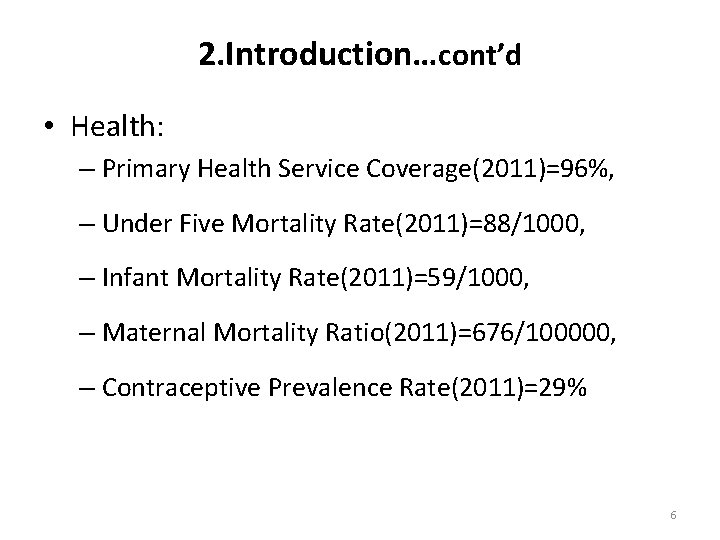
2. Introduction…cont’d • Health: – Primary Health Service Coverage(2011)=96%, – Under Five Mortality Rate(2011)=88/1000, – Infant Mortality Rate(2011)=59/1000, – Maternal Mortality Ratio(2011)=676/100000, – Contraceptive Prevalence Rate(2011)=29% 6
3. Ethiopia’s vision • Ethiopia’s Vision which guides the Five-Year Development Plans is: “to become a country where democratic rule, goodgovernance and social justice reign, upon the involvement and free will of its peoples, and once extricating itself from poverty to reach the level of a middle-income economy as of 2020 -2023. ”
4. Objectives of Growth and Transformation Plan(GTP) – Maintain at least an average real GDP growth rate of 11% and attain MDGs. – Expand ensure the qualities of education and health services and achieve MDGs in the social sector. – Establish suitable conditions for sustainable nation building through the creation of a stable democratic and developmental state; and – Ensure the sustainability of growth by realizing all the above objectives within a stable macroeconomic framework.
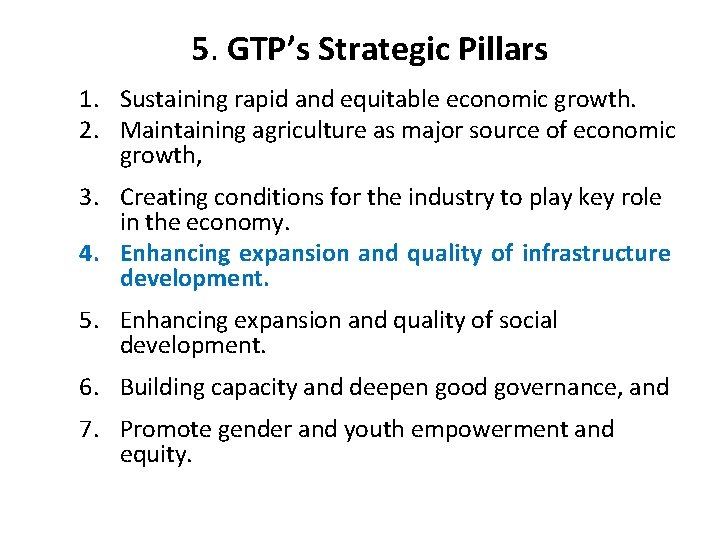
5. GTP’s Strategic Pillars 1. Sustaining rapid and equitable economic growth. 2. Maintaining agriculture as major source of economic growth, 3. Creating conditions for the industry to play key role in the economy. 4. Enhancing expansion and quality of infrastructure development. 5. Enhancing expansion and quality of social development. 6. Building capacity and deepen good governance, and 7. Promote gender and youth empowerment and equity.
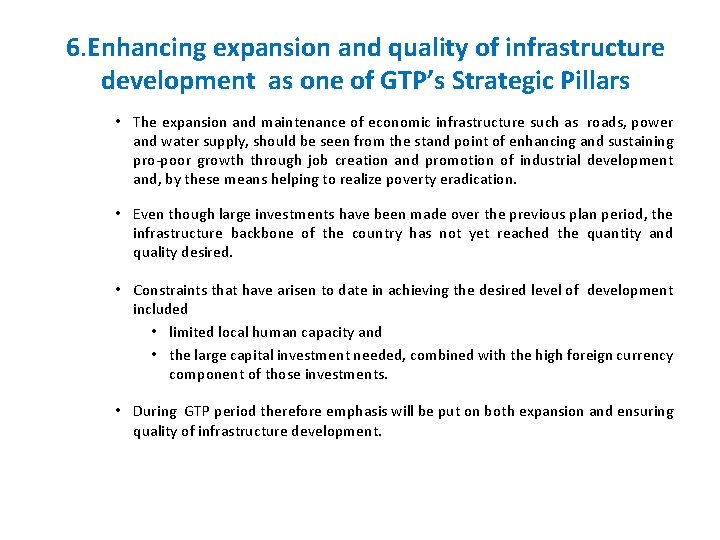
6. Enhancing expansion and quality of infrastructure development as one of GTP’s Strategic Pillars • The expansion and maintenance of economic infrastructure such as roads, power and water supply, should be seen from the stand point of enhancing and sustaining pro-poor growth through job creation and promotion of industrial development and, by these means helping to realize poverty eradication. • Even though large investments have been made over the previous plan period, the infrastructure backbone of the country has not yet reached the quantity and quality desired. • Constraints that have arisen to date in achieving the desired level of development included • limited local human capacity and • the large capital investment needed, combined with the high foreign currency component of those investments. • During GTP period therefore emphasis will be put on both expansion and ensuring quality of infrastructure development.
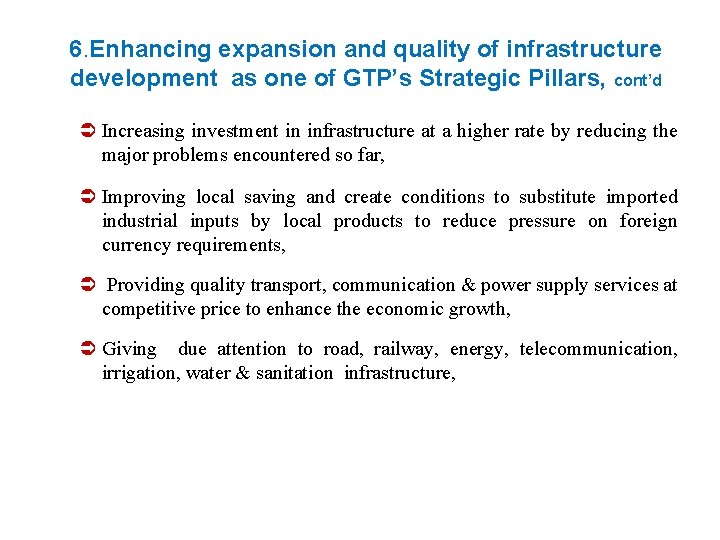
6. Enhancing expansion and quality of infrastructure development as one of GTP’s Strategic Pillars, cont’d Ü Increasing investment in infrastructure at a higher rate by reducing the major problems encountered so far, Ü Improving local saving and create conditions to substitute imported industrial inputs by local products to reduce pressure on foreign currency requirements, Ü Providing quality transport, communication & power supply services at competitive price to enhance the economic growth, Ü Giving due attention to road, railway, energy, telecommunication, irrigation, water & sanitation infrastructure,
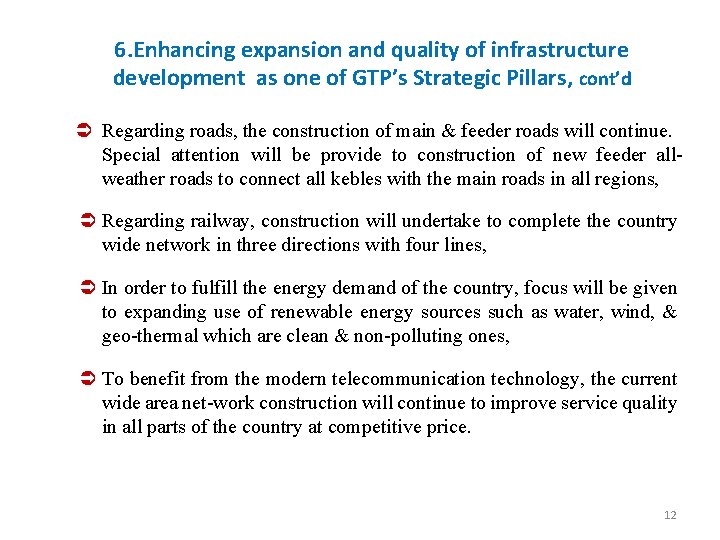
6. Enhancing expansion and quality of infrastructure development as one of GTP’s Strategic Pillars, cont’d Ü Regarding roads, the construction of main & feeder roads will continue. Special attention will be provide to construction of new feeder allweather roads to connect all kebles with the main roads in all regions, Ü Regarding railway, construction will undertake to complete the country wide network in three directions with four lines, Ü In order to fulfill the energy demand of the country, focus will be given to expanding use of renewable energy sources such as water, wind, & geo-thermal which are clean & non-polluting ones, Ü To benefit from the modern telecommunication technology, the current wide area net-work construction will continue to improve service quality in all parts of the country at competitive price. 12
6. Enhancing expansion and quality of infrastructure development as one of GTP’s Strategic Pillars, cont’d Ü Developing & using the water resources of the country for different economic & social activities in sustainable & equitable manner, expand total service coverage & irrigation construction works, Ü To ensure rapid & equitable growth in urban centers, expansion of infrastructure will be given attention according to the level of their development & the role they play. Ü The infrastructure construction will be linked to job creation & development of small scale enterprises, Ü The construction industry is where the private sector play the dominate role. The sector will be market oriented and focus on growth , employment generation, and competitiveness. Ü Participation & benefits of women & children as well as design suitability for disabled will be given due attention. Ü Regarding sanitation, clean & suitable work & urban environment will be ensured. 13
6. Enhancing expansion and quality of infrastructure development as one of GTP’s Strategic Pillars, cont’d • Provision of affordable physical and economic infrastructure, such as transportation, communication and energy makes a crucial contribution to economic growth, employment creation, social welfare and the expansion of the industrial sector. • In the years prior to the GTP, a massive capital investment was made to expand infrastructure services. • In the GTP period, very large investment will be made to further expand infrastructure services, to strengthen the foundation for long-term sustained growth and development, and in doing so, the challenges encountered during the PASDEP implementation will be addressed and resolved.
6. Enhancing expansion and quality of infrastructure development as one of GTP’s Strategic Pillars, cont’d • To date financing for capital investment has come from Treasury and Official Development Assistance sources. • To increase the financial resources available, emphasis will be given to improving the level of domestic savings and foreign exchange savings through promoting import substitution of imported materials and construction services with domestic products and services. • Nevertheless, it is envisaged that domestic resources will still not be adequate to fully finance the infrastructure programs of the GTP. • Import substitution of the materials and construction services will help, but is not expected to fully address the foreign exchange constraints. Thus, the mobilization of external official development assistance will be important in this regard.
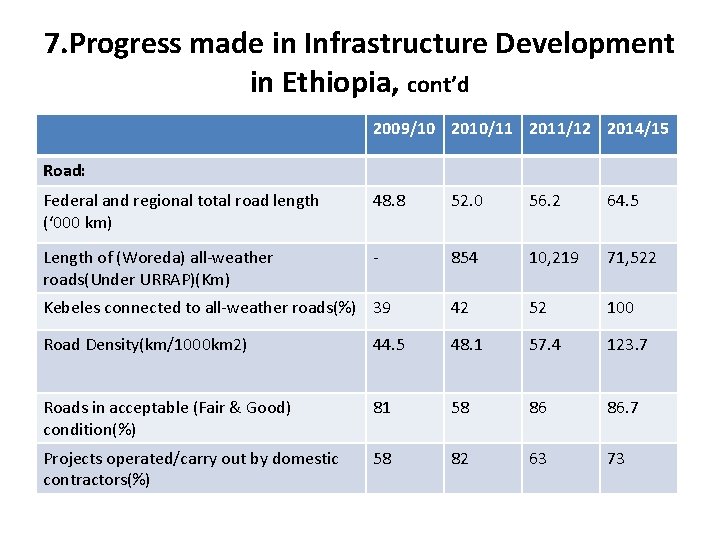
7. Progress made in Infrastructure Development in Ethiopia, cont’d 2009/10 2010/11 2011/12 2014/15 Road: Federal and regional total road length (‘ 000 km) 48. 8 52. 0 56. 2 64. 5 Length of (Woreda) all-weather roads(Under URRAP)(Km) - 854 10, 219 71, 522 Kebeles connected to all-weather roads(%) 39 42 52 100 Road Density(km/1000 km 2) 44. 5 48. 1 57. 4 123. 7 Roads in acceptable (Fair & Good) condition(%) 81 58 86 86. 7 Projects operated/carry out by domestic contractors(%) 58 82 63 73
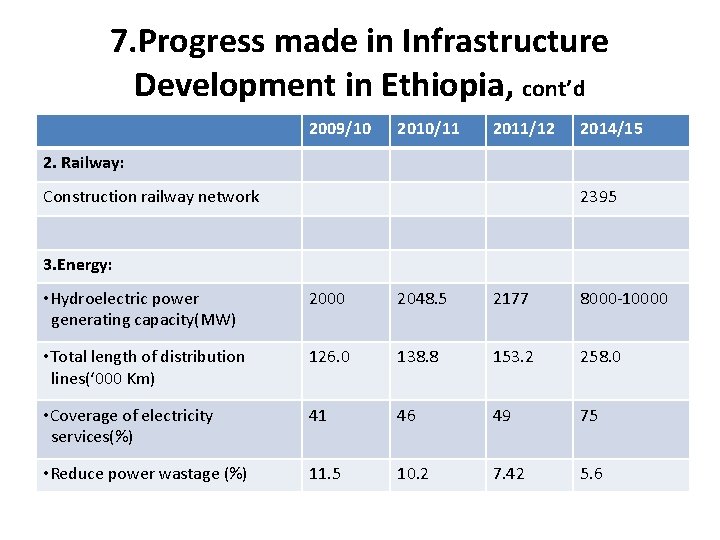
7. Progress made in Infrastructure Development in Ethiopia, cont’d 2009/10 2010/11 2011/12 2014/15 2. Railway: Construction railway network 2395 3. Energy: • Hydroelectric power generating capacity(MW) 2000 2048. 5 2177 8000 -10000 • Total length of distribution lines(‘ 000 Km) 126. 0 138. 8 153. 2 258. 0 • Coverage of electricity services(%) 41 46 49 75 • Reduce power wastage (%) 11. 5 10. 2 7. 42 5. 6
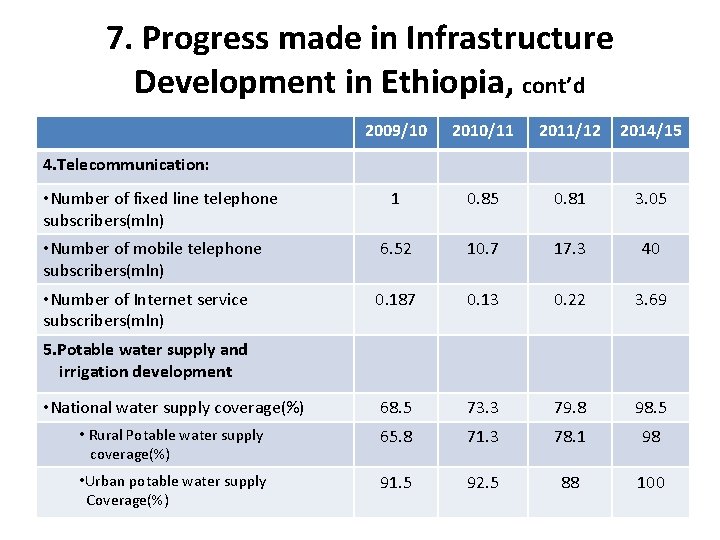
7. Progress made in Infrastructure Development in Ethiopia, cont’d 2009/10 2010/11 2011/12 2014/15 1 0. 85 0. 81 3. 05 • Number of mobile telephone subscribers(mln) 6. 52 10. 7 17. 3 40 • Number of Internet service subscribers(mln) 0. 187 0. 13 0. 22 3. 69 • National water supply coverage(%) 68. 5 73. 3 79. 8 98. 5 • Rural Potable water supply coverage(%) 65. 8 71. 3 78. 1 98 • Urban potable water supply Coverage(%) 91. 5 92. 5 88 100 4. Telecommunication: • Number of fixed line telephone subscribers(mln) 5. Potable water supply and irrigation development
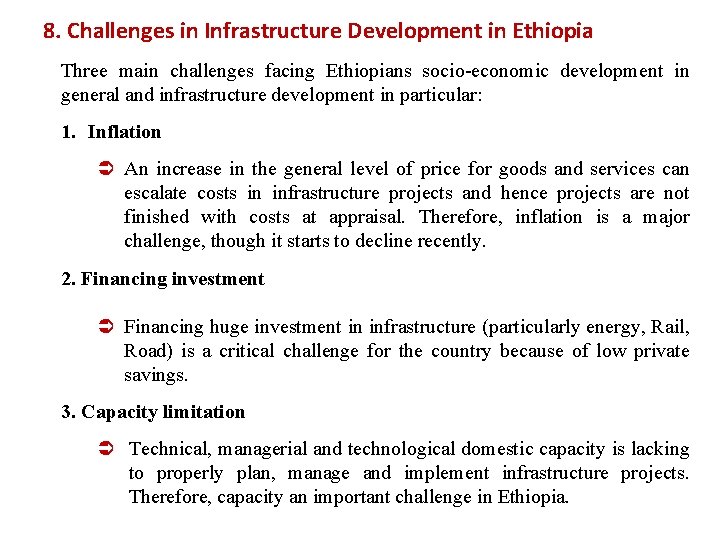
8. Challenges in Infrastructure Development in Ethiopia Three main challenges facing Ethiopians socio-economic development in general and infrastructure development in particular: 1. Inflation Ü An increase in the general level of price for goods and services can escalate costs in infrastructure projects and hence projects are not finished with costs at appraisal. Therefore, inflation is a major challenge, though it starts to decline recently. 2. Financing investment Ü Financing huge investment in infrastructure (particularly energy, Rail, Road) is a critical challenge for the country because of low private savings. 3. Capacity limitation Ü Technical, managerial and technological domestic capacity is lacking to properly plan, manage and implement infrastructure projects. Therefore, capacity an important challenge in Ethiopia.
9. Conclusions & Recommendations • The development vision of Ethiopia to become a middle income economy and eradicate poverty AS OF 2020 -2023 require `rapid economic growth, • The required rapid economic growth, in turn, requires a rapid infrastructural development, • Though the government is committed to develop infrastructure at the required level and speed, the very limited domestic capacity hiders to invest in this area due to low savings(8. 8%, in 2010/11), • Therefore, there are opportunities foreign investors, including the Koreans, to involve in infrastructural development(particularly in energy, road and railways).
Thank You!