
Introduction of the Instructor Education MS Management MSc
- Slides: 28
Introduction of the Instructor Education • MS (Management), MSc (Mass Communication), MBA (Marketing), BS (Computer Sciences) Experience • Lecturer, Department of Management Sciences, CIIT (2007 – Date) • Manager – Business Development, SKB Engineering & Construction (2006 – 2007) • Asstt. Manager – Liaison & Communications, Karcon Pvt. Ltd. (2003 – 2006) • Asstt. Manager – Marketing & Business Development, Aspire Solutions (2002 – 2003) • Organized various international conferences and seminars • Published one journal article and thirteen conferences papers at national and international level. Contacts Emails: tahir_mumtaz@comsats. edu. pk, mumtaz. tahir@yahoo. com Phone Numbers: +92 -300 -5283204, +92 -333 -5001377
Marketing Theory & Practice (MGT-410) Course Instructor: Tahir Mumtaz Awan
Objectives / Value Themes • To introduce new marketing students to the fascinating world of modern marketing in an innovative yet practical and enjoyable way. • To understand learn about creating value for customers in order to capture value from customers in return. • To get an in-depth knowledge about building and managing strong, value creating brands.
Objectives / Value Themes • To understand the role of marketing accountability i. e. measuring and managing return on marketing investments. • To have a deep understanding of sustainable marketing i. e. meeting the present needs of consumers and businesses while also preserving or enhancing the ability of future generations to meet their needs.
Textbook Principles of Marketing 13 th Edition Authors: Phillip Kotler and Gary Armstrong Publisher: Pearson Education, Inc. as Prentice Hall
Course Organization PART 01 – Defining Marketing and the Marketing Process ü Chapter 01 and 02 PART 02 – Understanding the Marketplace and Consumers ü Chapter 03, 04, 05, and 06 PART 03 – Designing Customer-Driven Marketing Strategy & Mix ü Chapter 07, 08, 09, 10, 11, 12, 13, 14, 15, 16, and 17 PART 04 – Extending Marketing ü Chapter 18, 19, and 20
PART 01 DEFINING MARKETING AND THE MARKETING PROCESS
Chapter 01 Marketing: Creating & Capturing Customer Value • What Is Marketing? • Understand the Marketplace and Customer Needs • Designing a Customer-Driven Marketing Strategy • Preparing an Integrated Marketing Plan and Program • Building Customer Relationships • Capturing Value from Customers • The Changing Marketing Landscape
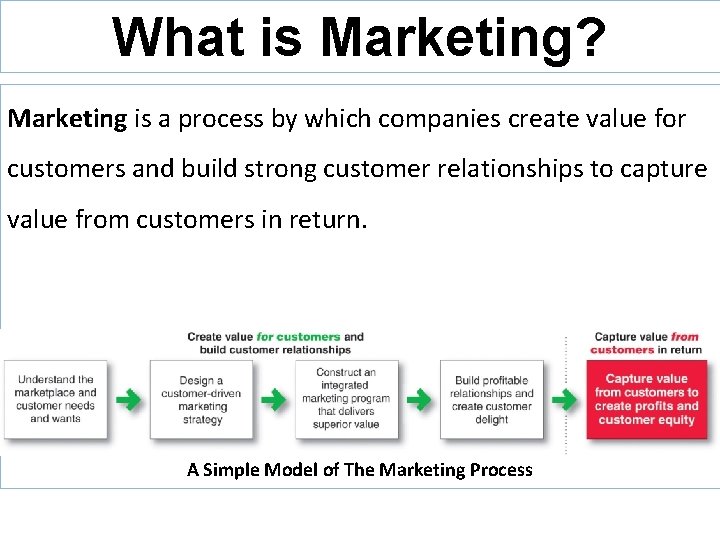
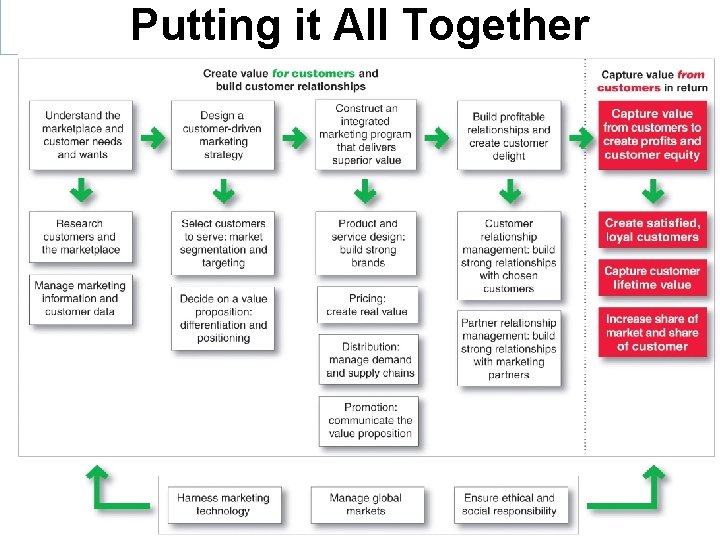
What is Marketing? Marketing is a process by which companies create value for customers and build strong customer relationships to capture value from customers in return. A Simple Model of The Marketing Process
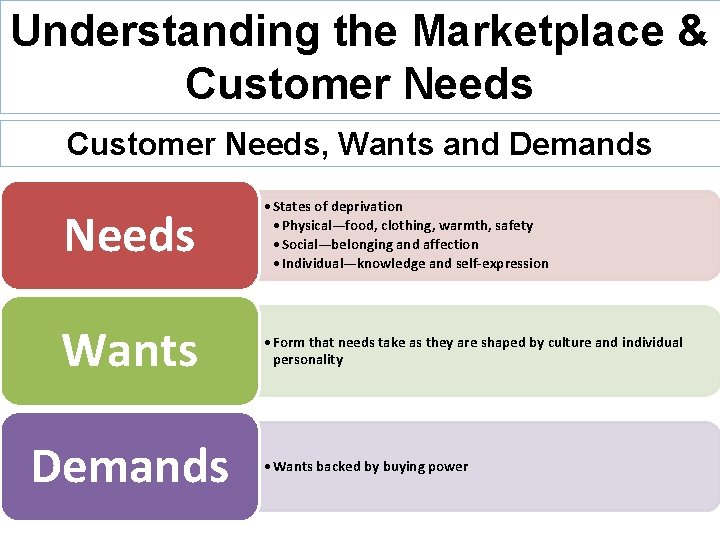
Understanding the Marketplace & Customer Needs, Wants and Demands Needs • States of deprivation • Physical—food, clothing, warmth, safety • Social—belonging and affection • Individual—knowledge and self-expression Wants • Form that needs take as they are shaped by culture and individual personality Demands • Wants backed by buying power
Understanding the Marketplace & Customer Needs Market Offerings and Marketing Myopia • Market offerings are some combination of products, services, information, or experiences offered to a market to satisfy a need or want. • Marketing myopia is focusing only on existing wants and losing sight of underlying consumer needs
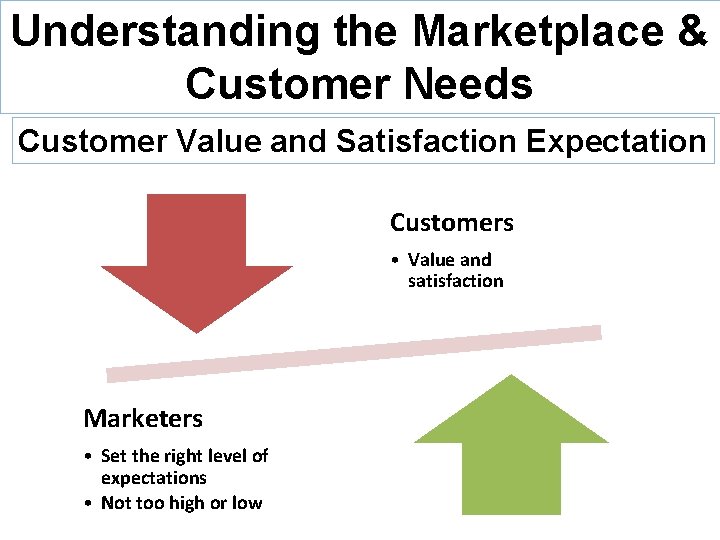
Understanding the Marketplace & Customer Needs Customer Value and Satisfaction Expectation Customers • Value and satisfaction Marketers • Set the right level of expectations • Not too high or low
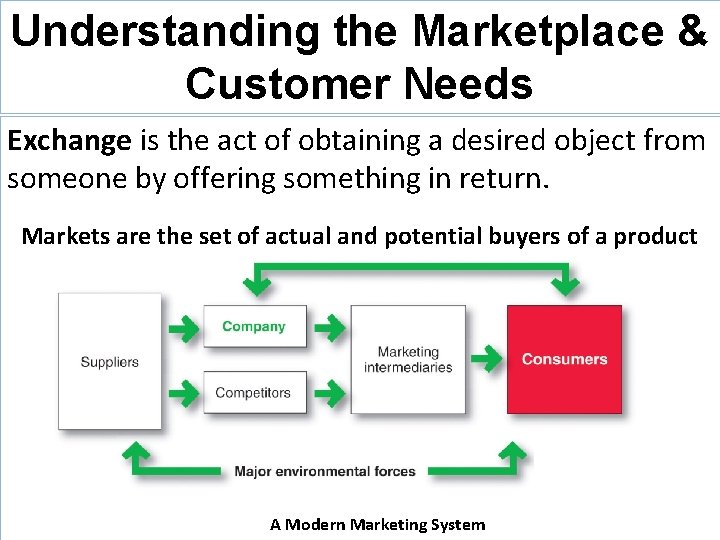
Understanding the Marketplace & Customer Needs Exchange is the act of obtaining a desired object from someone by offering something in return. Markets are the set of actual and potential buyers of a product A Modern Marketing System
Designing a Customer-Driven Marketing Strategy Marketing management is the art and science of choosing target markets and building profitable relationships with them • What customers will we serve? • How can we best serve these customers?
Designing a Customer-Driven Marketing Strategy Selecting Customers to Serve Market segmentation refers to dividing the markets into segments of customers Target marketing refers to which segments to go after Demarketing is marketing to reduce demand temporarily or permanently; the aim is not to destroy demand but to reduce or shift it
Designing a Customer-Driven Marketing Strategy Choosing a Value Proposition The value proposition is the set of benefits or values a company promises to deliver to customers to satisfy their needs
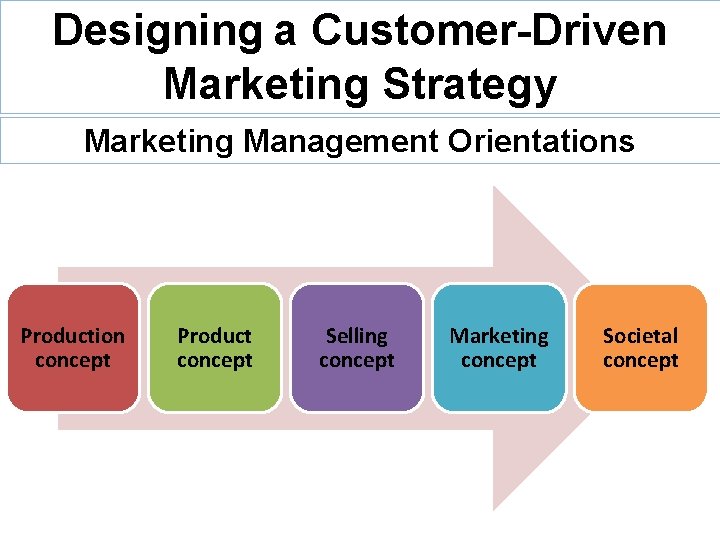
Designing a Customer-Driven Marketing Strategy Marketing Management Orientations Production concept Product concept Selling concept Marketing concept Societal concept
Designing a Customer-Driven Marketing Strategy Marketing Management Orientations • Production concept is the idea that consumers will favor products that are available or highly affordable. • Product concept is the idea that consumers will favor products that offer the most quality, performance, and features. Organization should therefore devote its energy to making continuous product improvements.
Designing a Customer-Driven Marketing Strategy Marketing Management Orientations • Selling concept is the idea that consumers will not buy enough of the firm’s products unless it undertakes a large scale selling and promotion effort. • Marketing concept is the idea that achieving organizational goals depends on knowing the needs and wants of the target markets and delivering the desired satisfactions better than competitors do.
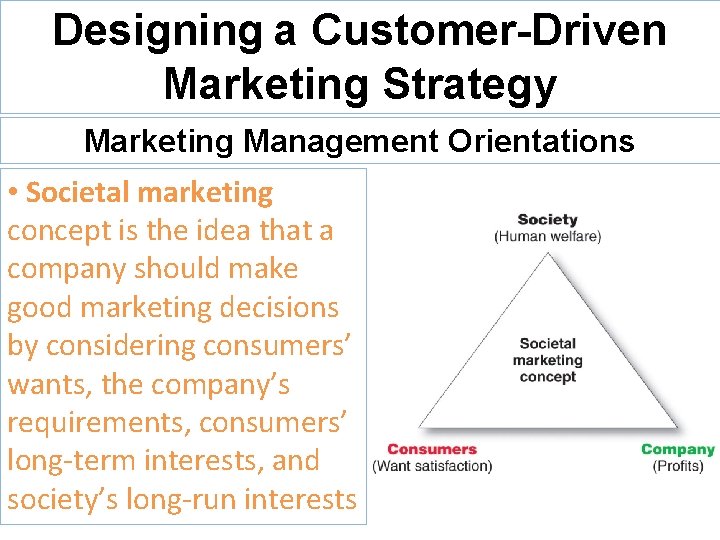
Designing a Customer-Driven Marketing Strategy Marketing Management Orientations • Societal marketing concept is the idea that a company should make good marketing decisions by considering consumers’ wants, the company’s requirements, consumers’ long-term interests, and society’s long-run interests
Designing a Customer-Driven Marketing Strategy Preparing an Integrated Marketing Plan and Program The marketing mix is the set of tools (four Ps) the firm uses to implement its marketing strategy. It includes product, price, promotion, and place. Integrated marketing program is a comprehensive plan that communicates and delivers the intended value to chosen customers.
Building Customer Relationships Customer Relationship Management (CRM) The overall process of building and maintaining profitable customer relationships by delivering superior customer value and satisfaction
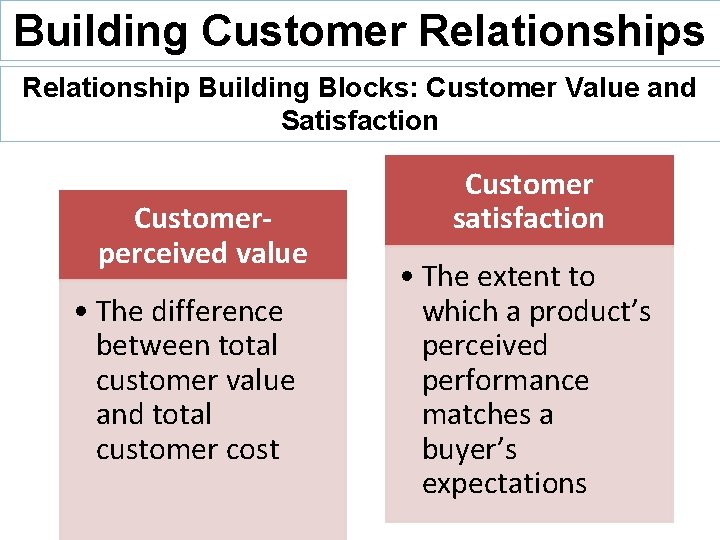
Building Customer Relationships Relationship Building Blocks: Customer Value and Satisfaction Customerperceived value • The difference between total customer value and total customer cost Customer satisfaction • The extent to which a product’s perceived performance matches a buyer’s expectations
Building Customer Relationships Partner Relationship Management • Partner relationship management involves working closely with partners in other company departments and outside the company to jointly bring greater value to customers. • Partners inside the company is every function area interacting with customers ü Electronically ü Cross-functional teams
Building Customer Relationships Partner Relationship Management • Partners outside the company is how marketers connect with their suppliers, channel partners, and competitors by developing partnerships. • Supply chain is a channel that stretches from raw materials to components to final products to final buyers ü Supply management ü Strategic partners ü Strategic alliances
Capturing Value from Customers Customer lifetime value is the value of the entire stream of purchases that the customer would make over a lifetime of patronage. Customer equity is the total combined customer lifetime values of all of the company’s customers. Build the right relationship with the right customers
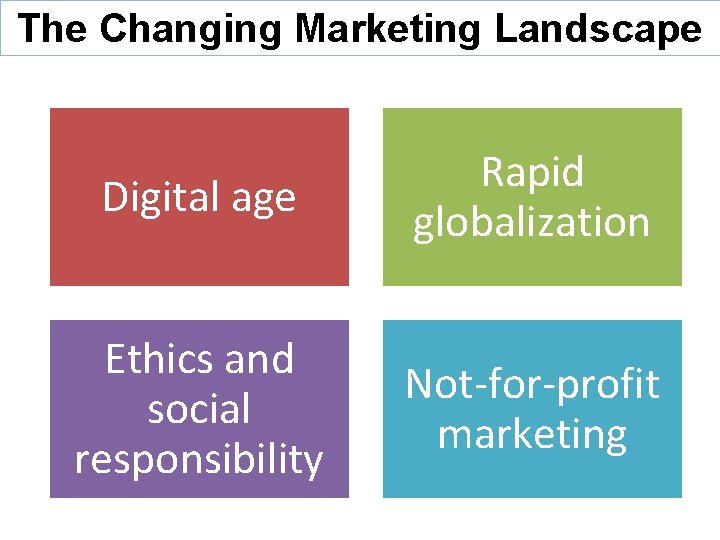
The Changing Marketing Landscape Digital age Rapid globalization Ethics and social responsibility Not-for-profit marketing
Putting it All Together