
Introduction of AntiHistamine AntiHistamine Diphenhydramine Benylin Pharmaceutical chemistry
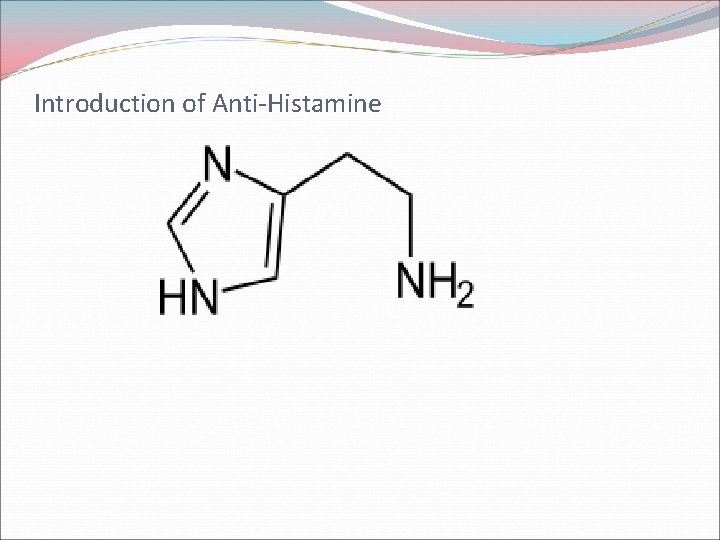
Introduction of Anti-Histamine
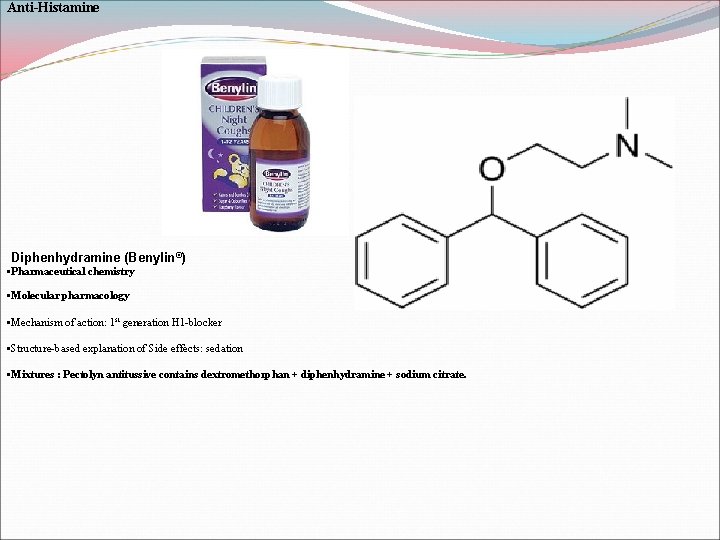
Anti-Histamine Diphenhydramine (Benylin ®) • Pharmaceutical chemistry • Molecular pharmacology • Mechanism of action: 1 st generation H 1 -blocker • Structure-based explanation of Side effects: sedation • Mixtures : Pectolyn antitussive contains dextromethorphan + diphenhydramine + sodium citrate.

Anti-Histamine Chlorpheniramine (Polaramine, Allerfin) • Pharmaceutical chemistry • Molecular pharmacology • Mechanism of action: 1 st generation H 1 -blocker • Structure-based explanation of Side effects: sedation Mixtures: Tussifin contains chlorpheniramine + codeine + glyceryl guaiacolate + potassium citrate + sodium benzoate + liquorice

Anti-Histamine Hydroxyzine (Atarax) • Pharmaceutical chemistry • Molecular pharmacology • Mechanism of action: 1 st generation H 1 -blocker • Structure-based explanation of Side effects: sedation

Anti-Histamine Meclozine (Navidoxine with B 6)) • Pharmaceutical chemistry • Molecular pharmacology • Mechanism of action: 1 st generation H 1 -blocker • Structure-based explanation of Side effects: sedation

Anti-Histamine Dimetindene (Fenistil) • Pharmaceutical chemistry • Molecular pharmacology • Mechanism of action: 1 st generation H 1 -blocker • Structure-based explanation of Side effects: sedation

Anti-Histamine Triprolidine (Trifed) • Pharmaceutical chemistry • Possible Origin • Physiochemical Properties • Idea of Retro-synthesis • Molecular pharmacology • Mechanism of action: 1 st generation H 1 -blocker • Structure-based explanation of Therapeutic uses • Structure-based explanation of Side effects: sedation • Analysis. • Mixtures : Trifed. . Conatins guaiphenesin + pseudoephdrine + triprolidine.

Anti-Histamine Oxomemazine (Rectolyn, Rictamol) • Pharmaceutical chemistry • Possible Origin • Physiochemical Properties • Idea of Retro-synthesis • Molecular pharmacology • Mechanism of action: 1 st generation H 1 -blocker • Structure-based explanation of Therapeutic uses • Structure-based explanation of Side effects: sedation • Analysis. • Mixtures : Rectolyn contains Conatins guaiphenesin + paracetamol+ oxomemazine + sodium benzoate.

Anti-Histamine Promethazine (Histazin) • Pharmaceutical chemistry • Possible Origin • Physiochemical Properties • Idea of Retro-synthesis • Molecular pharmacology • Mechanism of action: 1 st generation H 1 -blocker • Structure-based explanation of Therapeutic uses • Structure-based explanation of Side effects: sedation • Analysis

Anti-Histamine Ketotifen (Zaditen) • Pharmaceutical chemistry • Possible Origin • Physiochemical Properties • Idea of Retro-synthesis • Molecular pharmacology • Mechanism of action: 1 st generation H 1 -blocker, mast cell stabiliser • Structure-based explanation of Therapeutic uses • Structure-based explanation of Side effects: sedation • Analysis

Anti-Histamine Acrivastine (Semprex capsules) • Pharmaceutical chemistry • Possible Origin • Physiochemical Properties • Idea of Retro-synthesis • Molecular pharmacology • Mechanism of action: 2 nd generation H 1 -blocker • Structure-based explanation of Therapeutic uses • Structure-based explanation of Side effects • Analysis

Anti-Histamine Cetirizine (zyrtec) • Pharmaceutical chemistry • Possible Origin • Physiochemical Properties • Idea of Retro-synthesis • Molecular pharmacology • Mechanism of action: 2 nd generation H 1 -blocker • Structure-based explanation of Therapeutic uses • Structure-based explanation of Side effects • Analysis Levocetrizine( xyzal)
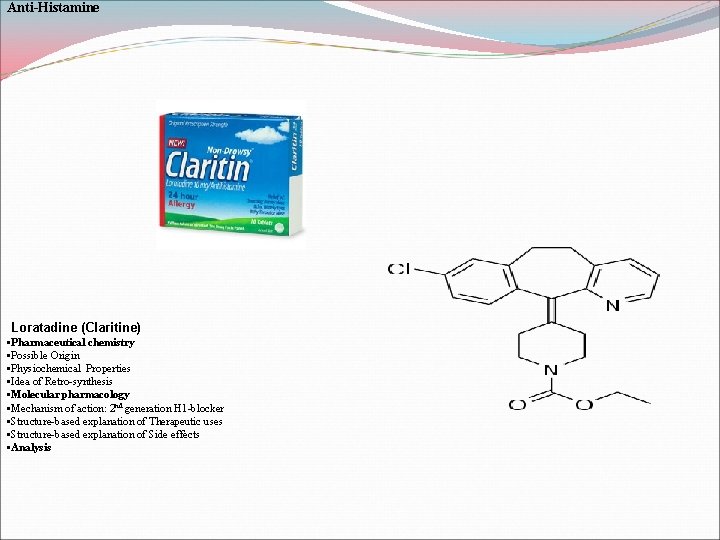
Anti-Histamine Loratadine (Claritine) • Pharmaceutical chemistry • Possible Origin • Physiochemical Properties • Idea of Retro-synthesis • Molecular pharmacology • Mechanism of action: 2 nd generation H 1 -blocker • Structure-based explanation of Therapeutic uses • Structure-based explanation of Side effects • Analysis
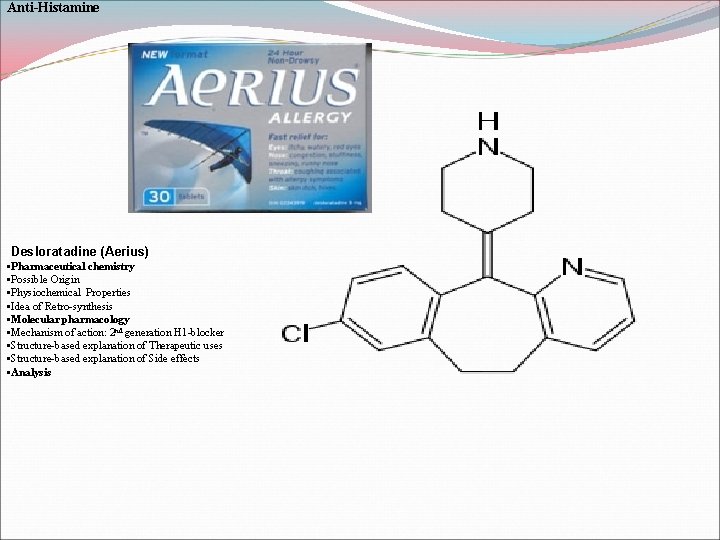
Anti-Histamine Desloratadine (Aerius) • Pharmaceutical chemistry • Possible Origin • Physiochemical Properties • Idea of Retro-synthesis • Molecular pharmacology • Mechanism of action: 2 nd generation H 1 -blocker • Structure-based explanation of Therapeutic uses • Structure-based explanation of Side effects • Analysis
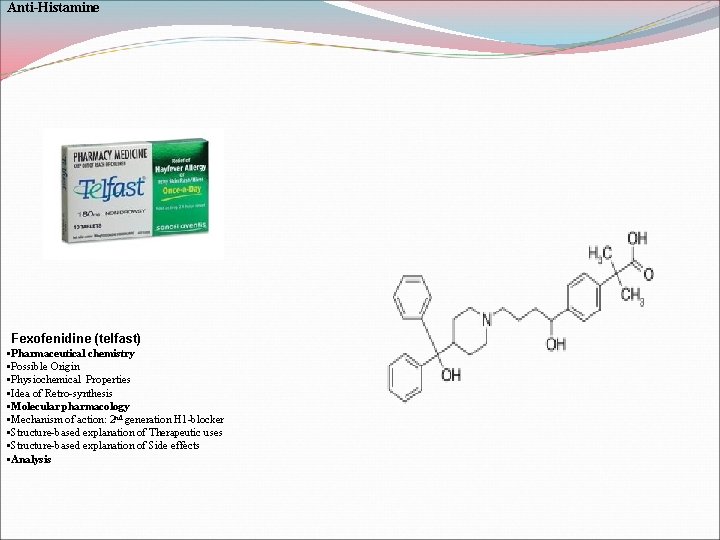
Anti-Histamine Fexofenidine (telfast) • Pharmaceutical chemistry • Possible Origin • Physiochemical Properties • Idea of Retro-synthesis • Molecular pharmacology • Mechanism of action: 2 nd generation H 1 -blocker • Structure-based explanation of Therapeutic uses • Structure-based explanation of Side effects • Analysis
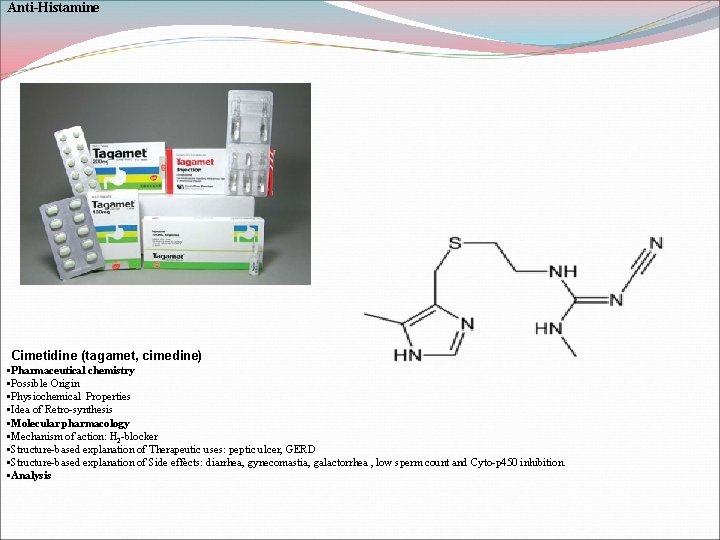
Anti-Histamine Cimetidine (tagamet, cimedine) • Pharmaceutical chemistry • Possible Origin • Physiochemical Properties • Idea of Retro-synthesis • Molecular pharmacology • Mechanism of action: H 2 -blocker • Structure-based explanation of Therapeutic uses: peptic ulcer, GERD • Structure-based explanation of Side effects: diarrhea, gynecomastia, galactorrhea , low sperm count and Cyto-p 450 inhibition. • Analysis
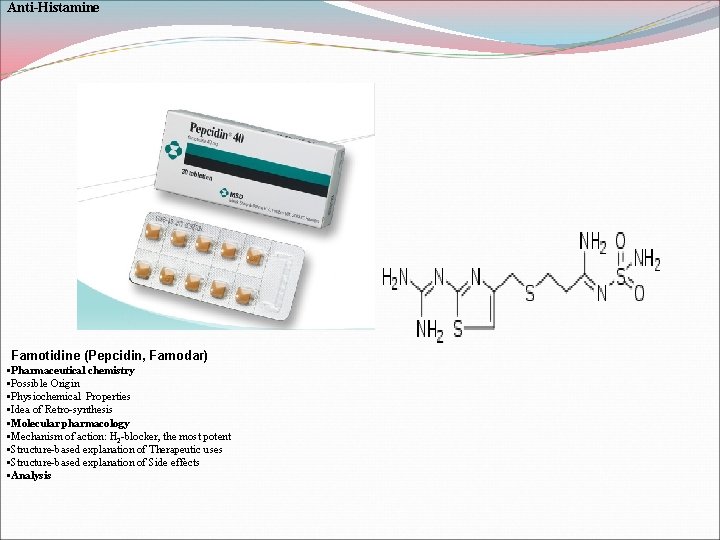
Anti-Histamine Famotidine (Pepcidin, Famodar) • Pharmaceutical chemistry • Possible Origin • Physiochemical Properties • Idea of Retro-synthesis • Molecular pharmacology • Mechanism of action: H 2 -blocker, the most potent • Structure-based explanation of Therapeutic uses • Structure-based explanation of Side effects • Analysis
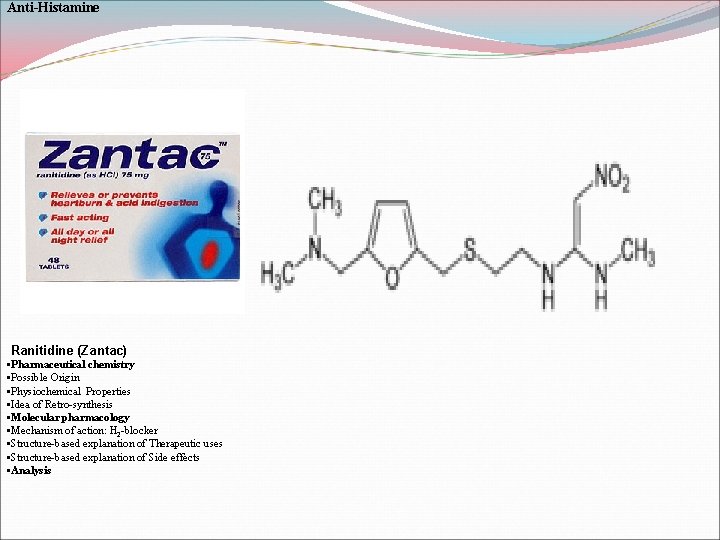
Anti-Histamine Ranitidine (Zantac) • Pharmaceutical chemistry • Possible Origin • Physiochemical Properties • Idea of Retro-synthesis • Molecular pharmacology • Mechanism of action: H 2 -blocker • Structure-based explanation of Therapeutic uses • Structure-based explanation of Side effects • Analysis
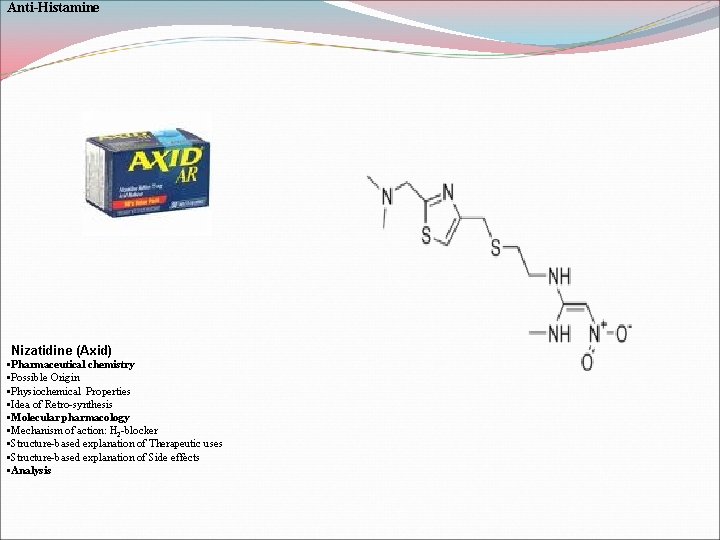
Anti-Histamine Nizatidine (Axid) • Pharmaceutical chemistry • Possible Origin • Physiochemical Properties • Idea of Retro-synthesis • Molecular pharmacology • Mechanism of action: H 2 -blocker • Structure-based explanation of Therapeutic uses • Structure-based explanation of Side effects • Analysis
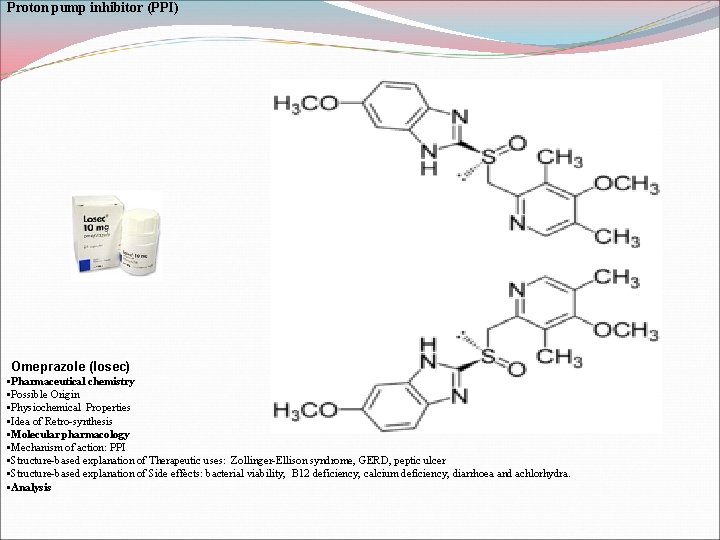
Proton pump inhibitor (PPI) Omeprazole (losec) • Pharmaceutical chemistry • Possible Origin • Physiochemical Properties • Idea of Retro-synthesis • Molecular pharmacology • Mechanism of action: PPI • Structure-based explanation of Therapeutic uses: Zollinger-Ellison syndrome, GERD, peptic ulcer • Structure-based explanation of Side effects: bacterial viability, B 12 deficiency, calcium deficiency, diarrhoea and achlorhydra. • Analysis
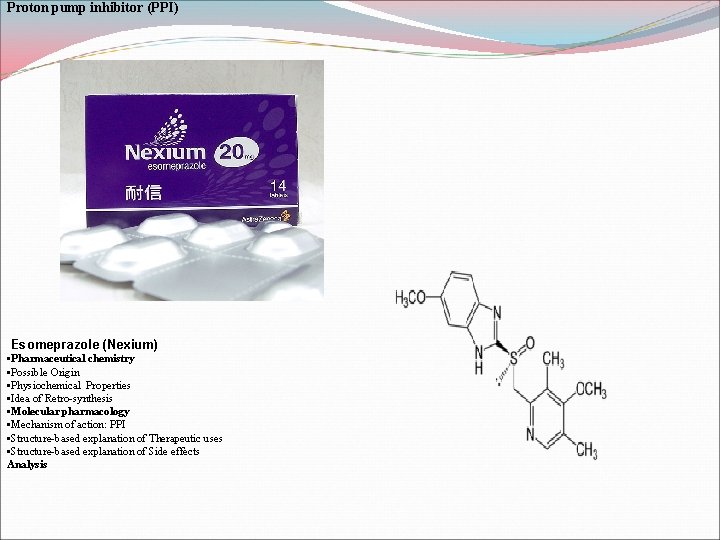
Proton pump inhibitor (PPI) Esomeprazole (Nexium) • Pharmaceutical chemistry • Possible Origin • Physiochemical Properties • Idea of Retro-synthesis • Molecular pharmacology • Mechanism of action: PPI • Structure-based explanation of Therapeutic uses • Structure-based explanation of Side effects Analysis
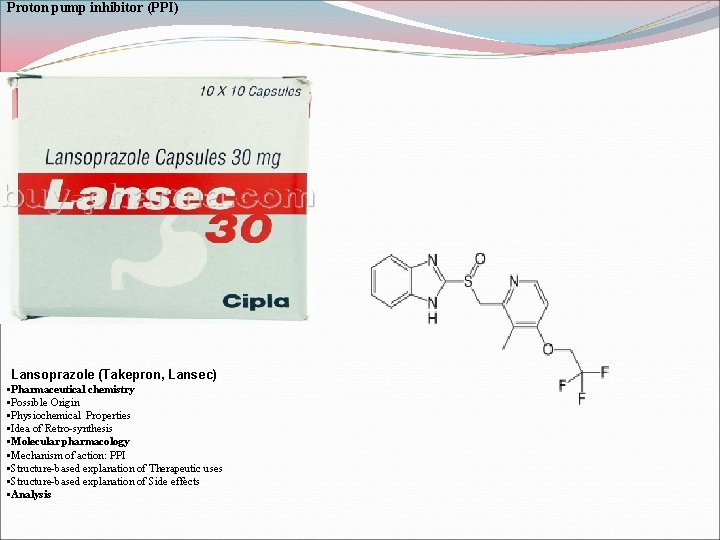
Proton pump inhibitor (PPI) Lansoprazole (Takepron, Lansec) • Pharmaceutical chemistry • Possible Origin • Physiochemical Properties • Idea of Retro-synthesis • Molecular pharmacology • Mechanism of action: PPI • Structure-based explanation of Therapeutic uses • Structure-based explanation of Side effects • Analysis
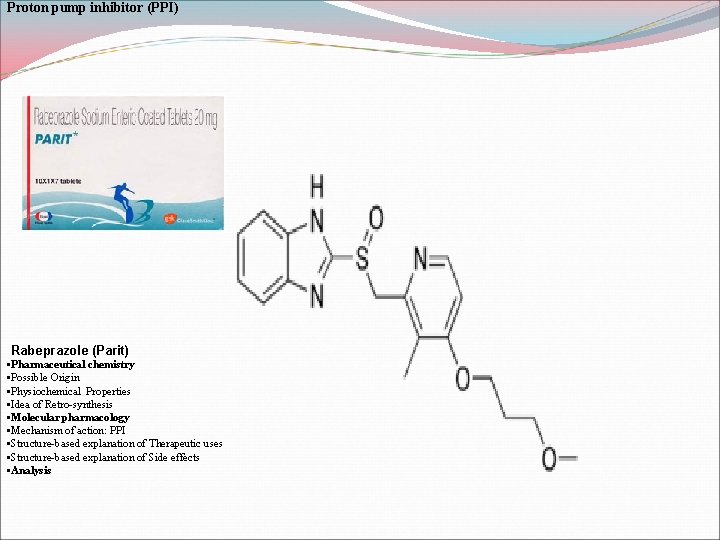
Proton pump inhibitor (PPI) Rabeprazole (Parit) • Pharmaceutical chemistry • Possible Origin • Physiochemical Properties • Idea of Retro-synthesis • Molecular pharmacology • Mechanism of action: PPI • Structure-based explanation of Therapeutic uses • Structure-based explanation of Side effects • Analysis
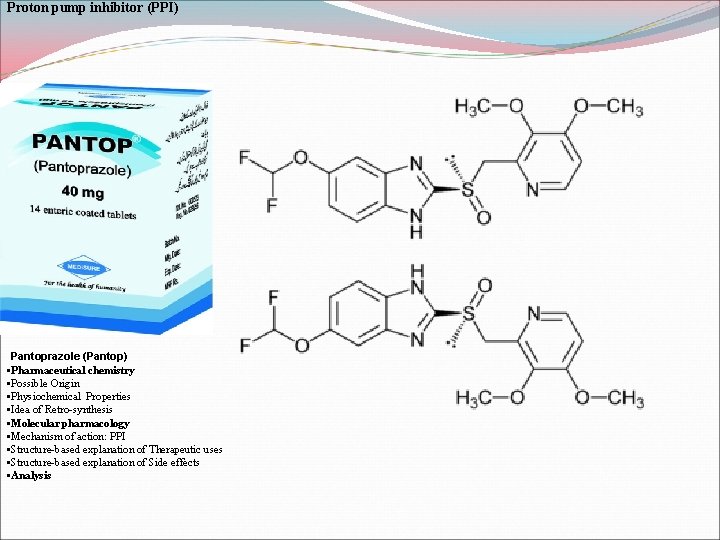
Proton pump inhibitor (PPI) Pantoprazole (Pantop) • Pharmaceutical chemistry • Possible Origin • Physiochemical Properties • Idea of Retro-synthesis • Molecular pharmacology • Mechanism of action: PPI • Structure-based explanation of Therapeutic uses • Structure-based explanation of Side effects • Analysis
- Slides: 24