
INTRODUCTION Nature and Scope of Managerial Economics Chapter
- Slides: 16
INTRODUCTION Nature and Scope of Managerial Economics (Chapter 1 Hirschey)
NATURE AND SCOPE OF MANAGERIAL ECONOMICS Definition of Managerial Economics • Application of economic tools and techniques to business and administrative decision-making; another term for the title of this course, namely economic analysis for agribusiness and management. • Helps decision-makers recognize how economic forces affect organizations and describes the economic consequences of managerial behavior. How? By linking economic concepts and quantitative methods to develop tools for managerial decisionmaking. • Simply put, managerial economics uses economic concepts and quantitative methods to solve managerial problems. • We place emphasis on the practical application of economic analysis to managerial decision problems; the primary virtue of managerial economics lies in its usefulness.
ECONOMIC CONCEPTS Economic concepts: influence which products to produce, which costs to consider, and the prices to charge; necessitates the collection, organization, and analysis of information. Emphasis is placed on microeconomic topics, although macroeconomic relations have implications for managerial decision-making as well.
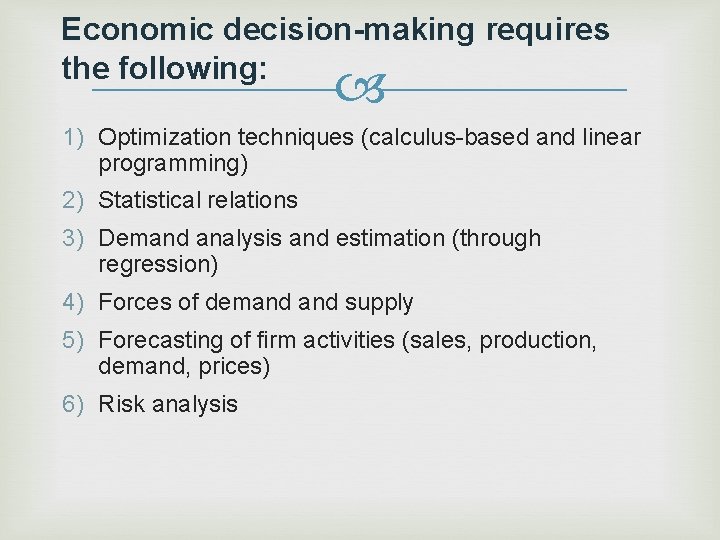
Economic decision-making requires the following: 1) Optimization techniques (calculus-based and linear programming) 2) Statistical relations 3) Demand analysis and estimation (through regression) 4) Forces of demand supply 5) Forecasting of firm activities (sales, production, demand, prices) 6) Risk analysis
FIRMS Firms are useful for producing and distributing goods and services Motivation for firms: profit maximization or expected value maximization; free enterprise depends upon profits and the profit motive Expected value of maximization: optimization of profits in light of uncertainty and time value of money.
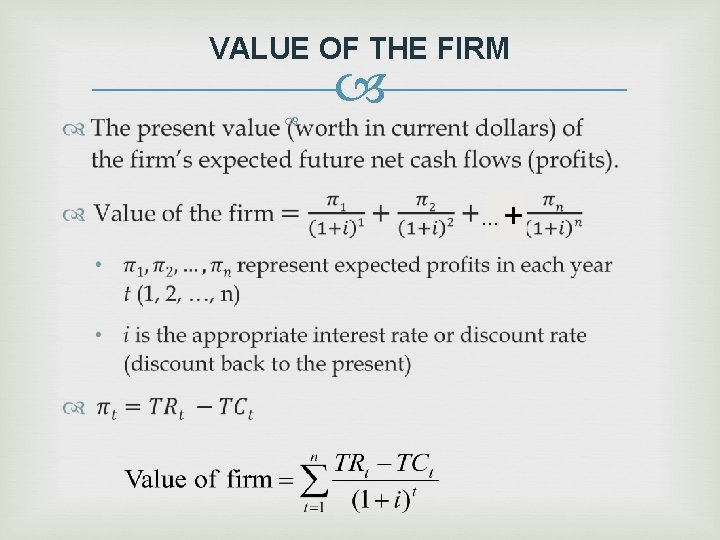
VALUE OF THE FIRM … +
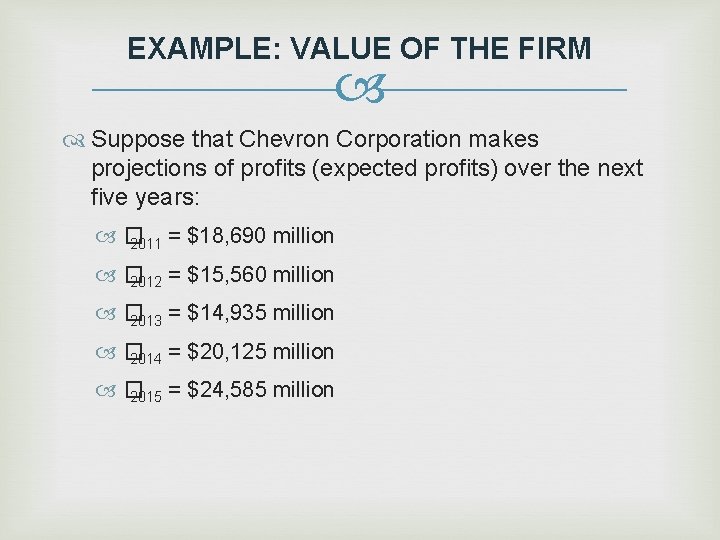
EXAMPLE: VALUE OF THE FIRM Suppose that Chevron Corporation makes projections of profits (expected profits) over the next five years: � 2011 = $18, 690 million � 2012 = $15, 560 million � 2013 = $14, 935 million � 2014 = $20, 125 million � 2015 = $24, 585 million
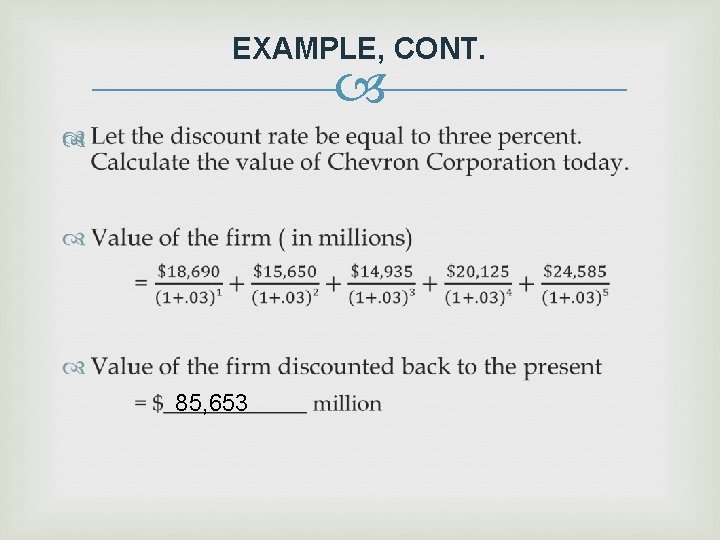
EXAMPLE, CONT. 85, 653
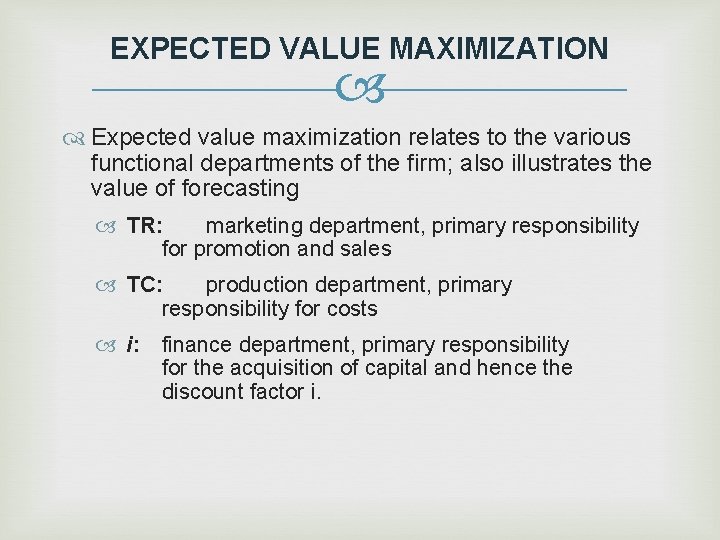
EXPECTED VALUE MAXIMIZATION Expected value maximization relates to the various functional departments of the firm; also illustrates the value of forecasting TR: marketing department, primary responsibility for promotion and sales TC: production department, primary responsibility for costs i: finance department, primary responsibility for the acquisition of capital and hence the discount factor i.
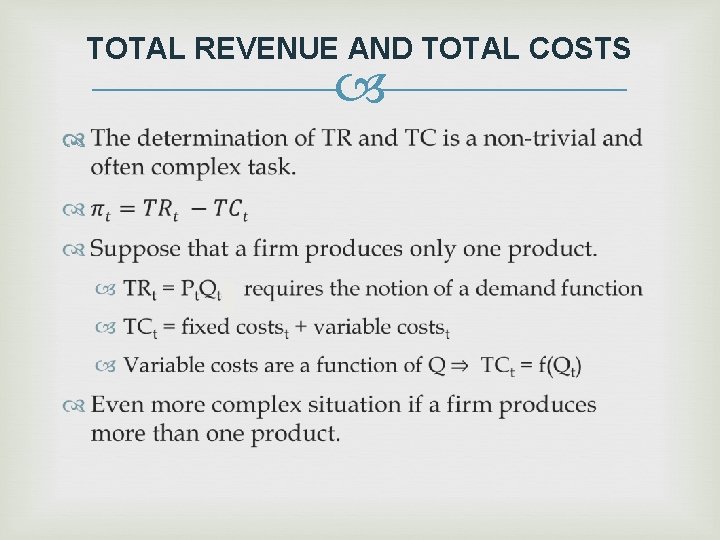
TOTAL REVENUE AND TOTAL COSTS
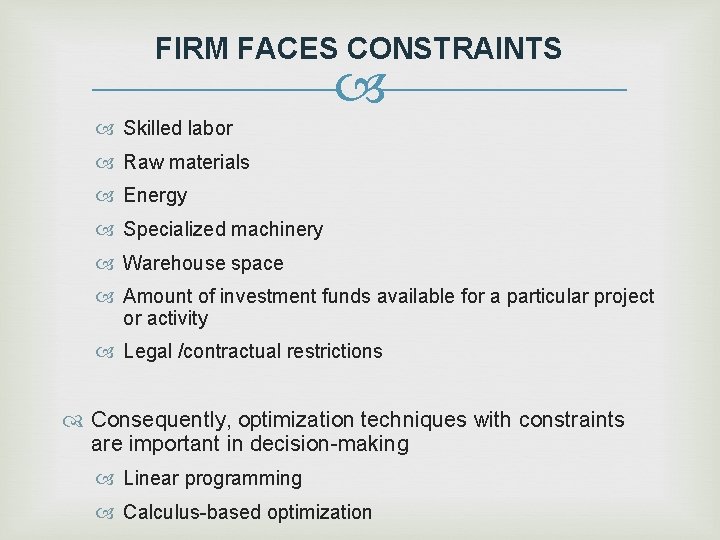
FIRM FACES CONSTRAINTS Skilled labor Raw materials Energy Specialized machinery Warehouse space Amount of investment funds available for a particular project or activity Legal /contractual restrictions Consequently, optimization techniques with constraints are important in decision-making Linear programming Calculus-based optimization
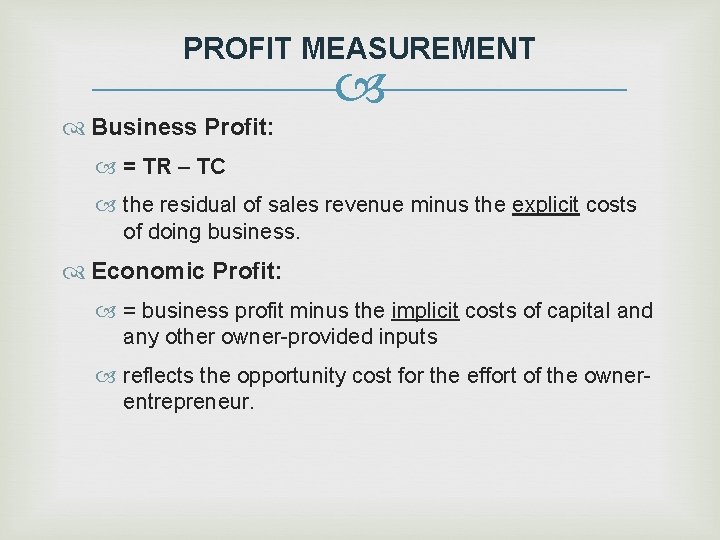
PROFIT MEASUREMENT Business Profit: = TR – TC the residual of sales revenue minus the explicit costs of doing business. Economic Profit: = business profit minus the implicit costs of capital and any other owner-provided inputs reflects the opportunity cost for the effort of the ownerentrepreneur.
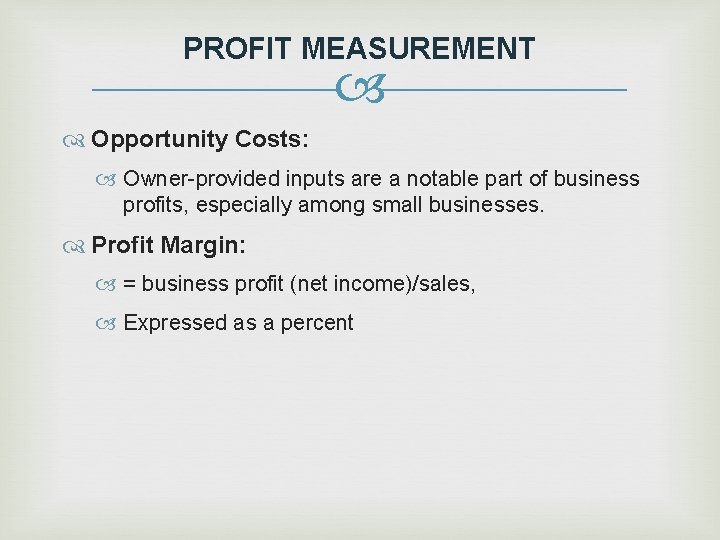
PROFIT MEASUREMENT Opportunity Costs: Owner-provided inputs are a notable part of business profits, especially among small businesses. Profit Margin: = business profit (net income)/sales, Expressed as a percent
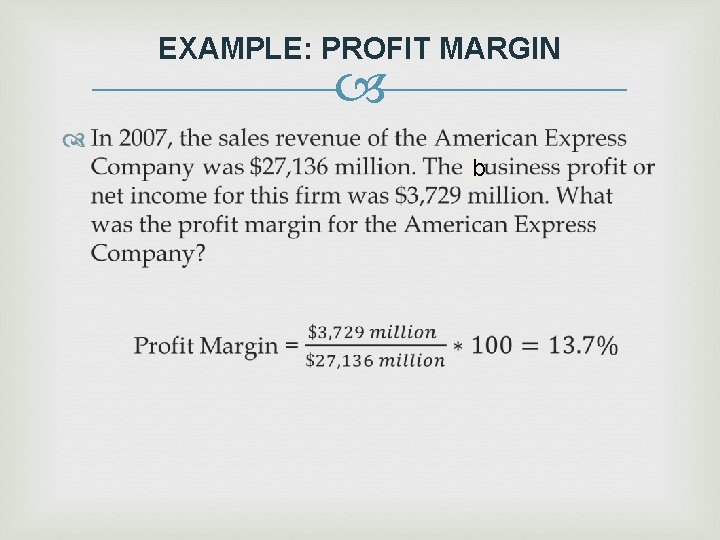
EXAMPLE: PROFIT MARGIN b
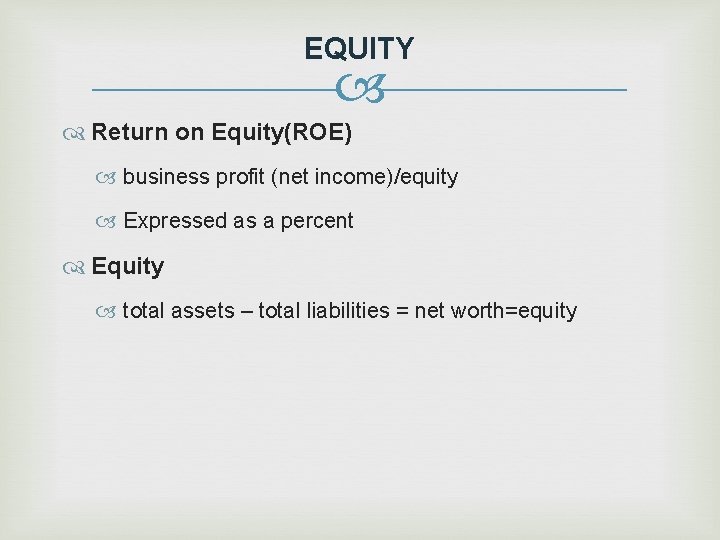
EQUITY Return on Equity(ROE) business profit (net income)/equity Expressed as a percent Equity total assets – total liabilities = net worth=equity
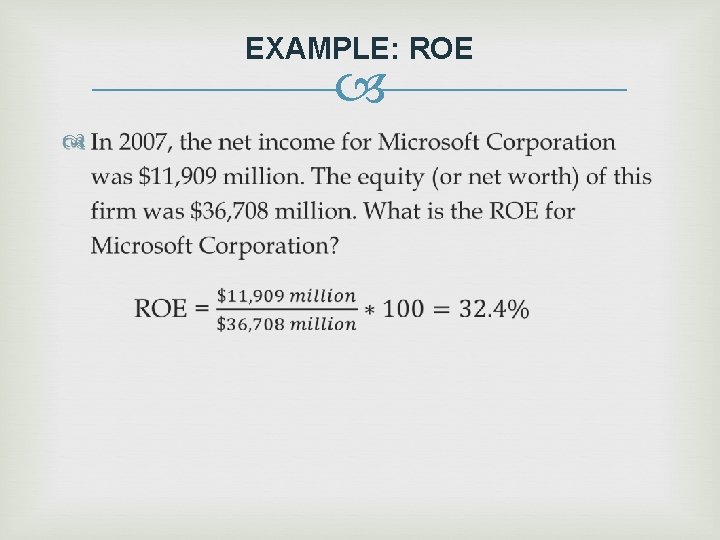
EXAMPLE: ROE