
Introduction MissionOrganization of the Fire Service SalvageOverhaul Module
- Slides: 38
Introduction Mission/Organization of the Fire Service Salvage/Overhaul Module 9
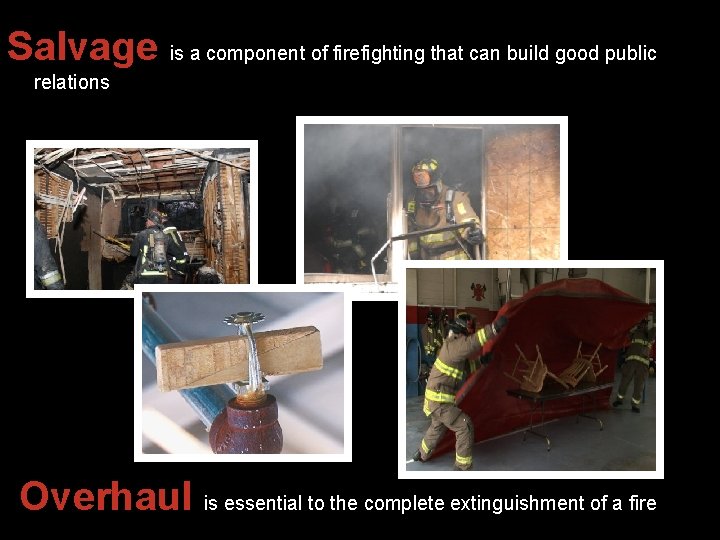
Salvage is a component of firefighting that can build good public relations Overhaul is essential to the complete extinguishment of a fire 2
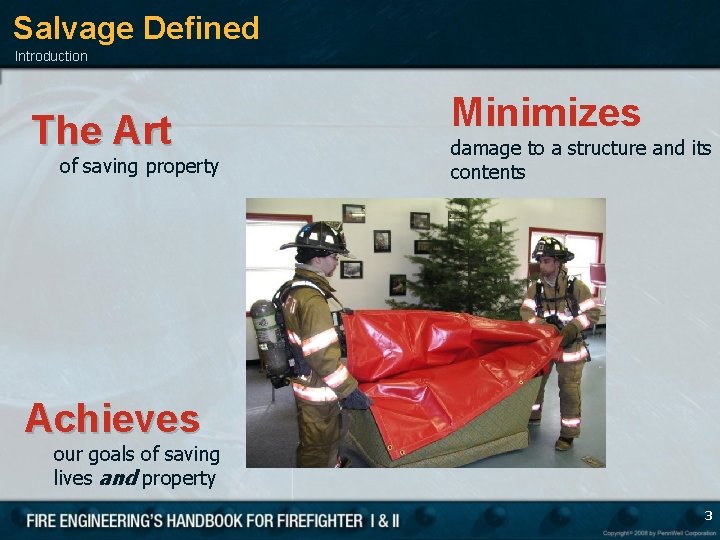
Salvage Defined Introduction The Art of saving property Minimizes damage to a structure and its contents Achieves our goals of saving lives and property 3
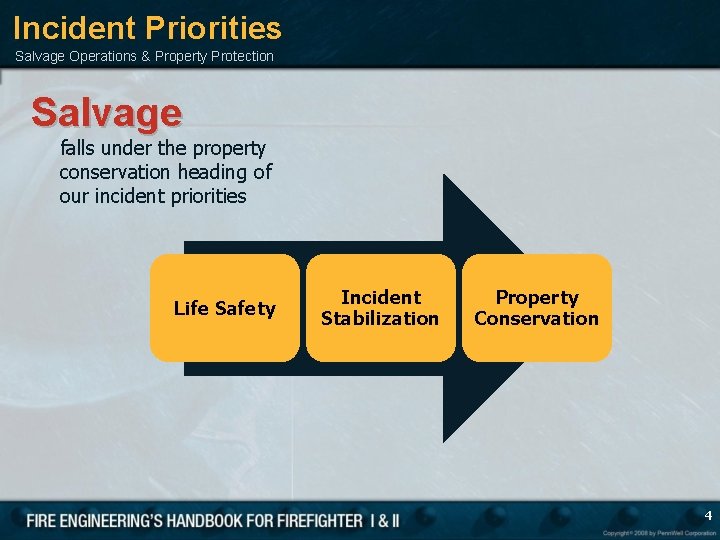
Incident Priorities Salvage Operations & Property Protection Salvage falls under the property conservation heading of our incident priorities Life Safety Incident Stabilization Property Conservation 4
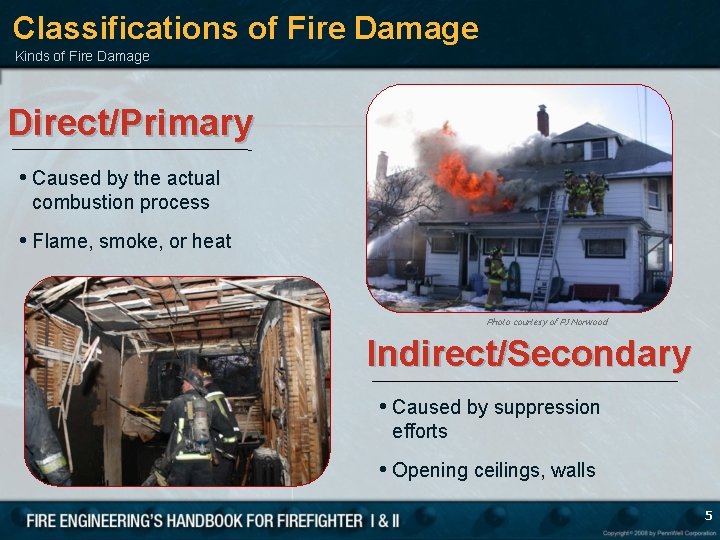
Classifications of Fire Damage Kinds of Fire Damage Direct/Primary • Caused by the actual combustion process • Flame, smoke, or heat Photo courtesy of PJ Norwood Indirect/Secondary • Caused by suppression efforts • Opening ceilings, walls 5
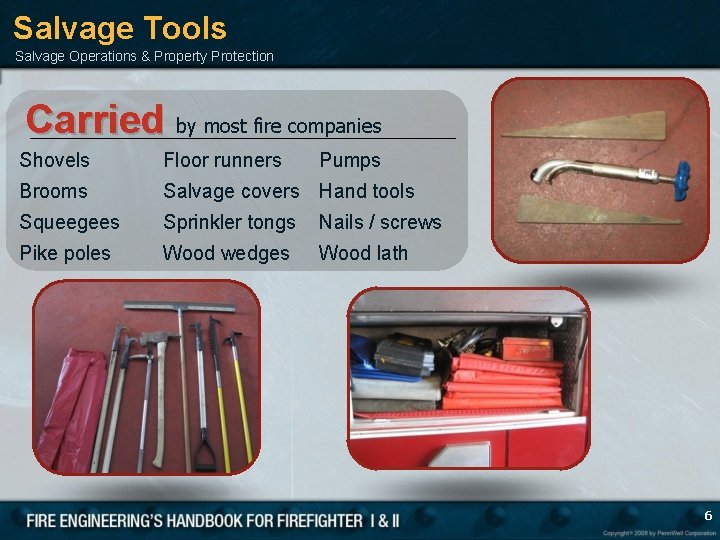
Salvage Tools Salvage Operations & Property Protection Carried by most fire companies Shovels Floor runners Pumps Brooms Salvage covers Hand tools Squeegees Sprinkler tongs Nails / screws Pike poles Wood wedges Wood lath 6
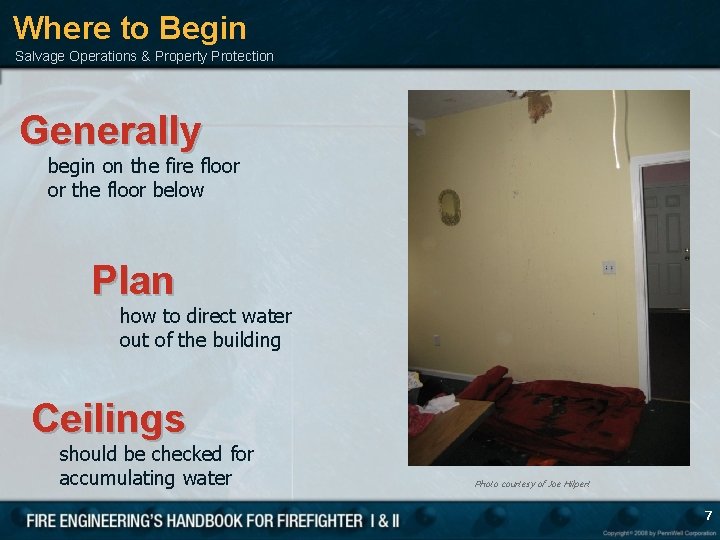
Where to Begin Salvage Operations & Property Protection Generally begin on the fire floor or the floor below Plan how to direct water out of the building Ceilings should be checked for accumulating water Photo courtesy of Joe Hilpert 7
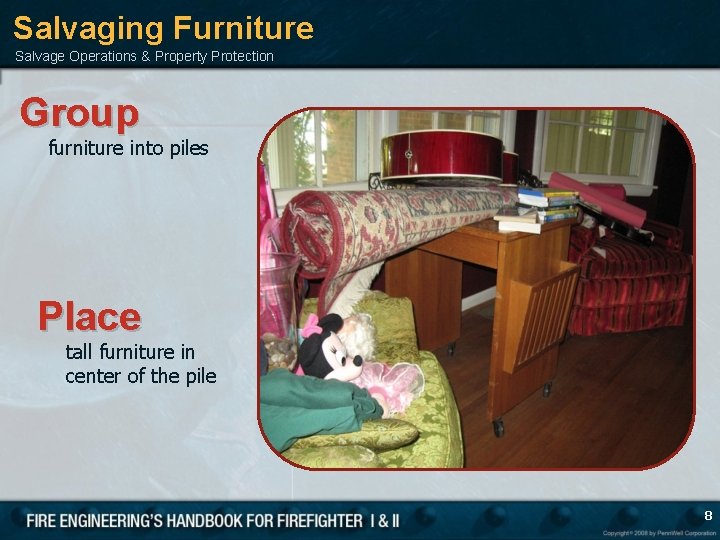
Salvaging Furniture Salvage Operations & Property Protection Group furniture into piles Place tall furniture in center of the pile 8
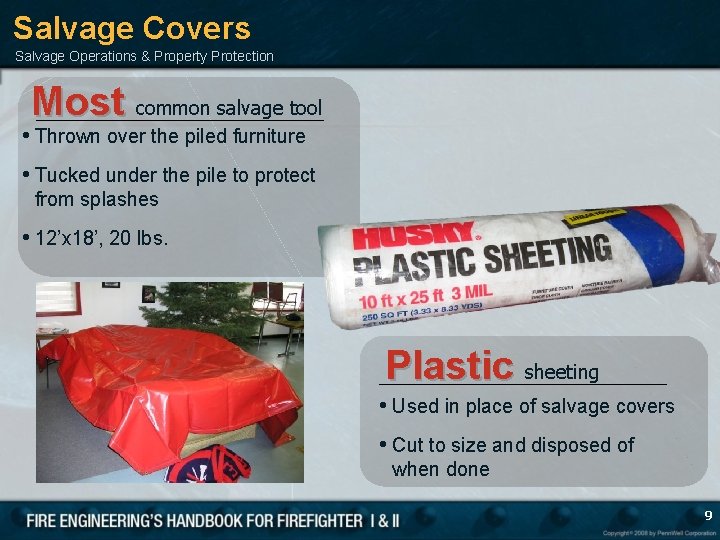
Salvage Covers Salvage Operations & Property Protection Most common salvage tool • Thrown over the piled furniture • Tucked under the pile to protect from splashes • 12’x 18’, 20 lbs. Plastic sheeting • Used in place of salvage covers • Cut to size and disposed of when done 9
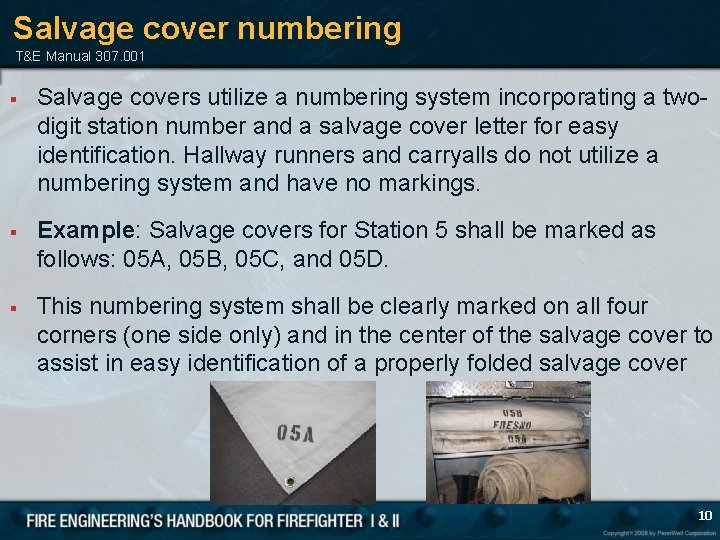
Salvage cover numbering T&E Manual 307. 001 § Salvage covers utilize a numbering system incorporating a twodigit station number and a salvage cover letter for easy identification. Hallway runners and carryalls do not utilize a numbering system and have no markings. § Example: Salvage covers for Station 5 shall be marked as follows: 05 A, 05 B, 05 C, and 05 D. § This numbering system shall be clearly marked on all four corners (one side only) and in the center of the salvage cover to assist in easy identification of a properly folded salvage cover 10
Inventory T&E Manual 307. 001 § All stations shall be issued salvage covers based on the number and type of apparatus assigned to the station. The following salvage cover station inventory shall be used: § Two per fire engine assigned to the station (front line and reserve) § Five per fire truck assigned to the station (front line and reserve) § Two additional for each front-line engine assigned to the station § Five additional for each front-line truck assigned to the station 11
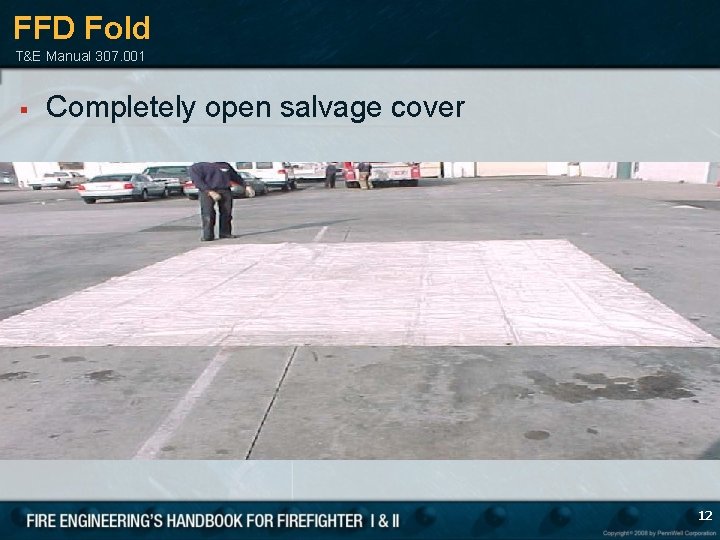
FFD Fold T&E Manual 307. 001 § Completely open salvage cover 12
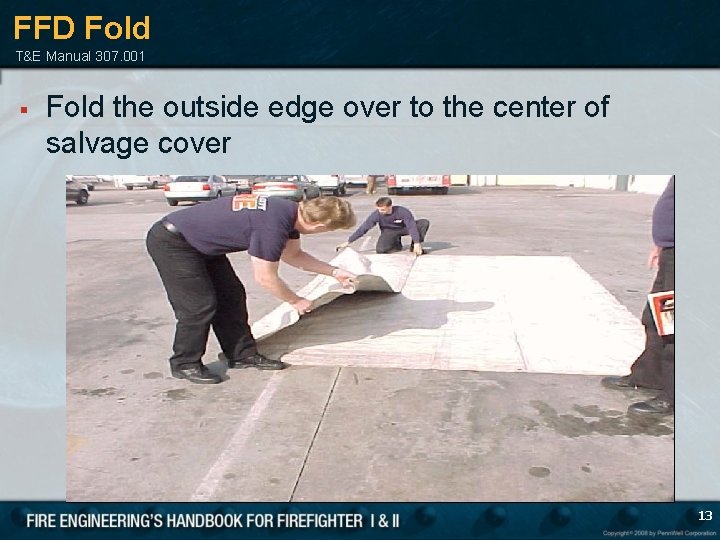
FFD Fold T&E Manual 307. 001 § Fold the outside edge over to the center of salvage cover 13
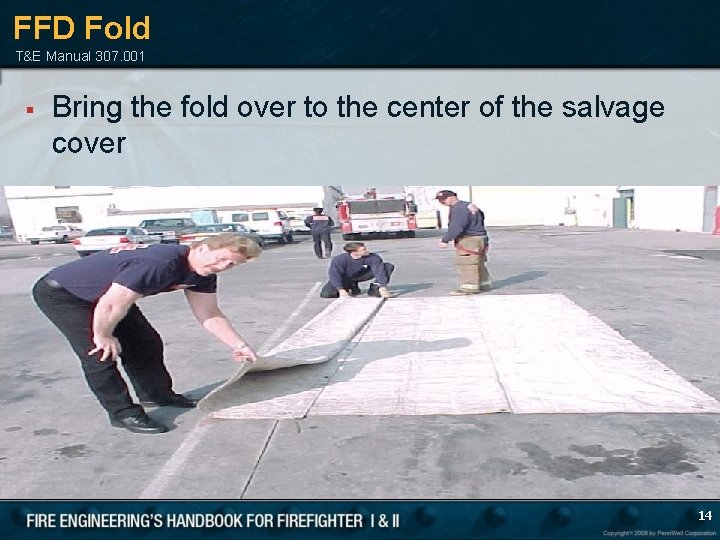
FFD Fold T&E Manual 307. 001 § Bring the fold over to the center of the salvage cover 14
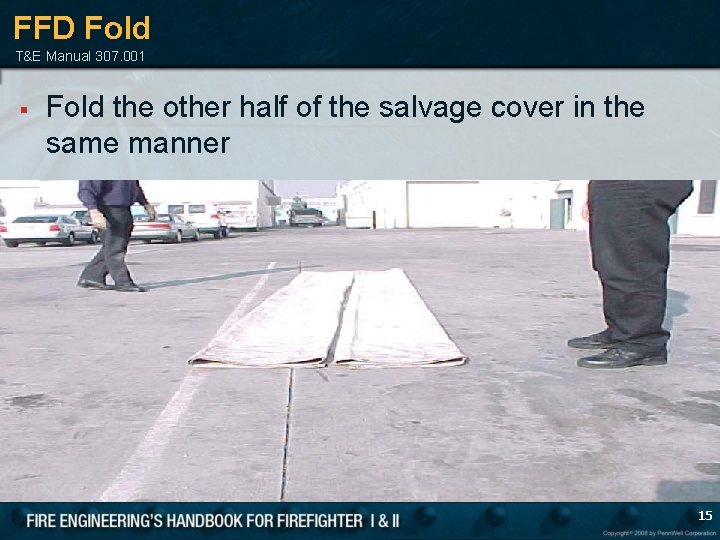
FFD Fold T&E Manual 307. 001 § Fold the other half of the salvage cover in the same manner 15
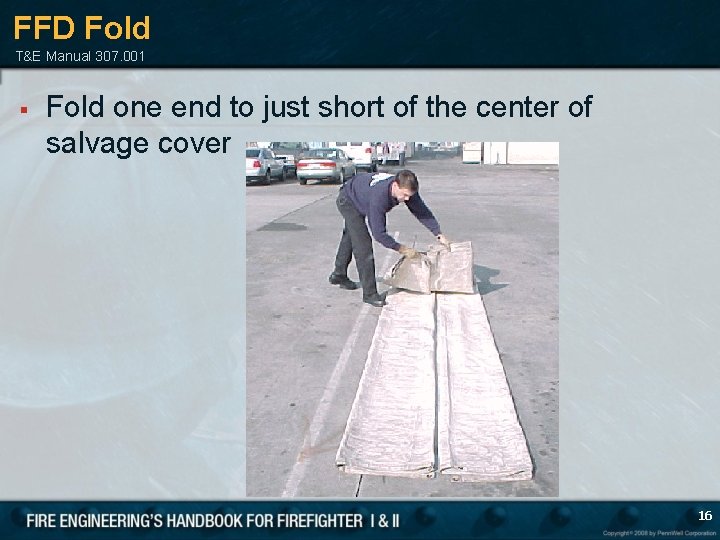
FFD Fold T&E Manual 307. 001 § Fold one end to just short of the center of salvage cover 16
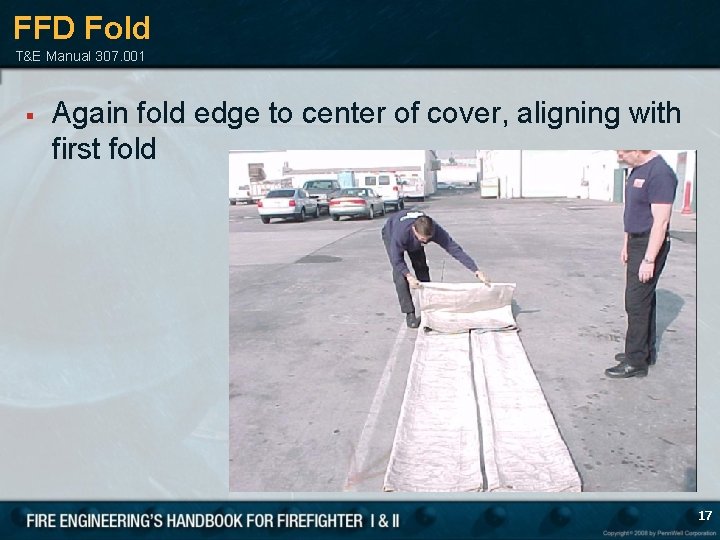
FFD Fold T&E Manual 307. 001 § Again fold edge to center of cover, aligning with first fold 17
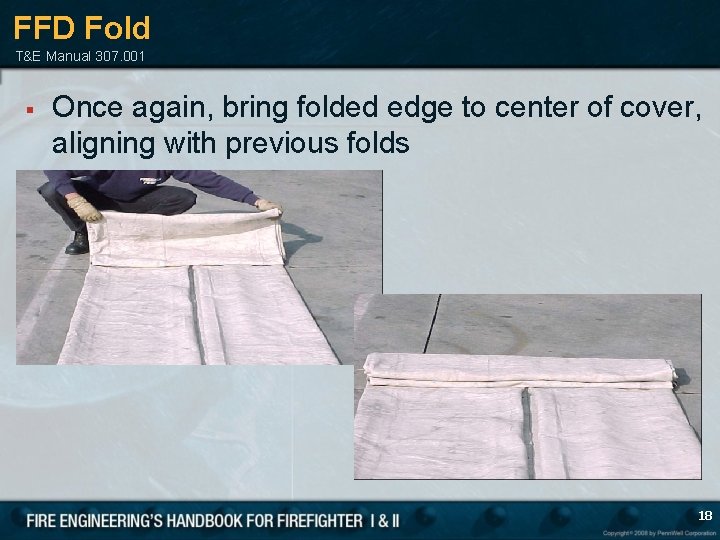
FFD Fold T&E Manual 307. 001 § Once again, bring folded edge to center of cover, aligning with previous folds 18
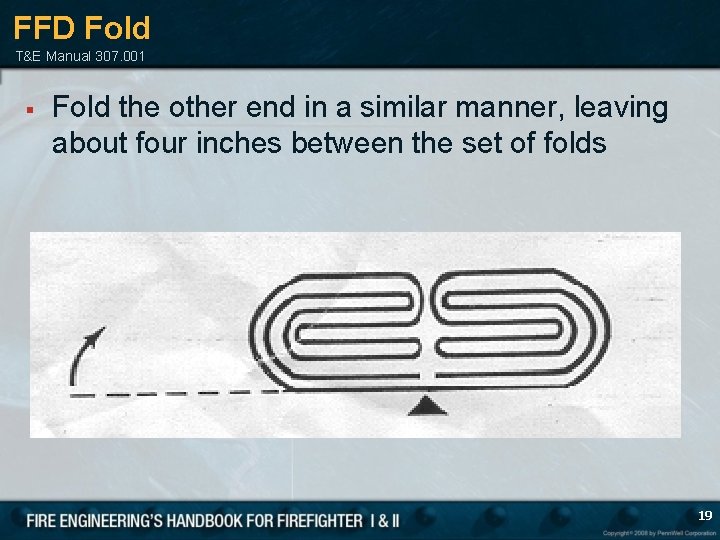
FFD Fold T&E Manual 307. 001 § Fold the other end in a similar manner, leaving about four inches between the set of folds 19
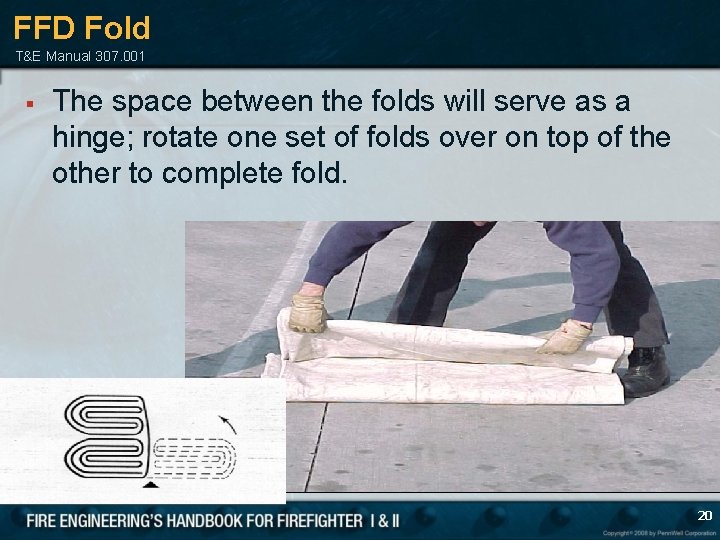
FFD Fold T&E Manual 307. 001 § The space between the folds will serve as a hinge; rotate one set of folds over on top of the other to complete fold. 20
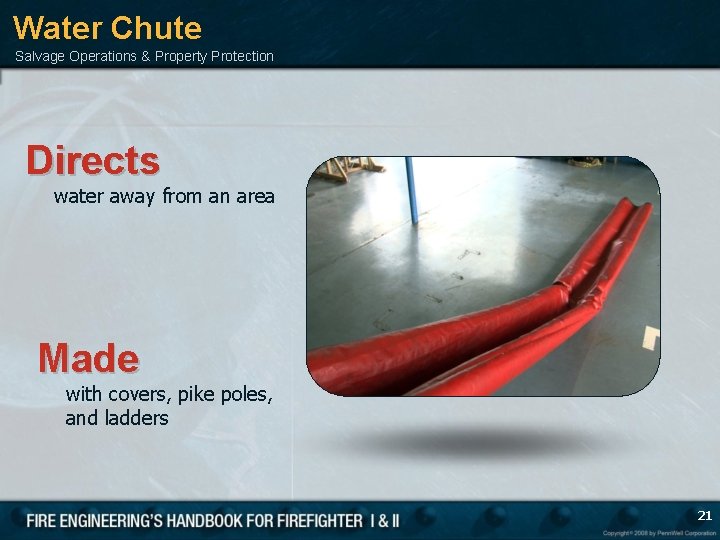
Water Chute Salvage Operations & Property Protection Directs water away from an area Made with covers, pike poles, and ladders 21
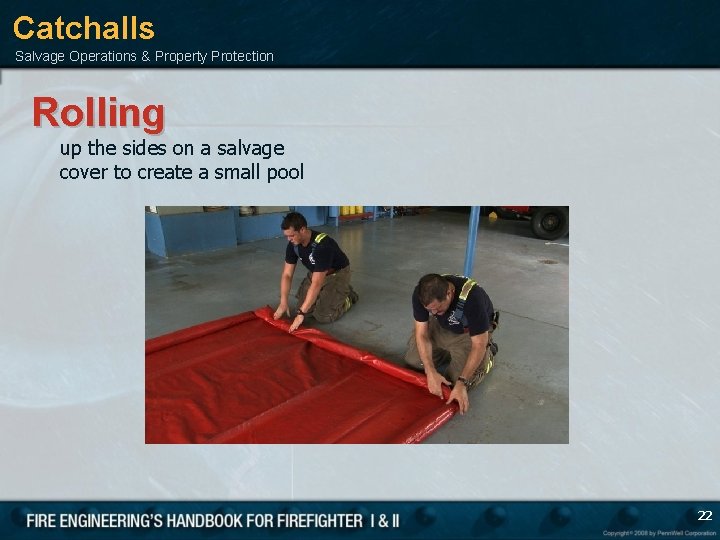
Catchalls Salvage Operations & Property Protection Rolling up the sides on a salvage cover to create a small pool 22
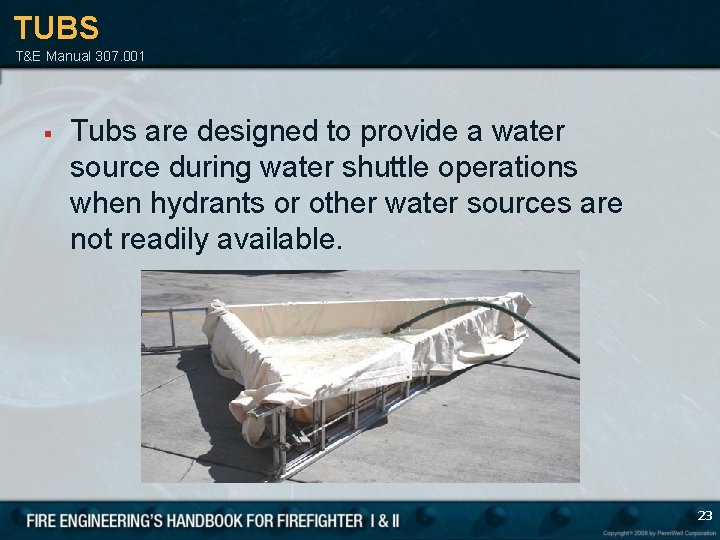
TUBS T&E Manual 307. 001 § Tubs are designed to provide a water source during water shuttle operations when hydrants or other water sources are not readily available. 23
Waterproof folds T&E Manual 307. 001 § Waterproof folds are often needed to connect two hallway runners or salvage covers together when protecting property from water damage. § The waterproof fold begins by folding the end of the first cover 18 inches back on itself. A second cover is then laid on top of and even with the end of the first fold. § The two covers are then folded nine inches back towards the second cover and then folded nine inches again in, the same direction, forming a waterproof fold. 24
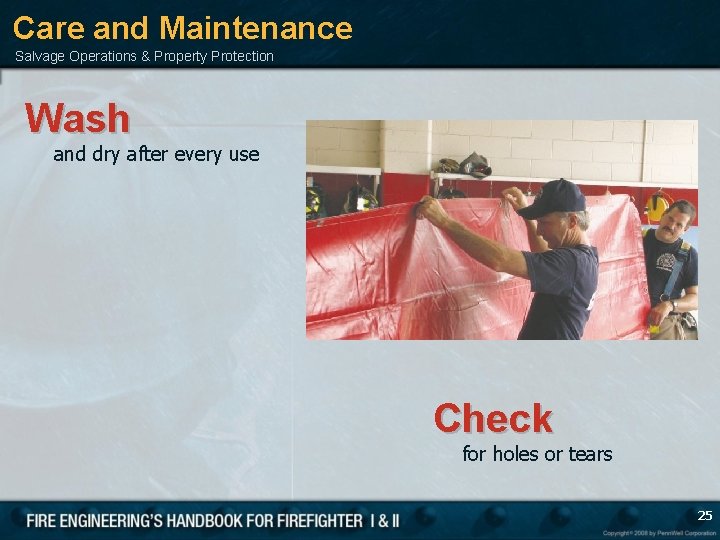
Care and Maintenance Salvage Operations & Property Protection Wash and dry after every use Check for holes or tears 25
Care and Maintenance T&E Manual 307. 001 § Hallway runners, carryalls, and salvage covers shall be used at emergency incidents and shall be thoroughly examined, checked for damage, washed, and hung to dry within 24 hours of use. § Note: To inspect for holes, hold them up to the light and look for light rays penetrating on the shadow side. Once clean and dry, circle any holes with chalk and route to the shop using a wired repair tag (FD-37). 26
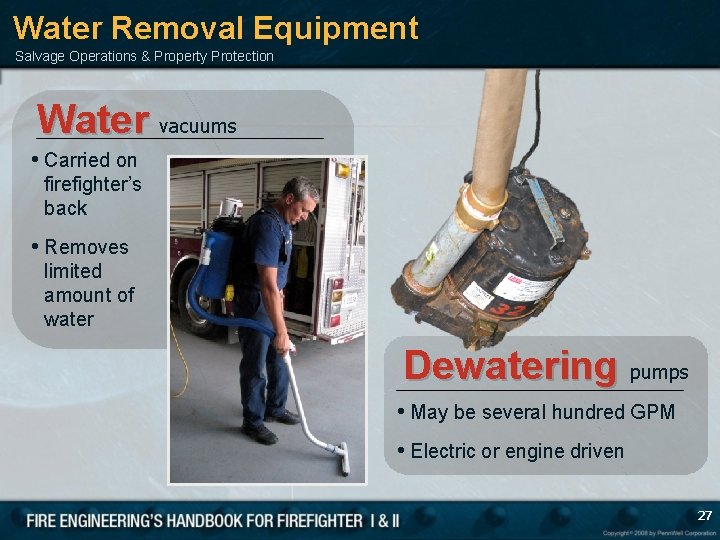
Water Removal Equipment Salvage Operations & Property Protection Water vacuums • Carried on firefighter’s back • Removes limited amount of water Dewatering pumps • May be several hundred GPM • Electric or engine driven 27
Salvage Master T&E Manual 307. 003 § The “Salvage Master” backpack-style, wet vacuum (Figure 1) is carried on all truck companies. It is designed for fast, efficient removal of water and ashes from all types of floors, carpets, and confined spaces. § The capacity of the “Salvage Master” is approximately six gallons of water. § While this unit is not a water pump, it will fill to capacity in approximately 17 seconds and empty in approximately 9 seconds from a straight draft. 28
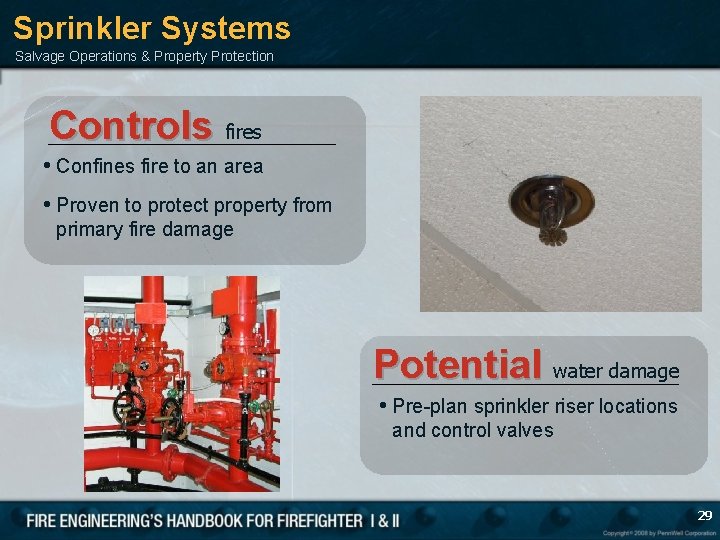
Sprinkler Systems Salvage Operations & Property Protection Controls fires • Confines fire to an area • Proven to protect property from primary fire damage Potential water damage • Pre-plan sprinkler riser locations and control valves 29
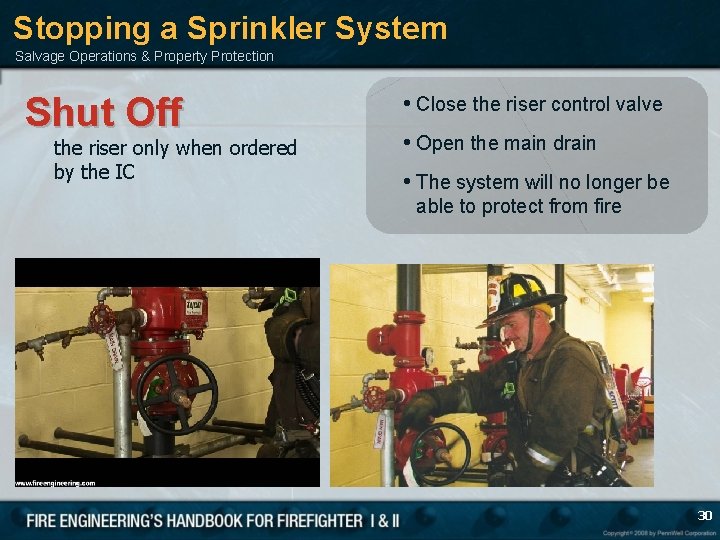
Stopping a Sprinkler System Salvage Operations & Property Protection Shut Off the riser only when ordered by the IC • Close the riser control valve • Open the main drain • The system will no longer be able to protect from fire 30
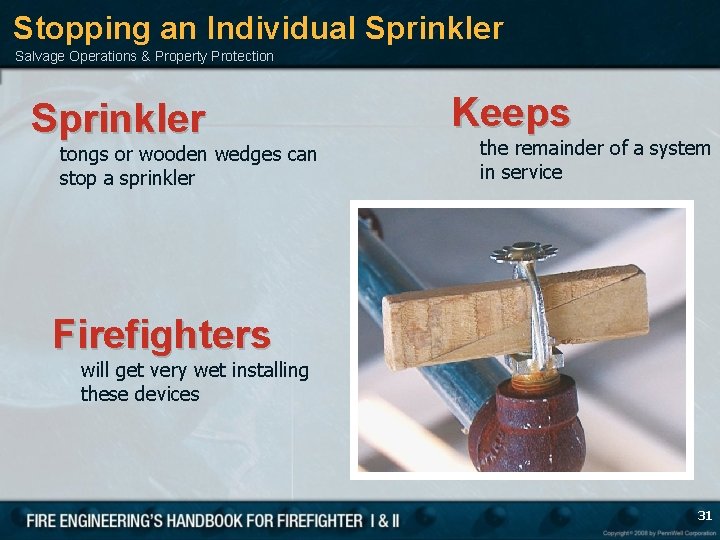
Stopping an Individual Sprinkler Salvage Operations & Property Protection Sprinkler tongs or wooden wedges can stop a sprinkler Keeps the remainder of a system in service Firefighters will get very wet installing these devices 31
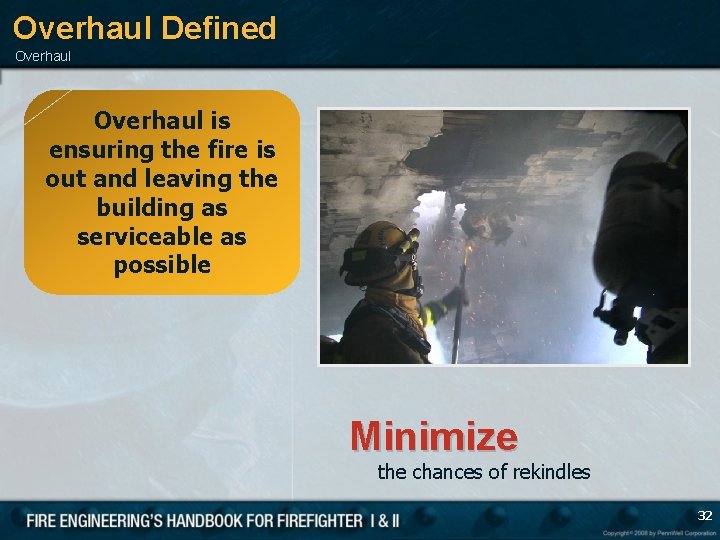
Overhaul Defined Overhaul is ensuring the fire is out and leaving the building as serviceable as possible Minimize the chances of rekindles 32
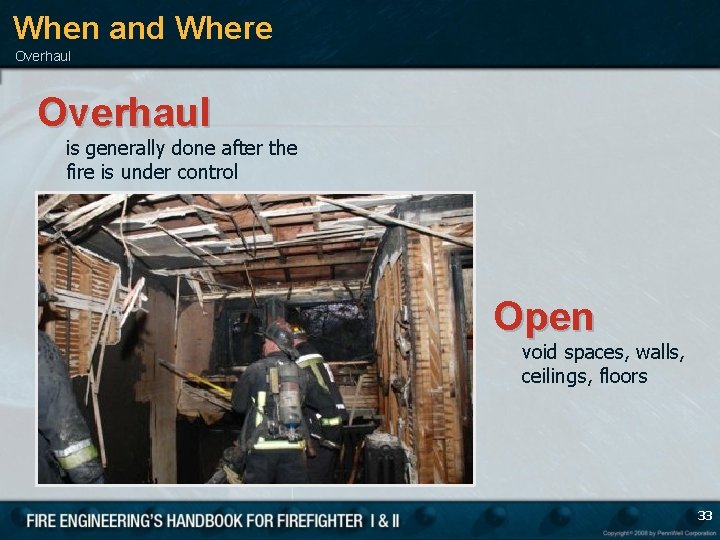
When and Where Overhaul is generally done after the fire is under control Open void spaces, walls, ceilings, floors 33
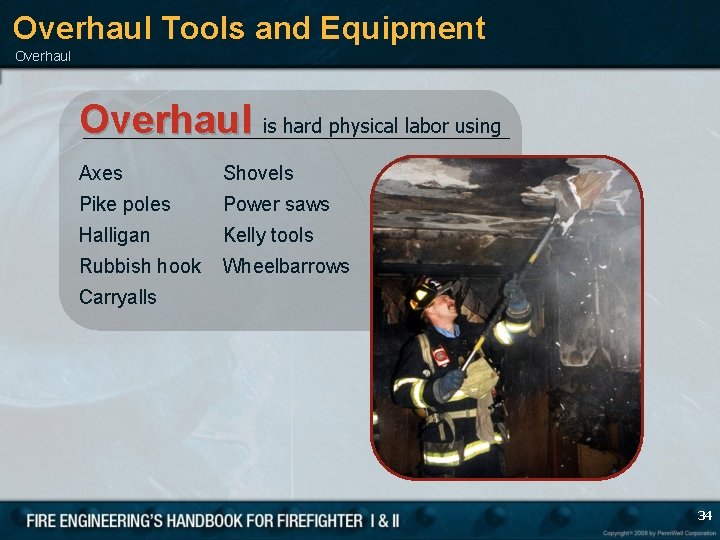
Overhaul Tools and Equipment Overhaul is hard physical labor using Axes Shovels Pike poles Power saws Halligan Kelly tools Rubbish hook Wheelbarrows Carryalls 34
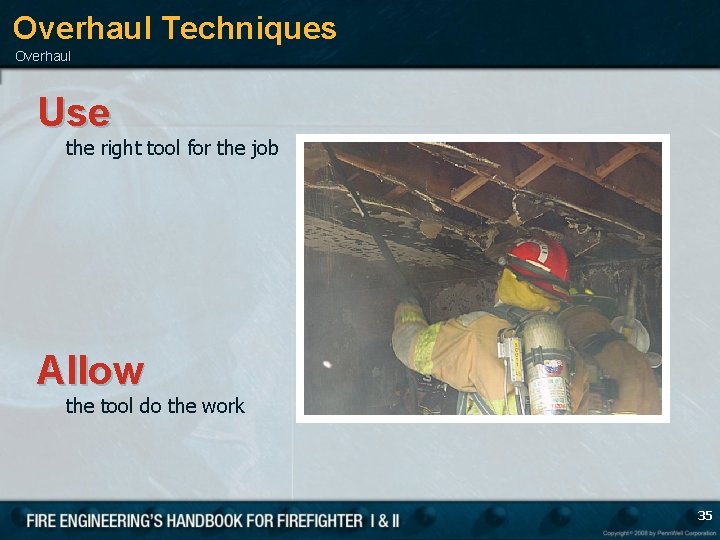
Overhaul Techniques Overhaul Use the right tool for the job Allow the tool do the work 35
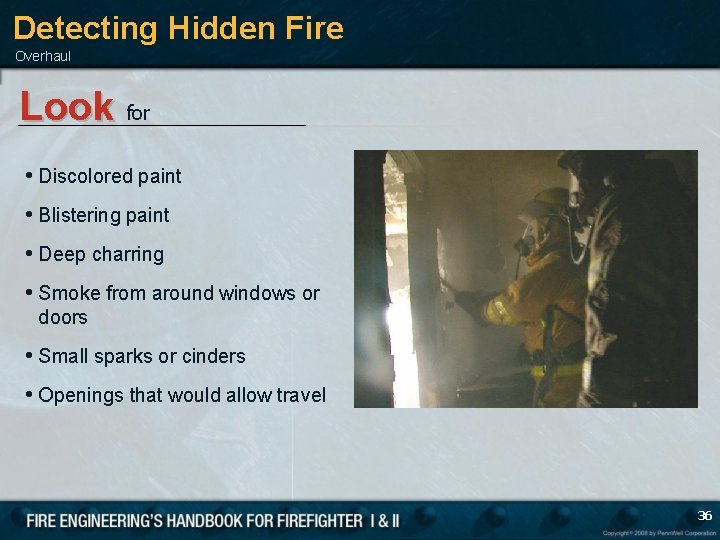
Detecting Hidden Fire Overhaul Look for • Discolored paint • Blistering paint • Deep charring • Smoke from around windows or doors • Small sparks or cinders • Openings that would allow travel 36
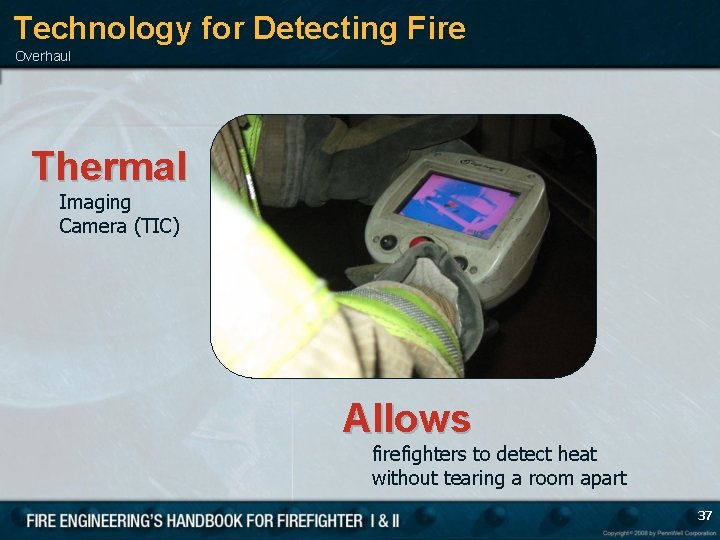
Technology for Detecting Fire Overhaul Thermal Imaging Camera (TIC) Allows firefighters to detect heat without tearing a room apart 37
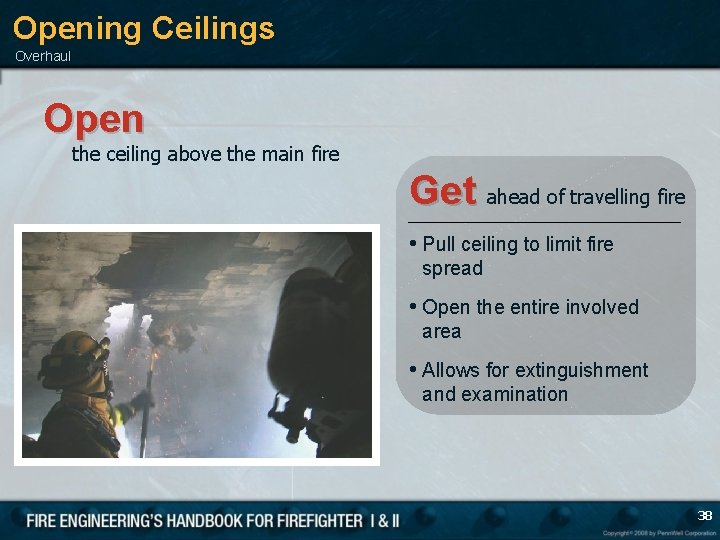
Opening Ceilings Overhaul Open the ceiling above the main fire Get ahead of travelling fire • Pull ceiling to limit fire spread • Open the entire involved area • Allows for extinguishment and examination 38