
Introduction into the Solar Channels Description of characteristics
- Slides: 27
Introduction into the Solar Channels Description of characteristics and content of the channels: Ch 01: 0. 6 Ch 02: 0. 8 Ch 03: 1. 6 Contact person: Veronika Zwatz-Meise zwatz-meise@zamg. ac. at Version 1. 0. 13 July 2004 1
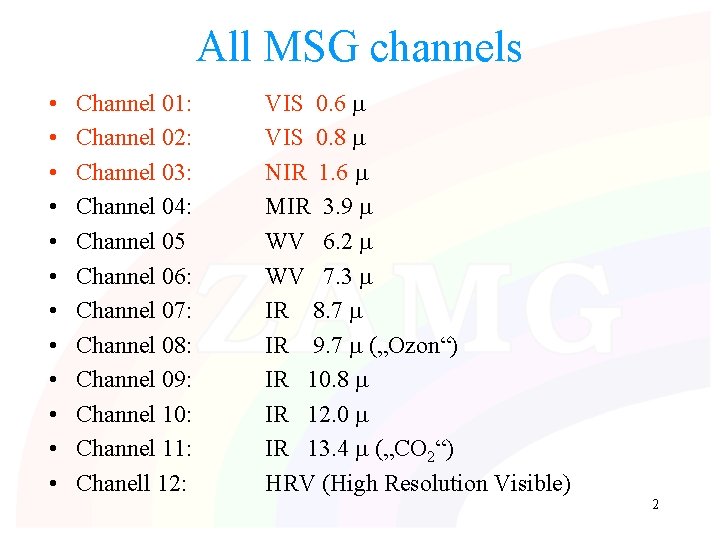
All MSG channels • • • Channel 01: Channel 02: Channel 03: Channel 04: Channel 05 Channel 06: Channel 07: Channel 08: Channel 09: Channel 10: Channel 11: Chanell 12: VIS 0. 6 VIS 0. 8 NIR 1. 6 MIR 3. 9 WV 6. 2 WV 7. 3 IR 8. 7 IR 9. 7 („Ozon“) IR 10. 8 IR 12. 0 IR 13. 4 („CO 2“) HRV (High Resolution Visible) 2
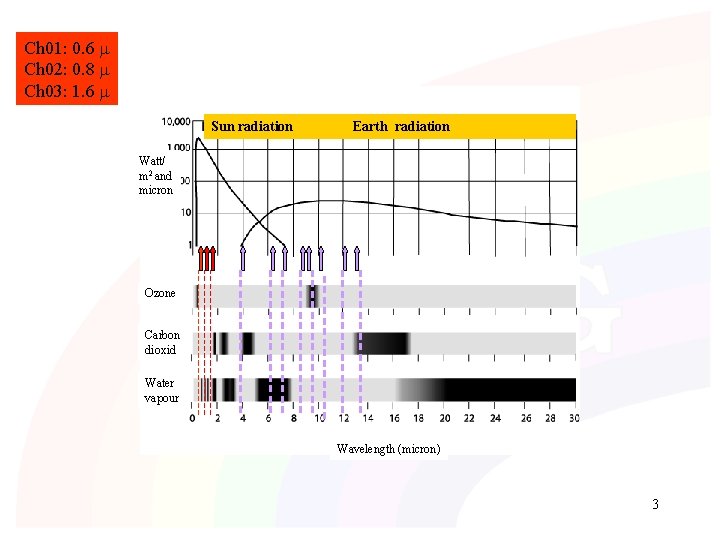
Ch 01: 0. 6 Ch 02: 0. 8 Ch 03: 1. 6 Sun radiation Earth radiation Watt/ m 2 and micron Ozone Carbon dioxid Water vapour Wavelength (micron) 3
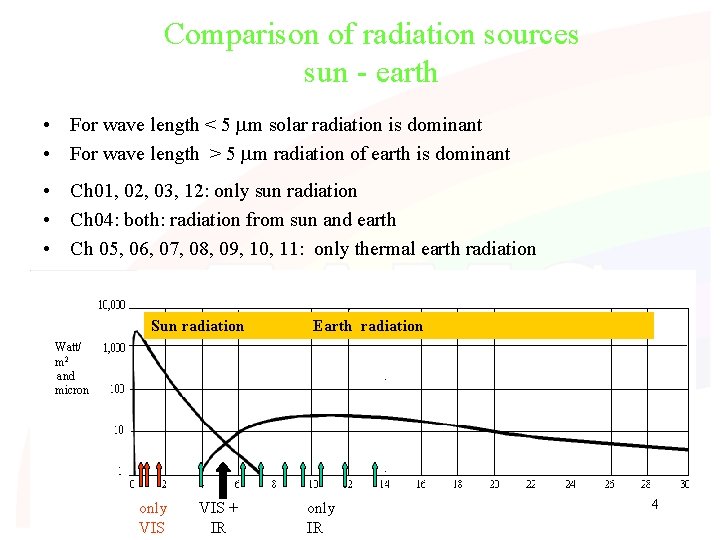
Comparison of radiation sources sun - earth • For wave length < 5 m solar radiation is dominant • For wave length > 5 m radiation of earth is dominant • Ch 01, 02, 03, 12: only sun radiation • Ch 04: both: radiation from sun and earth • Ch 05, 06, 07, 08, 09, 10, 11: only thermal earth radiation Sun radiation Earth radiation Watt/ m 2 and micron only VIS + IR only IR 4
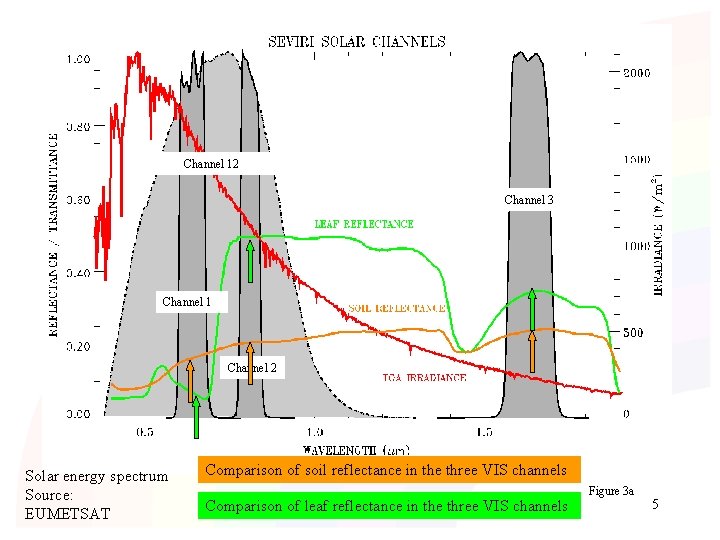
Channel 12 Channel 3 Channel 1 Channel 2 Solar energy spectrum Source: EUMETSAT Comparison of soil reflectance in the three VIS channels Comparison of leaf reflectance in the three VIS channels Figure 3 a 5
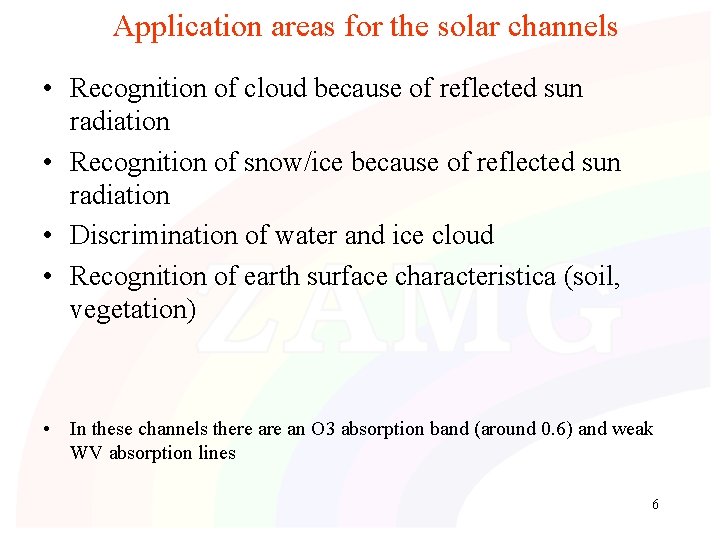
Application areas for the solar channels • Recognition of cloud because of reflected sun radiation • Recognition of snow/ice because of reflected sun radiation • Discrimination of water and ice cloud • Recognition of earth surface characteristica (soil, vegetation) • In these channels there an O 3 absorption band (around 0. 6) and weak WV absorption lines 6
Ch 01: 0. 6 and Ch 02: 0. 8 • NOAA and MSG VIS channels are comparable 7
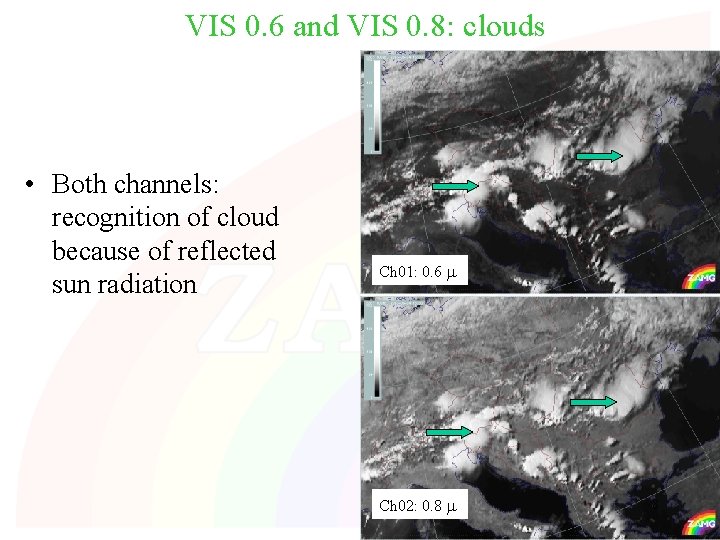
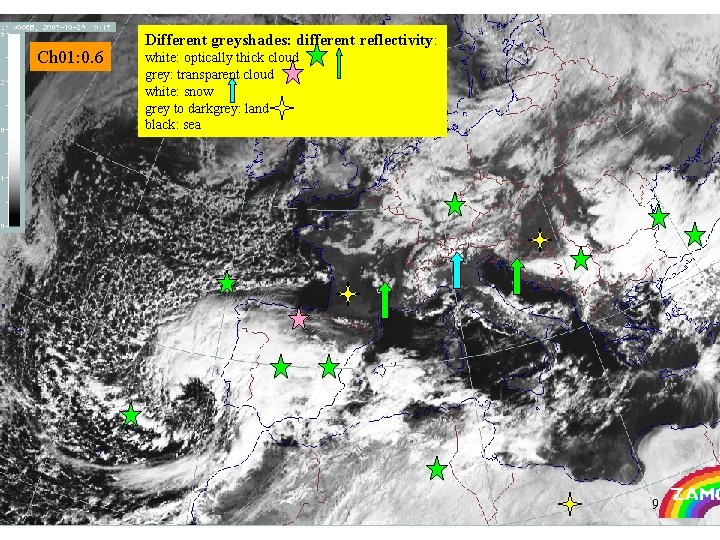
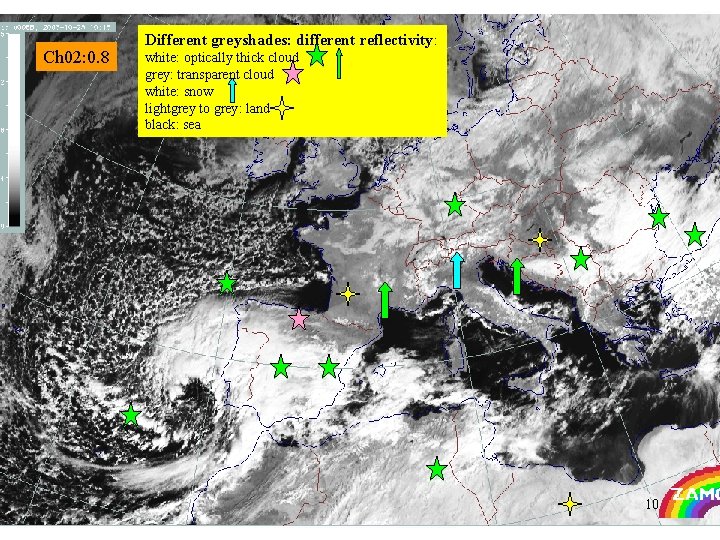
VIS 0. 6 and VIS 0. 8: clouds • Both channels: recognition of cloud because of reflected sun radiation Ch 01: 0. 6 Ch 02: 0. 8 8
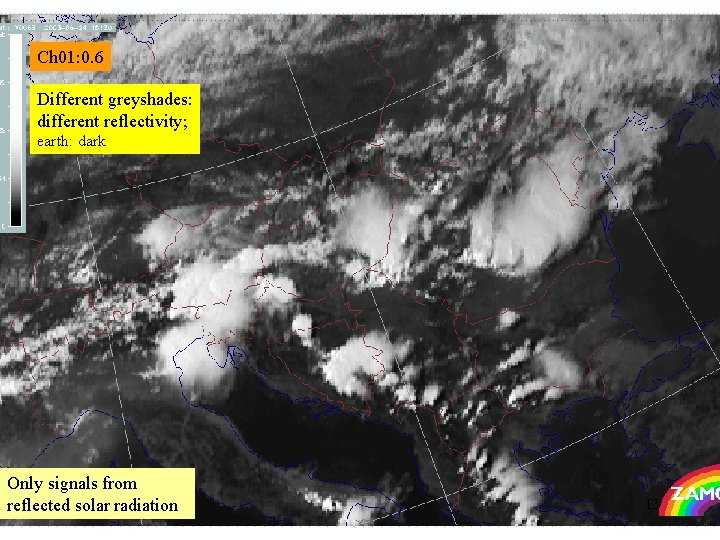
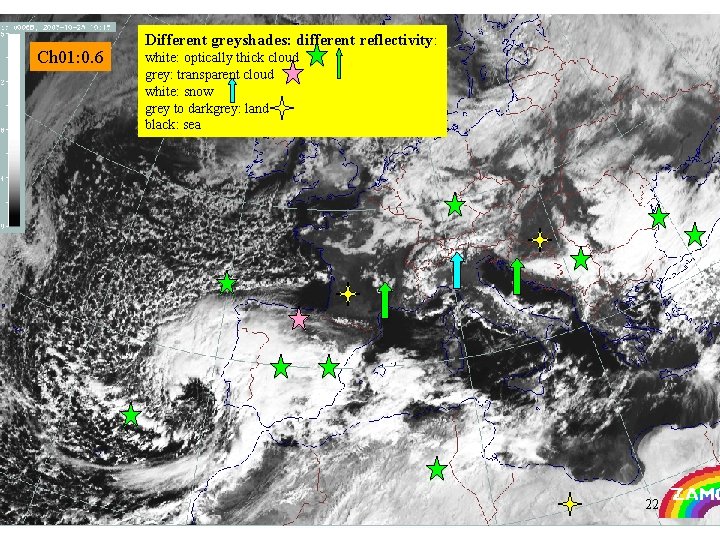
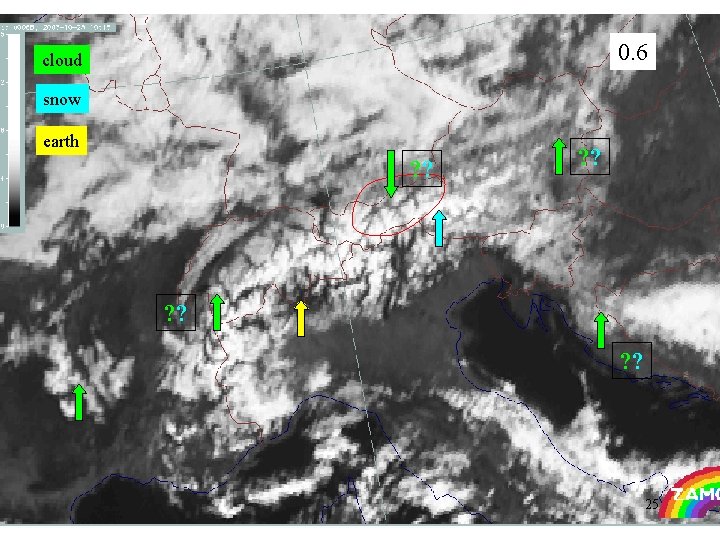
Ch 01: 0. 6 Different greyshades: different reflectivity: white: optically thick cloud grey: transparent cloud white: snow grey to darkgrey: land black: sea 9
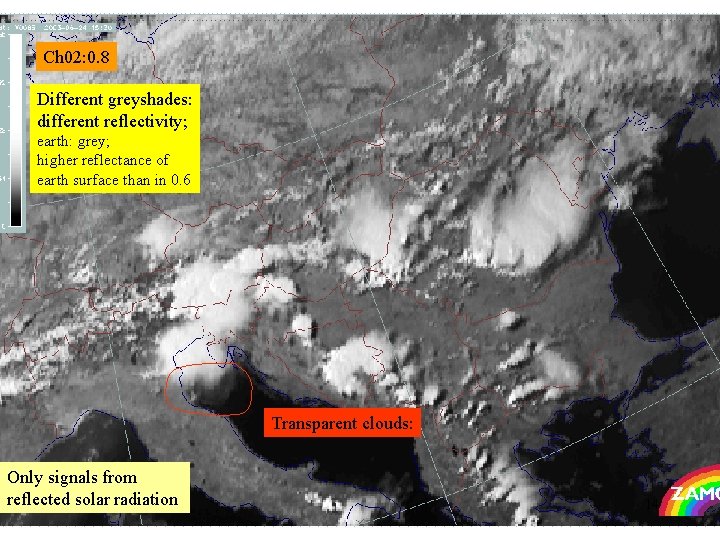
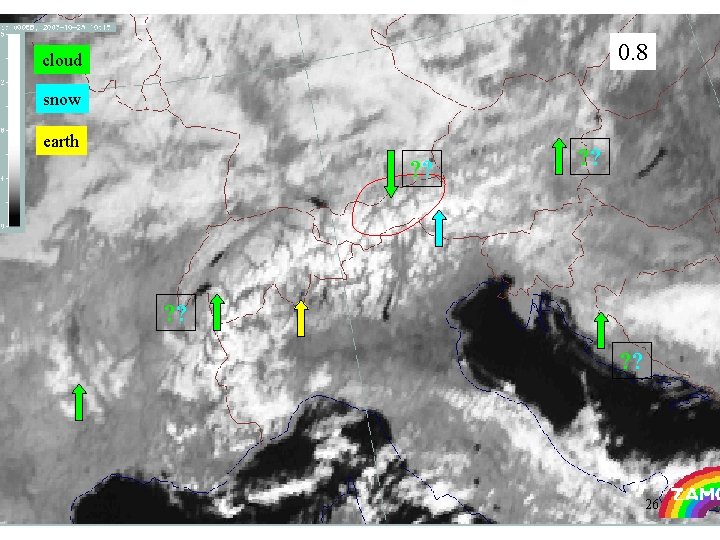
Ch 02: 0. 8 Different greyshades: different reflectivity: white: optically thick cloud grey: transparent cloud white: snow lightgrey to grey: land black: sea 10
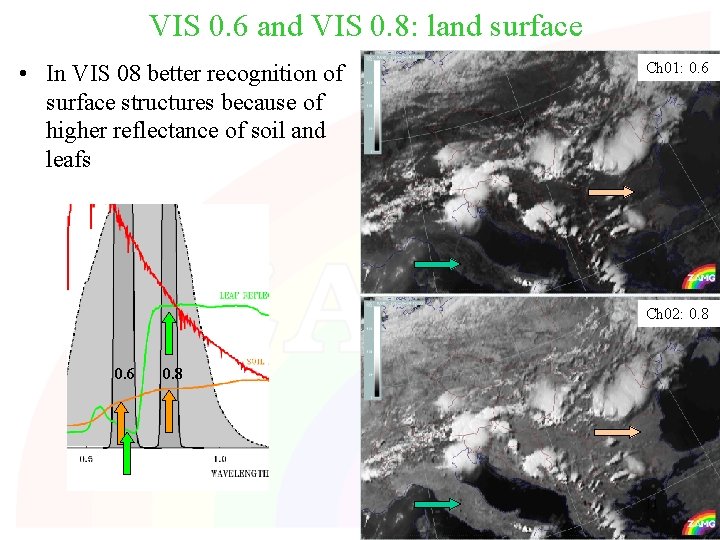
VIS 0. 6 and VIS 0. 8: land surface • In VIS 08 better recognition of surface structures because of higher reflectance of soil and leafs Ch 01: 0. 6 Ch 02: 0. 8 0. 6 0. 8 11
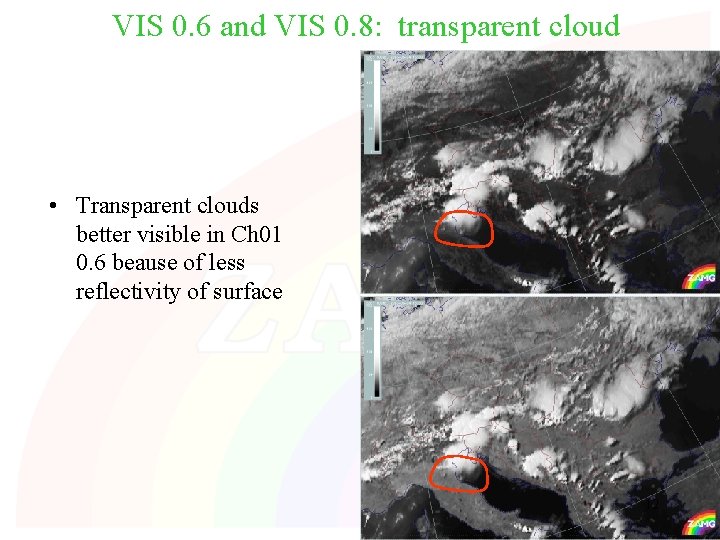
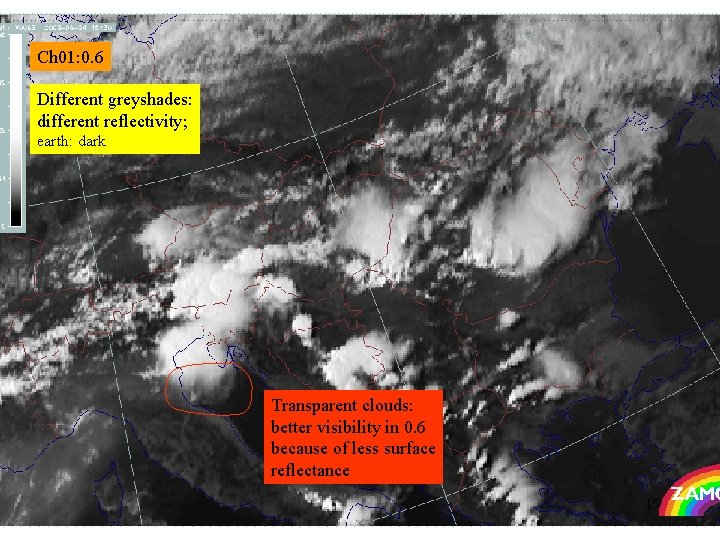
VIS 0. 6 and VIS 0. 8: transparent cloud • Transparent clouds better visible in Ch 01 0. 6 beause of less reflectivity of surface 12
Ch 01: 0. 6 Different greyshades: different reflectivity; earth: dark Only signals from reflected solar radiation 13
Ch 02: 0. 8 Different greyshades: different reflectivity; earth: grey; higher reflectance of earth surface than in 0. 6 Transparent clouds: Only signals from reflected solar radiation 14
Ch 01: 0. 6 Different greyshades: different reflectivity; earth: dark Transparent clouds: better visibility in 0. 6 because of less surface reflectance 15
Ch 03: 1. 6 (NIR) • NOAA and MSG NIR channel is comparable 16
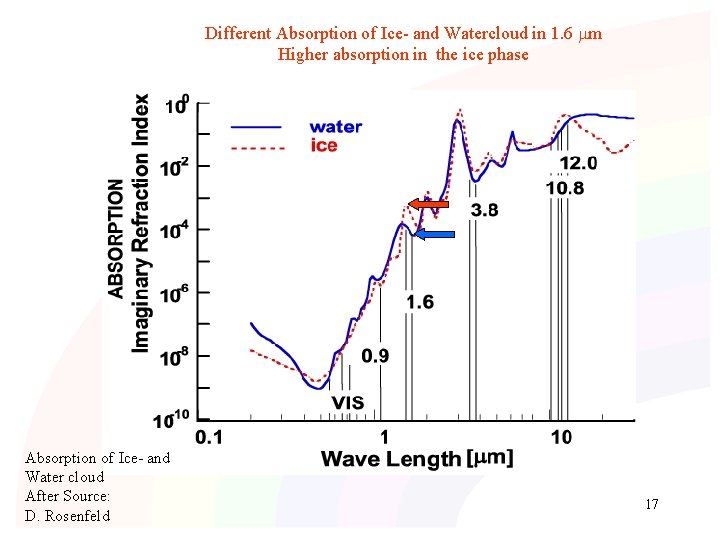
Different Absorption of Ice- and Watercloud in 1. 6 m Higher absorption in the ice phase Absorption of Ice- and Water cloud After Source: D. Rosenfeld 17
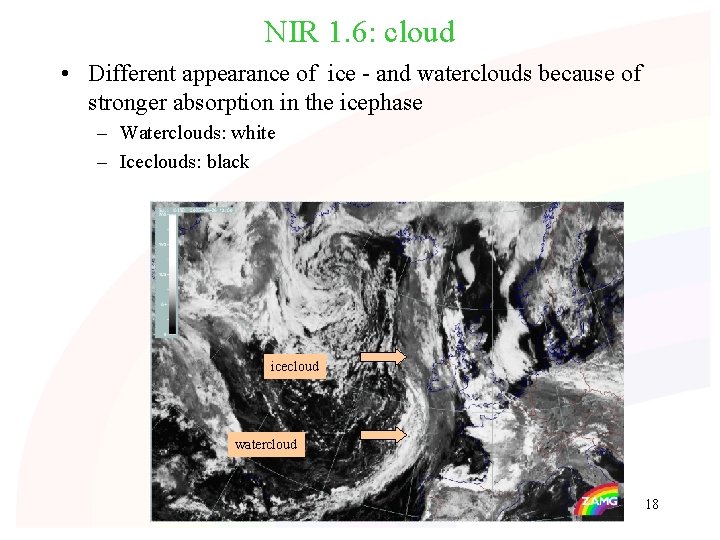
NIR 1. 6: cloud • Different appearance of ice - and waterclouds because of stronger absorption in the icephase – Waterclouds: white – Iceclouds: black icecloud watercloud 18
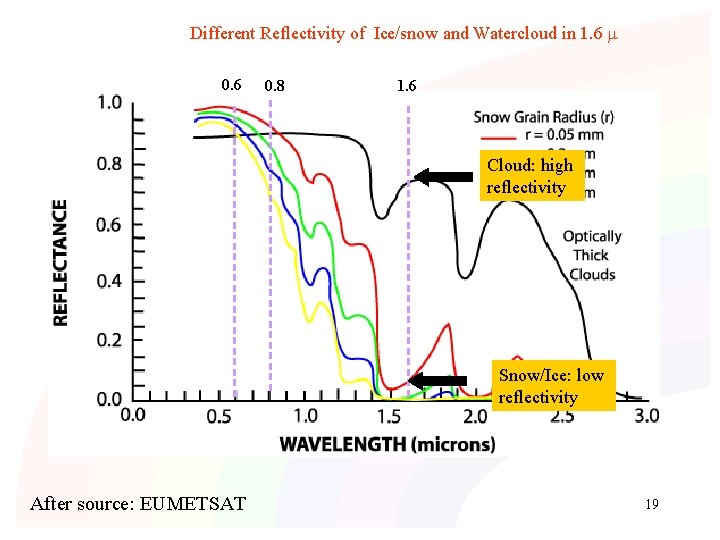
Different Reflectivity of Ice/snow and Watercloud in 1. 6 0. 6 0. 8 1. 6 Cloud: high reflectivity Snow/Ice: low reflectivity After source: EUMETSAT 19
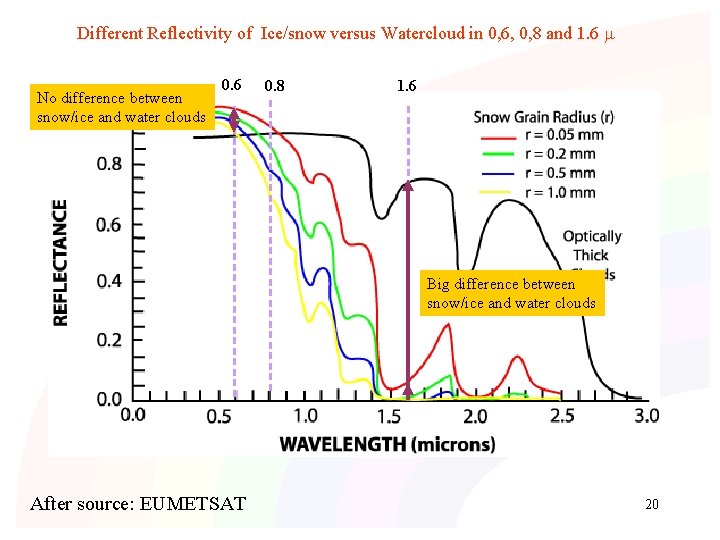
Different Reflectivity of Ice/snow versus Watercloud in 0, 6, 0, 8 and 1. 6 No difference between snow/ice and water clouds 0. 6 0. 8 1. 6 Big difference between snow/ice and water clouds After source: EUMETSAT 20
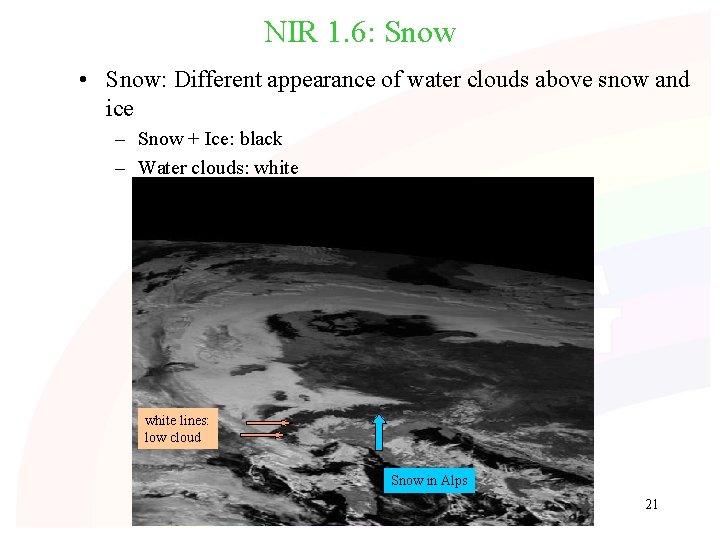
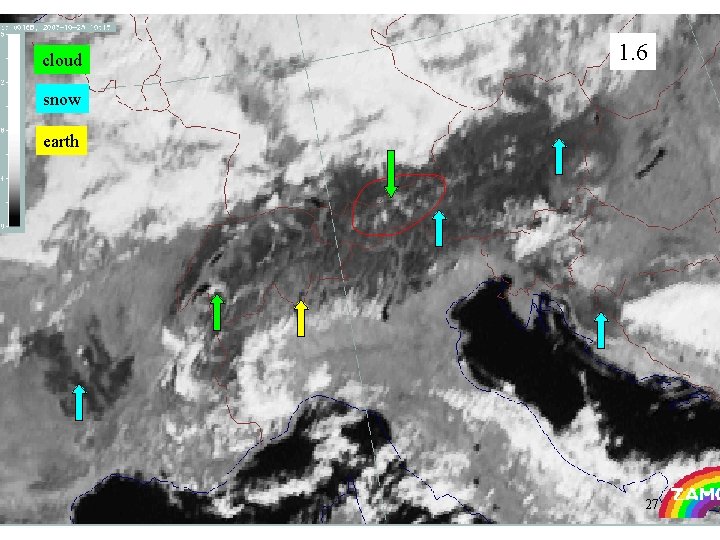
NIR 1. 6: Snow • Snow: Different appearance of water clouds above snow and ice – Snow + Ice: black – Water clouds: white lines: low cloud Snow in Alps 21
Ch 01: 0. 6 Different greyshades: different reflectivity: white: optically thick cloud grey: transparent cloud white: snow grey to darkgrey: land black: sea 22
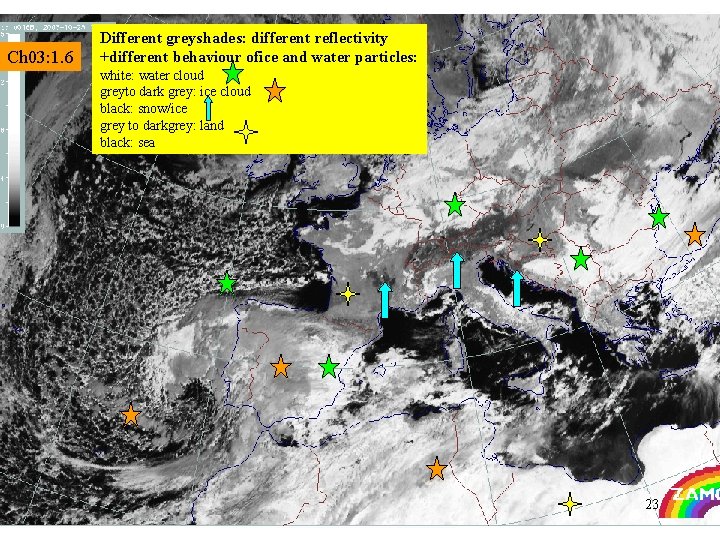
Ch 03: 1. 6 Different greyshades: different reflectivity +different behaviour ofice and water particles: white: water cloud greyto dark grey: ice cloud black: snow/ice grey to darkgrey: land black: sea 23
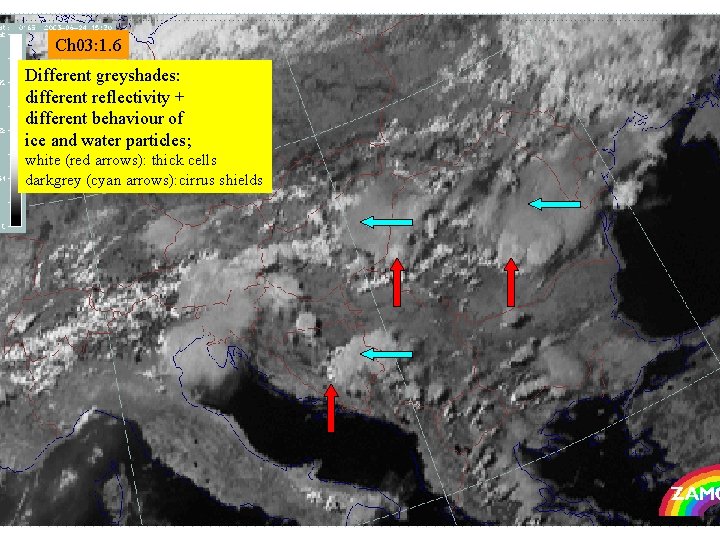
Ch 03: 1. 6 Different greyshades: different reflectivity + different behaviour of ice and water particles; white (red arrows): thick cells darkgrey (cyan arrows): cirrus shields 24
0. 6 cloud snow earth ? ? 25
0. 8 cloud snow earth ? ? 26
cloud 1. 6 snow earth 27