
Introduction Forensic palynologya specialized field that studies pollen

- Slides: 14
Introduction Forensic palynology—a specialized field that studies pollen and spore evidence o Pollen and spores are microscopic reproductive structures that have resistant outer shells o Pollen—contains the male gametes of seed plants o Spores—found in certain protists, algae, plants and fungi
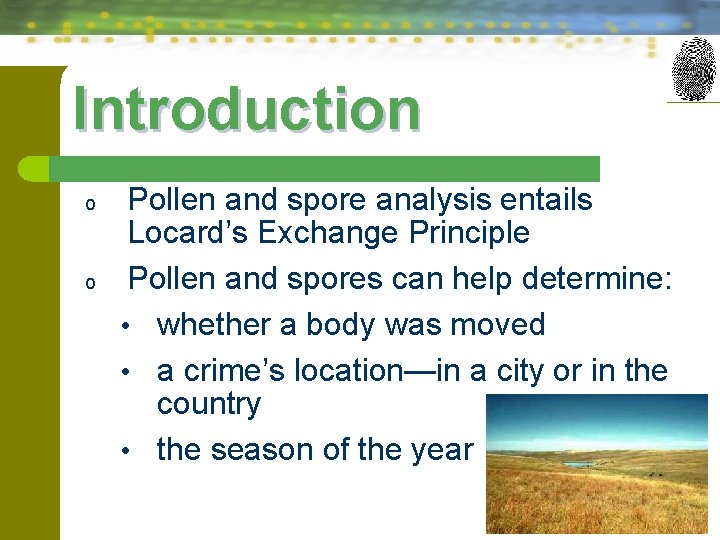
Introduction o o Pollen and spore analysis entails Locard’s Exchange Principle Pollen and spores can help determine: • whether a body was moved • a crime’s location—in a city or in the country • the season of the year
Pollen-Producing Plants Pollen fingerprint—the number and type of pollen grains found in a geographic area at a particular time of year Non-seed plants • ferns, mosses, liverworts, and horsetails Seed plants • gymnosperms (cycads, ginkgoes, and conifers) • angiosperms (flowering plants)
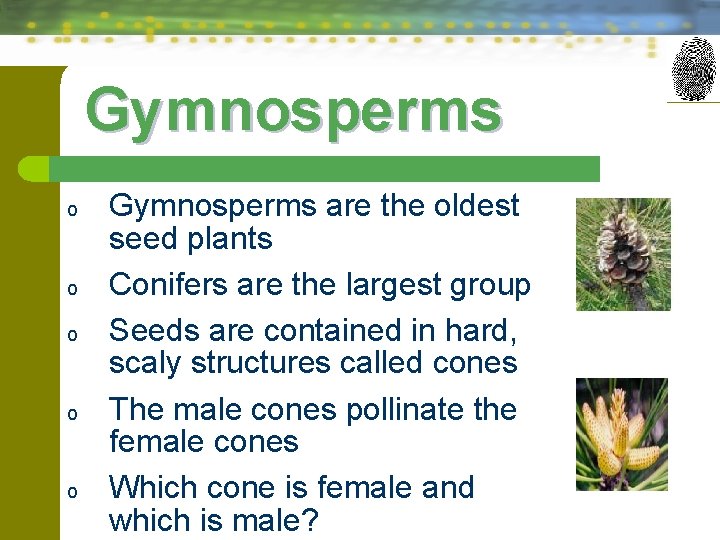
Gymnosperms o o o Gymnosperms are the oldest seed plants Conifers are the largest group Seeds are contained in hard, scaly structures called cones The male cones pollinate the female cones Which cone is female and which is male?
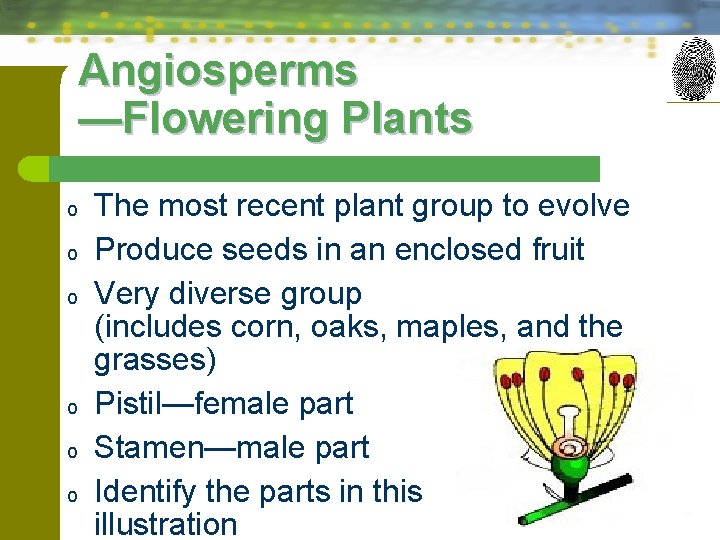
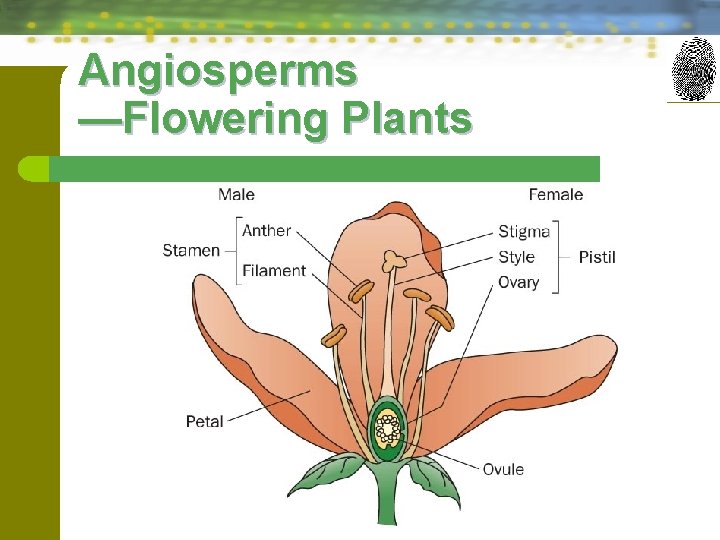
Angiosperms —Flowering Plants o o o The most recent plant group to evolve Produce seeds in an enclosed fruit Very diverse group (includes corn, oaks, maples, and the grasses) Pistil—female part Stamen—male part Identify the parts in this illustration
Angiosperms —Flowering Plants
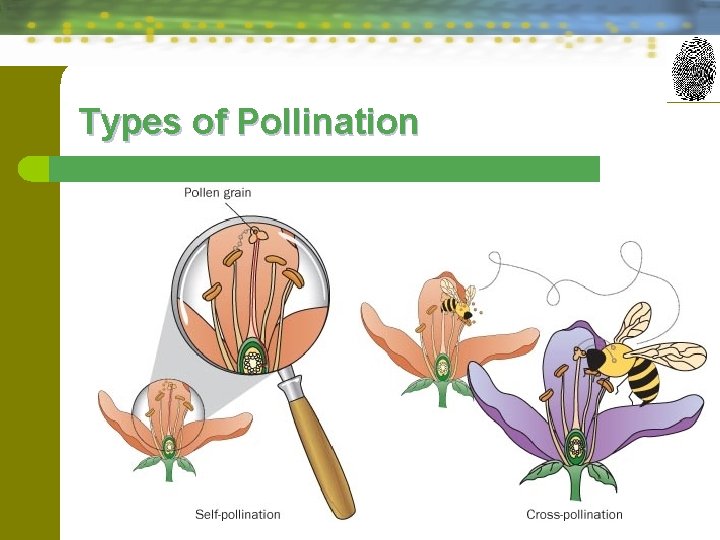
Types of Pollination o o o Pollination—the transfer of pollen from the male part of a plant to the female part of a seed plant Self-pollination—pollen transfers from an anther to the stigma within the same flower, as in pea plants Cross-pollination—pollen transfers between two distinct plants
Types of Pollination
Types of Pollination o o o Pollen of self-pollinating plants • Rarely encountered • Lower value in forensic studies Pollen can be carried by • Wind • Animals • Water Wind-born pollen is less effective • Potentially long distances
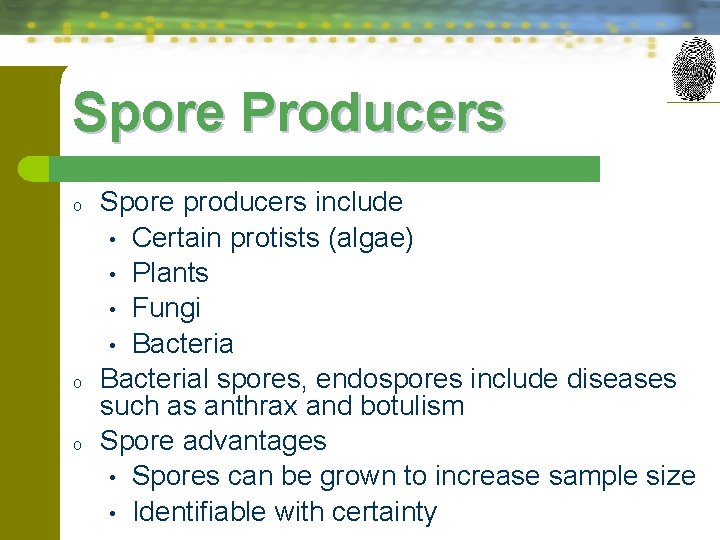
Spore Producers o o o Spore producers include • Certain protists (algae) • Plants • Fungi • Bacterial spores, endospores include diseases such as anthrax and botulism Spore advantages • Spores can be grown to increase sample size • Identifiable with certainty
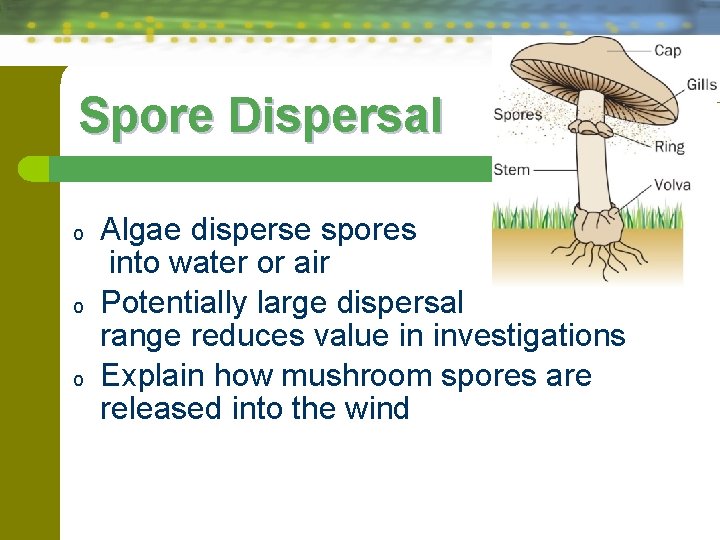
Spore Dispersal o o o Algae disperse spores into water or air Potentially large dispersal range reduces value in investigations Explain how mushroom spores are released into the wind
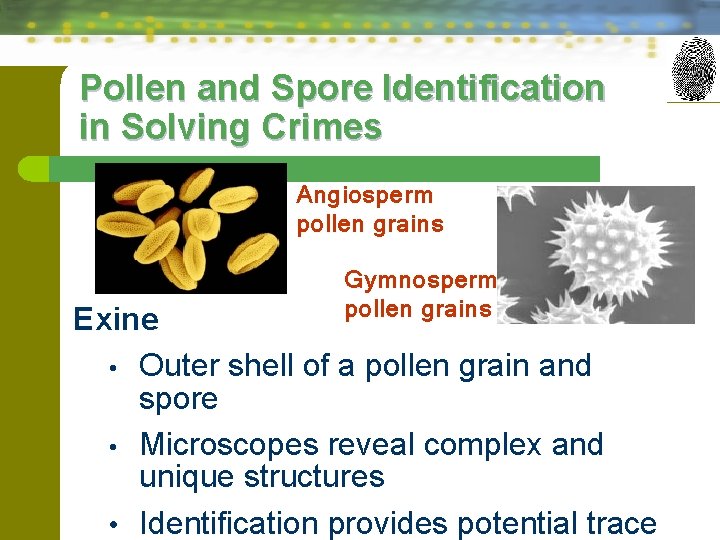
Pollen and Spore Identification in Solving Crimes Angiosperm pollen grains Gymnosperm pollen grains Exine • Outer shell of a pollen grain and spore • Microscopes reveal complex and unique structures • Identification provides potential trace
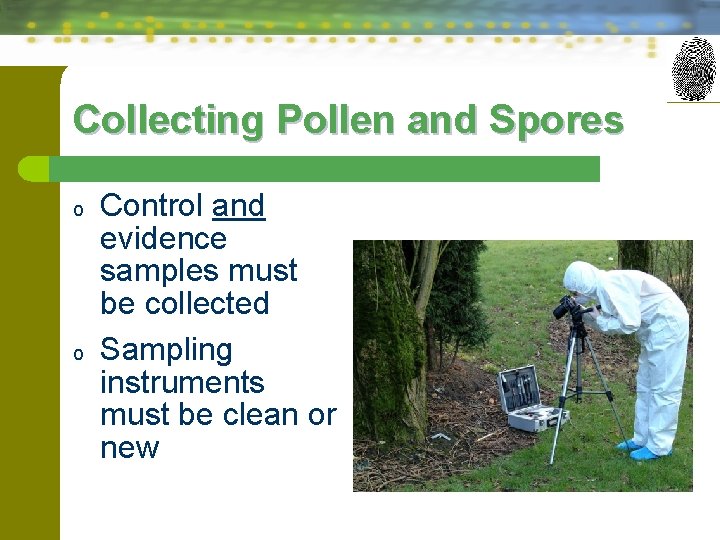
Collecting Pollen and Spores o o Control and evidence samples must be collected Sampling instruments must be clean or new
Analyzing Pollen and Spore Samples o o o Pollen and spores are chemically extracted from samples Tools specialists use to examine and identify include: • compound light microscope • scanning electronic microscope (SEM) • reference collections (photos, illustrations, dried specimens) Pollen and spore evidence can be presented in court