
Introduction Fertility denotes the ability of a man
Introduction • Fertility denotes the ability of a man and woman to reproduce; conversely, infertility denotes the lack of fertility—an involuntary reduction in the ability to produce children. • When a couple has been engaging in regular, unprotected sexual intercourse for at least 1 year without conceiving, the couple is considered infertile. ü In about one third of cases, a male factor is the predominant cause; ü in another one third, the female factor predominates; and ü in another onethird, no cause is found in either partner.

• The workup for infertility starts with a complete history and physical exam for both the woman and the man, including their sexual history. A rational approach is to put each partner through a series of tests that generally uncover a vast majority of the contributing factors of infertility. These tests usually take 2 to 3 months to complete. • Standard pretest and posttest care for couples undergoing fertility testing includes the following: – Provide information and support. Be sensitive to the couple’s need for privacy and confidentiality. – Maintain a communication network about new procedures, tests, and treatments. – Help couples deal with feelings of sadness and loss. Assist couples to deal with the effects of stress and the financial burden during the diagnostic process. – Assist couples in arranging work and testing schedules with the least amount of disruption for the couple.
• Arrange for counseling with experts who understand the different ways infertility affects someone’s life. ü Tests include evaluation of: q amenorrhea, q anovulation, q sperm count (angiosperm, oligospermia), ü hormone testing ü hysterosalpingogram ü laparoscopy ü Hysteroscopy ü fertiloscopy, ü Semen analysis, ü postcoital test ü endometrial biopsy ü chromosome karyotype to exclude Kallmann’s ü syndrome.
Hormonal testing • Hormone testing • rules pregnancy in or out, chorionic gonadotropin • prolactin • luteinizing hormone [LH] • follicle-stimulating hormone [FSH] • thyroid-stimulating hormone [TSH] • postcoital test • antisperm antibodies • Also see estrogen testing.
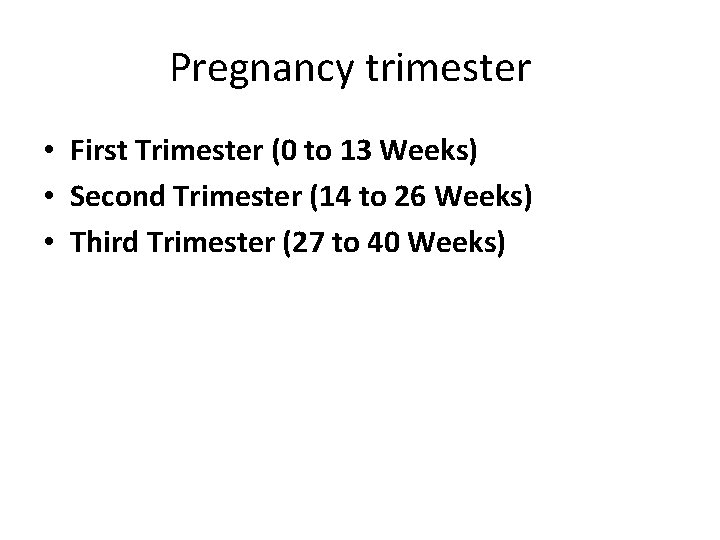
Pregnancy trimester • First Trimester (0 to 13 Weeks) • Second Trimester (14 to 26 Weeks) • Third Trimester (27 to 40 Weeks)
PROLACTIN
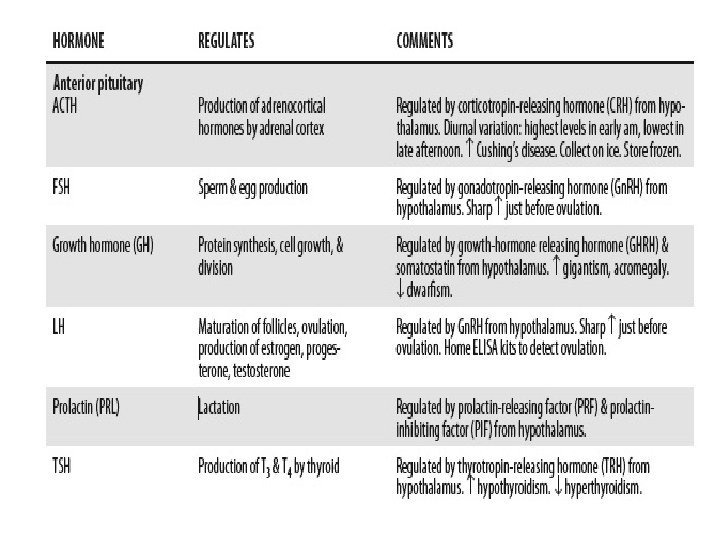
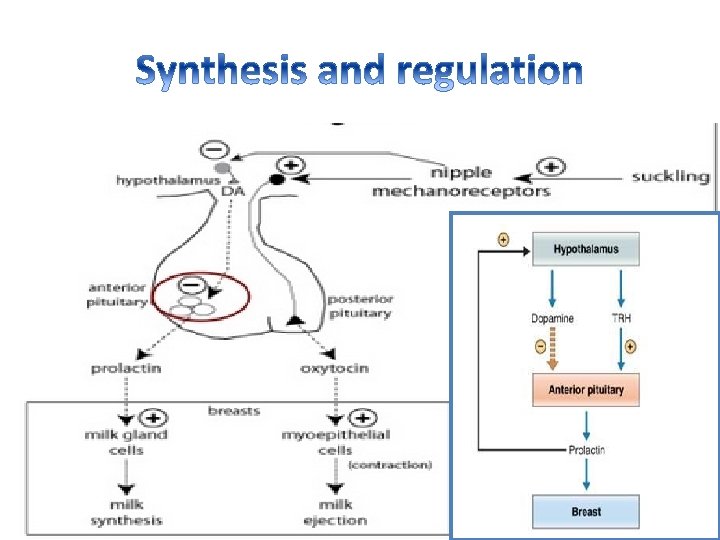
• Prolactin (PRL, luteotropic hormone) is secreted from lactortrophs of the anterior pituitary gland in both men and woman. • It is a protein consisting of a single polypeptide biological action of the hormone is on the mammary gland where maintenance of milk production. • Molecular weight of approximately 23. 000 Daltons. • The gender difference in prolactin does not occur until puberty, when increased estrogen production results in higher prolactin levels in females. • Women normally have slightly higher basal prolactin levels than men. • During and following pregnancy, prolactin, in association with other hormones, stimulates breast development and milk production.
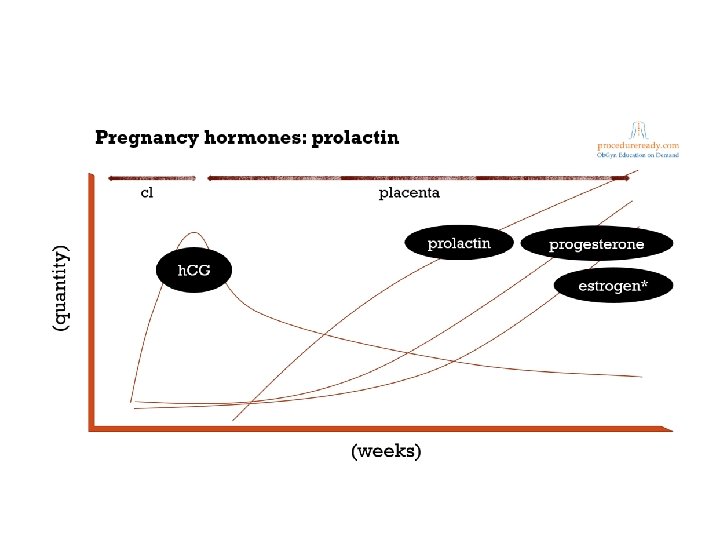
• High levels of prolactin are normal during pregnancy and after childbirth while the mother is nursing.
why women who are breastfeeding (and thus have high levels of prolactin) usually don’t become pregnant. • High prolactin levels inhibit secretion of FSH. Therefore, if your prolactin levels are high, your ovulation may be suppressed. • High levels of prolactin appear to inhibit steroidogenesis as well as inhibiting LH and FSH synthesis at the pituitary gland.
• The primary biological action of the hormone is on the mammary gland where it is involved in the growth of the gland in the induction and maintenance of milk production. • There is evidence to suggest that prolactin may be involve in steroidogenesis in the gonad. Acting synergistically with luteinizing hormone LH.
• Prolactin is a hormone that plays a role in fertility by inhibiting follicle stimulating hormone (FSH) and gonadotropin-releasing hormone (Gn. RH), the hormones that trigger ovulation and allow eggs to develop and mature. • It is unclear what role prolactin plays in men, but it is clearly linked to infertility.
Significance • The clinical usefulness of the measurement of prolactin hormone in ascertaining the diagnosis of hyperprolactinemia and for the subsequent monitoring the effectiveness of the treatment has been well established. • It is also useful in the management of hypothalamic disease • Monitoring the effectiveness of surgery, chemotherapy, and radiation treatment of prolactin-secreting tumors.
• The prolactin test can also be performed if a woman is having infertility problems or irregular menstrual periods and also to rule out problems with the pituitary gland or hypothalamus.
• Measurement of plasma prolactin has been used as an index of response to the injection of TRH, which stimulates release of prolactin in addition to stimulating the release of TSH. • If you are taking medicine for a prolactinoma, you will have your hormone levels checked at least once or twice a year.
• Hypersecretion of prolactin can be caused by pituitary tumors, hypothalamic diseases, hypothyroid, renal failure, acute exercise and several medications. • Hyperprolactinemia inhibits hypogonadism in men and women with accompanying low FSH and LH levels. • Human Prolactin is similar in structure to human growth hormone(HGH), and both are good lactogenic.
• Prolactinomas occur in both men and women but are more commonly diagnosed in women who are less than 50 years than in older women or men. • In cases of prolactinoma, the test is carried out regularly to check the tumor’s response to treatment. • High levels of prolactin can also be caused by pituitary tumors, which can be treated medically or surgically. • are the most common hormone-secreting pituitary tumors. Based on its size, a prolactinoma can be classified as a microprolactinoma (< 10 mm diameter) or a macroprolactinoma (>10 mm diameter).
• For the interpretation of the finding of an increased plasma (prolactin), it is important to enquire about the intake of drug. • Many centrally acting drugs (phenothiazines, methyldopa, imipramine) inhibit the release of prolactin release-inhibiting hormone. Oestrogens and oral contraceptive may also cause raised plasma prolactin
• Surgery is often the first treatment for many types of pituitary adenomas. If you had a functional (hormone-making) pituitary adenoma, hormone measurements can often be done within days or weeks after surgery to see if the treatment was successful. • Blood tests will also be done to see how well the remaining normal pituitary gland is functioning. • If the results show that the tumor was removed completely and that pituitary function is normal, you will still need periodic visits with your doctor. • Your hormone levels may need to be checked again in the future to check for recurrence of the adenoma.
• Blood should be drawn using standard venipuncture techniques and serum separated from blood cells as soon as possible. Samples should be allowed to clot for one hour at room temperature, centrifuged for 10 minutes (4°C) and serum extracted. This kit is for use with serum samples without additives only. • Avoid grossly hemolytic, lipidic or turbid samples. • Serum samples to be used within 24 -48 hours may be stored at 2 -8°C otherwise samples must be stored at 20°C to avoid loss of bioactivity and contamination. Avoid freeze-thaw cycles.
• When performing the assay slowly bring samples to room temperature. • It is recommended that all samples be assayed in duplicate. • DO NOT USE HEAT-TREATED SPECIMENS. • This test cannot be made for mother at lactation period. • Patient should be avoid Emotional stress and strenuous exercise.
Procedure 1. Ensure that the patient fasts for 12 hours before testing. Obtain a 5 -m. L venous blood sample (red-topped tube). Serum is used. 2. Procure specimens in the morning, between 8: 00 (0800 hours) and 10: 00 a. m. (1000 hours). Draw in chilled tubes, and keep specimen on ice. 3. Observe standard precautions. Place specimen in a biohazard bag. The only result of prolactin deficiency in pregnancy is the absence of postpartum lactation. Interfering Factors 1. Increased values are associated with newborns, pregnancy, postpartum period, stress, exercise, sleep, nipple stimulation, and lactation (breast-feeding). 2. Drugs (eg, estrogens, methyldopa, phenothiazines, opiates) may increase values. 3. Dopaminergic drugs inhibit prolactin secretion. Administration of L-dopa can normalize prolactin levels in galactorrhea, hyperprolactinemia, and pituitary tumor. 4. Increased levels are found in cocaine abuse, even after withdrawal from cocaine. 5. Macroprolactin can falsely increase test results.
Reference range • Levels >200 ng/m. L or >200 μg/L in a nonlactating female indicate a prolactinsecreting tumor; • however, a normal prolactin level does not rule out pituitary tumor.
What are related tests? • Serum quantitative HCG measurement • CT of pituitary fossa • MRI of head • MRI of pituitary fossa • Plasma FSH measurement • Video EEG
Thyroid dysfunction and infertility • Thyroid dysfunction is a condition known to reduce the likelihood of pregnancy. Additionally, abnormal thyroid hormones disturb the normal menstrual pattern.
• Measurement of prolactin and thyroid hormones, especially thyroid stimulating hormone (TSH), has been considered an important component of infertility work up in women. • Thyroid dysfunctions interfere with numerous aspects of reproduction and pregnancy. • Several articles have highlighted the association of hyperthyroidism or hypothyroidism with menstrual disturbance, anovulatory cycles, decreased fecundity and increased morbidity during pregnancy
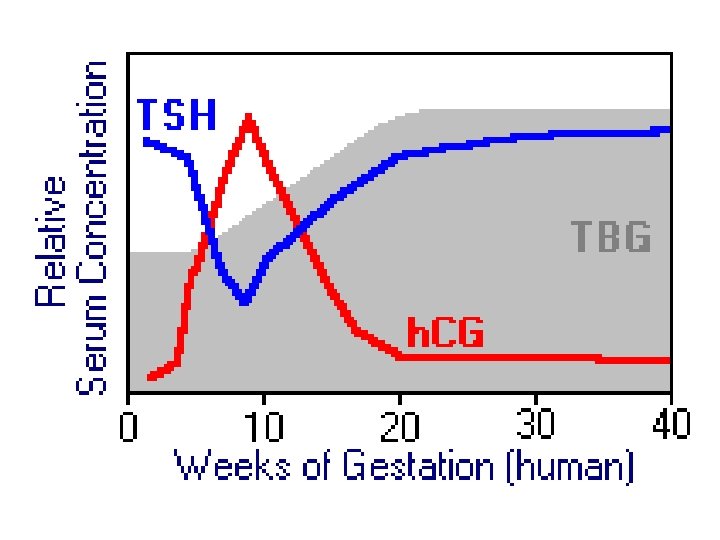
• Thyroid stimulation by chorionic gonadotropin: The placentae of humans and other primates secrete huge amounts of a hormone called chorionic gonadotropin (in the case of humans, human chorionic gonadotropin or h. CG) which is very closely related to LH. • TSH and h. CG are similar enough that h. CG can bind and transduce signalling from the TSH receptor on thyroid epithelial cells. Toward the end of the first trimester of pregnancy in humans, when h. CG levels are highest, a significant fraction of the thyroid-stimulating activity is from h. CG. • During this time, blood levels of TSH often are suppressed, as depicted in the figure to the right. The thyroid-stimulating activity of h. CG actually causes some women to develop transient hyperthyroidism. • The net effect of pregnancy is an increased demand on the thyroid gland. In the normal individuals, this does not appear to represent much of a load to the thyroid gland, but in females with subclinical hypothyroidism, the extra demands of pregnancy can precipitate clinical disease.
• Increased blood concentrations of T 4 -binding globulin: TBG is one of several proteins that transport thyroid hormones in blood, and has the highest affinity for T 4 (thyroxine) of the group. • Estrogens stimulate expression of TBG in liver, and the normal rise in estrogen during pregnancy induces roughly a doubling in serum TBG concentrations. • Increased levels of TBG lead to lowered free T 4 concentrations, which results in elevated TSH secretion by the pituitary and, consequently, enhanced production and secretion of thyroid hormones. • The net effect of elevated TBG synthesis is to force a new equilibrium between free and bound thyroid hormones and thus a significant increase in total T 4 and T 3 levels. • The increased demand for thyroid hormones is reached by about 20 weeks of gestation and persists until term.
Notes: • Prolactin (h. PRL) • Prolactin is a pituitary hormone essential for initiating and maintaining lactation. • Circadian changes in prolactin concentration in adults are marked by episodic fluctuation and a sleep-induced peak in the early morning hours.
- Slides: 33