
Introduction Early Embryology Human Structure Development ANHB 2212
Introduction & Early Embryology Human Structure & Development ANHB 2212 Semester 1 – 2008 Dr. Avinash Bharadwaj avinash@anhb. uwa. edu. au
Welcome! n The Promise : n n n An exciting unit! All possible help during the course of the unit Improvements… already in place n n Unit Coordinators n n n Avinash Bharadwaj Julie Hill Lecturers n n Last year’s SPOT – both 2212 and 1102! Assoc Prof Geoff Meyer Yours truly ++ Demonstrators/Tutors
Prerequisites other than A&HB Units…? n “Prescribed reading”… n n n Integrated with learning resources Available well before the actual classes In case of difficulty (unlikely )… … Contact me!
More About the Unit n Learning load (? ) and help n n n Directed self-study Pre-lab prep is essential Resources, especially website n www. lab. anhb. uwa. edu. au/anhb 2212 n Some resources and features on Web. CT. n n Web. CT URL : http: //webct. uwa. edu. au Lab manual – available in co-op shop soon Textbooks (“Recommended”) Course Reader : Online, includes “prescribed” reading
What’s in It for You? n n Wide variety of student background and goals Integrated Structure, Function and Development n Componets are not separable! n n Carefully selected content n n Separation in labs inevitable… Relevance to all streams considered Assessment designed to facilitate all streams n n Core topics… “Other areas”
UWA Student email account n Must be activated immediately n Class List emails for important announcements n Check your email regularly. n Auto redirect to other accounts is not encouraged. Mails coming from other accounts are likely to be auto deleted.
ANHB computing account n n n For accessing web material on G. 03 computers Now can be done through the Histology Lab. You can do it on Thursday, Week 1 Lab! You do not need this for computers other than in the A&HB building. The Unit website is “open” – needs no username or password as of now.
Lab Allocation – OLCR n Lab time allocations only through OLCR. n If problems persist, see Wendy Colangelo, Ground floor, A&HB Building. n Adjustments done only for genuine reasons, mostly timetable clashes. n Mutual exchange between two students : Both must see Wendy together! n Allocation will settle down in a week’s time!
Communication n Offices : Avinash : 1. 77, First floor, A&HB Julie n : 1. 75, First floor, A&HB Email : avinash@anhb. uwa. edu. au jhill@anhb. uwa. edu. au n In general, Policy-related mails and those with subject related questions to Avinash Admin-related mails to Julie. n Subject header must include : “ANHB 2212”, your name, and a word or two about the subject. E. g. ANHB 2212 – Jane Smith – Embryology question
Teaching Strategies – Lectures n Theme based n Slide-show and printable versions available in advance. No handouts! n Not incorporated in the lab manual. n n Recorded on Lectopia
Teaching Strategies – Labs n n Anatomy labs : “free movement”. n Visit all tables n Check for exhibits in the centre or on the boards. Histology labs are “sit-down”! For Both Labs n Directed self study n Pre-lab study is essential n Attendance/worksheets : Stick to the allotted tutor. n Roving resource persons.
Teaching Strategies – Tutorials n n Interactive, Q-A sessions. Usually a week after the topic. n n n Time to study/understand, identify ‘gaps’. Questions not supplied in advance! Essay writing practice during tutorials. Attendance at Labs and Tutorials is compulsory and recorded. Penalties apply for absence without valid reason. Email Julie regarding absence.
Unit Outcomes n n n Detailed specific outcomes listed on the website Do not read all at once! Assessment carefully matched with outcomes. In general… Critical thinking and analysis is encouraged. HUGE lot of guidance on the Unit website. Correct use of language is essential
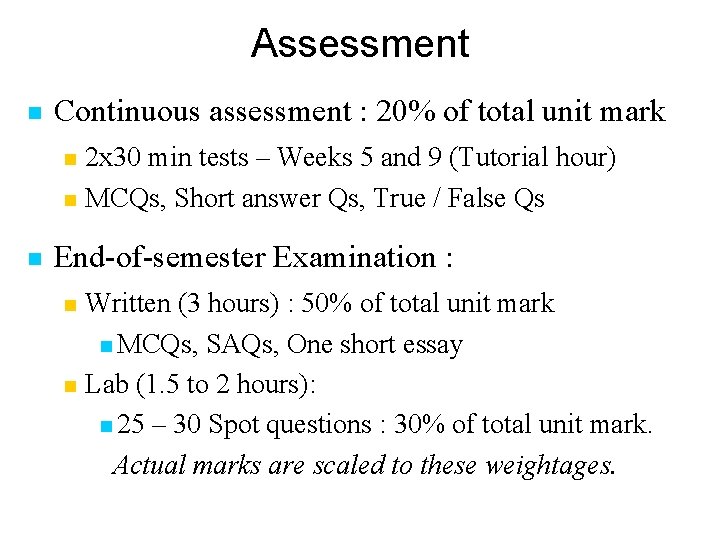
Assessment n Continuous assessment : 20% of total unit mark n n n 2 x 30 min tests – Weeks 5 and 9 (Tutorial hour) MCQs, Short answer Qs, True / False Qs End-of-semester Examination : n n Written (3 hours) : 50% of total unit mark n MCQs, SAQs, One short essay Lab (1. 5 to 2 hours): n 25 – 30 Spot questions : 30% of total unit mark. Actual marks are scaled to these weightages.
Other Assessment Events n Formative, do not count towards final mark. Short notes / Essays written during tutorials n n Pre-test in Week 1 Tutorial n n Marked and returned for feedback Feedback to coordinators Mock lab test (Week 8) administered as practice. (If possible, also in Week 13).
For This Week… n Recap (also if you have not done ANHB 1101/1102) : n n n Course Reader Chapters 1, 2 and 3. Chapter 2 : Details of mitosis and meiosis not examinable. Lab preparation : Power. Point files on the Unit website (Link given on the website).
Early Embryology n Recap of ANHB 1101/1102 (or equivalent) n Many facets… Tailoring to HSD 2212 Some important concepts n n
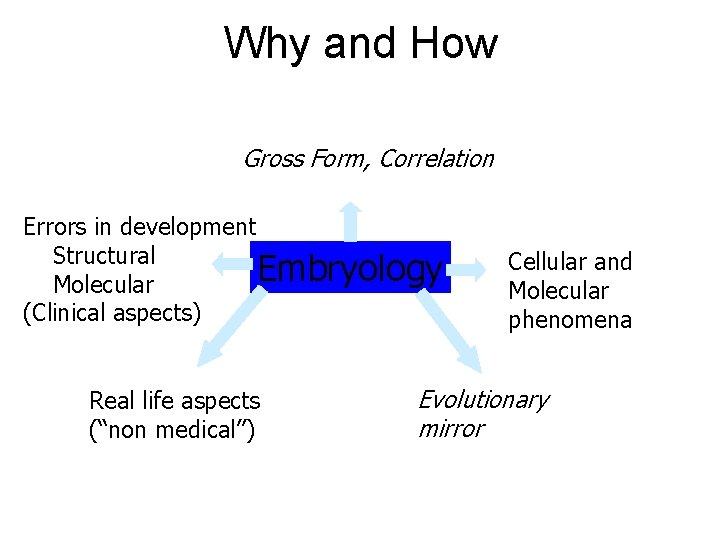
Why and How Gross Form, Correlation Errors in development Structural Embryology Molecular (Clinical aspects) Real life aspects (“non medical”) Cellular and Molecular phenomena Evolutionary mirror
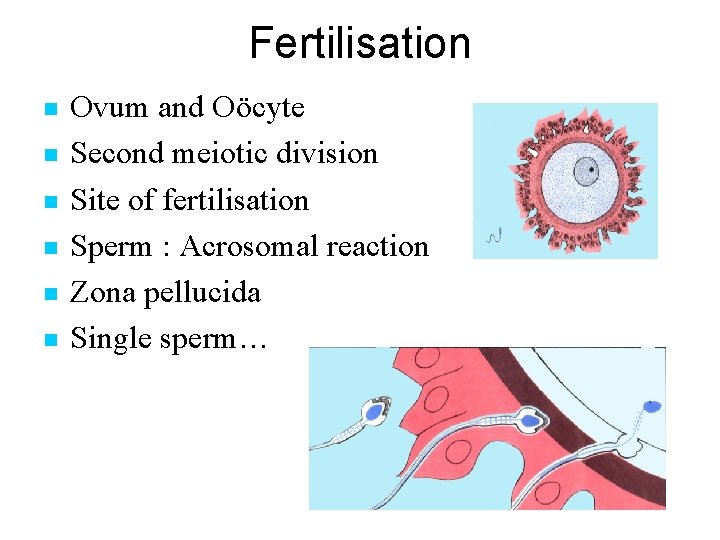
Fertilisation n n n Ovum and Oöcyte Second meiotic division Site of fertilisation Sperm : Acrosomal reaction Zona pellucida Single sperm…
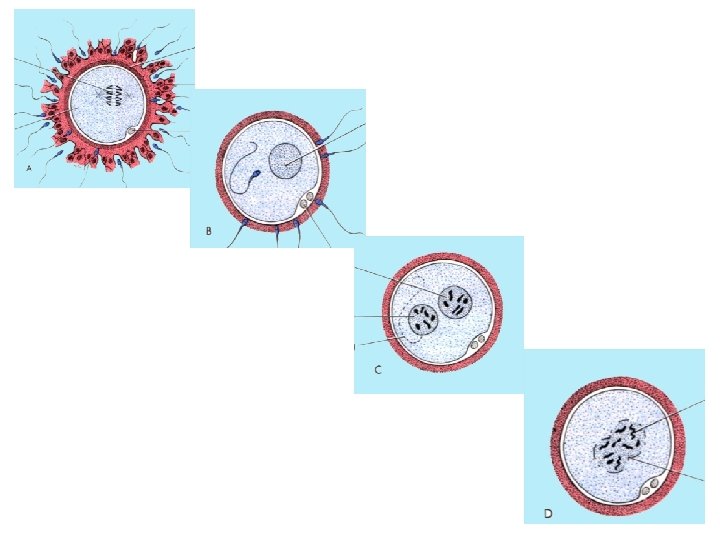
Fertilisation n Completion of meiosis II n n n Polar bodies (Also dealt with in Week 11) Restoration of diploidy Initiation of cleavage Chromosomal sex determination Genetic and evolutionary implications n n Paternal and maternal chromosomes Further mixing during next gametogenesis (crossing over)
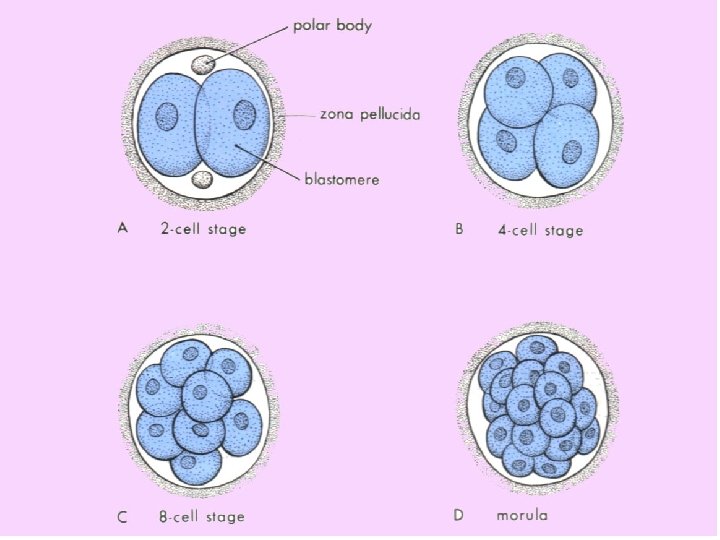
Cleavage n n n Nuclear-cytoplasmic ratio Division by reduction of cell volume Planes of cleavage Polarity…? Inner cell mass and trophoblast formed later Transport through the uterine tube Zona pellucida… retained until implantation
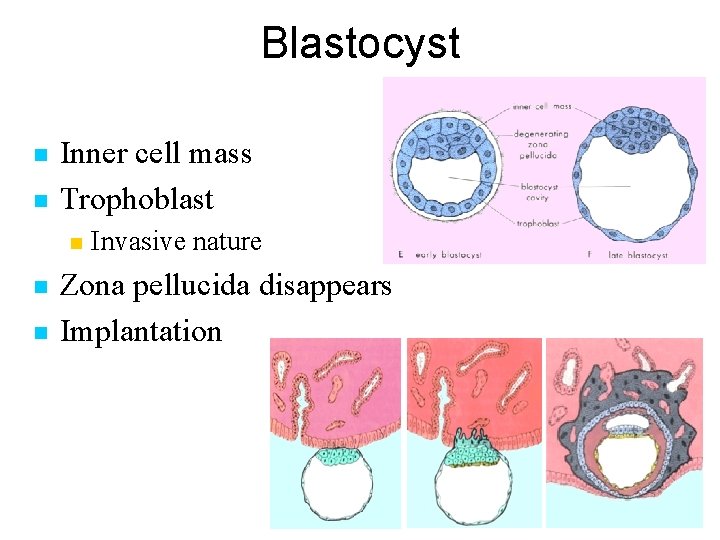
Blastocyst n n Inner cell mass Trophoblast n n n Invasive nature Zona pellucida disappears Implantation
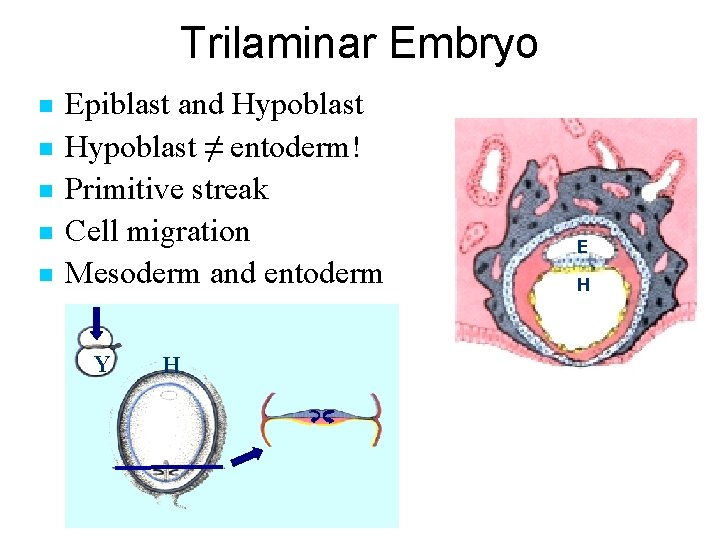
Trilaminar Embryo n n n Epiblast and Hypoblast ≠ entoderm! Primitive streak Cell migration Mesoderm and entoderm Y H E H
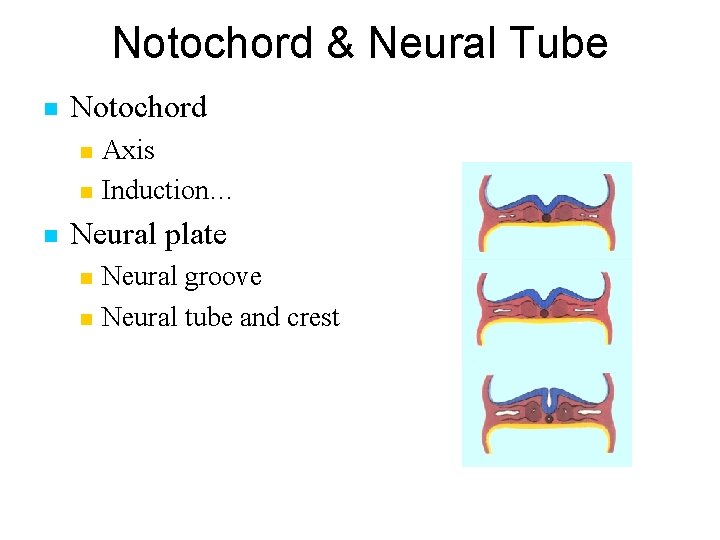
Notochord & Neural Tube n Notochord n n n Axis Induction… Neural plate n n Neural groove Neural tube and crest
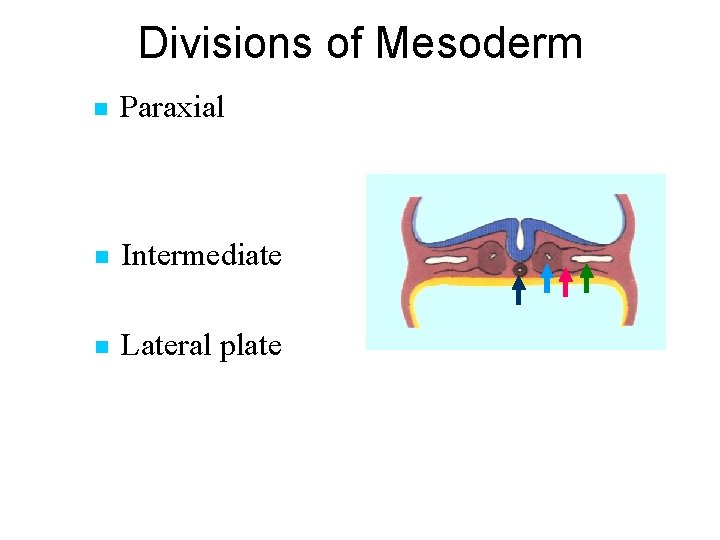
Divisions of Mesoderm n Paraxial n Intermediate n Lateral plate
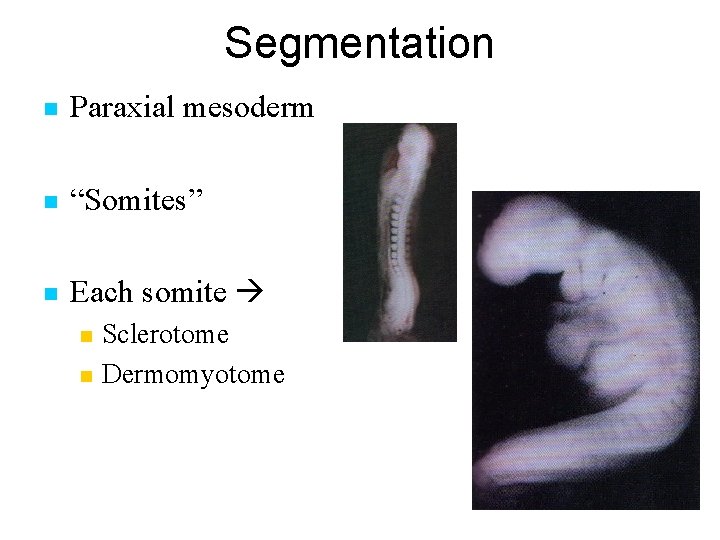
Segmentation n Paraxial mesoderm n “Somites” n Each somite n n Sclerotome Dermomyotome
Fate of Germ Layers n Ectoderm n n Epidermis (not skin!) ++ Mesoderm n n Muscle, Connective (including skeletal) tissues Some epithelial structures Parts of urogenital systems n Endothelium of heart and blood vessels n “Serous membranes” n n Endoderm n Lining epithelium of digestive system
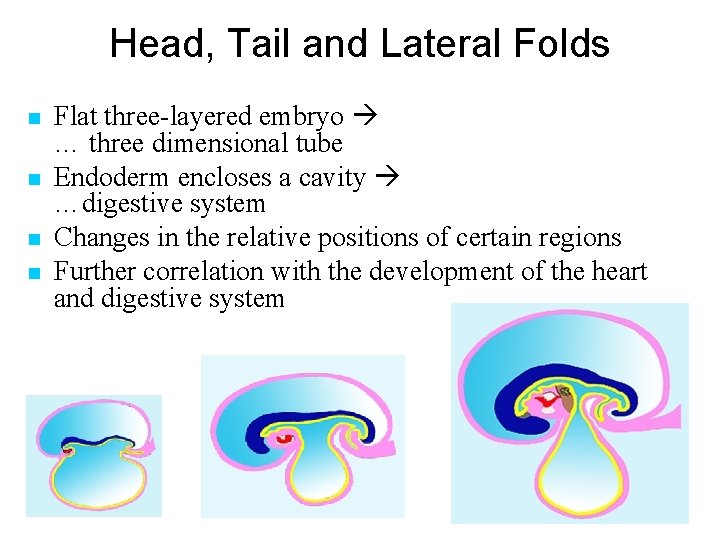
Head, Tail and Lateral Folds n n Flat three-layered embryo … three dimensional tube Endoderm encloses a cavity …digestive system Changes in the relative positions of certain regions Further correlation with the development of the heart and digestive system
The Developing Human – Three Phases n n Early development Embryonic phase – organogenesis The foetal period Differentiation, Histogenesis and Functional development Last Slide
- Slides: 31