
INTRODUCTION Describe Rangeland A C D B E

INTRODUCTION Describe Rangeland
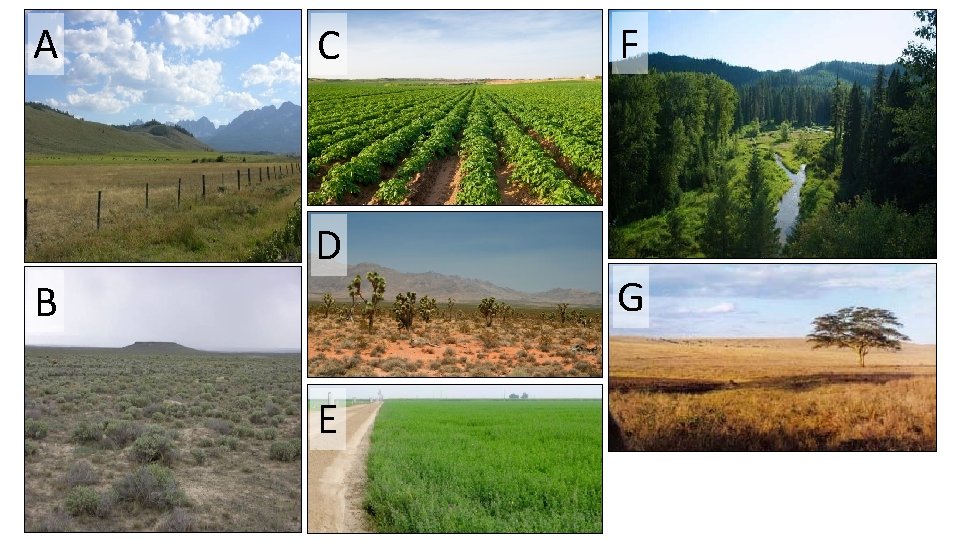
A C D B E F G

Photo A B C D E F G Yes, this is Rangeland No, this is not Rangeland
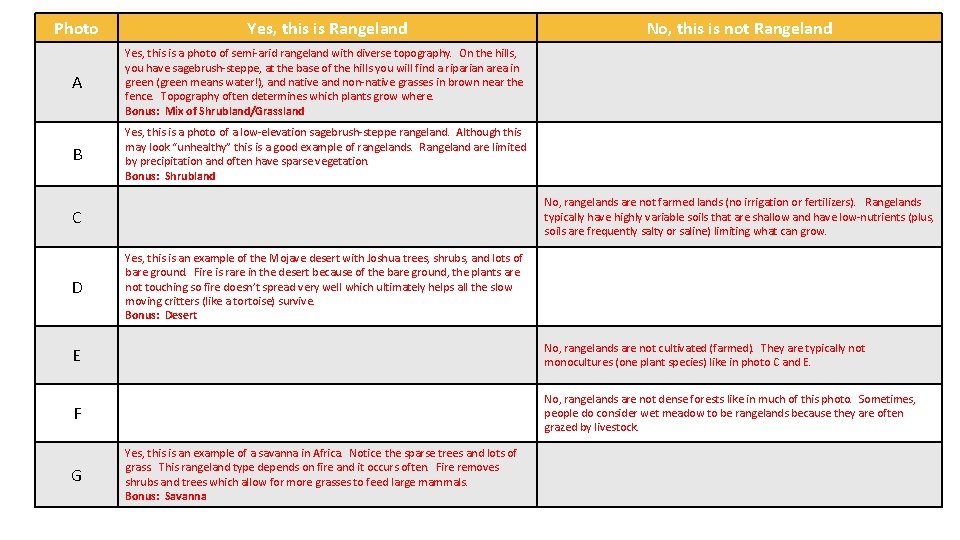
Photo Yes, this is Rangeland A Yes, this is a photo of semi-arid rangeland with diverse topography. On the hills, you have sagebrush-steppe, at the base of the hills you will find a riparian area in green (green means water!), and native and non-native grasses in brown near the fence. Topography often determines which plants grow where. Bonus: Mix of Shrubland/Grassland B Yes, this is a photo of a low-elevation sagebrush-steppe rangeland. Although this may look “unhealthy” this is a good example of rangelands. Rangeland are limited by precipitation and often have sparse vegetation. Bonus: Shrubland No, rangelands are not farmed lands (no irrigation or fertilizers). Rangelands typically have highly variable soils that are shallow and have low-nutrients (plus, soils are frequently salty or saline) limiting what can grow. C D No, this is not Rangeland Yes, this is an example of the Mojave desert with Joshua trees, shrubs, and lots of bare ground. Fire is rare in the desert because of the bare ground, the plants are not touching so fire doesn’t spread very well which ultimately helps all the slow moving critters (like a tortoise) survive. Bonus: Desert E No, rangelands are not cultivated (farmed). They are typically not monocultures (one plant species) like in photo C and E. F No, rangelands are not dense forests like in much of this photo. Sometimes, people do consider wet meadow to be rangelands because they are often grazed by livestock. G Yes, this is an example of a savanna in Africa. Notice the sparse trees and lots of grass. This rangeland type depends on fire and it occurs often. Fire removes shrubs and trees which allow for more grasses to feed large mammals. Bonus: Savanna
- Slides: 4