
Introduction Corporate Finance Professor Jaime F Zender Course
- Slides: 6
Introduction Corporate Finance Professor Jaime F. Zender
Course Overview: Purpose and Focus Review of the syllabus n Course objectives and learning goals w Prerequisites: accounting, economics, statistics n n Steve Ross – the economics of risk and time Course materials, schedule, assignments w See D 2 L w Homework on myfinancelab. com n n n Homework versus Practice Course policies Grading guidelines
Corporate Finance Decisions Financial analysis and planning. n Pro forma financial statements – look forward. w Cash flow for valuation. w Higgins Capital budgeting. n Decisions that involve what fixed assets the firm should acquire. w “Investment” or “left-hand side” decisions.
Corporate Finance Decisions Capital structure. n n How best to raise cash to “buy” productive assets. Financing or “Right-hand side” decisions. Working capital management. n “Both sides” of the balance sheet but only the current section. Risk and return. n An important and difficult question is exactly how we should measure risk.
Valuation Basics – Where We Are Headed Assets have value due to the future “benefits” they provide for those who buy them. n Commonly “benefits” equals cash flow but not always. The price you are willing to pay depends on the benefits you receive from owning an asset. n All else equal, more is better. Timing matters – a concept labeled the “time value of money. ” n When you receive the cash has an impact on value. Risk is also a piece of the puzzle. n “The benefits you expect to receive. ”
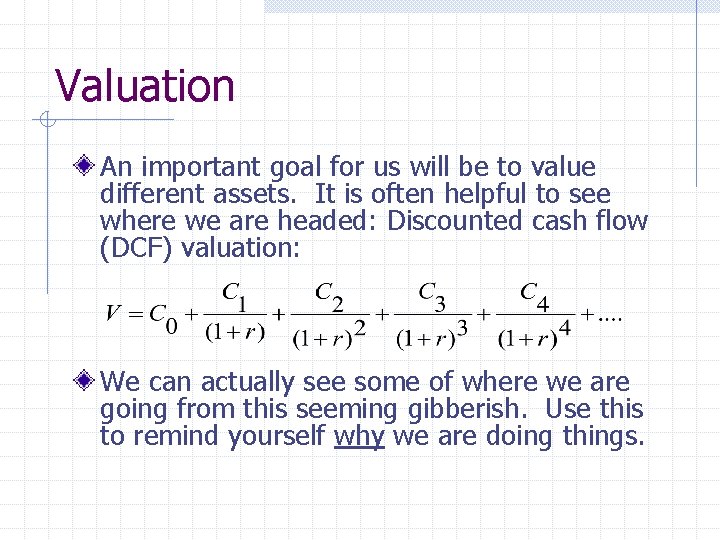
Valuation An important goal for us will be to value different assets. It is often helpful to see where we are headed: Discounted cash flow (DCF) valuation: We can actually see some of where we are going from this seeming gibberish. Use this to remind yourself why we are doing things.