
Introduction Consumption is the end of all economic


- Slides: 13
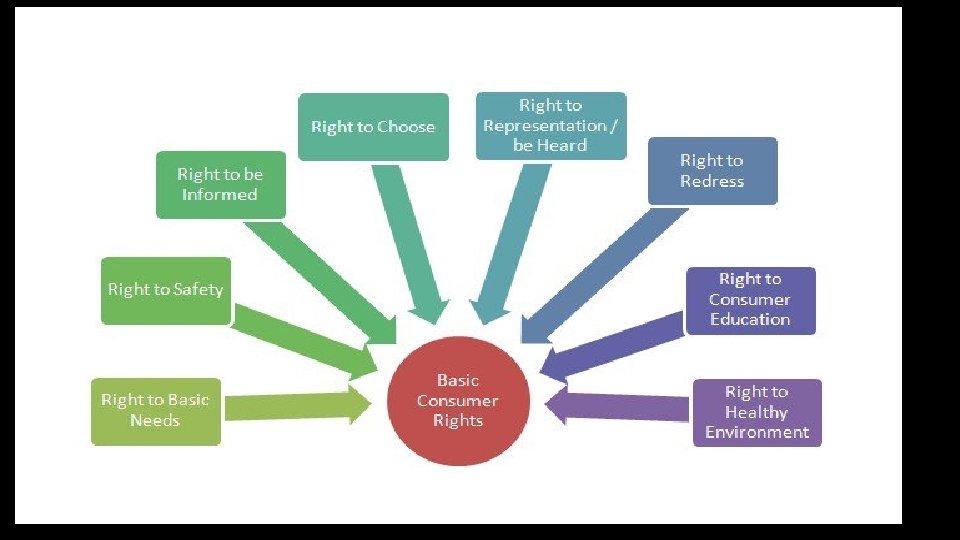
Introduction üConsumption is the end of all economic activity. üPurchase of food, medicines, utilities, toys, clothings, obtaining banking services, health care services, transport services, etc, almost every daily activity falls within the concept of consumption. üThe practicality of this concept is widespread. üThus to protect the interest of consumers at large, consumer rights have gained particular significance over the years.
Historical background ü“Caveat Emptor” (let the buyer beware) is a principle of consumer law, which previously had the tendency of exempting the seller from liability. üThe then prevailing mindset was that, it was the responsibility of the ‘buyer’ to be aware and evaluate the goods and service in question. üBut over the decades, another competing internationally recognised principle named “Caveat Venditor” has evolved which means ‘let the seller beware’. üWith time consciousness grew about the difficulties of the buyer to properly examine the goods and service.
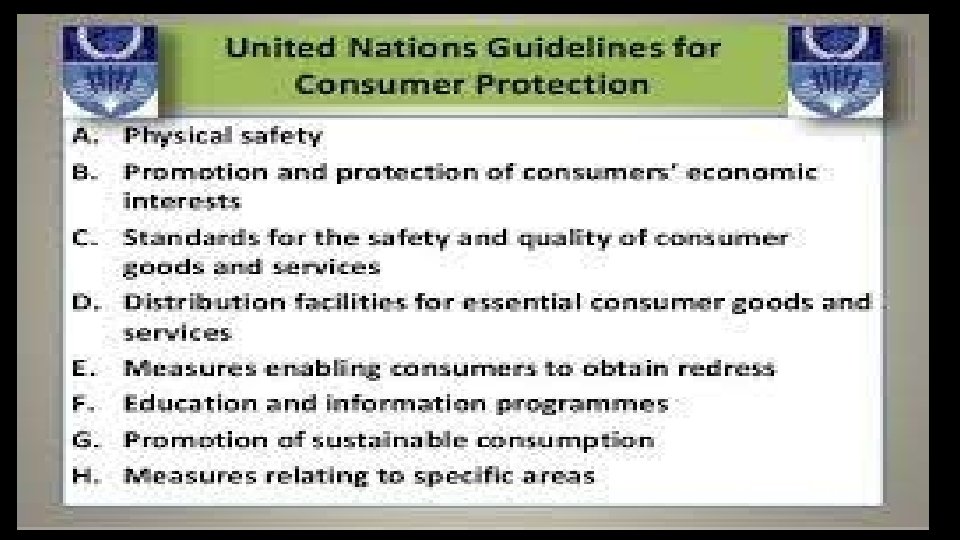
Importance of consumer protection üThe concept of consumer protection is important. Internationally consumer protection aims have been recognized as fundamental rights, as early in 1973. üSince 1983, every year March 15 is observed as ‘World Consumer Rights Day’. üThe annual celebration of the consumer movement is a means of raising global awareness about consumer rights and needs; it is a chance to demand that the rights of all consumers are respected and protected; and to protest against market abuses and social injustices which undermine those rights.
The Consumers’ Right Protection Act (CRPA) 2009 üThe Consumers’ Right Protection Act 2009 is a consumer protection specific enactment. It was enacted to ensure adequate consumer right protection. üTo fulfil and implement the objectives of this Act, a National Consumer Right Protection Council has been established. üFunctions of the Council include formulation of policy on consumer protection, etc. ü The performance and execution of decisions by the Council is assisted by a Directorate called the Directorate of National Consumers’ Right Protection (DNCRP).
üDNCRP is a quasi-judicial body with investigatory, hearing and remedial powers. üComplaints of anti-consumer activity can be directly made to this body. üTo ensure such protection throughout the country, the CRPA 2009 has also created a district committee in every district named District Consumers’ Right Protection Committee. üFunctions of the District committee include compliance with the direction of the Council, raising awareness, etc. Upazilla and Union Committees may also be constituted under the Act for similar purpose.
q. Complaint, q. Complainant, q. Manufacturer, q. Anti-consumer right practice q. Consumer q. Service q. Rights of a consumer q. Complaint procedure
q. Chapter III Directorate, Director General, etc (S. 23 -36) q. Chapter IV Offences, Punishment, etc. (S. 37 -56) q. Chapter V Trial etc. (S. 57 -65) q. Chapter VI Civil Proceedings and Remedies (S. 66 -68) q. Chapter VII Miscellaneous (S. 69 -78)
2. Criticisms Some of the major drawbacks will be highlighted below. 2. 1. Unawareness 2. 2. Time constraint 2. 3. Criminal case cannot be filed directly 2. 4. Limitation regarding adulterated or fake medicine 2. 5. Limitation regarding private health care service 2. 6. Limited jurisdiction
2. 7. Narrow definition of anti-consumer right practice 2. 8. Narrow definition of service 2. 9. Limitation on technical capacity 2. 9. 1 Other commodities 2. 10. Hearing procedure 2. 11. Limited remedy 2. 12. Fragmented law 2. 13. No provision for digital content 2. 14. High price 2. 15. Sustainable consumption and production