
Introduction COMPSCI 453 Computer Networks Professor Jim Kurose


- Slides: 10
Introduction COMPSCI 453 Computer Networks Professor Jim Kurose College of Information and Computer Sciences University of Massachusetts § Overview. What is the Internet? What is a protocol? § Network edge § Network core § Performance: loss, delay, throughput § Protocol layers, service models § Security § History Class textbook: Computer Networking: A Top. Down Approach (8 th ed. ) J. F. Kurose, K. W. Ross Pearson, 2020 http: //gaia. cs. umass. edu/kurose_ross
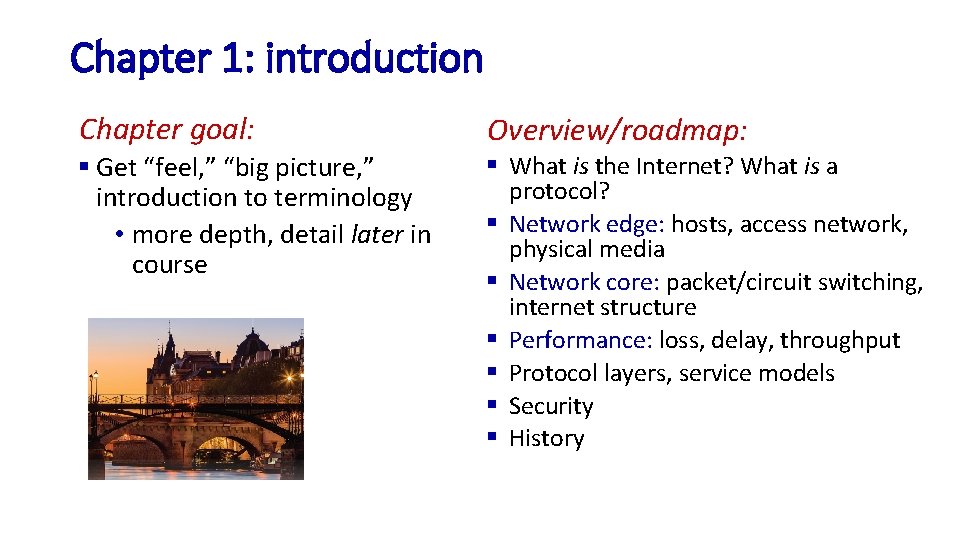
Chapter 1: introduction Chapter goal: Overview/roadmap: § Get “feel, ” “big picture, ” introduction to terminology • more depth, detail later in course § What is the Internet? What is a protocol? § Network edge: hosts, access network, physical media § Network core: packet/circuit switching, internet structure § Performance: loss, delay, throughput § Protocol layers, service models § Security § History
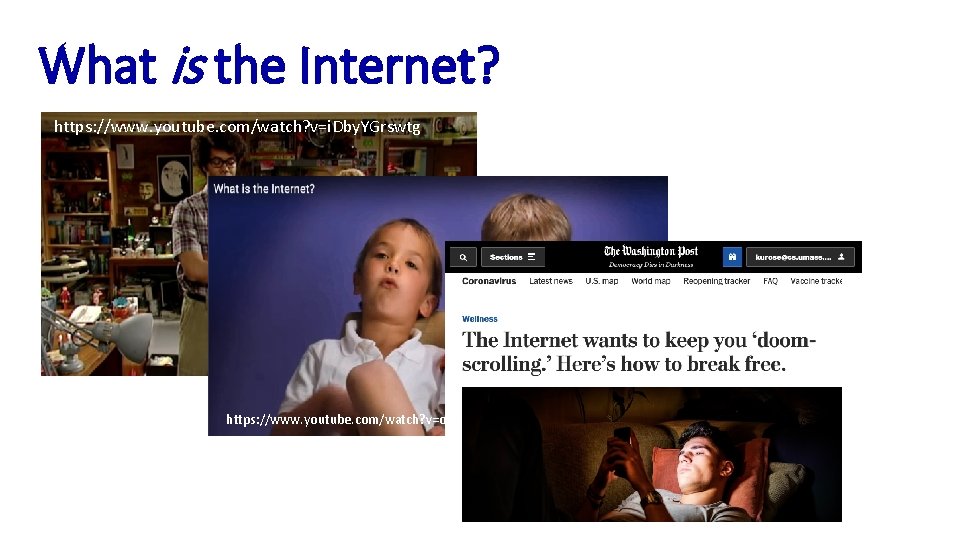
What is the Internet? https: //www. youtube. com/watch? v=i. Dby. YGrswtg https: //www. youtube. com/watch? v=ourb 9 j-dq 8 Q
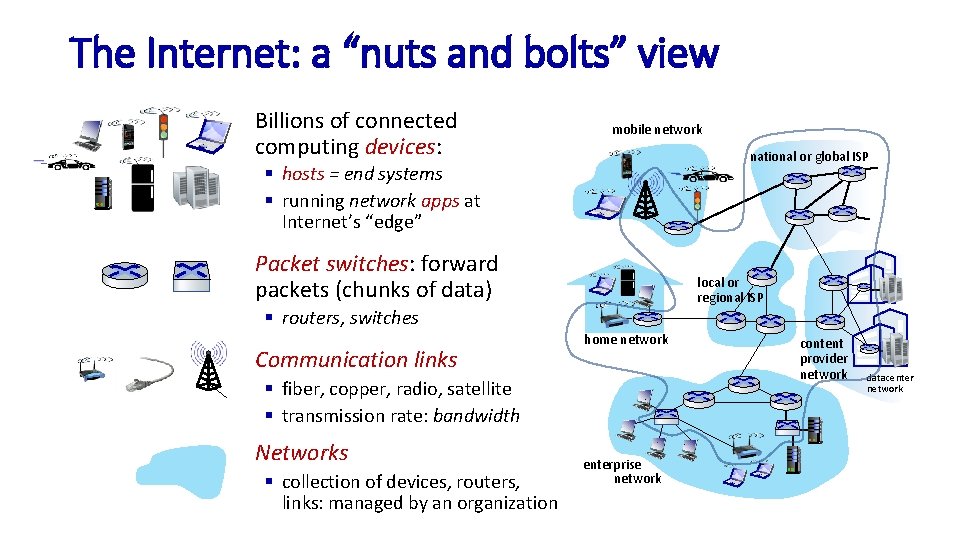
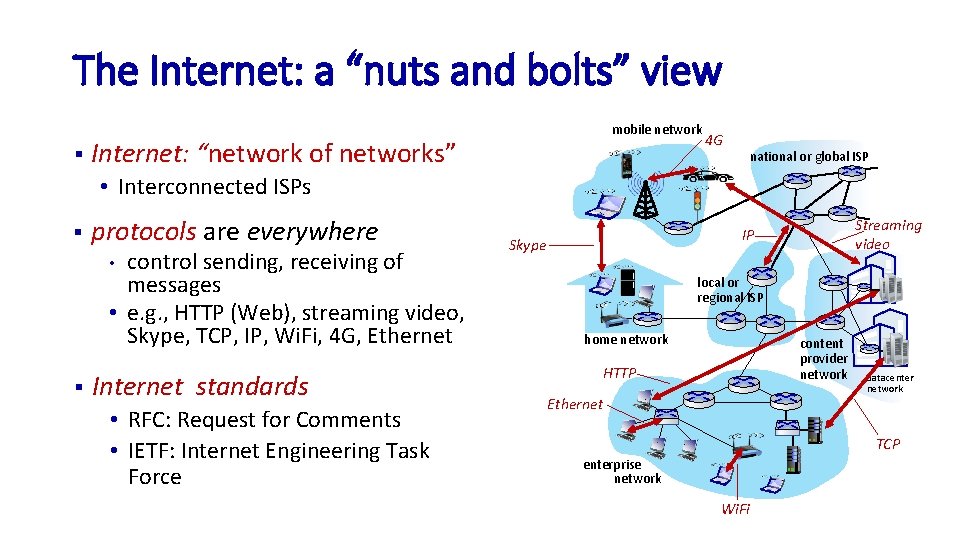
The Internet: a “nuts and bolts” view Billions of connected computing devices: mobile network national or global ISP § hosts = end systems § running network apps at Internet’s “edge” Packet switches: forward packets (chunks of data) local or regional ISP Internet § routers, switches Communication links home network § fiber, copper, radio, satellite § transmission rate: bandwidth Networks § collection of devices, routers, links: managed by an organization enterprise network content provider network datacenter network
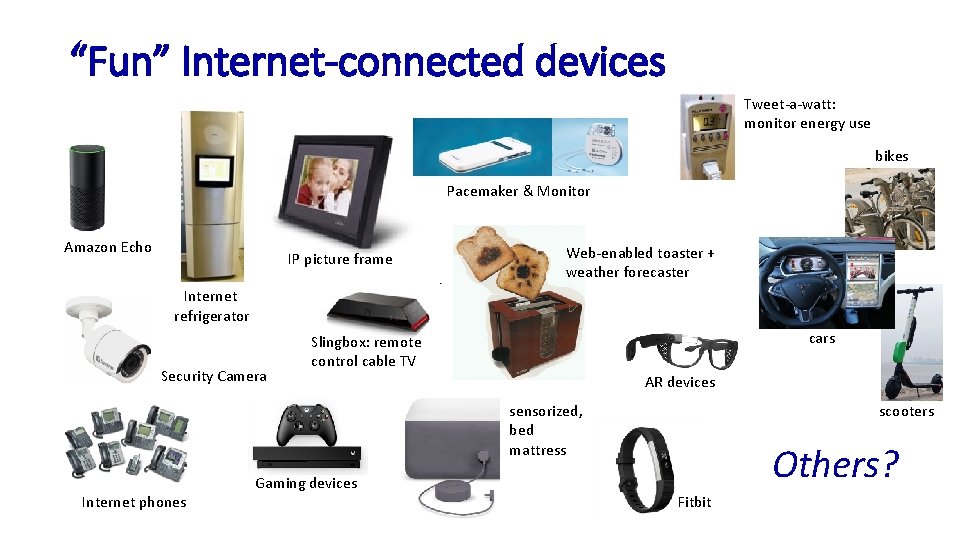
“Fun” Internet-connected devices Tweet-a-watt: monitor energy use bikes Pacemaker & Monitor Amazon Echo IP picture frame Web-enabled toaster + weather forecaster Internet refrigerator Security Camera cars Slingbox: remote control cable TV AR devices scooters sensorized, bed mattress Internet phones Gaming devices Others? Fitbit
The Internet: a “nuts and bolts” view § mobile network Internet: “network of networks” 4 G national or global ISP • Interconnected ISPs § protocols are everywhere control sending, receiving of messages • e. g. , HTTP (Web), streaming video, Skype, TCP, IP, Wi. Fi, 4 G, Ethernet • § Internet standards • RFC: Request for Comments • IETF: Internet Engineering Task Force Streaming video IP Skype local or regional ISP home network content provider network HTTP Ethernet datacenter network TCP enterprise network Wi. Fi
The Internet: a “services” view § Infrastructure that provides services to applications: • Web, streaming video, multimedia teleconferencing, email, games, ecommerce, social media, interconnected appliances, … § provides programming interface to distributed applications: • “hooks” allowing sending/receiving apps to “connect” to, use Internet transport service • provides service options, analogous to postal service mobile network national or global ISP Streaming video Skype local or regional ISP home network HTTP enterprise network content provider network datacenter network
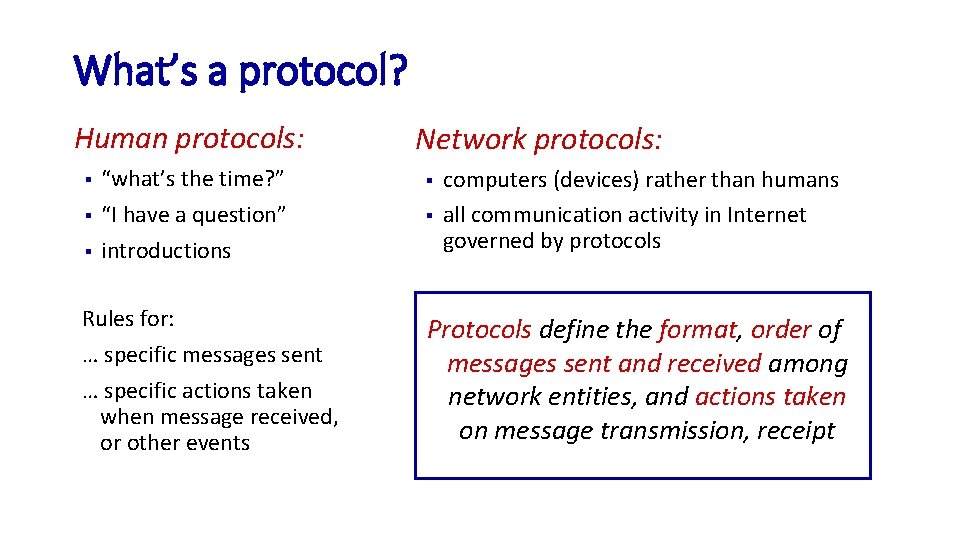
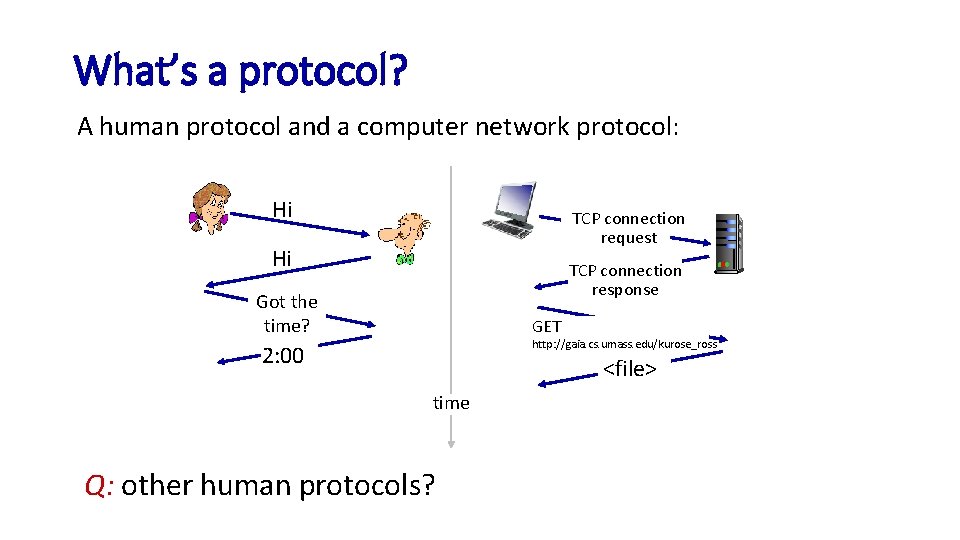
What’s a protocol? Human protocols: § § § “what’s the time? ” “I have a question” introductions Rules for: … specific messages sent … specific actions taken when message received, or other events Network protocols: § § computers (devices) rather than humans all communication activity in Internet governed by protocols Protocols define the format, order of messages sent and received among network entities, and actions taken on message transmission, receipt
What’s a protocol? A human protocol and a computer network protocol: Hi TCP connection request Hi TCP connection response Got the time? GET http: //gaia. cs. umass. edu/kurose_ross 2: 00 <file> time Q: other human protocols?
Introduction COMPSCI 453 Computer Networks Professor Jim Kurose § Introduction. What is the Internet? What is a protocol? § Network edge § Network core § Performance: loss, delay, throughput § Protocol layers, service models § Security § History College of Information and Computer Sciences University of Massachusetts Class textbook: Computer Networking: A Top. Down Approach (8 th ed. ) J. F. Kurose, K. W. Ross Pearson, 2020 http: //gaia. cs. umass. edu/kurose_ross Video: 2020, J. F. Kurose, All Rights Reserved Powerpoint: 1996 -2020, J. F. Kurose, K. W. Ross, All Rights Reserved