
Introduction Chapter 1 Sections 1 The Nature of
- Slides: 41
Introduction Chapter 1 Sections: 1. The Nature of Work 2. Defining Work Systems 3. Types of Occupations 4. Productivity 5. Organization of the Book
Historical Figures Related to Work § Eli Whitney (1765 -1825) § Interchangeable parts manufacture § Henry Ford (1863 -1947) § Moving assembly line § Frederick W. Taylor (1856 -1915) § Scientific management § Time study § Frank (1868 -1924) & Lillian Gilbreth (1878 -1972) § Motion study
Work § Is our primary means of livelihood § Serves an important economic function in the global world of commerce § Creates opportunities for social interactions and friendships § Provides the products and services that sustain and improve our standard of living
Introduction 1. The Nature of Work
The Nature of Work is an activity in which one exerts physical and mental effort to accomplish a given task or perform a duty § Task or duty has some useful objective § Worker applies skills and knowledge for successful completion § The activity has commercial value § The worker is compensated
Work (Physics Definition) The displacement (distance) that an object moves in a certain direction multiplied by the force acting on the object in the same direction. § Units of measurement: § Newton-meters (N-m) in the International System of Units (metric system) § Foot-pounds (ft-lb) in U. S. customary units
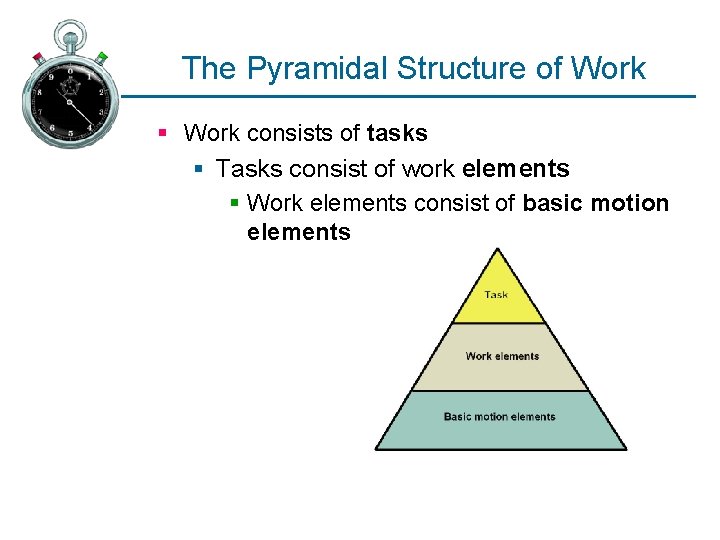
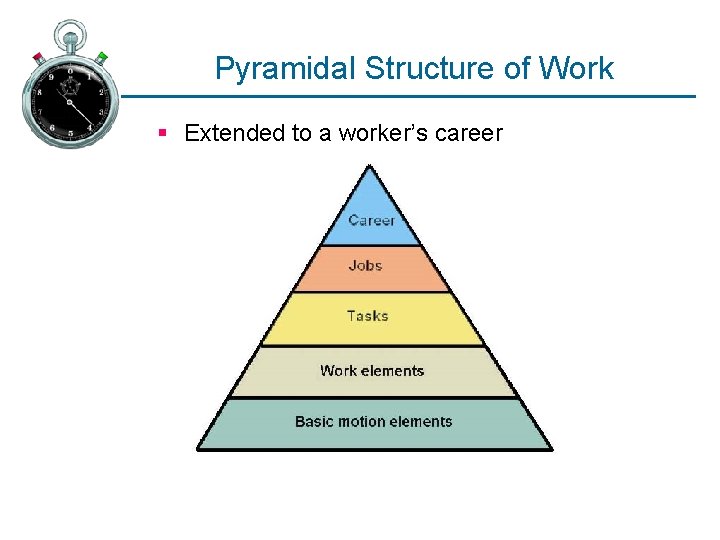
The Pyramidal Structure of Work § Work consists of tasks § Tasks consist of work elements § Work elements consist of basic motion elements
Task An amount of work that is assigned to a worker or for which a worker is responsible § Repetitive task – as in mass production § Time required = 30 seconds to several minutes § Non-repetitive task – performed periodically, infrequently, or only once § Time required usually much longer than for repetitive task
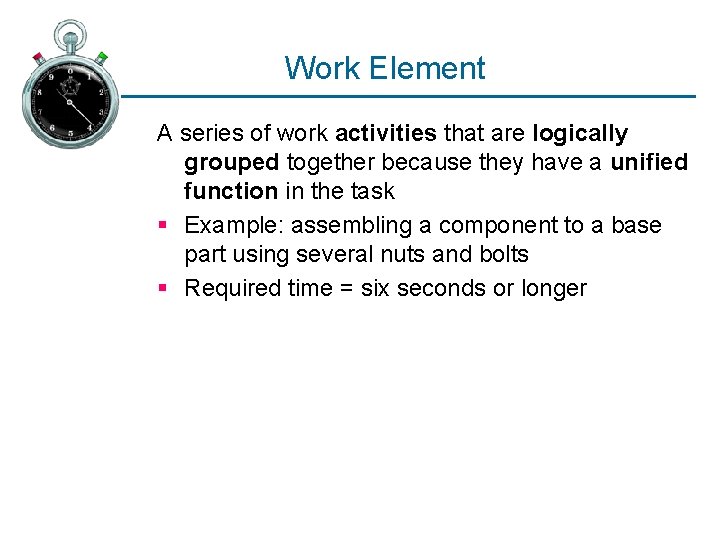
Work Element A series of work activities that are logically grouped together because they have a unified function in the task § Example: assembling a component to a base part using several nuts and bolts § Required time = six seconds or longer
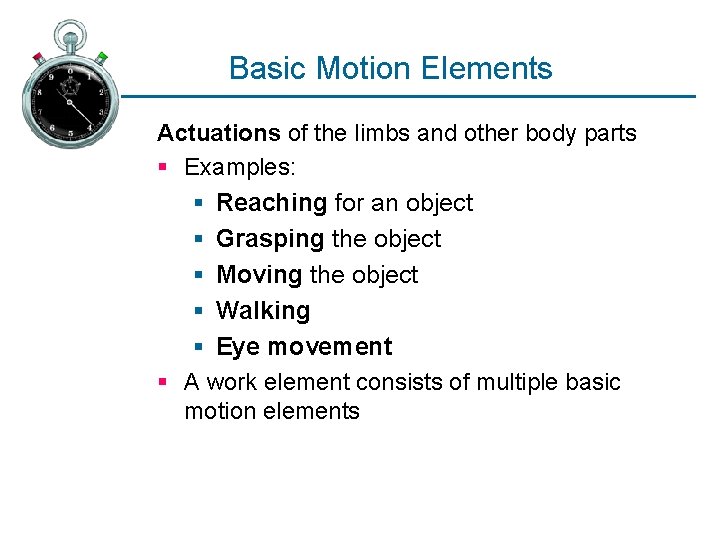
Basic Motion Elements Actuations of the limbs and other body parts § Examples: § Reaching for an object § Grasping the object § Moving the object § Walking § Eye movement § A work element consists of multiple basic motion elements
Pyramidal Structure of Work § Extended to a worker’s career
Importance of Time § In many human endeavors, “time is of the essence” § In sports § In daily living § In business and industry § In work
Time in Business and Industry § § § New product introduction Product cost Delivery time Overnight delivery Competitive bidding Production scheduling
Importance of Time in Work § Time is the most frequently used measure of work § How many minutes or hours are required to perform a given task? § Most workers are paid by the time they work § Hourly wage rate § Salary § Workers must arrive at work on time § Labor and staffing requirements computed in units of time
Introduction 2. Defining Work Systems
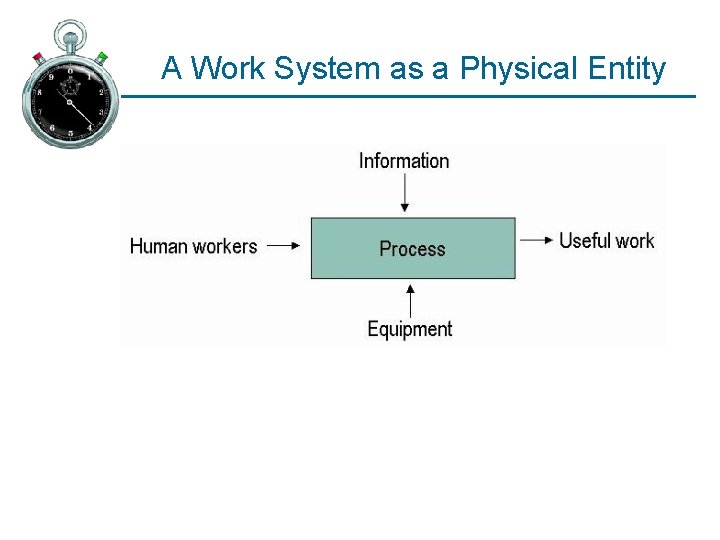
Work System Defined As a physical entity, a work system is a system consisting of humans, information, and equipment designed to perform useful work § Contributes to the production of a product or delivery of a service § Examples: § Worker operating a machine tool in a factory § Robotic welding line in an automobile plant § Parcel service agent driving a delivery truck to make customer deliveries § Designer working at a CAD workstation
A Work System as a Physical Entity
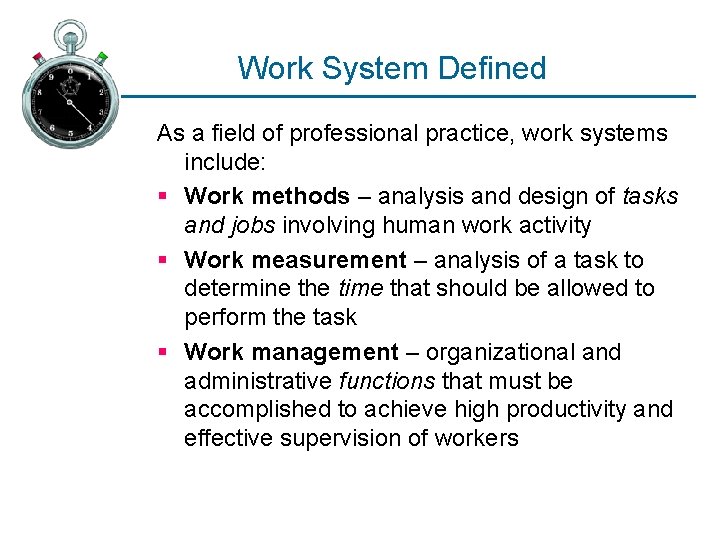
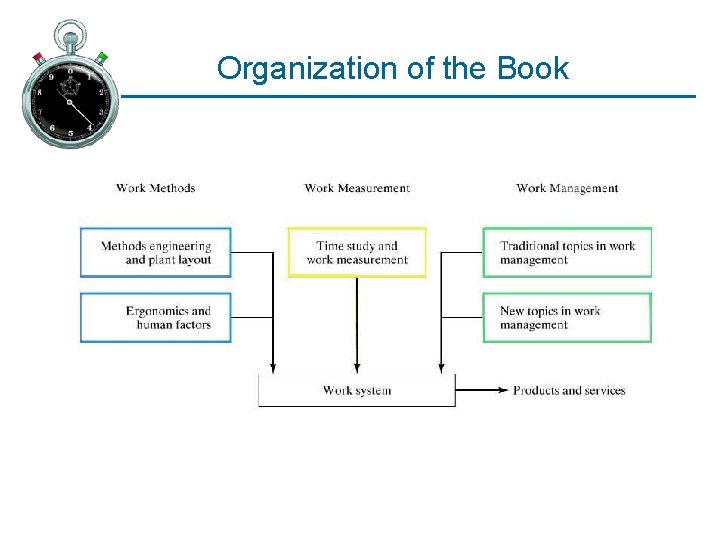
Work System Defined As a field of professional practice, work systems include: § Work methods – analysis and design of tasks and jobs involving human work activity § Work measurement – analysis of a task to determine the time that should be allowed to perform the task § Work management – organizational and administrative functions that must be accomplished to achieve high productivity and effective supervision of workers
Introduction 3. Types of Occupations
Jobs and Occupations § Bureau of Labor Statistics of the U. S. Department of Labor identifies 821 occupations in its Standard Occupational Classification (SOC) § The SOC covers virtually every type of work performed for pay or profit in the United States § Occupations are organized into 23 major groups § Groups are established on the basis of type of work and/or the industry in which it is performed
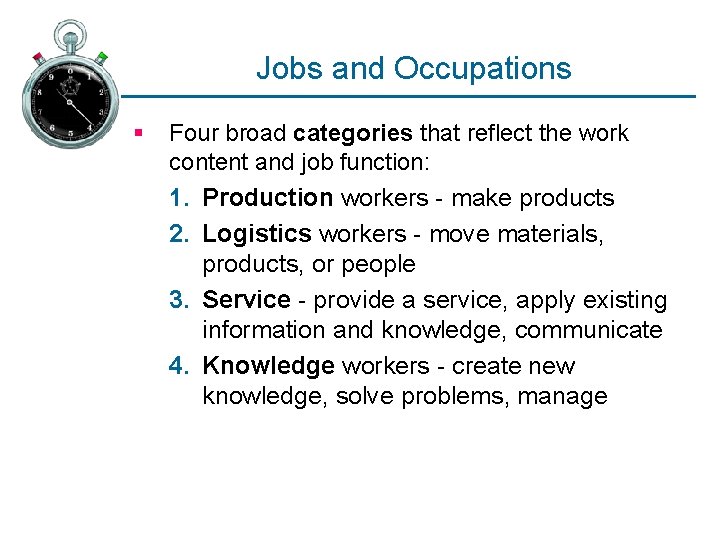
Jobs and Occupations § Four broad categories that reflect the work content and job function: 1. Production workers - make products 2. Logistics workers - move materials, products, or people 3. Service - provide a service, apply existing information and knowledge, communicate 4. Knowledge workers - create new knowledge, solve problems, manage
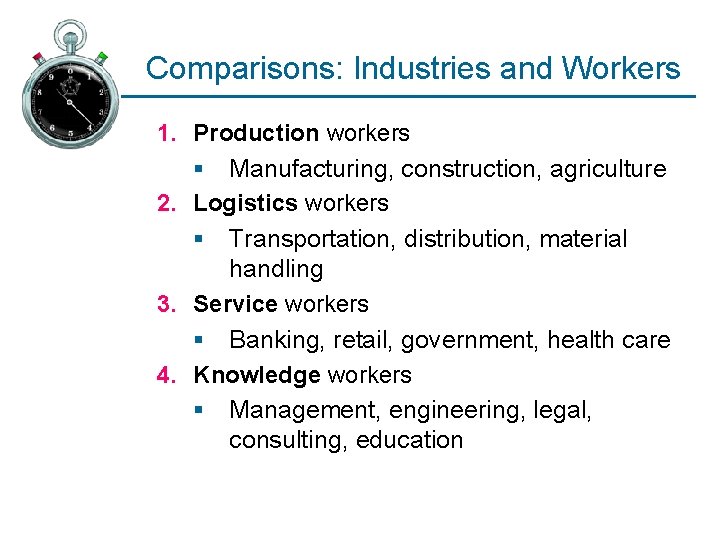
Comparisons: Industries and Workers 1. Production workers § Manufacturing, construction, agriculture 2. Logistics workers § Transportation, distribution, material handling 3. Service workers § Banking, retail, government, health care 4. Knowledge workers § Management, engineering, legal, consulting, education
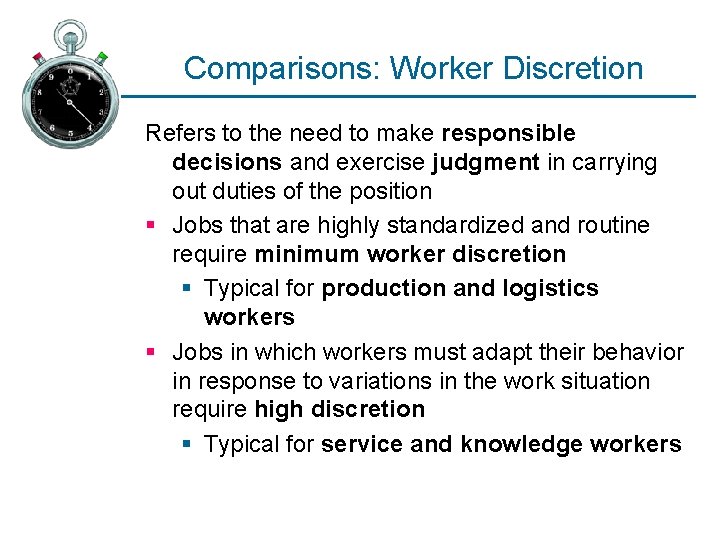
Comparisons: Worker Discretion Refers to the need to make responsible decisions and exercise judgment in carrying out duties of the position § Jobs that are highly standardized and routine require minimum worker discretion § Typical for production and logistics workers § Jobs in which workers must adapt their behavior in response to variations in the work situation require high discretion § Typical for service and knowledge workers
Introduction 4. Productivity
Productivity The level of output of a given process relative to the level of input § Process can refer to § Individual production or service operations § A national economy § Productivity is an important metric in work systems because § Improving productivity is the means by which worker compensation can be increased without increasing the costs of products and services they produce
Labor Productivity § The most common productivity measure is labor productivity, defined by the following ratio: LPR = where, § LPR = labor productivity ratio, § WU = work units of output, § LH = labor hours of input
Labor Factor in Productivity § Labor itself does not contribute much to improving productivity § More important factors: § Capital - substitution of machines for human labor § Technology - fundamental change in the way some activity or function is accomplished
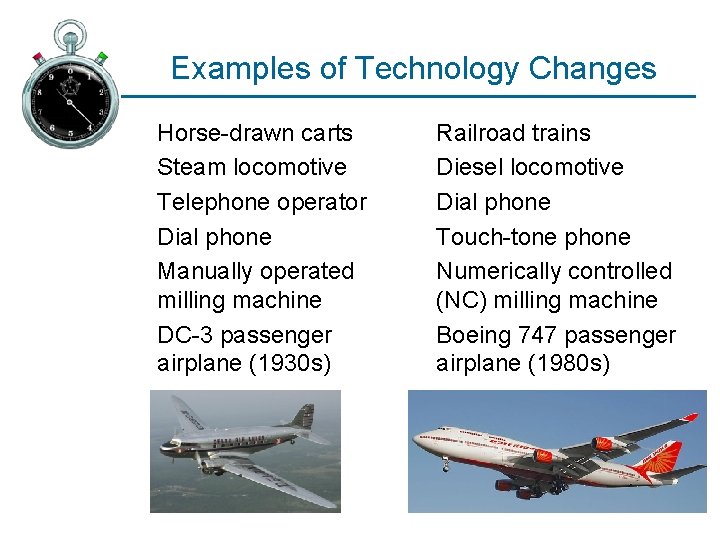
Examples of Technology Changes Horse-drawn carts Steam locomotive Telephone operator Dial phone Manually operated milling machine DC-3 passenger airplane (1930 s) Railroad trains Diesel locomotive Dial phone Touch-tone phone Numerically controlled (NC) milling machine Boeing 747 passenger airplane (1980 s)
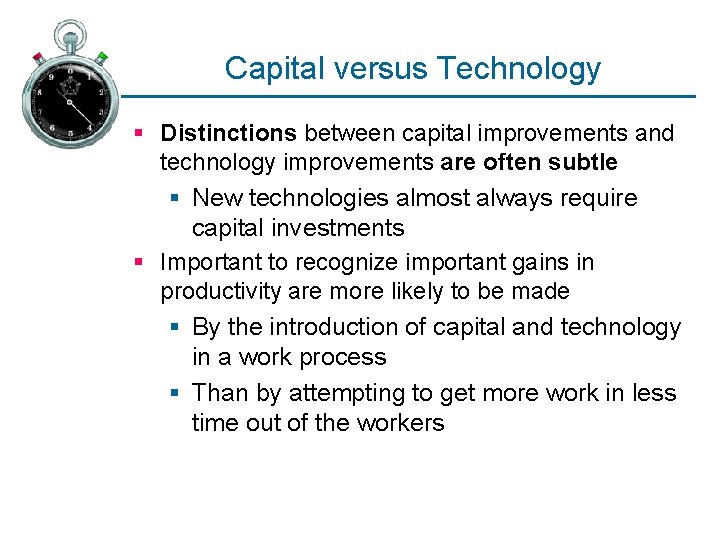
Capital versus Technology § Distinctions between capital improvements and technology improvements are often subtle § New technologies almost always require capital investments § Important to recognize important gains in productivity are more likely to be made § By the introduction of capital and technology in a work process § Than by attempting to get more work in less time out of the workers
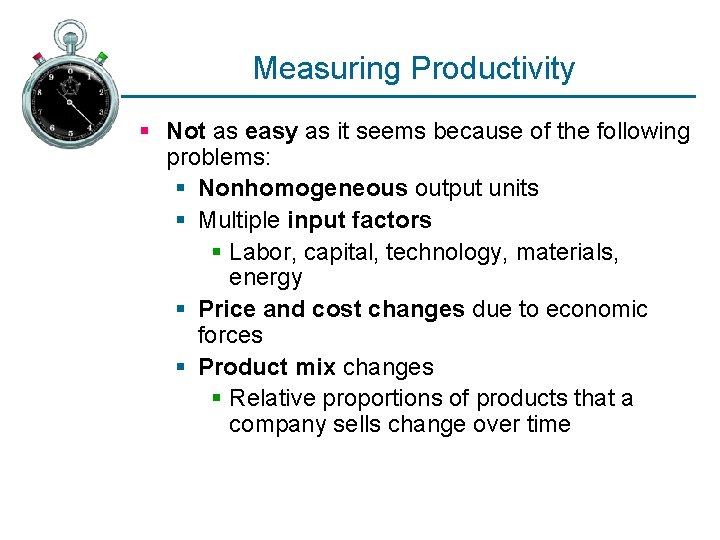
Measuring Productivity § Not as easy as it seems because of the following problems: § Nonhomogeneous output units § Multiple input factors § Labor, capital, technology, materials, energy § Price and cost changes due to economic forces § Product mix changes § Relative proportions of products that a company sells change over time
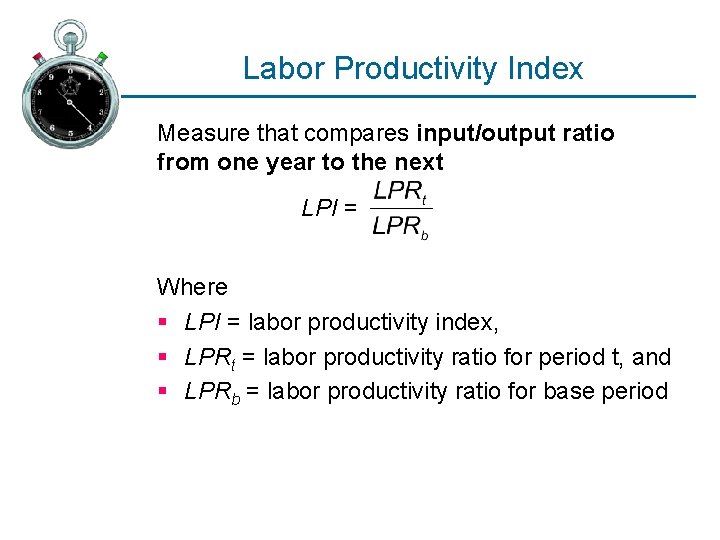
Labor Productivity Index Measure that compares input/output ratio from one year to the next LPI = Where § LPI = labor productivity index, § LPRt = labor productivity ratio for period t, and § LPRb = labor productivity ratio for base period
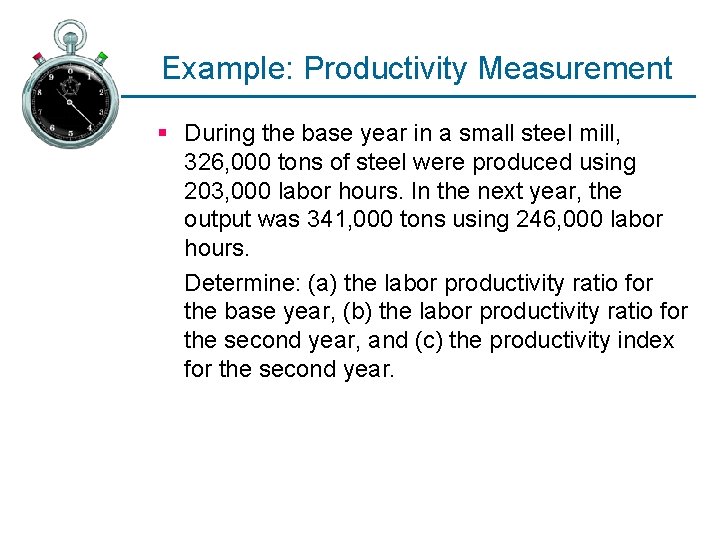
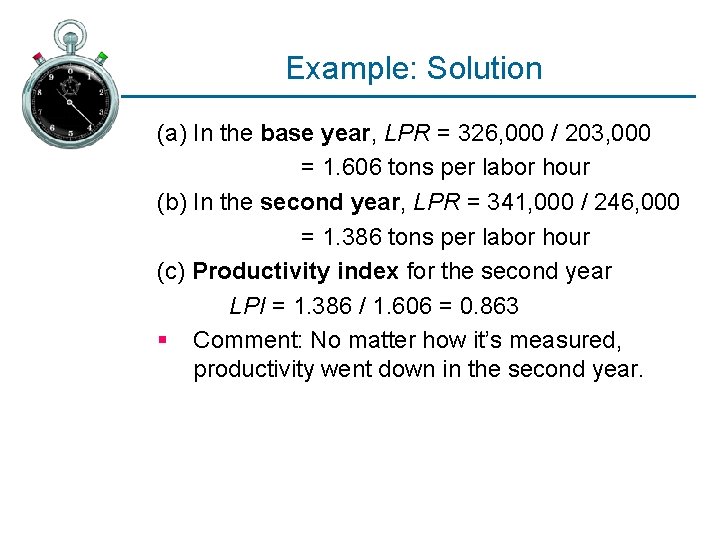
Example: Productivity Measurement § During the base year in a small steel mill, 326, 000 tons of steel were produced using 203, 000 labor hours. In the next year, the output was 341, 000 tons using 246, 000 labor hours. Determine: (a) the labor productivity ratio for the base year, (b) the labor productivity ratio for the second year, and (c) the productivity index for the second year.
Example: Solution (a) In the base year, LPR = 326, 000 / 203, 000 = 1. 606 tons per labor hour (b) In the second year, LPR = 341, 000 / 246, 000 = 1. 386 tons per labor hour (c) Productivity index for the second year LPI = 1. 386 / 1. 606 = 0. 863 § Comment: No matter how it’s measured, productivity went down in the second year.
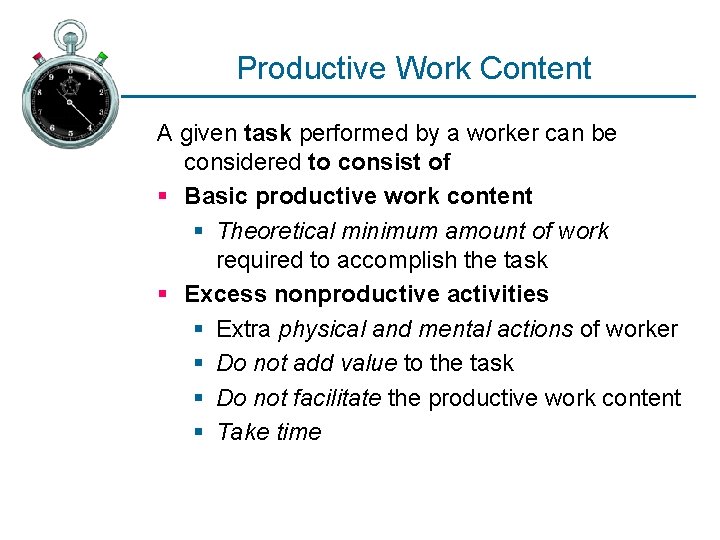
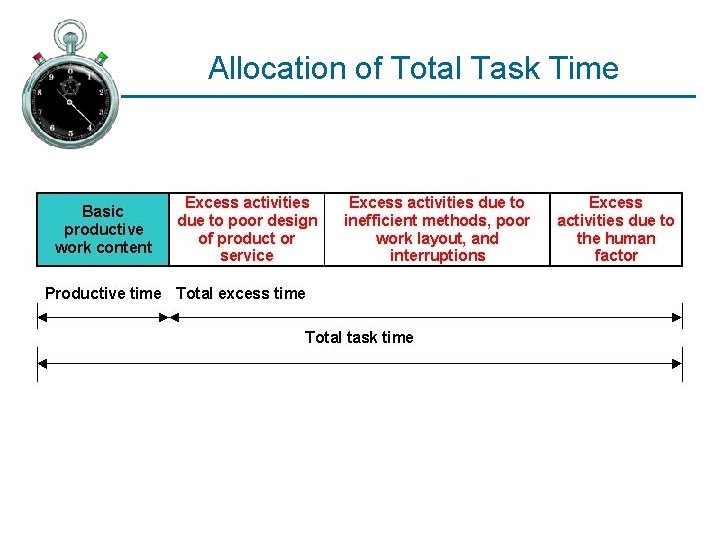
Productive Work Content A given task performed by a worker can be considered to consist of § Basic productive work content § Theoretical minimum amount of work required to accomplish the task § Excess nonproductive activities § Extra physical and mental actions of worker § Do not add value to the task § Do not facilitate the productive work content § Take time
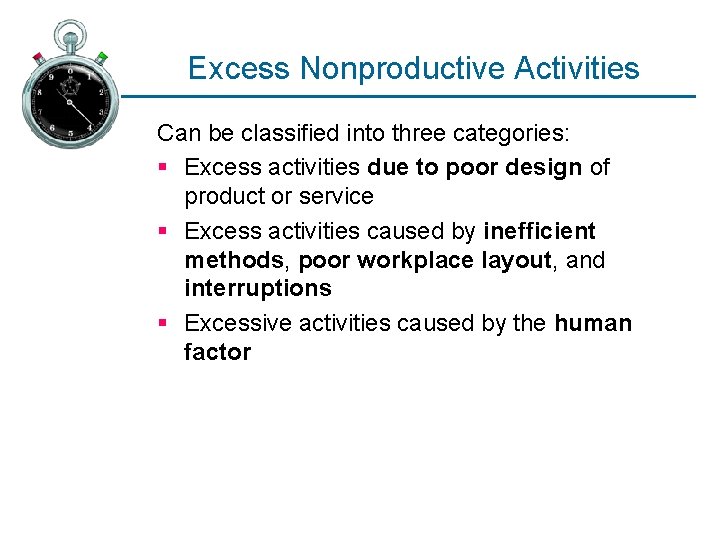
Excess Nonproductive Activities Can be classified into three categories: § Excess activities due to poor design of product or service § Excess activities caused by inefficient methods, poor workplace layout, and interruptions § Excessive activities caused by the human factor
Allocation of Total Task Time
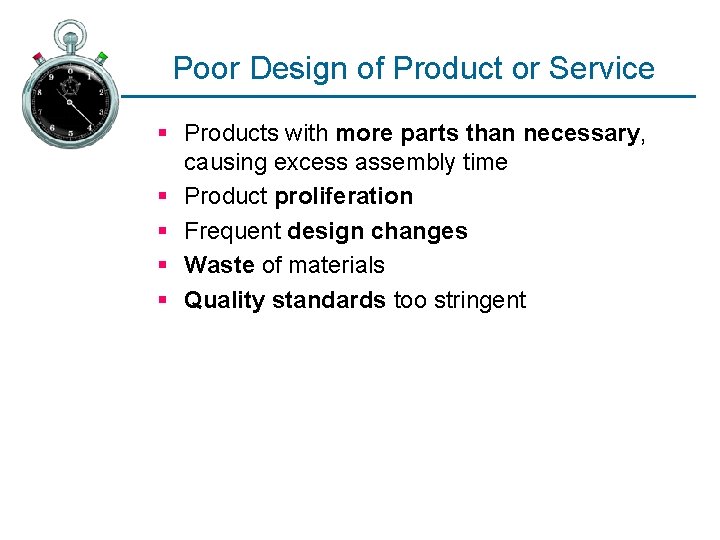
Poor Design of Product or Service § Products with more parts than necessary, causing excess assembly time § Product proliferation § Frequent design changes § Waste of materials § Quality standards too stringent
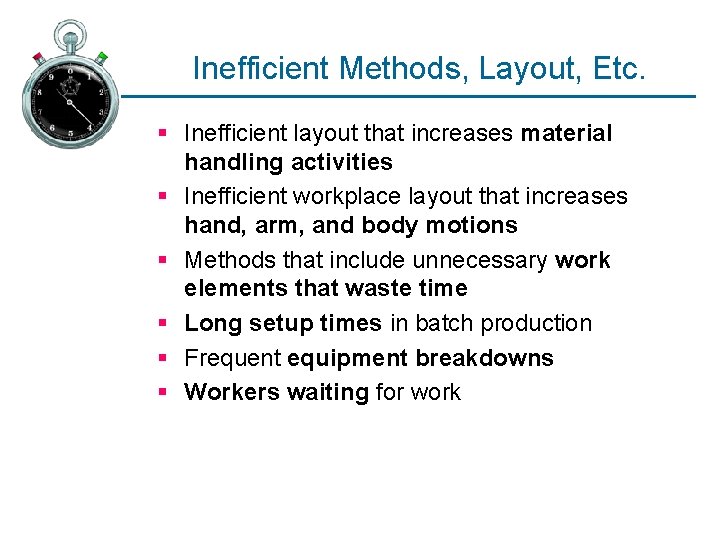
Inefficient Methods, Layout, Etc. § Inefficient layout that increases material handling activities § Inefficient workplace layout that increases hand, arm, and body motions § Methods that include unnecessary work elements that waste time § Long setup times in batch production § Frequent equipment breakdowns § Workers waiting for work
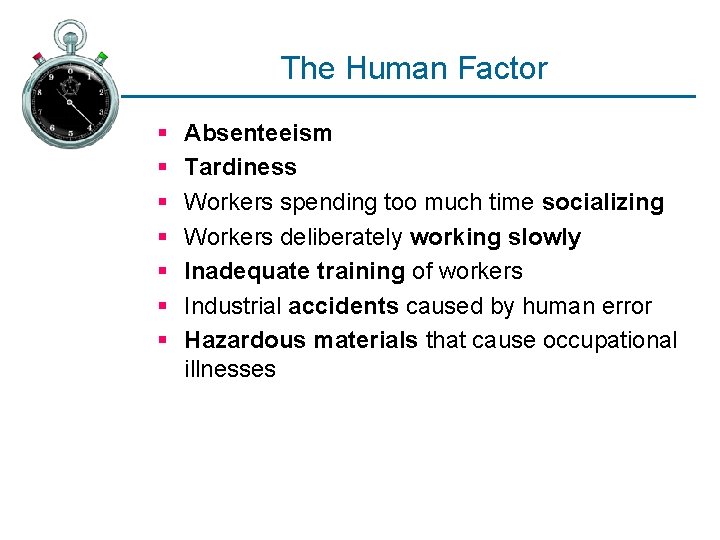
The Human Factor § § § § Absenteeism Tardiness Workers spending too much time socializing Workers deliberately working slowly Inadequate training of workers Industrial accidents caused by human error Hazardous materials that cause occupational illnesses
Introduction 5. Organization of the Book
Organization of the Book