
Introduction and History of Anatomy Definitions Branches Anatomy
Introduction and History of Anatomy
Definitions & Branches Anatomy- From Greek “to cut open”; study of the structure of the human body § Macroscopic (Gross): Regional / Systemic / Surface § Microscopic: Cytology / Histology § Developmental § Pathological ► Physiology – branch of biological science studying the function of organs and organ systems § Systemic approach § Pathological ► Which is the older science? Why?
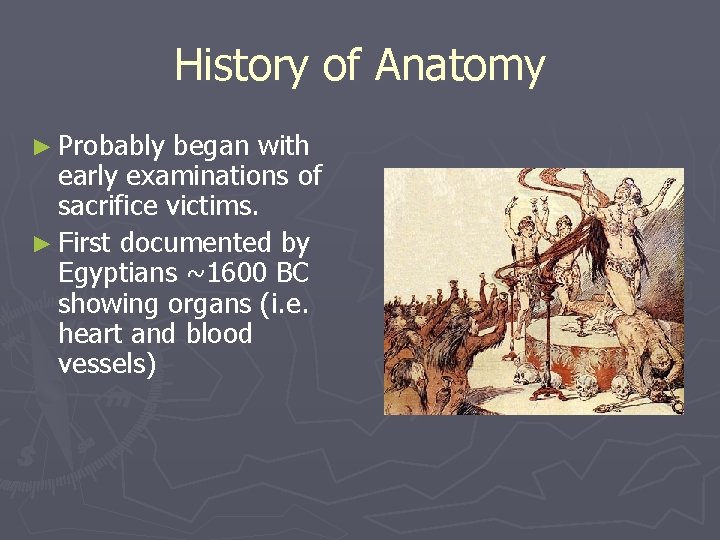
History of Anatomy ► Probably began with early examinations of sacrifice victims. ► First documented by Egyptians ~1600 BC showing organs (i. e. heart and blood vessels)
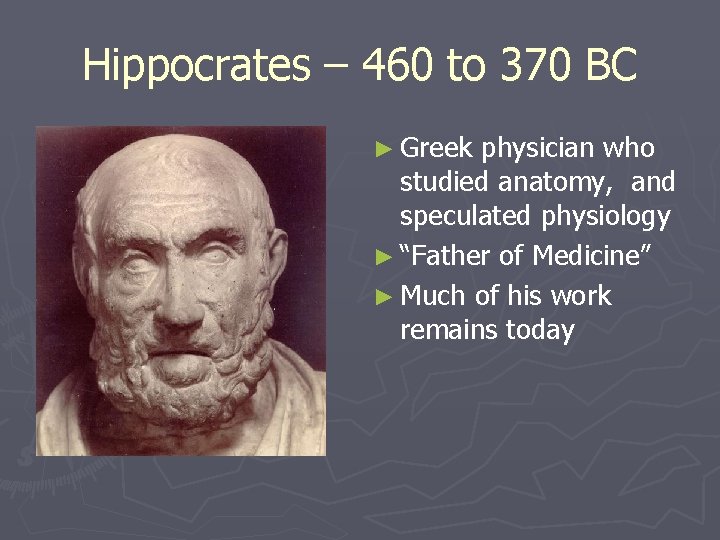
Hippocrates – 460 to 370 BC ► Greek physician who studied anatomy, and speculated physiology ► “Father of Medicine” ► Much of his work remains today
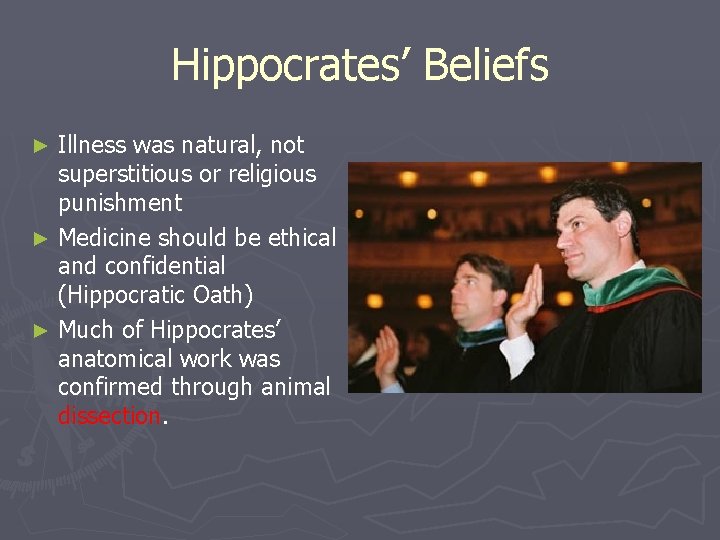
Hippocrates’ Beliefs Illness was natural, not superstitious or religious punishment ► Medicine should be ethical and confidential (Hippocratic Oath) ► Much of Hippocrates’ anatomical work was confirmed through animal dissection. ►
Hippocratic Oath At the time of being admitted as a member of the medical profession: ► I solemnly pledge to consecrate my life to the service of humanity; ► I will give to my teachers the respect and gratitude that is their due; ► I will practise my profession with conscience and dignity; ► The health of my patient will be my first consideration; ► I will respect the secrets that are confided in me, even after the patient has died; ► I will maintain by all the means in my power, the honour and the noble traditions of the medical profession; ► My colleagues will be my sisters and brothers; ► I will not permit considerations of age, disease or disability, creed, ethnic origin, gender, nationality, political affiliation, race, sexual orientation, social standing or any other factor to intervene between my duty and my patient; ► I will maintain the utmost respect for human life; ► I will not use my medical knowledge to violate human rights and civil liberties, even under threat; ► I make these promises solemnly, freely and upon my honour
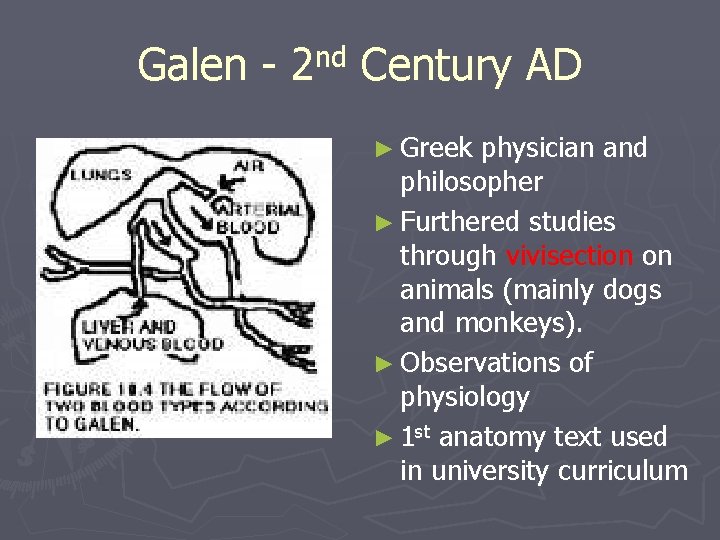
Galen - nd 2 Century AD ► Greek physician and philosopher ► Furthered studies through vivisection on animals (mainly dogs and monkeys). ► Observations of physiology ► 1 st anatomy text used in university curriculum
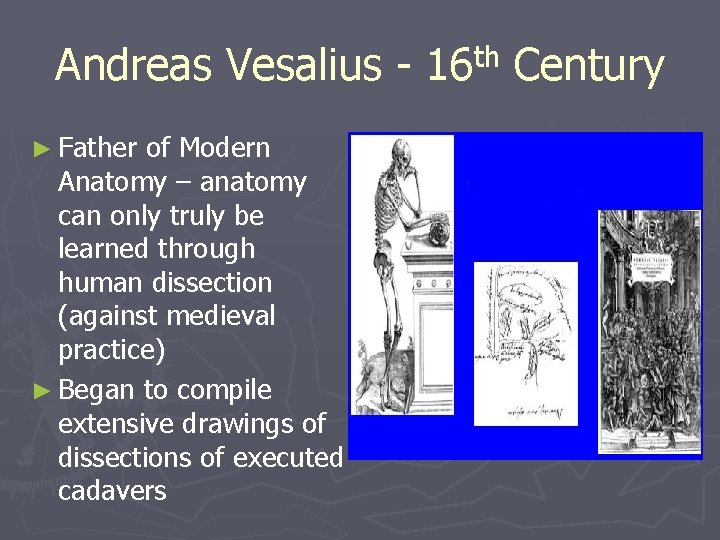
Andreas Vesalius ► Father of Modern Anatomy – anatomy can only truly be learned through human dissection (against medieval practice) ► Began to compile extensive drawings of dissections of executed cadavers th 16 Century
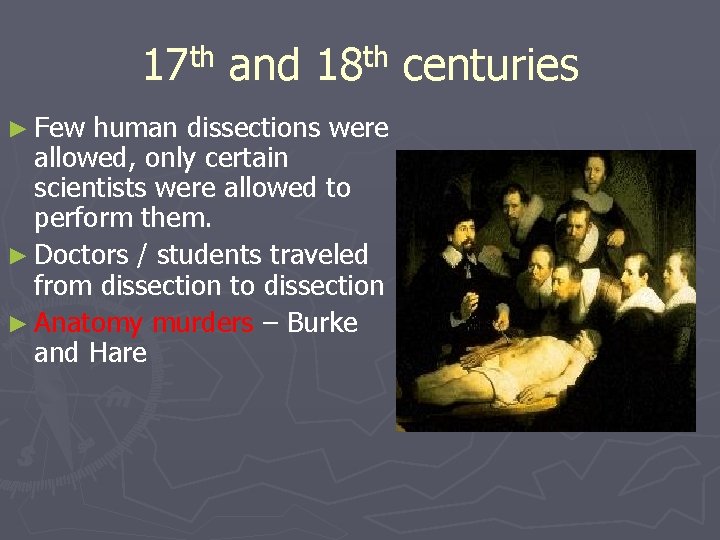
th 17 ► Few and th 18 human dissections were allowed, only certain scientists were allowed to perform them. ► Doctors / students traveled from dissection to dissection ► Anatomy murders – Burke and Hare centuries
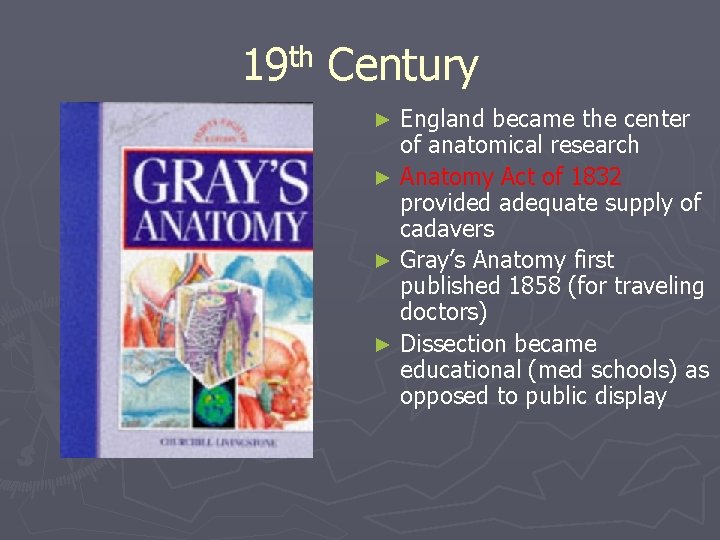
th 19 Century England became the center of anatomical research ► Anatomy Act of 1832 provided adequate supply of cadavers ► Gray’s Anatomy first published 1858 (for traveling doctors) ► Dissection became educational (med schools) as opposed to public display ►
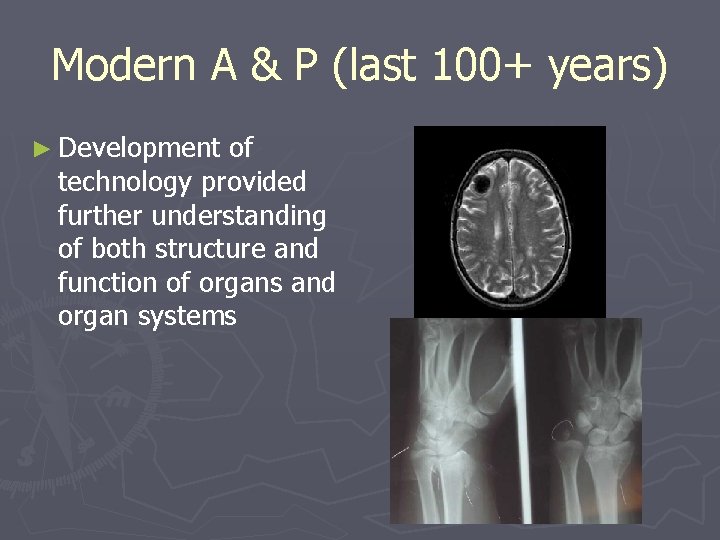
Modern A & P (last 100+ years) ► Development of technology provided further understanding of both structure and function of organs and organ systems
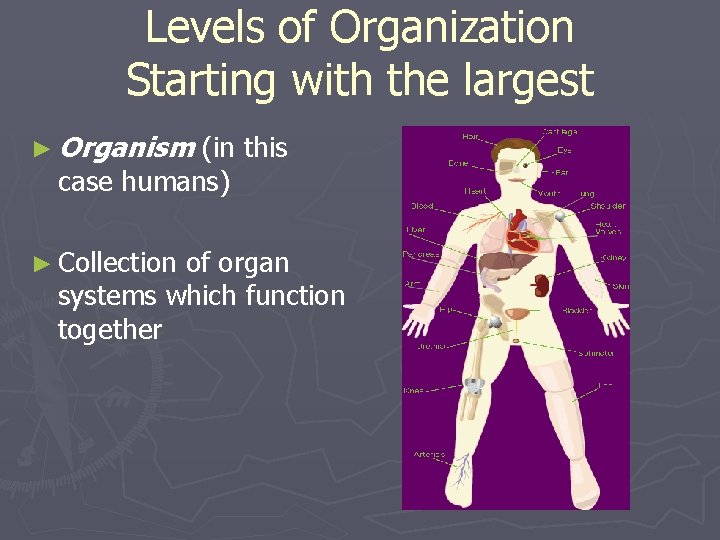
Levels of Organization Starting with the largest ► Organism (in this case humans) ► Collection of organ systems which function together
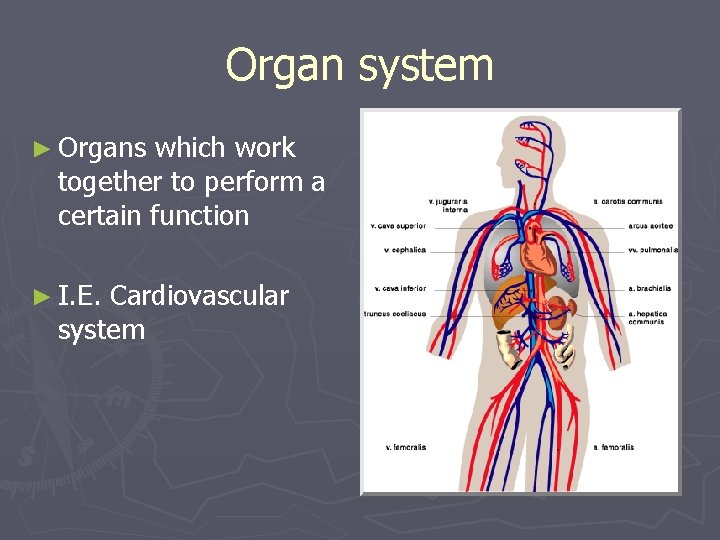
Organ system ► Organs which work together to perform a certain function ► I. E. Cardiovascular system
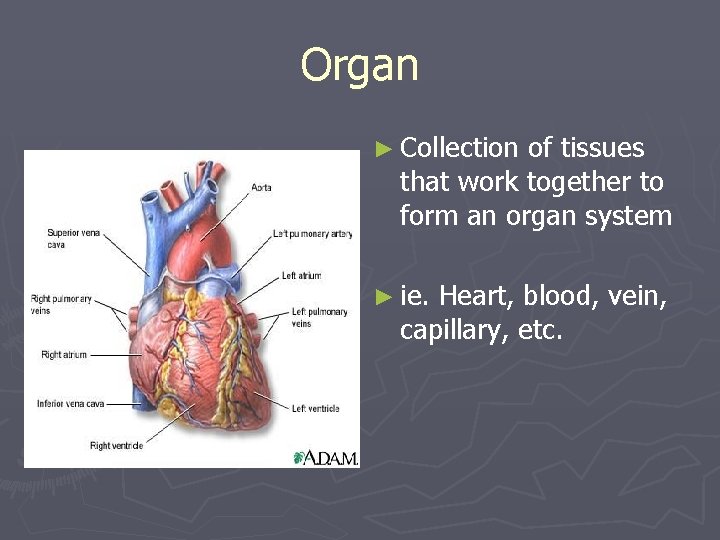
Organ ► Collection of tissues that work together to form an organ system ► ie. Heart, blood, vein, capillary, etc.
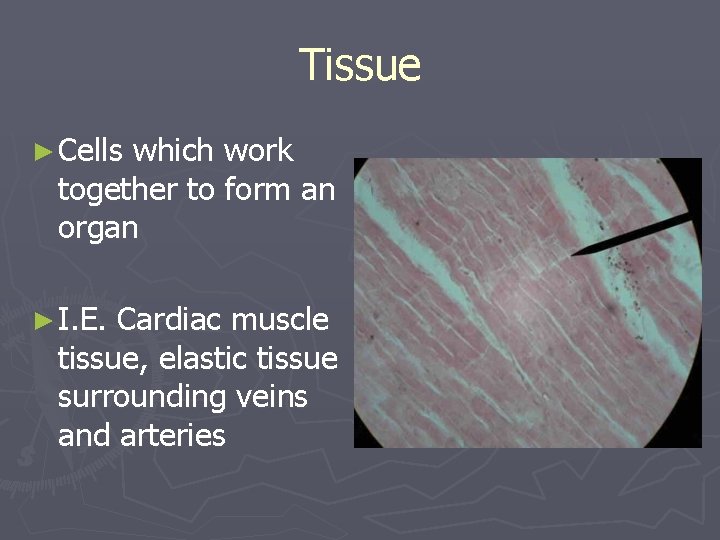
Tissue ► Cells which work together to form an organ ► I. E. Cardiac muscle tissue, elastic tissue surrounding veins and arteries
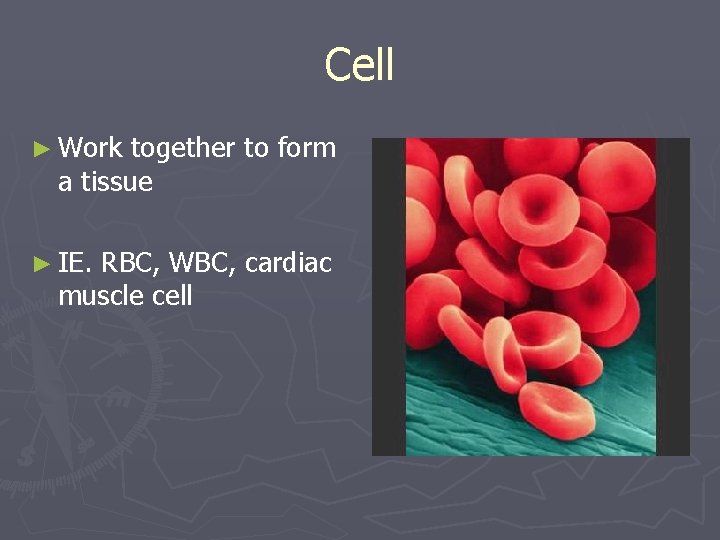
Cell ► Work together to form a tissue ► IE. RBC, WBC, cardiac muscle cell

Chemical (Molecules and Atoms) ► Fundamental substances that function to form the structure and function of a cell ► IE. Protein, carbohydrate, lipid, carbon
Living Requirements ► Water § Transport & body temp ► Food / Nutrients § Energy & raw materials ► Oxygen § Drives metabolism ► Heat § Reaction rate ► Pressure § Force for flow of air / blood
Homeostasis ►System to maintain stable internal conditions for a living thing ►Dynamic State = continually changing due to both external and internal influences
Regulation of Homeostasis ► The homeostatic responses of the body are regulated by the combined effects of the nervous system and the endocrine system. § Nervous system = electrical messages, control events short-term and specific basis § Endocrine system = chemical messages, control events longer-term and more widespread basis ► Feedback mechanisms occur when the level of one substance influences the level of another substance or activity of another organ (Positive or Negative)
Operation of a Control Mechanism Stimulus- disrupts homeostasis in a controlled condition which is monitored by a receptor. Receptor- detects specific changes in the controlled condition and sends input to control center. Control Center- receives input from receptors, processes the information in conjunction to the set point and provides output to specific effectors. Effectors- brings about change in the body in response to the control center that counteracts the disruption in homeostasis. Response-effectors brings the controlled condition back into normal homeostasis.
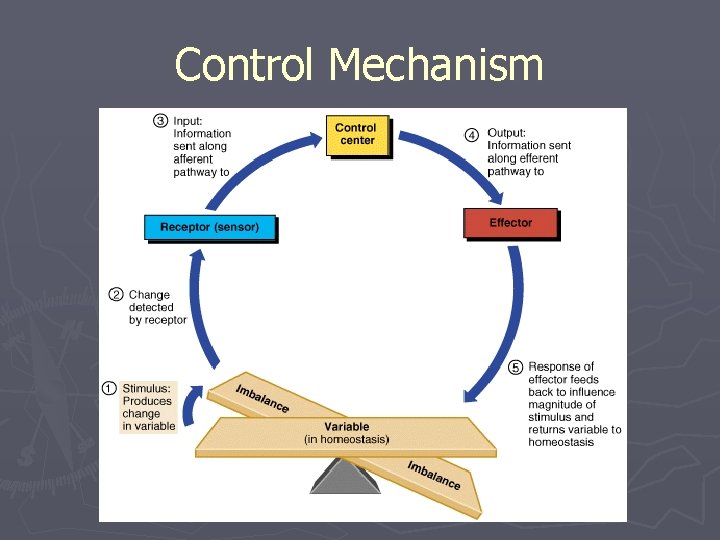
Control Mechanism
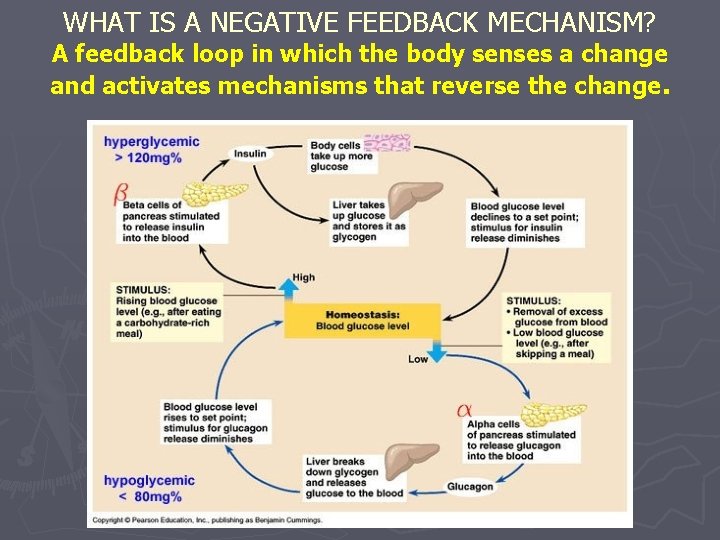
WHAT IS A NEGATIVE FEEDBACK MECHANISM? A feedback loop in which the body senses a change and activates mechanisms that reverse the change.
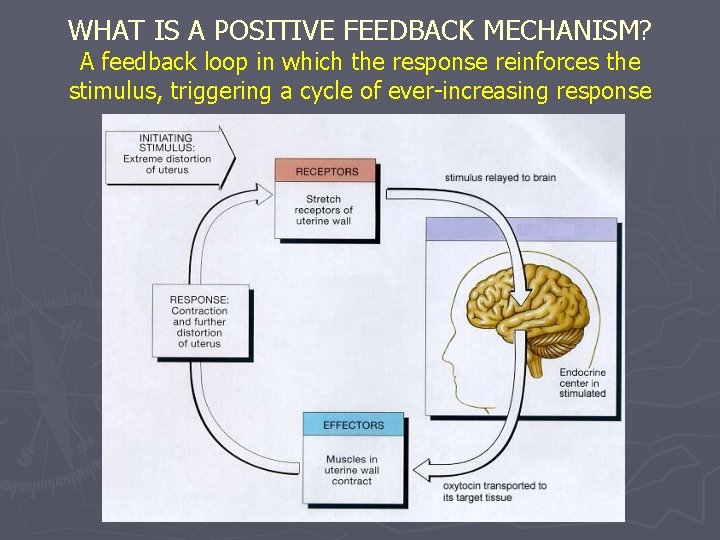
WHAT IS A POSITIVE FEEDBACK MECHANISM? A feedback loop in which the response reinforces the stimulus, triggering a cycle of ever-increasing response
Conclusions ► Most body functions operate on negative feedback, blood clotting and child birth operate on positive feedback mechanisms. ► Homeostatic Imbalance = leads to critical state / life threatening conditions in the human body
- Slides: 25