
INTRODUCTION Admission Transfer Discharge INTRODUCTION Responsibility for process
INTRODUCTION • Admission • Transfer • Discharge
INTRODUCTION • Responsibility for process • Role of assistant
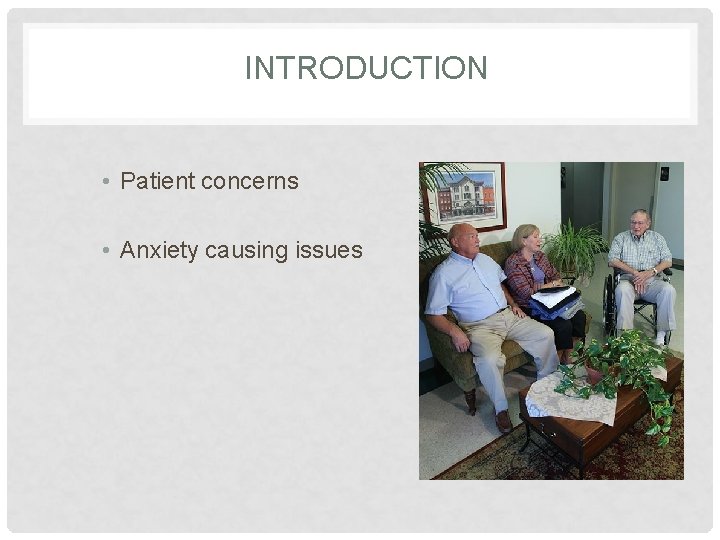
INTRODUCTION • Patient concerns • Anxiety causing issues

INTRODUCTION • Addressing patient concerns • Emphasize patient choices • Reassure patient
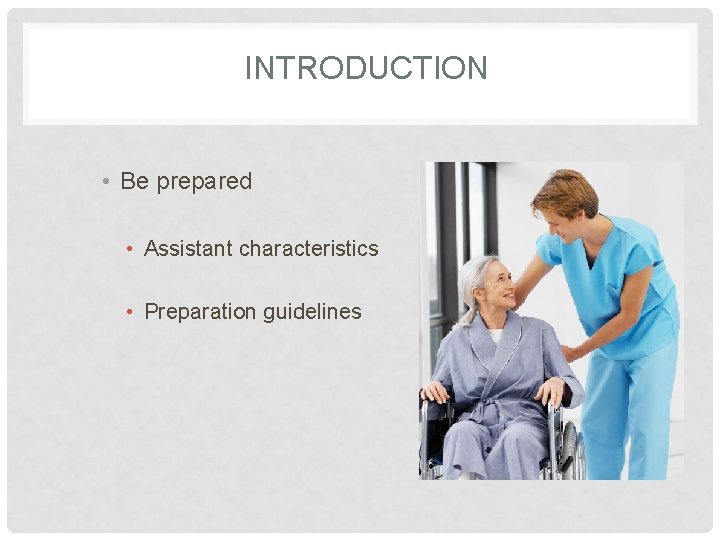
INTRODUCTION • Be prepared • Assistant characteristics • Preparation guidelines
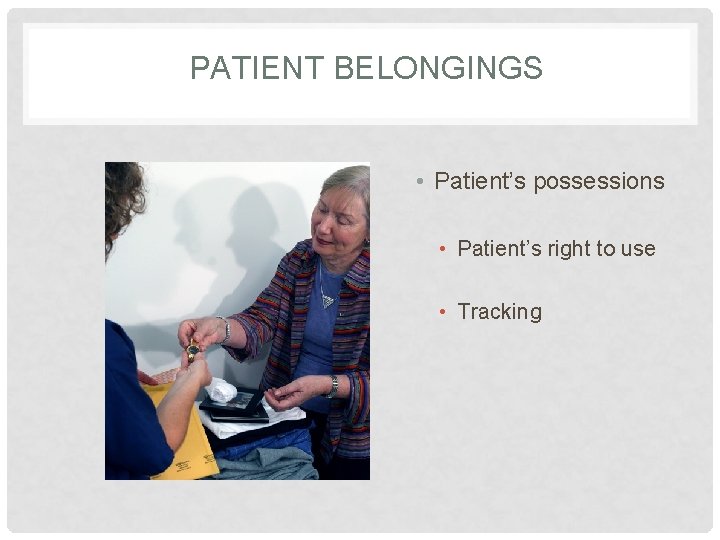
PATIENT BELONGINGS • Patient’s possessions • Patient’s right to use • Tracking
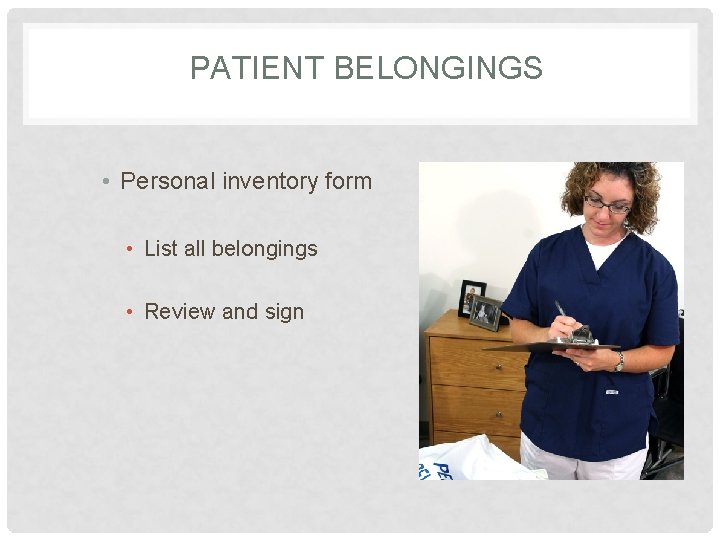
PATIENT BELONGINGS • Personal inventory form • List all belongings • Review and sign
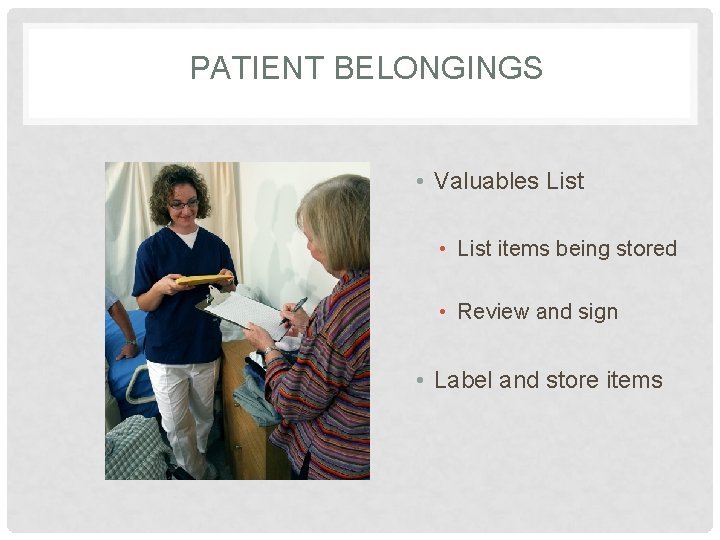
PATIENT BELONGINGS • Valuables List • List items being stored • Review and sign • Label and store items
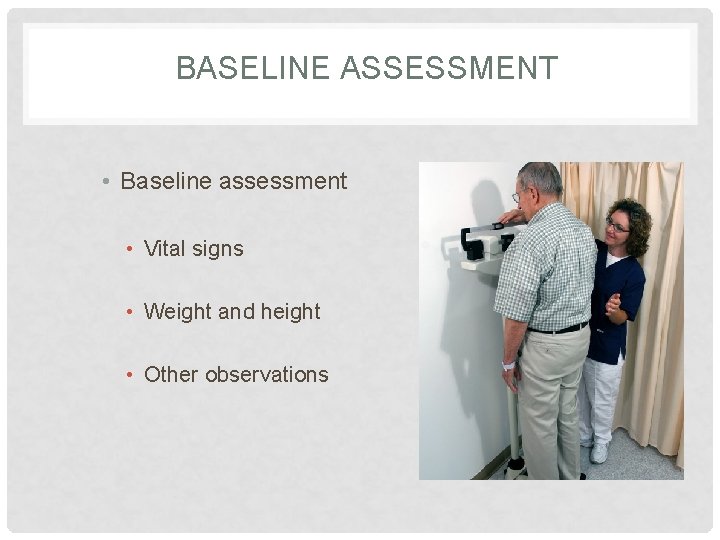
BASELINE ASSESSMENT • Baseline assessment • Vital signs • Weight and height • Other observations
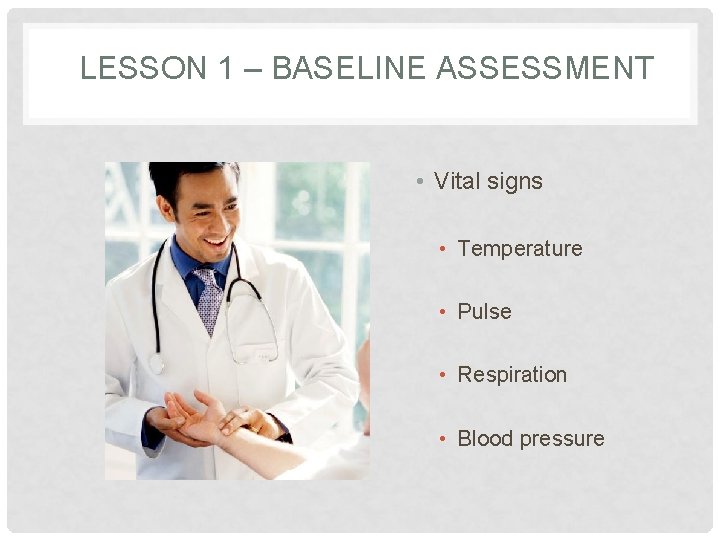
LESSON 1 – BASELINE ASSESSMENT • Vital signs • Temperature • Pulse • Respiration • Blood pressure
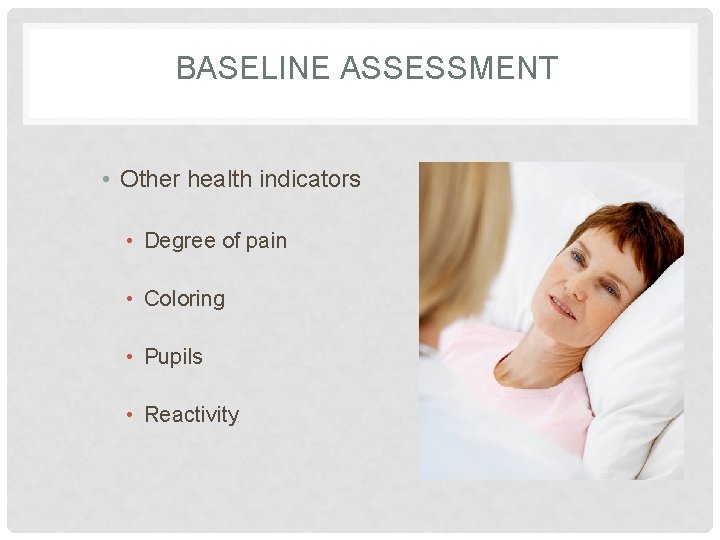
BASELINE ASSESSMENT • Other health indicators • Degree of pain • Coloring • Pupils • Reactivity
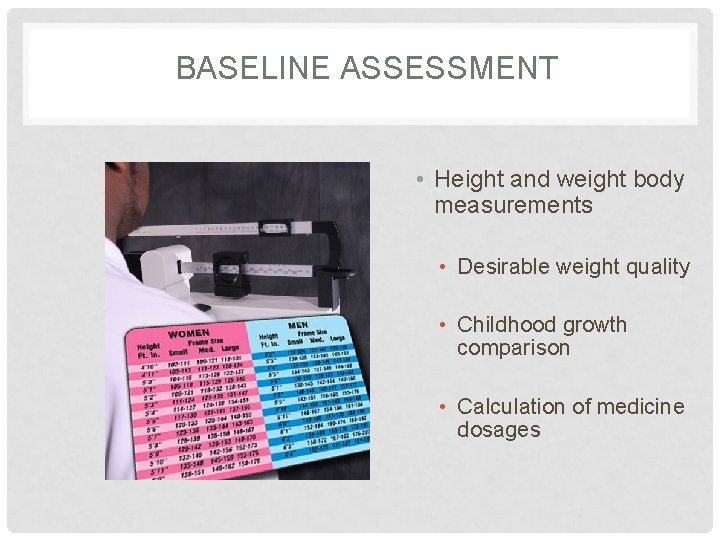
BASELINE ASSESSMENT • Height and weight body measurements • Desirable weight quality • Childhood growth comparison • Calculation of medicine dosages
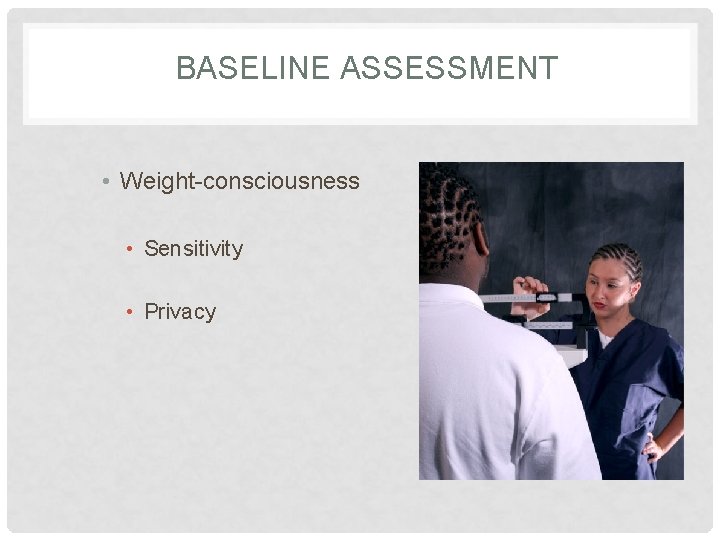
BASELINE ASSESSMENT • Weight-consciousness • Sensitivity • Privacy
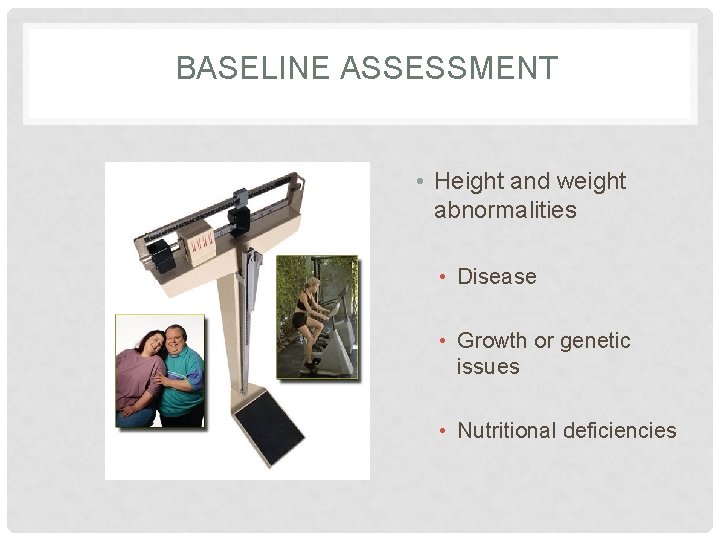
BASELINE ASSESSMENT • Height and weight abnormalities • Disease • Growth or genetic issues • Nutritional deficiencies
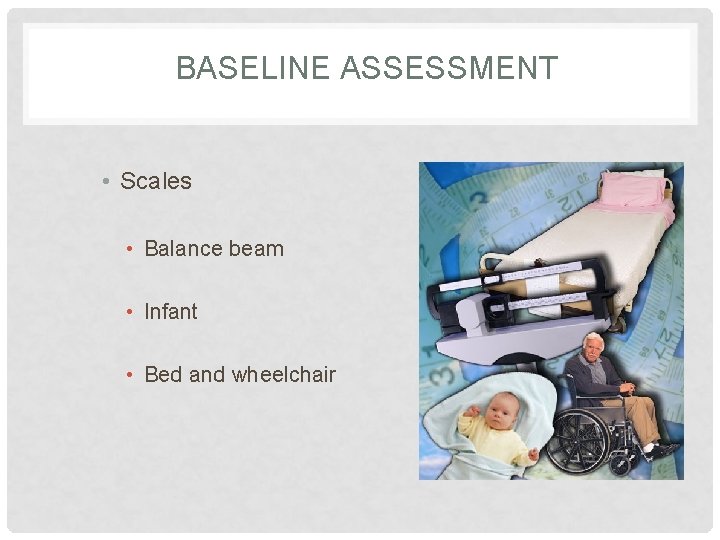
BASELINE ASSESSMENT • Scales • Balance beam • Infant • Bed and wheelchair
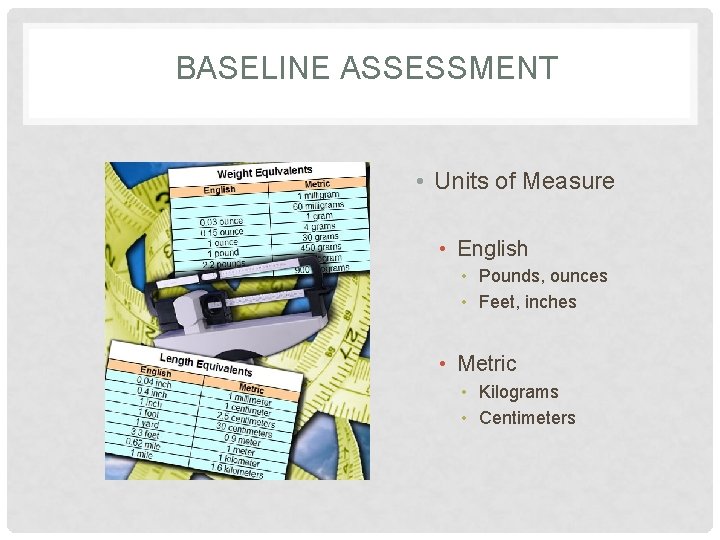
BASELINE ASSESSMENT • Units of Measure • English • Pounds, ounces • Feet, inches • Metric • Kilograms • Centimeters
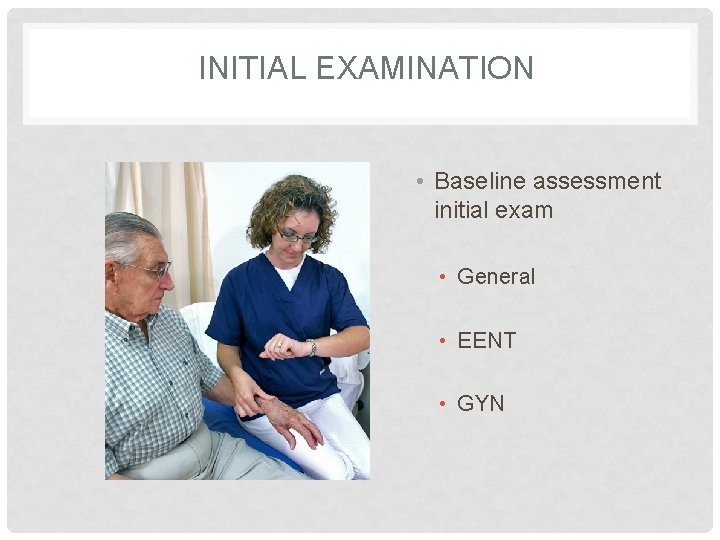
INITIAL EXAMINATION • Baseline assessment initial exam • General • EENT • GYN
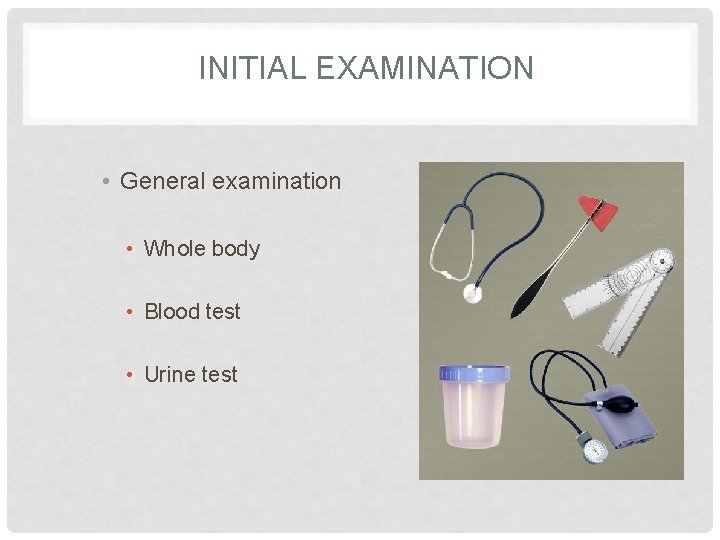
INITIAL EXAMINATION • General examination • Whole body • Blood test • Urine test
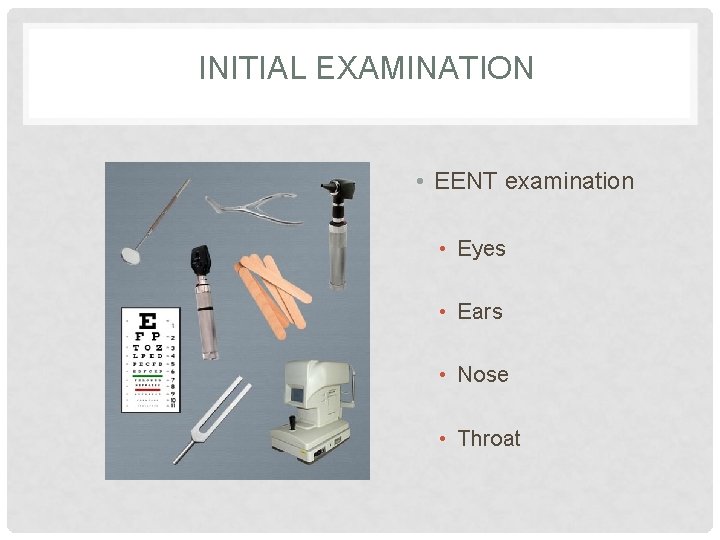
INITIAL EXAMINATION • EENT examination • Eyes • Ears • Nose • Throat
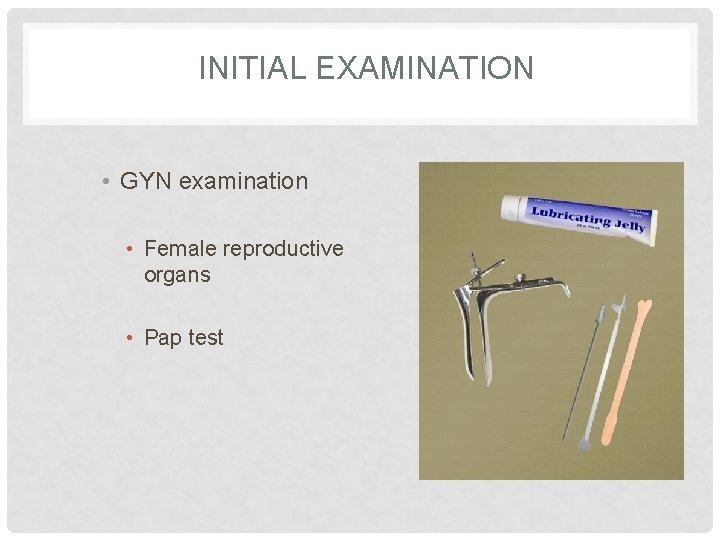
INITIAL EXAMINATION • GYN examination • Female reproductive organs • Pap test
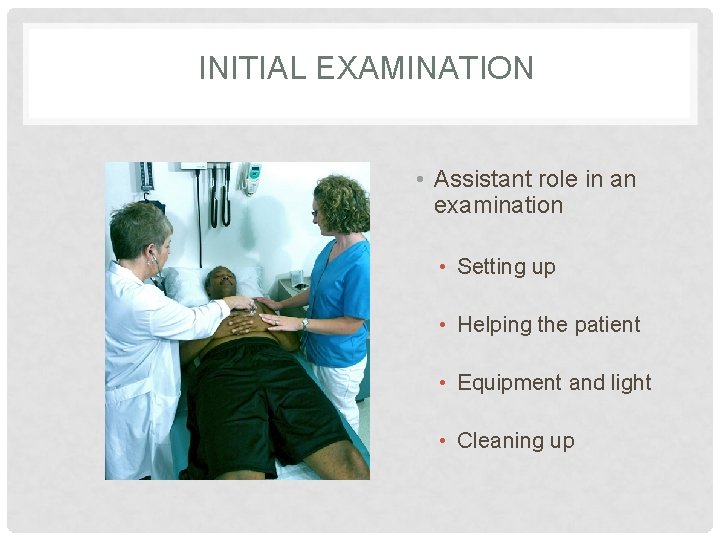
INITIAL EXAMINATION • Assistant role in an examination • Setting up • Helping the patient • Equipment and light • Cleaning up
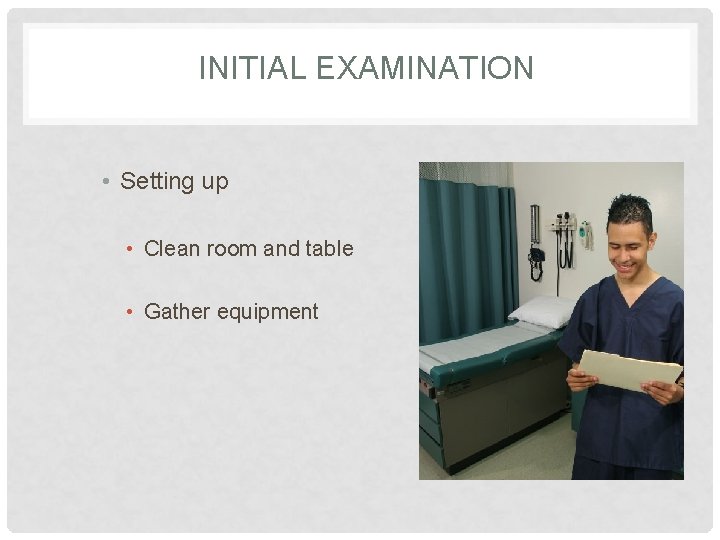
INITIAL EXAMINATION • Setting up • Clean room and table • Gather equipment
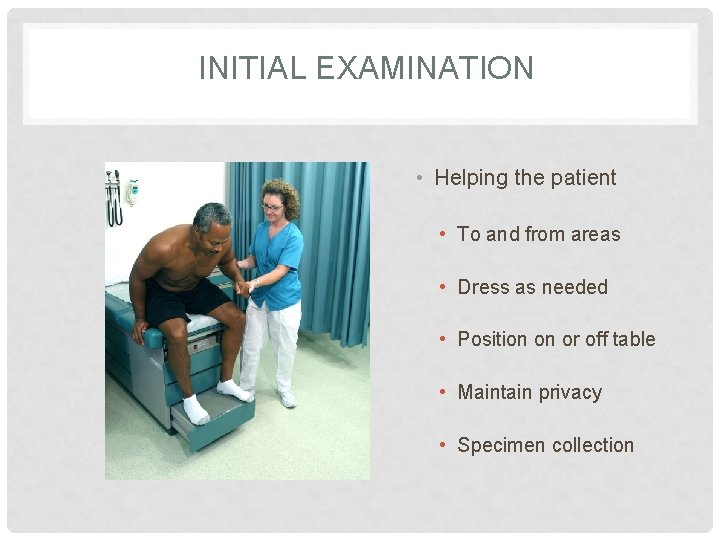
INITIAL EXAMINATION • Helping the patient • To and from areas • Dress as needed • Position on or off table • Maintain privacy • Specimen collection
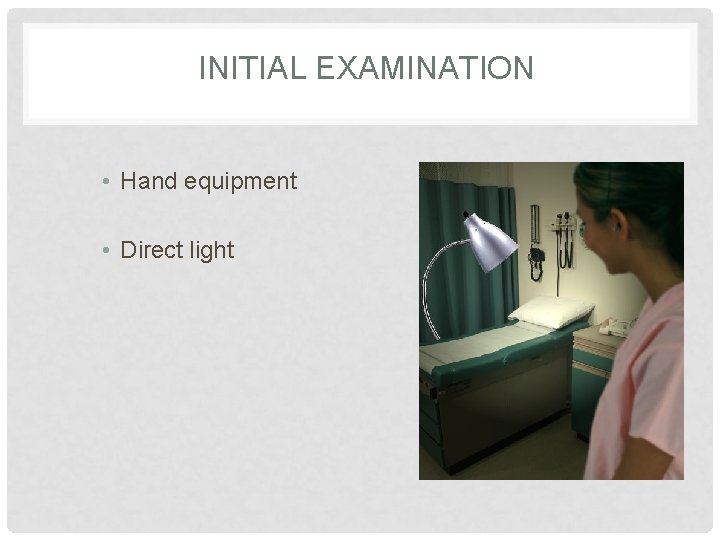
INITIAL EXAMINATION • Hand equipment • Direct light
INITIAL EXAMINATION • Cleaning up • Equipment • Specimens • Documentation
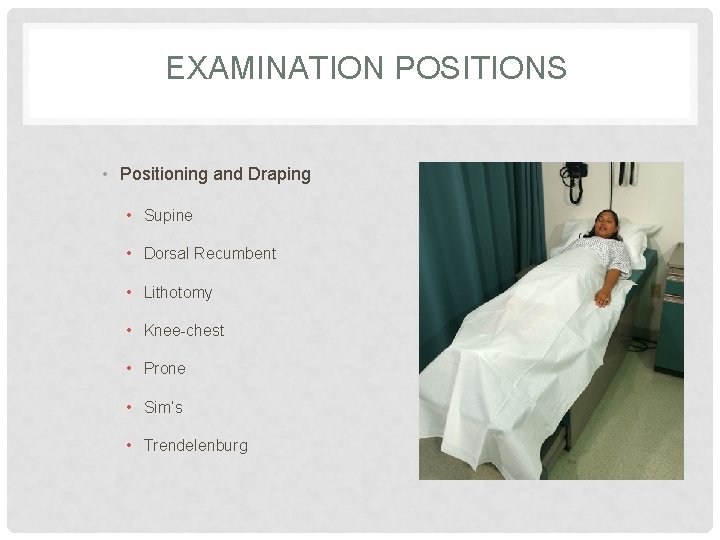
EXAMINATION POSITIONS • Positioning and Draping • Supine • Dorsal Recumbent • Lithotomy • Knee-chest • Prone • Sim’s • Trendelenburg
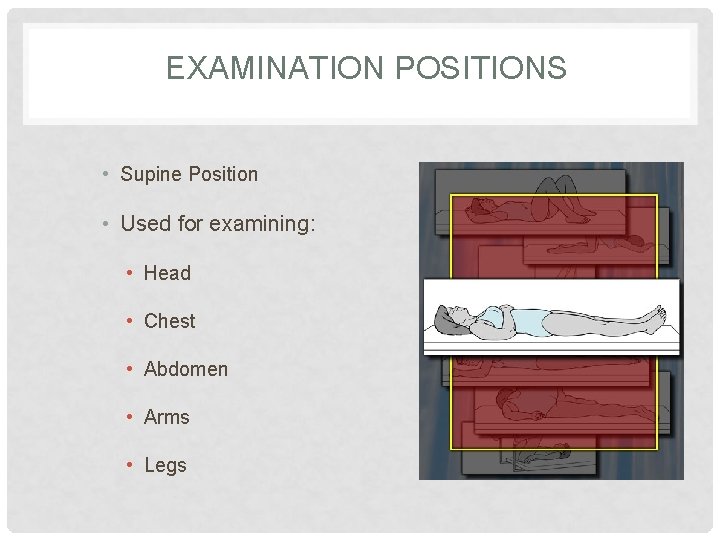
EXAMINATION POSITIONS • Supine Position • Used for examining: • Head • Chest • Abdomen • Arms • Legs
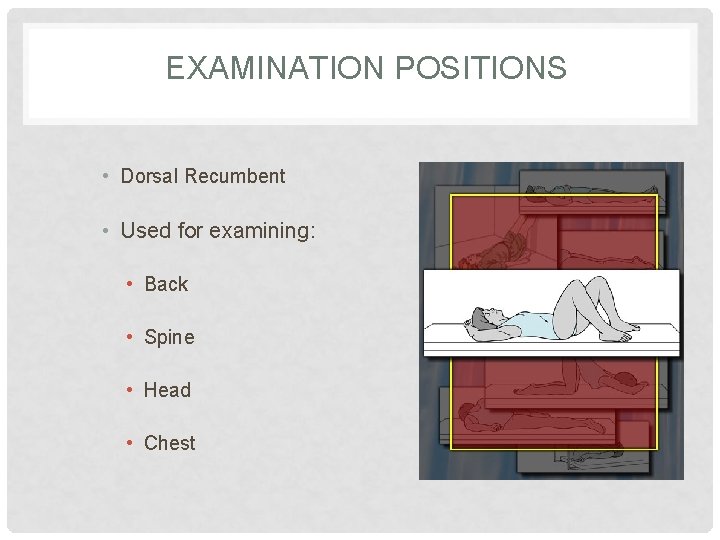
EXAMINATION POSITIONS • Dorsal Recumbent • Used for examining: • Back • Spine • Head • Chest
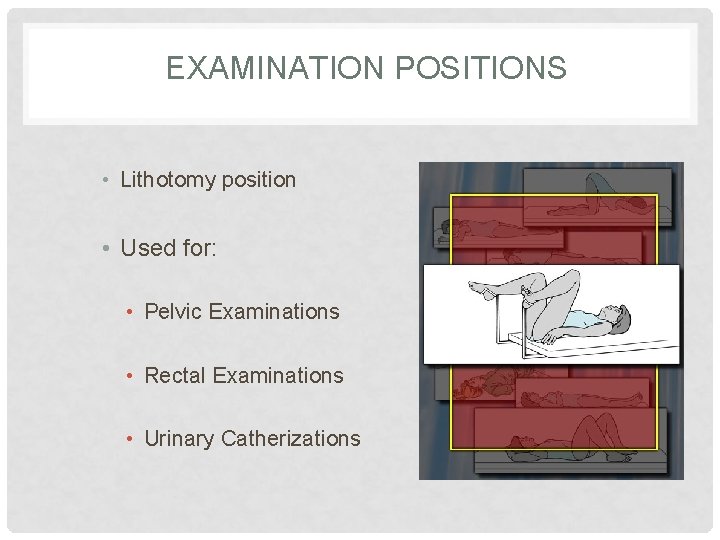
EXAMINATION POSITIONS • Lithotomy position • Used for: • Pelvic Examinations • Rectal Examinations • Urinary Catherizations
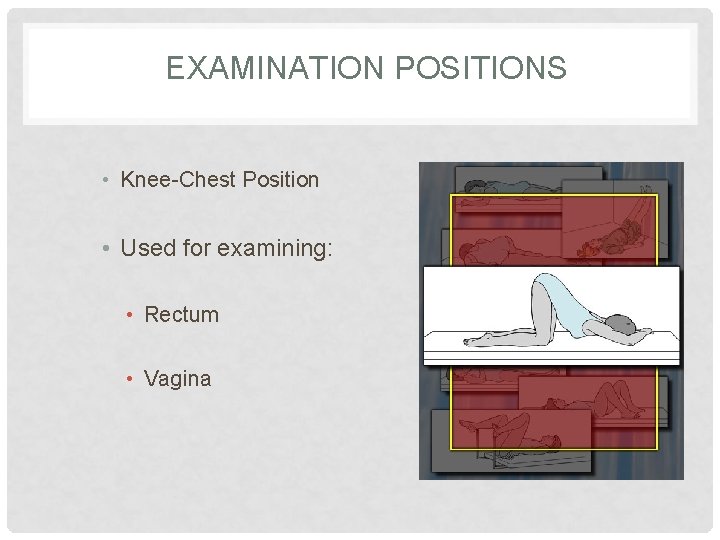
EXAMINATION POSITIONS • Knee-Chest Position • Used for examining: • Rectum • Vagina
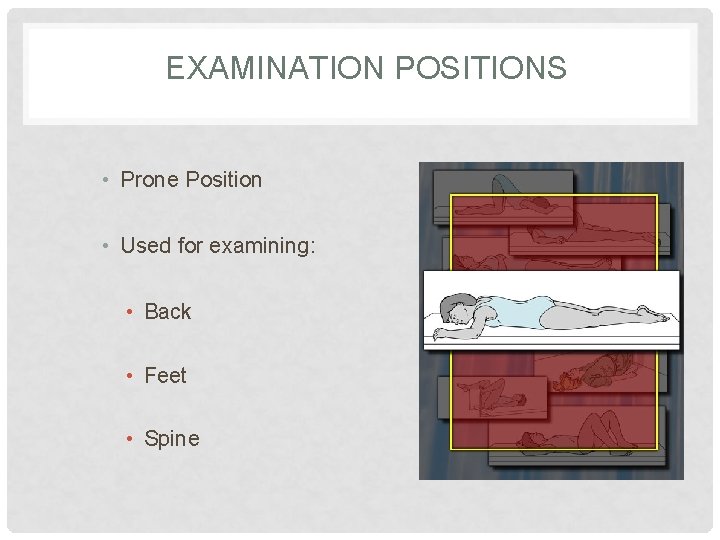
EXAMINATION POSITIONS • Prone Position • Used for examining: • Back • Feet • Spine
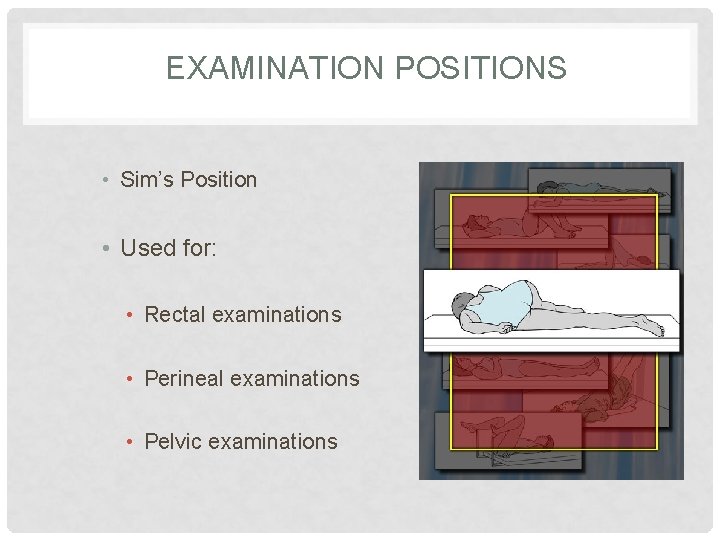
EXAMINATION POSITIONS • Sim’s Position • Used for: • Rectal examinations • Perineal examinations • Pelvic examinations
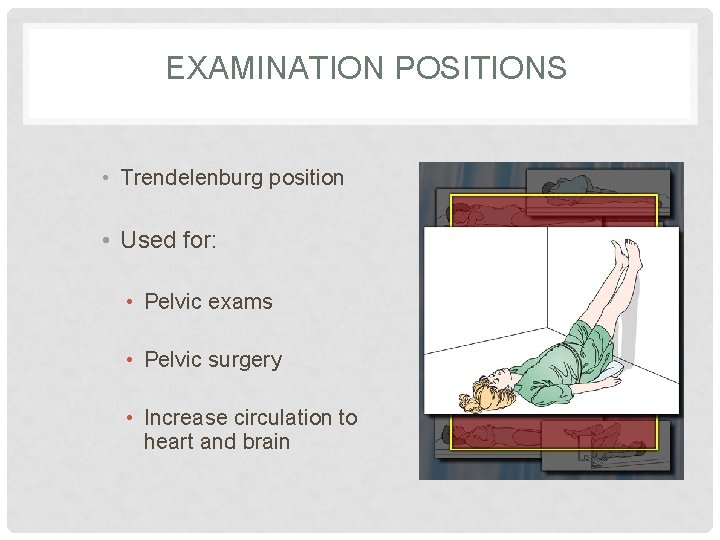
EXAMINATION POSITIONS • Trendelenburg position • Used for: • Pelvic exams • Pelvic surgery • Increase circulation to heart and brain
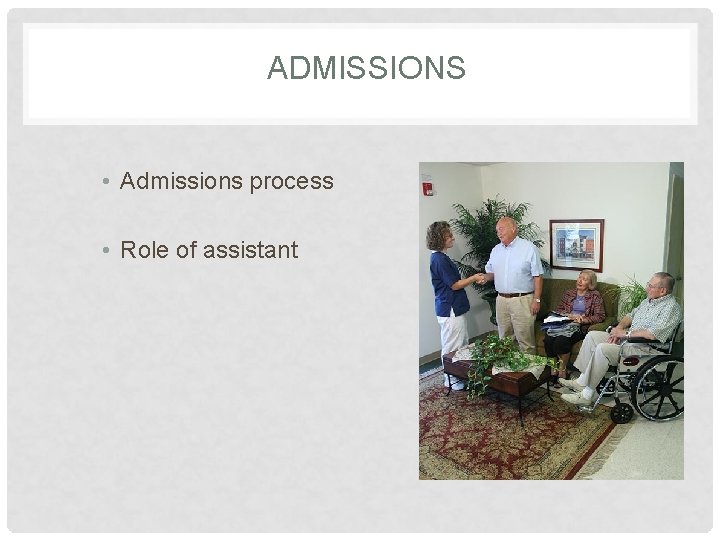
ADMISSIONS • Admissions process • Role of assistant
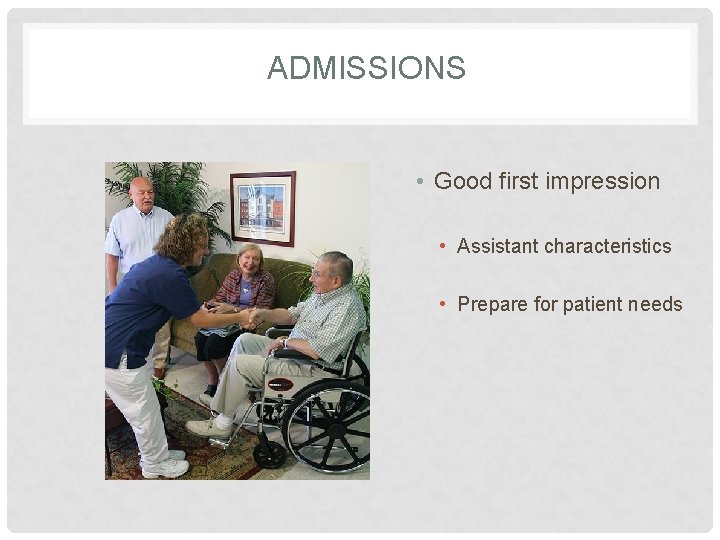
ADMISSIONS • Good first impression • Assistant characteristics • Prepare for patient needs
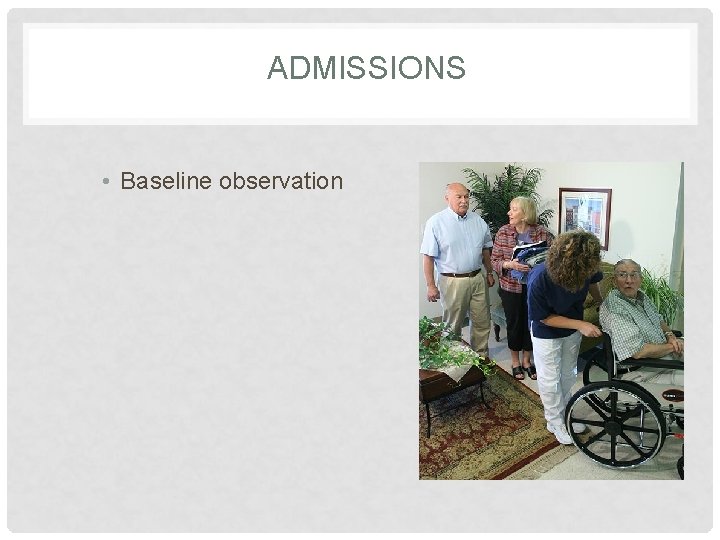
ADMISSIONS • Baseline observation
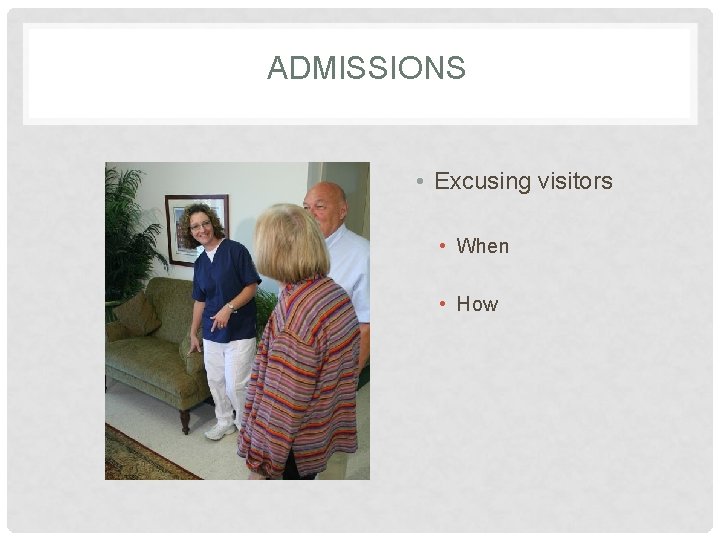
ADMISSIONS • Excusing visitors • When • How
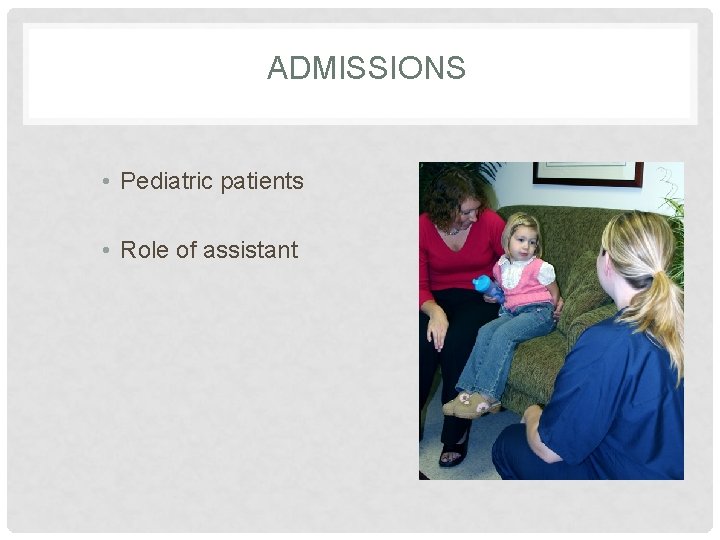
ADMISSIONS • Pediatric patients • Role of assistant
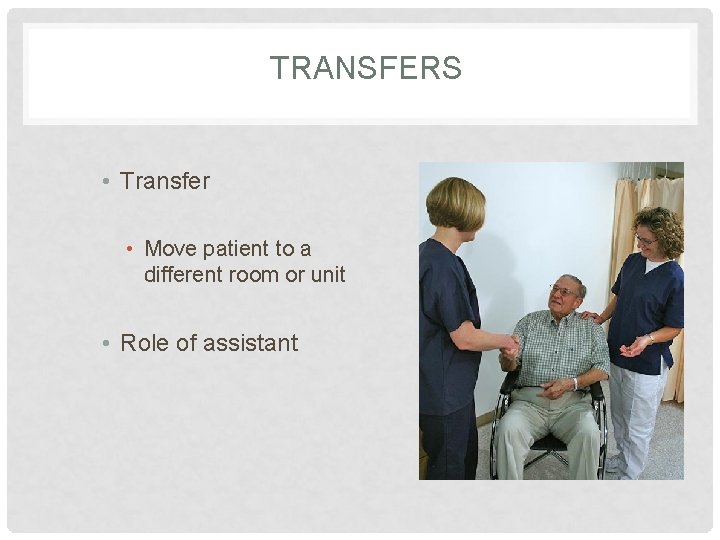
TRANSFERS • Transfer • Move patient to a different room or unit • Role of assistant
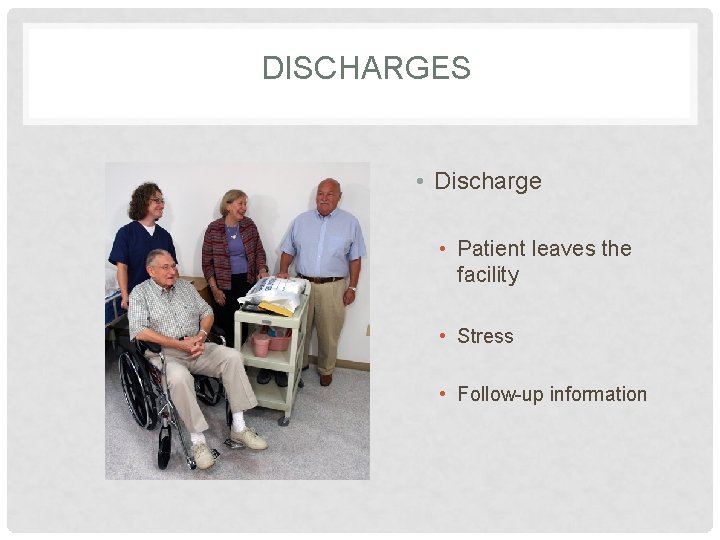
DISCHARGES • Discharge • Patient leaves the facility • Stress • Follow-up information
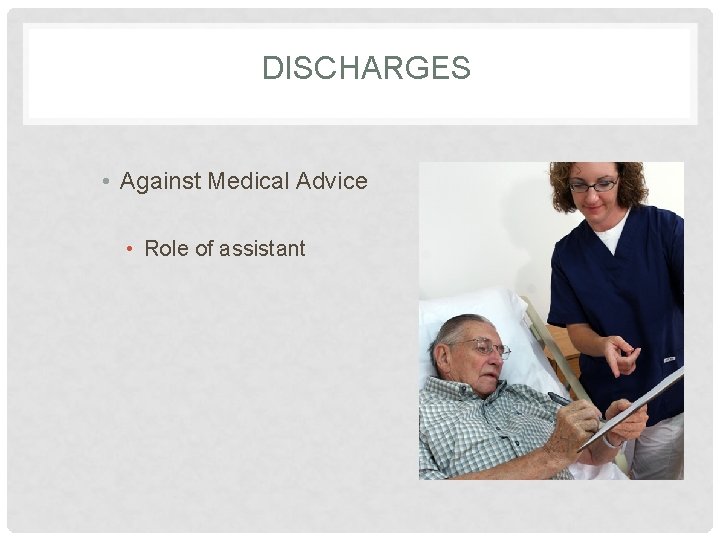
DISCHARGES • Against Medical Advice • Role of assistant
- Slides: 41