
INTRODUCTION 18 TH CENTURY BRITISH FICTION Historical overview

INTRODUCTION 18 TH CENTURY BRITISH FICTION
Historical overview 18 th century is also known as the Age of Reason, Enlightenment. It is a period when a rational and scientific approach to religious, social, political, and economic issues promoted a secular view of the world and a general sense of progress. Factual analysis predominated dogmatic views. In this period, Britain involved in transatlantic slave trade and became the world’s most powerful colonial and trading nation.
Social and cultural context The period is marked by the emergence of modern science and by the birth of a consumer culture. It was a period of expansion in knowledge with the circulation of information in periodicals and in public spaces such as coffee houses, the country. With the industrial revolution, printed press gained significance and boks began to be printed in large amounts. However, despite this progress, 50 % of the population was poor. The persistence of popular, regular Sunday attendance was in conflict with Secularism associated with Enlightenment rationalism.
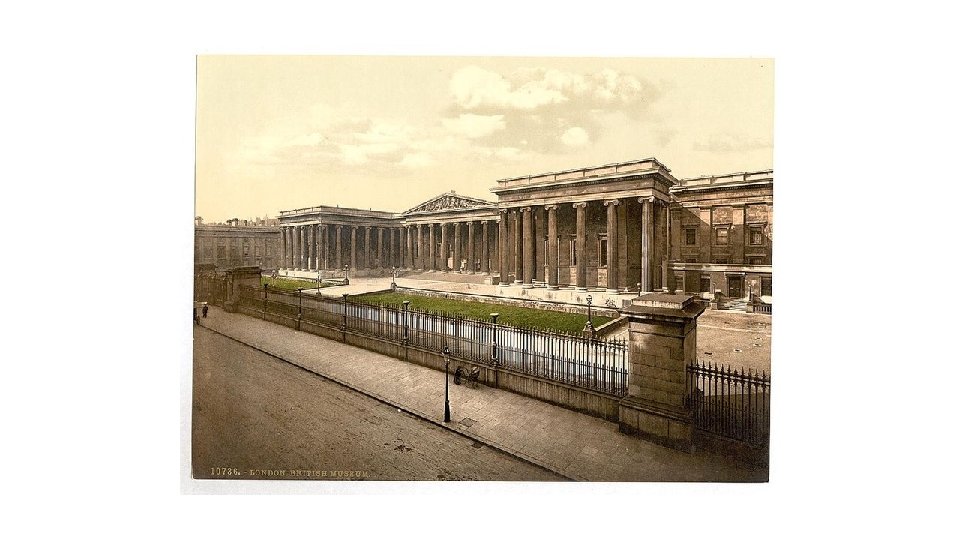
Between 1700 and 1800, England’s population nearly doubled, from approximately 5 million to 9 million. There was a rise in the population of cities such as Birmingham, Leeds, Manchester and Sheffield. With urbanisation there was a rise in service institutions of modernity such as libraries, schools, hospitals and museums. The British Museum was founded in 1753.
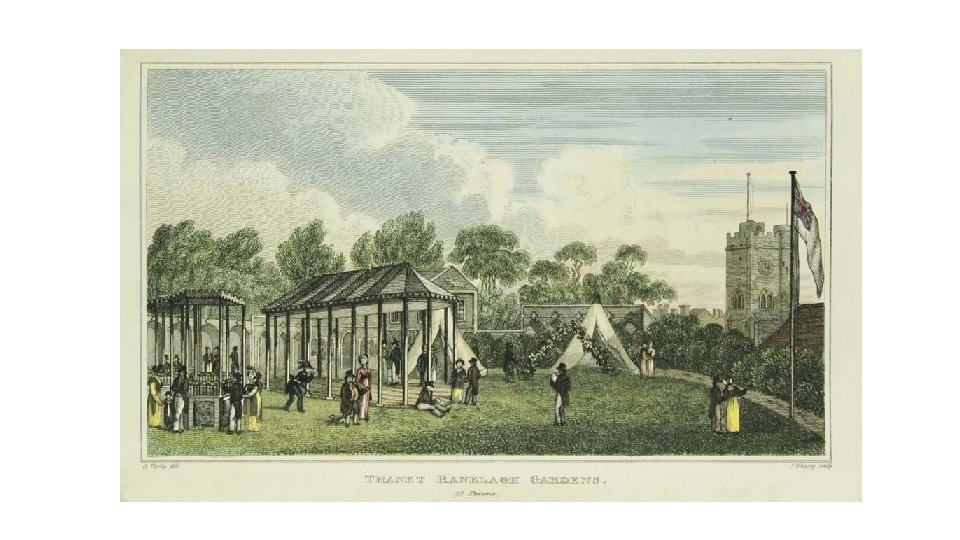
London was covered in filth – the main reason of which was attributed to the growing consumer culture. With its growth, London displayed great extremes of poverty and wealth from the city’s «Gin Lanes» (a portrayal by the English artist William Hogarth as a reaction to the excessive consumption of gin, which was later put under control by the 1751 Gin Act) to the pleasure gardens on the south bank of the Thames.
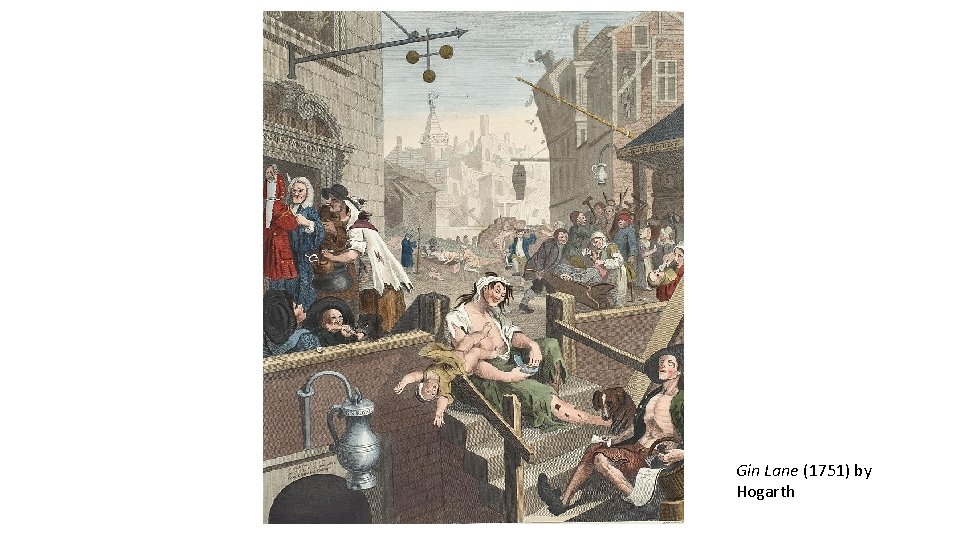
Gin Lane (1751) by Hogarth
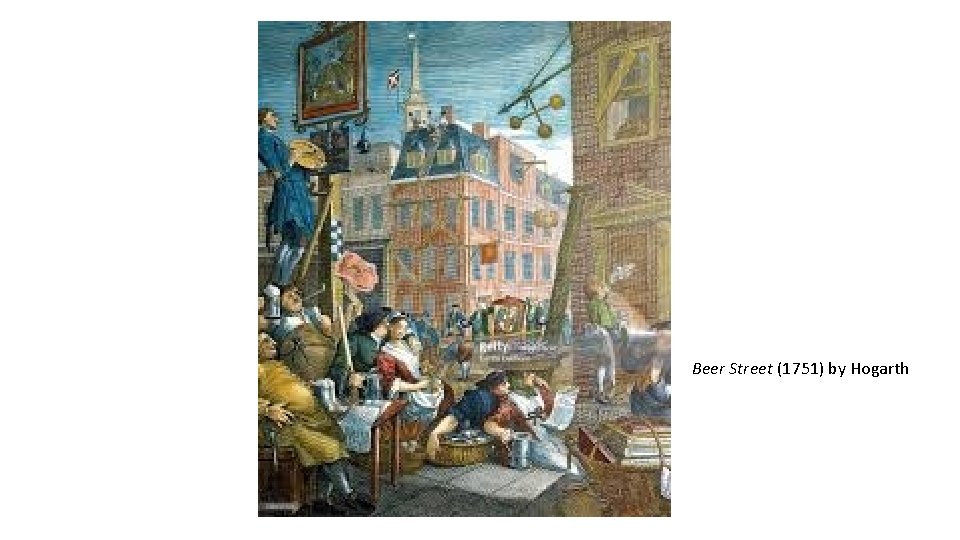
Beer Street (1751) by Hogarth
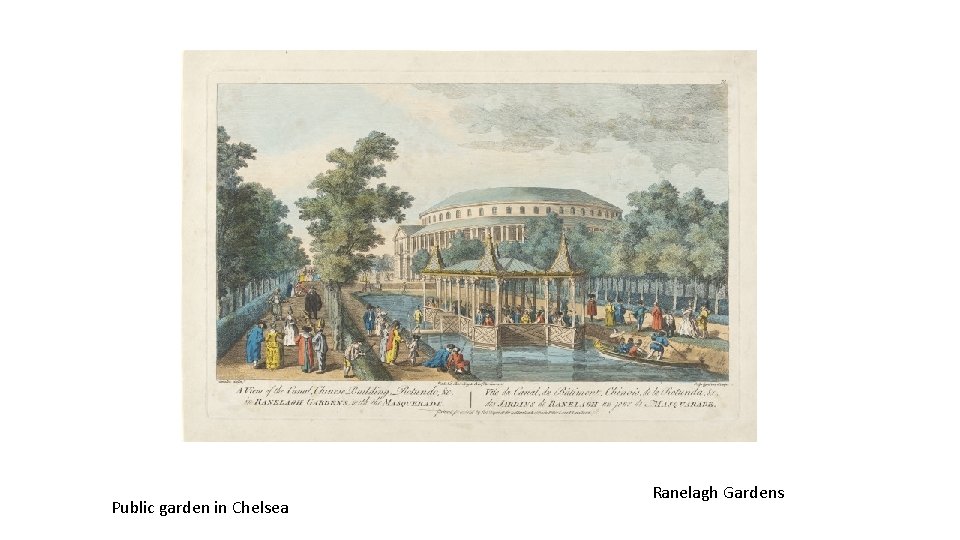
Public garden in Chelsea Ranelagh Gardens
Given this social and cultural climate, this period indeed failed to display a thorough vision of modernity. The period, therefore, revealed conflicting aspirations: • With the Age of Enlightenment, there was a tendency towards a more rational, modern way of living – since it was an age of science and reason • There was a tendency to stick to the traditions of the past rather than contributing to the important innovations
The vision of increasing stability and democracy is associated with the Whig policy while the persistence of older traditions, the continuing importance of religion is considered a Tory vision. There was a confusing interplay of the old and the new in the 18 th century.
Literary context This conflicting interplay could be observed in the literary works of the period. The new writers of prose and poetry (e. g. John Dryden, Alexander Pope) had a respect for old Classical writers such as Virgil, Horace and Ovid. They wanted to revive the classical spirit. They were concerned with balance, clarity, and coherence. There was also a growing interest in the novel, which was often seen as less ambitious than the works of prose and poetry due to the use of a simpler language and a focus on ordinary individuals.
In fact, the emergence of the novel as a genre dates back to the 16 th century when the French writer François Rabelais’ The Life of Gargantua and Pantagruel was published. Rabelais’ novel consisted of five volumes which present the comic story of the giant Gargantua and his son Pantagruel. The work contained elements of heroism, satire, humour, and exaggeration.
Drawing on Rabelais’ work, the Russian scholar Mikhail Bakhtin defined the novel as a narrative that contains a dialogue between different literary forms: epic, romance, comedy, parody, satire.
The emergence of the novel genre in Britain in the 18 th century, with its newness and originality, represents the early phase of the novel. Yet, older forms such as romance and epic are important for a consideration of the novel as a genre. • The medieval romance (e. g. Thomas Malory’s Morthe Darthur), which is an extended prose narrative as the novel, is about the adventures of a Knight, who complies with the chivalric code with the hope that he might in the end win the love of a particular princess. • The epic is a long, fictional narrative in verse whereas the novel is a long, fictional narrative in prose. Some see the novel as a prose epic.
This new literary form prioritised the daily experience over the older and unrealistic genres of epic and romance, since romance and epic are found irrelevant in their unreality (with larger than life characters – characters that are not encountered in the real life), in their distance from the everyday world and experience.
The novel provides a range of ways of addressing both the questions of virtue in the older romance tradition and questions of truth in early modern circumstances. Novels were initially written in simpler and clearer language, and therefore thought to be works of literature aimed for the less literate. This view created the impression that novels were easy to read.
With the influence of the Enlightenment, hunger for actuality triggered the birth of the realistic novel. • In 18 th century fiction, there are often no miracles or suspension of the physical laws of nature, no angelic visitations, no gods dropping down from heaven, no magicians, no fairies. • The novel offered an artistic imitation of life. • The new kind of fiction comes to substitute the world of everyday and common sense experience. • This new form reflected the transition from the general to the particular – the individual.
The contents of this new kind of fiction included specific and historical accounts of particular individuals. • Many novels in this period represent individuals from the middle classes of society who attempt to acquire status (wealth and power) through individual virtue and action rather than by inheritance. • Novels therefore tend to be about leaving home, finding your way, seeking your fortune. Novels in this period often had the following titles: “history”, “romances”, “adventures”, “lives”, “tales”, “memoirs”, “fortunes and misfortunes” (as in the case of Moll Flanders).
Novels published in this period cast a critical eye on the breakdown of the traditional moral order in the face of this new ruthlessly indifferent economic world devoid of feelings.
The Rise of the Novel: The 18 th century is the period when the realist novel rises as a dominant genre which continues to be a popular literary form in the 19 th century. The writer and scholar Ian Watt explains the emergence of the novel in Britain in relation to the growth of the middle classes in the eighteenth century. He takes a materialist view, asserting that social and historical factors generated aesthetic responses. In other words, to Watt the novel is the product of the industrial period and a consumerist society.
Watt points out three key areas related to the rise of the novel: (a)The growth of economic/possessive individualism, and with it the growth of new commercial capitalist values of investment and capital accumulation. (b) The rise of materialistic individualism, with its new emphasis on the individual as the essential social unit. (c) The new demand for education/moral training associated with middle class values. The middle classes existed as a readership, and required reading material.
The novel, which is concerned with the realistic depiction of middle class life, values and experience, depicted the development of individual characters over time (within a narrative which is simpler, clearer and more precise compared with the elevated forms of the former works of literature).
Characteristics of the 18 th century novel: • Individual experience was an important criterion. • Plots taken from history, legend, mythology and previous literature were largely abandoned. • Characters usually differed greatly from one another. • Characters were given contemporary names and surnames, so they looked more realistic. • There was a much greater concern with the exactness of time. • Unlike the previous fiction in which the idea of place had usually been vague, in the 18 th century novel setting contained a lot of details (e. g. The name of streets, or towns). • There was a general movement away from rhetorical and figurative language towards a more descriptive form of language which lacked much of the elegance and polish of the previous literary works.
Literary historians mention the names Behn, Defoe, Richardson, or Fielding as the founders of the English novel. Aphra Behn is credited with being the first female professional writer in England. Published in 1688, Oroonoko; or, The Royal Slave: A True History is about an African Prince who is forced into slavery in the South American country of Suriname, which was an English colony in the late 1600 s.
- Slides: 26