
Introduction 1 Why forecasting is important Safety outdoor

- Slides: 18
Introduction 1. Why forecasting is important? Safety, outdoor activity, work, agriculture, etc. 2. What specific factors, parameters, or variables are important to a forecast? Ø Data communication (leading time) (some need to send out in time, e. g. , flash flood) Ø When, where, how severe, how much precipitation, how cold/hot, etc.
Introduction Problems of Forecasting ? 1. Numerical modeling Ø Model spatial resolutions limited to computer resources Ø Parameterizations limited to our understanding of weather Ø Boundary conditions of mesoscale models limited to available global data (every 6 h) Ø Initial conditions limited to observations. 2. Failure of communications
Introduction What can we do to improve forecasting? Ø Backup plan if communication fails Ø Improve numerical model - improve our understanding of weather: better physics parameterization - improve numerical schemes Ø Improve computational power – higher resolution or more forecast members Ø Improve initial conditions, observations, and weather analysis. Our focus in this class
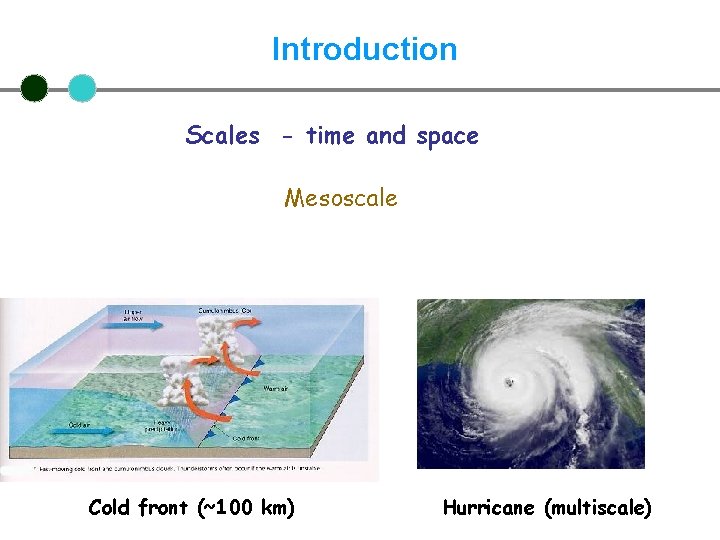
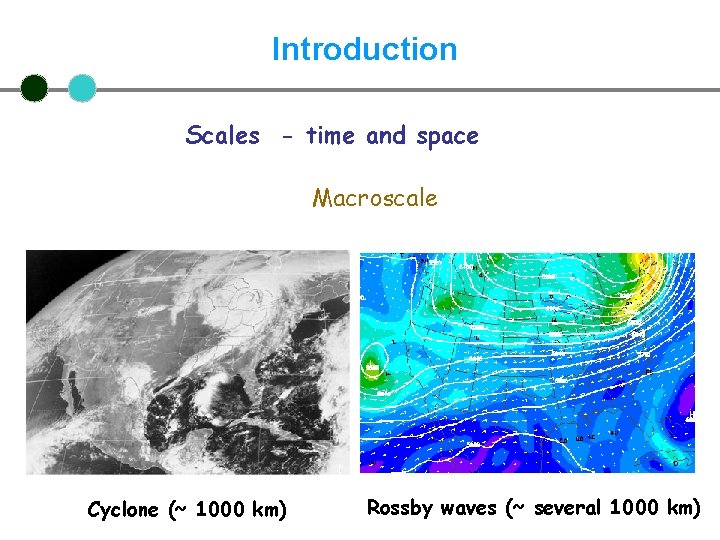
Introduction Scales - time and space Microscale – up to few km or tens km Mesoscale – tens km to hundred or 1000 km Macroscale – above 1000 km
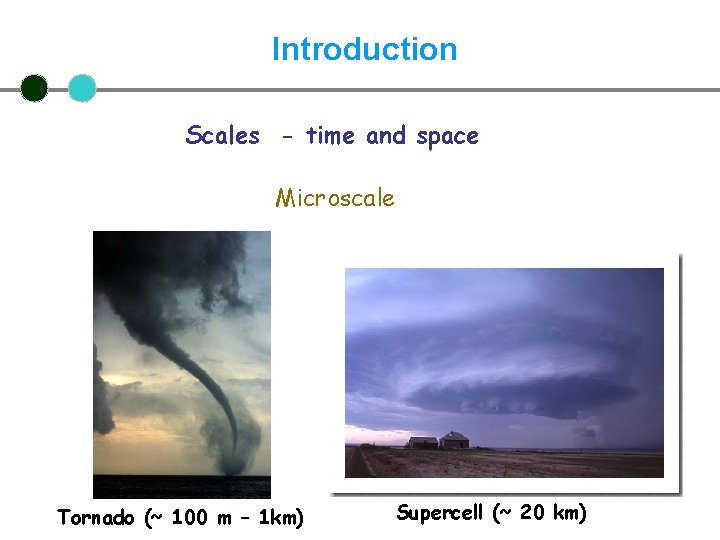
Introduction Scales - time and space Microscale Tornado (~ 100 m – 1 km) Supercell (~ 20 km)
Introduction Scales - time and space Mesoscale Cold front (~100 km) Hurricane (multiscale)
Introduction Scales - time and space Macroscale Cyclone (~ 1000 km) Rossby waves (~ several 1000 km)
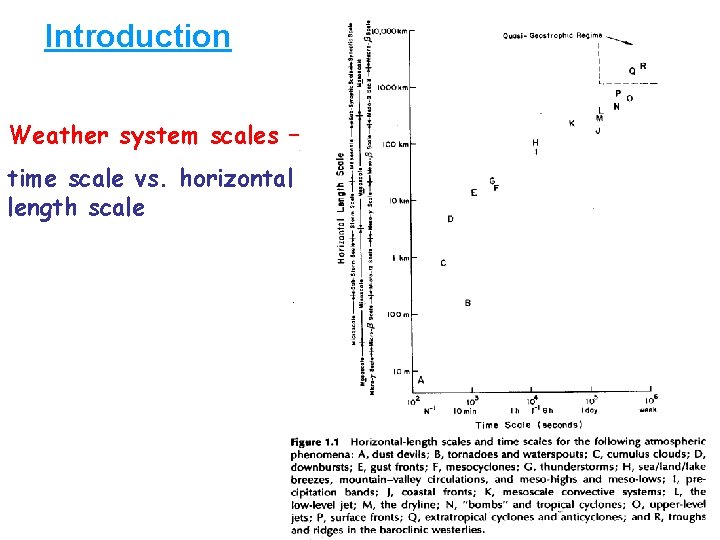
Introduction Weather system scales – time scale vs. horizontal length scale
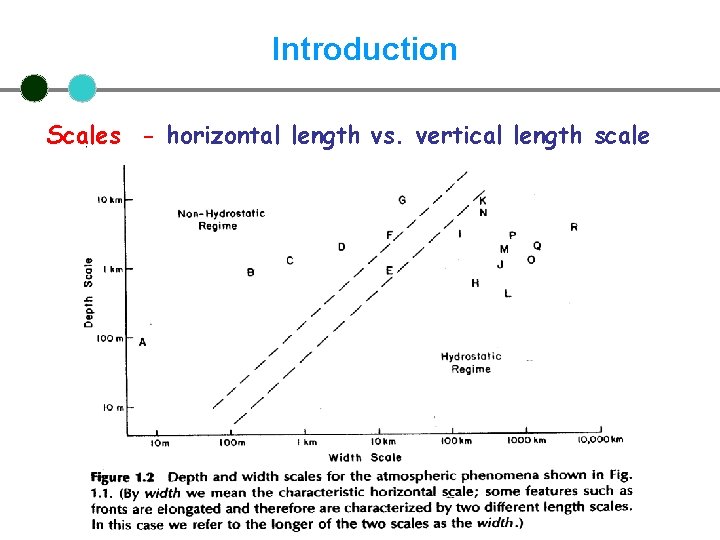
Introduction Scales - horizontal length vs. vertical length scale
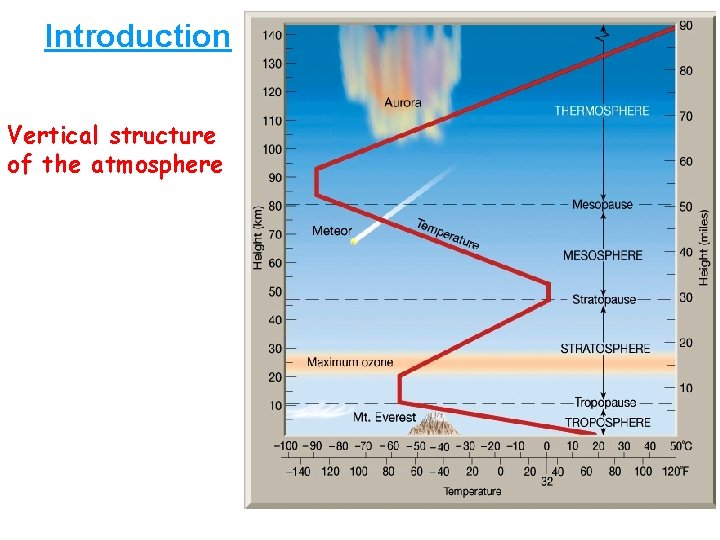
Introduction Vertical structure of the atmosphere
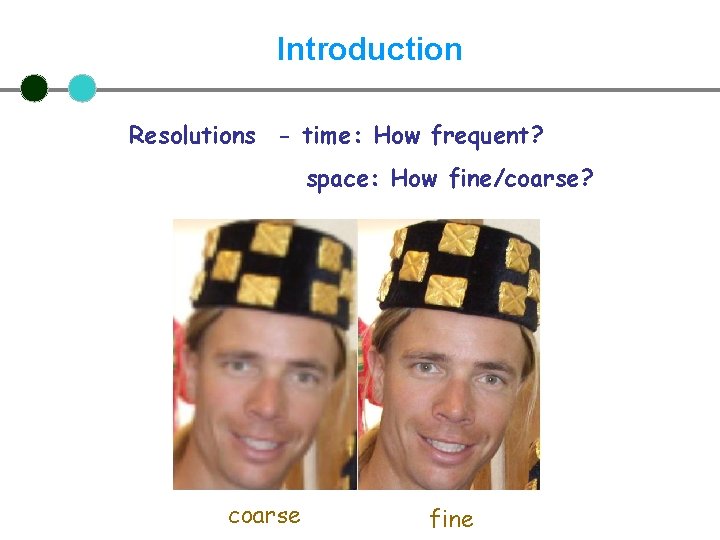
Introduction Resolutions - time: How frequent? space: How fine/coarse? coarse fine
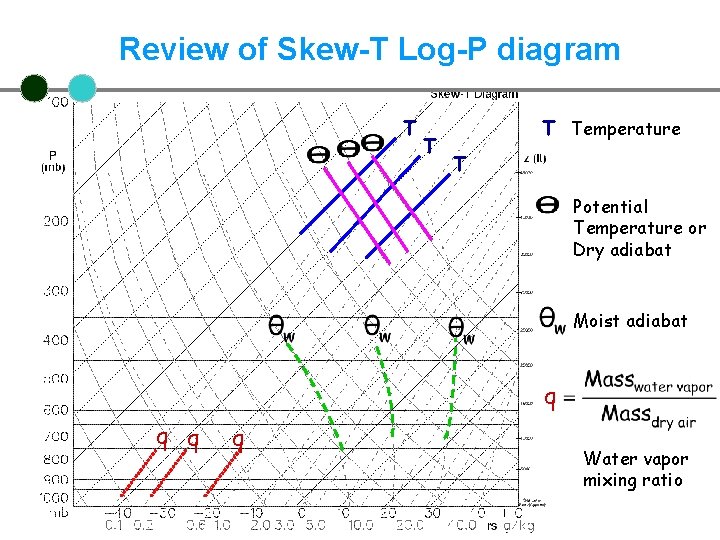
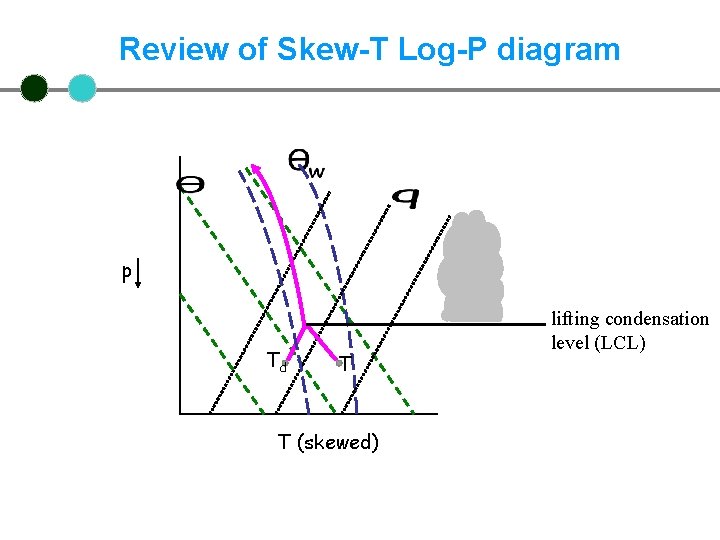
Review of Skew-T Log-P diagram T Temperature T Potential Temperature or Dry adiabat Moist adiabat q q Water vapor mixing ratio
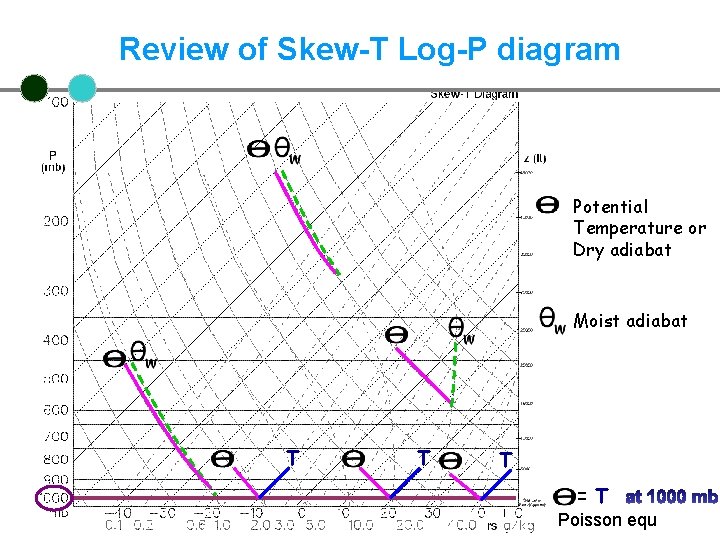
Review of Skew-T Log-P diagram Potential Temperature or Dry adiabat Moist adiabat T T T =T Poisson equ
Review of Skew-T Log-P diagram p Td T T (skewed) lifting condensation level (LCL)
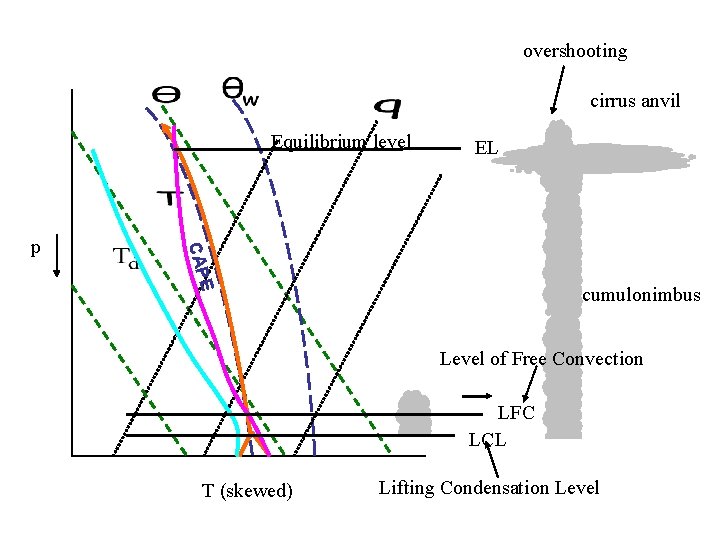
overshooting cirrus anvil Equilibrium level E CAP p EL cumulonimbus Level of Free Convection LFC LCL T (skewed) Lifting Condensation Level
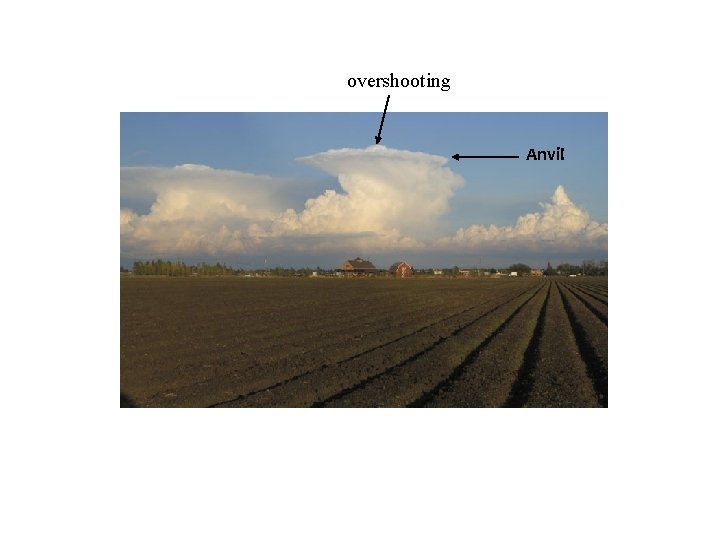
overshooting Anvil
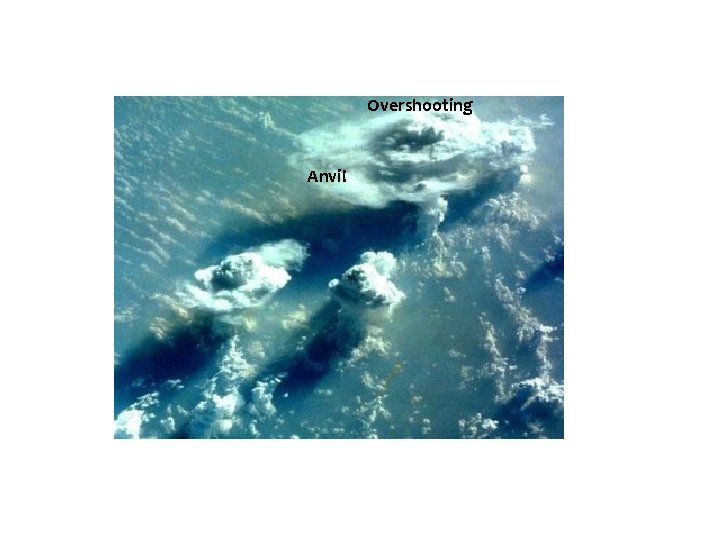
Overshooting Anvil
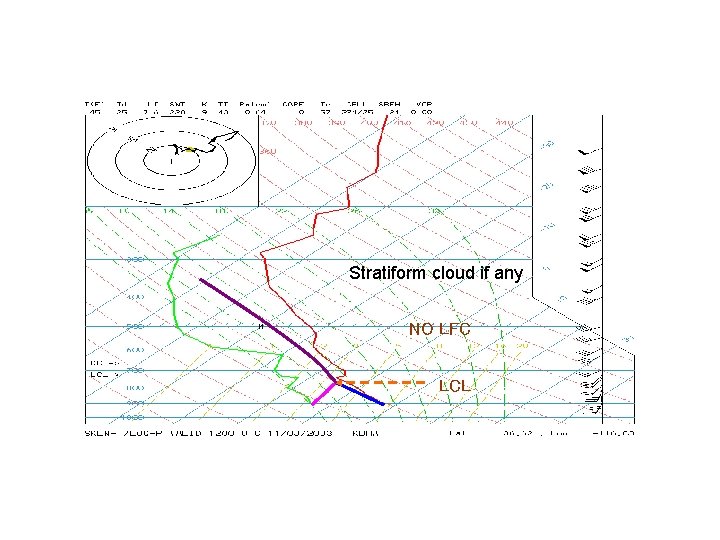
Stratiform cloud if any NO LFC LCL