
Introducing the Nutrients Macronutrients Carbohydrates Sugars and starches

Introducing the Nutrients Macronutrients • Carbohydrates – Sugars and starches – Functions • Energy source Food sources • • Grains Vegetables Fruits Dairy products
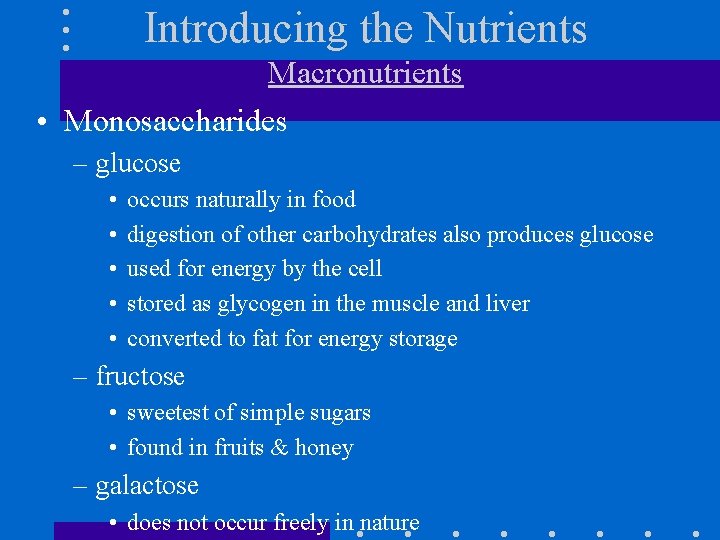
Introducing the Nutrients Macronutrients • Monosaccharides – glucose • • • occurs naturally in food digestion of other carbohydrates also produces glucose used for energy by the cell stored as glycogen in the muscle and liver converted to fat for energy storage – fructose • sweetest of simple sugars • found in fruits & honey – galactose • does not occur freely in nature

Simple Sugars • Monosaccharides • Disaccharides – Lactose = Glucose + Galactose – Sucrose = Glucose + Fructose – Maltose = Glucose + Glucose
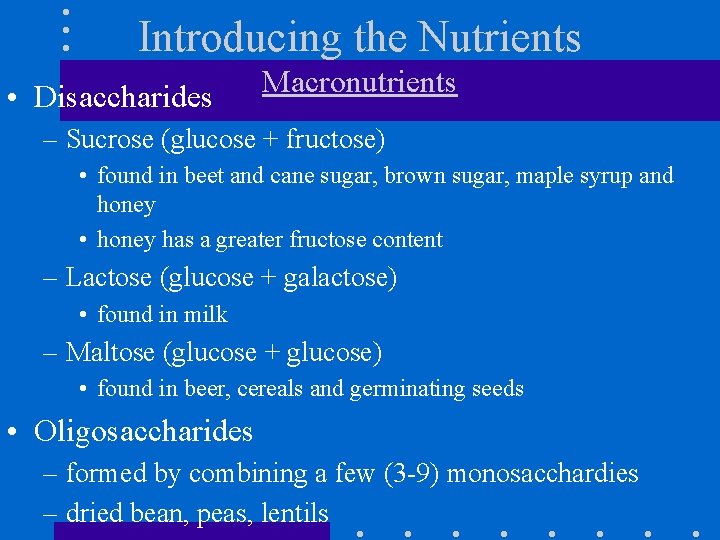
Introducing the Nutrients • Disaccharides Macronutrients – Sucrose (glucose + fructose) • found in beet and cane sugar, brown sugar, maple syrup and honey • honey has a greater fructose content – Lactose (glucose + galactose) • found in milk – Maltose (glucose + glucose) • found in beer, cereals and germinating seeds • Oligosaccharides – formed by combining a few (3 -9) monosacchardies – dried bean, peas, lentils
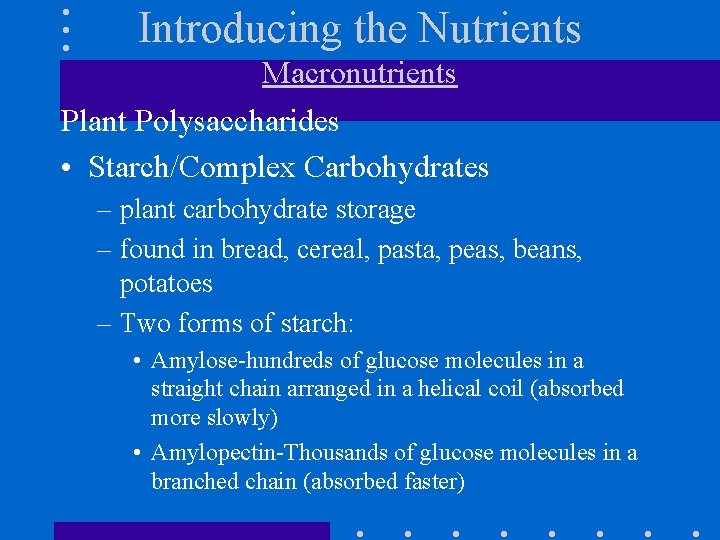
Introducing the Nutrients Macronutrients Plant Polysaccharides • Starch/Complex Carbohydrates – plant carbohydrate storage – found in bread, cereal, pasta, peas, beans, potatoes – Two forms of starch: • Amylose-hundreds of glucose molecules in a straight chain arranged in a helical coil (absorbed more slowly) • Amylopectin-Thousands of glucose molecules in a branched chain (absorbed faster)
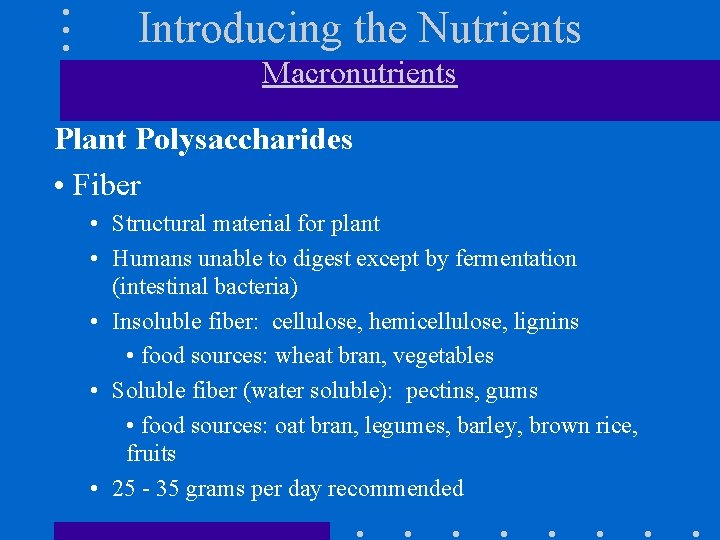
Introducing the Nutrients Macronutrients Plant Polysaccharides • Fiber • Structural material for plant • Humans unable to digest except by fermentation (intestinal bacteria) • Insoluble fiber: cellulose, hemicellulose, lignins • food sources: wheat bran, vegetables • Soluble fiber (water soluble): pectins, gums • food sources: oat bran, legumes, barley, brown rice, fruits • 25 - 35 grams per day recommended

Fiber Cellulose = a long rigid molecule Cellulose fibrils of a plant cell wall

Health Effects of Fibers The “Bulking Effect” • Scraping of the intestinal cell wall • Binding or diluting harmful chemicals or inhibiting their activity • Shortening the transit time for food residues Health Effect Insoluble Fiber Soluble Fiber Obesity - displaces calories Constipation - softens stools Speeds up stool transit time Cancer Diabetes - improves glucose tolerance Cardiovascular disease - lowers cholesterol Interferes with mineral absorption Yes Yes Yes, some No Yes No No No Yes, some Yes No
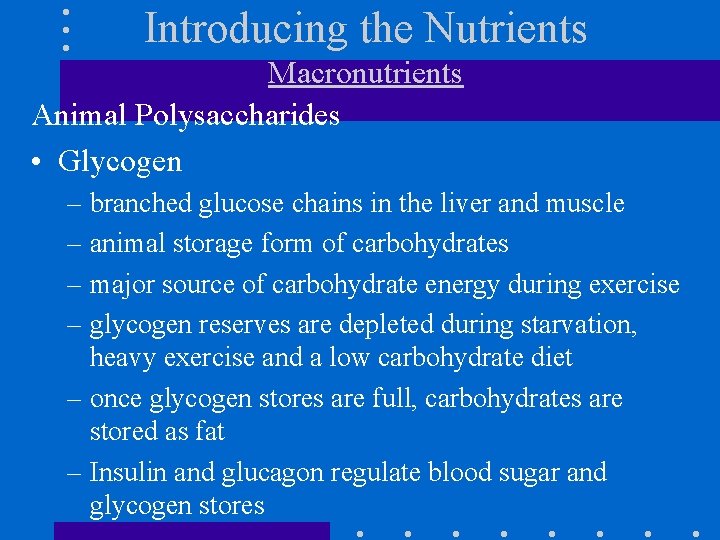
Introducing the Nutrients Macronutrients Animal Polysaccharides • Glycogen – branched glucose chains in the liver and muscle – animal storage form of carbohydrates – major source of carbohydrate energy during exercise – glycogen reserves are depleted during starvation, heavy exercise and a low carbohydrate diet – once glycogen stores are full, carbohydrates are stored as fat – Insulin and glucagon regulate blood sugar and glycogen stores
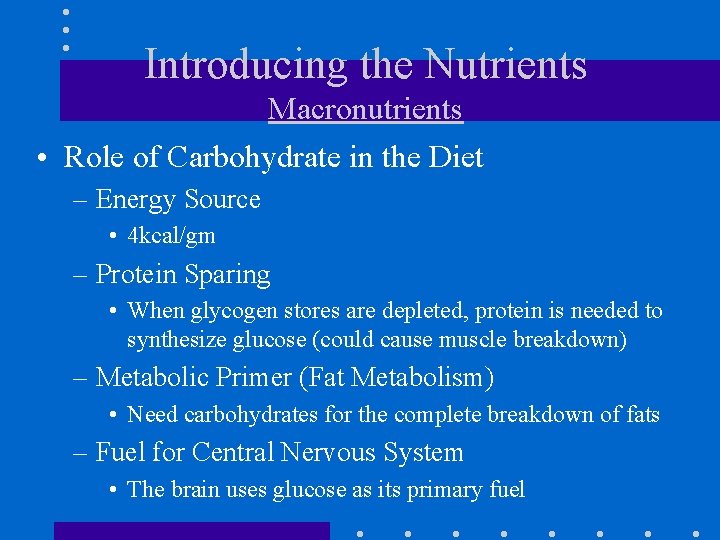
Introducing the Nutrients Macronutrients • Role of Carbohydrate in the Diet – Energy Source • 4 kcal/gm – Protein Sparing • When glycogen stores are depleted, protein is needed to synthesize glucose (could cause muscle breakdown) – Metabolic Primer (Fat Metabolism) • Need carbohydrates for the complete breakdown of fats – Fuel for Central Nervous System • The brain uses glucose as its primary fuel
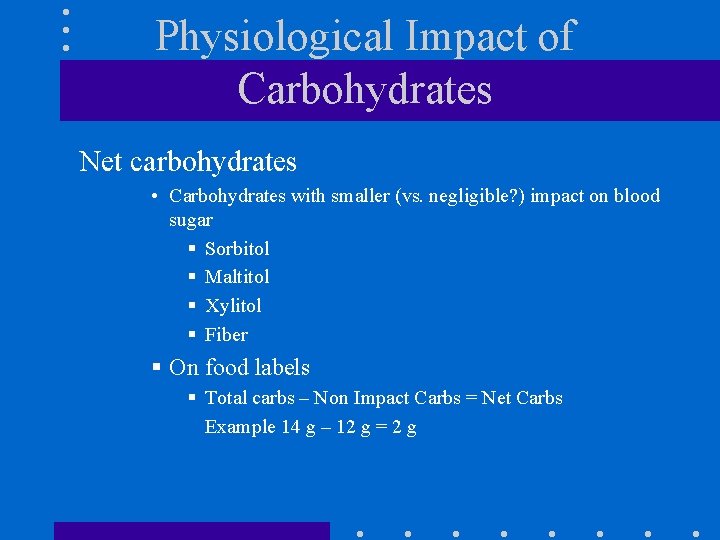
Physiological Impact of Carbohydrates Net carbohydrates • Carbohydrates with smaller (vs. negligible? ) impact on blood sugar § Sorbitol § Maltitol § Xylitol § Fiber § On food labels § Total carbs – Non Impact Carbs = Net Carbs Example 14 g – 12 g = 2 g
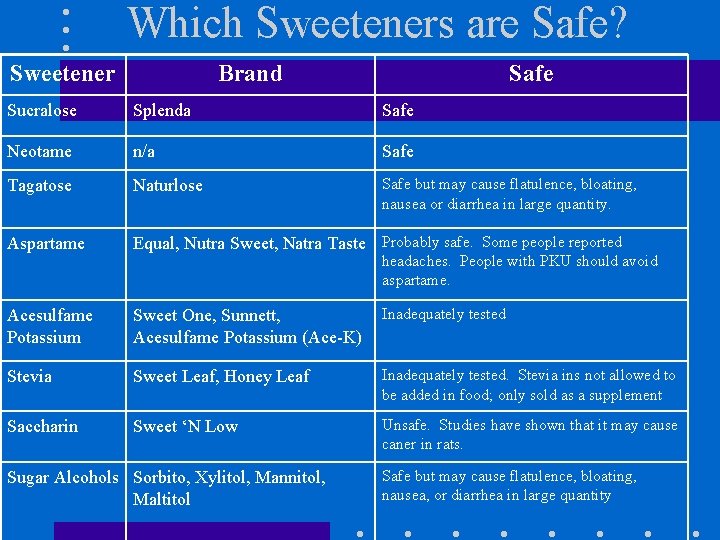
Which Sweeteners are Safe? Sweetener Brand Safe Sucralose Splenda Safe Neotame n/a Safe Tagatose Naturlose Safe but may cause flatulence, bloating, nausea or diarrhea in large quantity. Aspartame Equal, Nutra Sweet, Natra Taste Probably safe. Some people reported Acesulfame Potassium Sweet One, Sunnett, Acesulfame Potassium (Ace-K) Inadequately tested Stevia Sweet Leaf, Honey Leaf Inadequately tested. Stevia ins not allowed to be added in food; only sold as a supplement Saccharin Sweet ‘N Low Unsafe. Studies have shown that it may cause caner in rats. headaches. People with PKU should avoid aspartame. Sugar Alcohols Sorbito, Xylitol, Mannitol, Maltitol Safe but may cause flatulence, bloating, nausea, or diarrhea in large quantity
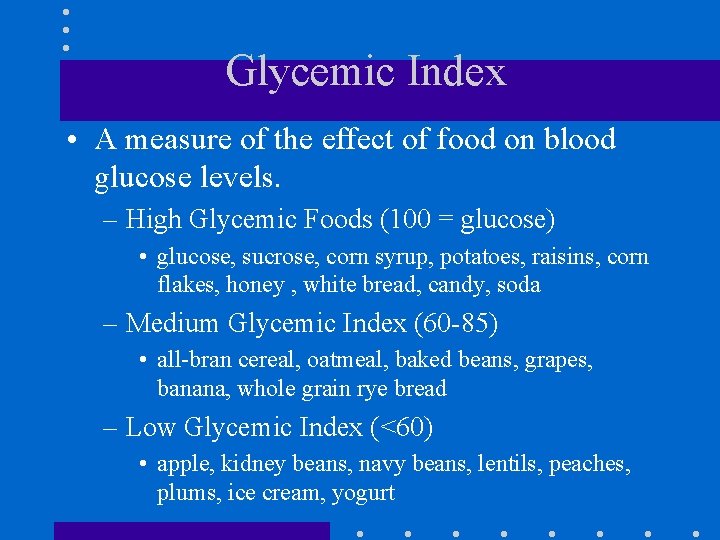
Glycemic Index • A measure of the effect of food on blood glucose levels. – High Glycemic Foods (100 = glucose) • glucose, sucrose, corn syrup, potatoes, raisins, corn flakes, honey , white bread, candy, soda – Medium Glycemic Index (60 -85) • all-bran cereal, oatmeal, baked beans, grapes, banana, whole grain rye bread – Low Glycemic Index (<60) • apple, kidney beans, navy beans, lentils, peaches, plums, ice cream, yogurt
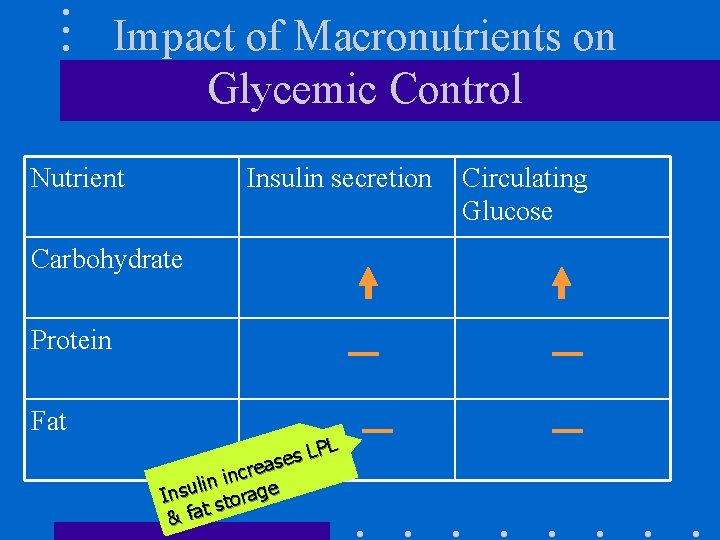
Impact of Macronutrients on Glycemic Control Nutrient Insulin secretion Carbohydrate Protein Fat LPL s e as e r c n in i ge l u s In ora t s t & fa Circulating Glucose
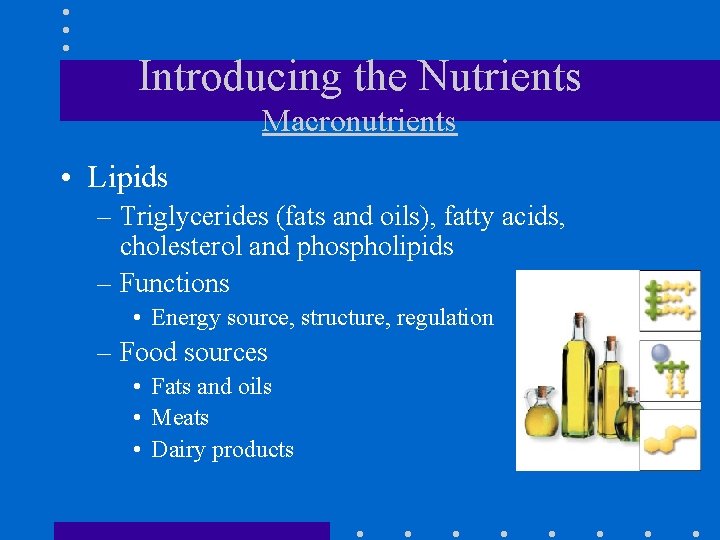
Introducing the Nutrients Macronutrients • Lipids – Triglycerides (fats and oils), fatty acids, cholesterol and phospholipids – Functions • Energy source, structure, regulation – Food sources • Fats and oils • Meats • Dairy products
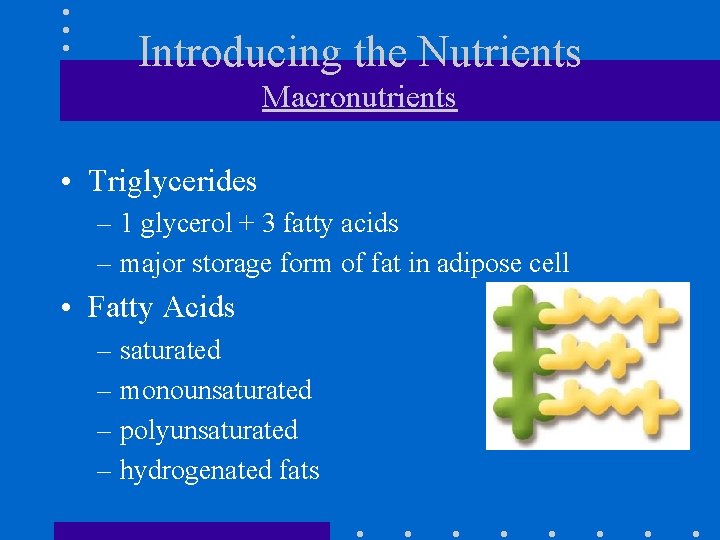
Introducing the Nutrients Macronutrients • Triglycerides – 1 glycerol + 3 fatty acids – major storage form of fat in adipose cell • Fatty Acids – saturated – monounsaturated – polyunsaturated – hydrogenated fats
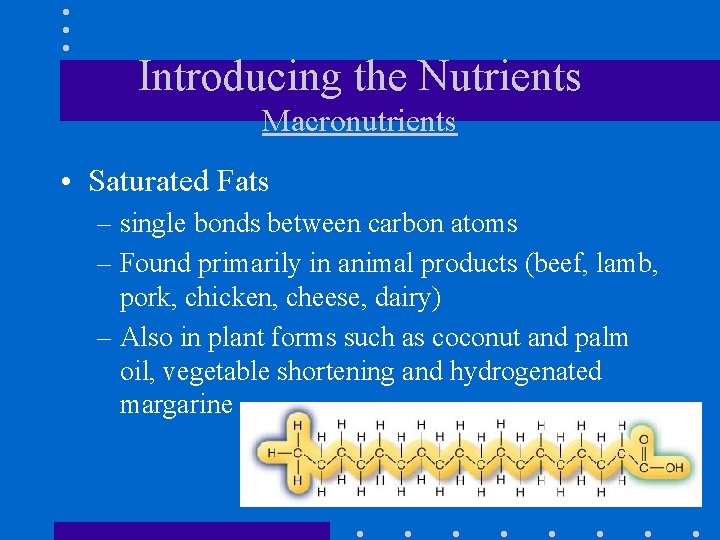
Introducing the Nutrients Macronutrients • Saturated Fats – single bonds between carbon atoms – Found primarily in animal products (beef, lamb, pork, chicken, cheese, dairy) – Also in plant forms such as coconut and palm oil, vegetable shortening and hydrogenated margarine
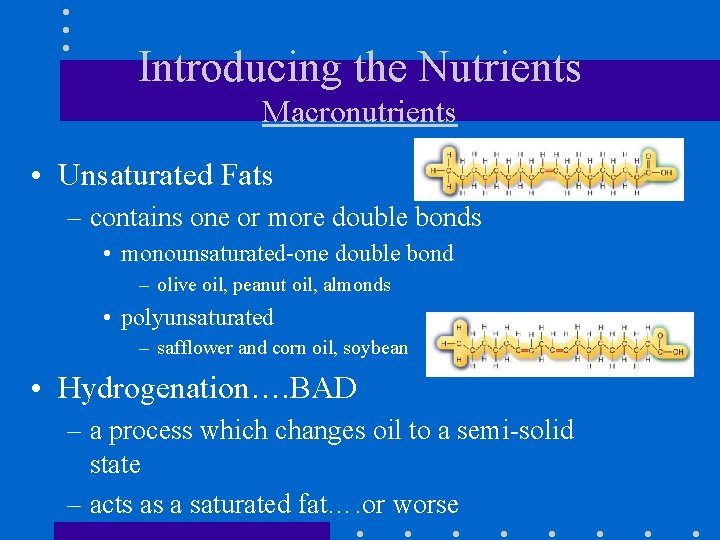
Introducing the Nutrients Macronutrients • Unsaturated Fats – contains one or more double bonds • monounsaturated-one double bond – olive oil, peanut oil, almonds • polyunsaturated – safflower and corn oil, soybean • Hydrogenation…. BAD – a process which changes oil to a semi-solid state – acts as a saturated fat…. or worse

Introducing the Nutrients Essential Fatty Acids • omega-3 fatty acid – EPA and DHA – required by brain and CNS – sources: fish, shellfish – ALA (flax seed, walnuts, canola and soybean oils) • omega-6 fatty acid – animal protein and vegetable oil • Evolution: Ratio 1: 1 now 12: 1 – increased incidence of atherosclerosis and inflammatory disorders
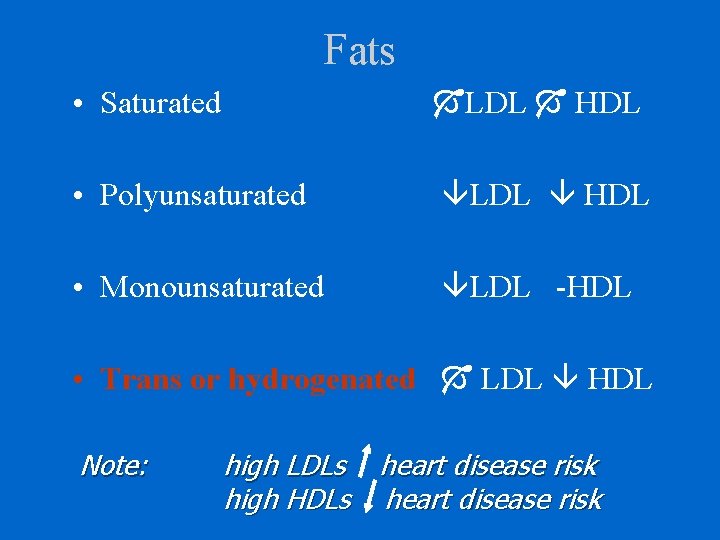
Fats • Saturated LDL HDL • Polyunsaturated LDL HDL • Monounsaturated LDL -HDL • Trans or hydrogenated LDL HDL Note: high LDLs heart disease risk high HDLs heart disease risk
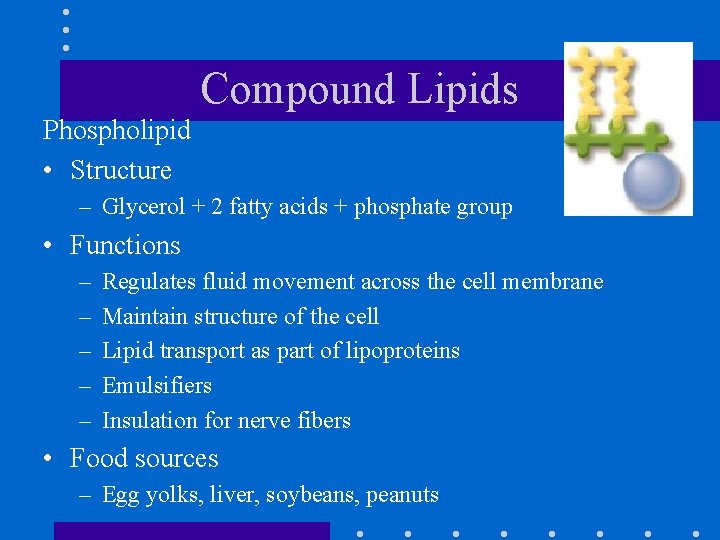
Compound Lipids Phospholipid • Structure – Glycerol + 2 fatty acids + phosphate group • Functions – – – Regulates fluid movement across the cell membrane Maintain structure of the cell Lipid transport as part of lipoproteins Emulsifiers Insulation for nerve fibers • Food sources – Egg yolks, liver, soybeans, peanuts
Introducing the Nutrients Macronutrients • Cholesterol – Lipoprotein (compound lipid) • protein joined with a TG or phospholipid • transporter (for lipids in the blood) • 4 types of lipoproteins – Chylomicrons • fat storage in adipose tissue • transports fat soluble vitamins – Very Low Density Lipoprotein (VLDL) • ~95% Lipid • delivers triglycerides to the cell

Introducing the Nutrients Macronutrients – Low Density Lipoprotein (LDL or Bad Cholesterol) • carries ~60 -80% of cholesterol • delivers cholesterol to arterial walls – High Density Lipoprotein (HDL or Good Cholesterol) • ~50% protein, ~20% lipid, ~20% cholesterol • returns cholesterol to the liver • exercise and refraining from cigarettes can increase HDL
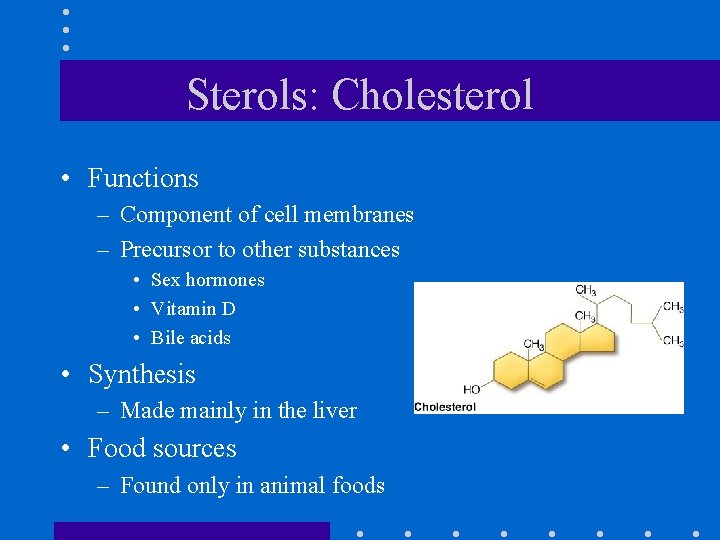
Sterols: Cholesterol • Functions – Component of cell membranes – Precursor to other substances • Sex hormones • Vitamin D • Bile acids • Synthesis – Made mainly in the liver • Food sources – Found only in animal foods
Introducing the Nutrients Macronutrients • Role of Lipids in the Body – Energy Source and Reserve • 9 kcal/gm – Protect vital organs – Insulation – Vitamin Carrier (A, D, E, K) – Promotes Satiety – Incorporated into cell structures, i. e. cell membranes
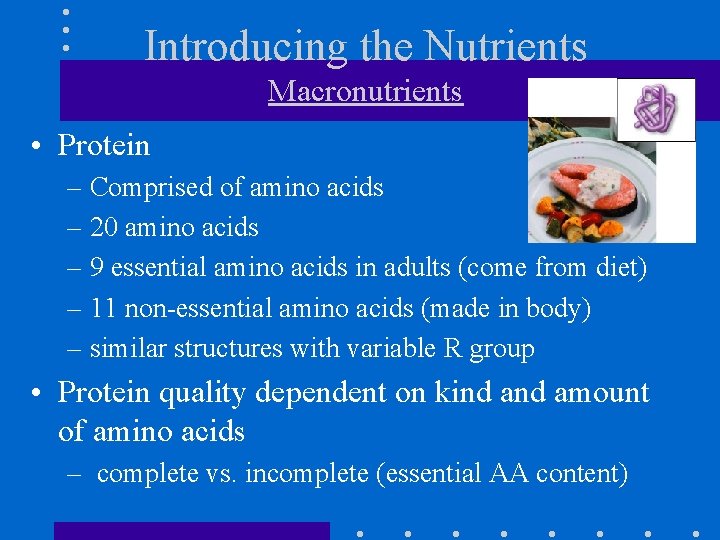
Introducing the Nutrients Macronutrients • Protein – Comprised of amino acids – 20 amino acids – 9 essential amino acids in adults (come from diet) – 11 non-essential amino acids (made in body) – similar structures with variable R group • Protein quality dependent on kind amount of amino acids – complete vs. incomplete (essential AA content)
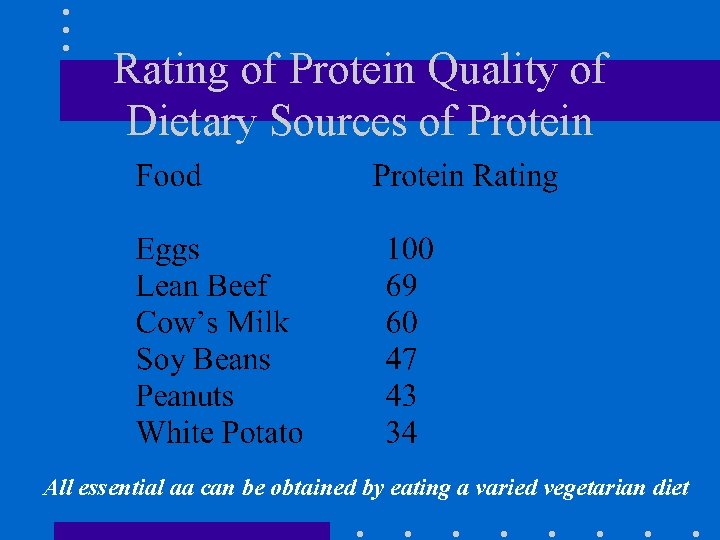
Rating of Protein Quality of Dietary Sources of Protein All essential aa can be obtained by eating a varied vegetarian diet
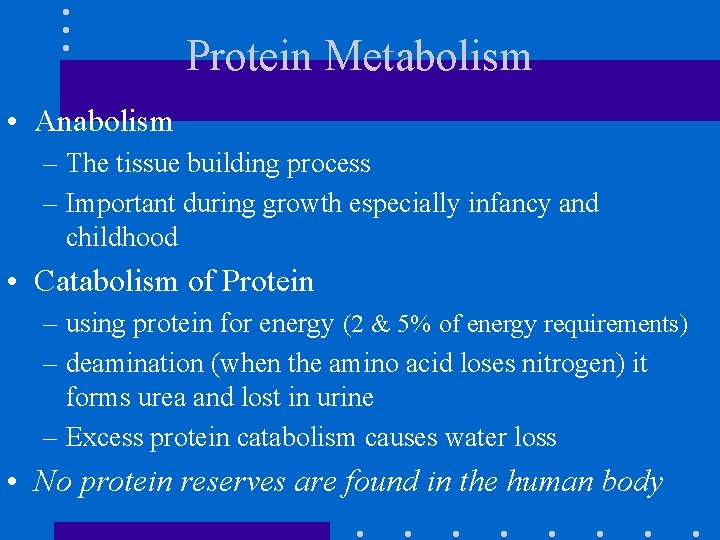
Protein Metabolism • Anabolism – The tissue building process – Important during growth especially infancy and childhood • Catabolism of Protein – using protein for energy (2 & 5% of energy requirements) – deamination (when the amino acid loses nitrogen) it forms urea and lost in urine – Excess protein catabolism causes water loss • No protein reserves are found in the human body
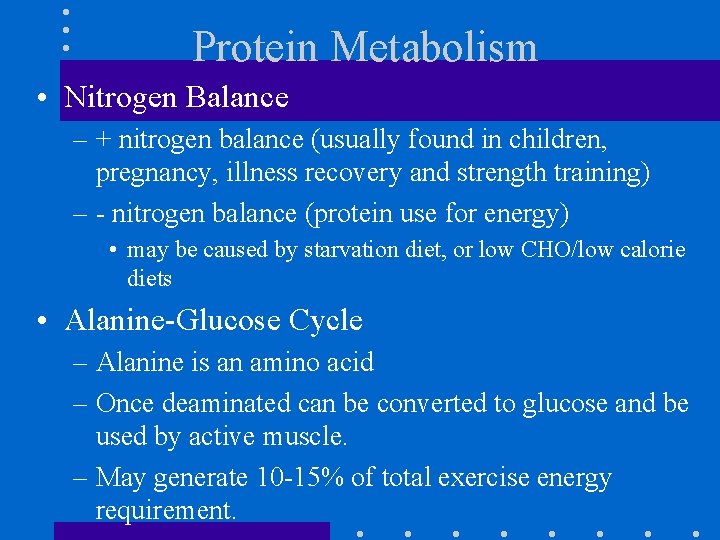
Protein Metabolism • Nitrogen Balance – + nitrogen balance (usually found in children, pregnancy, illness recovery and strength training) – - nitrogen balance (protein use for energy) • may be caused by starvation diet, or low CHO/low calorie diets • Alanine-Glucose Cycle – Alanine is an amino acid – Once deaminated can be converted to glucose and be used by active muscle. – May generate 10 -15% of total exercise energy requirement.
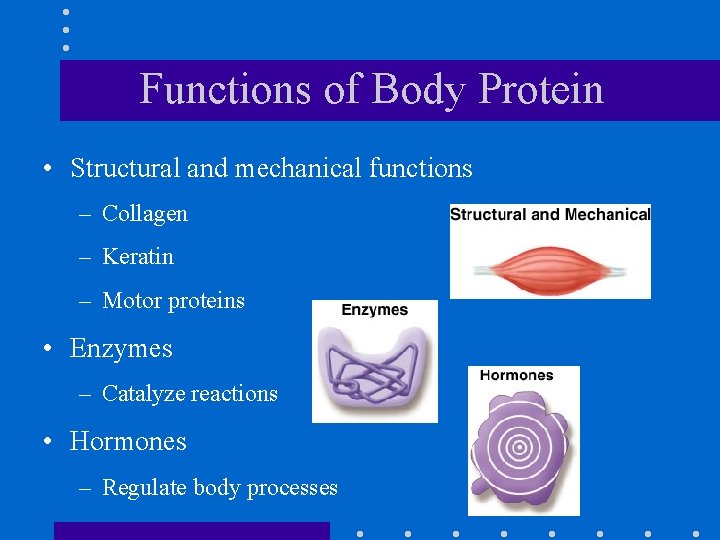
Functions of Body Protein • Structural and mechanical functions – Collagen – Keratin – Motor proteins • Enzymes – Catalyze reactions • Hormones – Regulate body processes
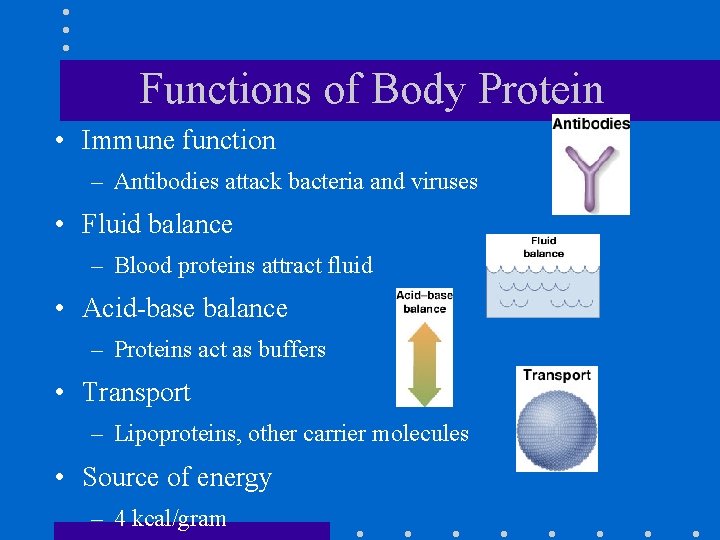
Functions of Body Protein • Immune function – Antibodies attack bacteria and viruses • Fluid balance – Blood proteins attract fluid • Acid-base balance – Proteins act as buffers • Transport – Lipoproteins, other carrier molecules • Source of energy – 4 kcal/gram
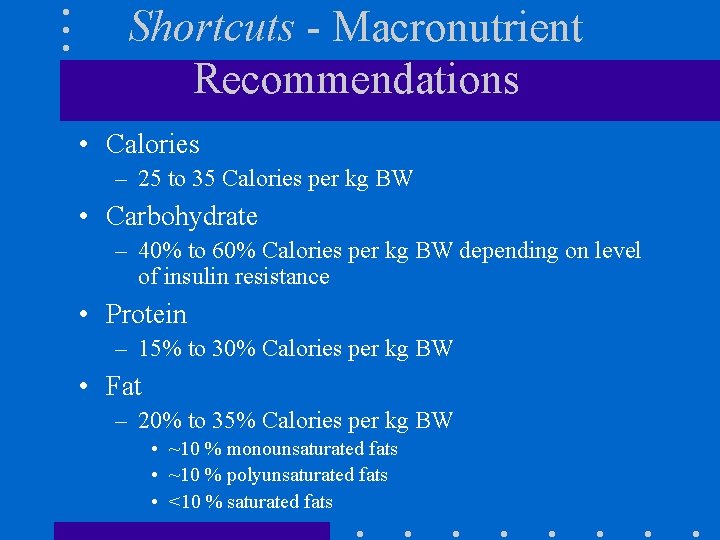
Shortcuts - Macronutrient Recommendations • Calories – 25 to 35 Calories per kg BW • Carbohydrate – 40% to 60% Calories per kg BW depending on level of insulin resistance • Protein – 15% to 30% Calories per kg BW • Fat – 20% to 35% Calories per kg BW • ~10 % monounsaturated fats • ~10 % polyunsaturated fats • <10 % saturated fats
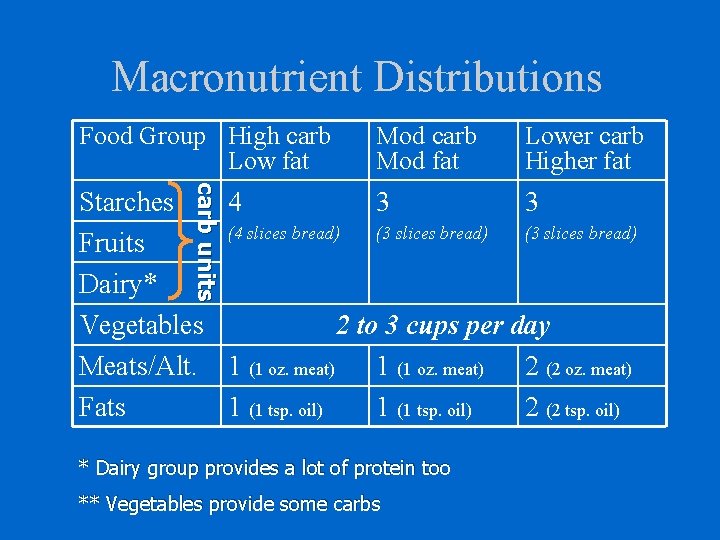
Macronutrient Distributions Food Group High carb Low fat Mod carb Mod fat Lower carb Higher fat carb units Starches 4 3 3 (4 slices bread) (3 slices bread) Fruits Dairy* Vegetables 2 to 3 cups per day Meats/Alt. 1 (1 oz. meat) 2 (2 oz. meat) Fats 1 (1 tsp. oil) 2 (2 tsp. oil) * Dairy group provides a lot of protein too ** Vegetables provide some carbs
- Slides: 33