
Introducing the Company Rent and Affordability Benchmark Advisory
Introducing the Company Rent and Affordability Benchmark Advisory Group November 30 2019
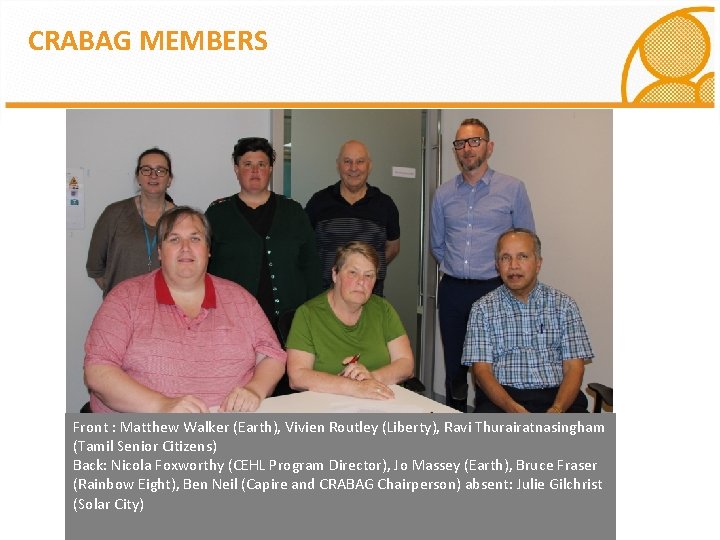
CRABAG MEMBERS Front : Matthew Walker (Earth), Vivien Routley (Liberty), Ravi Thurairatnasingham (Tamil Senior Citizens) Back: Nicola Foxworthy (CEHL Program Director), Jo Massey (Earth), Bruce Fraser (Rainbow Eight), Ben Neil (Capire and CRABAG Chairperson) absent: Julie Gilchrist (Solar City)
WHAT WE’RE SUPPOSED TO DO - 4 THINGS 1. Review Affordability Benchmark 2. Review the Company Rent model with the aim of providing flexibility in what services co-ops pay CEHL for 3. Make recommendations to the Board on items 1 and 2 4. Make sure that co-op members have opportunities to understand the information, are able to communicate their ideas and influence the recommendations made.
1. AFFORDABILITY BENCHMARK WHAT IS IT? Housing affordability is the ability of households to meet housing costs while maintaining the ability to meet other basic costs of living. Many social housing agencies use a percentage of household income to set rents – this is called the affordability benchmark. NOTES This is just a formula developed by academics and used in government. The “affordability benchmark” formula is used generally and does not take into account any individual situations
1. AFFORDABILITY BENCHMARK HOW IS IT USED? The affordability benchmark is used to calculate an individual household’s rent. Public and social housing groups apply the affordability benchmark in slightly different ways, currently use an Affordability benchmark of between 25% - 30%. Notes Because CEHL is a Registered Housing Association it must apply a % of income when calculating rents. Registered Housing Associations consider three other things in their rent calculations, • % of Family Tax Benefits received from Centerlink (FTB) • Commonwealth Rent Assistance received from Centerlink (CRA) • % of market rent which is used to calculate the maximum rent (cap on market rent ) The following page shows how all the Victorian Registered Housing Associations combine these to calculate their rents. As you can see there is room for some variation
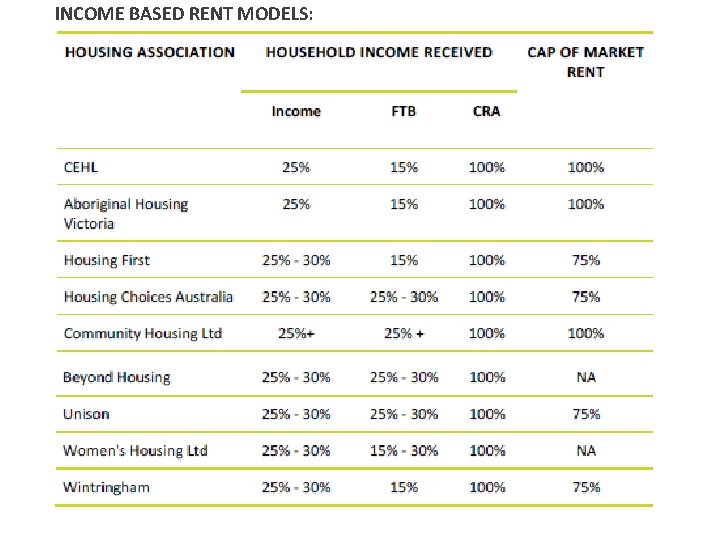
INCOME BASED RENT MODELS:

1. AFFORDABILITY BENCHMARK WHAT’S THE TASK? The Rent Model Advisory Group (RMAG) felt the current affordability benchmark needed further debate + consultation. Notes The RMAG worked for a year to review how rents were set and made recommendations to the CEHL board in November 2018. A new rent system was put into place in July 2019. The Board has appointed CRABAG to consider whether the current benchmark is appropriate. Notes Changing the % of income charged (currently 25%) was not considered by RMAG. There has as yet been no discussion of what should be taken into account in deciding what’s ‘appropriate’
2. COMPANY RENT • All co-ops have an agreement (CCA) with CEHL on how rent from members will be split • Some costs are paid for ‘in bulk’ by CEHL eg: loans and property insurance • Other costs are the responsibility of the co-op eg: rates and audits Notes Each co-op has an agreement with CEHL which lists responsibilities. One section details financial arrangements. It’s not really accurate to call the money that co-ops contribute ‘rent’ because CEHL is just a way for the co-ops to work together as shareholders of CEHL
2. COMPANY RENT • In 2007, when the last rent system began, it was decided 55% would be pooled and go to CEHL and 45% stay with co-ops • CEHL does not receive any ongoing funding from government. From time to time, CEHL may receive oneoff grants to buy or develop properties. The company rent is a contribution that each co-op makes for the costs and services that are best paid in bulk. By pooling our money, it can go further.
2. COMPANY RENT FLEXIBILITY • CERC co-ops pay the fixed 55% amount whether they use specific CEHL services or not, or even if they would prefer to use someone else • There may also be work that a co-op currently does which it would prefer to hand over to CEHL • The CEHL Board agreed with the previous Rent Model Advisory Group that the division of work between CEHL and each co-op should be negotiable • Flexibility will affect the way rental income needs to be divided. An across the board fixed percentage for all coops would not be possible.
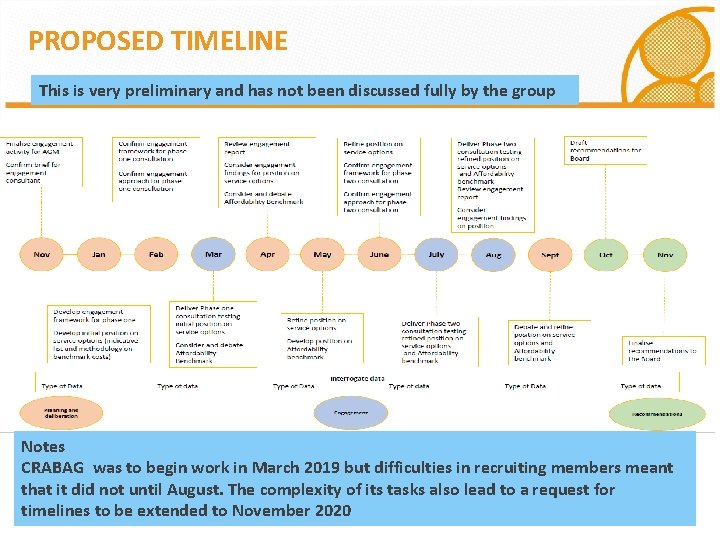
PROPOSED TIMELINE This is very preliminary and has not been discussed fully by the group Notes CRABAG was to begin work in March 2019 but difficulties in recruiting members meant that it did not until August. The complexity of its tasks also lead to a request for timelines to be extended to November 2020
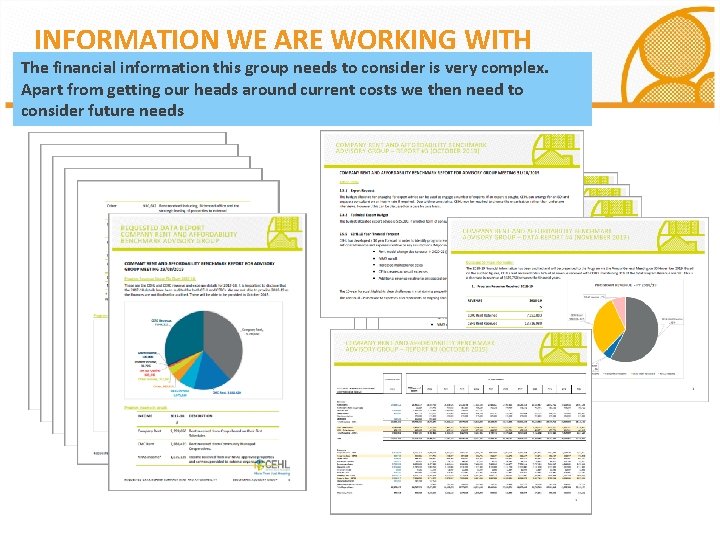
INFORMATION WE ARE WORKING WITH The financial information this group needs to consider is very complex. Apart from getting our heads around current costs we then need to consider future needs
We are all ears contact us. . . 1. Have your say page on www. cehl. com. au/Have. Your. Say Log in and click on the Discussion Tab to ask a question or see FAQs 2. Email contactcrabag@gmail. com Only CRABAG members have access to these emails Notes It would be really helpful to hear your views: What is it that you don’t know now, that you’d want to know? What’s the best way to talk with your co-op in the future. What don’t you want?
- Slides: 13