
Introducing stem cells Stem cell biology basics A
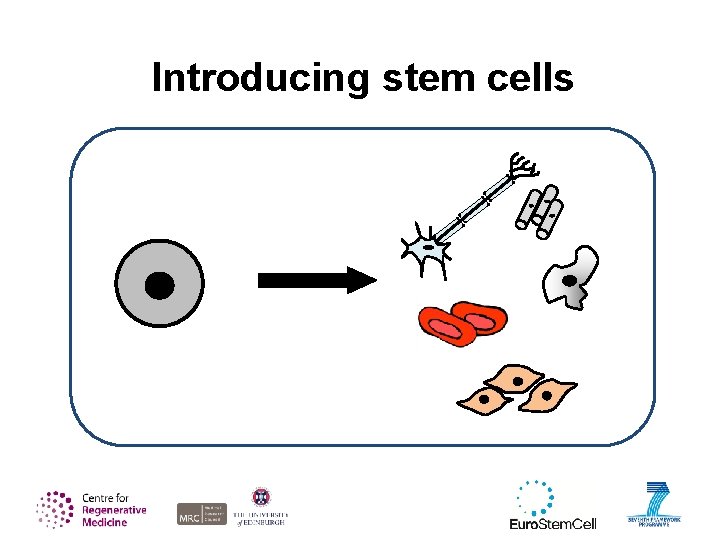
Introducing stem cells

Stem cell biology basics
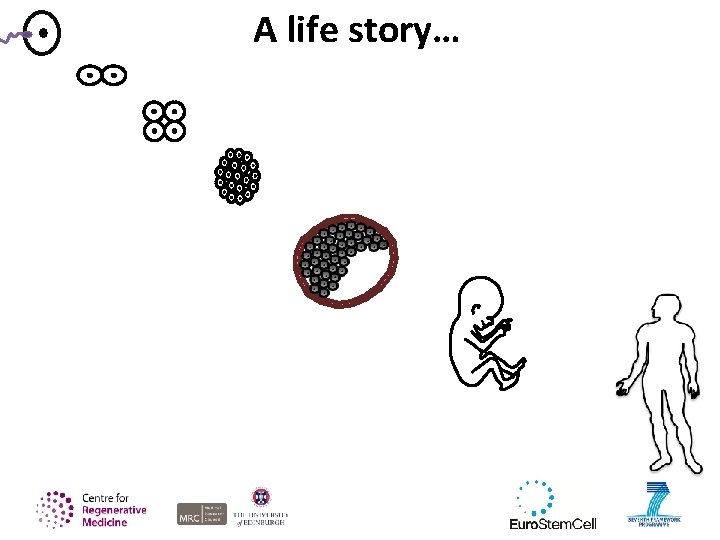
A life story…
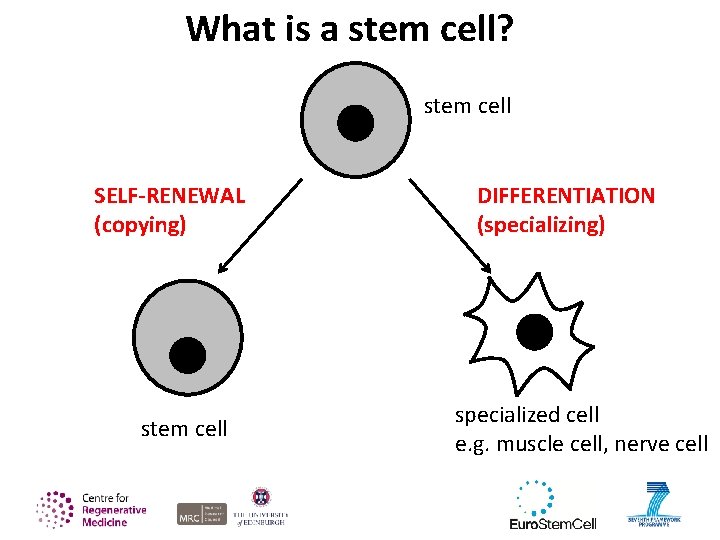
What is a stem cell? stem cell SELF-RENEWAL (copying) stem cell DIFFERENTIATION (specializing) specialized cell e. g. muscle cell, nerve cell
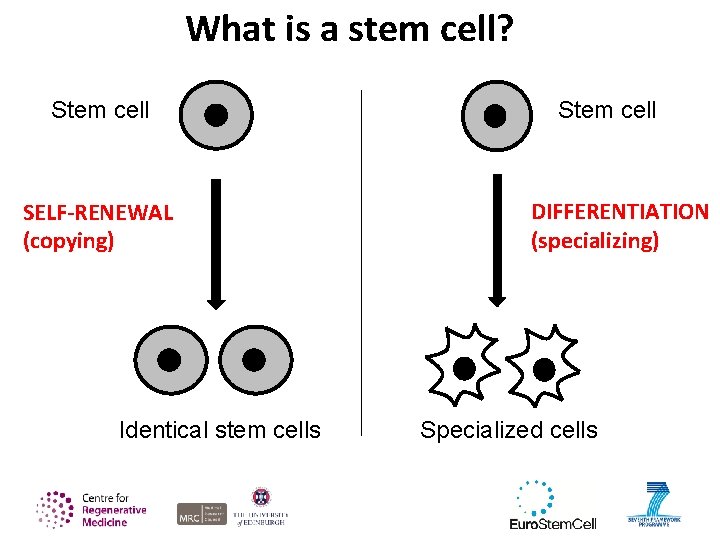
What is a stem cell? Stem cell SELF-RENEWAL (copying) Identical stem cells Stem cell DIFFERENTIATION (specializing) Specialized cells
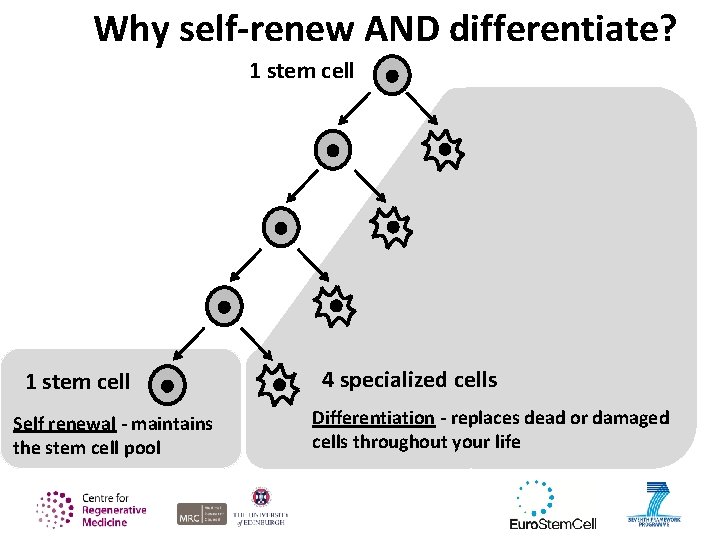
Why self-renew AND differentiate? 1 stem cell Self renewal - maintains the stem cell pool 4 specialized cells Differentiation - replaces dead or damaged cells throughout your life
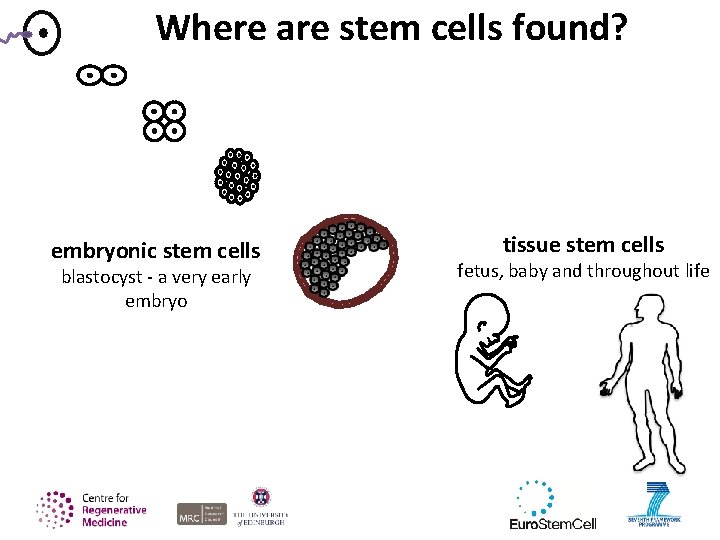
Where are stem cells found? embryonic stem cells blastocyst - a very early embryo tissue stem cells fetus, baby and throughout life
Types of stem cell: 1) Embryonic stem cells
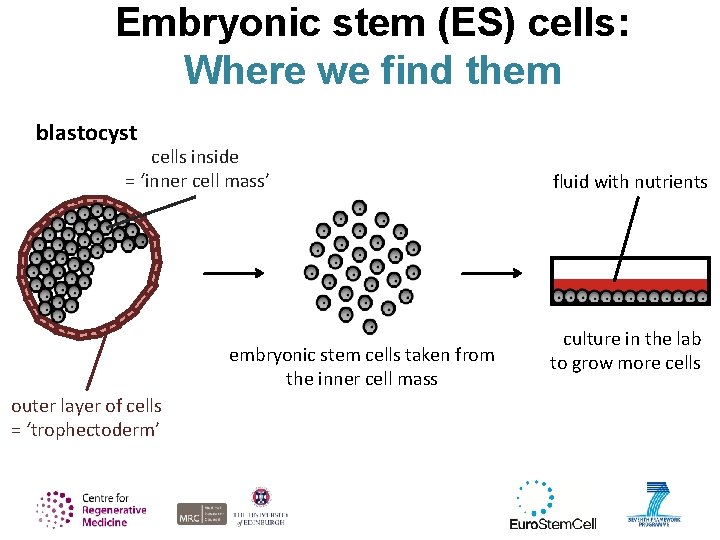
Embryonic stem (ES) cells: Where we find them blastocyst cells inside = ‘inner cell mass’ embryonic stem cells taken from the inner cell mass outer layer of cells = ‘trophectoderm’ fluid with nutrients culture in the lab to grow more cells
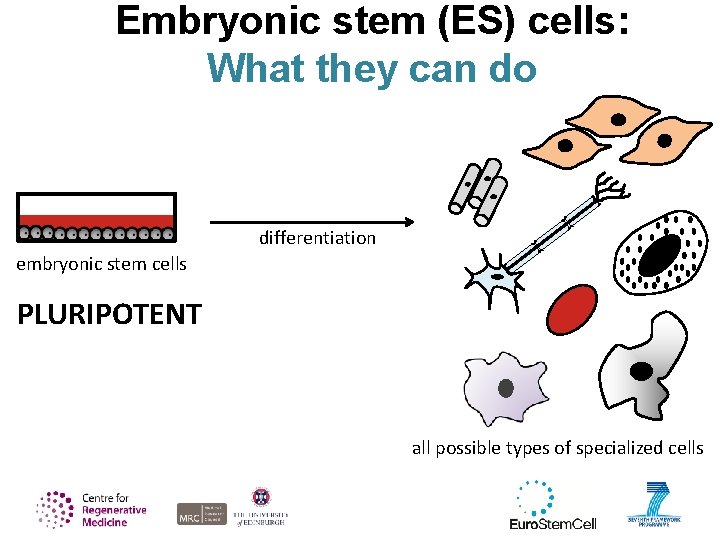
Embryonic stem (ES) cells: What they can do differentiation embryonic stem cells PLURIPOTENT all possible types of specialized cells
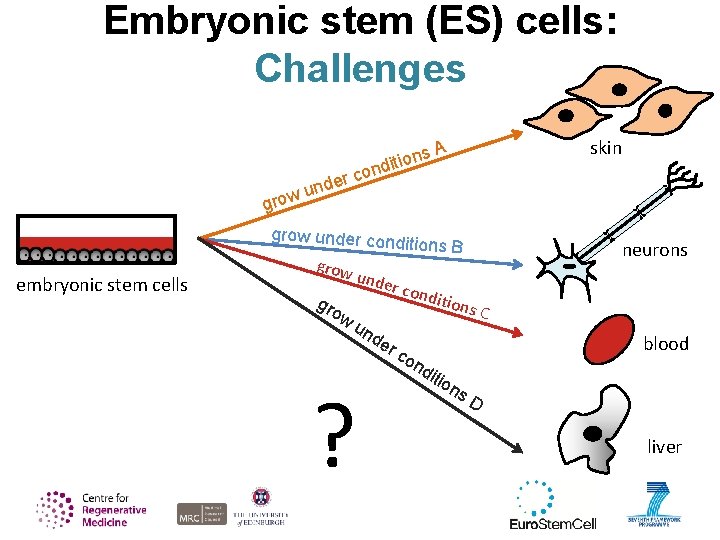
Embryonic stem (ES) cells: Challenges grow er und ns o i t i nd skin A co grow under cond embryonic stem cells grow gro w itions B neurons unde r con un de r ? ditio ns C blood co nd itio ns D liver
Types of stem cell: 2) Tissue stem cells
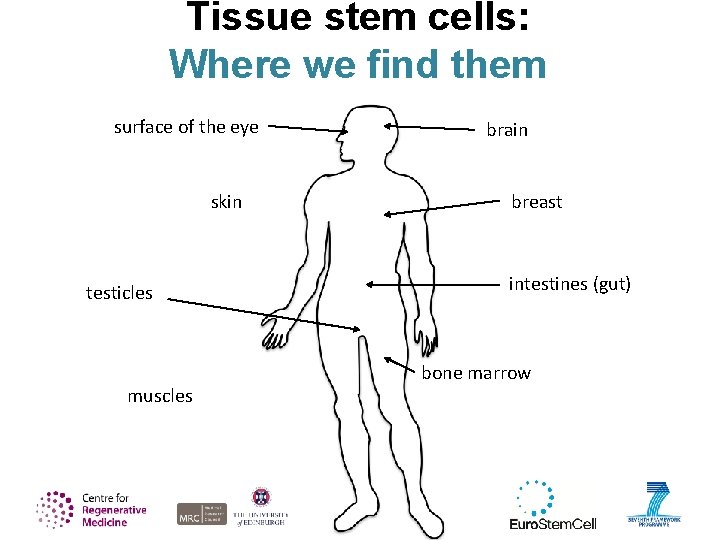
Tissue stem cells: Where we find them surface of the eye skin testicles muscles brain breast intestines (gut) bone marrow
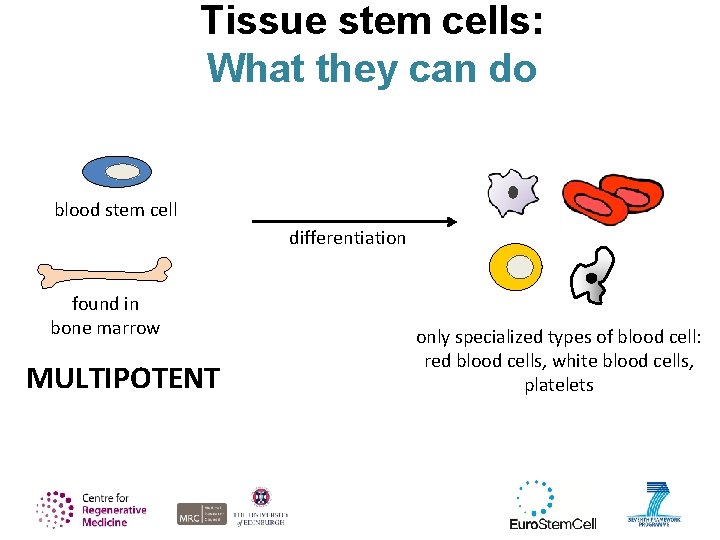
Tissue stem cells: What they can do blood stem cell differentiation found in bone marrow MULTIPOTENT only specialized types of blood cell: red blood cells, white blood cells, platelets
Types of stem cell: 3)Induced pluripotent (i. PS) stem cells
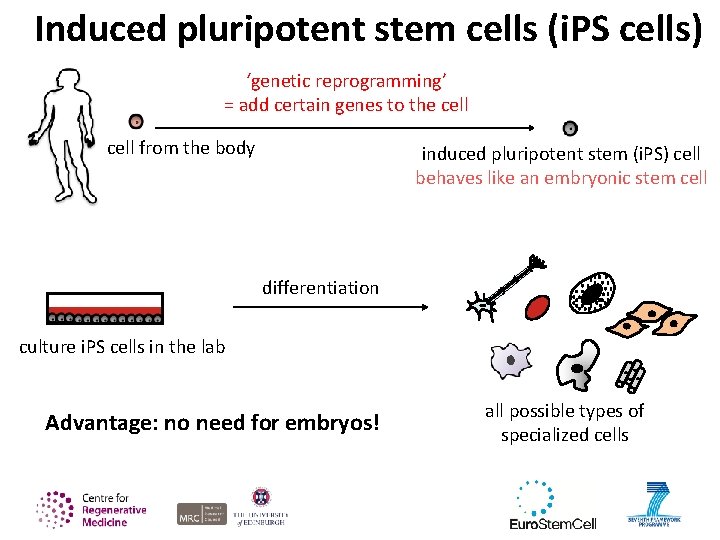
Induced pluripotent stem cells (i. PS cells) ‘genetic reprogramming’ = add certain genes to the cell from the body induced pluripotent stem (i. PS) cell behaves like an embryonic stem cell differentiation culture i. PS cells in the lab Advantage: no need for embryos! all possible types of specialized cells
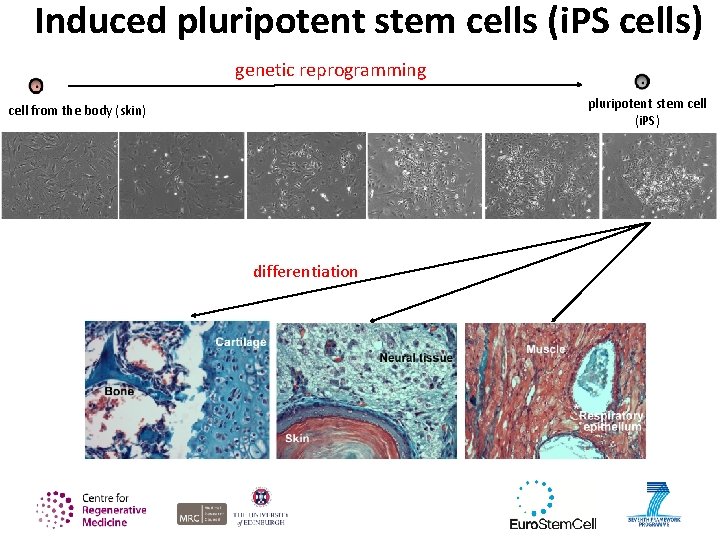
Induced pluripotent stem cells (i. PS cells) genetic reprogramming pluripotent stem cell (i. PS) cell from the body (skin) differentiation
Stem cell jargon Potency A measure of how many types of specialized cell a stem cell can make Pluripotent Can make all types of specialized cells in the body Embryonic stem cells are pluripotent Multipotent Can make multiple types of specialized cells, but not all types Tissue stem cells are multipotent
Cloning
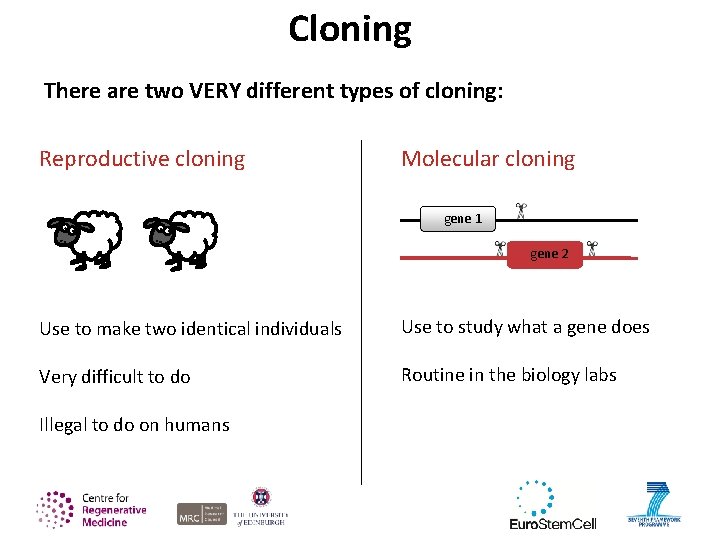
Cloning There are two VERY different types of cloning: Reproductive cloning Molecular cloning gene 1 gene 2 Use to make two identical individuals Use to study what a gene does Very difficult to do Routine in the biology labs Illegal to do on humans
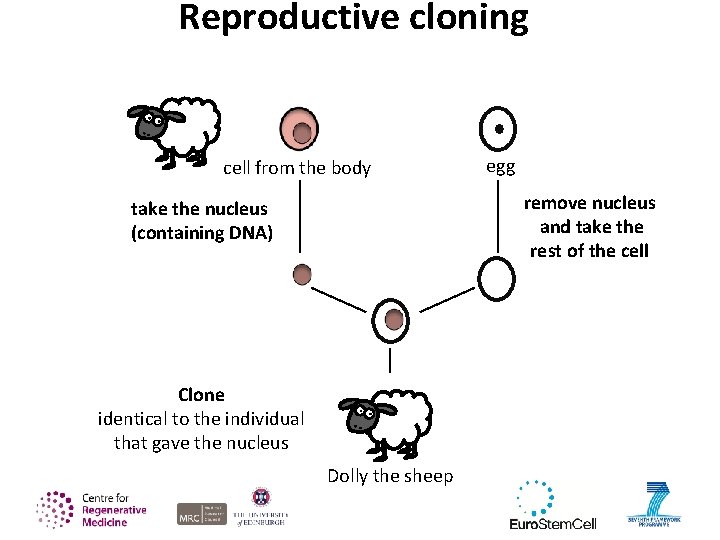
Reproductive cloning cell from the body egg remove nucleus and take the rest of the cell take the nucleus (containing DNA) Clone identical to the individual that gave the nucleus Dolly the sheep
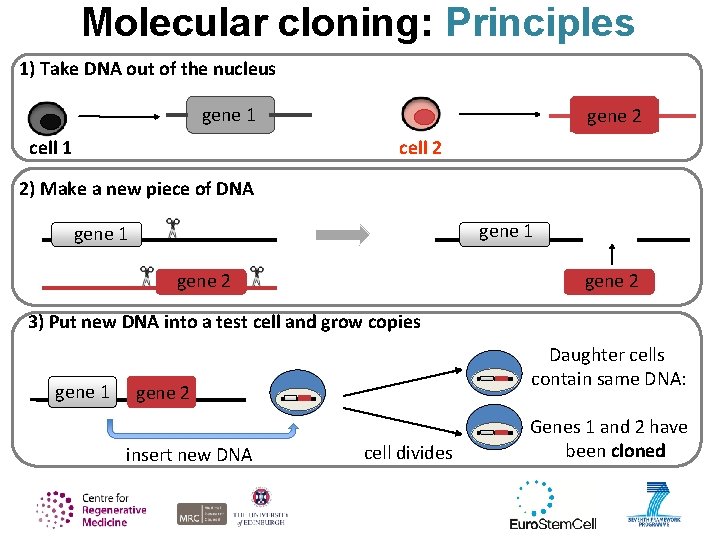
Molecular cloning: Principles 1) Take DNA out of the nucleus gene 1 cell 1 gene 2 cell 2 2) Make a new piece of DNA gene 1 gene 2 3) Put new DNA into a test cell and grow copies gene 1 Daughter cells contain same DNA: gene 2 insert new DNA cell divides Genes 1 and 2 have been cloned
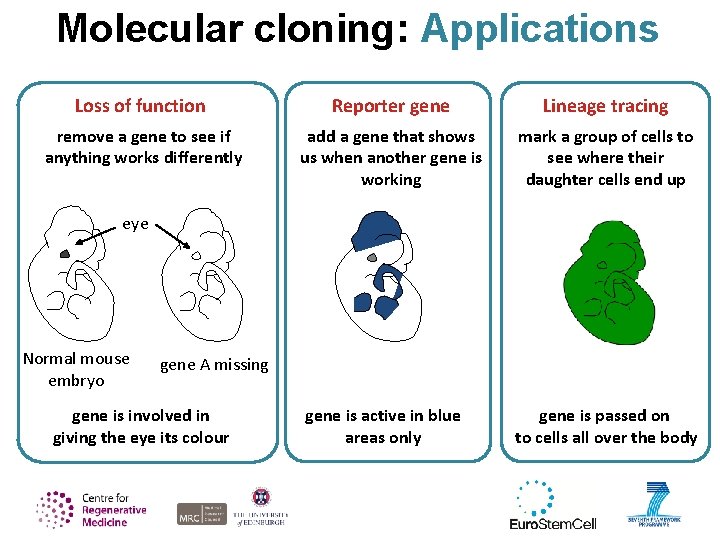
Molecular cloning: Applications Loss of function Reporter gene Lineage tracing remove a gene to see if anything works differently add a gene that shows us when another gene is working mark a group of cells to see where their daughter cells end up gene is active in blue areas only gene is passed on to cells all over the body eye Normal mouse embryo gene A missing gene is involved in giving the eye its colour
Stem cell biology in more detail
Tissue stem cell types and hierarchies
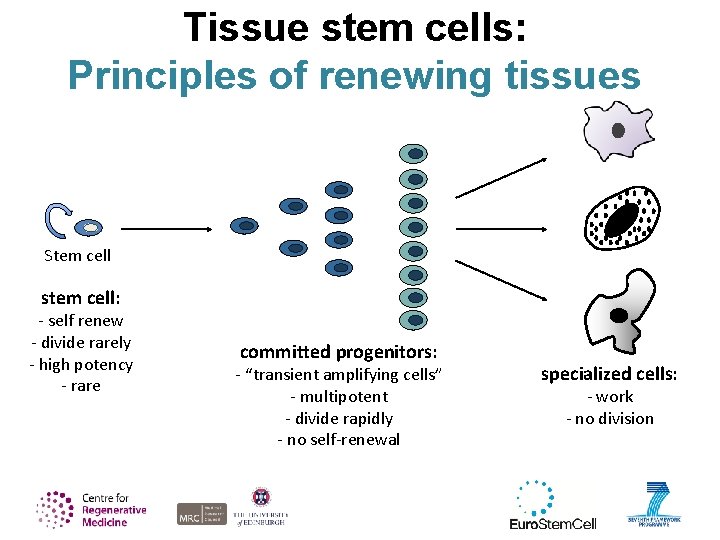
Tissue stem cells: Principles of renewing tissues Stem cell stem cell: - self renew - divide rarely - high potency - rare committed progenitors: - “transient amplifying cells” - multipotent - divide rapidly - no self-renewal specialized cells: - work - no division
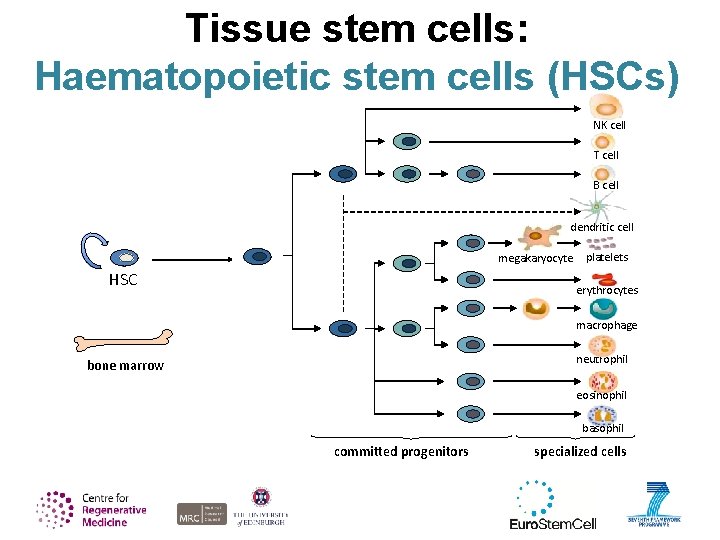
Tissue stem cells: Haematopoietic stem cells (HSCs) NK cell T cell B cell dendritic cell megakaryocyte HSC platelets erythrocytes macrophage neutrophil bone marrow eosinophil basophil committed progenitors specialized cells
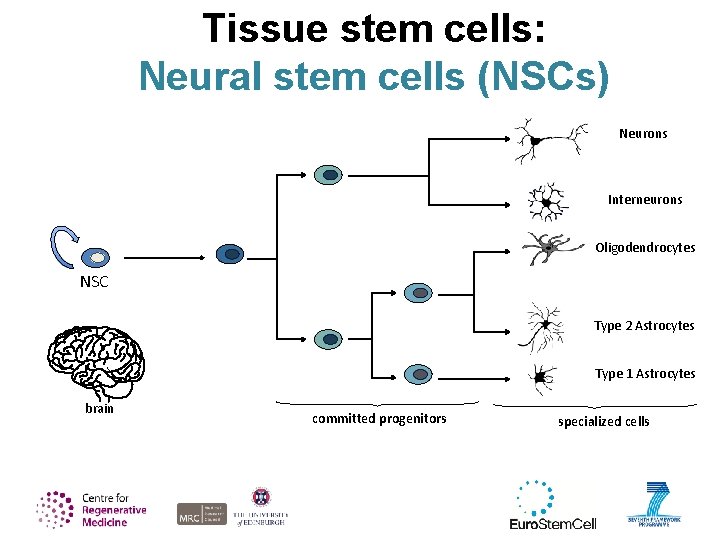
Tissue stem cells: Neural stem cells (NSCs) Neurons Interneurons Oligodendrocytes NSC Type 2 Astrocytes Type 1 Astrocytes brain committed progenitors specialized cells
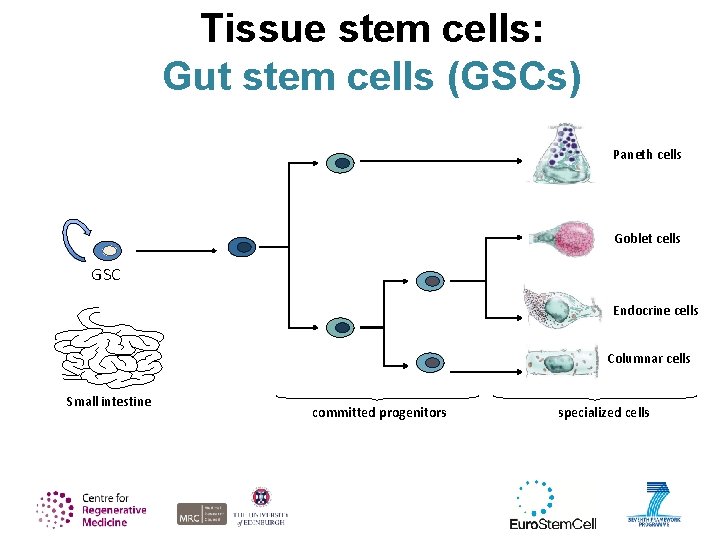
Tissue stem cells: Gut stem cells (GSCs) Paneth cells Goblet cells GSC Endocrine cells Columnar cells Small intestine committed progenitors specialized cells
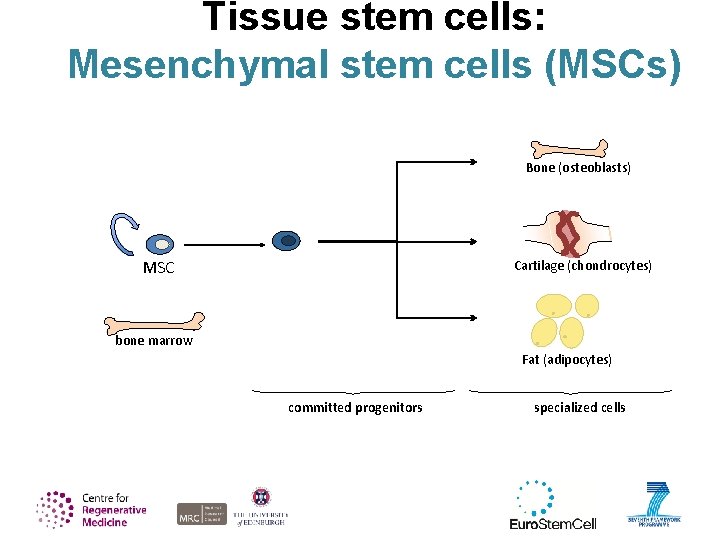
Tissue stem cells: Mesenchymal stem cells (MSCs) Bone (osteoblasts) Cartilage (chondrocytes) MSC bone marrow Fat (adipocytes) committed progenitors specialized cells
Stem cells at home: The stem cell niche
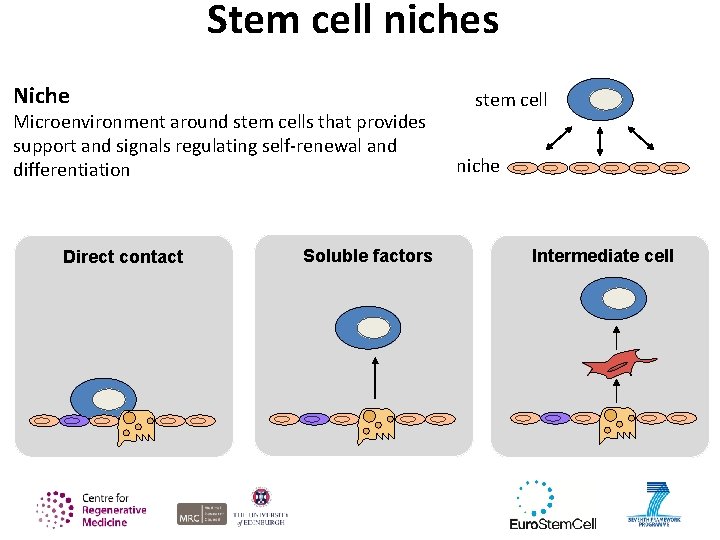
Stem cell niches Niche Microenvironment around stem cells that provides support and signals regulating self-renewal and differentiation Direct contact Soluble factors stem cell niche Intermediate cell
Credits Picture credits Many thanks to the following people for permission to reproduce images: Slide 17, i. PS cells: Keisuke Kaji, University of Edinburgh, UK Slide 27, blood cell diagrams: Jonas Larsson, Lund Univeristy, Sweden Slide 29, intestinal cell diagrams: Hans Clevers and Nick Barker, Hubrecht Institute, The Netherlands Should you wish to re-use any of the images listed above, please contact the owner. All other images in this presentation can be re-used freely. Acknowledgements Particular thanks to Dr Christele Gonneau for creating these slides and working tirelessly to help ensure the notes are correct. Thanks also to Freddy Radtke of EPFL, Switzerland, whose slide we copied to make slide 27 on tissue stem cells.
- Slides: 33