
Introducing Research Skills Toolkit A suite of interactive

- Slides: 41
Introducing: Research Skills Toolkit A suite of interactive, online programmes from Epigeum
About Epigeum Founded at Imperial College London in 2005, and part of Oxford University Press since 2015, Epigeum is a leading provider of interactive, online courseware for universities and colleges worldwide – making consistent, costeffective training achievable for all. Watch our introductory video
Epigeum Programmes Epigeum programmes support the core activities of universities and colleges in four key areas. Evidence-based learning design, cutting-edge technology, and comprehensive subject knowledge ensure that each programme delivers training of the highest quality.
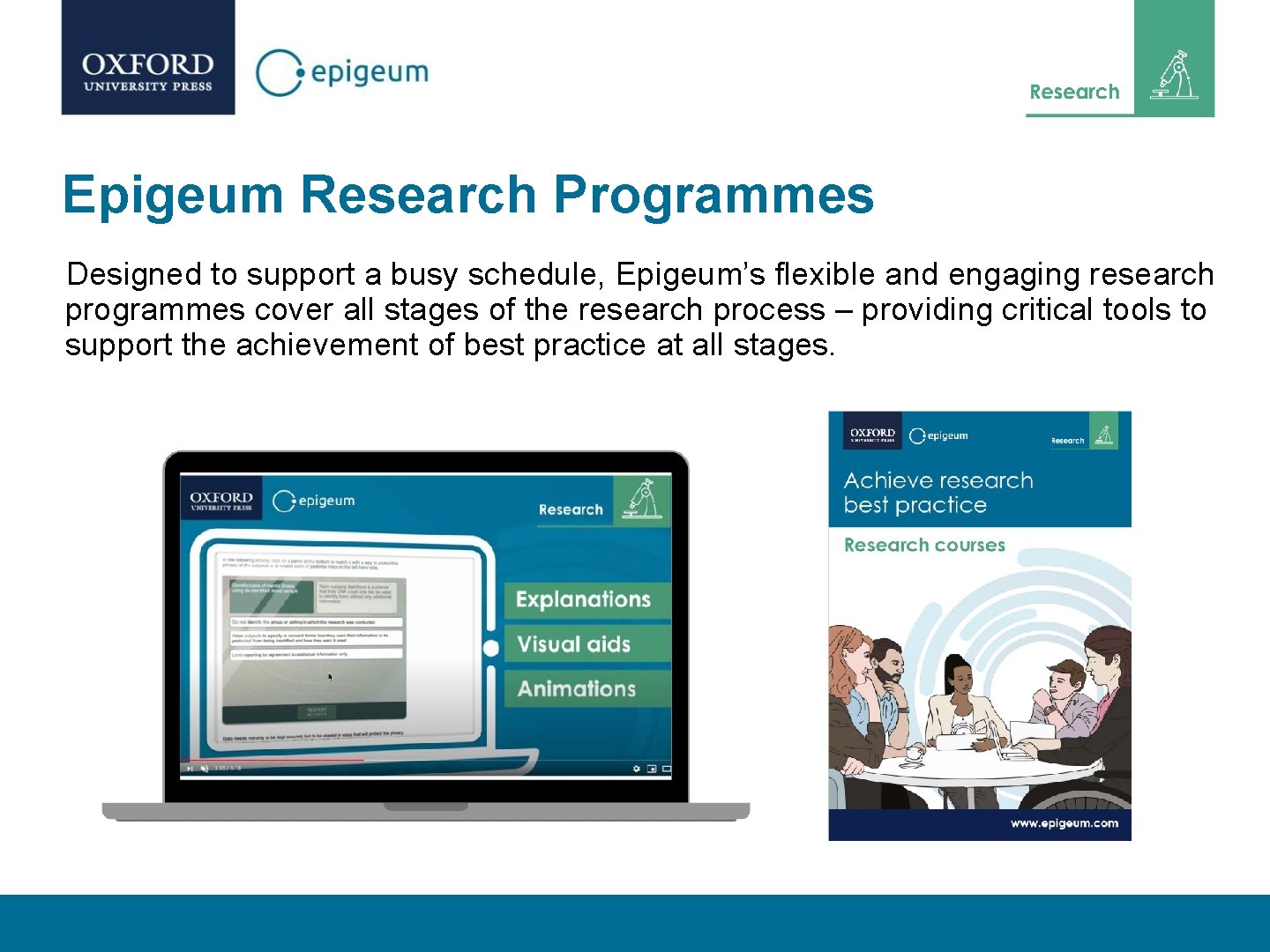
Epigeum Research Programmes Designed to support a busy schedule, Epigeum’s flexible and engaging research programmes cover all stages of the research process – providing critical tools to support the achievement of best practice at all stages.
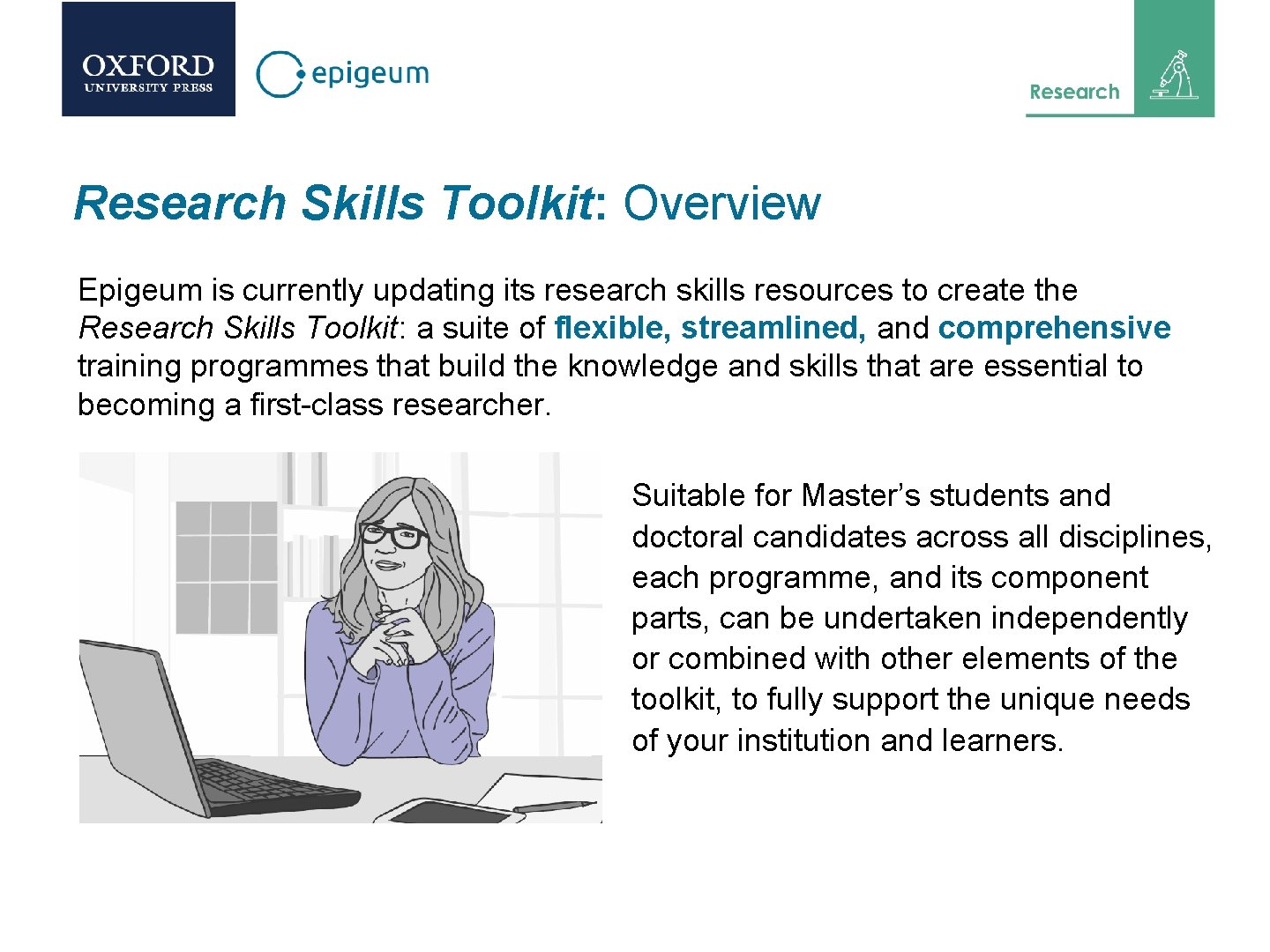
Research Skills Toolkit: Overview Epigeum is currently updating its research skills resources to create the Research Skills Toolkit: a suite of flexible, streamlined, and comprehensive training programmes that build the knowledge and skills that are essential to becoming a first-class researcher. Item 2 item Suitable for Master’s students and doctoral candidates across all disciplines, each programme, and its component parts, can be undertaken independently or combined with other elements of the toolkit, to fully support the unique needs of your institution and learners.
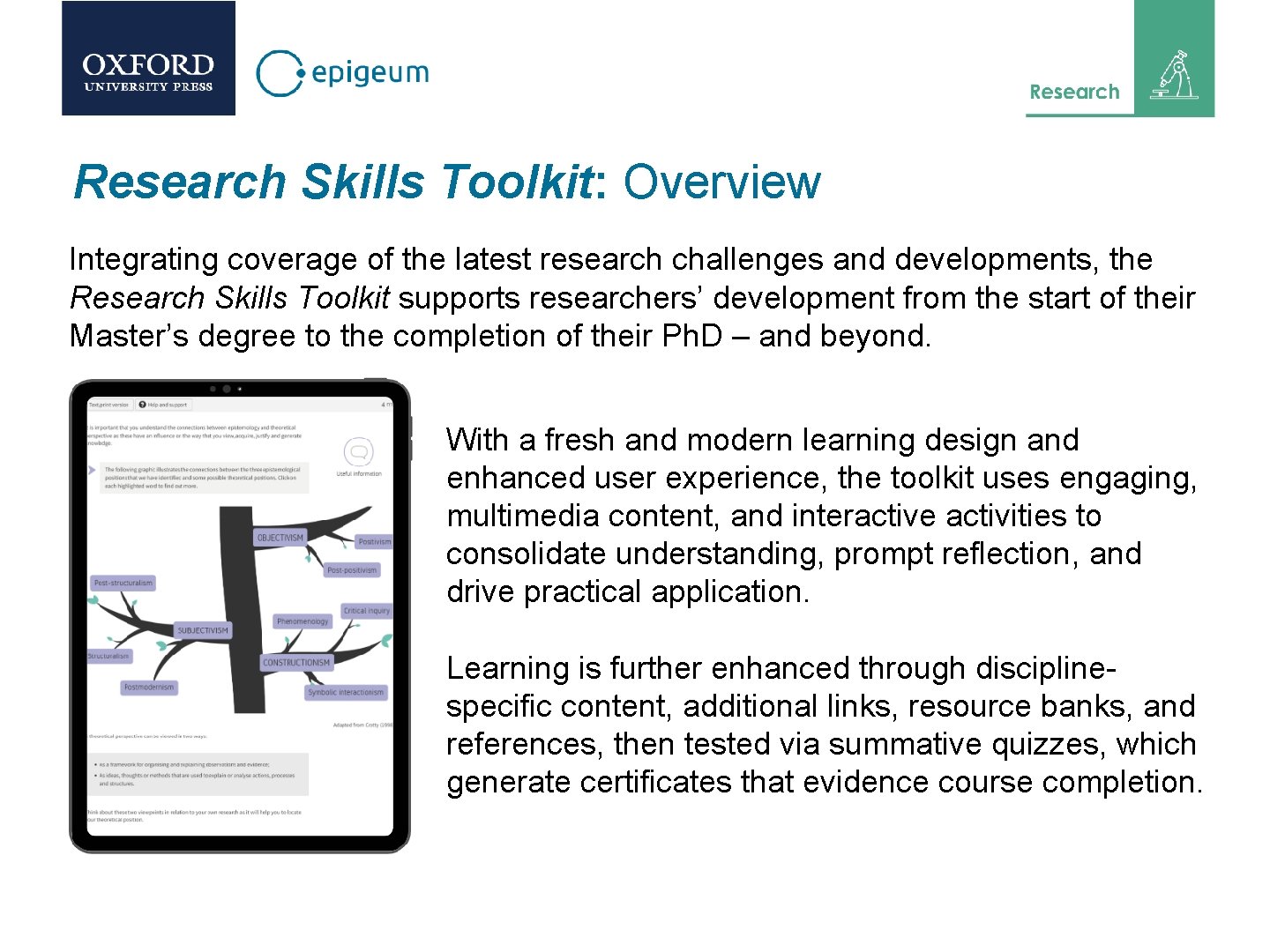
Research Skills Toolkit: Overview Integrating coverage of the latest research challenges and developments, the Research Skills Toolkit supports researchers’ development from the start of their Master’s degree to the completion of their Ph. D – and beyond. With a fresh and modern learning design and enhanced user experience, the toolkit uses engaging, multimedia content, and interactive activities to consolidate understanding, prompt reflection, and drive practical application. Learning is further enhanced through disciplinespecific content, additional links, resource banks, and references, then tested via summative quizzes, which Item 2 item generate certificates that evidence course completion.
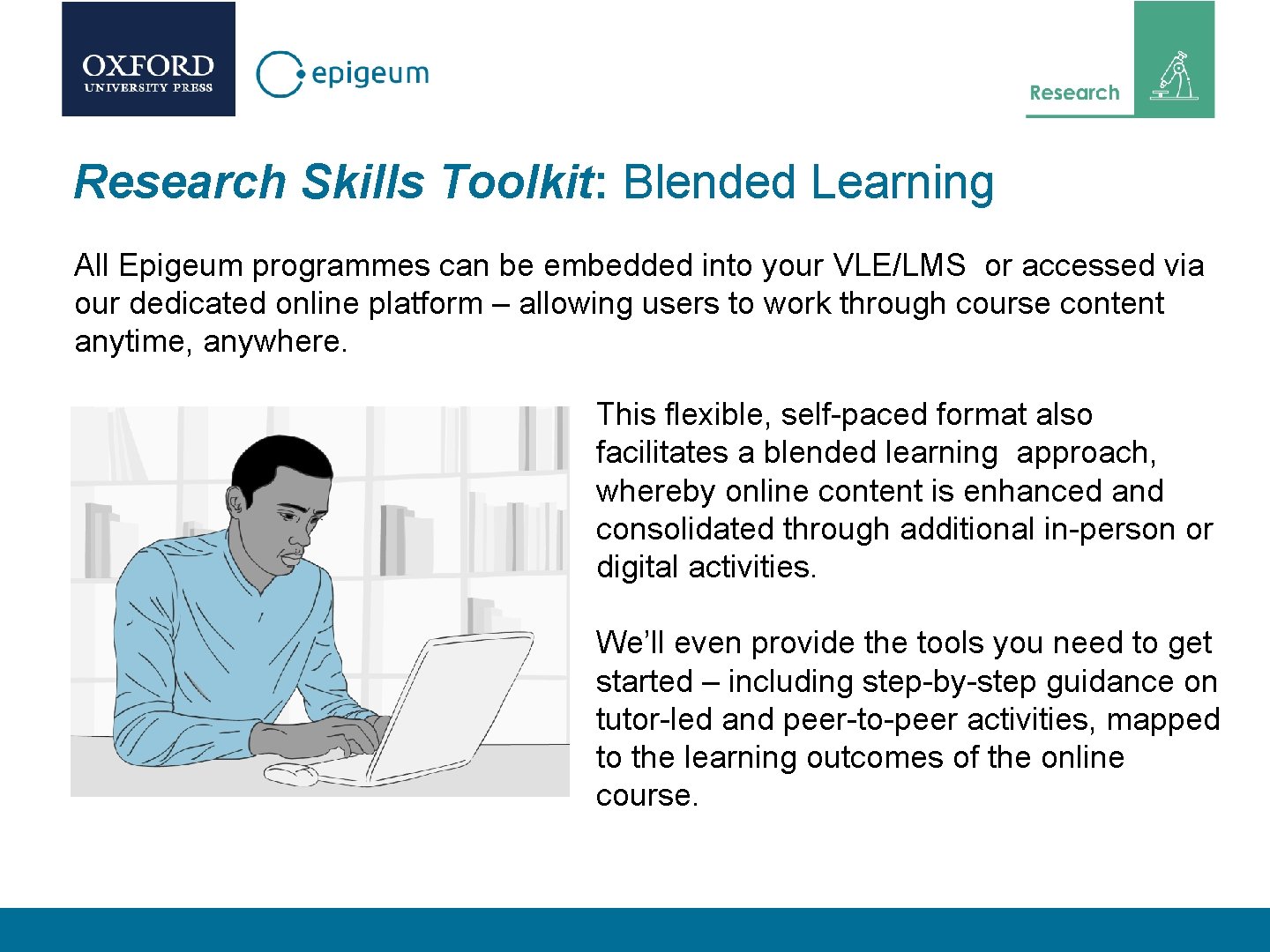
Research Skills Toolkit: Blended Learning All Epigeum programmes can be embedded into your VLE/LMS or accessed via our dedicated online platform – allowing users to work through course content anytime, anywhere. This flexible, self-paced format also facilitates a blended learning approach, whereby online content is enhanced and consolidated through additional in-person or digital activities. Item 2 item We’ll even provide the tools you need to get started – including step-by-step guidance on tutor-led and peer-to-peer activities, mapped to the learning outcomes of the online course.
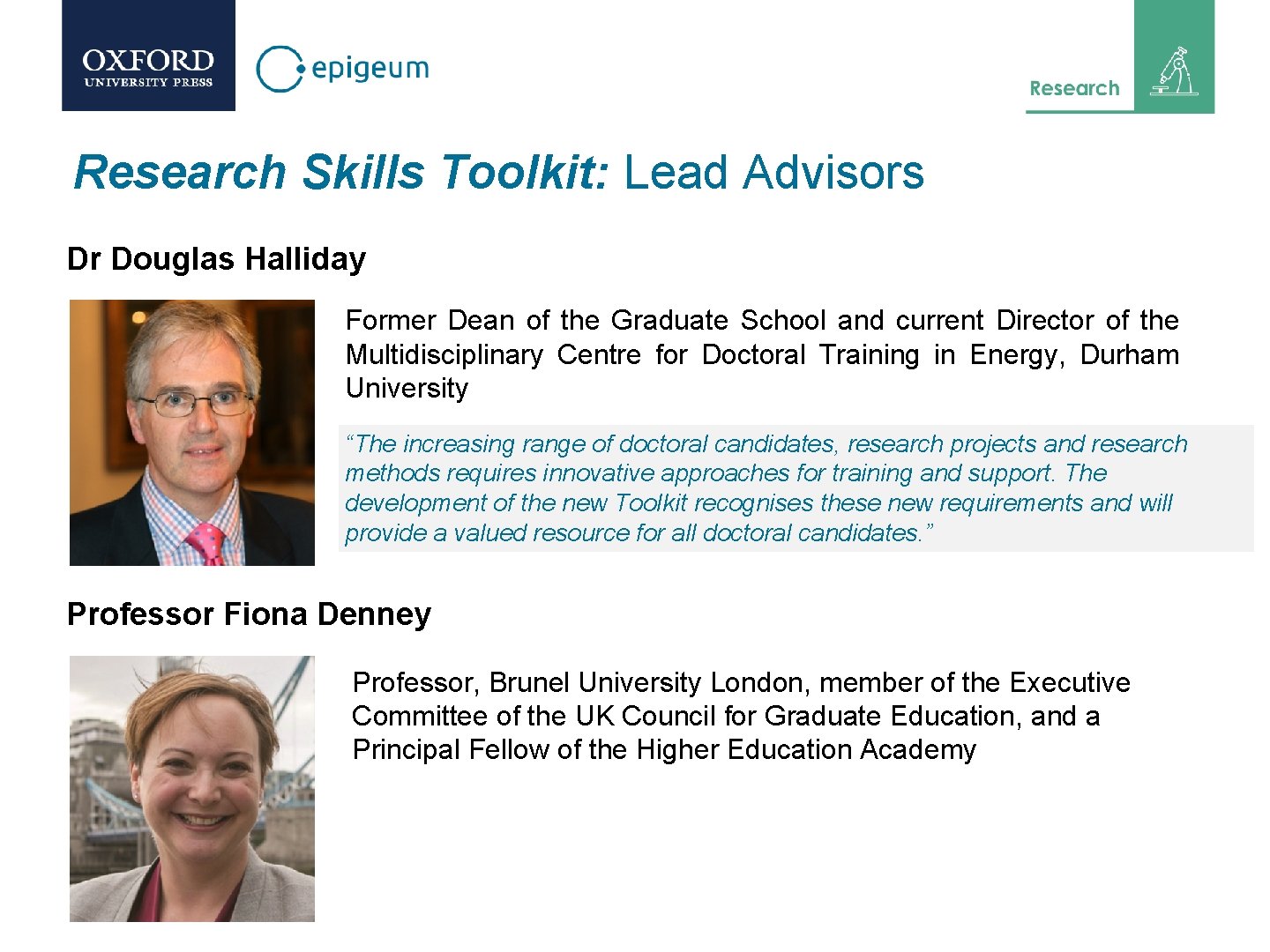
Research Skills Toolkit: Lead Advisors Dr Douglas Halliday Former Dean of the Graduate School and current Director of the Multidisciplinary Centre for Doctoral Training in Energy, Durham University “The increasing range of doctoral candidates, research projects and research methods requires innovative approaches for training and support. The development of the new Toolkit recognises these new requirements and will provide a valued resource for all doctoral candidates. ” Professor Fiona Denney Professor, Brunel University London, member of the Executive Committee of the UK Council for Graduate Education, and a Principal Fellow of the Higher Education Academy Item 2 item
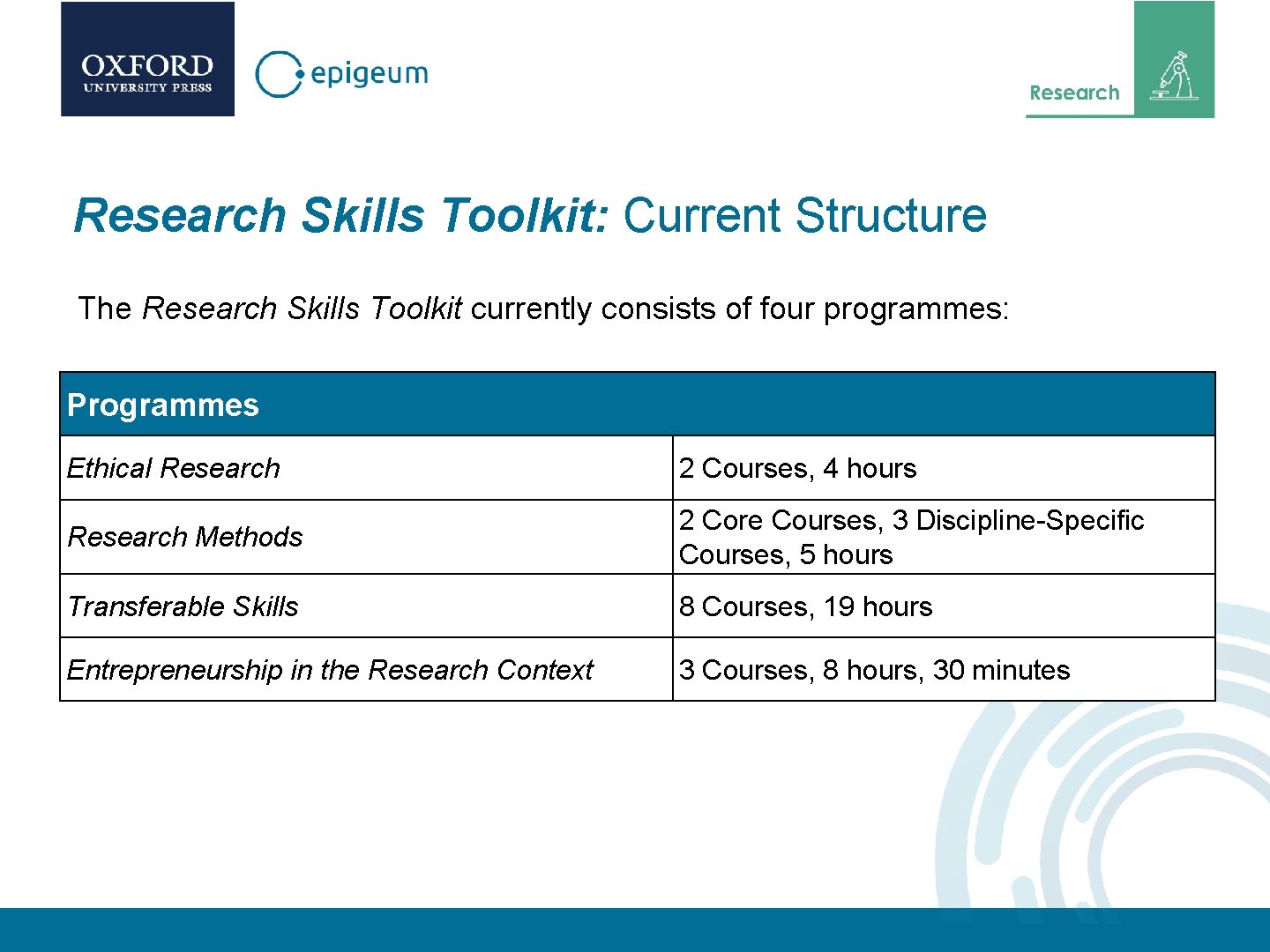
Research Skills Toolkit: Current Structure The Research Skills Toolkit currently consists of four programmes: Programmes Ethical Research 2 Courses, 4 hours Research Methods 2 Core Courses, 3 Discipline-Specific Courses, 5 hours Transferable Skills 8 Courses, 19 hours Entrepreneurship in the Research Context 3 Courses, 8 hours, 30 minutes Item 2 item
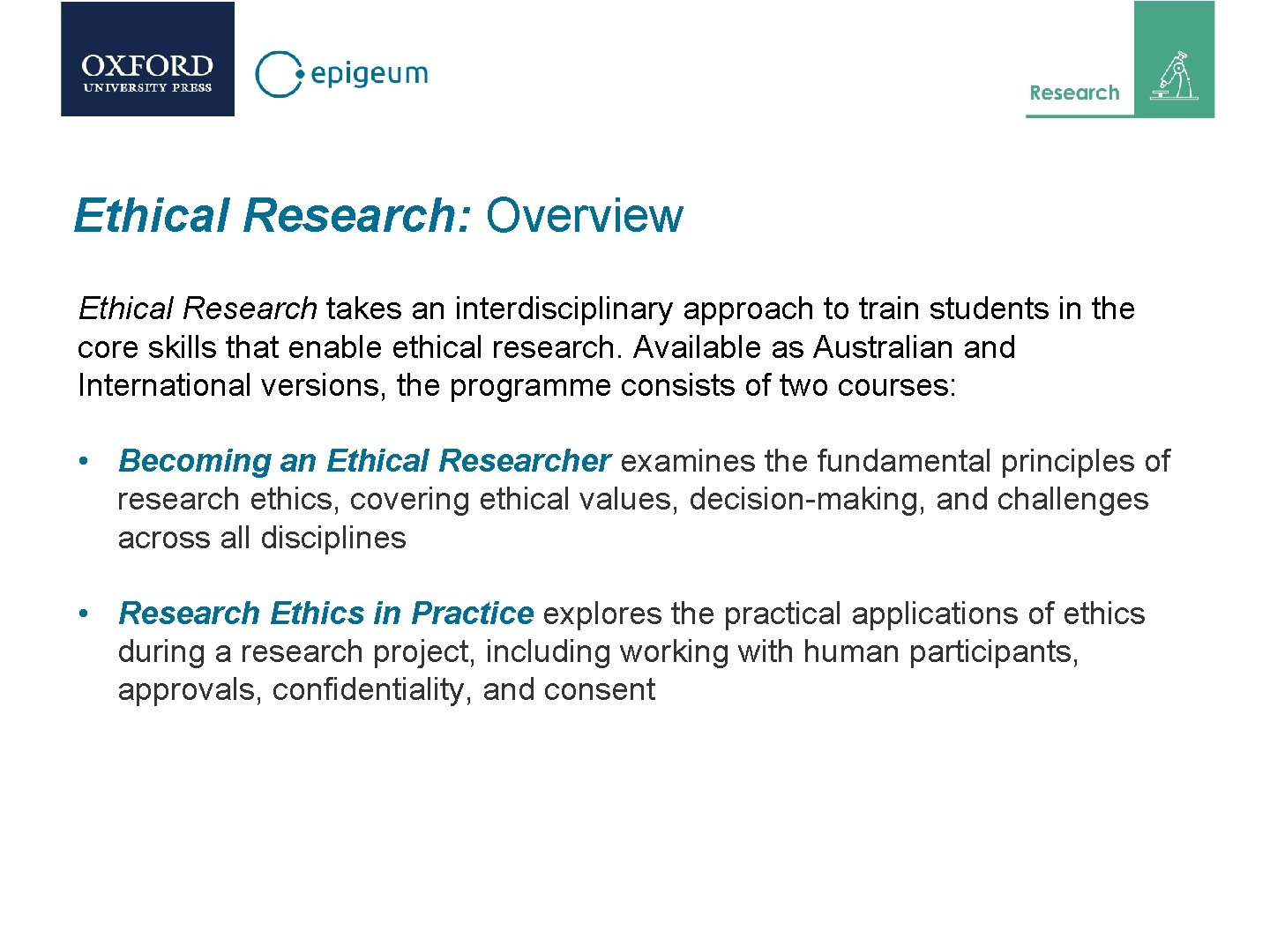
Ethical Research: Overview Ethical Research takes an interdisciplinary approach to train students in the core skills that enable ethical research. Available as Australian and International versions, the programme consists of two courses: • Becoming an Ethical Researcher examines the fundamental principles of research ethics, covering ethical values, decision-making, and challenges across all disciplines • Research Ethics in Practice explores the practical applications of ethics during a research project, including working with human participants, approvals, confidentiality, and consent Item 2 item
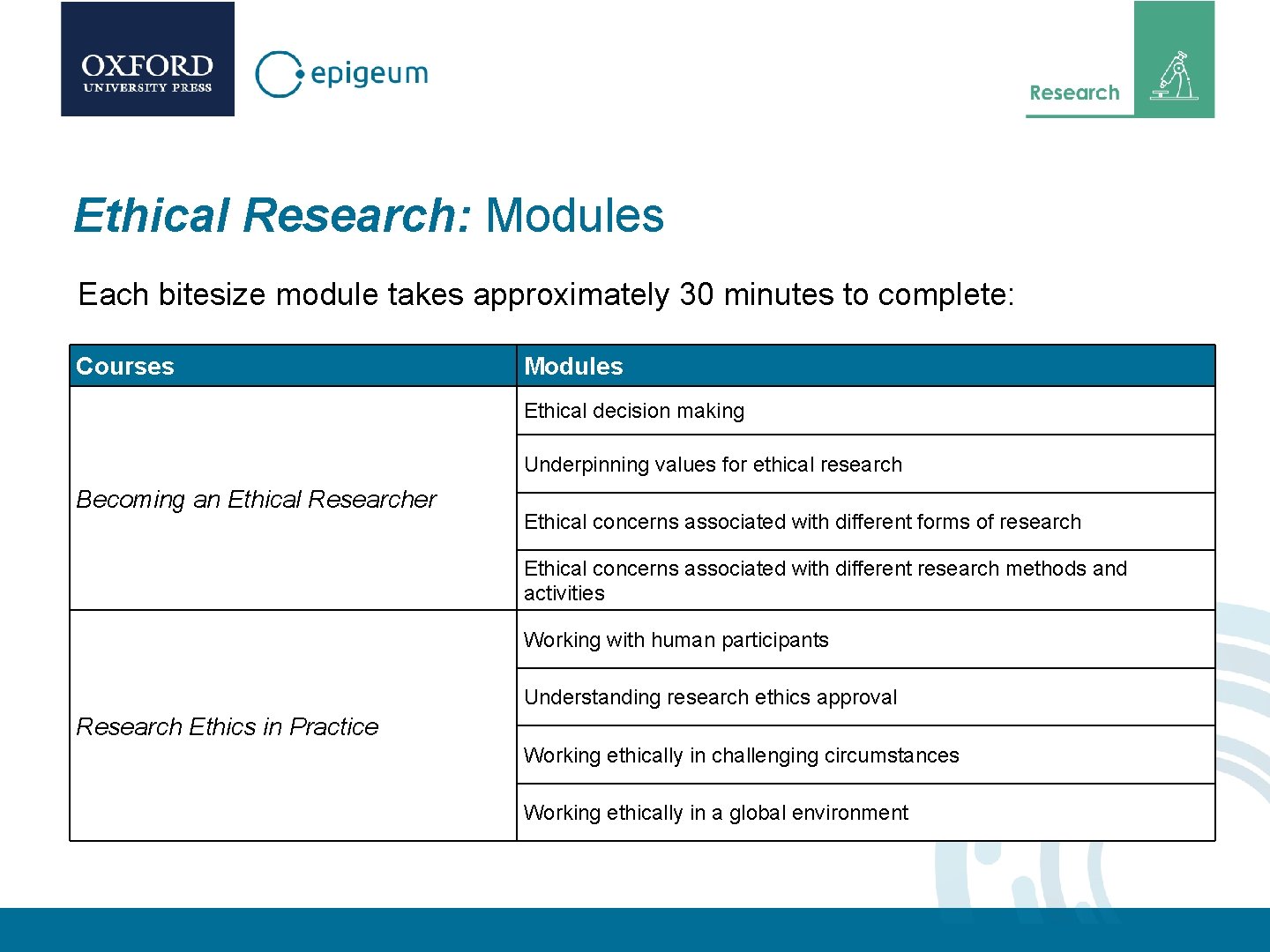
Ethical Research: Modules Each bitesize module takes approximately 30 minutes to complete: Courses Modules Ethical decision making Underpinning values for ethical research Becoming an Ethical Researcher Ethical concerns associated with different forms of research Ethical concerns associated with different research methods and activities Working with human participants Understanding research ethics approval Research Ethics in Practice Item 2 item Working ethically in challenging circumstances Working ethically in a global environment
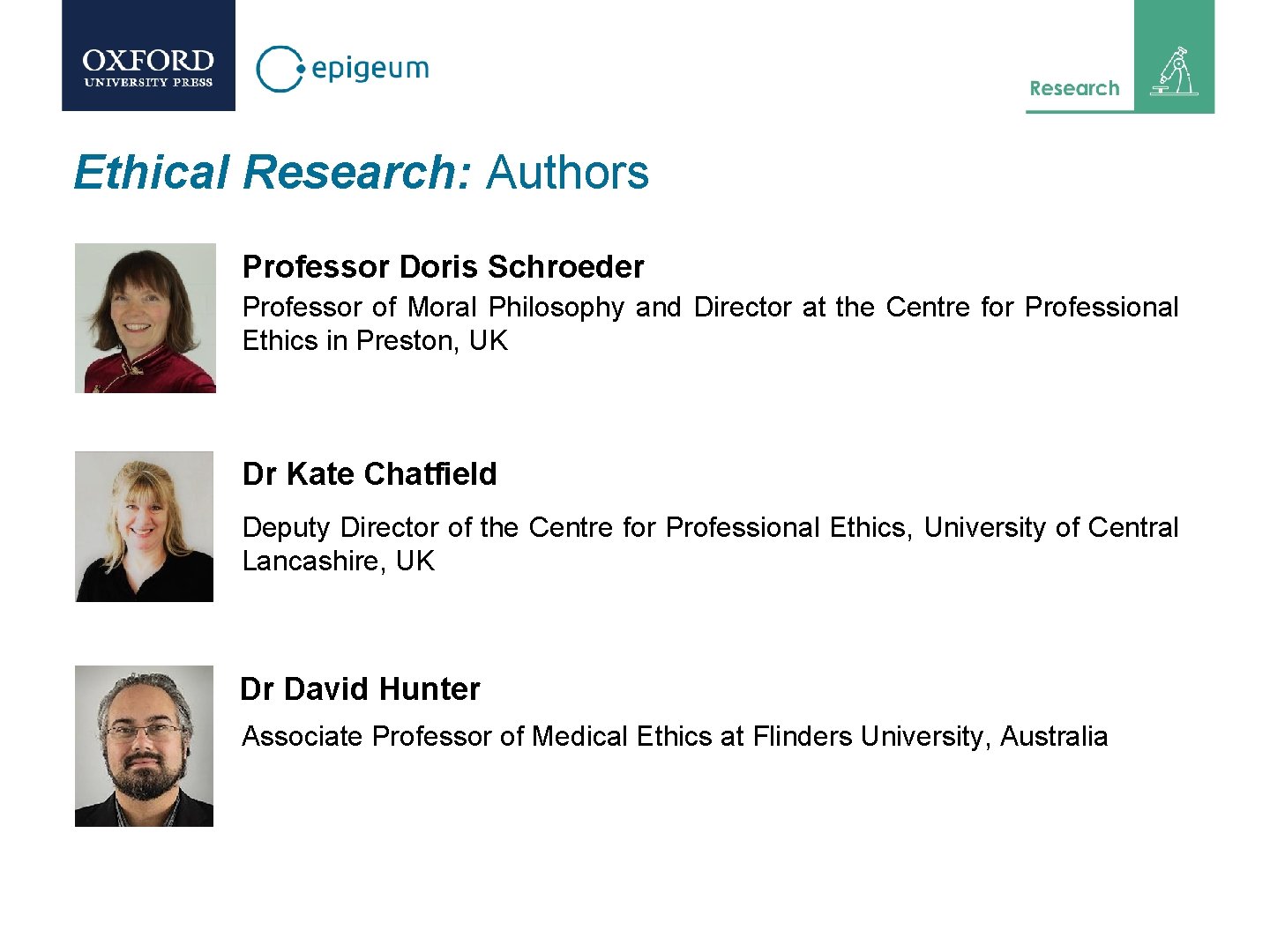
Ethical Research: Authors Professor Doris Schroeder Professor of Moral Philosophy and Director at the Centre for Professional Ethics in Preston, UK Dr Kate Chatfield Deputy Director of the Centre for Professional Ethics, University of Central Lancashire, UK Dr David Hunter Associate Professor of Medical Ethics at Flinders University, Australia Item 2 item
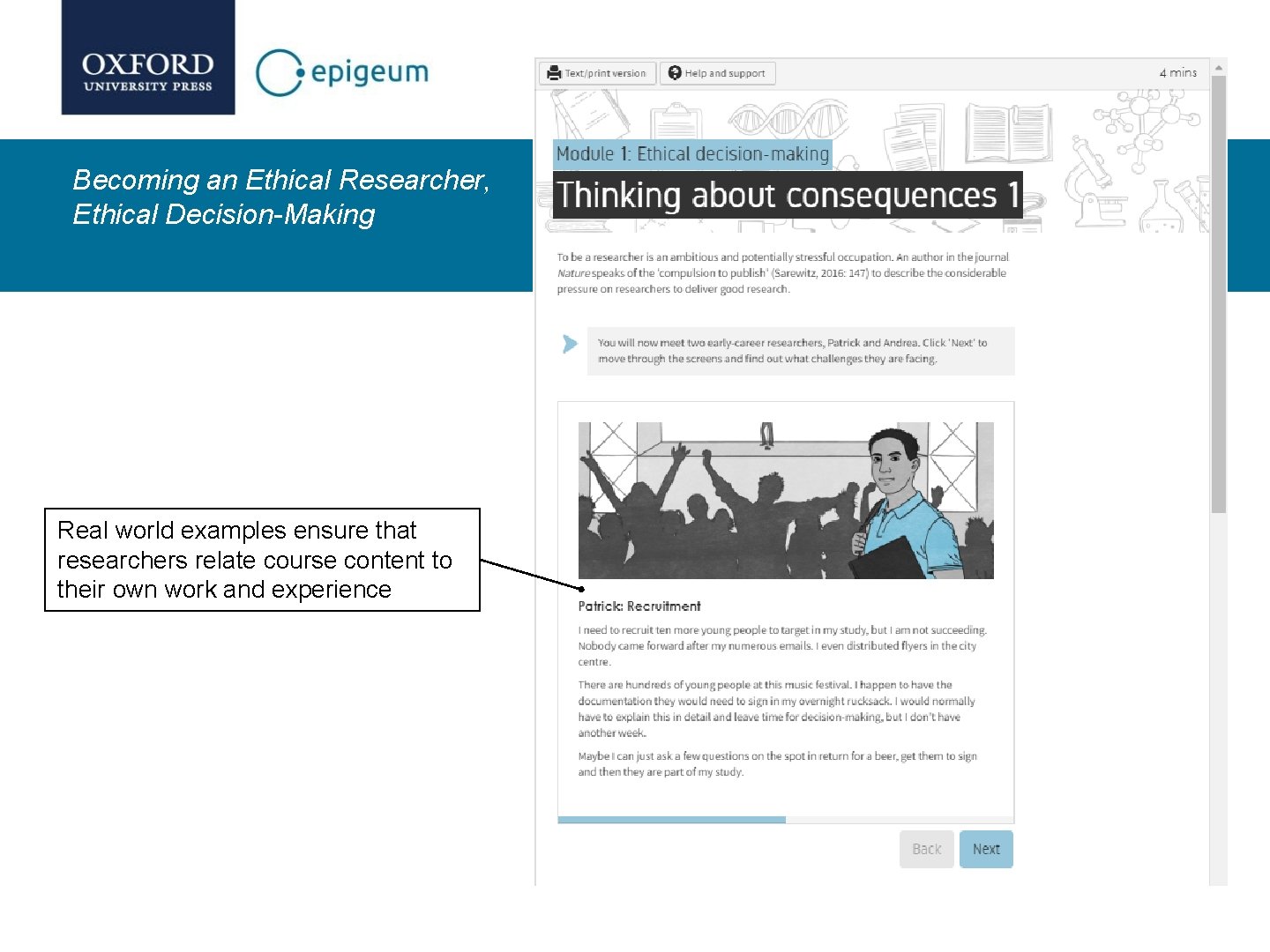
Becoming an Ethical Researcher, Ethical Decision-Making Real world examples ensure that researchers relate course content to their own work and experience
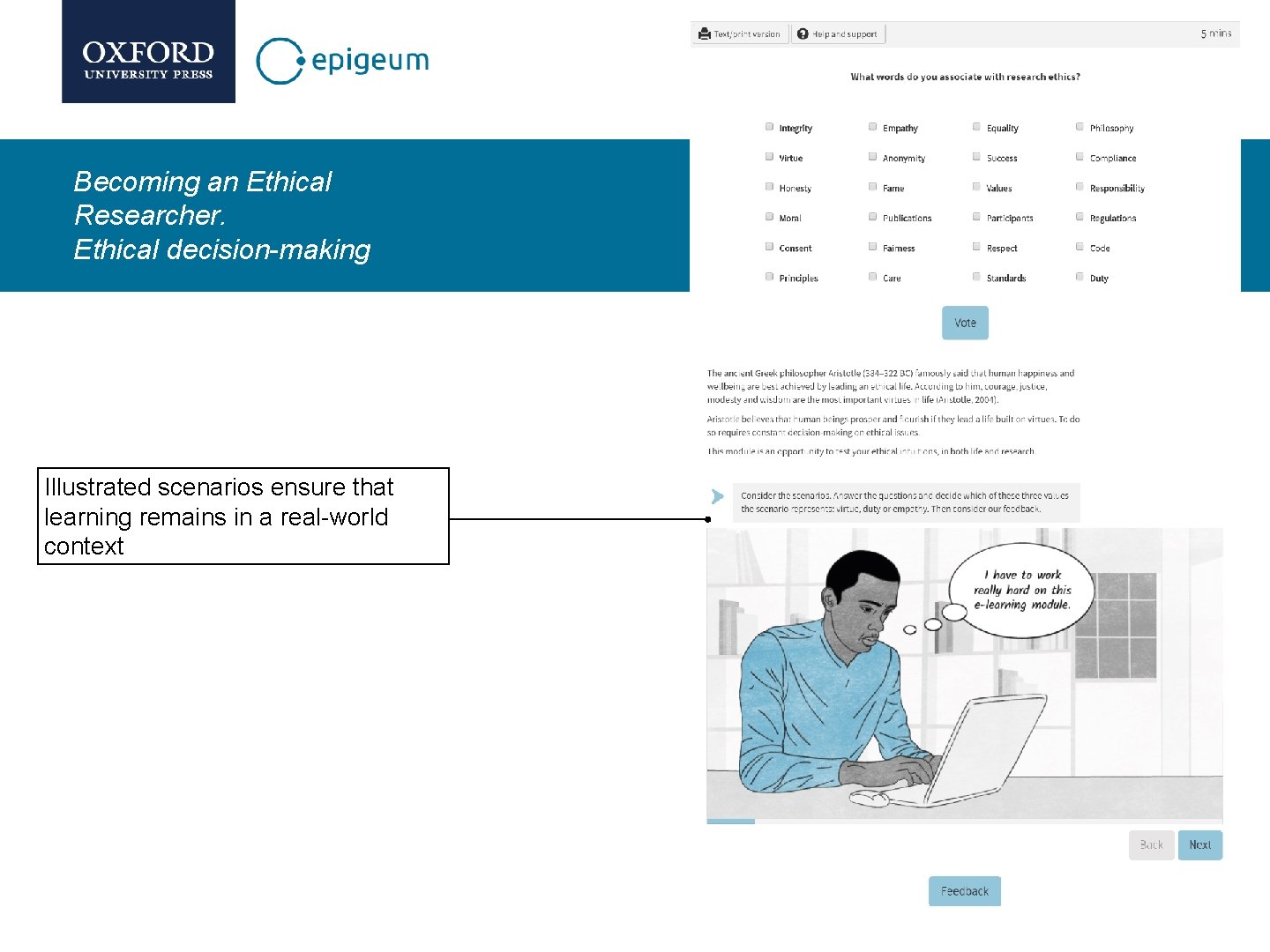
Becoming an Ethical Researcher. Ethical decision-making Illustrated scenarios ensure that learning remains in a real-world context
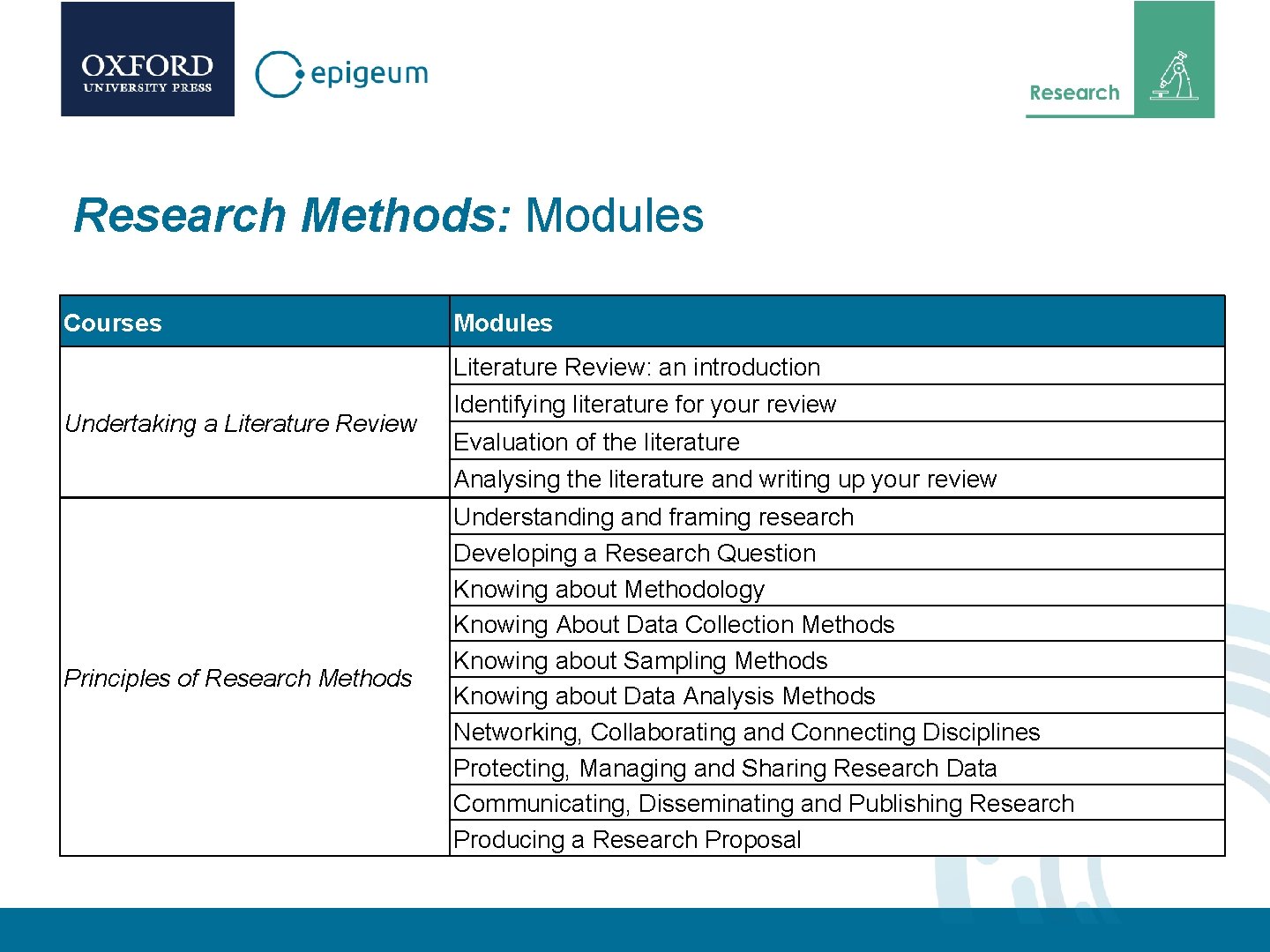
Research Methods: Overview Research Methods integrates coverage of the latest developments, trends, and challenges in research practice, equipping researchers across all disciplines with the skills needed to confidently undertake independent research projects. • Undertaking a Literature Review supports researchers throughout the process of conducting a literature review – from planning and choosing a methodical approach, to sourcing, evaluating, and presenting findings Item 2 item
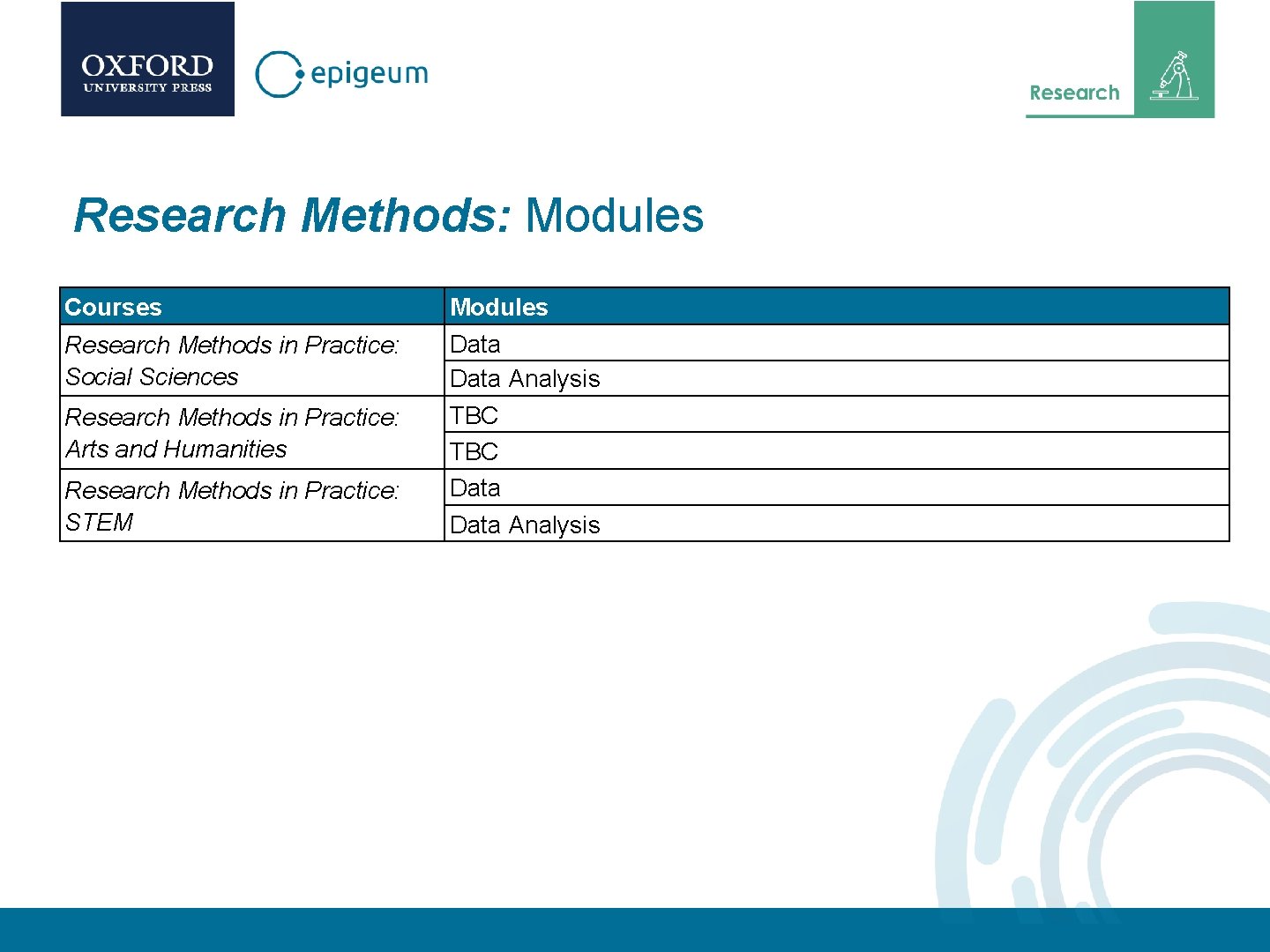
Research Methods: Overview • Principles of Research Methods presents the core theoretical principles that underpin research methods across all disciplines, exploring available methodologies, and highlighting opportunities for interdisciplinary approaches and mixed methods • Research Methods in Practice: Social Sciences, Research Methods in Practice: Arts and Humanities, and Research Methods in Practice: STEM address the practical applications of research methods in specific subject areas, using scenario-based activities, nuanced examples, and expert tips to explore common challenges Item 2 item
Research Methods: Modules Courses Modules Literature Review: an introduction Undertaking a Literature Review Identifying literature for your review Evaluation of the literature Analysing the literature and writing up your review Understanding and framing research Developing a Research Question Knowing about Methodology Knowing About Data Collection Methods Knowing about Sampling Methods Principles of Research Methods Knowing about Data Analysis Methods Networking, Collaborating and Connecting Disciplines Item 2 item Protecting, Managing and Sharing Research Data Communicating, Disseminating and Publishing Research Producing a Research Proposal
Research Methods: Modules Courses Research Methods in Practice: Social Sciences Research Methods in Practice: Arts and Humanities Research Methods in Practice: STEM Modules Data Analysis TBC Data Analysis Item 2 item
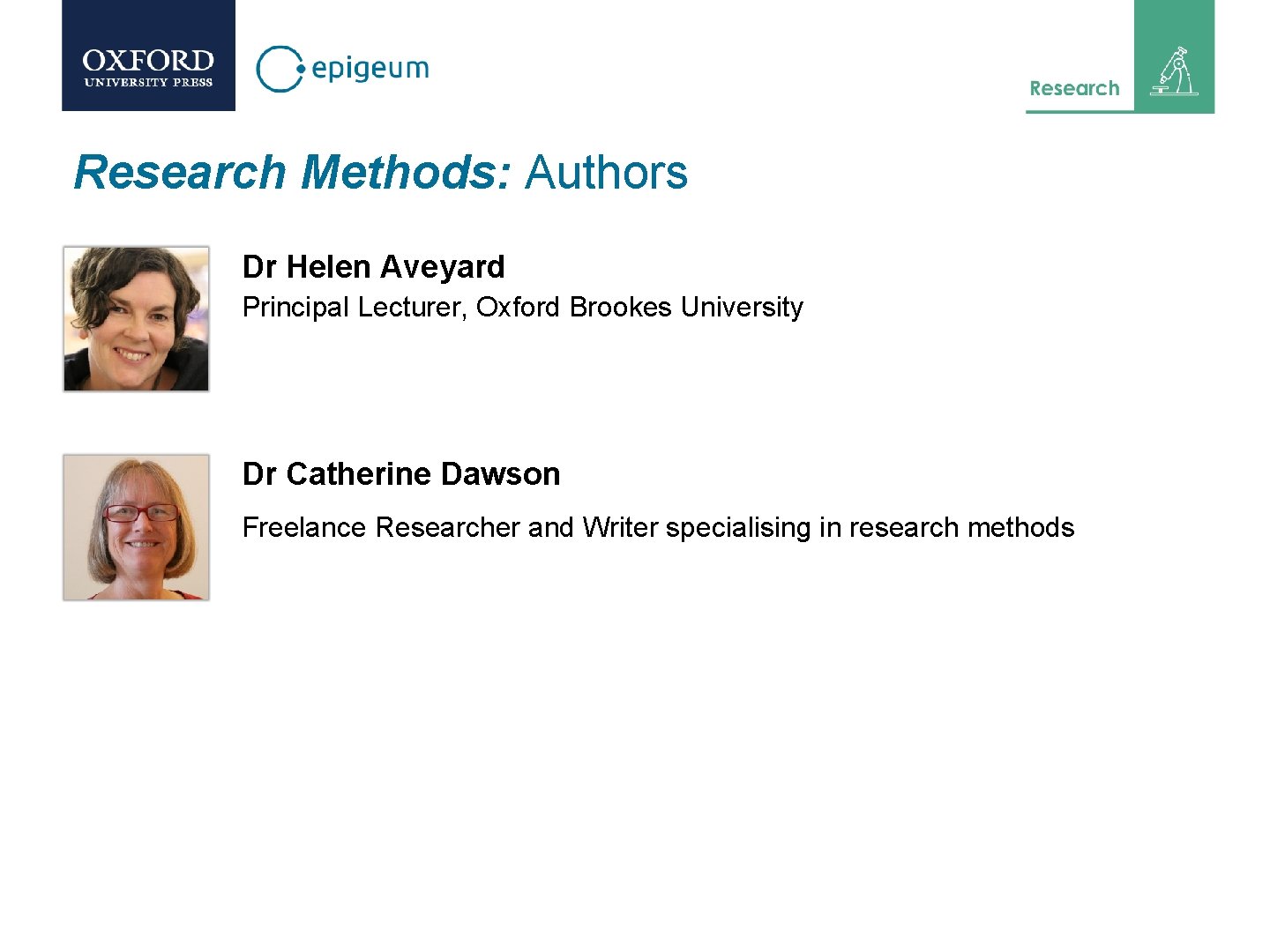
Research Methods: Authors Dr Helen Aveyard Principal Lecturer, Oxford Brookes University Dr Catherine Dawson Freelance Researcher and Writer specialising in research methods Item 2 item
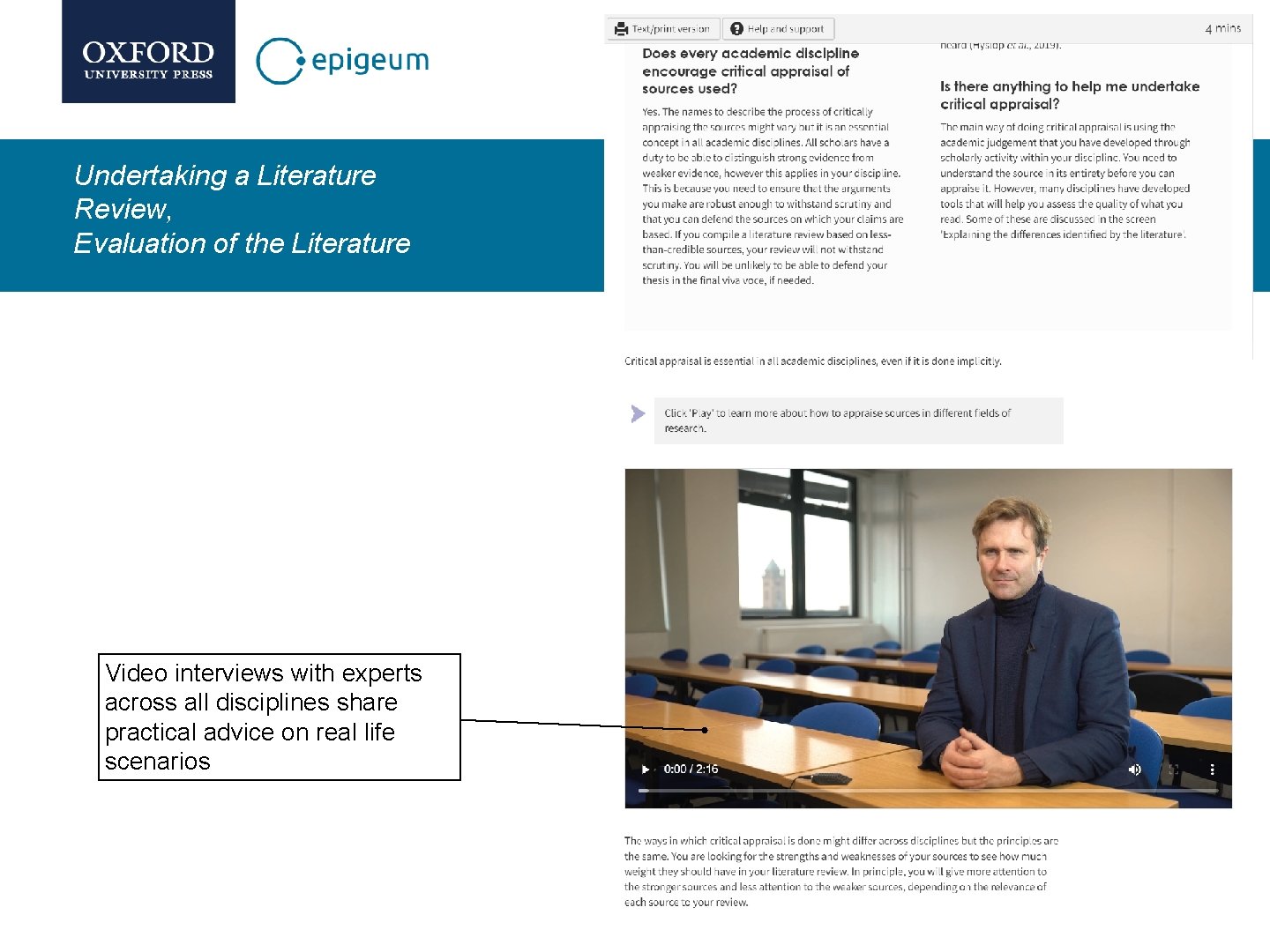
Undertaking a Literature Review, Evaluation of the Literature Video interviews with experts across all disciplines share practical advice on real life scenarios
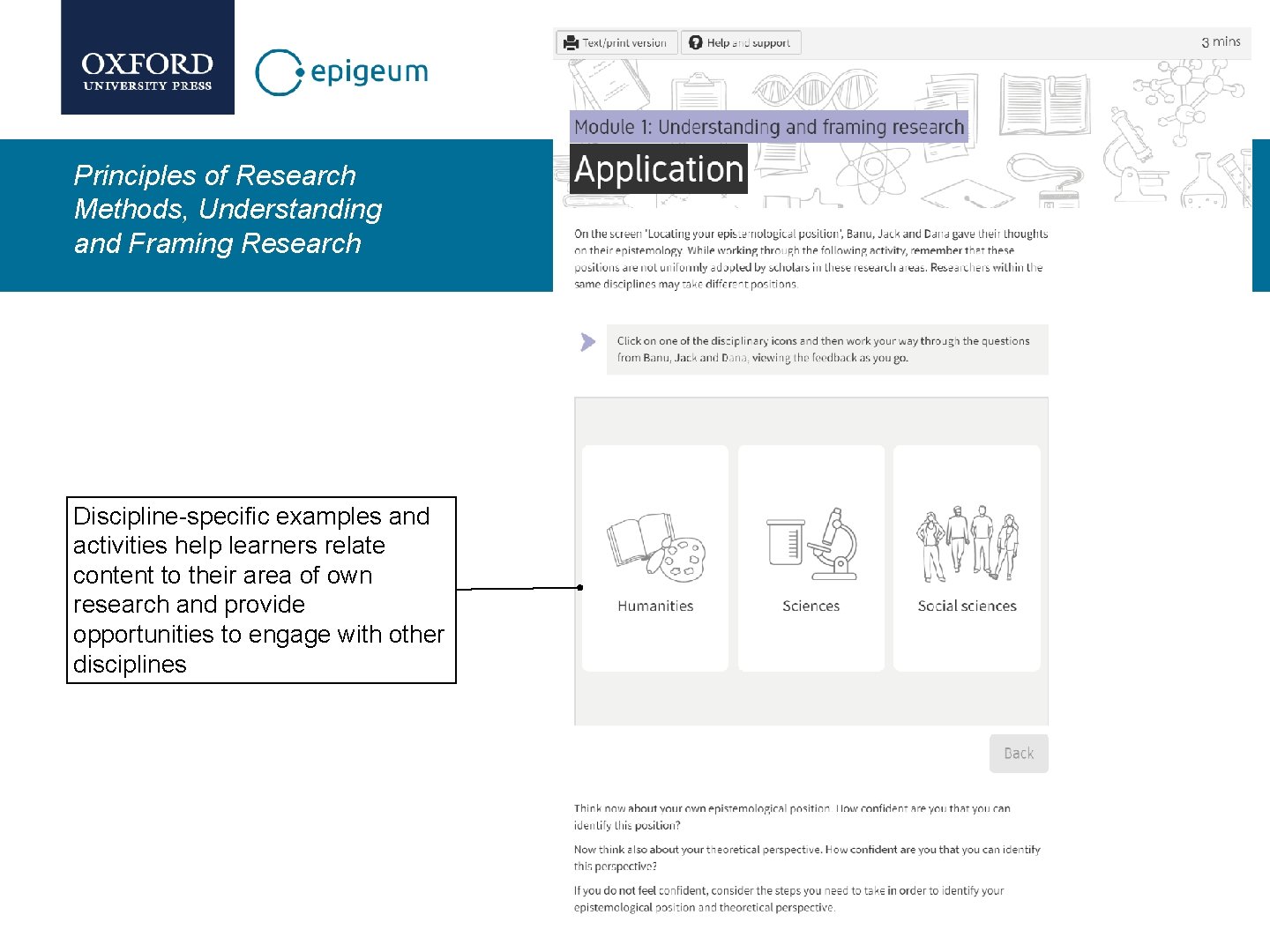
Principles of Research Methods, Understanding and Framing Research Discipline-specific examples and activities help learners relate content to their area of own research and provide opportunities to engage with other disciplines
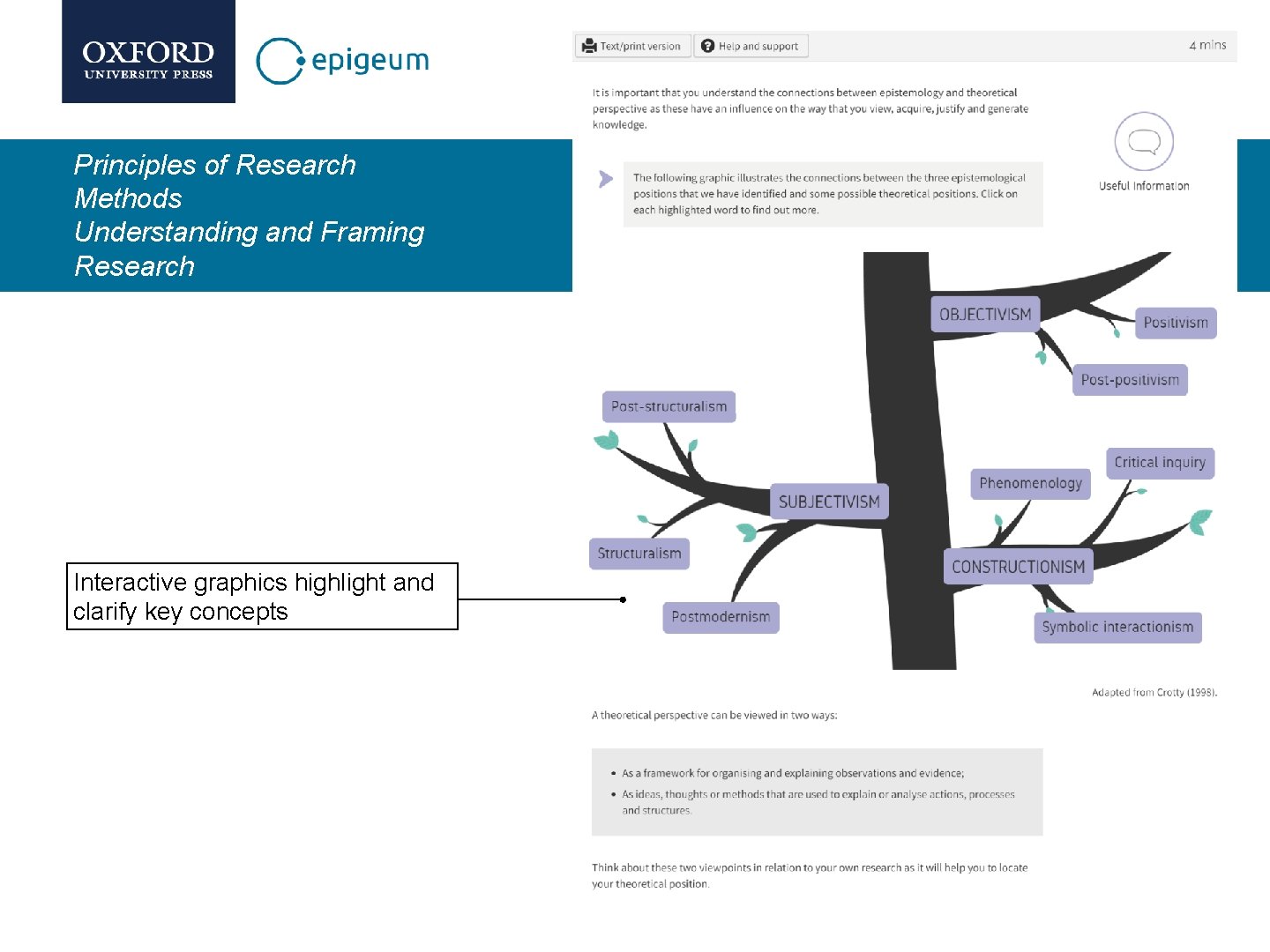
Principles of Research Methods Understanding and Framing Research Interactive graphics highlight and clarify key concepts
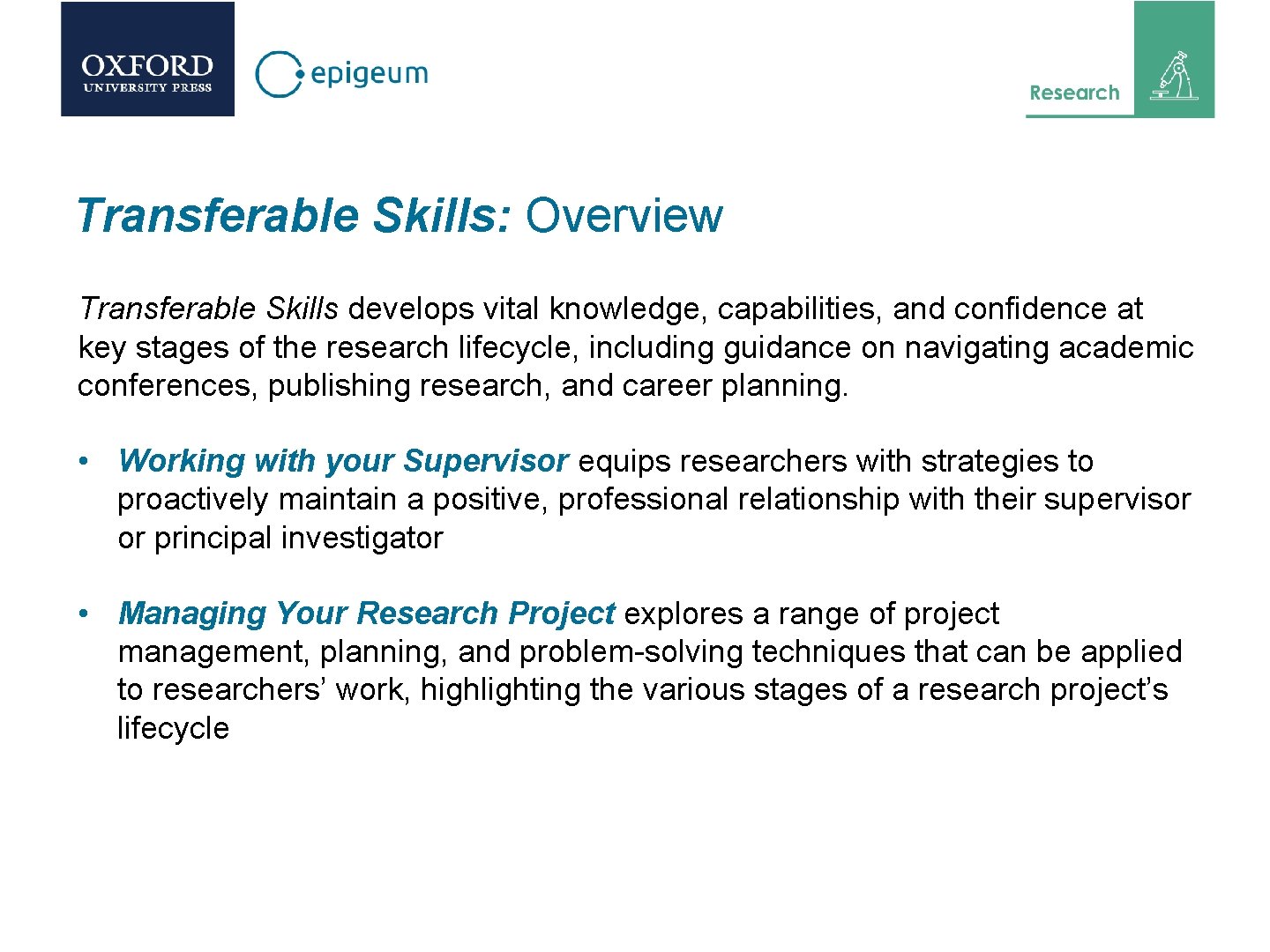
Transferable Skills: Overview Transferable Skills develops vital knowledge, capabilities, and confidence at key stages of the research lifecycle, including guidance on navigating academic conferences, publishing research, and career planning. • Working with your Supervisor equips researchers with strategies to proactively maintain a positive, professional relationship with their supervisor or principal investigator • Managing Your Research Project explores a range of project management, planning, and problem-solving techniques that can be applied to researchers’ work, highlighting the various stages of a research project’s lifecycle Item 2 item
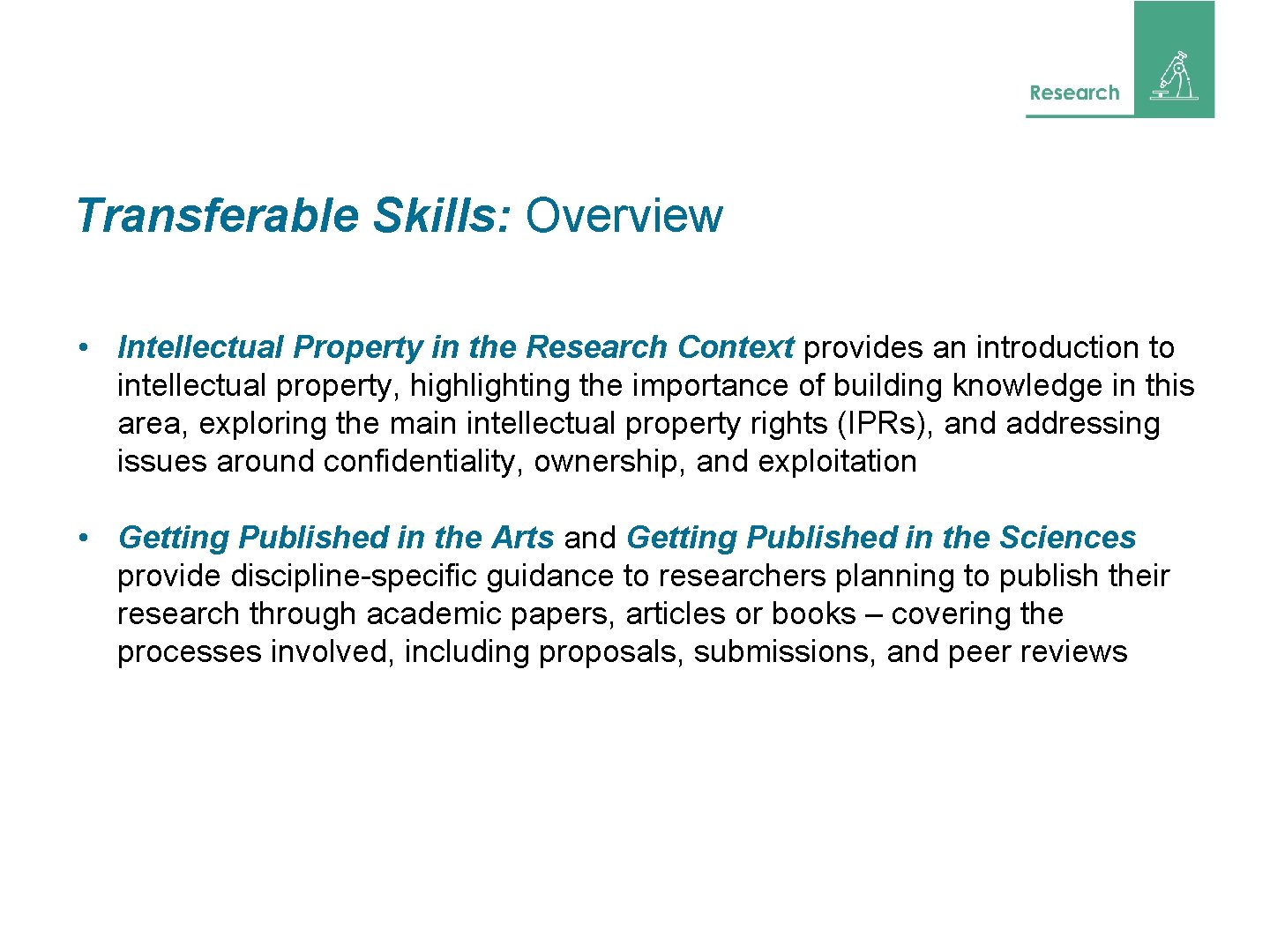
Transferable Skills: Overview • Intellectual Property in the Research Context provides an introduction to intellectual property, highlighting the importance of building knowledge in this area, exploring the main intellectual property rights (IPRs), and addressing issues around confidentiality, ownership, and exploitation • Getting Published in the Arts and Getting Published in the Sciences provide discipline-specific guidance to researchers planning to publish their research through academic papers, articles or books – covering the processes involved, including proposals, submissions, and peer reviews Item 2 item
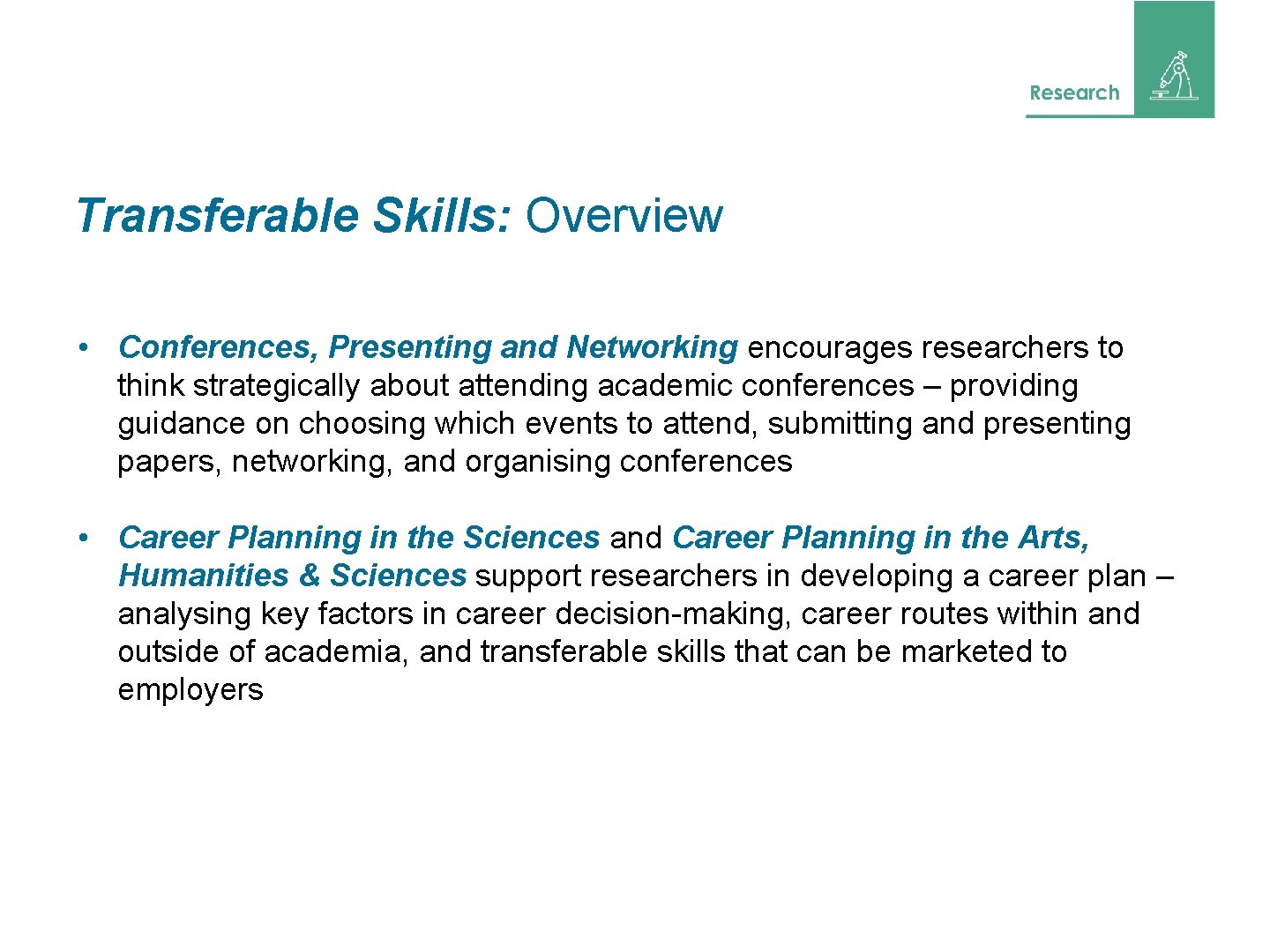
Transferable Skills: Overview • Conferences, Presenting and Networking encourages researchers to think strategically about attending academic conferences – providing guidance on choosing which events to attend, submitting and presenting papers, networking, and organising conferences • Career Planning in the Sciences and Career Planning in the Arts, Humanities & Sciences support researchers in developing a career plan – analysing key factors in career decision-making, career routes within and outside of academia, and transferable skills that can be marketed to employers Item 2 item
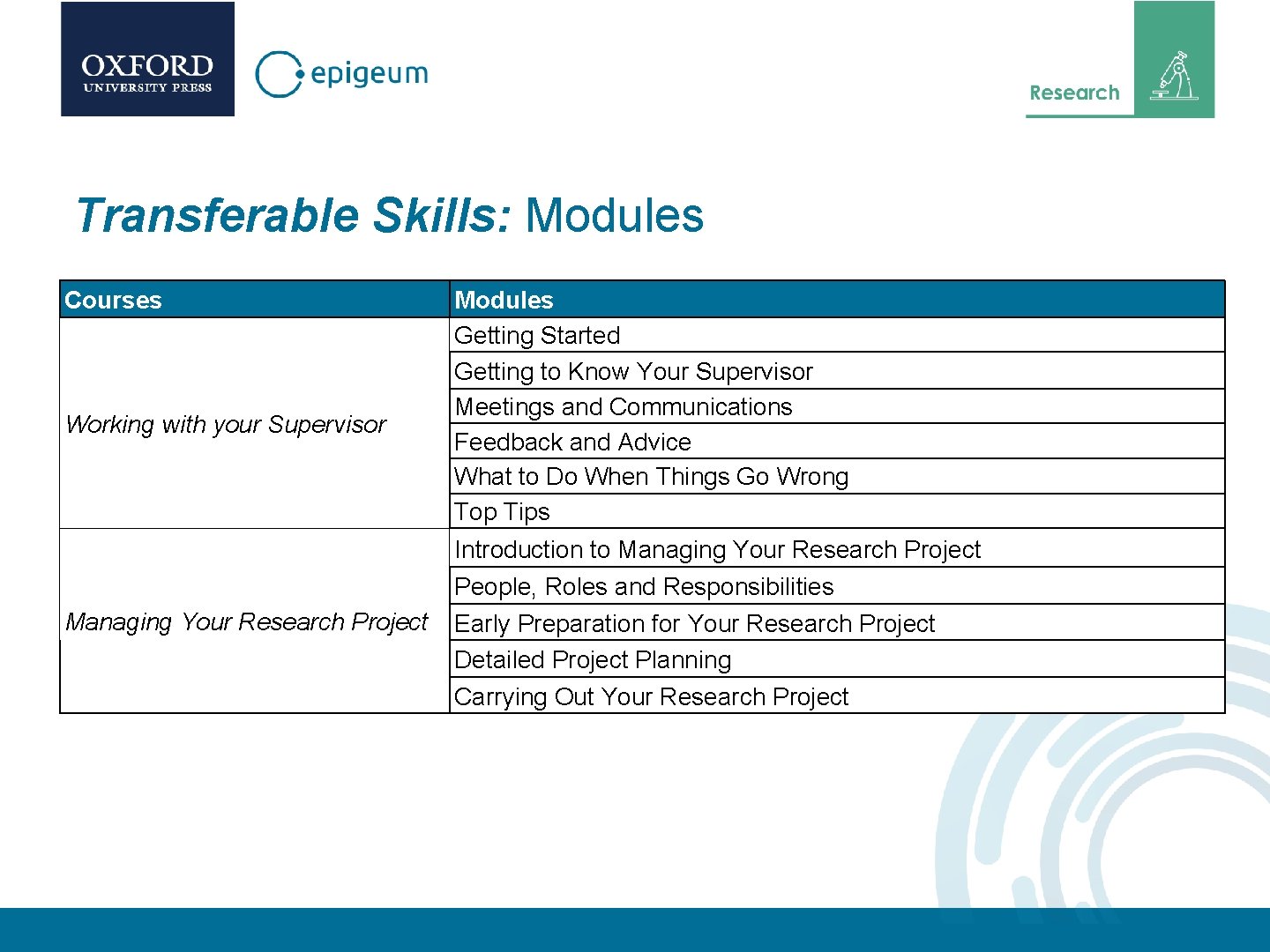
Transferable Skills: Modules Courses Working with your Supervisor Managing Your Research Project Modules Getting Started Getting to Know Your Supervisor Meetings and Communications Feedback and Advice What to Do When Things Go Wrong Top Tips Introduction to Managing Your Research Project People, Roles and Responsibilities Early Preparation for Your Research Project Detailed Project Planning Carrying Out Your Research Project Item 2 item
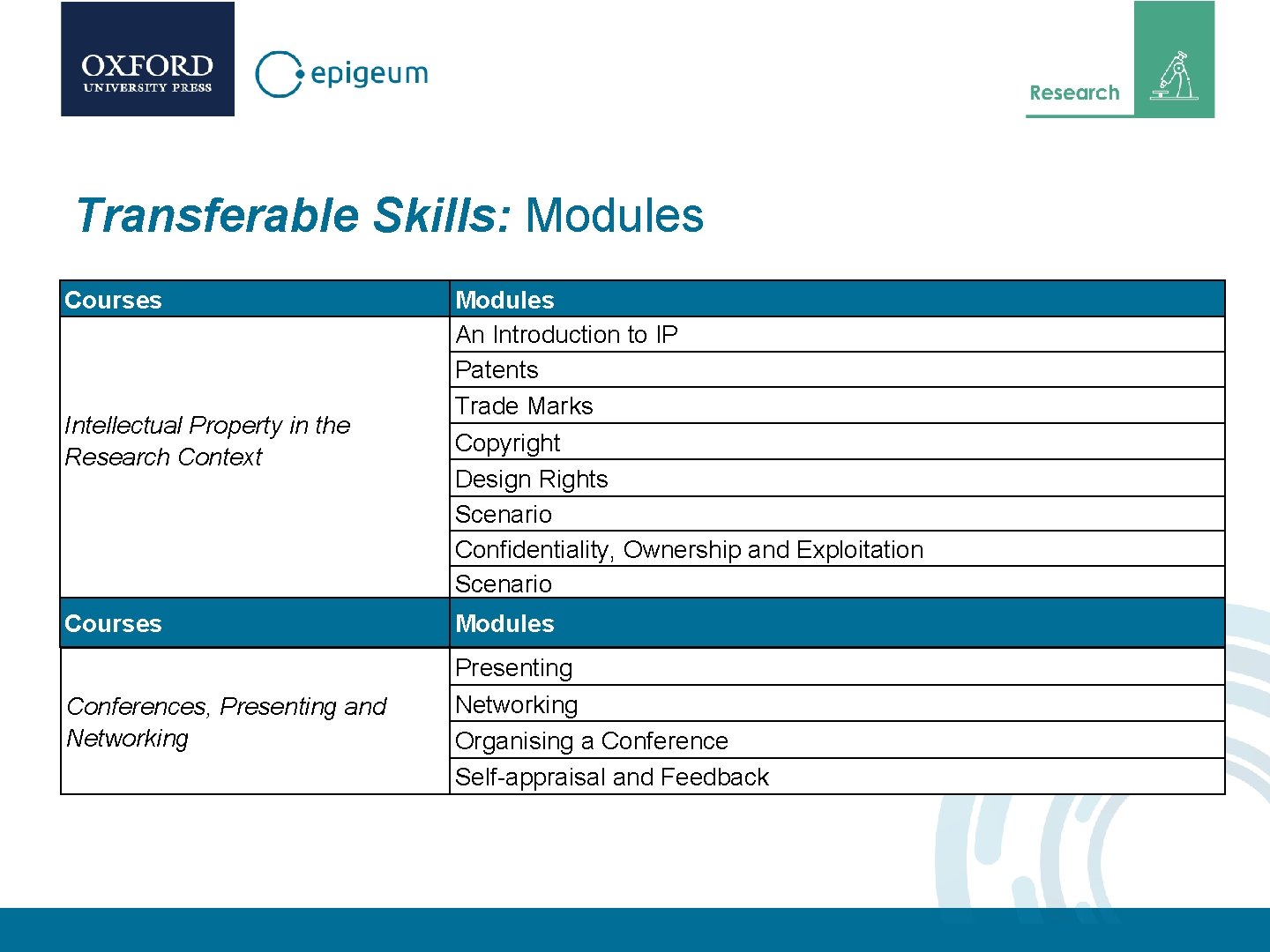
Transferable Skills: Modules Courses Intellectual Property in the Research Context Modules An Introduction to IP Patents Trade Marks Copyright Design Rights Scenario Confidentiality, Ownership and Exploitation Scenario Courses Modules Presenting Networking Conferences, Presenting and Networking Organising a Conference Item 2 item Self-appraisal and Feedback
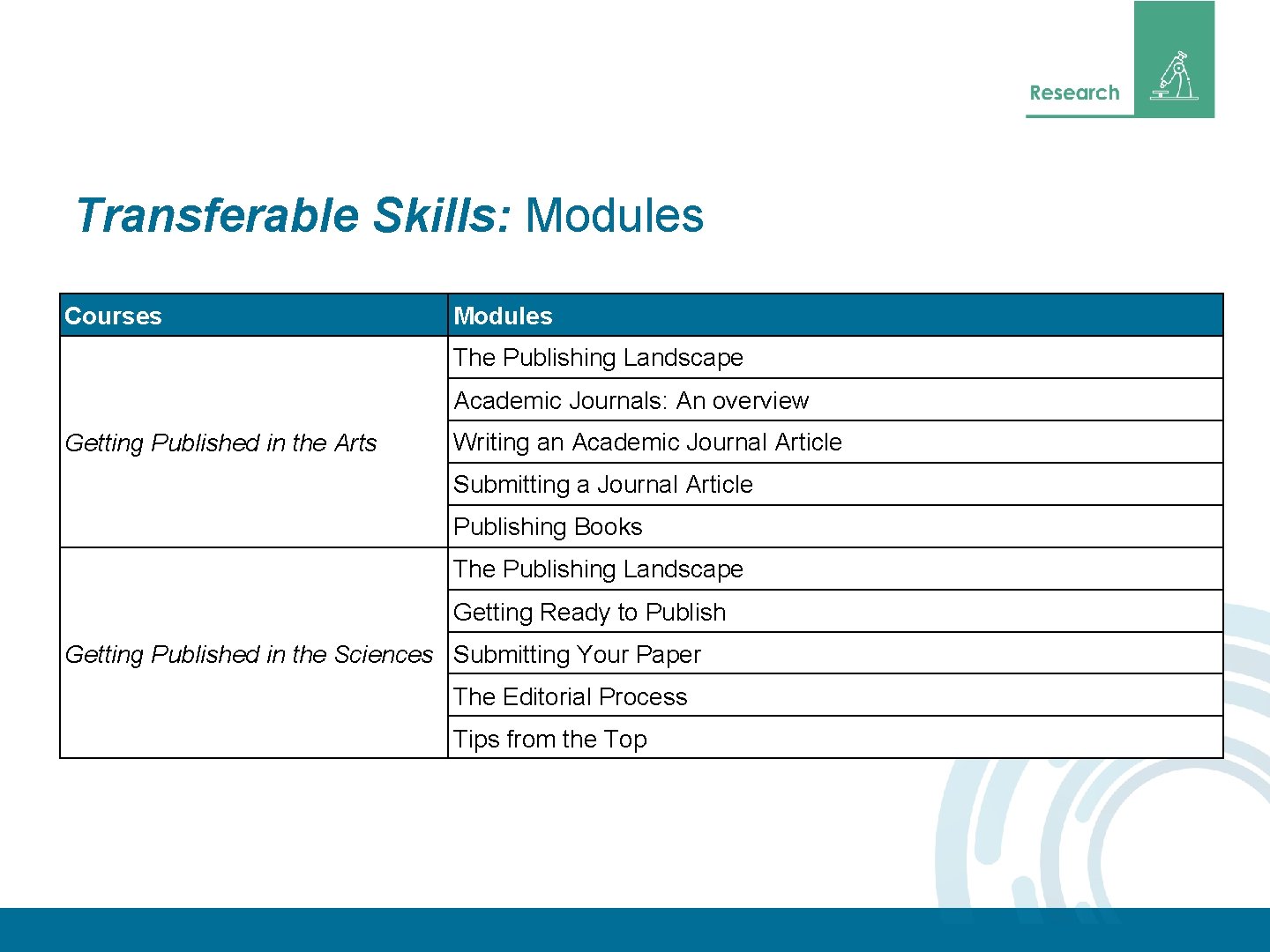
Transferable Skills: Modules Courses Modules The Publishing Landscape Academic Journals: An overview Getting Published in the Arts Writing an Academic Journal Article Submitting a Journal Article Publishing Books The Publishing Landscape Getting Ready to Publish Getting Published in the Sciences Submitting Your Paper The Editorial Process Tips from the Top Item 2 item
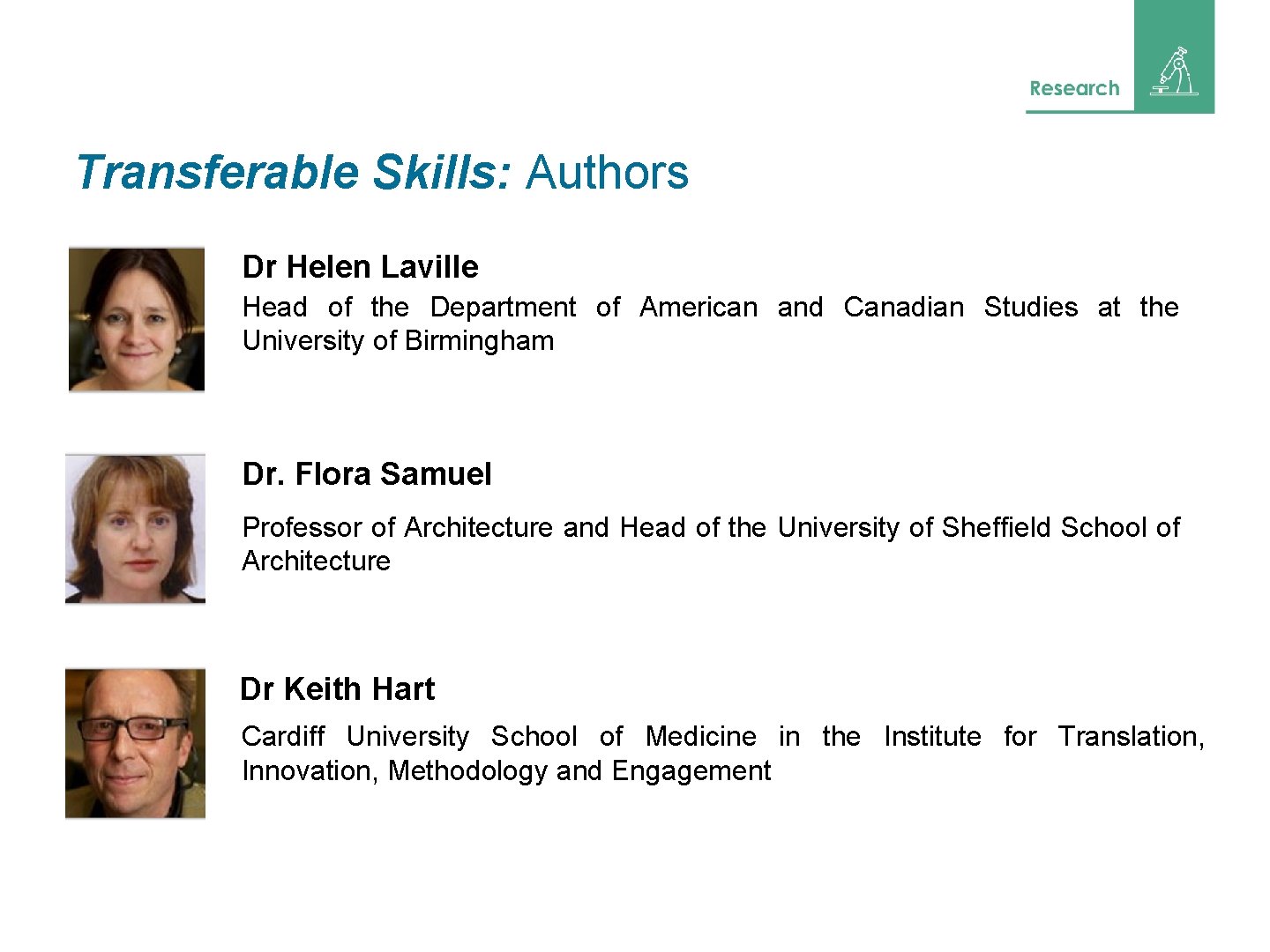
Transferable Skills: Authors Dr Helen Laville Head of the Department of American and Canadian Studies at the University of Birmingham Dr. Flora Samuel Professor of Architecture and Head of the University of Sheffield School of Architecture Dr Keith Hart Cardiff University School of Medicine in the Institute for Translation, Item 2 item and Engagement Innovation, Methodology
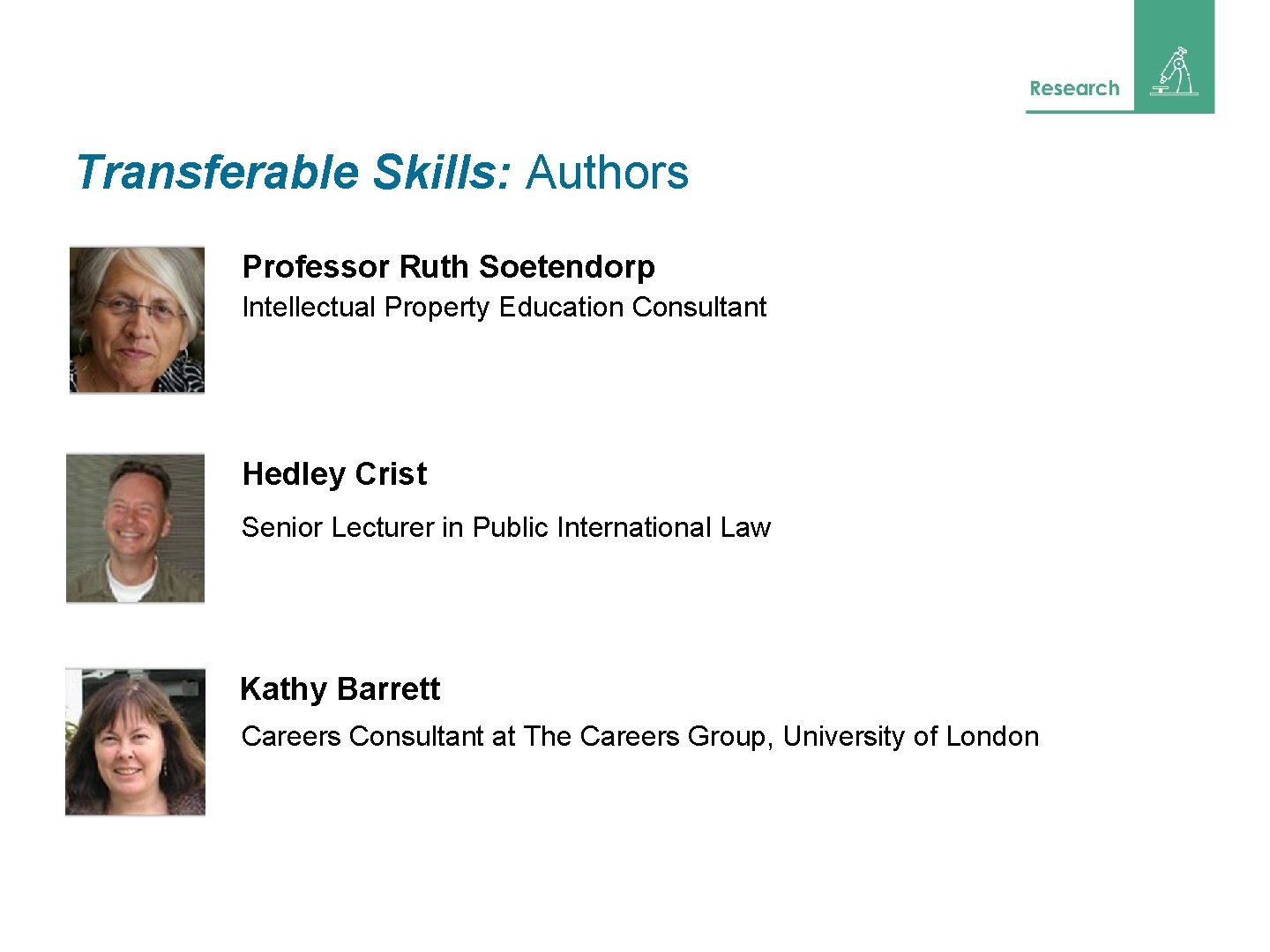
Transferable Skills: Authors Professor Ruth Soetendorp Intellectual Property Education Consultant Hedley Crist Senior Lecturer in Public International Law Kathy Barrett Careers Consultant at The Careers Group, University of London Item 2 item
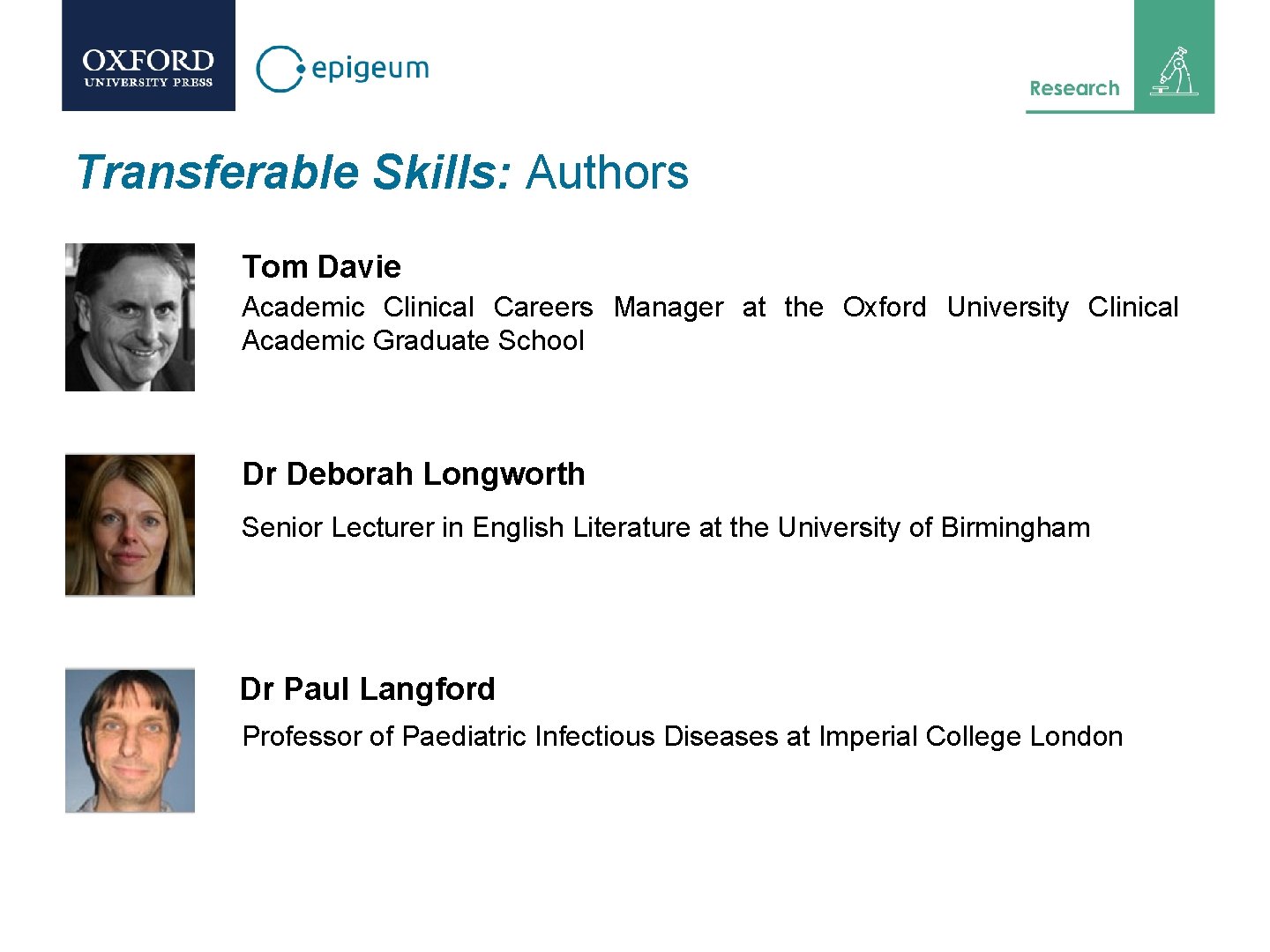
Transferable Skills: Authors Tom Davie Academic Clinical Careers Manager at the Oxford University Clinical Academic Graduate School Dr Deborah Longworth Senior Lecturer in English Literature at the University of Birmingham Dr Paul Langford Professor of Paediatric Infectious Diseases at Imperial College London Item 2 item
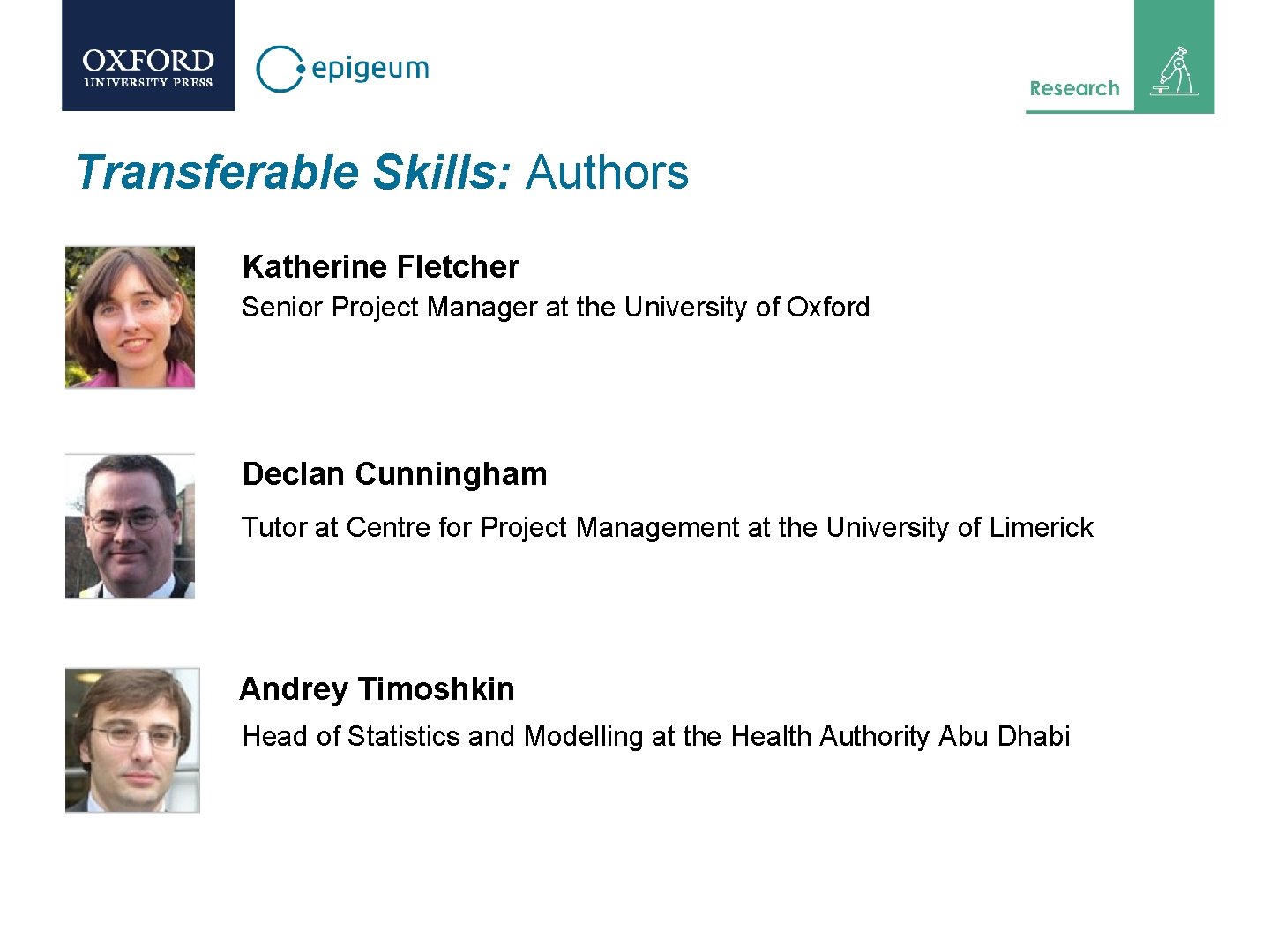
Transferable Skills: Authors Katherine Fletcher Senior Project Manager at the University of Oxford Declan Cunningham Tutor at Centre for Project Management at the University of Limerick Andrey Timoshkin Head of Statistics and Modelling at the Health Authority Abu Dhabi Item 2 item
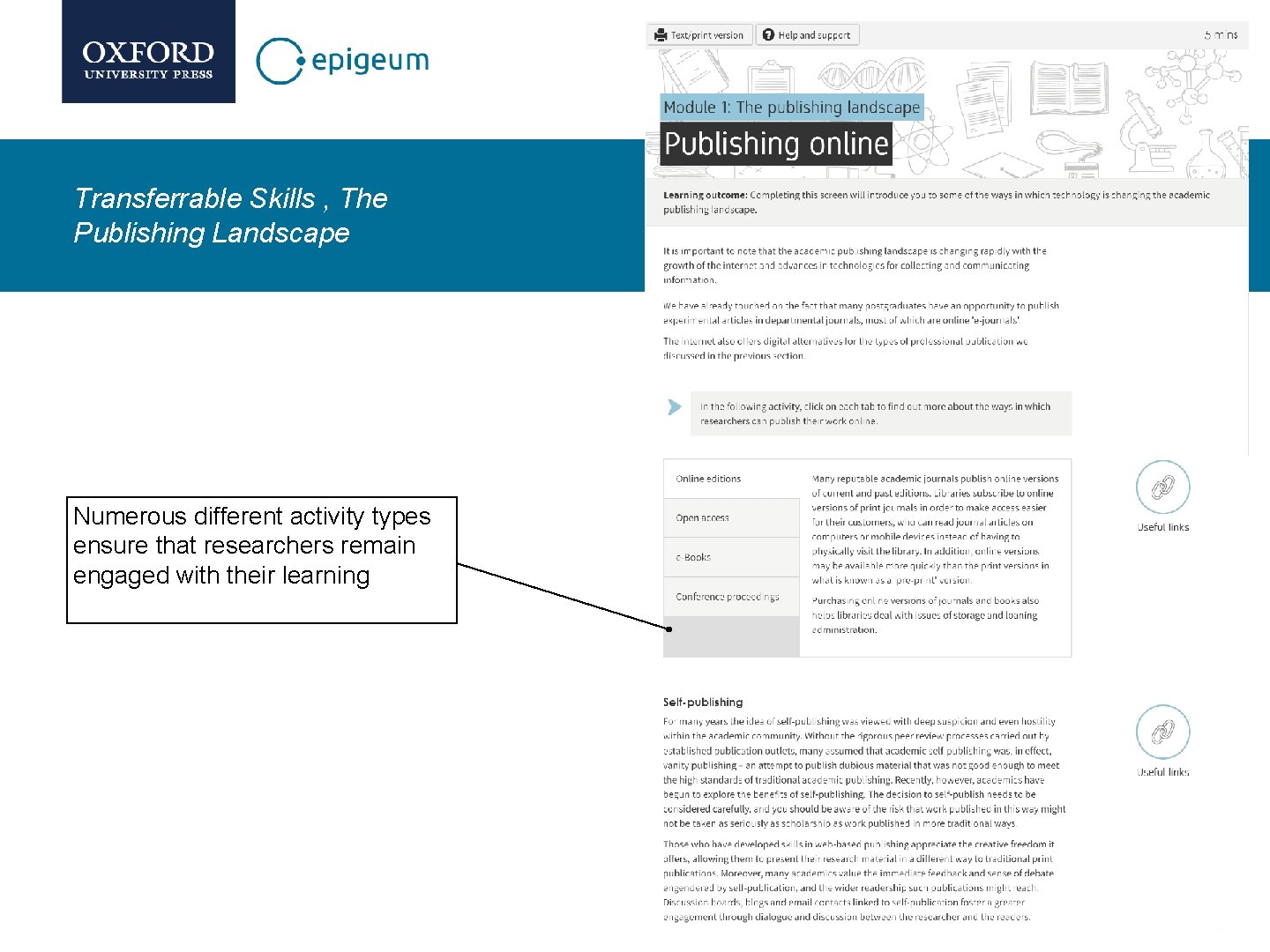
Transferrable Skills , The Publishing Landscape Numerous different activity types ensure that researchers remain engaged with their learning
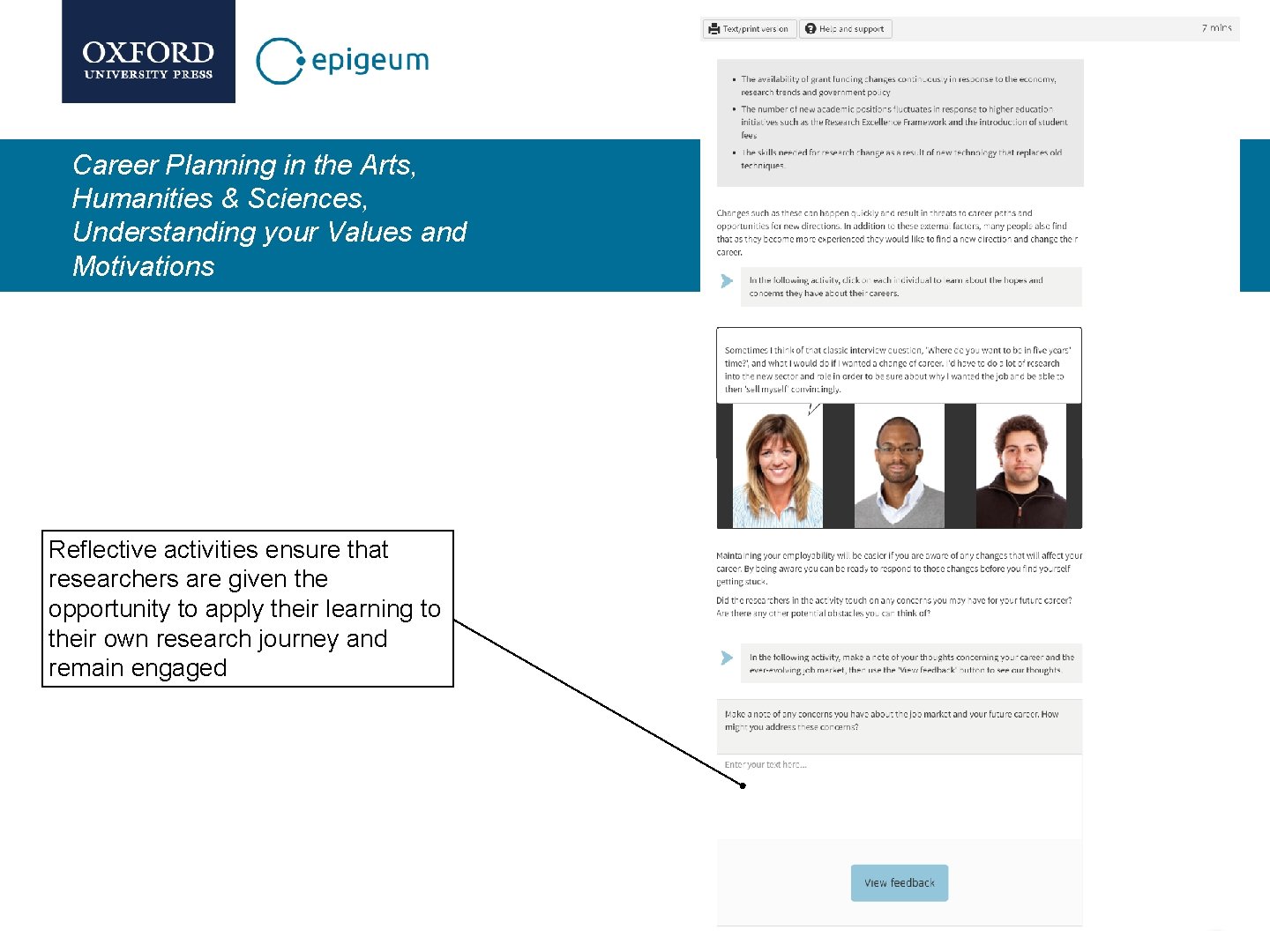
Career Planning in the Arts, Humanities & Sciences, Understanding your Values and Motivations Reflective activities ensure that researchers are given the opportunity to apply their learning to their own research journey and remain engaged
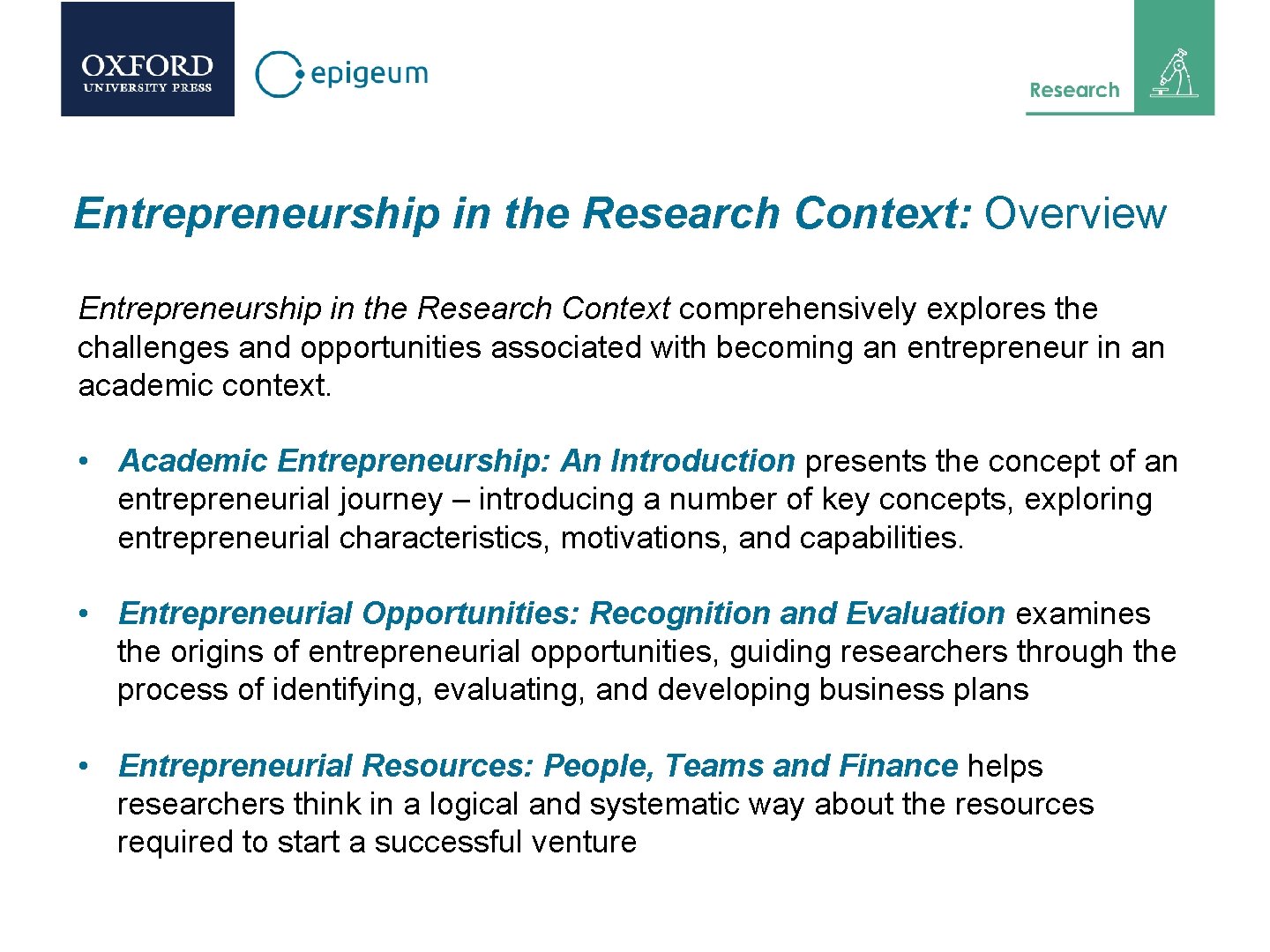
Entrepreneurship in the Research Context: Overview Entrepreneurship in the Research Context comprehensively explores the challenges and opportunities associated with becoming an entrepreneur in an academic context. • Academic Entrepreneurship: An Introduction presents the concept of an entrepreneurial journey – introducing a number of key concepts, exploring entrepreneurial characteristics, motivations, and capabilities. • Entrepreneurial Opportunities: Recognition and Evaluation examines the origins of entrepreneurial opportunities, guiding researchers through the process of identifying, evaluating, and developing business plans 2 item People, Teams and Finance helps • Entrepreneurial Item Resources: researchers think in a logical and systematic way about the resources required to start a successful venture
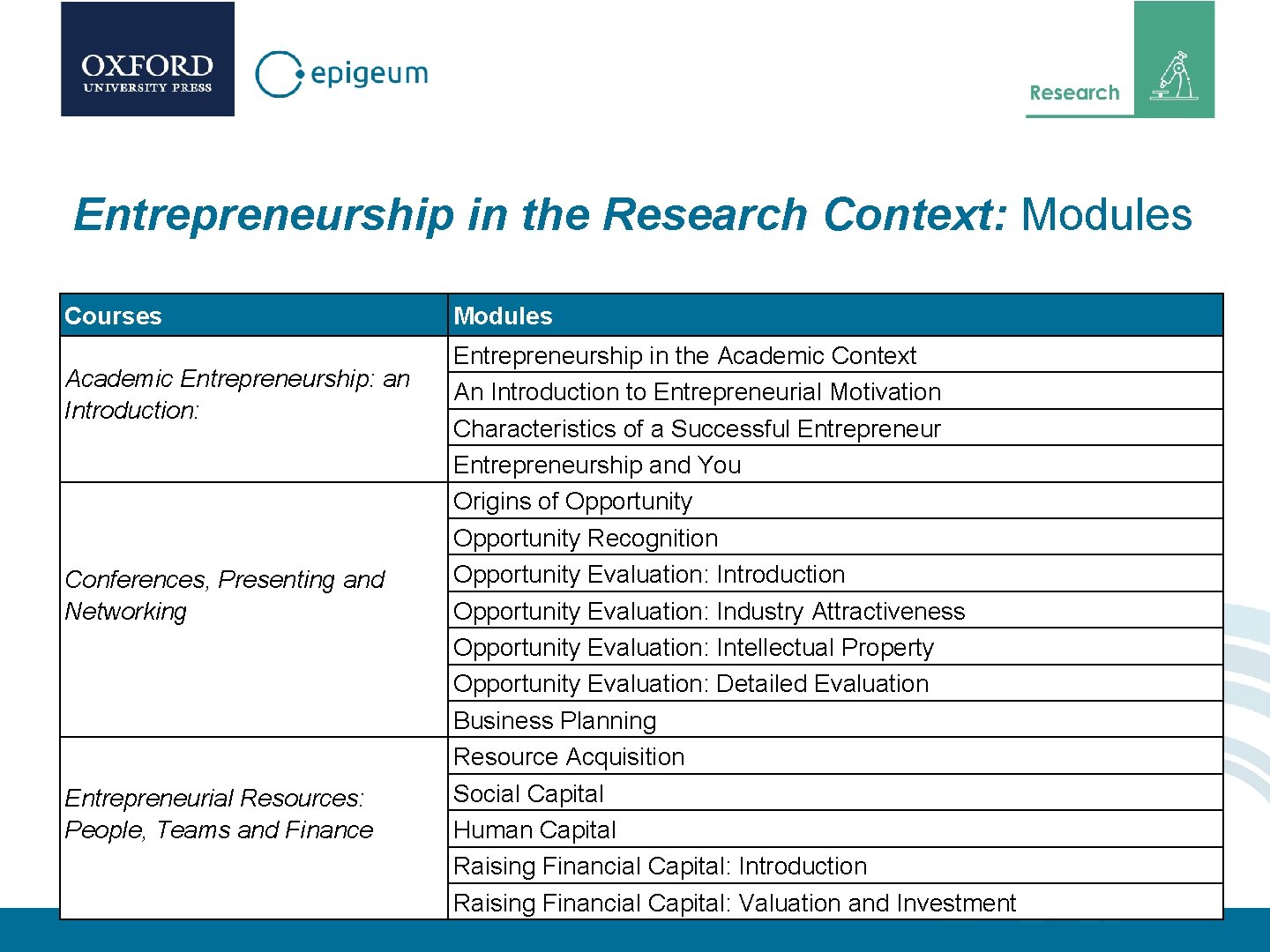
Entrepreneurship in the Research Context: Modules Courses Modules Entrepreneurship in the Academic Context Academic Entrepreneurship: an An Introduction to Entrepreneurial Motivation Introduction: Characteristics of a Successful Entrepreneurship and You Origins of Opportunity Recognition Opportunity Evaluation: Introduction Conferences, Presenting and Networking Opportunity Evaluation: Industry Attractiveness Opportunity Evaluation: Intellectual Property Opportunity Evaluation: Detailed Evaluation Business Planning Resource Acquisition Item 2 item Social Capital Entrepreneurial Resources: Human Capital People, Teams and Finance Raising Financial Capital: Introduction Raising Financial Capital: Valuation and Investment
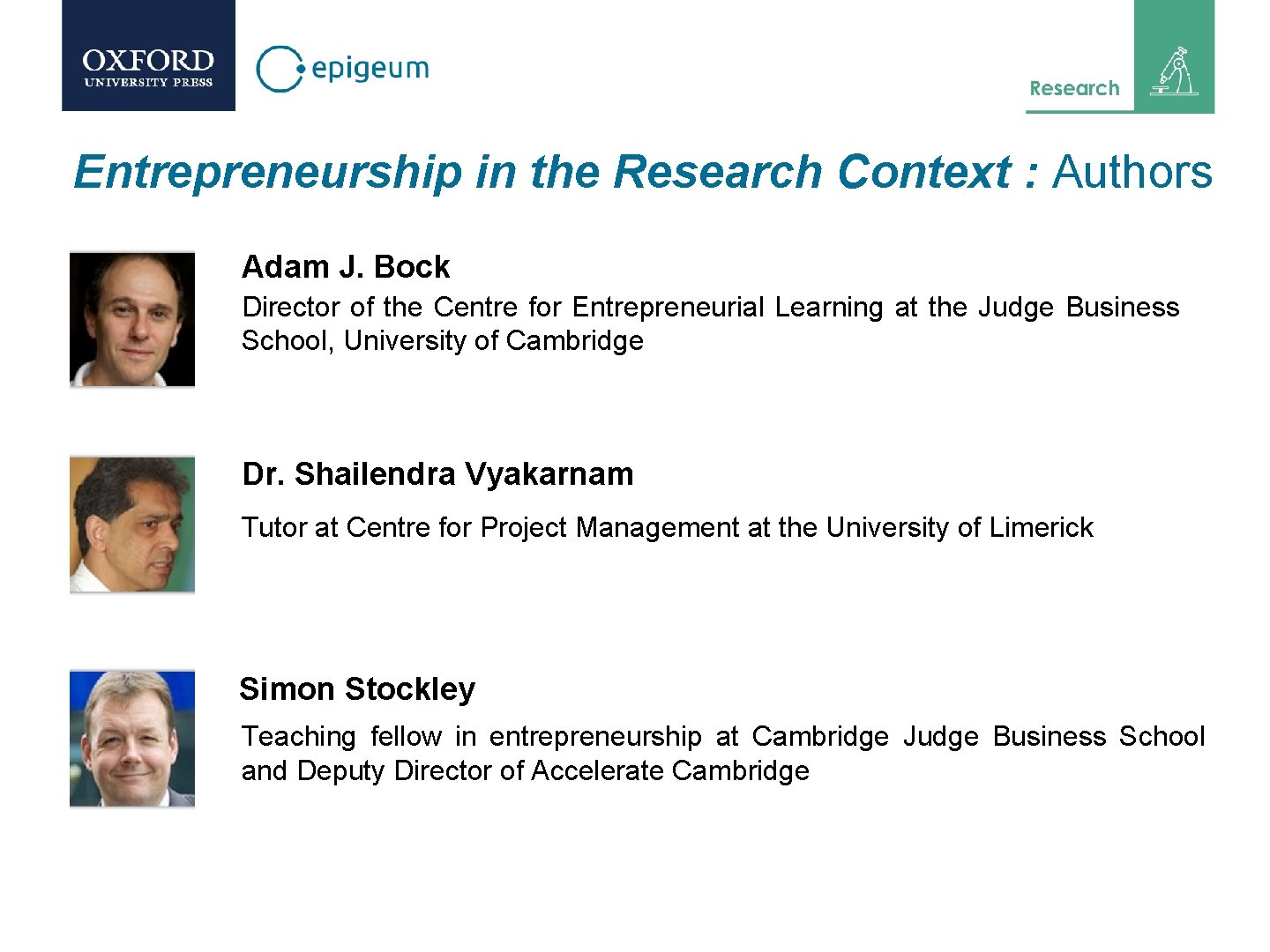
Entrepreneurship in the Research Context : Authors Adam J. Bock Director of the Centre for Entrepreneurial Learning at the Judge Business School, University of Cambridge Dr. Shailendra Vyakarnam Tutor at Centre for Project Management at the University of Limerick Simon Stockley Teaching fellow in entrepreneurship at Cambridge Judge Business School Item 2 itemof Accelerate Cambridge and Deputy Director
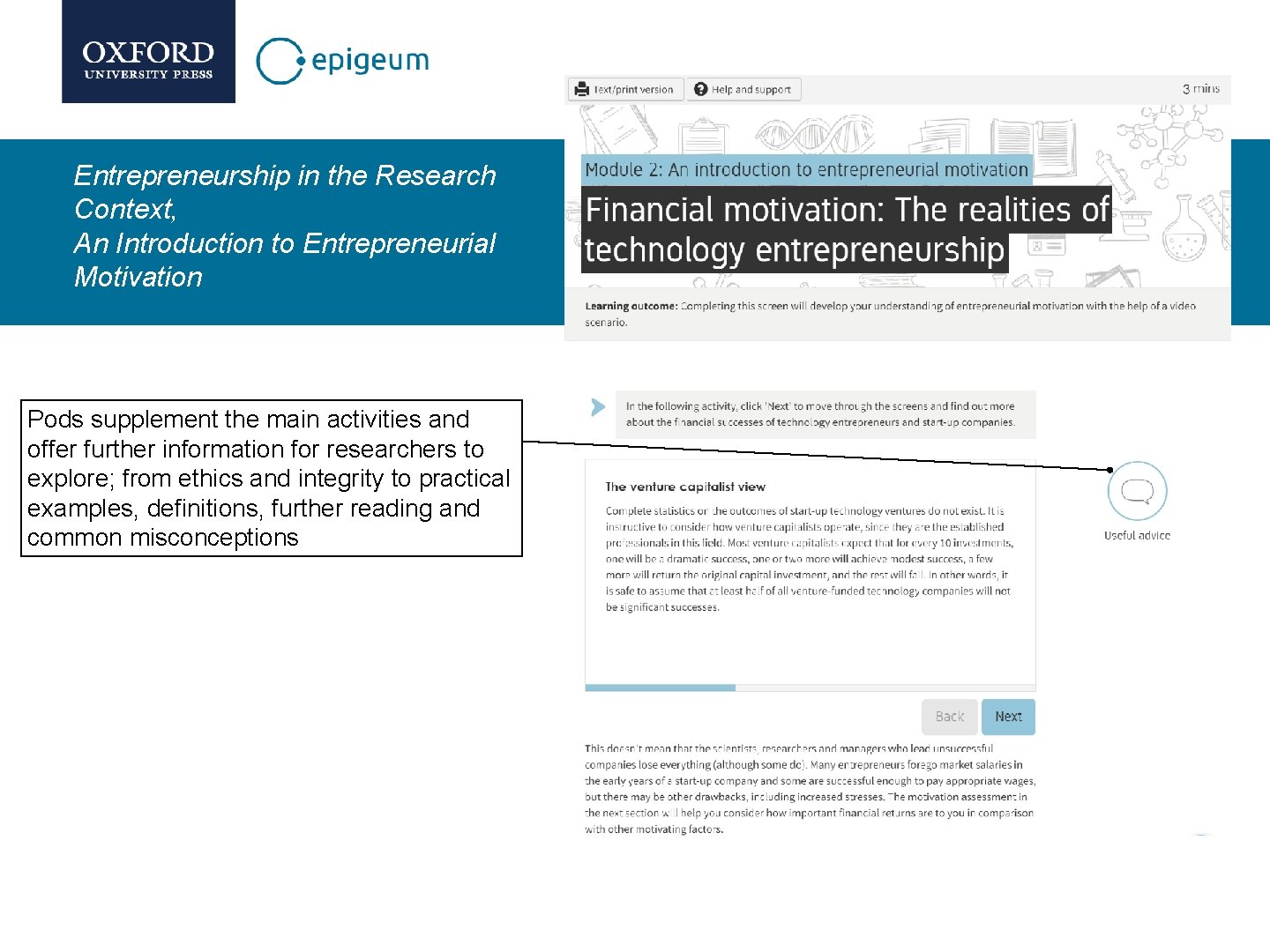
Entrepreneurship in the Research Context, An Introduction to Entrepreneurial Motivation Pods supplement the main activities and offer further information for researchers to explore; from ethics and integrity to practical examples, definitions, further reading and common misconceptions
Ongoing Support However you choose to deliver your research skills training, we will provide on-boarding and technical support every step of the way, in the form of promotional tools, workshops, and webinars. Our team of Learning Consultants will be on hand to ensure you get the most out of the programme – from advising on customisation and reporting options, to sharing practical tips and best practices from our partner institutions.
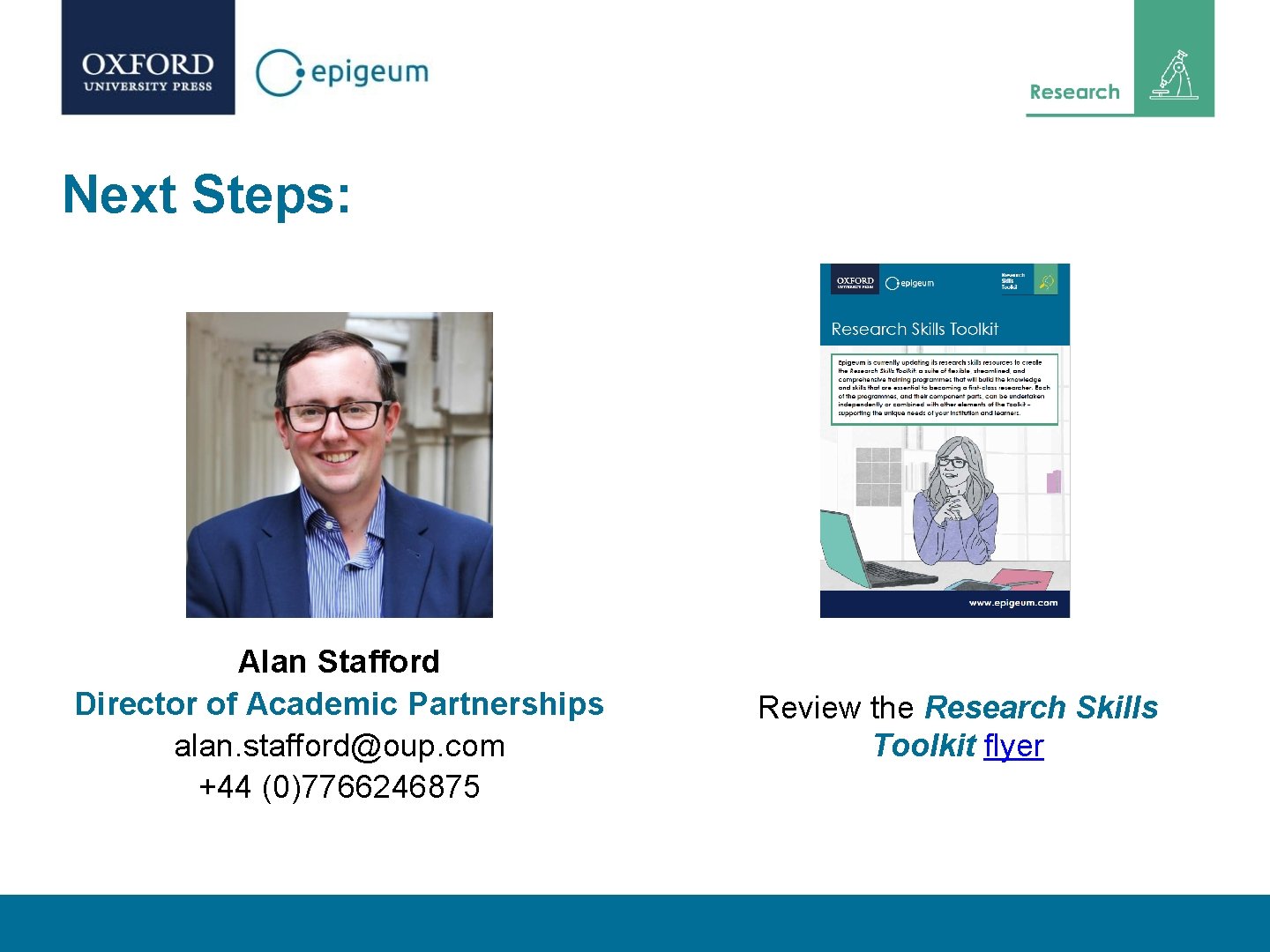
Next Steps: Alan Stafford Director of Academic Partnerships alan. stafford@oup. com +44 (0)7766246875 Review the Research Skills Toolkit flyer
Lorem ipsum dolor sit amet, consectetur adipiscing elit. www. epigeum. com