
INTRODUCING FOUR RCPCH ALLERGY CARE SAMPLE TITLE PATHWAYS










- Slides: 35
INTRODUCING FOUR RCPCH ALLERGY CARE SAMPLE TITLE PATHWAYS Anaphylaxis Asthma/Rhinitis Food Allergy Eczema PATRON HRH The Princess Royal
RCPCH Allergy Care Pathways BACKGROUND 2003 SAMPLE 2004/5 RCP – Allergy: the unmet need TITLE Parliamentary Health committee Highlighted postcode lottery Endorsed RCP report and recommendations 2005/6 Dept. of Health response No immediate action…more information required 2007 Science and Technology Focus on research but accepted committee (Ho. L) this was compromised by lack of service provision 2009 Department of Health Allergy Care Pathways Project 2010 RCP/RCPath Allergy services: Still not meeting the unmet need
RCPCH Allergy Care Pathways INCREASING PREVALENCE % of 12 yr. olds SAMPLE TITLE Burr et al Thorax 2006; 61: 296 -9
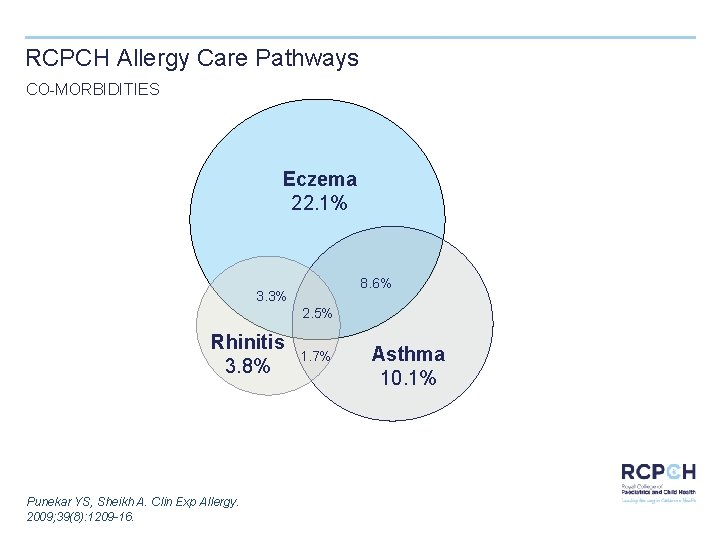
RCPCH Allergy Care Pathways CO-MORBIDITIES SAMPLE TITLE Eczema 22. 1% 8. 6% 3. 3% 2. 5% Rhinitis 3. 8% Punekar YS, Sheikh A. Clin Exp Allergy. 2009; 39(8): 1209 -16. 1. 7% Asthma 10. 1%
RCPCH Allergy Care Pathways WHAT ARE CARE PATHWAYS? • Structured SAMPLE TITLE • Timed • Multi-disciplinary • Patient-focussed processes • Reduce unnecessary variation • Empower patients and carers • Evidence-based guidelines into routine practice
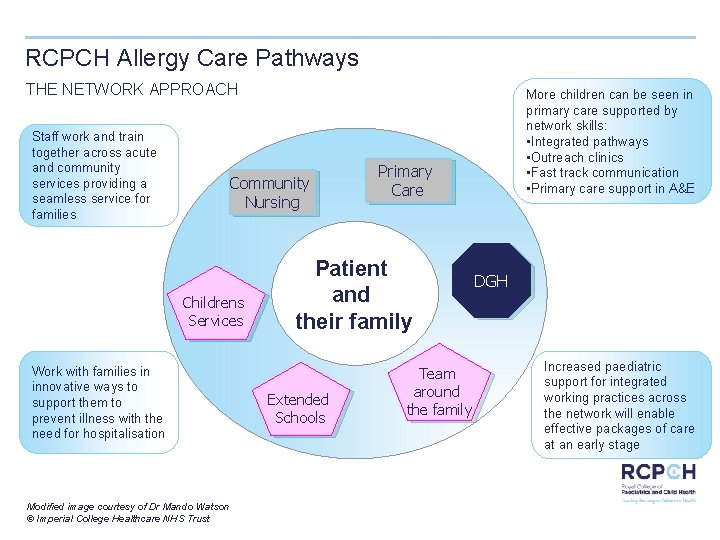
RCPCH Allergy Care Pathways THE NETWORK APPROACH Staff work and train together across acute and community services providing a seamless service for families SAMPLE TITLE Community Nursing Childrens Services Work with families in innovative ways to support them to prevent illness with the need for hospitalisation Modified image courtesy of Dr Mando Watson © Imperial College Healthcare NHS Trust Primary Care Patient and their family Extended Schools More children can be seen in primary care supported by network skills: • Integrated pathways • Outreach clinics • Fast track communication • Primary care support in A&E Team around the family DGH Increased paediatric support for integrated working practices across the network will enable effective packages of care at an early stage
RCPCH Allergy Care Pathways GETTING IT RIGHT FOR CHILDREN • Local partnerships including all agencies involved with the care of SAMPLE TITLE children in a locality • Emphasis on efficient service provision “What is needed is a common vision that is strong enough to bind all the agencies together while taking account of different perspectives. . . The future must be one of a holistic approach to the child or young person. ” Getting it right for children - Kennedy report Sept. 2010
RCPCH Allergy Care Pathways OVERVIEW Anaphylaxis SAMPLE TITLE Food Allergy Asthma/Rhinitis Eczema Urticaria / Angio-oedema / Mastocytosis Drug / Venom / Latex Allergies The pathways documents are in two sections: • An algorithm of the stages of care of the ideal pathway • The competences required to deliver the ideal pathway Each pathway has a set a core knowledge documents
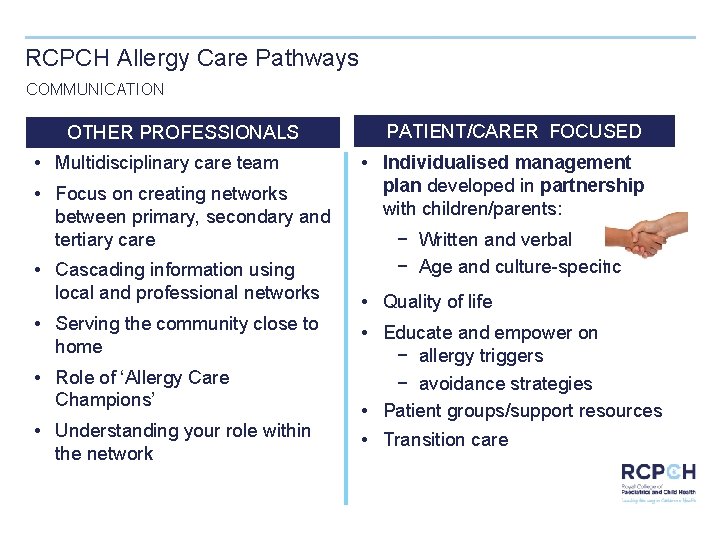
RCPCH Allergy Care Pathways COMMUNICATION OTHER PROFESSIONALS • Multidisciplinary care team SAMPLE TITLE • Focus on creating networks between primary, secondary and tertiary care • Cascading information using local and professional networks • Serving the community close to home • Role of ‘Allergy Care Champions’ • Understanding your role within the network PATIENT/CARER FOCUSED • Individualised management plan developed in partnership with children/parents: − Written and verbal − Age and culture-specific • Quality of life • Educate and empower on − allergy triggers − avoidance strategies • Patient groups/support resources • Transition care
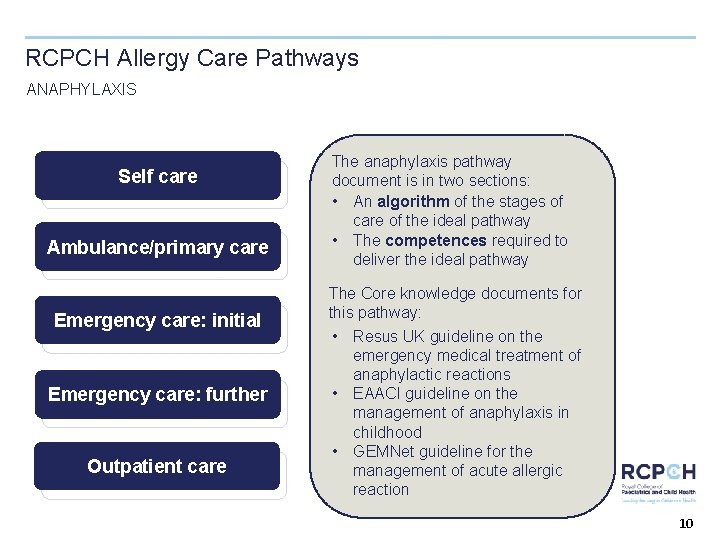
RCPCH Allergy Care Pathways ANAPHYLAXIS SAMPLESelf TITLE care Ambulance/primary care Emergency care: initial Emergency care: further Outpatient care The anaphylaxis pathway document is in two sections: • An algorithm of the stages of care of the ideal pathway • The competences required to deliver the ideal pathway The Core knowledge documents for this pathway: • Resus UK guideline on the emergency medical treatment of anaphylactic reactions • EAACI guideline on the management of anaphylaxis in childhood • GEMNet guideline for the management of acute allergic reaction 10
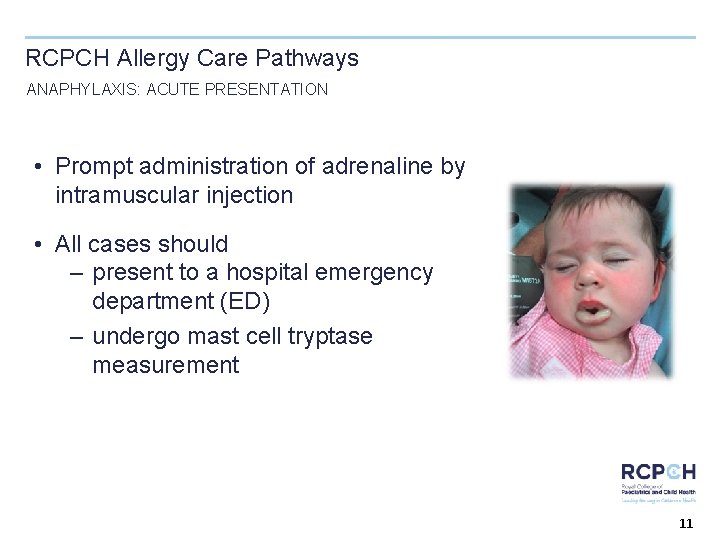
RCPCH Allergy Care Pathways ANAPHYLAXIS: ACUTE PRESENTATION • Prompt. TITLE administration of adrenaline by SAMPLE intramuscular injection • All cases should – present to a hospital emergency department (ED) – undergo mast cell tryptase measurement 11
RCPCH Allergy Care Pathways ANAPHYLAXIS: ED DISCHARGE • Patients. TITLE should be provided with a basic prevention and SAMPLE treatment package including: − Adrenaline injector and training on how to use it − Basic avoidance advice • Patient group information • Refer to an allergy clinic 12
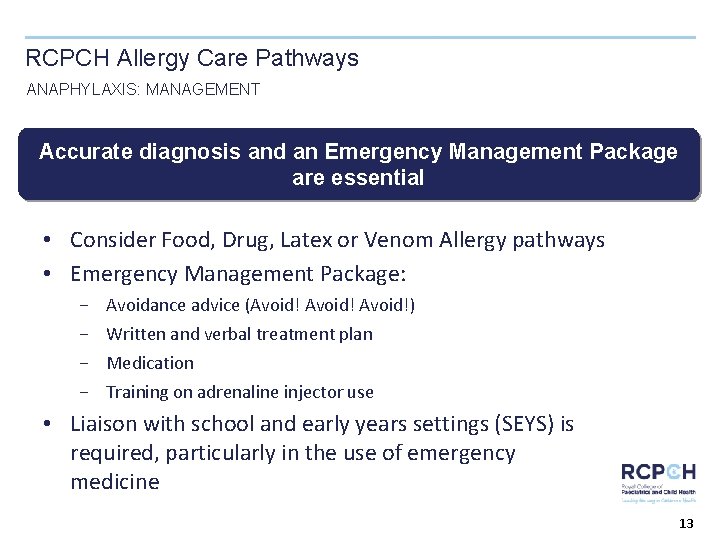
RCPCH Allergy Care Pathways ANAPHYLAXIS: MANAGEMENT Accurate diagnosis and an Emergency Management Package SAMPLE TITLE are essential • Consider Food, Drug, Latex or Venom Allergy pathways • Emergency Management Package: − − Avoidance advice (Avoid!) Written and verbal treatment plan Medication Training on adrenaline injector use • Liaison with school and early years settings (SEYS) is required, particularly in the use of emergency medicine 13
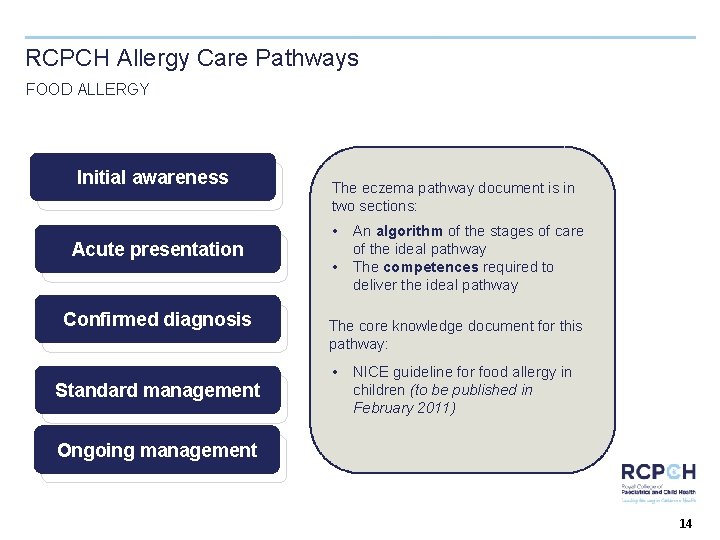
RCPCH Allergy Care Pathways FOOD ALLERGY SAMPLE Initial TITLE awareness Acute presentation Confirmed diagnosis Standard management The eczema pathway document is in two sections: • An algorithm of the stages of care of the ideal pathway • The competences required to deliver the ideal pathway The core knowledge document for this pathway: • NICE guideline for food allergy in children (to be published in February 2011) Ongoing management 14
RCPCH Allergy Care Pathways FOOD ALLERGY: INITIAL RECOGNITION The acute food allergy pathway is the same as the acute SAMPLE TITLEpathway (refer to the Anaphylaxis pathway) anaphylaxis • Similar to many common childhood conditions • Initial recognition of suspected adverse reactions to food is crucial • Recognise risk factors for allergic aetiology of presenting features − e. g. Family or personal history of atopy Food allergy may present in a variety of ways, from immediate allergic reactions to chronic presentations such as eczema or gastrointestinal (GI) symptoms 15
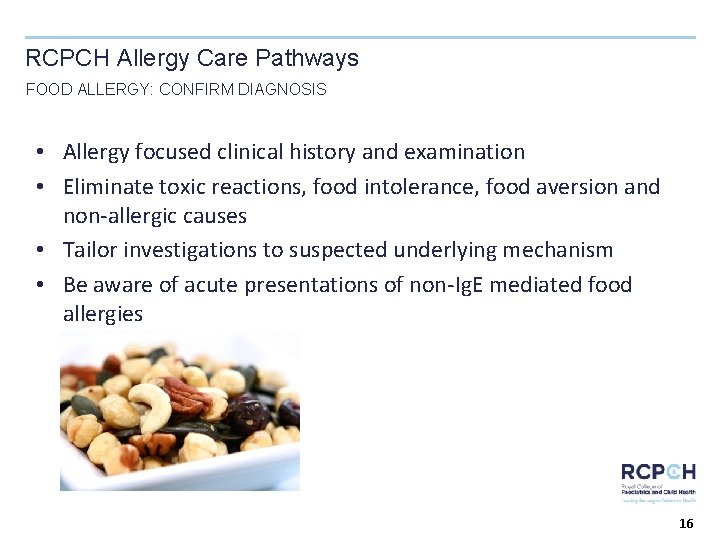
RCPCH Allergy Care Pathways FOOD ALLERGY: CONFIRM DIAGNOSIS • Allergy focused clinical history and examination SAMPLE TITLE • Eliminate toxic reactions, food intolerance, food aversion and non-allergic causes • Tailor investigations to suspected underlying mechanism • Be aware of acute presentations of non-Ig. E mediated food allergies 16
RCPCH Allergy Care Pathways FOOD ALLERGY: CONFIRM DIAGNOSIS Adverse reaction to food SAMPLE TITLE Unpredictable Intolerance Allergy Metabolic defect Aversion Other Predictable Toxin Pharmacological Scromboid fish Caffeine Microbial Staphylococcal endotoxin Ig. E and/or Immune complex and/or Cell mediated 17
RCPCH Allergy Care Pathways FOOD ALLERGY: STANDARD MANAGEMENT • Individualised management plan SAMPLE TITLE • Nutritional support and monitoring with the help of a dietitian • Monitor impact on Qo. L and any potential anxiety Complementary and alternative medicine (CAM) allergy tests, including kinesiology, serum specific Ig. G and Vega tests have no place in the diagnosis and/or management of food allergy 18
RCPCH Allergy Care Pathways FOOD ALLERGY: ONGOING MANAGEMENT • Monitor growth and ensure adequate SAMPLE TITLE nutrition is maintained • Recognise the resolution of food allergy (i. e. tolerance) • Identify any emerging co-morbid allergies • Revise and update the individualised management plan • Communicate and manage transition between care providers • Minimise the impact on Qo. L 19
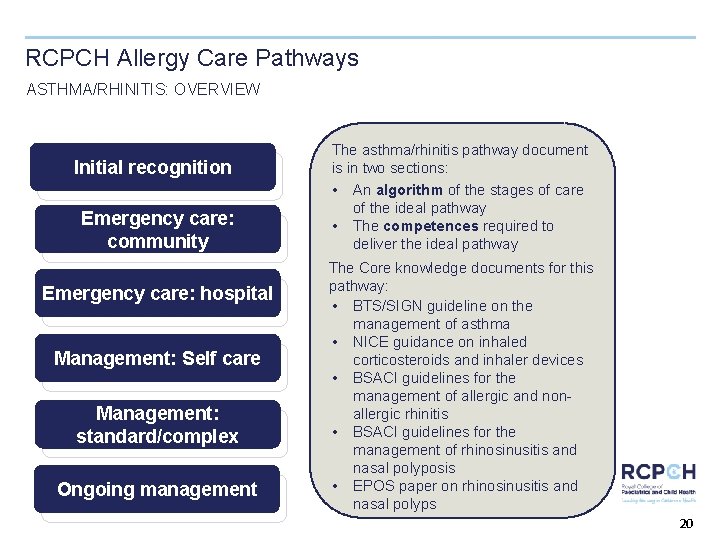
RCPCH Allergy Care Pathways ASTHMA/RHINITIS: OVERVIEW Initial recognition SAMPLE TITLE Emergency care: community Emergency care: hospital Management: Self care Management: standard/complex Ongoing management The asthma/rhinitis pathway document is in two sections: • An algorithm of the stages of care of the ideal pathway • The competences required to deliver the ideal pathway The Core knowledge documents for this pathway: • BTS/SIGN guideline on the management of asthma • NICE guidance on inhaled corticosteroids and inhaler devices • BSACI guidelines for the management of allergic and nonallergic rhinitis • BSACI guidelines for the management of rhinosinusitis and nasal polyposis • EPOS paper on rhinosinusitis and nasal polyps 20
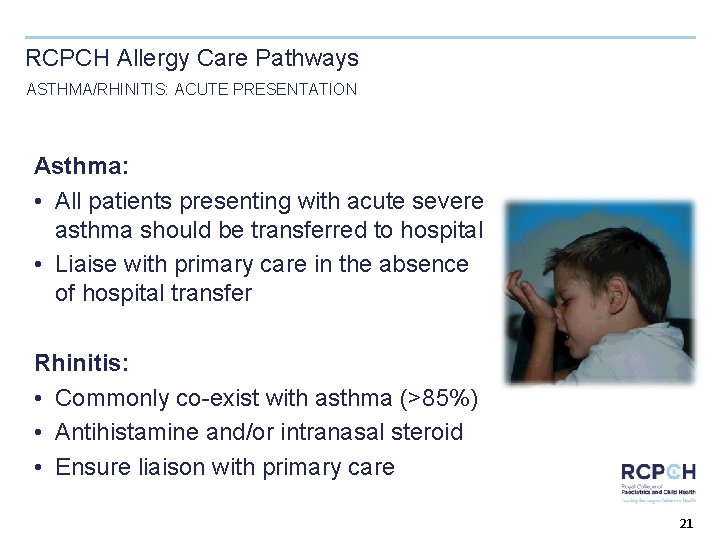
RCPCH Allergy Care Pathways ASTHMA/RHINITIS: ACUTE PRESENTATION Asthma: TITLE SAMPLE • All patients presenting with acute severe asthma should be transferred to hospital • Liaise with primary care in the absence of hospital transfer Rhinitis: • Commonly co-exist with asthma (>85%) • Antihistamine and/or intranasal steroid • Ensure liaison with primary care 21
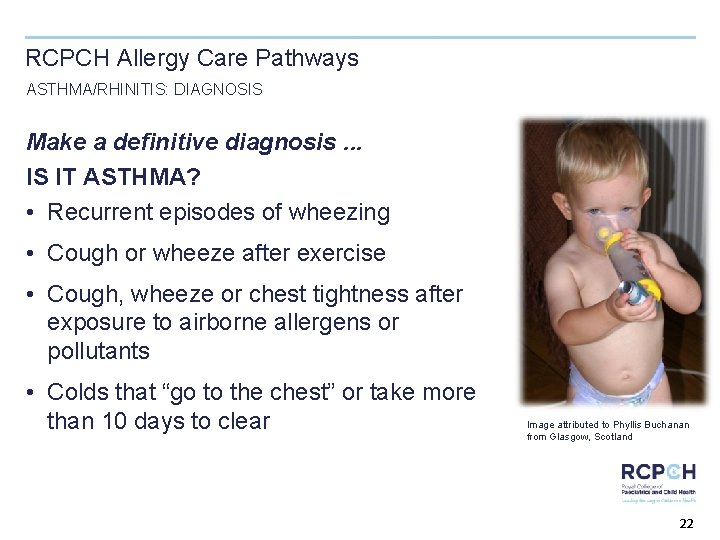
RCPCH Allergy Care Pathways ASTHMA/RHINITIS: DIAGNOSIS Make a definitive diagnosis. . . SAMPLE TITLE IS IT ASTHMA? • Recurrent episodes of wheezing • Cough or wheeze after exercise • Cough, wheeze or chest tightness after exposure to airborne allergens or pollutants • Colds that “go to the chest” or take more than 10 days to clear Image attributed to Phyllis Buchanan from Glasgow, Scotland 22
RCPCH Allergy Care Pathways SAMPLE TITLE Wheeze. . . is it asthma? 23
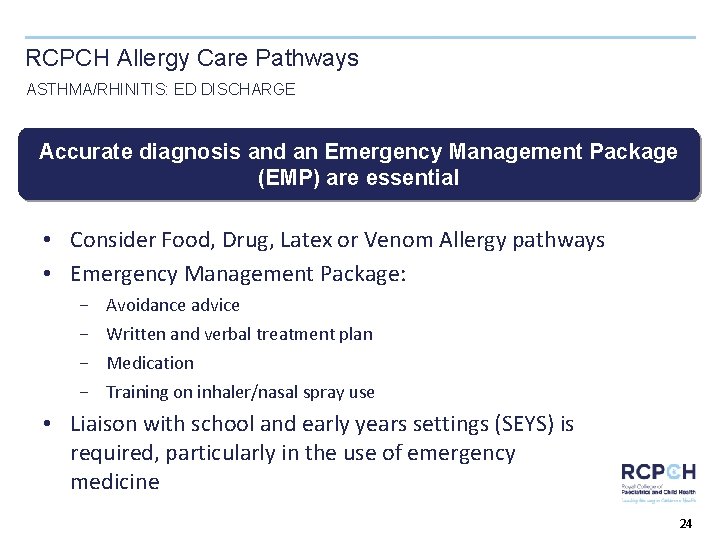
RCPCH Allergy Care Pathways ASTHMA/RHINITIS: ED DISCHARGE Accurate diagnosis and an Emergency Management Package SAMPLE TITLE (EMP) are essential • Consider Food, Drug, Latex or Venom Allergy pathways • Emergency Management Package: − − Avoidance advice Written and verbal treatment plan Medication Training on inhaler/nasal spray use • Liaison with school and early years settings (SEYS) is required, particularly in the use of emergency medicine 24
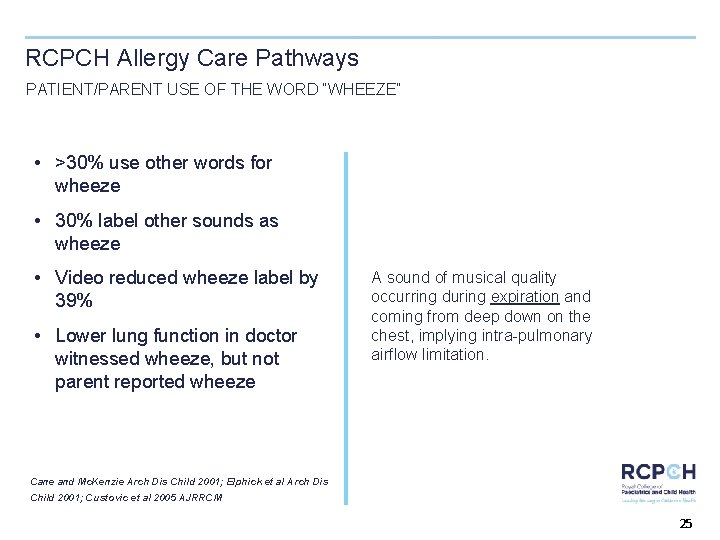
RCPCH Allergy Care Pathways PATIENT/PARENT USE OF THE WORD “WHEEZE” • >30% use other words for SAMPLE TITLE wheeze • 30% label other sounds as wheeze • Video reduced wheeze label by 39% • Lower lung function in doctor witnessed wheeze, but not parent reported wheeze A sound of musical quality occurring during expiration and coming from deep down on the chest, implying intra-pulmonary airflow limitation. Cane and Mc. Kenzie Arch Dis Child 2001; Elphick et al Arch Dis Child 2001; Custovic et al 2005 AJRRCM 25
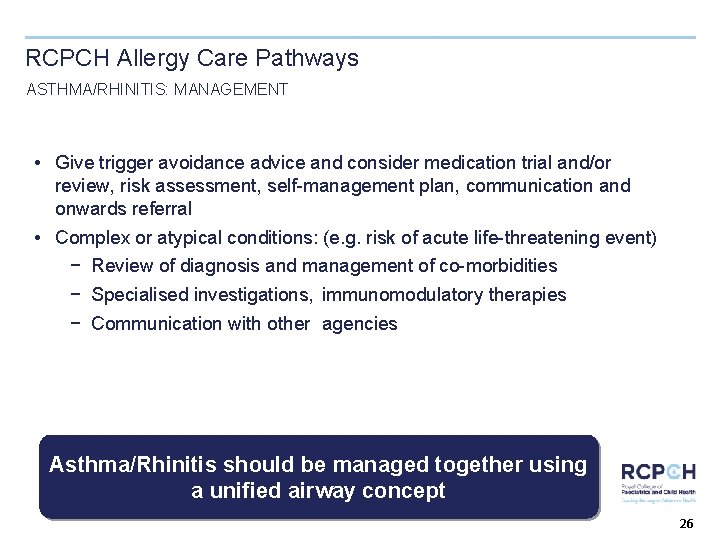
RCPCH Allergy Care Pathways ASTHMA/RHINITIS: MANAGEMENT • Give trigger avoidance advice and consider medication trial and/or SAMPLE TITLE review, risk assessment, self-management plan, communication and onwards referral • Complex or atypical conditions: (e. g. risk of acute life-threatening event) − Review of diagnosis and management of co-morbidities − Specialised investigations, immunomodulatory therapies − Communication with other agencies Asthma/Rhinitis should be managed together using a unified airway concept 26
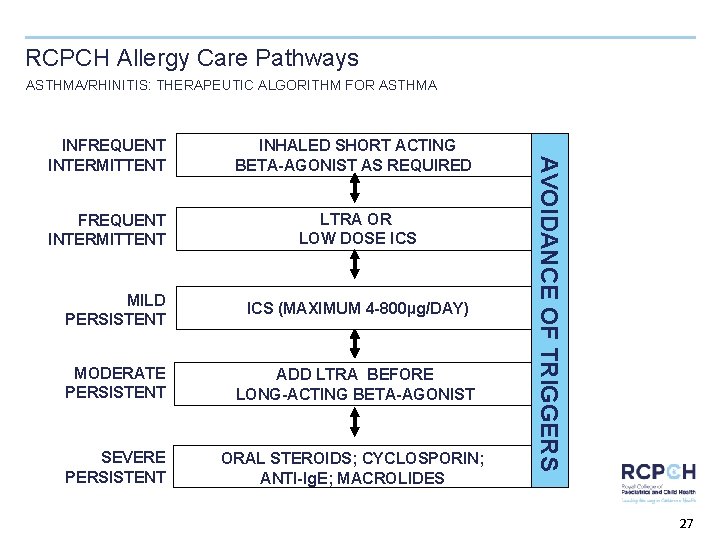
RCPCH Allergy Care Pathways ASTHMA/RHINITIS: THERAPEUTIC ALGORITHM FOR ASTHMA INHALED SHORT ACTING BETA-AGONIST AS REQUIRED FREQUENT INTERMITTENT LTRA OR LOW DOSE ICS SAMPLE TITLE MILD PERSISTENT ICS (MAXIMUM 4 -800µg/DAY) MODERATE PERSISTENT ADD LTRA BEFORE LONG-ACTING BETA-AGONIST SEVERE PERSISTENT ORAL STEROIDS; CYCLOSPORIN; ANTI-Ig. E; MACROLIDES AVOIDANCE OF TRIGGERS INFREQUENT INTERMITTENT 27
RCPCH Allergy Care Pathways ECZEMA: OVERVIEW SAMPLE TITLE Initial recognition Emergency care: hospital Management: Self care Management: standard/complex The eczema pathway document is in two sections: • An algorithm of the stages of care of the ideal pathway • The competences required to deliver the ideal pathway The Core knowledge document for this pathway: • NICE guideline for atopic eczema in children Ongoing management 28
RCPCH Allergy Care Pathways Genetic factors SAMPLE TITLE Contact irritants Impaired epithelial barrier Food allergens Chemicals Temperature change Infection Aeroallergens Pruritis Atopic Eczema Vaccination Stress 29
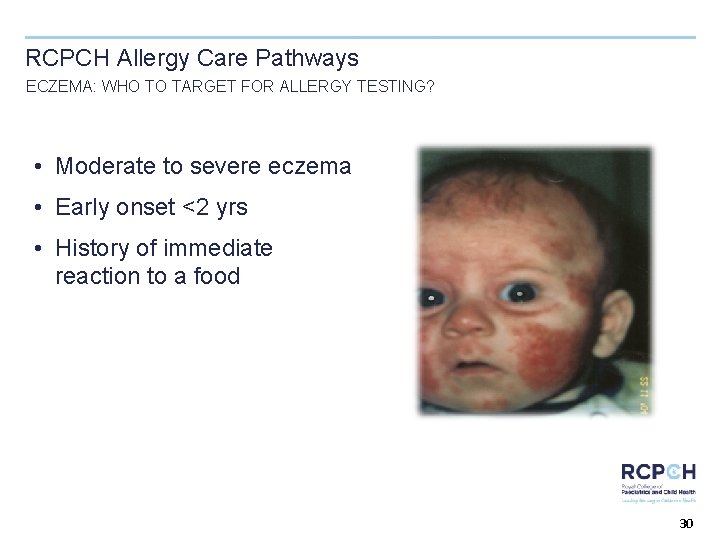
RCPCH Allergy Care Pathways ECZEMA: WHO TO TARGET FOR ALLERGY TESTING? • Moderate to severe eczema SAMPLE TITLE • Early onset <2 yrs • History of immediate reaction to a food 30
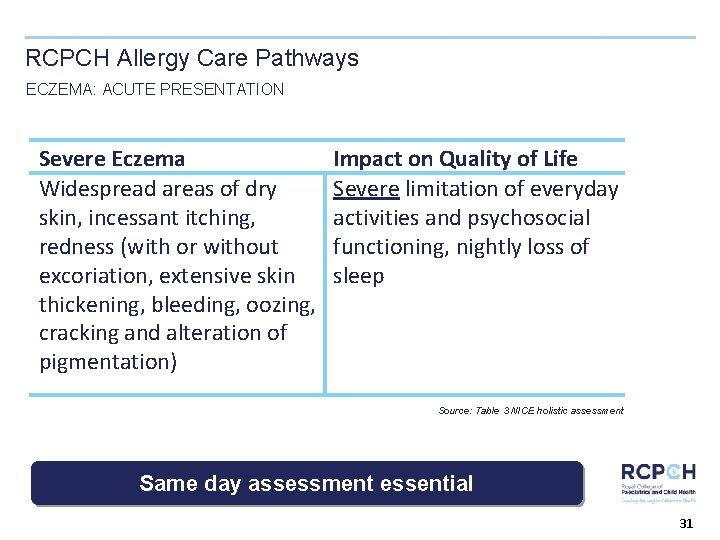
RCPCH Allergy Care Pathways ECZEMA: ACUTE PRESENTATION Severe Eczema SAMPLE TITLE Widespread areas of dry skin, incessant itching, redness (with or without excoriation, extensive skin thickening, bleeding, oozing, cracking and alteration of pigmentation) Impact on Quality of Life Severe limitation of everyday activities and psychosocial functioning, nightly loss of sleep Source: Table 3 NICE holistic assessment Same day assessment essential 31
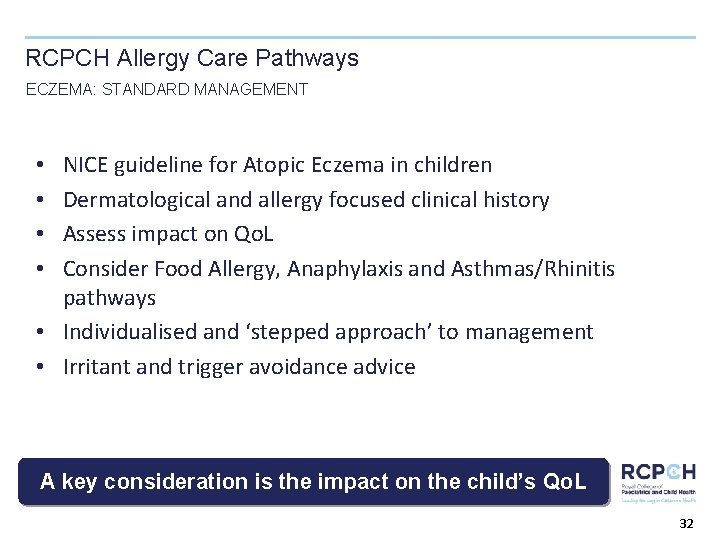
RCPCH Allergy Care Pathways ECZEMA: STANDARD MANAGEMENT • NICE guideline SAMPLE TITLE for Atopic Eczema in children • Dermatological and allergy focused clinical history • Assess impact on Qo. L • Consider Food Allergy, Anaphylaxis and Asthmas/Rhinitis pathways • Individualised and ‘stepped approach’ to management • Irritant and trigger avoidance advice A key consideration is the impact on the child’s Qo. L 32
RCPCH Allergy Care Pathways KEY POINTS 1. Provision of care in partnership with patient/parent/carer SAMPLE TITLE 2. Communication is important: • Network • Patient/parent/carer 3. Quality relationships and management planning can reduce the frequency and severity of allergic reactions 4. Recognise points of onwards referral 5. Recognise negative impact of disease on patient Qo. L
RCPCH Allergy Care Pathways BARRIERS TO LOCAL IMPLEMENTATION • Local adoption SAMPLE TITLE of pathways • Convince commissioners to fund • Time and location of training and meetings • Getting ‘buy-in’ from local champions • Families seeking tertiary care referrals • Changing service provision landscape
RCPCH Allergy Care Pathways WHAT NEXT? ü Keep TITLE up to date on the RCPCH website SAMPLE (www. rcpch. ac. uk/allergy) ü Be aware of the relevant associations and organisations (e. g. BSACI, Anaphylaxis Campaign, Asthma UK) ü Know the core knowledge documents ü Identify a local allergy champion ü Use your local and professional network; start up an allergy network