
Introducing Apache Tomcat 6 Mladen Turk Red Hat





- Slides: 32
Introducing Apache Tomcat 6 Mladen Turk Red Hat, Inc.
Agenda • A brief history of time • Tomcat versions • Tomcat 6
What is Tomcat? • Core features – Servlet container – JSP container – HTTP server • Additional features – Native web server integration (AJP) – Basic application server features (JNDI, JDBC, …) – Clustering and session replication
What is Tomcat? • Started at Sun Microsystems – Reference Java Servlet and JSP implementation – Donated to Apache Software Foundation in 1999 • ASF TLP (Top-level Project) – Since 2005 – Before developed under Jakarta umbrella
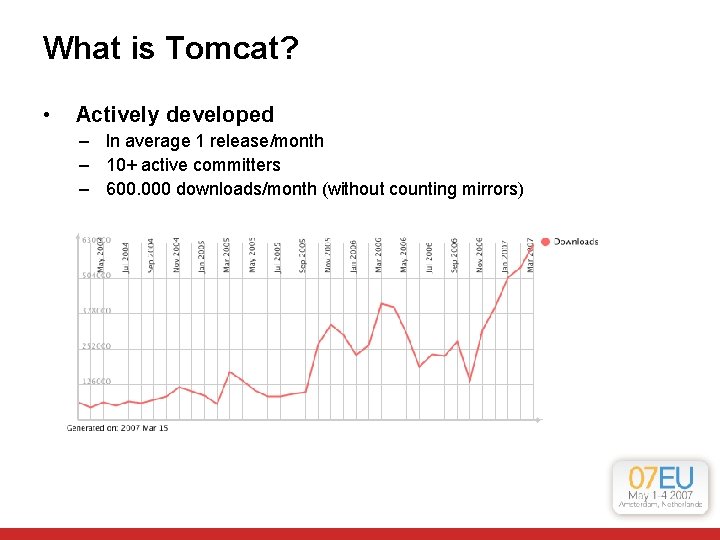
What is Tomcat? • Actively developed – In average 1 release/month – 10+ active committers – 600. 000 downloads/month (without counting mirrors)
Tomcat versions • Major version related to Servlet/JSP Spec – JVM required depends on the JVM required by spec – Spec maintained by JCP (Java Community Process) Servlet/JSP Spec 2. 5 2. 1 2. 4 2. 0 2. 3 1. 2 2. 2 1. 1 Apache Tomcat version 6. 0. x 5. 5. x 4. 1. x 3. 3. x
Tomcat release process • Follows the ASF release guidelines – Needs 3 +1 votes from the committers – When “enough” work is done – Release manager is volunteer • Urgent releases – Security related issues – Not discussed publicly during report-patch-release process – Private email list
Enough Tire Kicking! • Can we look under the hood?
Servlet 2. 5 Specification • JSR-000154 – Created via Java Community Process (http: //jcp. org) • JSE 5. 0 dependency – JDK 5. 0 is minimum platform requirement • Allow multiple url-pattern in servlet-mapping <servlet-mapping> <servlet-name>One. Fancy. Servlet</servlet-name> <url-pattern>/foo/*</url-pattern> <url-pattern>/bar/*</url-pattern> </servlet-mapping>
Servlet 2. 5 Specification • Annotations support – Alternatives to some XML entries in web. xml – @Resource: • Class or variable “resource injection” request – @Resources: • Similar as @Resource but holds the array or @Resource annotations – @Run. As: • Used to replace <run-as> entries in web. xml – @Declare. Roles: • Alternative to <security-role> in web. xml – Come from JSR 250 (Common Annotations for the Java Platform)
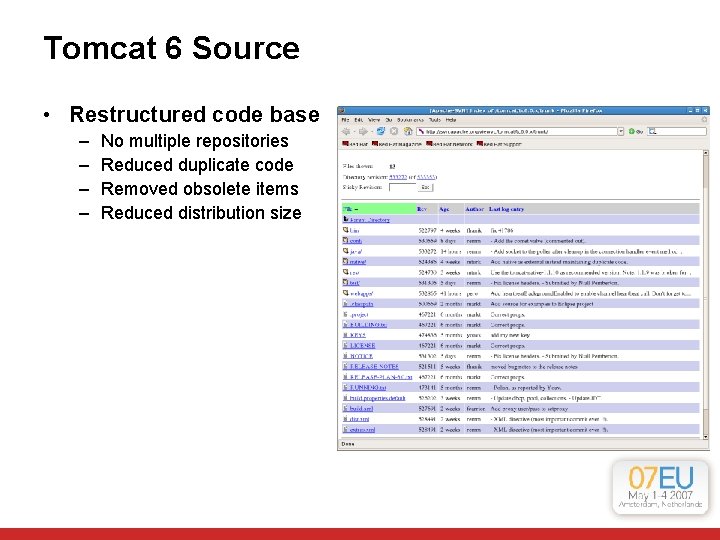
Tomcat 6 Source • Restructured code base – – No multiple repositories Reduced duplicate code Removed obsolete items Reduced distribution size
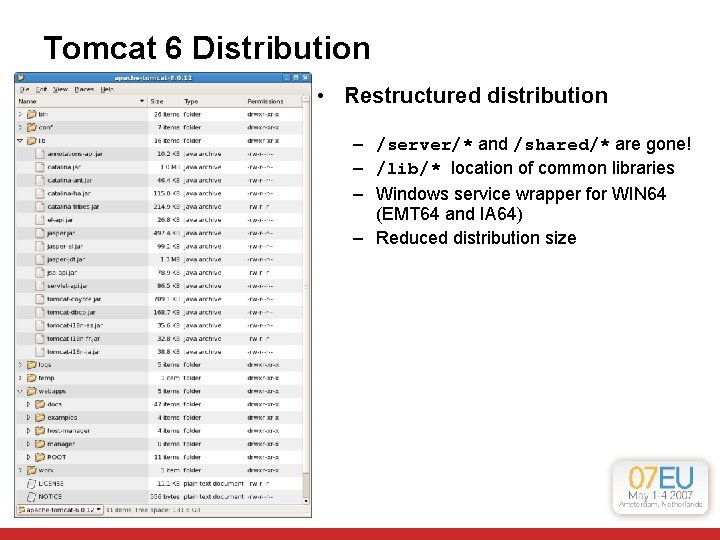
Tomcat 6 Distribution • Restructured distribution – /server/* and /shared/* are gone! – /lib/* location of common libraries – Windows service wrapper for WIN 64 (EMT 64 and IA 64) – Reduced distribution size
Tomcat 6 Distribution • Additional components – Downloadable from /extras/* • Full commons-logging implementation – Tomcat uses a package renamed commons-logging API implementation which is hard-coded to use the java. util. logging API. • Web Services support (JSR 109) – Tomcat provides factories for JSR 109 which may be used to resolve web services references. Place the generated catalina-ws. jar as well as jaxrpc. jar and wsdl 4 j. jar (or another implementation of JSR 109) in the Tomcat /lib/ folder.
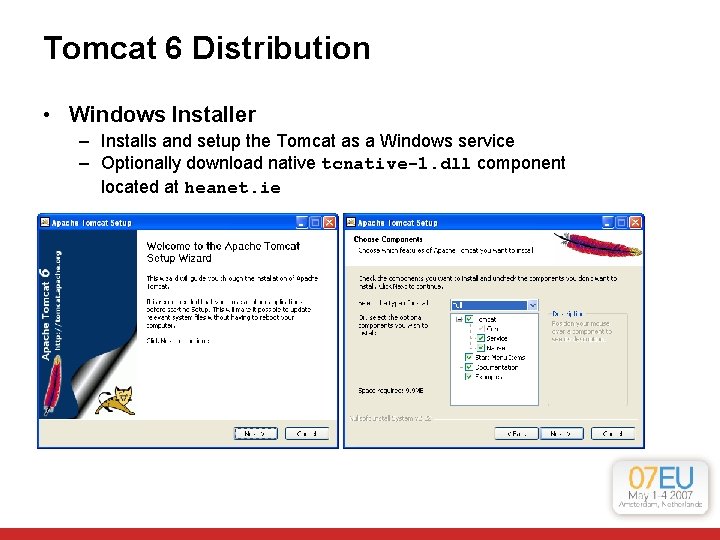
Tomcat 6 Distribution • Windows Installer – Installs and setup the Tomcat as a Windows service – Optionally download native tcnative-1. dll component located at heanet. ie
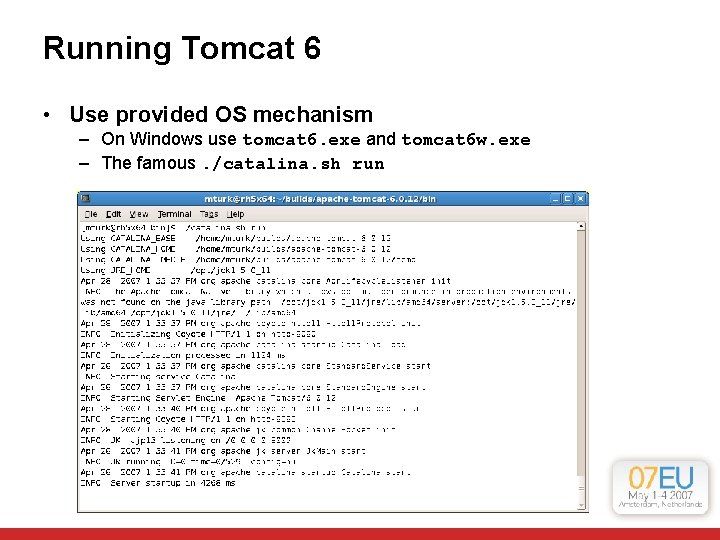
Running Tomcat 6 • Use provided OS mechanism – On Windows use tomcat 6. exe and tomcat 6 w. exe – The famous. /catalina. sh run
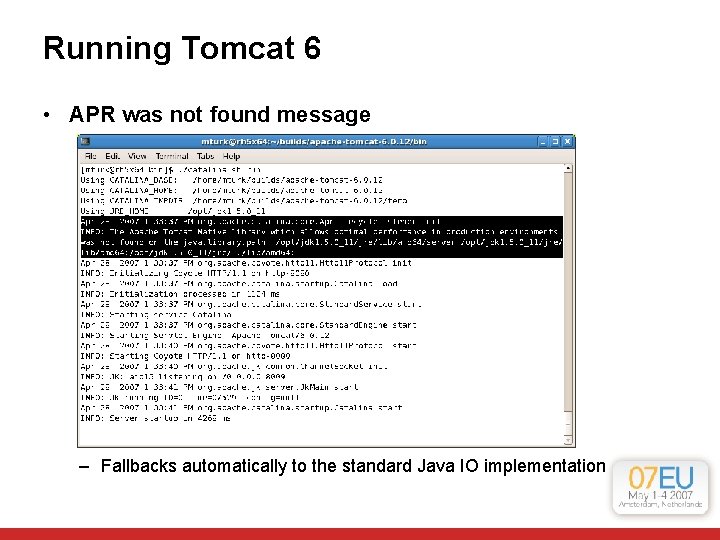
Running Tomcat 6 • APR was not found message – Fallbacks automatically to the standard Java IO implementation
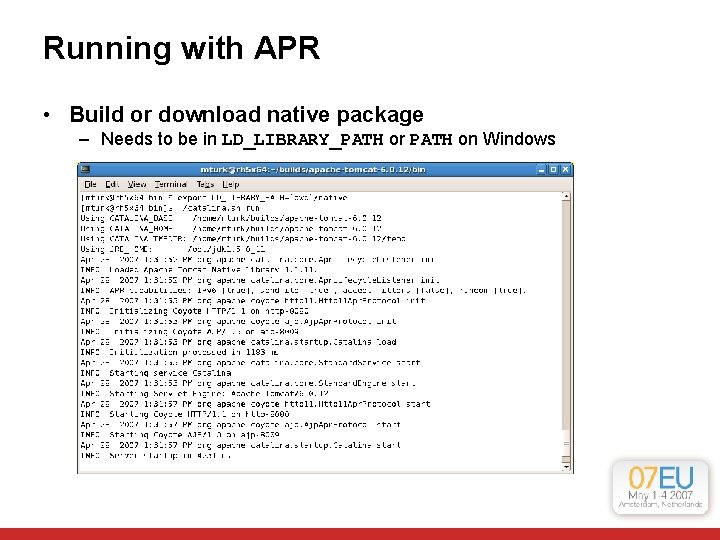
Running with APR • Uses Tomcat Native (tcnative) – Wrapper over Apache Portable Runtime (APR) – Replaces common JSE network stack
Running with APR • Build or download native package – Needs to be in LD_LIBRARY_PATH or PATH on Windows
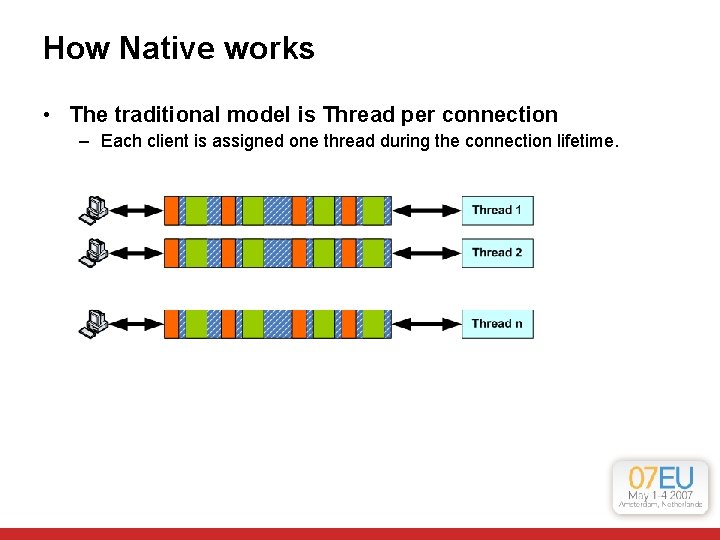
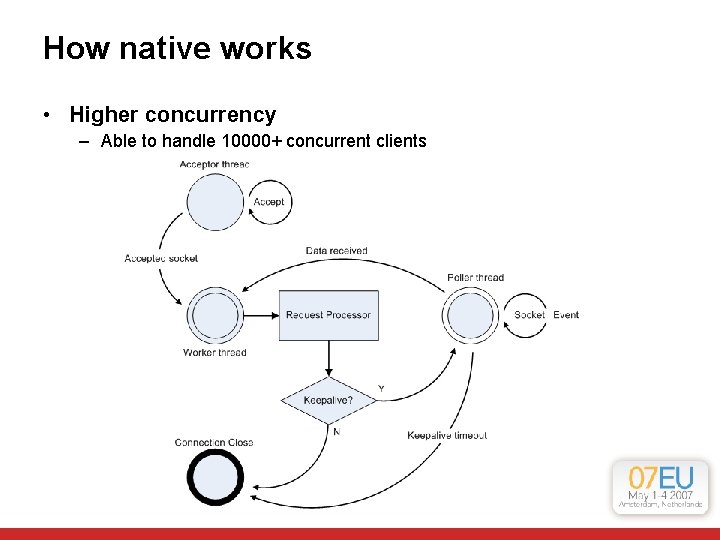
How Native works • The traditional model is Thread per connection – Each client is assigned one thread during the connection lifetime.
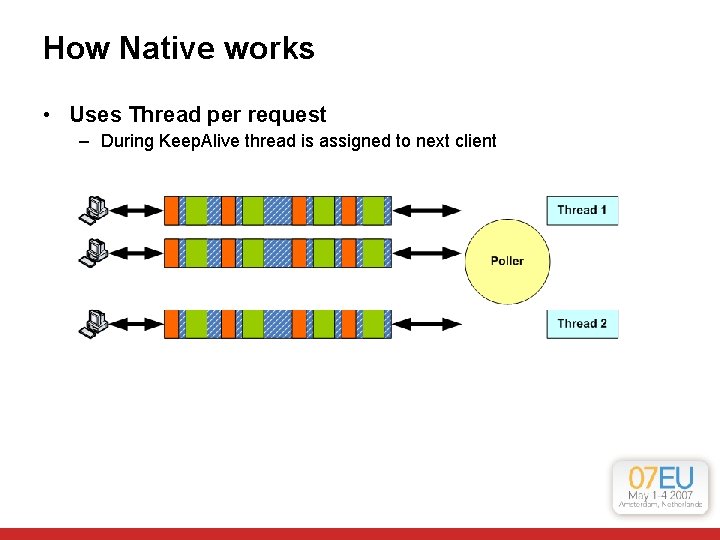
How Native works • Uses Thread per request – During Keep. Alive thread is assigned to next client
How native works • Higher concurrency – Able to handle 10000+ concurrent clients
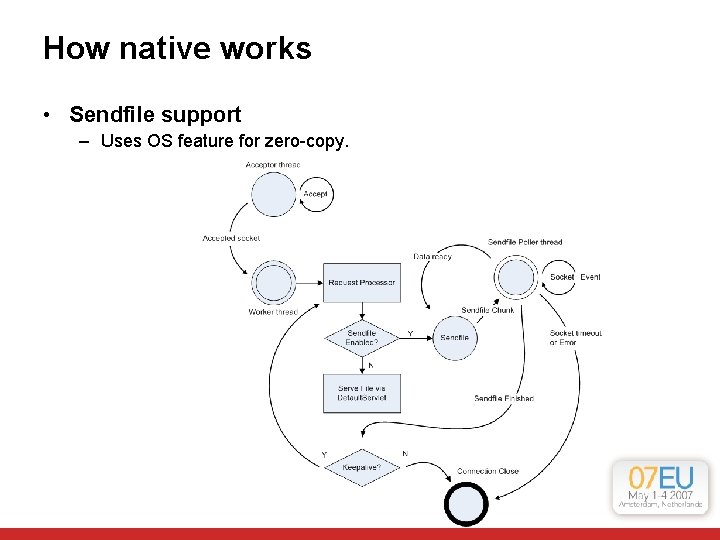
How native works • Sendfile support – Uses OS feature for zero-copy.
The benefits of using Native • Performance – Uses zero-copy for static content – Uses Open. SSL instead JSSE – Zero GC – no Java objects are created • Scalability – Thread per request allows more HTTP/1. 1 concurrent connections – Lower CPU and memory usage
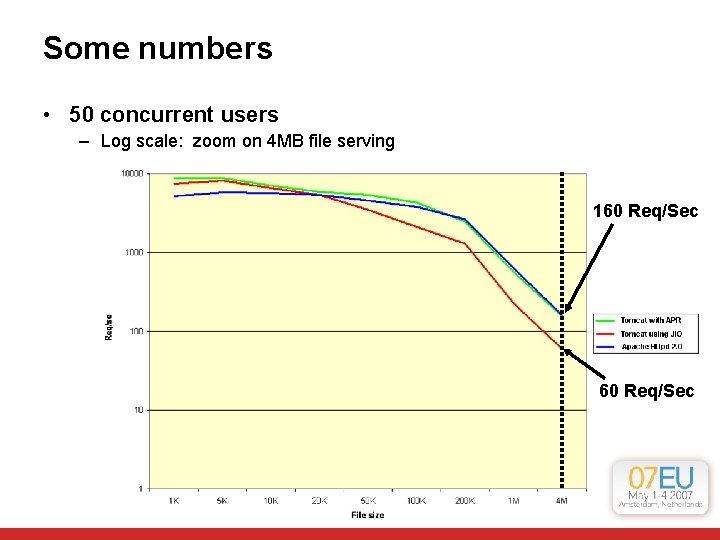
Some numbers • 50 concurrent users – Log scale: zoom on 4 MB file serving 160 Req/Sec
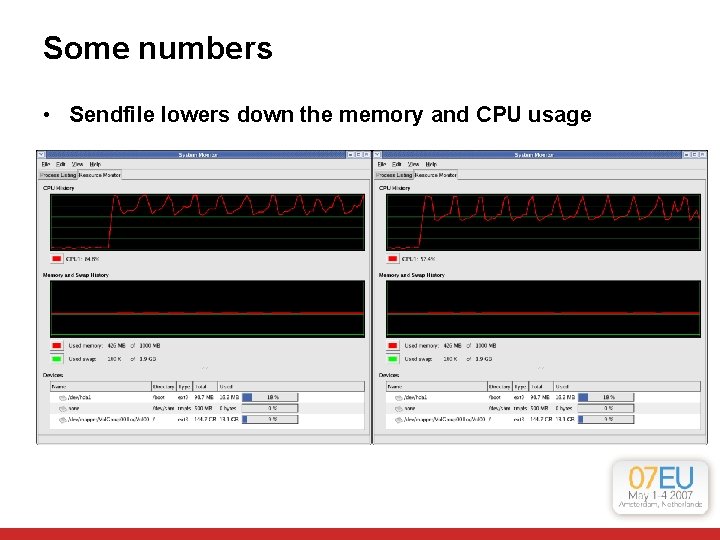
Some numbers • Sendfile lowers down the memory and CPU usage
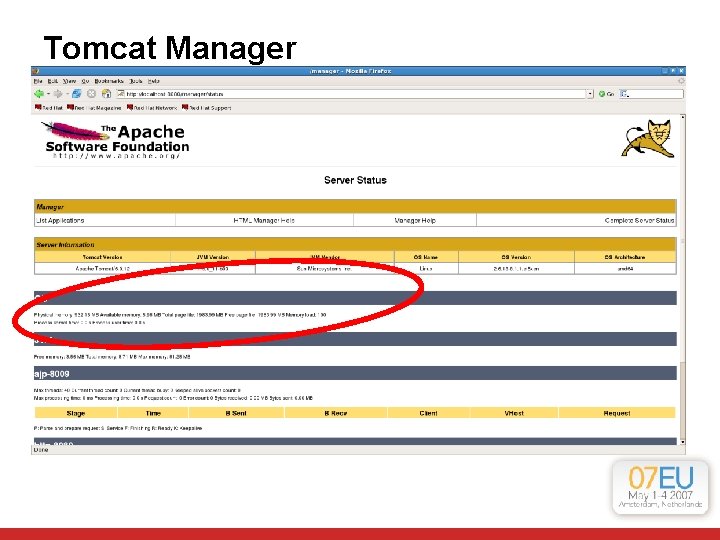
Tomcat Manager
Tomcat NIO Connector • Developed on APR principles – Use JSE NIO features – No need for extra native package – Not for static content delivery and SSL • Allows thread per connection model – Something NIO wasn’t designed for – Extends the standard blocking Servlet model
Tomcat Advanced IO • The Comet – Process servlets asynchronously! – Receive events when data is available for reading on the connection. – Not usable with AJP (for now)
Comet events • The Servlet is awaken on event – Implement the org. apache. catalina. Comet. Processor interface – The servlet is valid until the END event • BEGIN – Called at the beginning of the processing of the connection. – Valid until the END or ERROR events. • READ – Indicates that input data is available. – It is not allowed to attempt reading data from the request object outside of the execution of this method. • END – Indicates the end of the processing – Can be fired by application reload
Tomcat 6 • Documentation – http: //tomcat. apache. org/tomcat-6. 0 -doc/ • Download – http: //tomcat. apache. org/download-60. cgi • Support – Tomcat users mailing list http: //tomcat. apache. org/lists. html • Bug database – We don’t make bugs but anyhow … – http: //tomcat. apache. org/bugreport. html
Q&A
This page intentionally left blank Mladen Turk