
Intro to Viruses Learning Objectives Viruses Be able
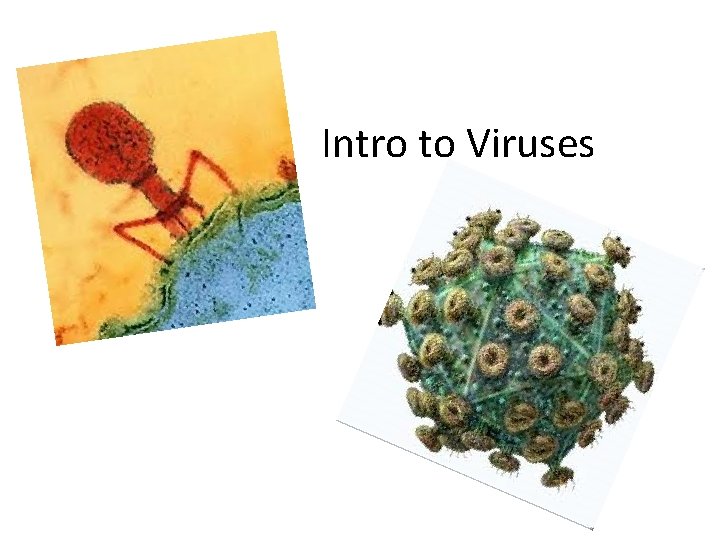
Intro to Viruses
Learning Objectives - Viruses • Be able to – Describe the basic structure of a virus – Explain why viruses are classified as non-living

What are Viruses? • Particles of nucleic acid, protein and in some cases, lipids • Reproduce by infecting living cells • Differ widely in terms of size and structure • Enter cells and use the machinery of the infected cell to produce more viruses
Are Viruses Living? • According to the online Merriam-Webster Dictionary life is – “an organismic state characterized by capacity for metabolism, growth, reaction to stimuli, and reproduction. ” • Viruses are NOT living things • Complicated assemblies of molecules (including proteins, nucleic acids) • Cannot do anything on their own – they MUST enter a living cell • Without cells, viruses would not be able to multiply

Virus Structure • Typical virus is made of – Core DNA or RNA – Surrounded by protein coat – (sometimes) contain layer of fat • Simplest viruses contain a few genes – Most complex can have > 100 genes
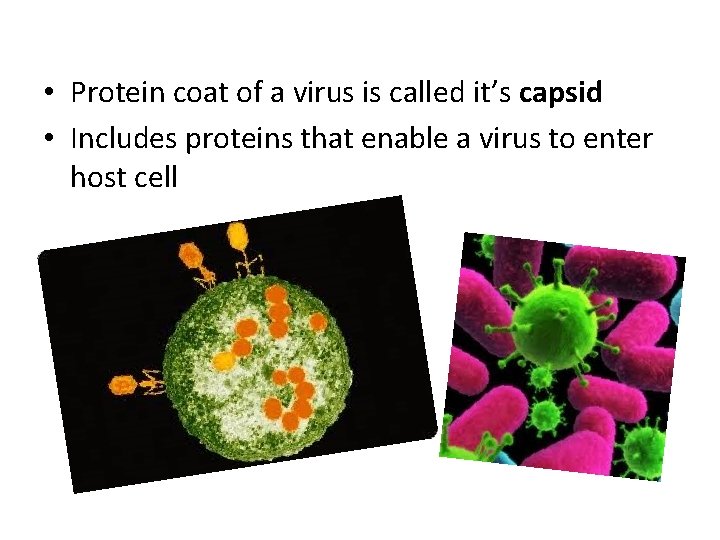
• Protein coat of a virus is called it’s capsid • Includes proteins that enable a virus to enter host cell
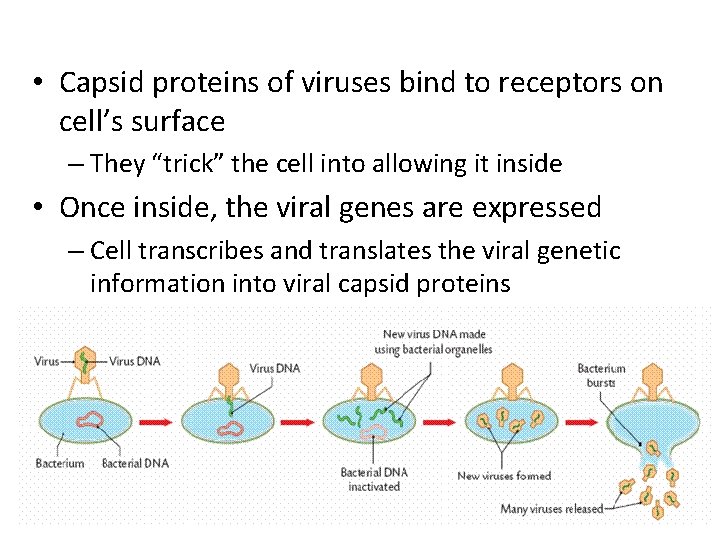
• Capsid proteins of viruses bind to receptors on cell’s surface – They “trick” the cell into allowing it inside • Once inside, the viral genes are expressed – Cell transcribes and translates the viral genetic information into viral capsid proteins
Retrovirus
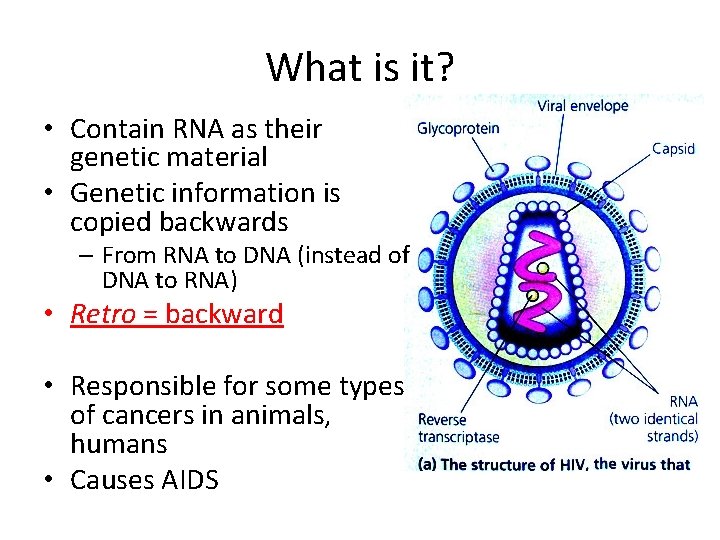
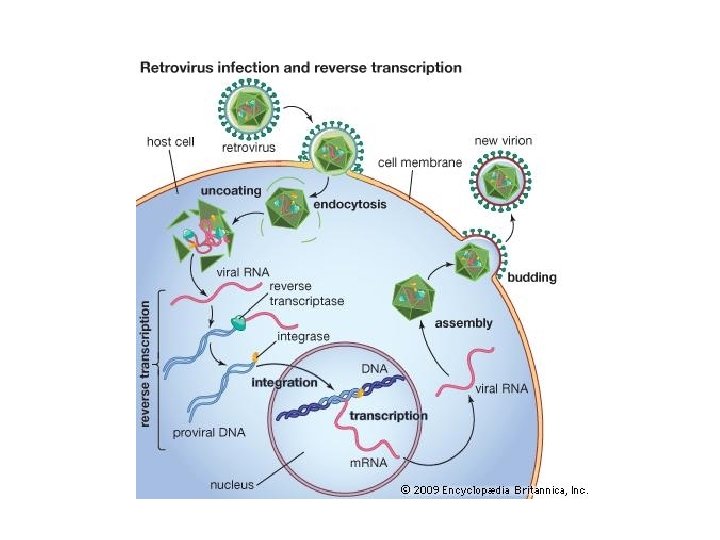
What is it? • Contain RNA as their genetic material • Genetic information is copied backwards – From RNA to DNA (instead of DNA to RNA) • Retro = backward • Responsible for some types of cancers in animals, humans • Causes AIDS
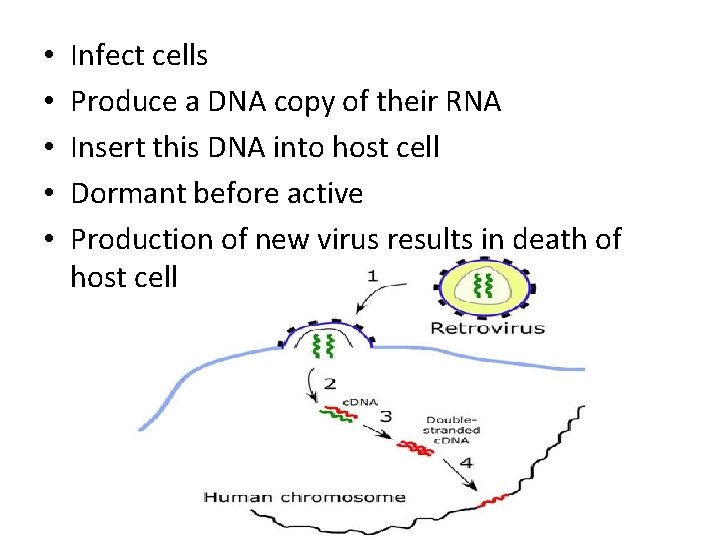
• • • Infect cells Produce a DNA copy of their RNA Insert this DNA into host cell Dormant before active Production of new virus results in death of host cell
- Slides: 11