
Intro to U S History U S Government
- Slides: 17
Intro to U. S. History U. S. Government Basics
U. S. Government �Democratic-Republic—Country in which the government is both a democracy and a republic (ultimately the power is derived from the people) The citizens have a voice through the right to vote The citizens have rights
Democracy vs. Republic �Democracy-a system of government by the whole population-where the populace decides policy initiatives. �Republic-a form of government in which the country/state is ruled by elected representatives (the elected body makes the laws or decides on the policies).
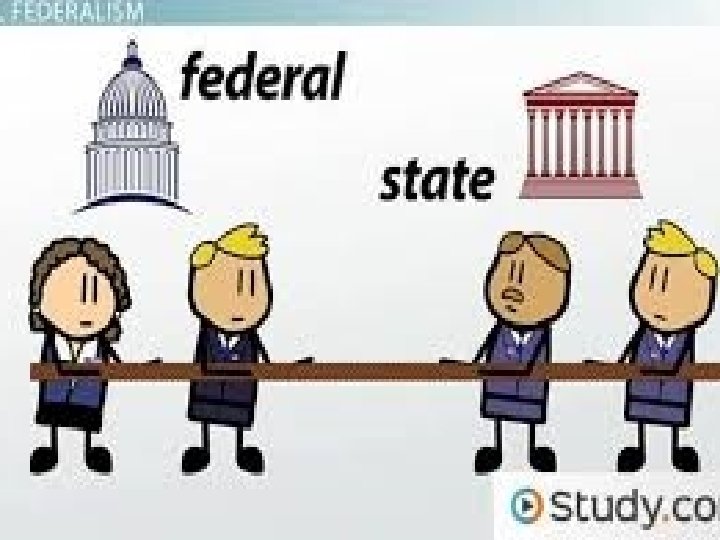
U. S. Constitution �The Constitution delegates powers of the Federal Government into branches and creates “Federalism” the balance of power between the Federal Govt’ and States’ governments It is the Supreme law of the land
Bill of Rights � The Bill of Rights are the first 10 Amendments to the U. S. Constitution. � The 1 st Amendment gives us “ 5 Freedoms”! � The 2 nd Amendment gives us the right to bear arms. � There are 5 Amendments that deal with the “rights of the accused”. � The 9 th Amendment states that citizens have more rights than are explicitly stated by the Constitution-and even though they are not listed they cannot be violated. � The 10 th Amendment states that powers not given to the Federal Government are reserved for the states. (Federalism)
Federalism �The divided power among the U. S. federal government and States’ governments �Federalism creates a balance of power; in which the central government and states’ governments should balance in power � 10 th Amendment to the Constitution
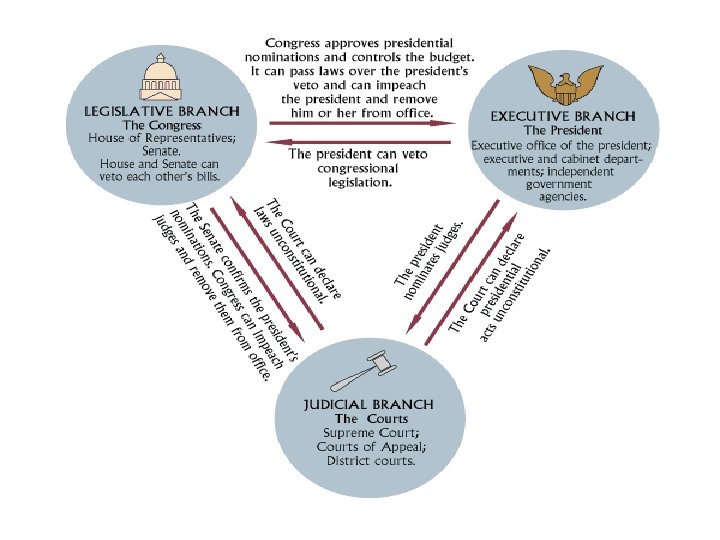
The U. S. Federal Government � 3 branches of Fed. Government The Executive Branch (President/Vice President/and Presidential Cabinet) The Judicial Branch (Supreme Court) The Legislative Branch (Congress)
Checks and Balances �Checks and Balances-where each branch of government is checked by another; not allowing one branch to become too powerful � Examples of checks and balances-� Congress writes laws and The Supreme Court reviews and determines the constitutionality of the law. � The Senate must approve President’s appointees for his/her Presidential Cabinet and Supreme Court. � President may veto a law passed by Congress.
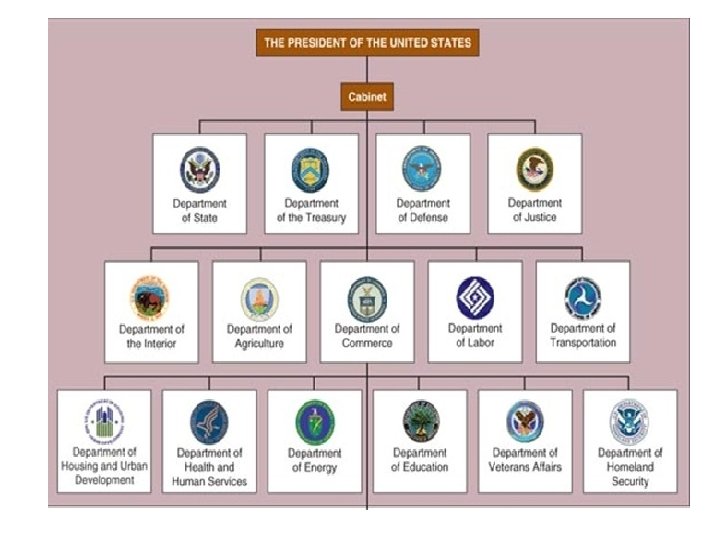
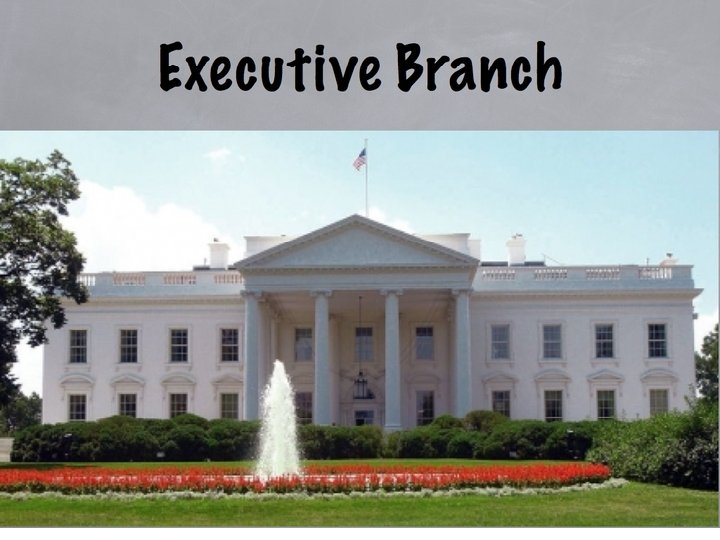
The Role of the Executive Branch �Who: President, Vice President, & Cabinet The President is head of state, commander in chief (over the armed forces with the responsibility of protecting the U. S. )-THE EXECUTIVE-can issue an Executive Order-which has the force of law Vice Pres. Is Presiding Officer of Senate and advisor to President The Cabinet members are appointed by the Pres. (and approved by the Senate-**Checks and Balances!!!)-They act as his advisors and heads of departments for their specialty areas. Ex: Secretary of Homeland Security Exec. Branch
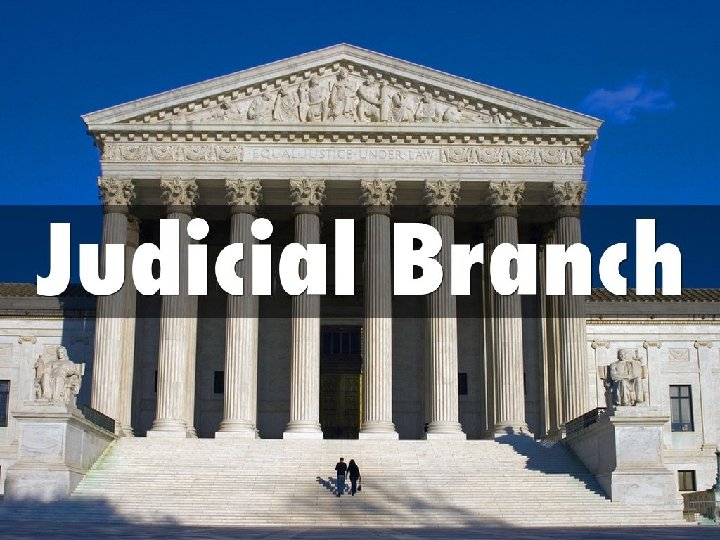
The Role of the Judicial Branch �Who: A system of federal judges and courts- the highest of those courts is the Supreme Court The Supreme Court reviews laws to determine constitutionality-”judicial review” Hear cases that have made it through the states’ court systems without an unchallenged decision Ex: Brown v. Board of Education Topeka, KS The Supreme Court
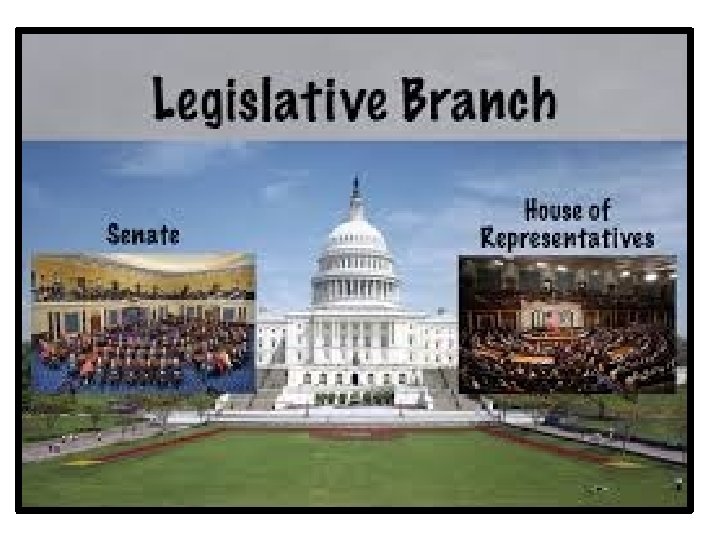
The Role of the Legislative Branch �Who: Congress-It is bicameral (meaning two houses)-The lower house-The House of Representatives and the higher house is the Senate �Congress makes laws- “legislate” and write amendments to the constitution Laws must pass through House of Representatives and Senate Laws can be vetoed by the President (Checks and Balances!!!) Congress