Intro to the Epic The Iliad The Odyssey
- Slides: 15
Intro to the Epic The Iliad The Odyssey
Characteristics of Epics § Deal with the three major themes in lit – Love (or lust) – Death – God (the divine or absence thereof) § High Seriousness/Elevated style § Long and complex
Secondary Characteristics § § § § § Hero of imposing stature Vast setting Supernatural forces Action requires great deeds Catalogues of ships and soldiers Extended formal speeches Objective narration Epic similes Invocation of muse Begins “in medias res”
Types of Epics § Primary Epics – Begins as oral tradition – Verse (sacred and easy to remember) – Stock phrasing to fit meter § “Hector, breaker of horses” § “Rhododaktulos Eos” – Epithets – Metrical patterns for freeform performance § Blues vs. classical
Types of Epics § Secondary Epics – Written to mimic format of primary epics – Composed in writing rather than orally – Virgil’s Aeneid is prototype
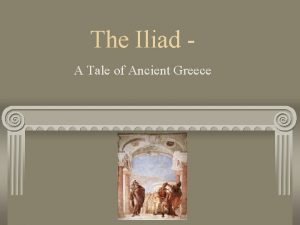
The Iliad § § MENIN AEIDE THEA! About Mycenaean Greece c. 2000 BC Written down post dark age c. 750 BC Author likely a rhapsode w/ literate relative – Oral culture disappears w/ in one generation of advent of literacy in a society – Written down at the transition period from oral to written culture
Greek Culture § Shame rather than Guilt culture – “Time” and “Kleos” = “Honor” and “Glory” § Armor as outward symbol of time, kleos, and identity § Achilles and Patroclus – You are who people think you are – Disgrace = actual injury
Arete § Central tenant of culture is search for Arete – Excellence or greatness – Achilles in war, Helen in beauty, Odysseus in oration – Achieving arete awarded by “time” and “kleos” § “Time” and “kleos” can be achieved by social position as well as arete § “Not to be tossed aside, the gifts of the gods. ” -Paris
Arete in The Iliad § Some caution regarding relentless pursuit of arete – Hector and Andromache § § Helmet Family choices § Priam and pity “Though much is taken, much abides; and though / We are not now that strength which in old days / Moved earth and heaven; that which we are, we are. ” Alfred, Lord Tennyson “Ulysses” 65 -67
Iliad Discussion Questions § What views does Iliad present on the three great themes? § In what way is the ethical vision of Iliad similar to our own? § What does Homer seem to admire about the main characters? § Why are the Trojans generally more sympathetic characters than the Greeks?
Iliad Discussion Questions 2 § What is Homer’s attitude toward war? § To what extent does The Iliad support the Marxian assertion that literature works to support the ruling class of whatever culture it speaks for?
The Iliad’s Wife § Samuel Butler characterized The Odyssey as a distinctly feminine perspective § Settings – Imaginary/fantastic – Domestic and dominated by women § Focus on “nostos” (homecoming) not rage § Athena rather than Zeus the divinity of choice § Interior “arete” rather than exterior – Mental and moral excellence
Extended Arete § In The Iliad arete only achieved by warriors § The Odyssey shows arete in all Greeks – Women (Penelope) – Youth (Telemachus) – Peasants (Eumaios) – Elderly (Eurycleia) – Animals? (Argos)
New focus on “Nomos” § “Nomos” = “custom” or “proper behavior” § Violation of “nomos” makes “arete” impossible – Suitors (young warriors) – “arete” found in others in Ithaca instead – Supposed to respect host, be kind to strangers and wayfarers
Odysseus as the Greek Ideal § § § Warrior Orator Thinker Husband Worker