
Intro to the Bible Why do Jews celebrate
Intro to the Bible
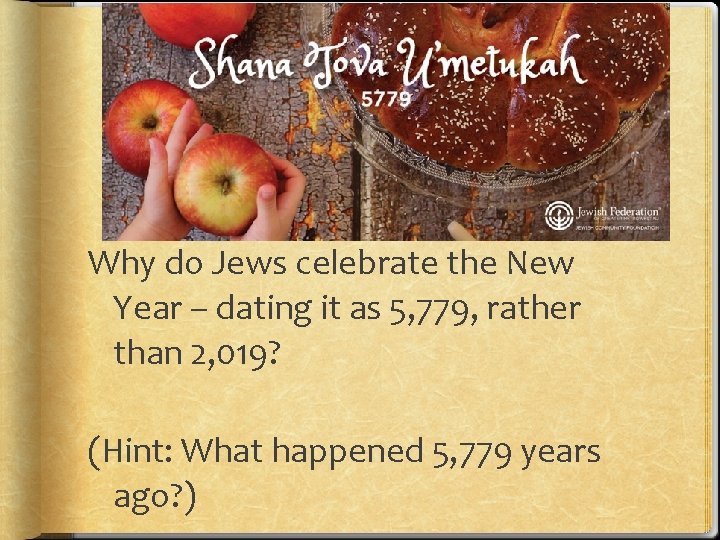
Why do Jews celebrate the New Year – dating it as 5, 779, rather than 2, 019? (Hint: What happened 5, 779 years ago? )
Goal: To understand the difference between a fundamentalist and contextualist understanding of Scripture. To see how Catholics and SOME Protestant churches differ in this regard. To see how time, place, and audience are key factors in understanding an author's intent.
Fundamentalism vs. Contextualism • The fundamentalist approach to Scripture is that the Bible is the perfect (in every way) word of God: believing people make mistakes, God does not. • People who are fundamentalists believe that if scientists or historians ever disagree with the Bible, they must be wrong. To them, the Bible teaches theology, history, and science.
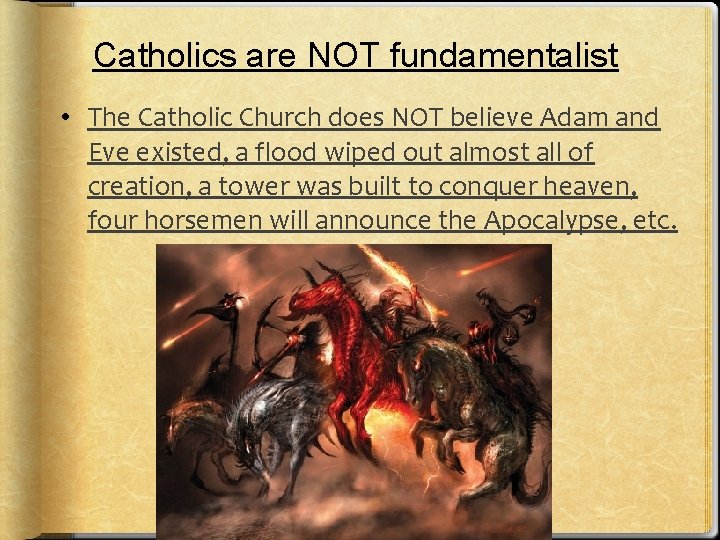
Catholics are NOT fundamentalist • The Catholic Church does NOT believe Adam and Eve existed, a flood wiped out almost all of creation, a tower was built to conquer heaven, four horsemen will announce the Apocalypse, etc.
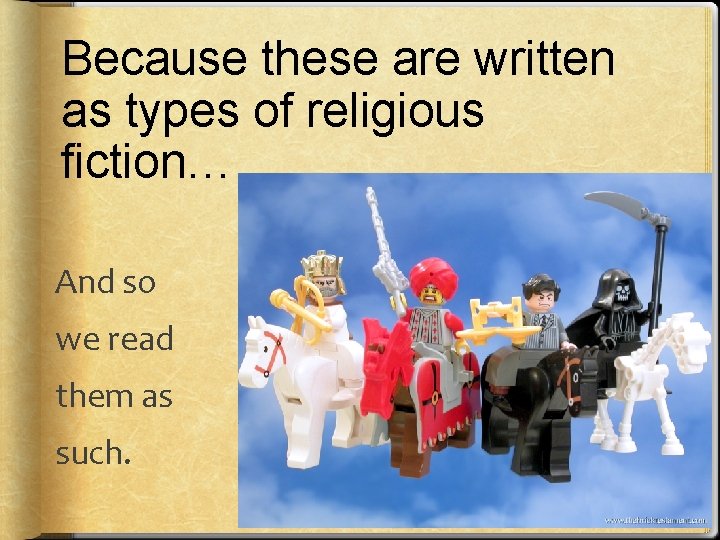
Because these are written as types of religious fiction… And so we read them as such.
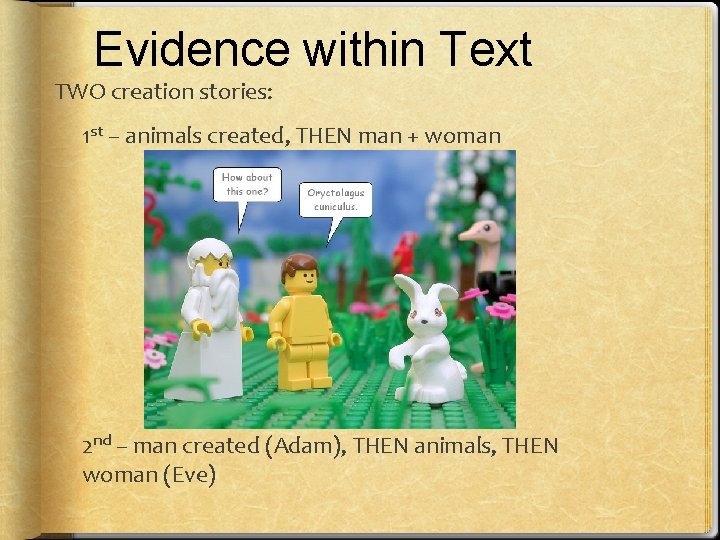
Evidence within Text TWO creation stories: 1 st – animals created, THEN man + woman 2 nd – man created (Adam), THEN animals, THEN woman (Eve)
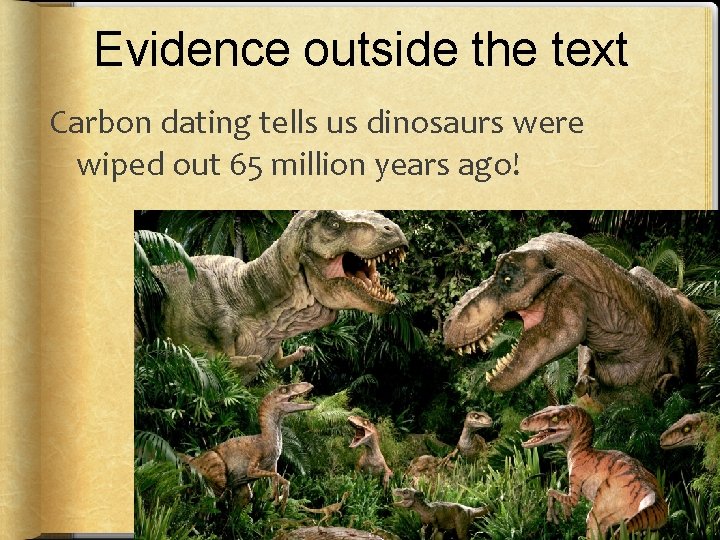
Evidence outside the text Carbon dating tells us dinosaurs were wiped out 65 million years ago!
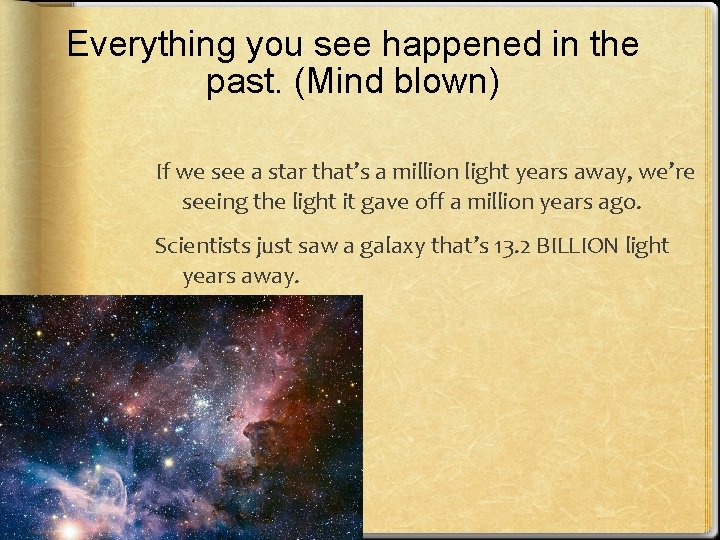
Everything you see happened in the past. (Mind blown) If we see a star that’s a million light years away, we’re seeing the light it gave off a million years ago. Scientists just saw a galaxy that’s 13. 2 BILLION light years away.
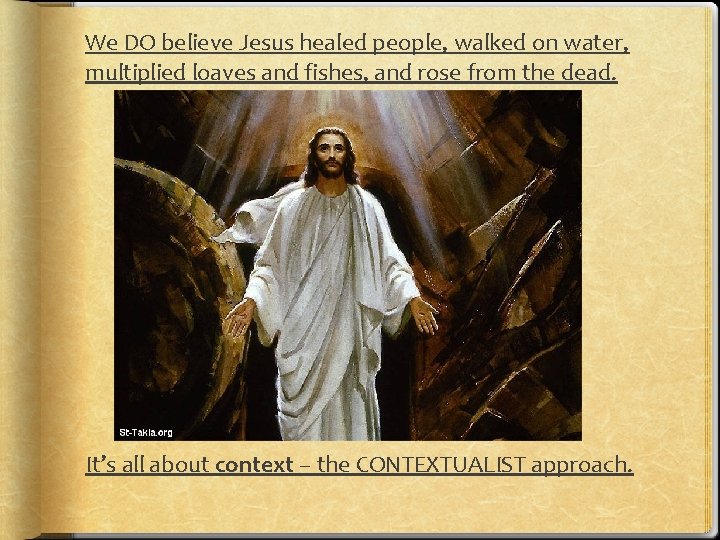
We DO believe Jesus healed people, walked on water, multiplied loaves and fishes, and rose from the dead. It’s all about context – the CONTEXTUALIST approach.

Divine Inspiration and Biblical Innerancy • Catholics believe the Bible is inspired by GOD and therefore free from error. • We believe it is error-proof in theological truths necessary for salvation. • Human authors also brought their own knowledge, creativity, writing style, culture, etc.
Therefore, it is crucially important to understand the culture, literary style, etc. , in which it was written.
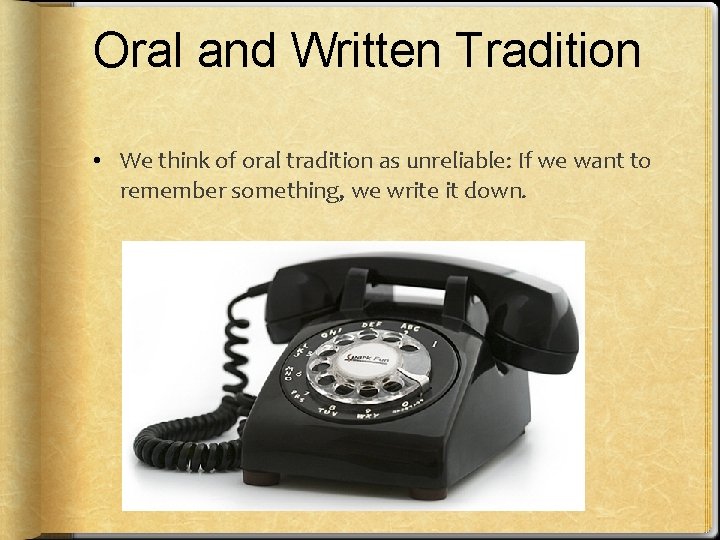
Oral and Written Tradition • We think of oral tradition as unreliable: If we want to remember something, we write it down.

Oral tradition can be incredibly reliable: in the ancient world, people memorized epic poems thousands of lines long. While the game of Telephone illustrates how messages can change passing from one person to another, a message taught to a community, and remembered communally, preserves accuracy.
Material sometimes written decades, even centuries after events This can affect the author’s perspective.
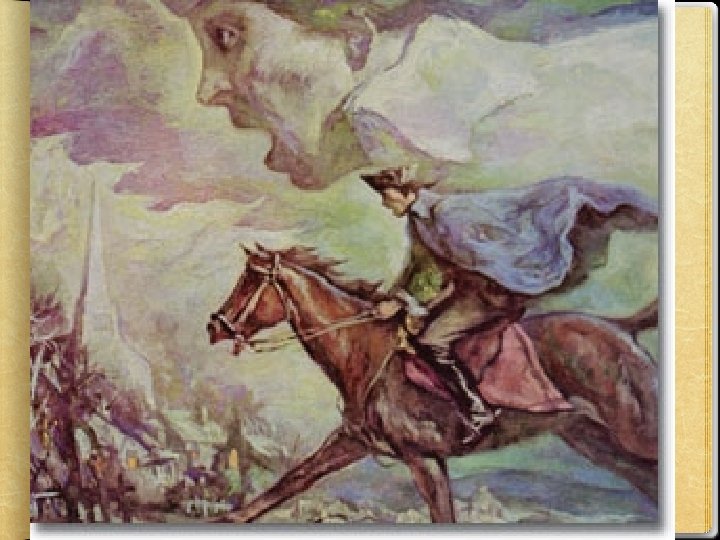
Why did Longfellow write this? So through the night rode Paul Revere; And so through the night went his cry of alarm To every Middlesex village and farm, --A cry of defiance, and not of fear, A voice in the darkness, a knock at the door, And a word that shall echo for evermore! For, borne on the night-wind of the Past, Through all our history, to the last, In the hour of darkness and peril and need, The people will waken and listen to hear The hurrying hoof-beats of that steed, And the midnight message of Paul Revere. Why did he promote courage as a necessity for freedom in 1861?
WHO it is written to (not just when) can also influence themes
Scholars believe LUKE's audience was somewhat wealthy. Wealth and poverty are a HUGE focus of his Gospel.
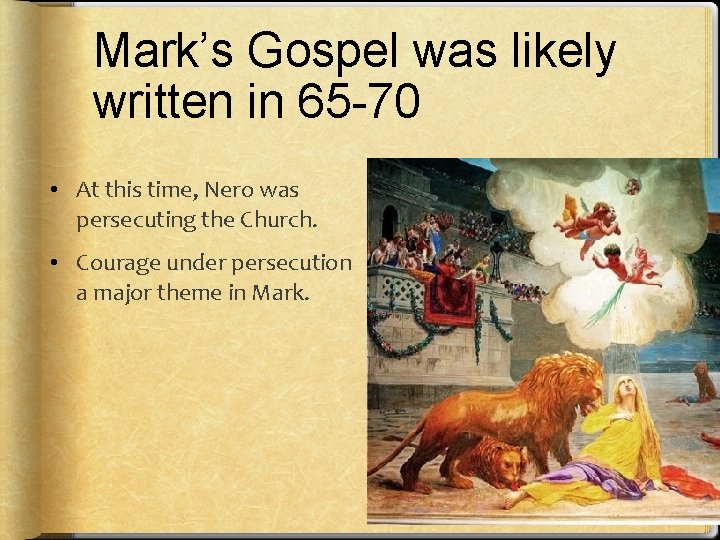
Mark’s Gospel was likely written in 65 -70 • At this time, Nero was persecuting the Church. • Courage under persecution a major theme in Mark.
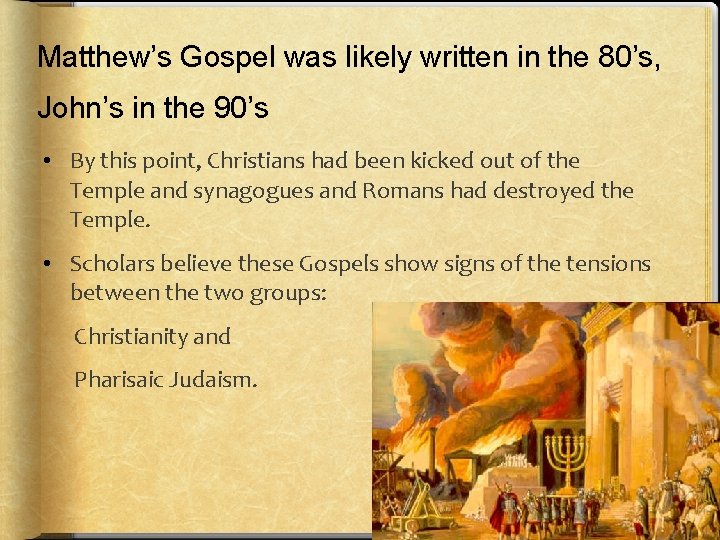
Matthew’s Gospel was likely written in the 80’s, John’s in the 90’s • By this point, Christians had been kicked out of the Temple and synagogues and Romans had destroyed the Temple. • Scholars believe these Gospels show signs of the tensions between the two groups: Christianity and Pharisaic Judaism.
Biblical Exegesis • Thoughtful and rigorous interpretation of the Scriptures and what God is communicating to us through His Words. • Experts at the culture of the time the Bible was written, the language, etc.
Literary Analysis & Redaction • You wouldn’t read a bio of Abe Lincoln and a Harry Potter book the same way: similarly, in Scripture, there are many types of literature. How does the TYPE dictate the reader’s approach? • Redaction – trying to analyze WHAT the author did with his source. – Often, this is difficult to discern. With Mt. and Lk. , almost all scholars believe Mk. was their primary source. – Also, HOW has the author arranged material, what is the author’s purpose, what are his main ideas, etc.
Old Testament Torah “Law/Teachings”/Pentateuch “Five books”: First 5 books : Creation, Covenants, Instruction and Law (613 of them) Jesus most often quoted the Torah Traditionally attributed to Moses (not the actual author)
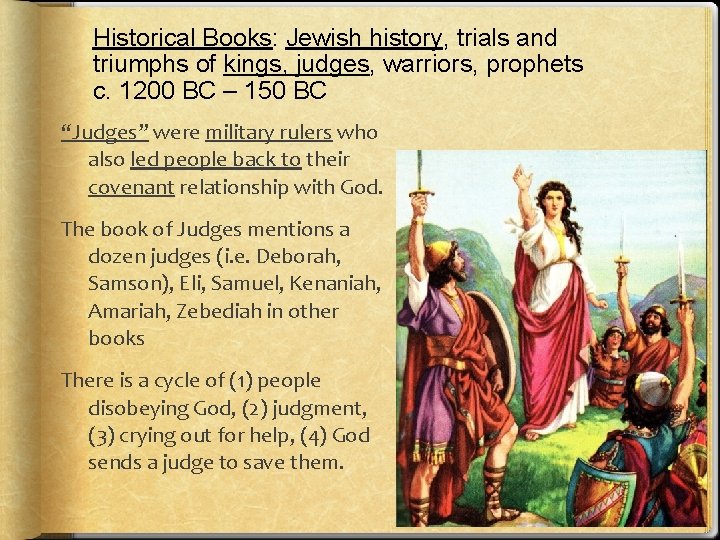
Historical Books: Jewish history, trials and triumphs of kings, judges, warriors, prophets c. 1200 BC – 150 BC “Judges” were military rulers who also led people back to their covenant relationship with God. The book of Judges mentions a dozen judges (i. e. Deborah, Samson), Eli, Samuel, Kenaniah, Amariah, Zebediah in other books There is a cycle of (1) people disobeying God, (2) judgment, (3) crying out for help, (4) God sends a judge to save them.
Who is the first King of Israel?
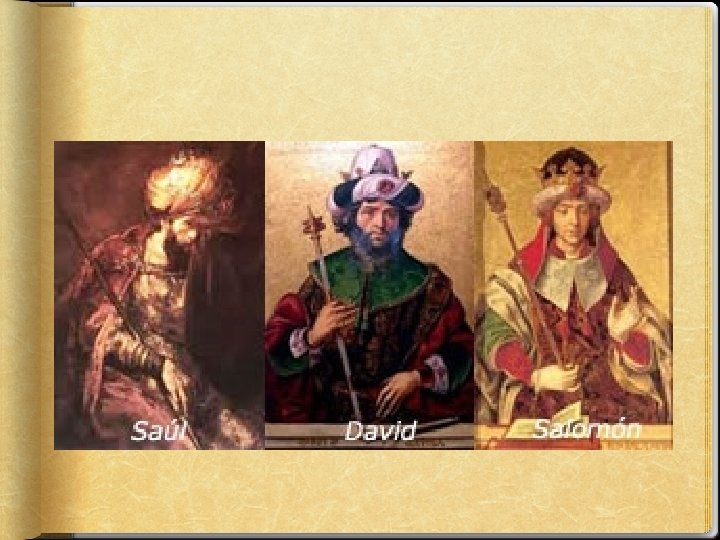
Wisdom: 7 books including Psalms, Proverbs and the Book of Wisdom Psalms: 150 psalms about peoples relationships with God – poetry praising God Wisdom literature also filled with practical advice for being wise, patient, honest, humble, respecting elders, self-control, etc. Psalms were traditionally ATTRIBUTED to King David, book of Wisdom to King Solomon (they probably didn’t write them).
Prophetic Books: 18 books- remembrance of the prophets and their writing • Prophets are said to “comfort the afflicted and afflict the comfortable” • They offer hope to those suffering, warn of judgment to those sinning Major prophets include Isaiah, Ezekiel, Jeremiah, and Daniel

12 Minor prophets
New Testament The heart of the New Testament is the Gospels
THE GOSPELS
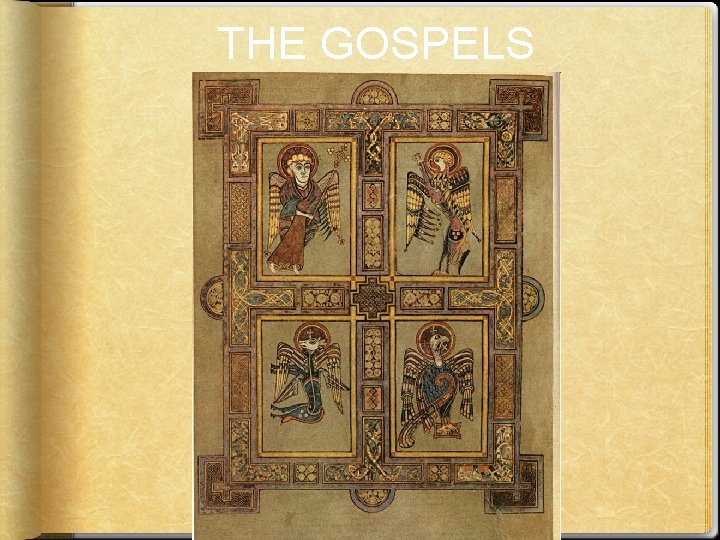
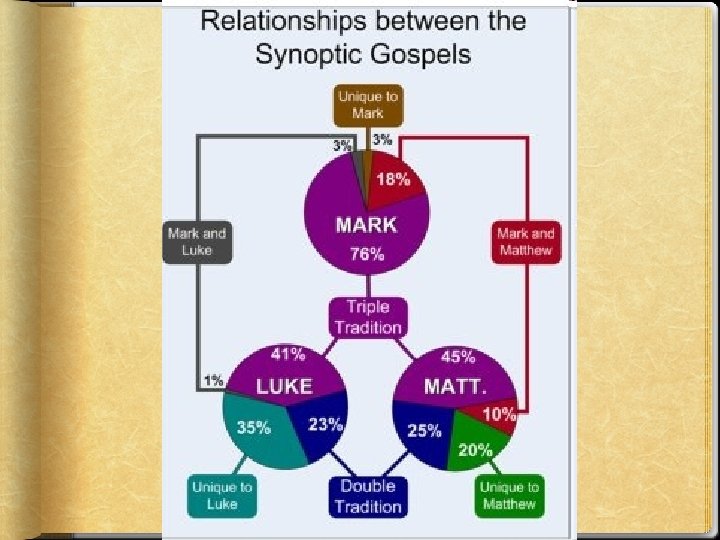
FOUR GOSPELS Matthew (Mt. ), Mark (Mk. ), Luke (Lk. ), and John (Jn. ) are the four CANONICAL Gospels (Dozens were written) They tell of Jesus’ life, death, and resurrection Mt. , Mk. , and Lk. are known as the SYNOPTIC (“One Eye”) Gospels The Synoptics not only have a similar style, but tell many of the SAME stories in the SAME order.
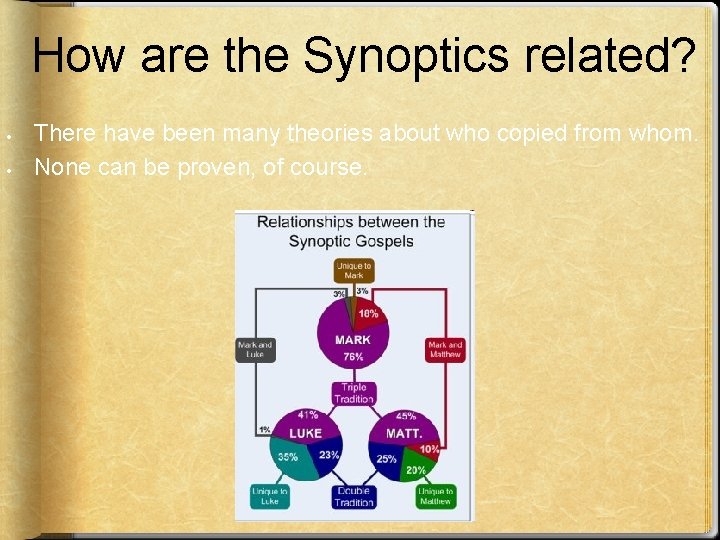
How are the Synoptics related? There have been many theories about who copied from whom. None can be proven, of course.
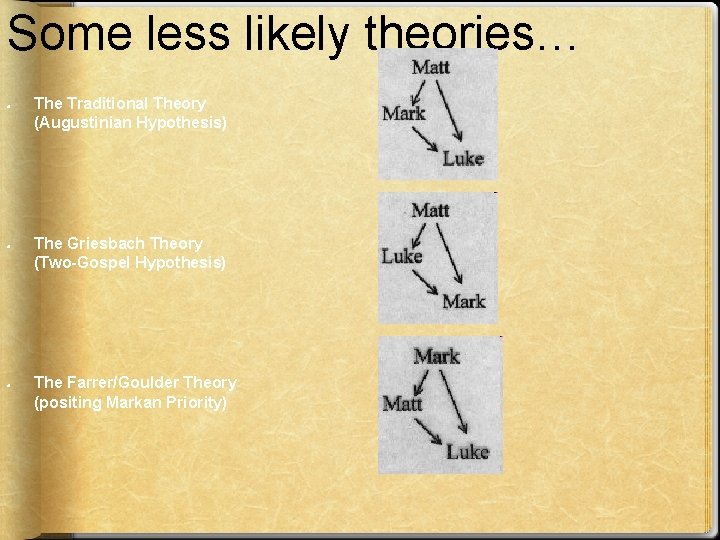
Some less likely theories… The Traditional Theory (Augustinian Hypothesis) The Griesbach Theory (Two-Gospel Hypothesis) The Farrer/Goulder Theory (positing Markan Priority)
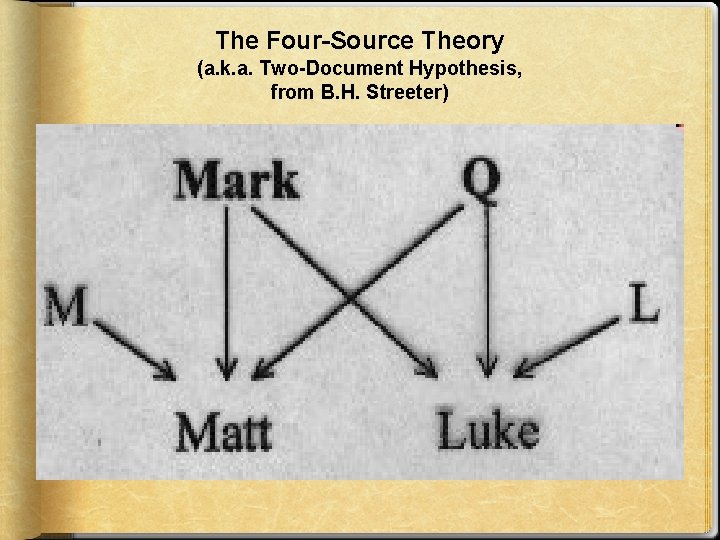
The Four-Source Theory (a. k. a. Two-Document Hypothesis, from B. H. Streeter)
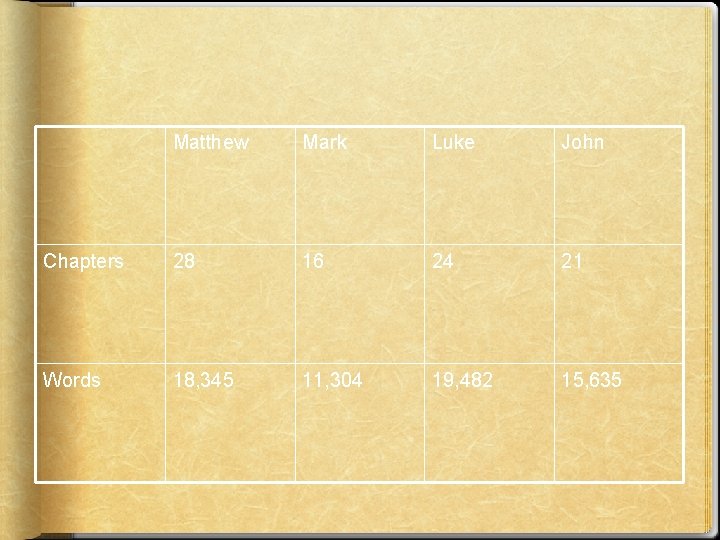
Matthew Mark Luke John Chapters 28 16 24 21 Words 18, 345 11, 304 19, 482 15, 635
Acts: Sequel to Luke’s Gospel 1 st half is about the Church community (Peter, James, John, Stephen, Mary) 2 nd half follows Paul’s journey
Letters: writings to the early church There are 21 letters, 13 of which are attributed to Paul Probably half of those 13 were actually written by him Some answer theological questions, some give advice for Christian living, encouragement during persecution Because they are written to a SPECIFIC audience for a SPECIFIC reason, knowing that can be crucial to understanding some of the letters.
Book of Revelation: The last book of the New Testament Apocalypse: meant to bring hope to the oppressed VERY symbolic, like Genesis Spoke about the political situation in the Roman empire, symbolically, not the world’s end.
Ch. 1 Vocab • • • Adam and Eve Theosis Prophets Torah Image and Likeness Fundamentalists Acts of the Apostles “In the beginning” Psalms Revelation Synoptics
- Slides: 43