
Intro to Stream Monitoring Introduccin al seguimiento de
- Slides: 9
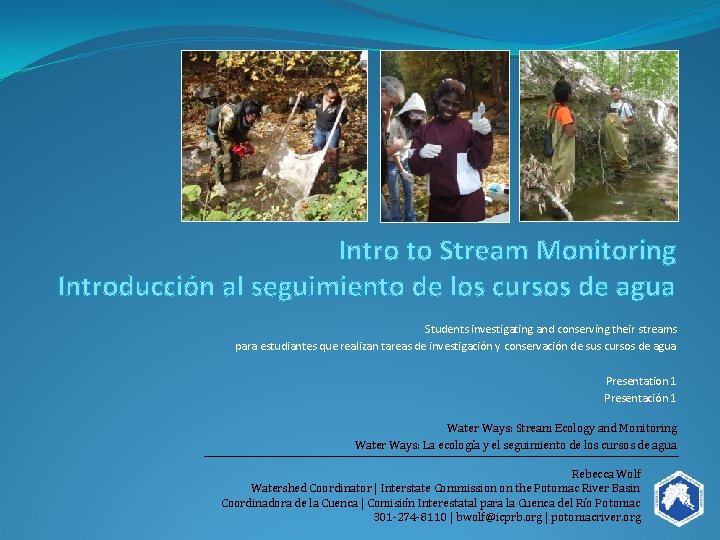
Intro to Stream Monitoring Introducción al seguimiento de los cursos de agua Students investigating and conserving their streams para estudiantes que realizan tareas de investigación y conservación de sus cursos de agua Presentation 1 Presentación 1 Water Ways: Stream Ecology and Monitoring Water Ways: La ecología y el seguimiento de los cursos de agua Rebecca Wolf Watershed Coordinator | Interstate Commission on the Potomac River Basin Coordinadora de la Cuenca | Comisión Interestatal para la Cuenca del Río Potomac 301 -274 -8110 | bwolf@icprb. org | potomacriver. org
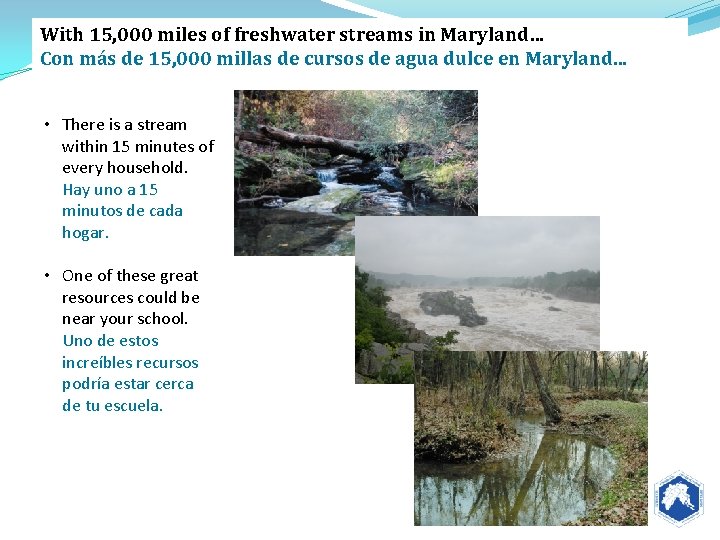
With 15, 000 miles of freshwater streams in Maryland… Con más de 15, 000 millas de cursos de agua dulce en Maryland. . . • There is a stream within 15 minutes of every household. Hay uno a 15 minutos de cada hogar. • One of these great resources could be near your school. Uno de estos increíbles recursos podría estar cerca de tu escuela.
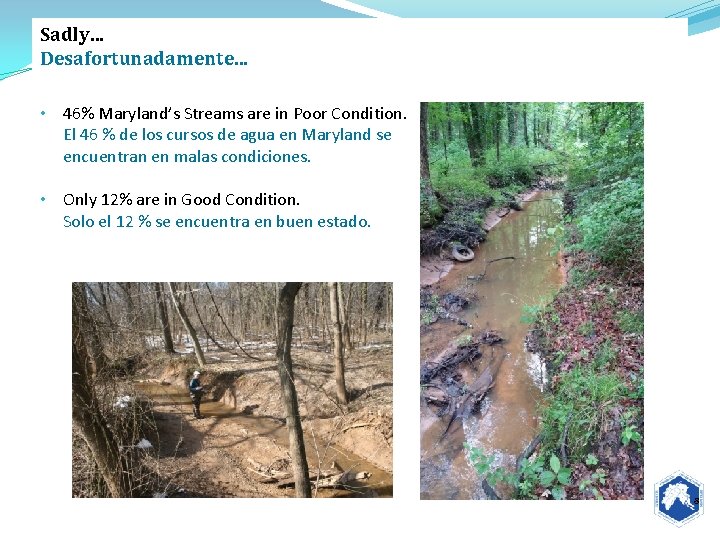
Sadly… Desafortunadamente. . . • 46% Maryland’s Streams are in Poor Condition. El 46 % de los cursos de agua en Maryland se encuentran en malas condiciones. • Only 12% are in Good Condition. Solo el 12 % se encuentra en buen estado. 8
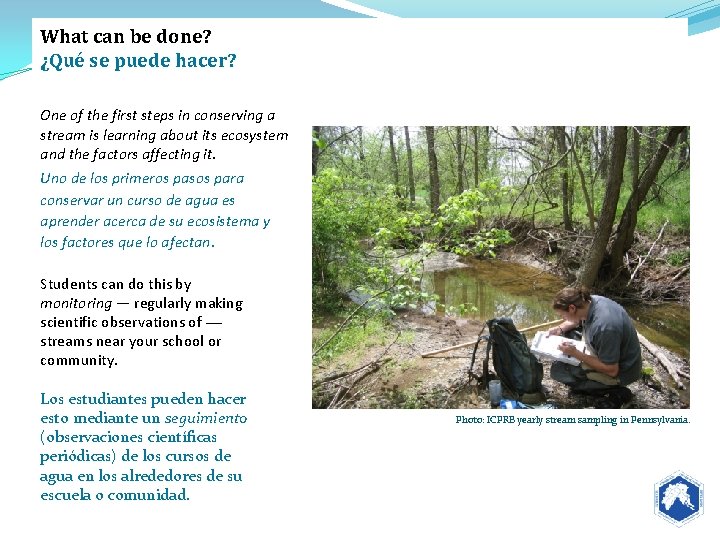
What can be done? ¿Qué se puede hacer? One of the first steps in conserving a stream is learning about its ecosystem and the factors affecting it. Uno de los primeros pasos para conservar un curso de agua es aprender acerca de su ecosistema y los factores que lo afectan. Students can do this by monitoring ― regularly making scientific observations of ― streams near your school or community. Los estudiantes pueden hacer esto mediante un seguimiento (observaciones científicas periódicas) de los cursos de agua en los alrededores de su escuela o comunidad. Photo: ICPRB yearly stream sampling in Pennsylvania.
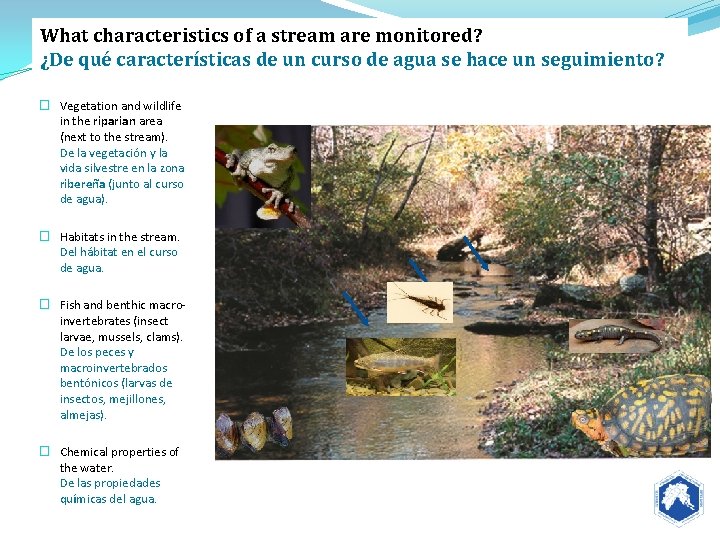
What characteristics of a stream are monitored? ¿De qué características de un curso de agua se hace un seguimiento? � Vegetation and wildlife in the riparian area (next to the stream). De la vegetación y la vida silvestre en la zona ribereña (junto al curso de agua). � Habitats in the stream. Del hábitat en el curso de agua. � Fish and benthic macroinvertebrates (insect larvae, mussels, clams). De los peces y macroinvertebrados bentónicos (larvas de insectos, mejillones, almejas). � Chemical properties of the water. De las propiedades químicas del agua.
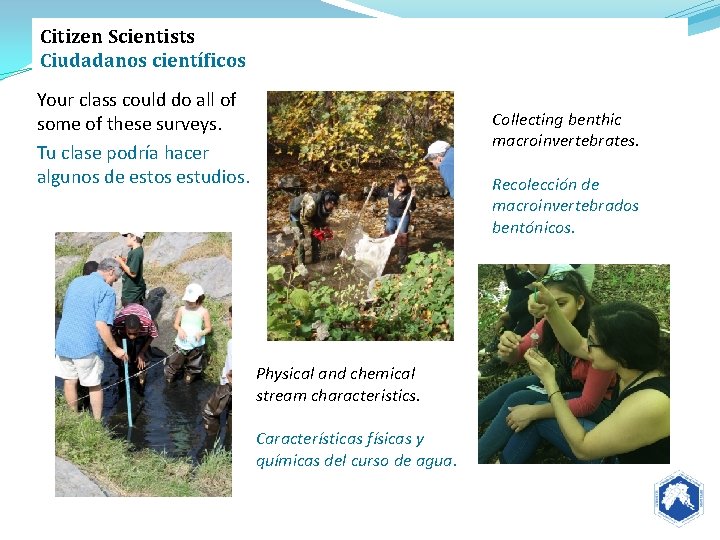
Citizen Scientists Ciudadanos científicos Your class could do all of some of these surveys. Tu clase podría hacer algunos de estos estudios. Collecting benthic macroinvertebrates. Recolección de macroinvertebrados bentónicos. Physical and chemical stream characteristics. Características físicas y químicas del curso de agua.
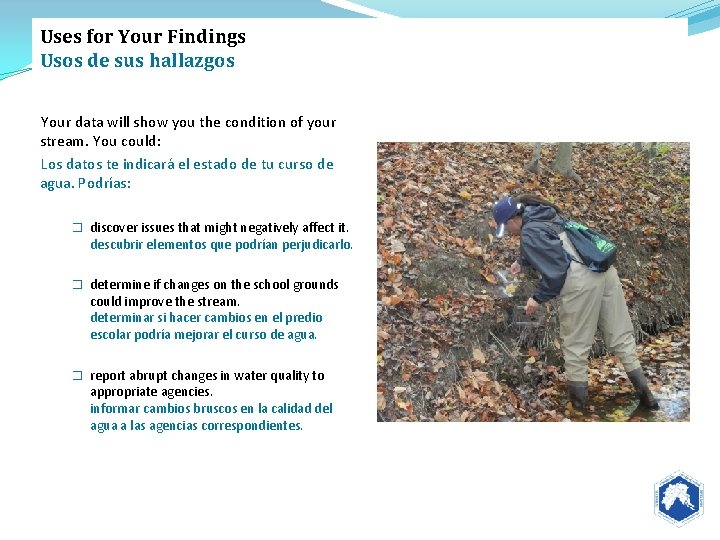
Uses for Your Findings Usos de sus hallazgos Your data will show you the condition of your stream. You could: Los datos te indicará el estado de tu curso de agua. Podrías: � discover issues that might negatively affect it. descubrir elementos que podrían perjudicarlo. � determine if changes on the school grounds could improve the stream. determinar si hacer cambios en el predio escolar podría mejorar el curso de agua. � report abrupt changes in water quality to appropriate agencies. informar cambios bruscos en la calidad del agua a las agencias correspondientes.
Setting Up Your Stream Studies Cómo organizar los estudios de tu curso de agua Discuss these questions to plan your stream research: Comenta estas preguntas para planificar la investigación de tu curso de agua: • How frequently should we monitor? ¿Con qué frecuencia deberíamos hacer el seguimiento? • Would different types of monitoring (chemical, physical, and biological) be done with the same frequency (the same number of times/year)? ¿Deberíamos hacer los distintos tipos de seguimiento (químicos, físicos y biológicos) con la misma frecuencia (la misma cantidad de veces al año)? • What can we learn from monitoring once? ¿Qué podemos saber con un solo seguimiento? • What can we learn from monitoring more than once a year? ¿Qué podemos saber con más de un seguimiento al año? • How could it be helpful to monitor yearly? ¿Qué utilidad tendría hacer un seguimiento anual? • What else do I need to know to answer these questions? ¿Qué más necesito saber para responder estas preguntas? • Are certain times of year better for some of the stream studies? ¿Existen ciertos períodos del año más propicios para hacer algunos de los estudios del curso de agua? • Are there any unusual challenges to collecting samples at our stream site? If so, what are possible solutions? ¿Existe alguna dificultad fuera de lo común para recolectar muestras en nuestro curso de agua? Si la hay, ¿cuáles son las posibles soluciones?
Vocabulary Vocabulario � Benthic macroinvertebrates: organisms without backbones that are visible to the eye (less than 2 inches long), and live on the bottoms and underwater surfaces of lakes, rivers, and streams. Macroinvertebrados bentónicos: organismos invertebrados visibles a simple vista (inferiores a 2 pulgadas de largo) que habitan en el fondo y en los sustratos sumergidos de lagos, ríos y arroyos. � Monitoring: regularly making observations with field methods and instruments and recording those observations. Seguimiento: hacer observaciones de forma periódica con instrumentos y métodos de campo y llevar un registro de esas observaciones. � Riparian: relating to or situated on the banks of a river. Ribereño(a): relativo a las orillas de un río o situado en ellas.