
Intro to Music History Intro to Music History


- Slides: 40
Intro to Music History
Intro to Music History Click through this Power. Point to learn about the periods of music history. Complete the worksheet as you go and turn in when finished.
What is Music ? Ø an artistic form of auditory communication incorporating instrumental or vocal tones in a structured and continuous manner. Ø IN PLAIN WORDS…. the sounds produced by singers or musical instruments.
Origins of Music History ü ü There are six periods of music Each music period has a particular style of music that has greatly contributed to what music is today
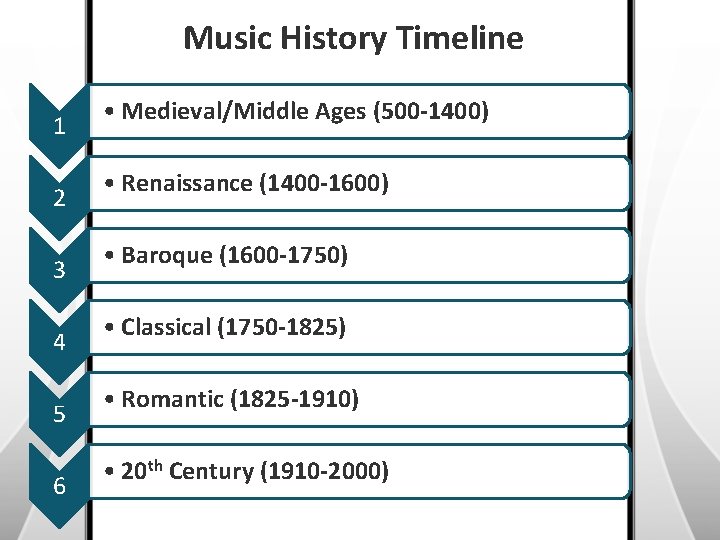
Music History Timeline 1 2 3 4 5 6 • Medieval/Middle Ages (500 -1400) • Renaissance (1400 -1600) • Baroque (1600 -1750) • Classical (1750 -1825) • Romantic (1825 -1910) • 20 th Century (1910 -2000)
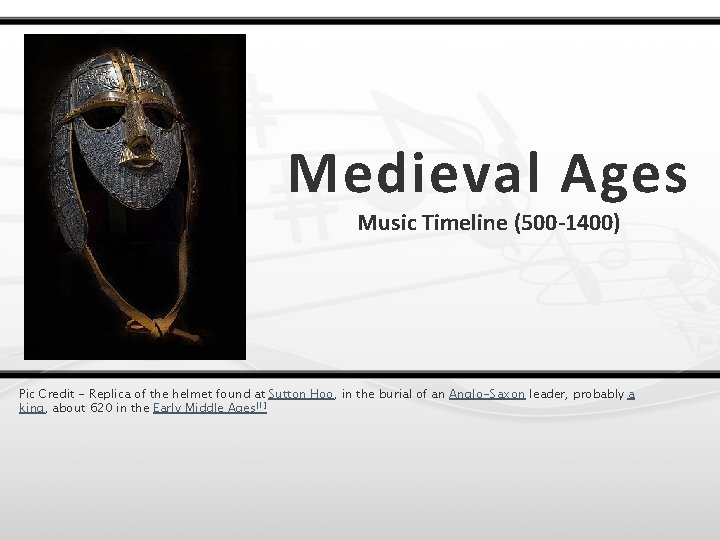
Medieval Ages Music Timeline (500 -1400) Pic Credit - Replica of the helmet found at Sutton Hoo, in the burial of an Anglo-Saxon leader, probably a king, about 620 in the Early Middle Ages[1]
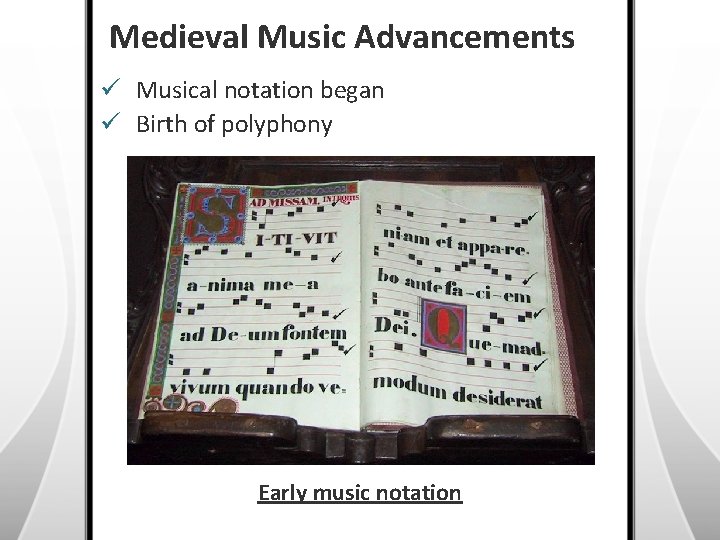
Medieval Music Advancements ü Musical notation began ü Birth of polyphony Early music notation
Monophonic and Polyphonic ü Music of this time is categorized into monophonic and polyphonic styles ü Monophonic means one note at a time ü Polyphonic means two or more different notes at the same time.
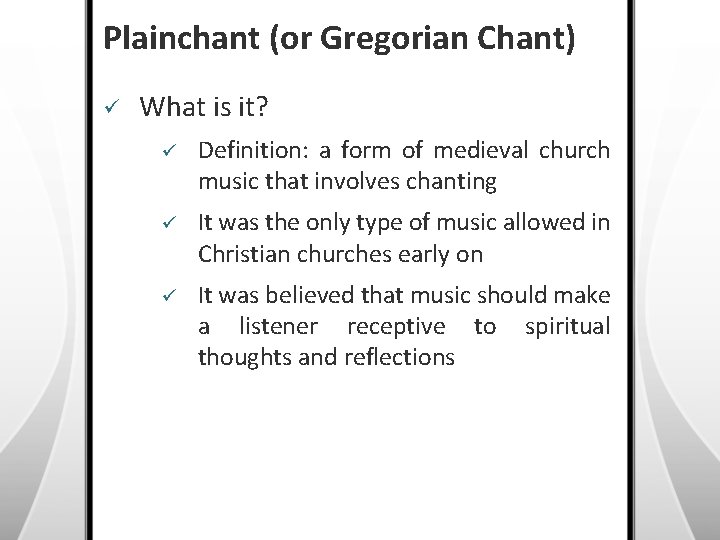
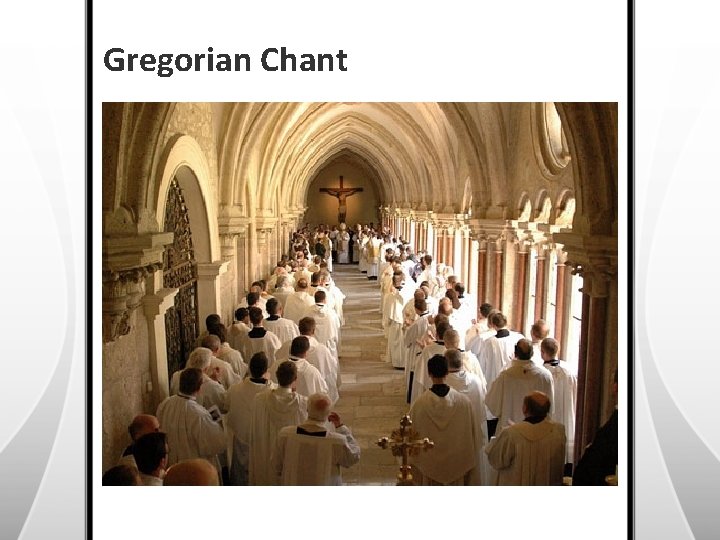
Plainchant (or Gregorian Chant) ü What is it? ü Definition: a form of medieval church music that involves chanting ü It was the only type of music allowed in Christian churches early on ü It was believed that music should make a listener receptive to spiritual thoughts and reflections
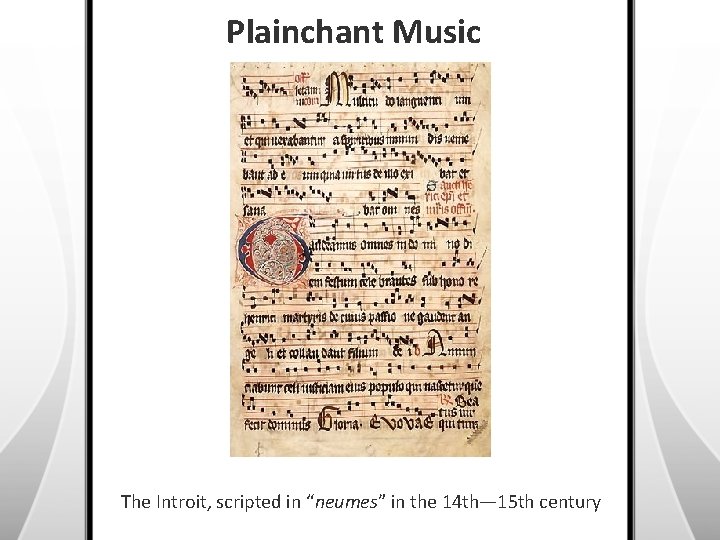
Plainchant Music The Introit, scripted in “neumes” in the 14 th— 15 th century
Gregorian Chant
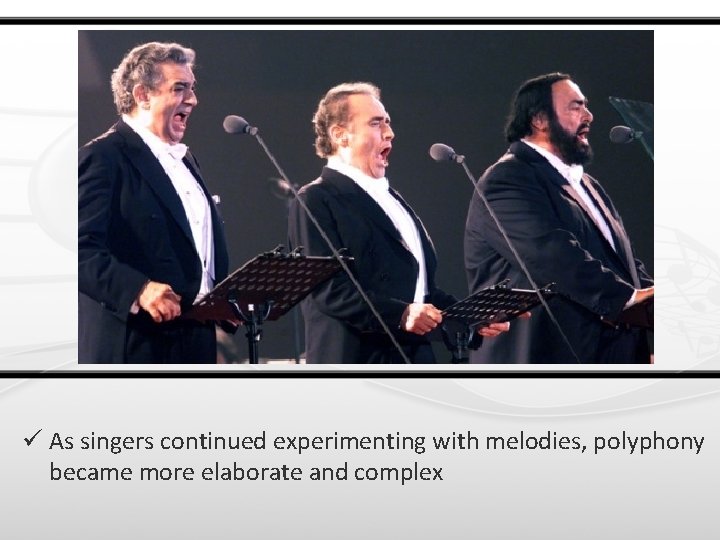
ü As singers continued experimenting with melodies, polyphony became more elaborate and complex
Major instrument of the time: The Lute ü is shaped like a pear a short neck, a sound hole carved with a rose pattern ü ü ü strings that varied in numbers early lute is the peg box which was angled back
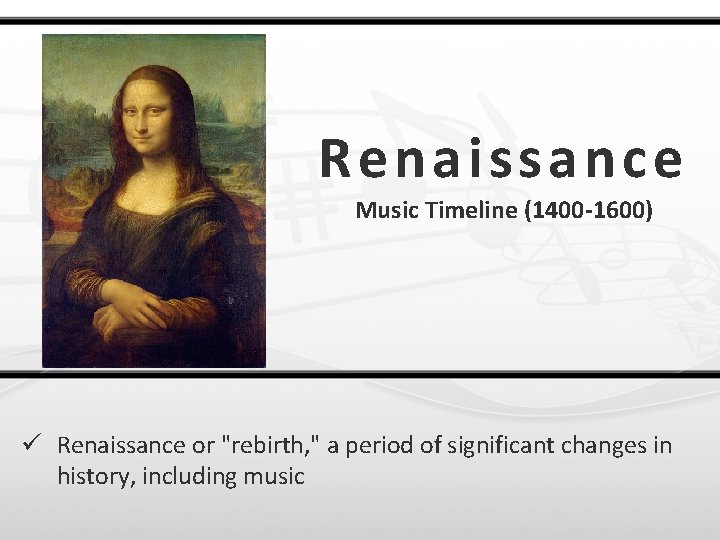
Re naissance Music Timeline (1400 -1600) ü Renaissance or "rebirth, " a period of significant changes in history, including music
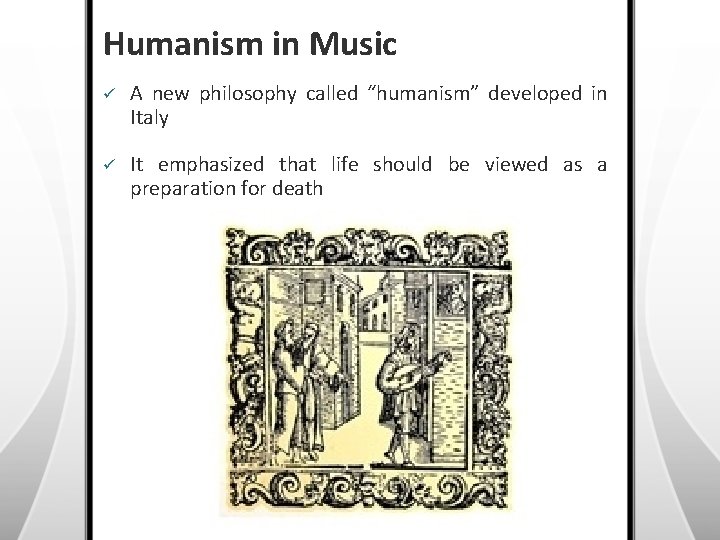
Humanism in Music ü A new philosophy called “humanism” developed in Italy ü It emphasized that life should be viewed as a preparation for death
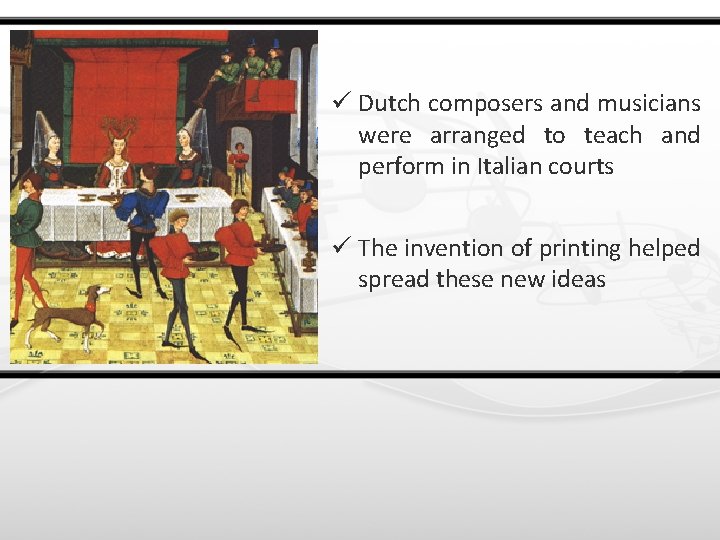
ü Dutch composers and musicians were arranged to teach and perform in Italian courts ü The invention of printing helped spread these new ideas
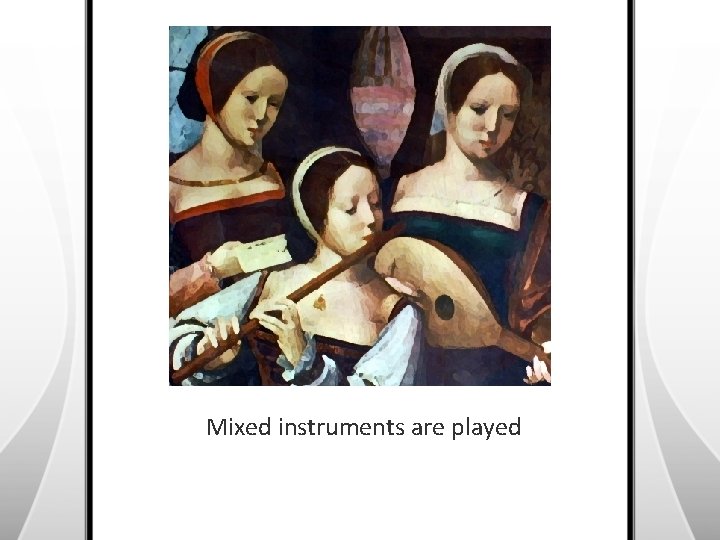
Instrumental Music ü By the second half of the 1500 s instrumental music began to take shape ü The lute was widely used at that time ü Eventually mixed instruments were used
Mixed instruments are played
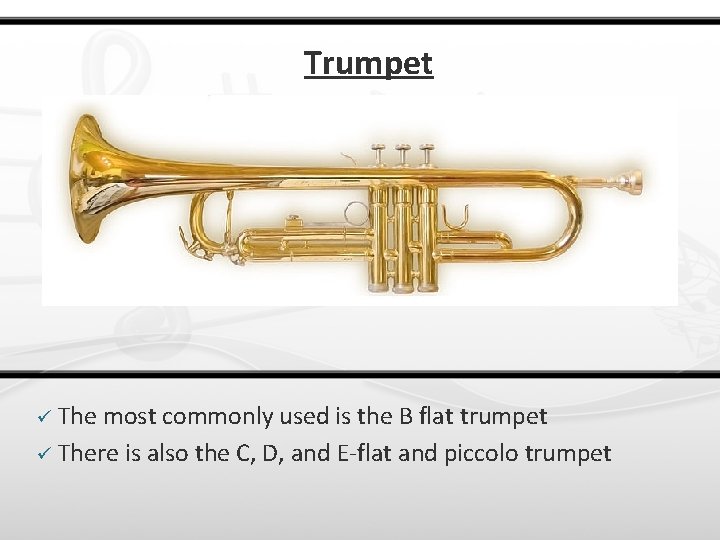
Renaissance Musical Instruments q The Shawm q The Dulcian q The Trumpet
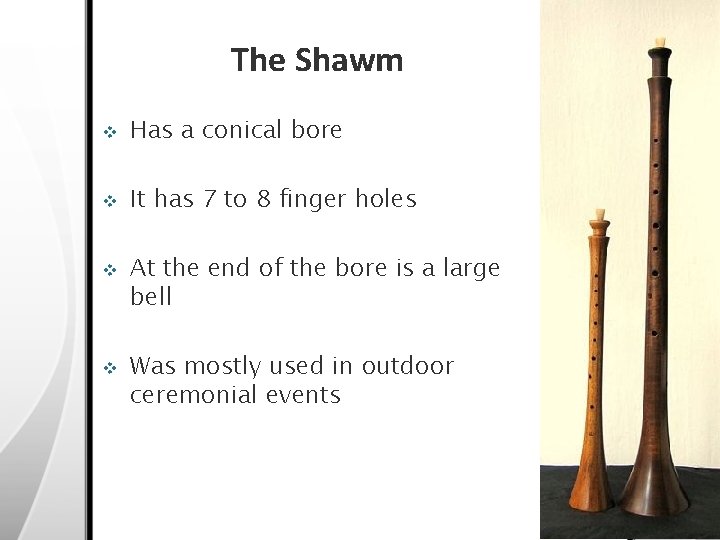
The Shawm v Has a conical bore v It has 7 to 8 finger holes v v At the end of the bore is a large bell Was mostly used in outdoor ceremonial events
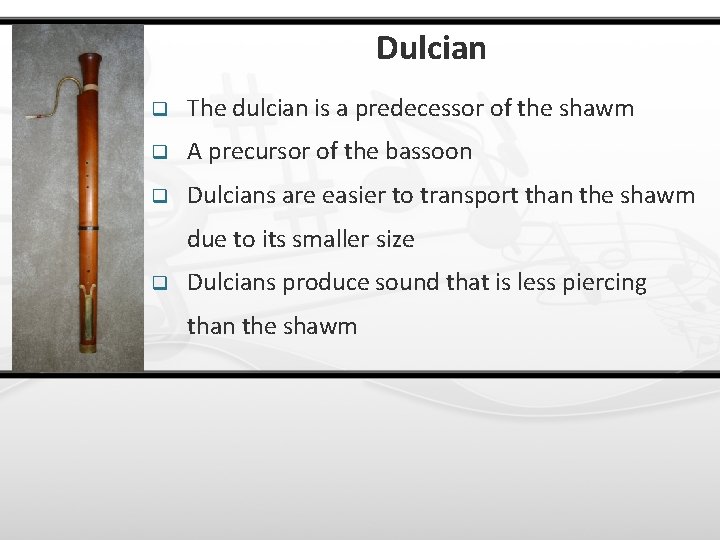
Dulcian q The dulcian is a predecessor of the shawm q A precursor of the bassoon q Dulcians are easier to transport than the shawm due to its smaller size q Dulcians produce sound that is less piercing than the shawm
Trumpet ü The most commonly used is the B flat trumpet ü There is also the C, D, and E-flat and piccolo trumpet
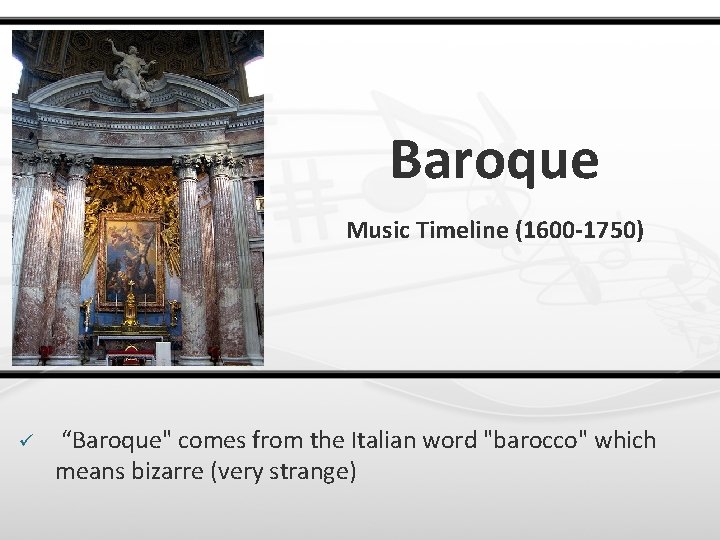
Baroque Music Timeline (1600 -1750) ü “Baroque" comes from the Italian word "barocco" which means bizarre (very strange)
Baroque Advancements: ü A time when composers experimented with form, styles and instruments. ü The development of opera and instrumental music ü The violin was also considered an important musical instrument during this time
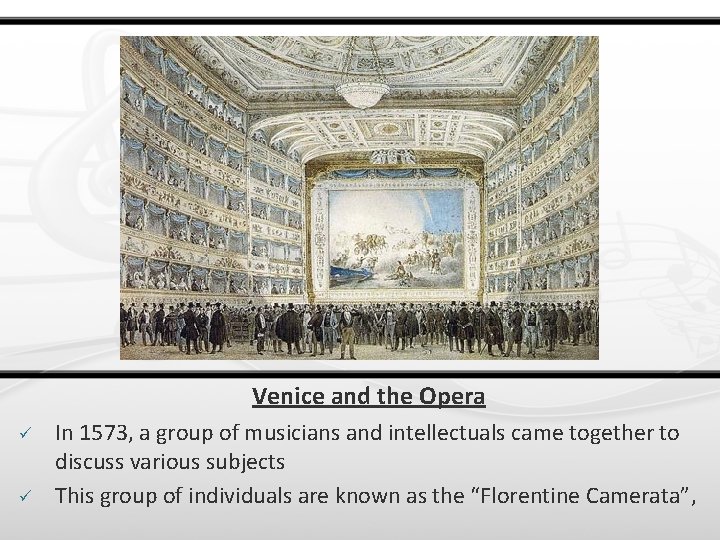
Venice and the Opera ü ü In 1573, a group of musicians and intellectuals came together to discuss various subjects This group of individuals are known as the “Florentine Camerata”,
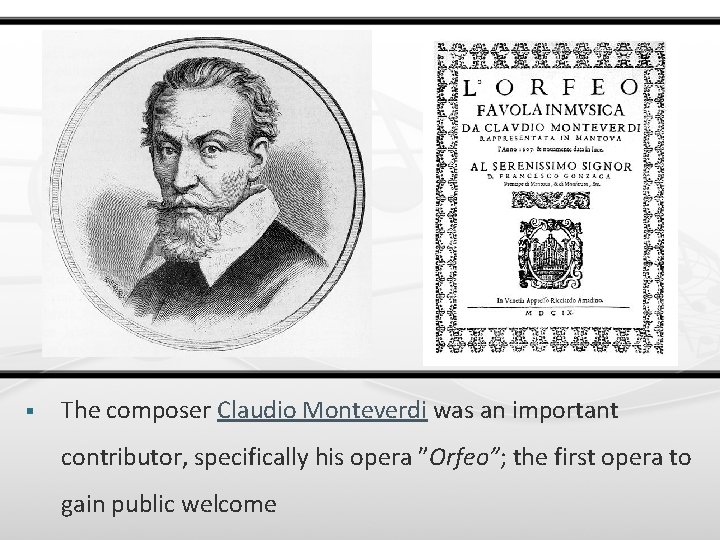
§ The composer Claudio Monteverdi was an important contributor, specifically his opera ”Orfeo”; the first opera to gain public welcome
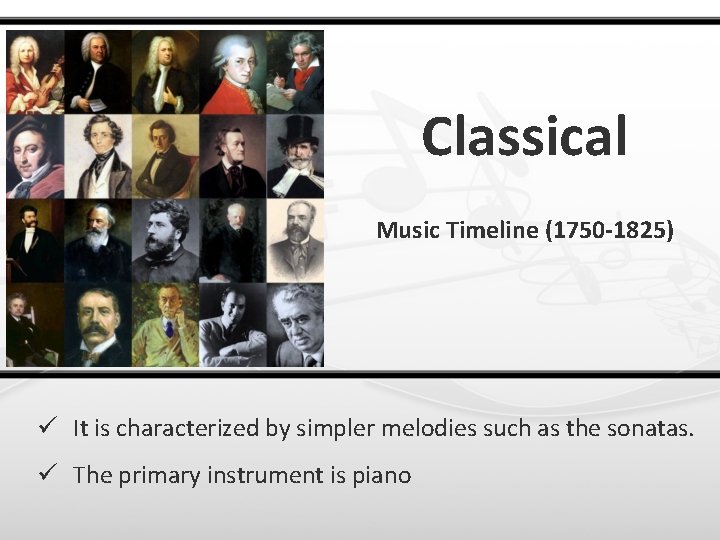
Classical Music Timeline (1750 -1825) ü It is characterized by simpler melodies such as the sonatas. ü The primary instrument is piano
Major Composers of the Period ü Franz Joseph Haydn ü Wolfgang Amadeus Mozart ü Ludwig van Beethoven ü Giuseppe Verdi ü Antonio Vivaldi
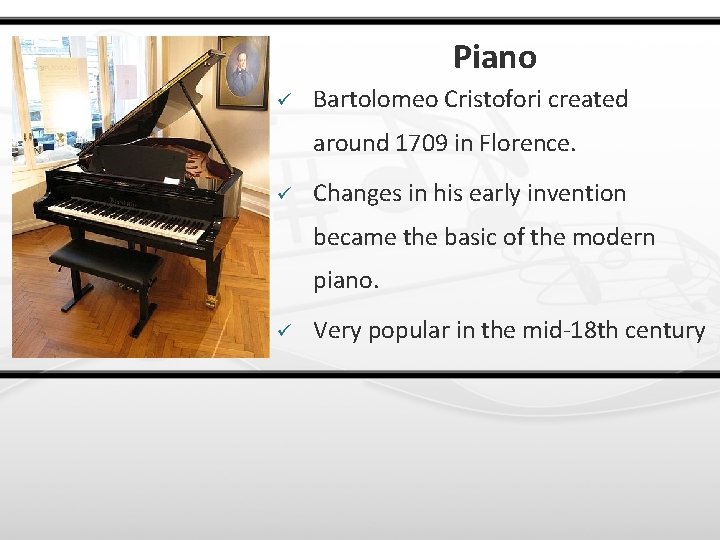
Piano ü Bartolomeo Cristofori created around 1709 in Florence. ü Changes in his early invention became the basic of the modern piano. ü Very popular in the mid-18 th century
Romantic Music Timeline (1825 -1910) ü Characterized by using music to tell a story or express an idea ü the use of various instruments including wind instruments
What is Romanticism? ü A concept that included different art forms from music to painting to literature. ü During the 19 th century, Vienna and Paris were the centers of musical activity
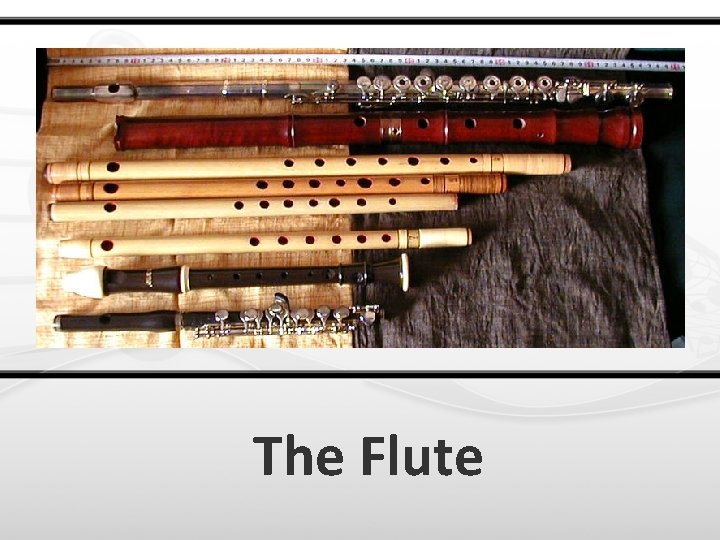
The Flute
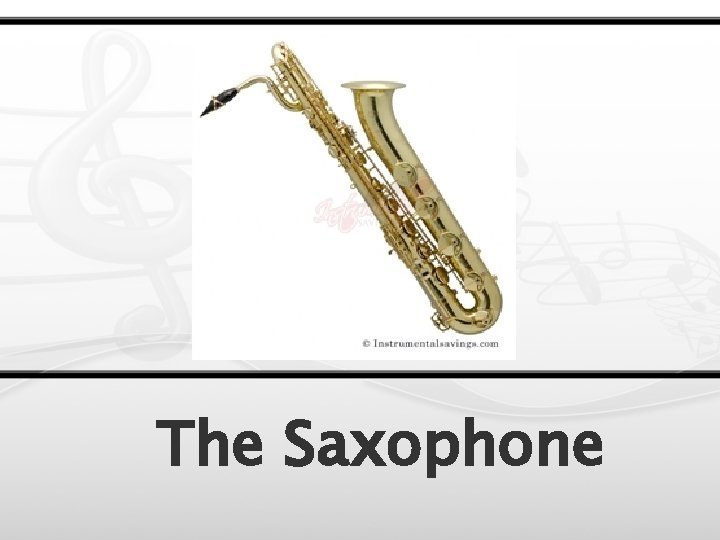
The Saxophone
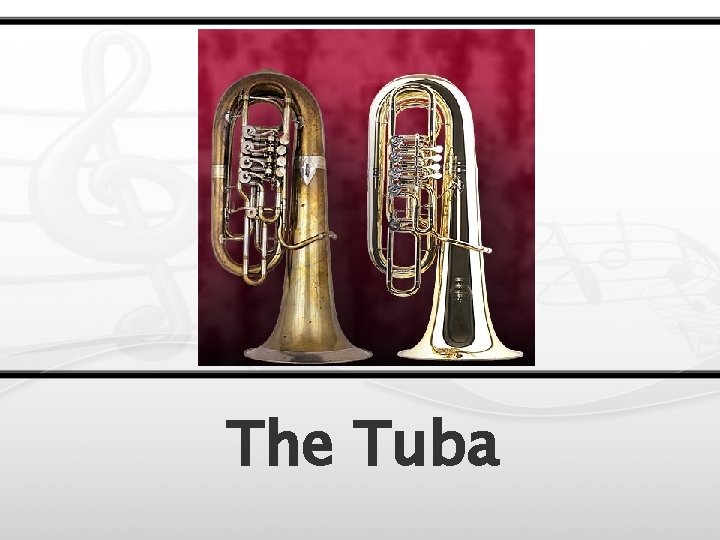
The Tuba
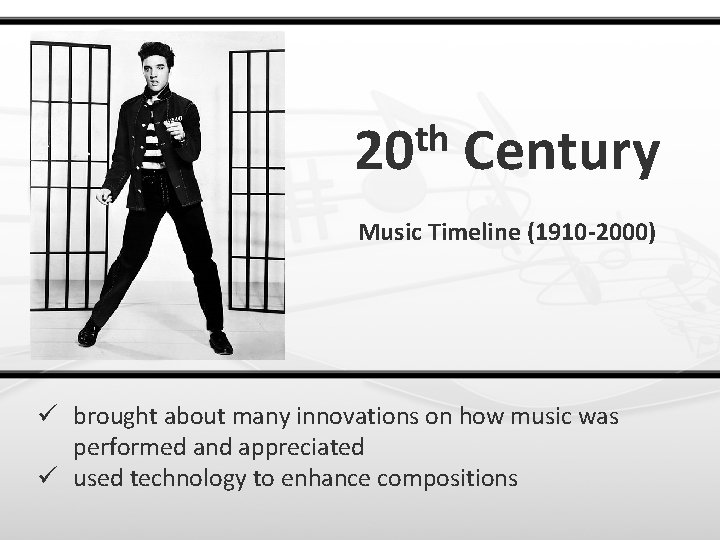
th 20 Century Music Timeline (1910 -2000) ü brought about many innovations on how music was performed and appreciated ü used technology to enhance compositions
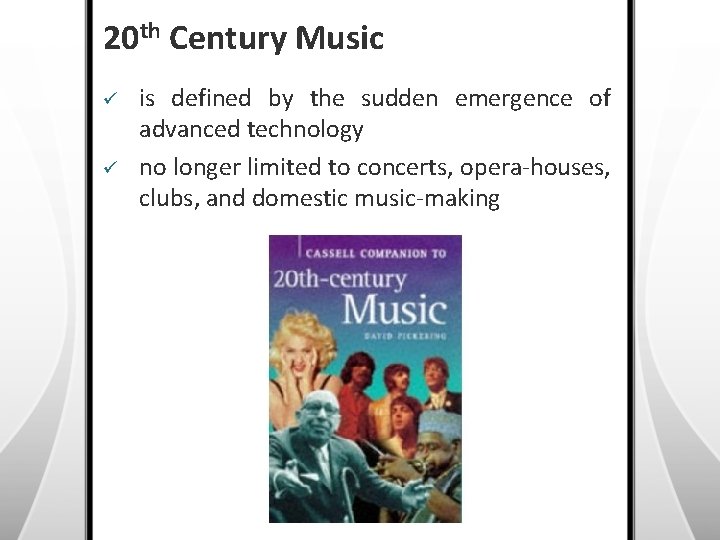
20 th Century Music ü ü is defined by the sudden emergence of advanced technology no longer limited to concerts, opera-houses, clubs, and domestic music-making
Rock and roll v Often written as rock & roll or rock 'n' roll v Evolved in the United States during the late 1940 s and early 1950 s v Combination of African American blues, country, jazz and gospel music.
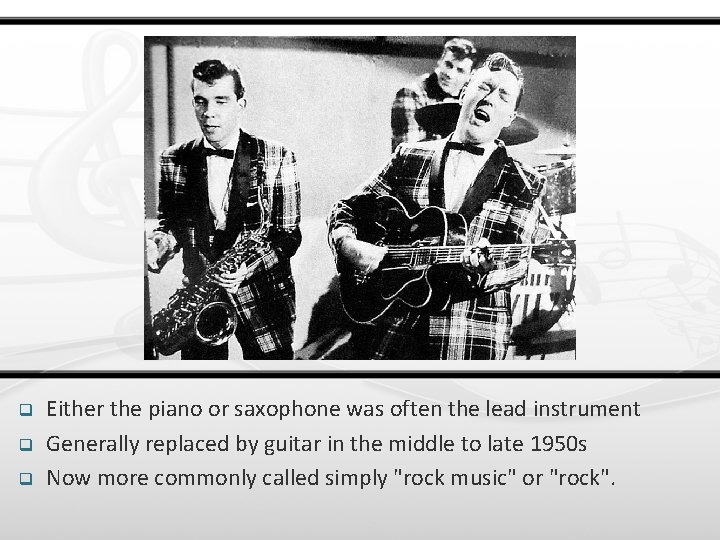
q q q Either the piano or saxophone was often the lead instrument Generally replaced by guitar in the middle to late 1950 s Now more commonly called simply "rock music" or "rock".
Hip Hop Music v also called rap music v consisting of a stylized rhythmic music v commonly accompanies rapping, a rhythmic and rhyming speech that is chanted
Music Education : http: //musiced. about. com/ Medieval : http: //en. wikipedia. org/wiki/Medieval_music Renaissance : http: //en. wikipedia. org/wiki/Renaissance_music Baroque : http: //en. wikipedia. org/wiki/Baroque_music Classical : http: //en. wikipedia. org/wiki/Classical_period_(music) Romantic : http: //en. wikipedia. org/wiki/Romantic_music 20 th Century : http: //en. wikipedia. org/wiki/20 th-century_classical_music