
Intro to Muscle Cells and Tissue Chapter 6
- Slides: 23
Intro to Muscle Cells and Tissue Chapter 6
Time for a Movie Discovery Channel Pushing the Limits: Muscle Fibers 10: 39: Describe skeletal muscle fibers (muscle cells). 11: 21 How many skeletal muscle fibers do we normally use at any one time? 12: 19 What body structure is needed to trigger our skeletal muscle fibers? 13: 15 When is the only time we can trigger all of our skeletal muscle fibers at once? 13: 40 What is the cost of using all of our skeletal muscles at once?
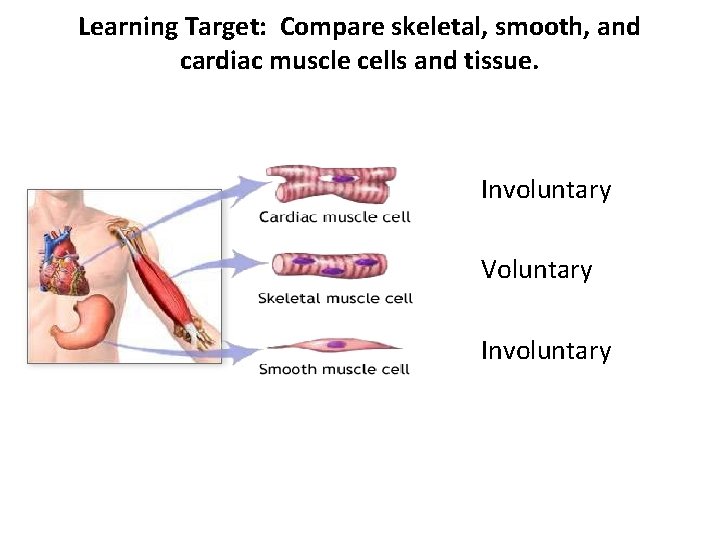
Learning Target: Compare skeletal, smooth, and cardiac muscle cells and tissue. Involuntary Voluntary Involuntary
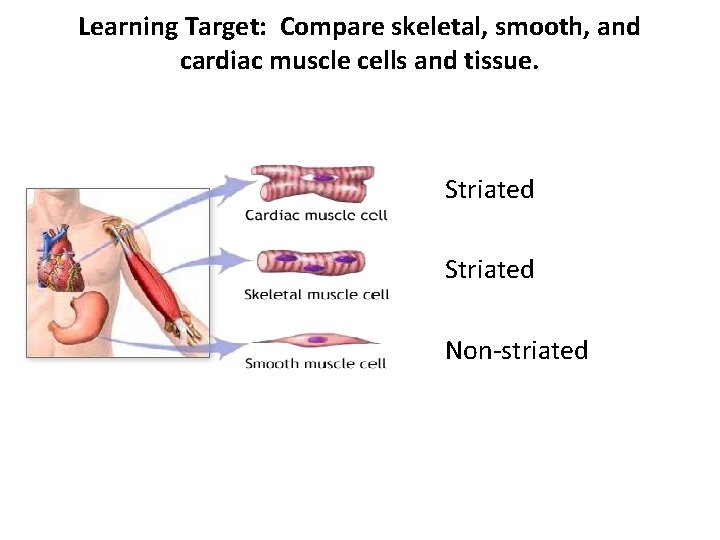
Learning Target: Compare skeletal, smooth, and cardiac muscle cells and tissue. Striated Non-striated
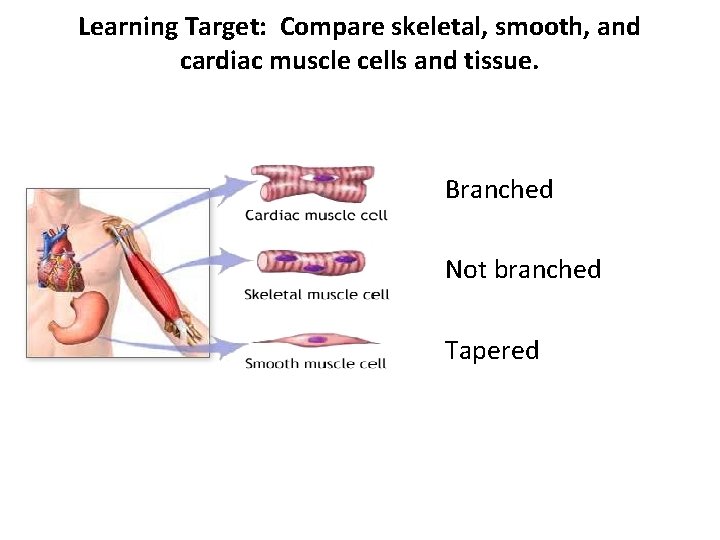
Learning Target: Compare skeletal, smooth, and cardiac muscle cells and tissue. Branched Not branched Tapered
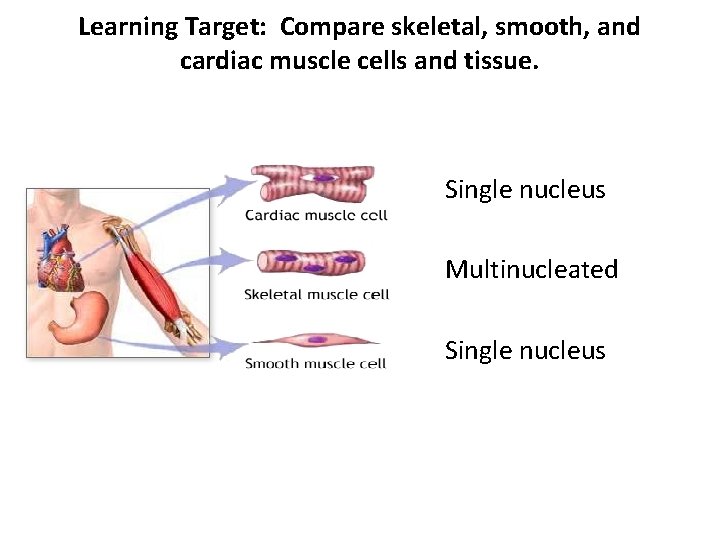
Learning Target: Compare skeletal, smooth, and cardiac muscle cells and tissue. Single nucleus Multinucleated Single nucleus
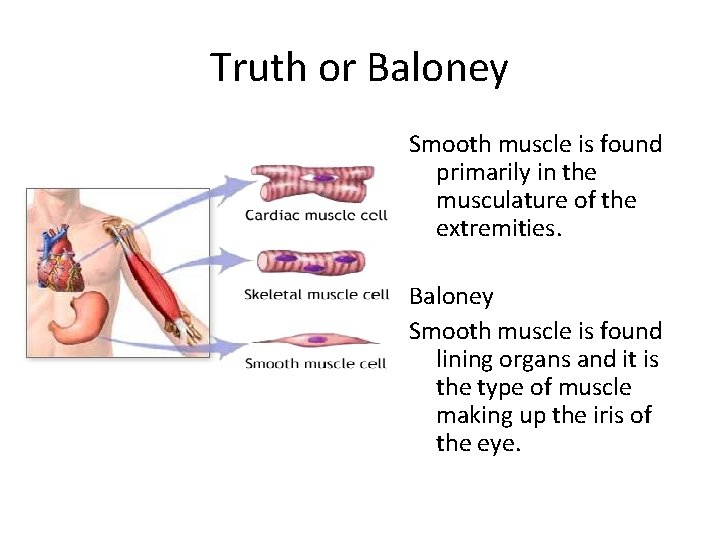
Truth or Baloney Smooth muscle is found primarily in the musculature of the extremities. Baloney Smooth muscle is found lining organs and it is the type of muscle making up the iris of the eye.
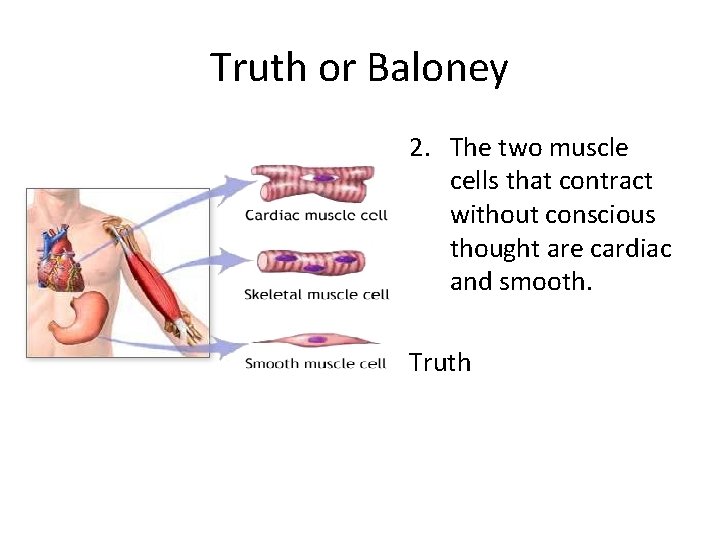
Truth or Baloney 2. The two muscle cells that contract without conscious thought are cardiac and smooth. Truth
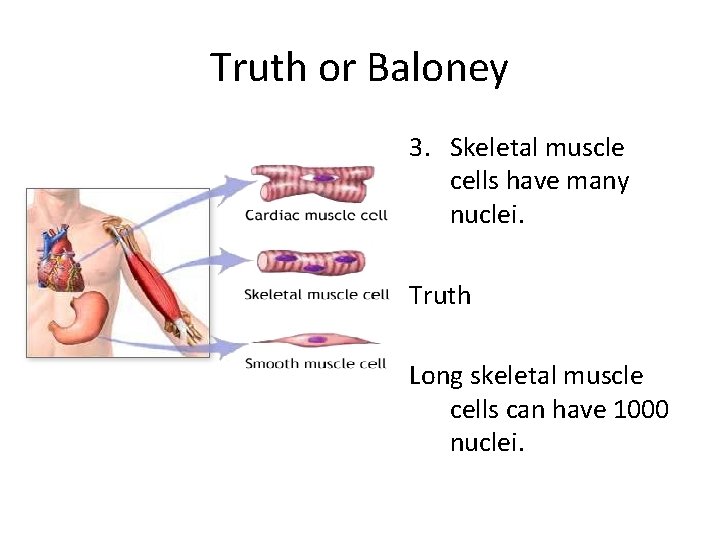
Truth or Baloney 3. Skeletal muscle cells have many nuclei. Truth Long skeletal muscle cells can have 1000 nuclei.
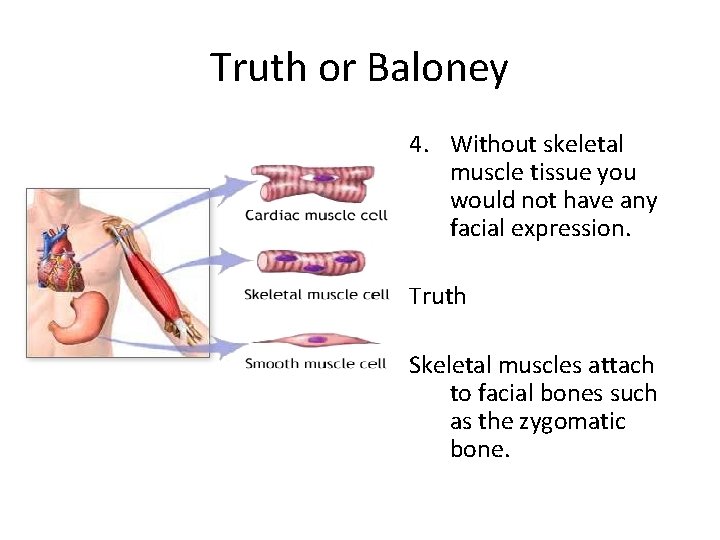
Truth or Baloney 4. Without skeletal muscle tissue you would not have any facial expression. Truth Skeletal muscles attach to facial bones such as the zygomatic bone.
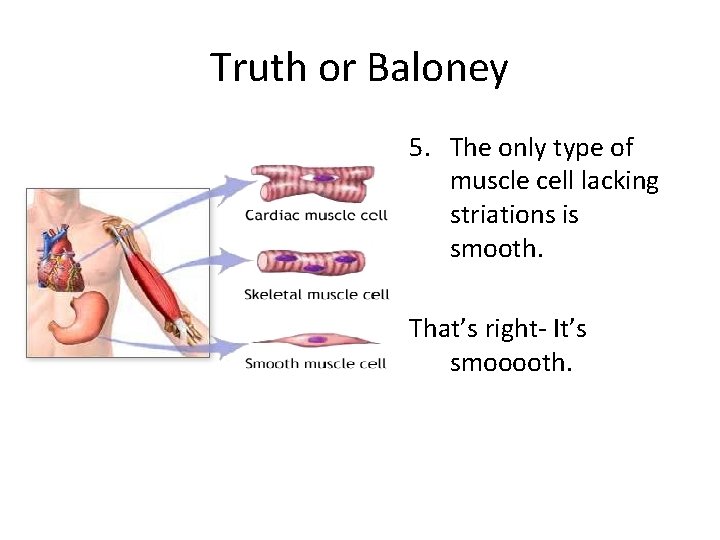
Truth or Baloney 5. The only type of muscle cell lacking striations is smooth. That’s right- It’s smooooth.
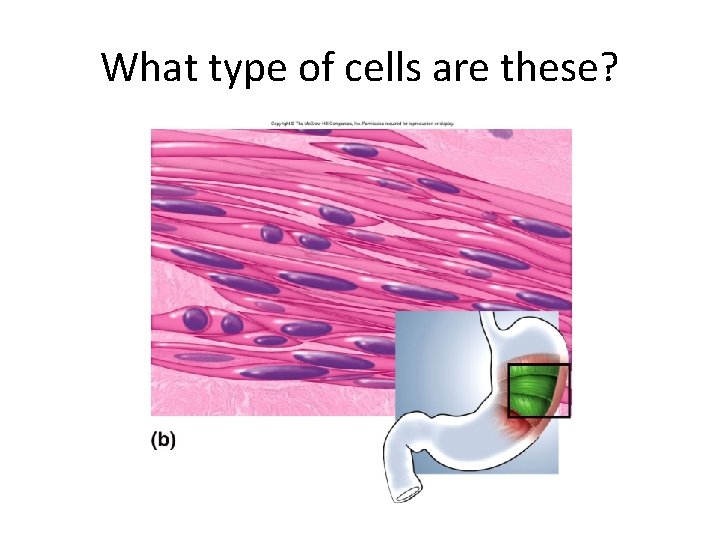
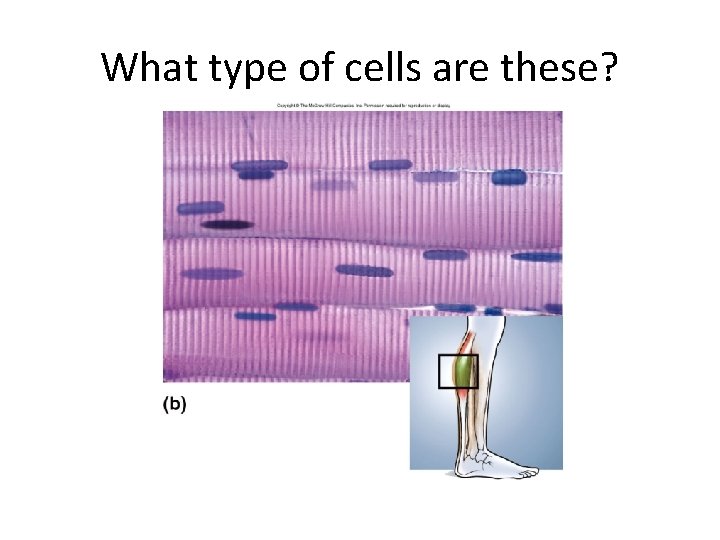
What type of cells are these?
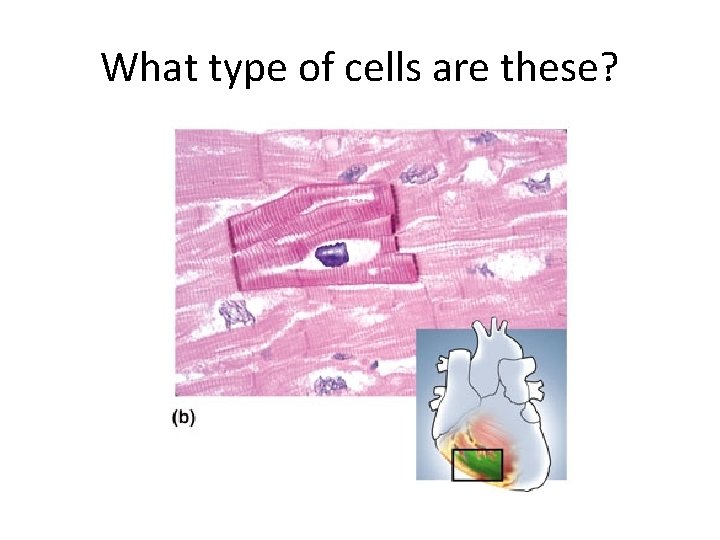
What type of cells are these?
What type of cells are these?
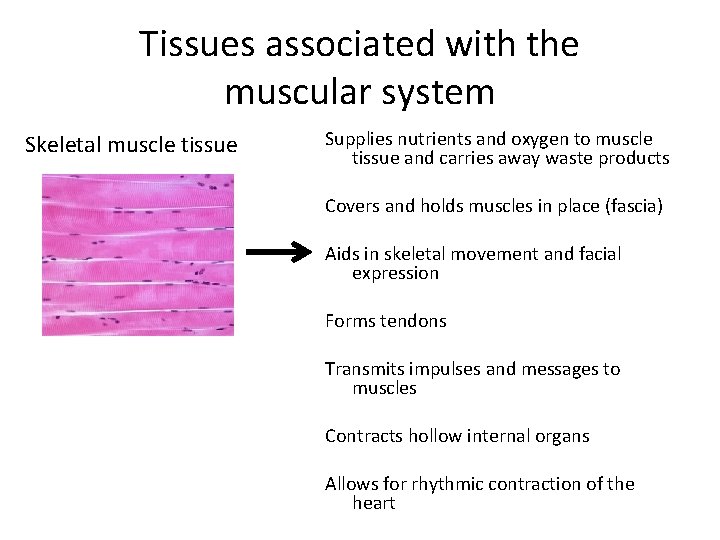
Tissues associated with the muscular system Skeletal muscle tissue Supplies nutrients and oxygen to muscle tissue and carries away waste products Covers and holds muscles in place (fascia) Aids in skeletal movement and facial expression Forms tendons Transmits impulses and messages to muscles Contracts hollow internal organs Allows for rhythmic contraction of the heart
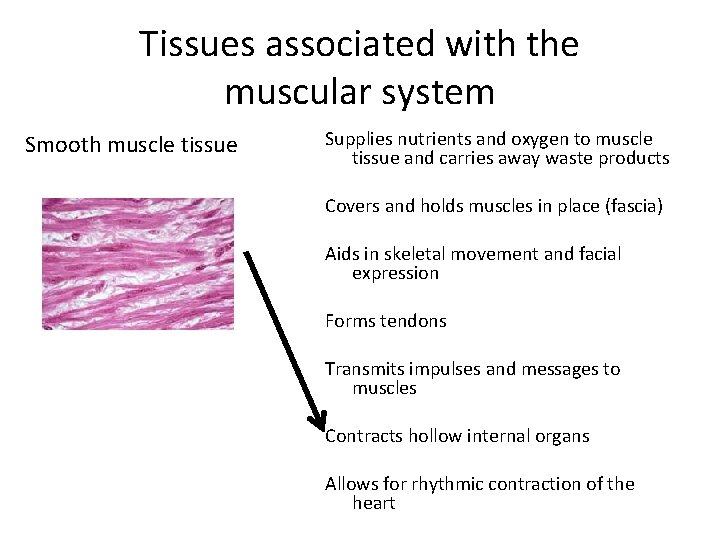
Tissues associated with the muscular system Smooth muscle tissue Supplies nutrients and oxygen to muscle tissue and carries away waste products Covers and holds muscles in place (fascia) Aids in skeletal movement and facial expression Forms tendons Transmits impulses and messages to muscles Contracts hollow internal organs Allows for rhythmic contraction of the heart
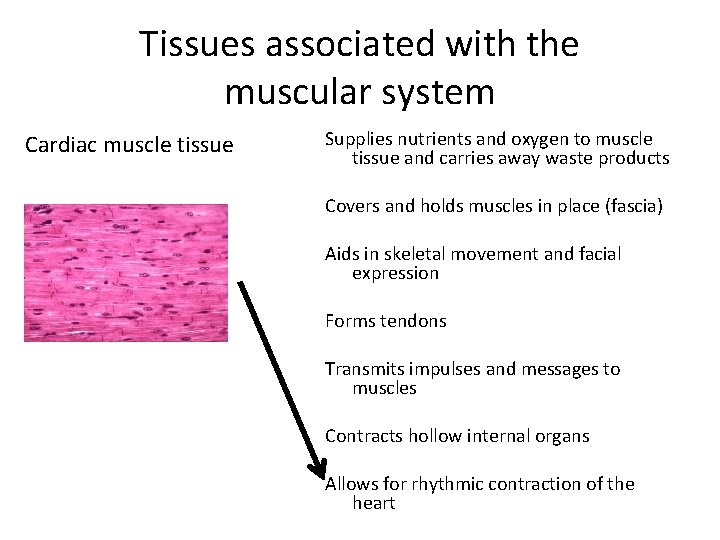
Tissues associated with the muscular system Cardiac muscle tissue Supplies nutrients and oxygen to muscle tissue and carries away waste products Covers and holds muscles in place (fascia) Aids in skeletal movement and facial expression Forms tendons Transmits impulses and messages to muscles Contracts hollow internal organs Allows for rhythmic contraction of the heart
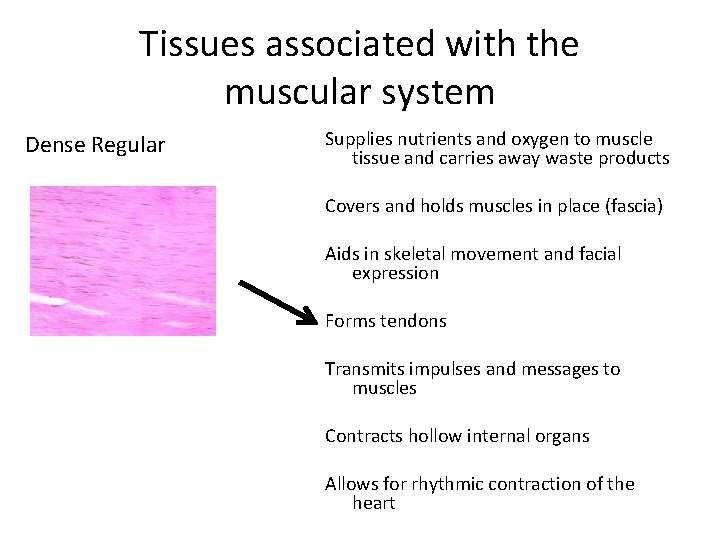
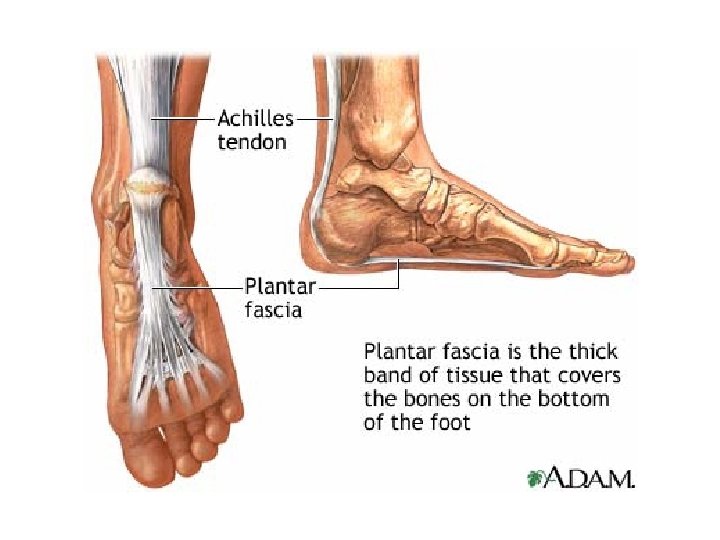
Tissues associated with the muscular system Dense Regular Supplies nutrients and oxygen to muscle tissue and carries away waste products Covers and holds muscles in place (fascia) Aids in skeletal movement and facial expression Forms tendons Transmits impulses and messages to muscles Contracts hollow internal organs Allows for rhythmic contraction of the heart
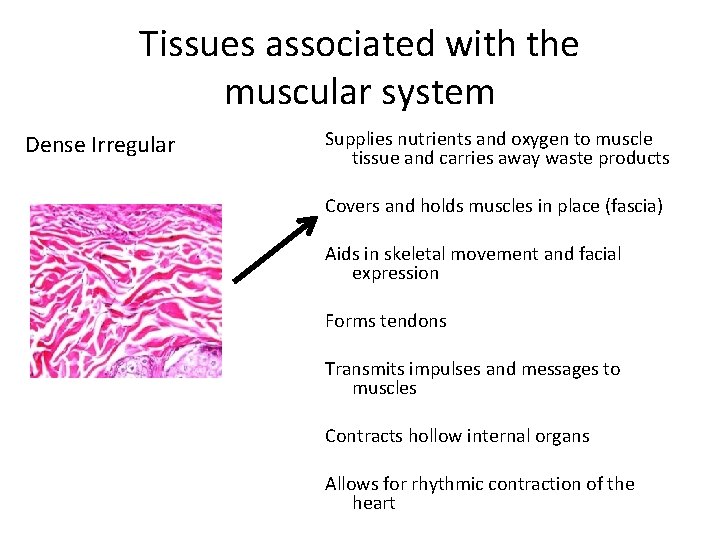
Tissues associated with the muscular system Dense Irregular Supplies nutrients and oxygen to muscle tissue and carries away waste products Covers and holds muscles in place (fascia) Aids in skeletal movement and facial expression Forms tendons Transmits impulses and messages to muscles Contracts hollow internal organs Allows for rhythmic contraction of the heart
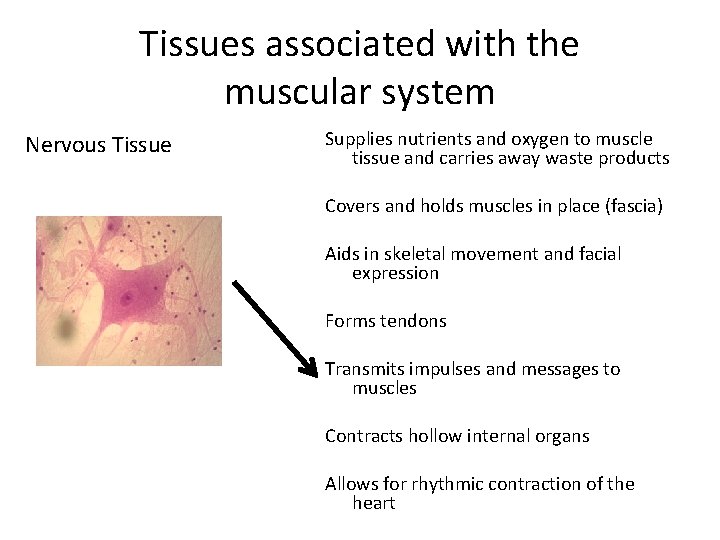
Tissues associated with the muscular system Nervous Tissue Supplies nutrients and oxygen to muscle tissue and carries away waste products Covers and holds muscles in place (fascia) Aids in skeletal movement and facial expression Forms tendons Transmits impulses and messages to muscles Contracts hollow internal organs Allows for rhythmic contraction of the heart
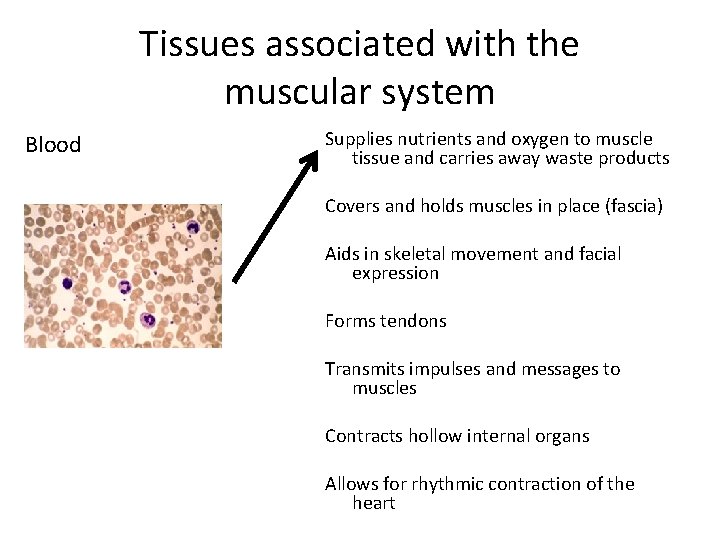
Tissues associated with the muscular system Blood Supplies nutrients and oxygen to muscle tissue and carries away waste products Covers and holds muscles in place (fascia) Aids in skeletal movement and facial expression Forms tendons Transmits impulses and messages to muscles Contracts hollow internal organs Allows for rhythmic contraction of the heart