
Intro to Meteorology Why study Meteorology What if
- Slides: 14
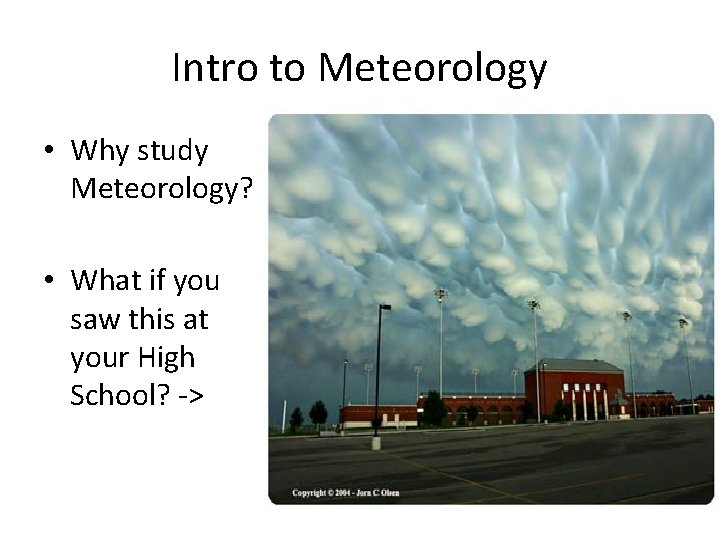
Intro to Meteorology • Why study Meteorology? • What if you saw this at your High School? ->
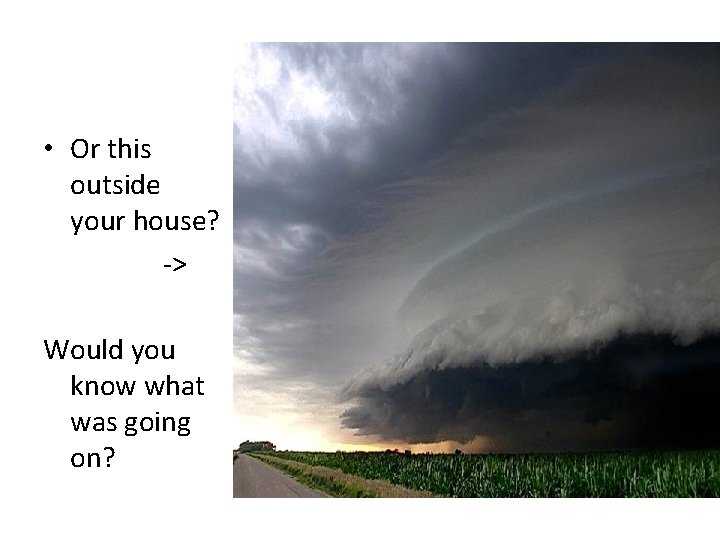
• Or this outside your house? -> Would you know what was going on?
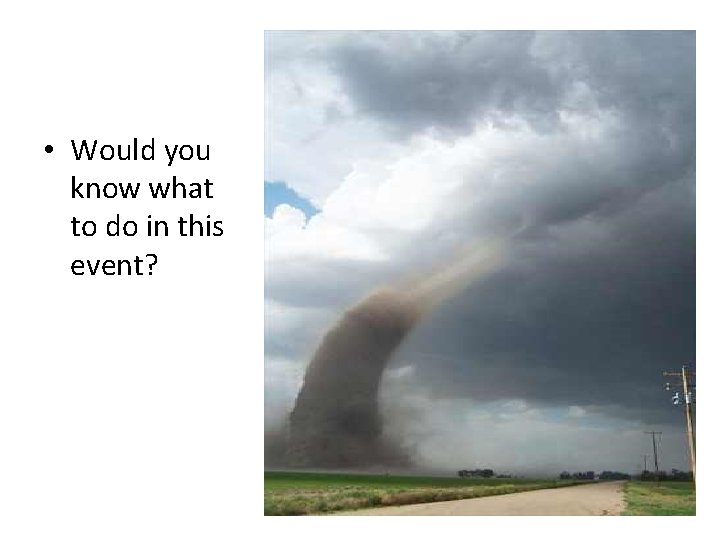
• Would you know what to do in this event?
Atmosphere Basics
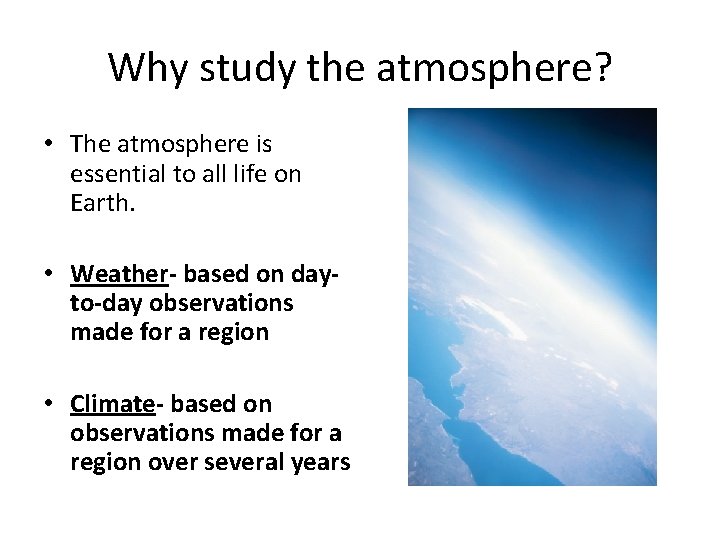
Why study the atmosphere? • The atmosphere is essential to all life on Earth. • Weather- based on dayto-day observations made for a region • Climate- based on observations made for a region over several years
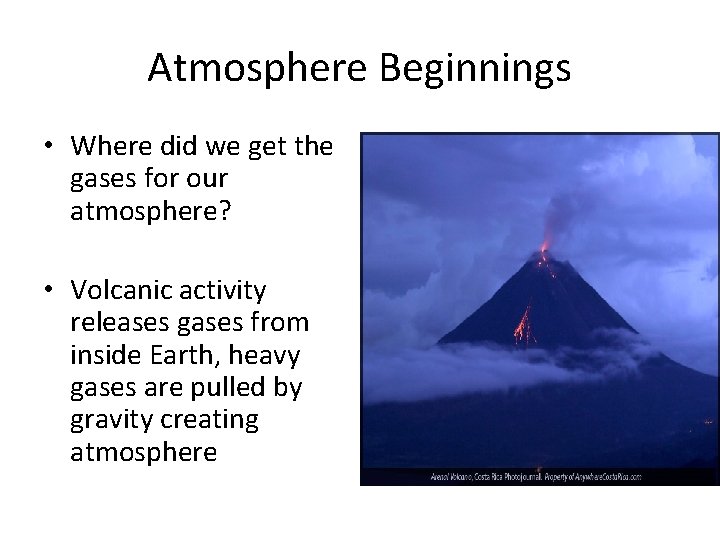
Atmosphere Beginnings • Where did we get the gases for our atmosphere? • Volcanic activity releases gases from inside Earth, heavy gases are pulled by gravity creating atmosphere
Atmosphere Components • 99 % of atmosphere is made of 2 elements – 78% Nitrogen – largest component of atmosphere! – 21% Oxygen • 1% CO 2, Argon, others • Water Vapor - Amount of water in the atmosphere – Changes, depends on where air originated • Dry air- originated over land • Moist air- originated over water
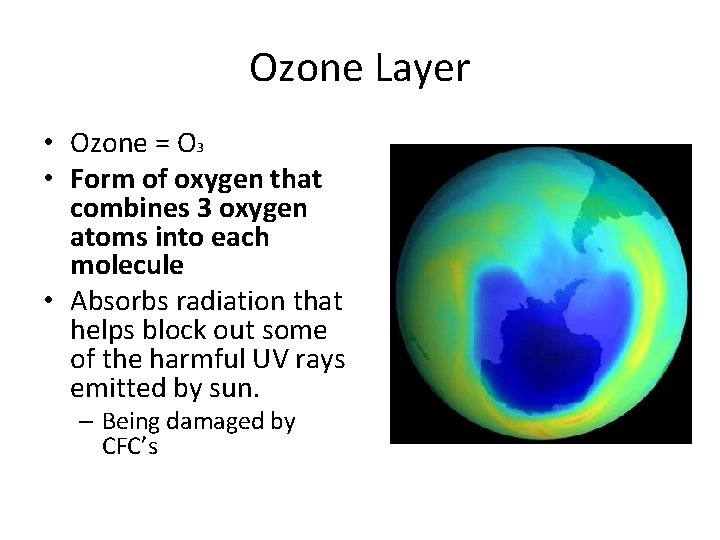
Ozone Layer • Ozone = O 3 • Form of oxygen that combines 3 oxygen atoms into each molecule • Absorbs radiation that helps block out some of the harmful UV rays emitted by sun. – Being damaged by CFC’s
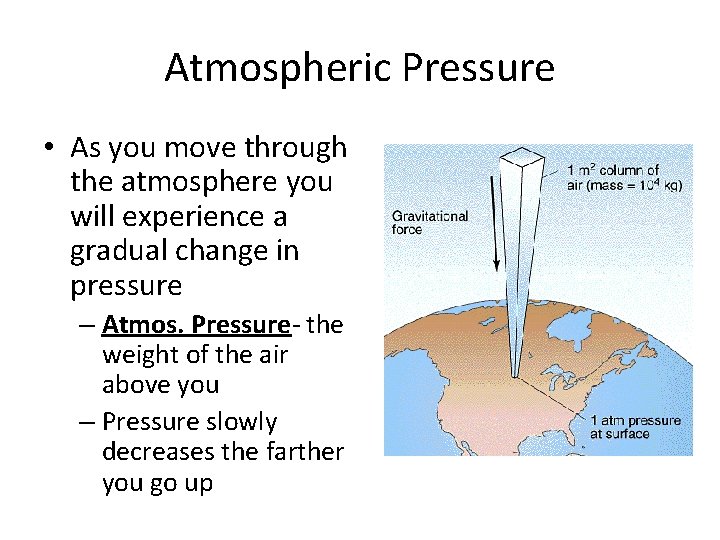
Atmospheric Pressure • As you move through the atmosphere you will experience a gradual change in pressure – Atmos. Pressure- the weight of the air above you – Pressure slowly decreases the farther you go up
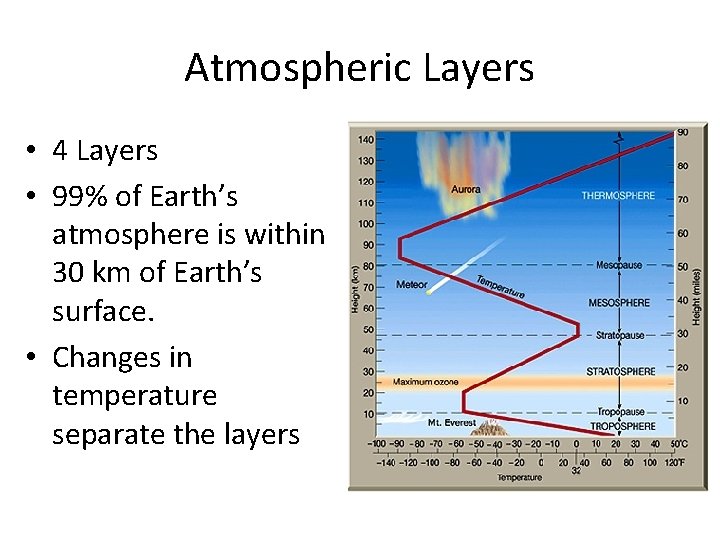
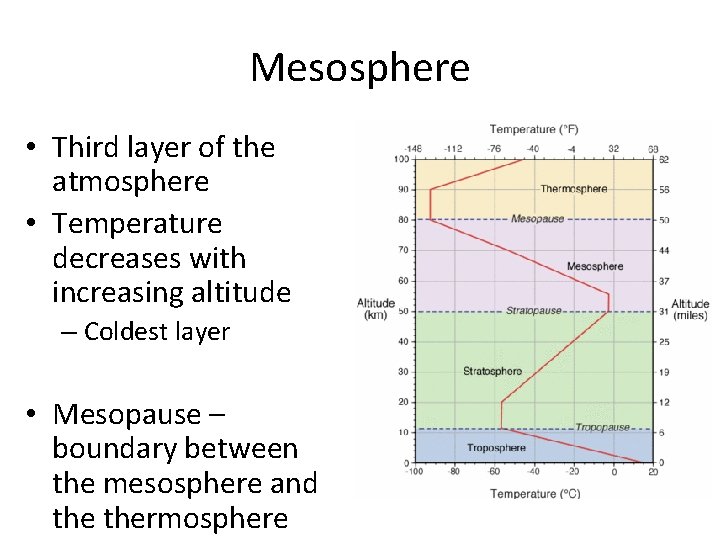
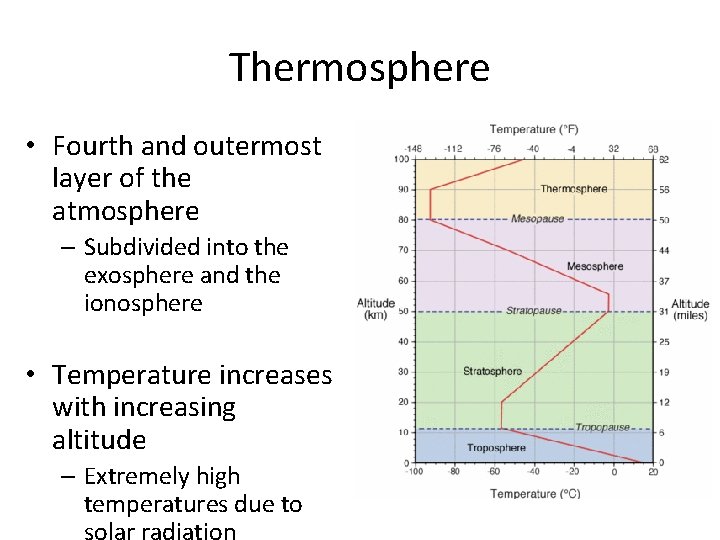
Atmospheric Layers • 4 Layers • 99% of Earth’s atmosphere is within 30 km of Earth’s surface. • Changes in temperature separate the layers
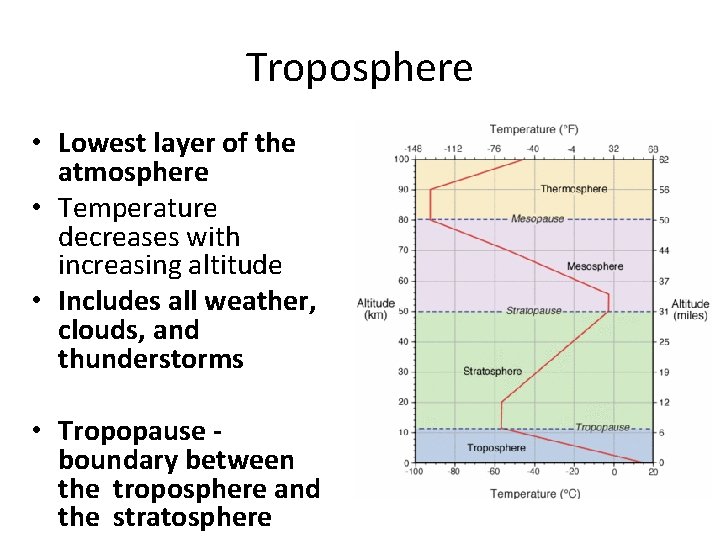
Troposphere • Lowest layer of the atmosphere • Temperature decreases with increasing altitude • Includes all weather, clouds, and thunderstorms • Tropopause boundary between the troposphere and the stratosphere
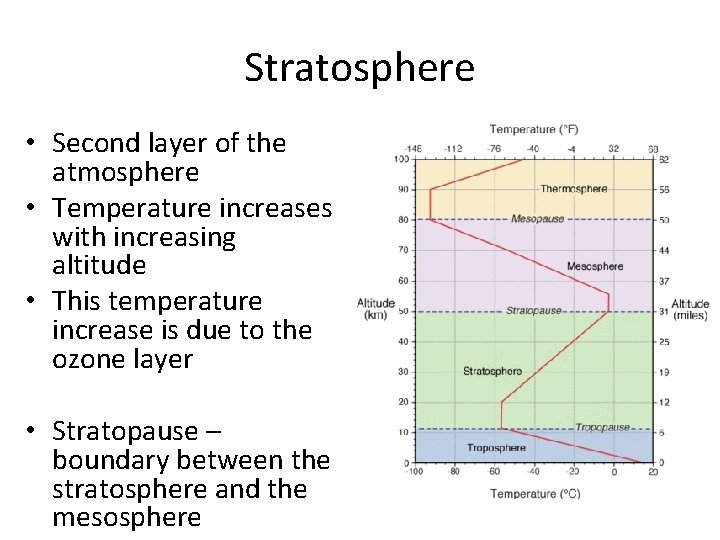
Stratosphere • Second layer of the atmosphere • Temperature increases with increasing altitude • This temperature increase is due to the ozone layer • Stratopause – boundary between the stratosphere and the mesosphere
Mesosphere • Third layer of the atmosphere • Temperature decreases with increasing altitude – Coldest layer • Mesopause – boundary between the mesosphere and thermosphere
Thermosphere • Fourth and outermost layer of the atmosphere – Subdivided into the exosphere and the ionosphere • Temperature increases with increasing altitude – Extremely high temperatures due to