
Intro to Mechanical Engineering Mech Eng Top 10
- Slides: 25
Intro to Mechanical Engineering
Mech. Eng. Top 10: ASME Survey Automobile: High-power lightweight engines, efficient massmanufacturing Apollo: Saturn V launch vehicle (7. 5 million pound thrust), command service module, lunar excursion module Power generation: Conversion of stored energy into electricity, manipulation of chemical-, kinetic, potential-, and nuclearenergy, large-scale power production Agriculture mechanization: Powered tractors, mechanized harvesting, high-capacity irrigation pumps, computerized crops management Airplane: Propulsion (jet engines), lightweight materials, electromechanical control systems
Mech. Eng. Top 10: ASME Survey Integrated circuit mass production: IC manufacturing machines, alignment systems, temperature- and vibration control, motors, bearings Air-conditioning and refrigeration: Compressors, refrigerants, heat exchangers Computer-aided engineering technology: Computer-aided design, analysis, manufacturing, virtual collaboratives Bioengineering: Imaging, prosthetics, minimally invasive surgery, tissue engineering Codes and standards: Interchangeability, interoperability, interconnectivity
Mech. Eng. : Typical Program Thermo-Fluids: Heat transfer, Energy Systems, HVAC, IC Engines Mechanical Systems: Vibrations, Feedback control, Mechatronics, MEMS Design: Composites, Machine Design, FEM Core: Statics, Dynamics, Thermodynamics, Fluid mechanics, Solid mechanics
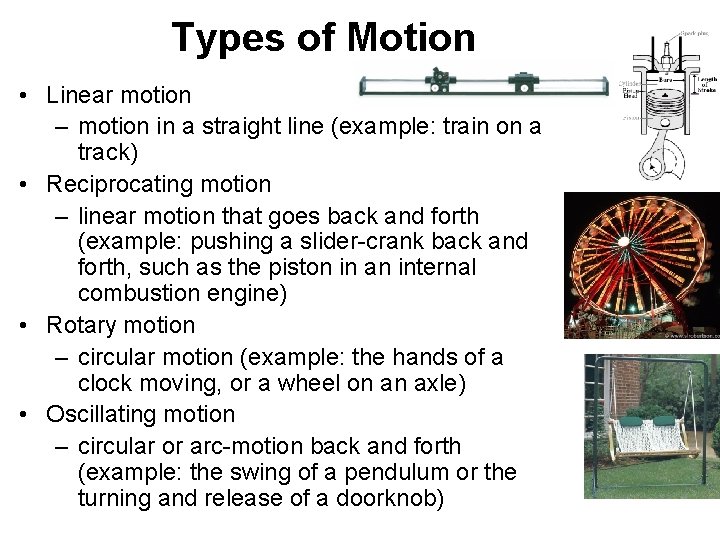
Types of Motion • Linear motion – motion in a straight line (example: train on a track) • Reciprocating motion – linear motion that goes back and forth (example: pushing a slider-crank back and forth, such as the piston in an internal combustion engine) • Rotary motion – circular motion (example: the hands of a clock moving, or a wheel on an axle) • Oscillating motion – circular or arc-motion back and forth (example: the swing of a pendulum or the turning and release of a doorknob)
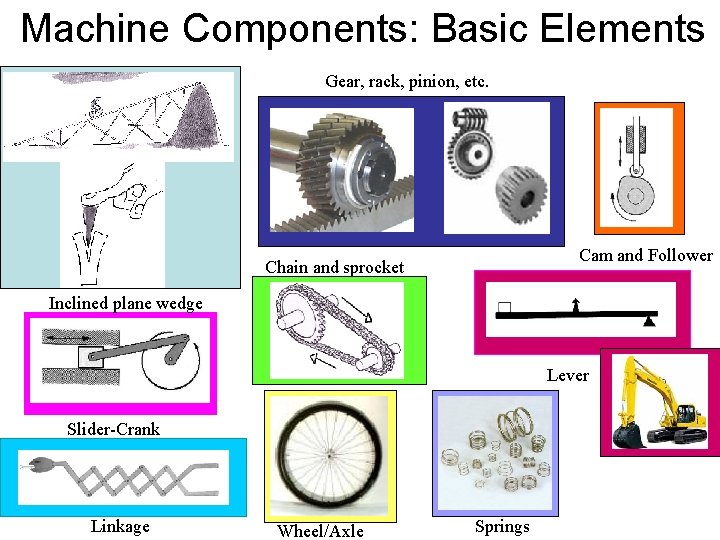
Machine Components: Basic Elements Gear, rack, pinion, etc. Cam and Follower Chain and sprocket Inclined plane wedge Lever Slider-Crank Linkage Wheel/Axle Springs
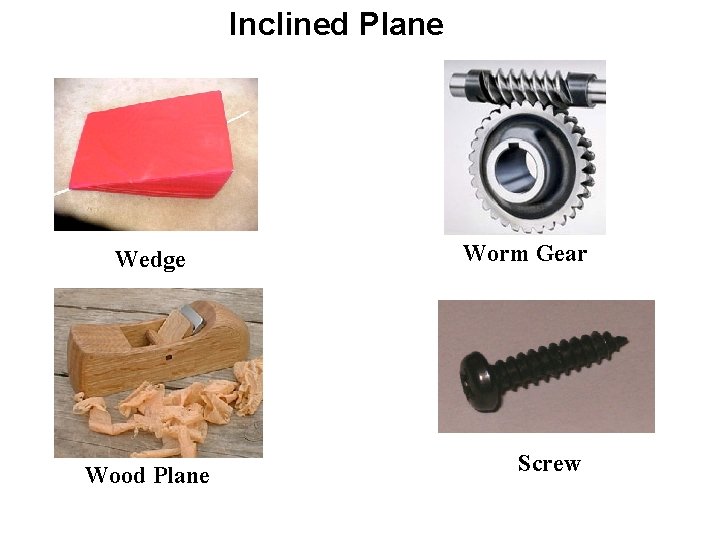
Inclined Plane Wedge Wood Plane Worm Gear Screw
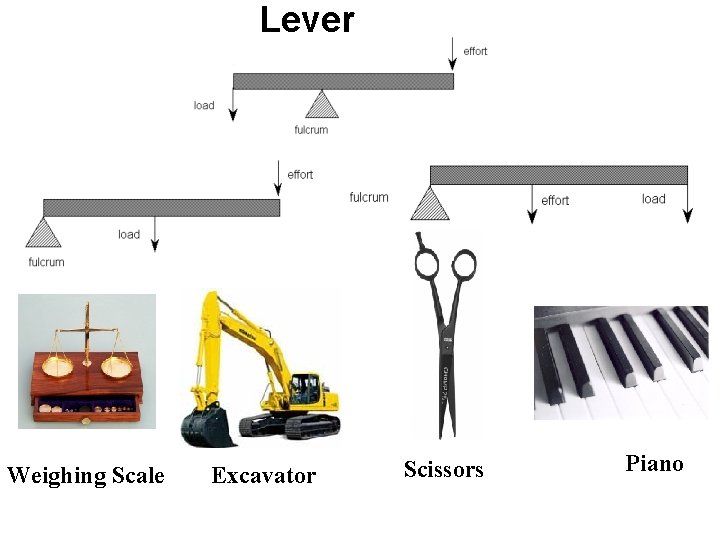
Lever Weighing Scale Excavator Scissors Piano
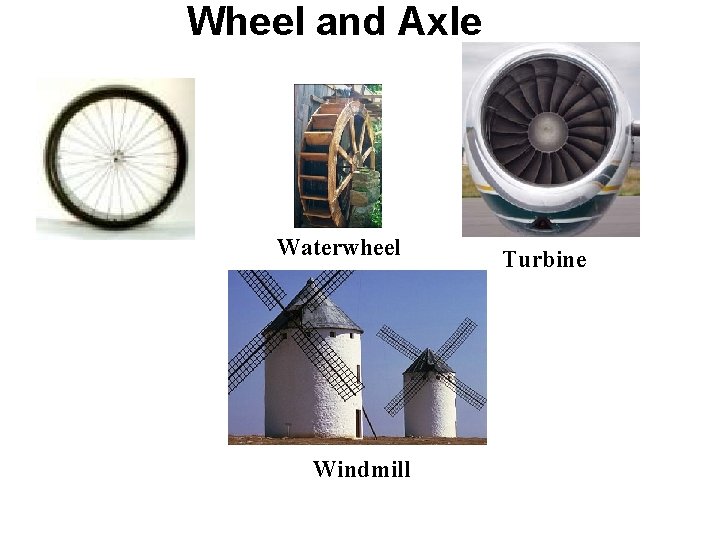
Wheel and Axle Waterwheel Windmill Turbine
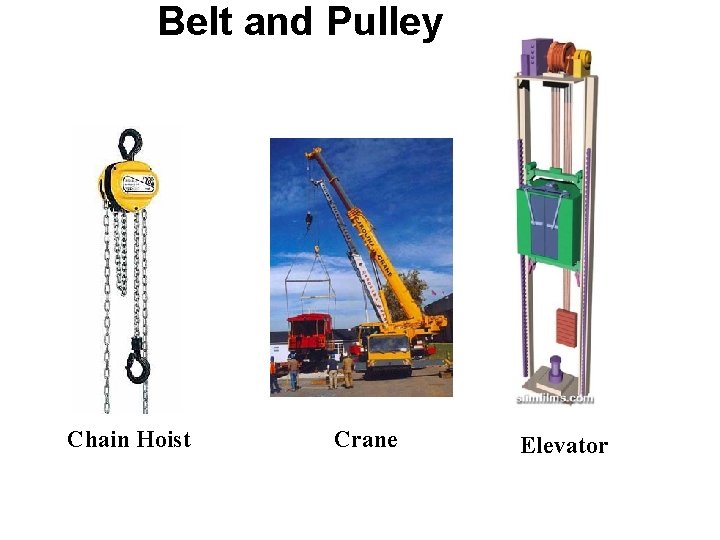
Belt and Pulley Chain Hoist Crane Elevator
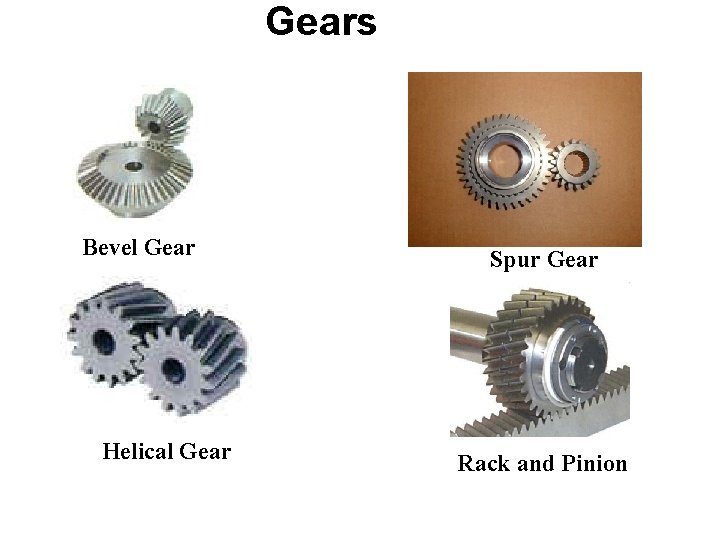
Gears Bevel Gear Helical Gear Spur Gear Rack and Pinion
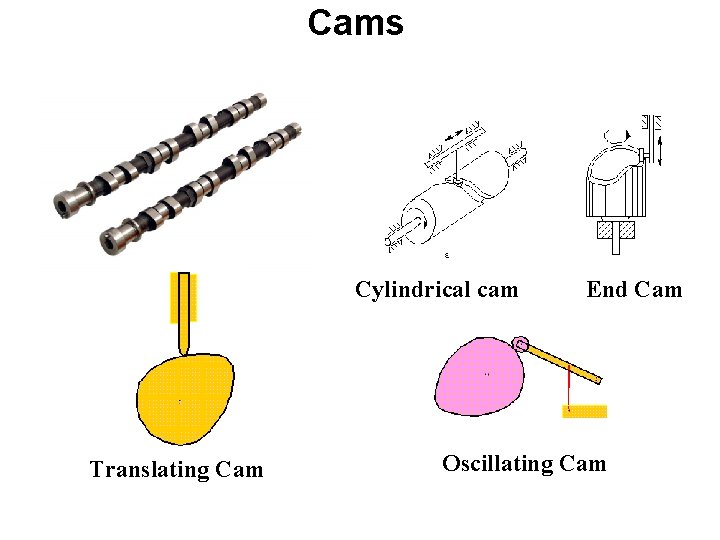
Cams Cylindrical cam Translating Cam End Cam Oscillating Cam
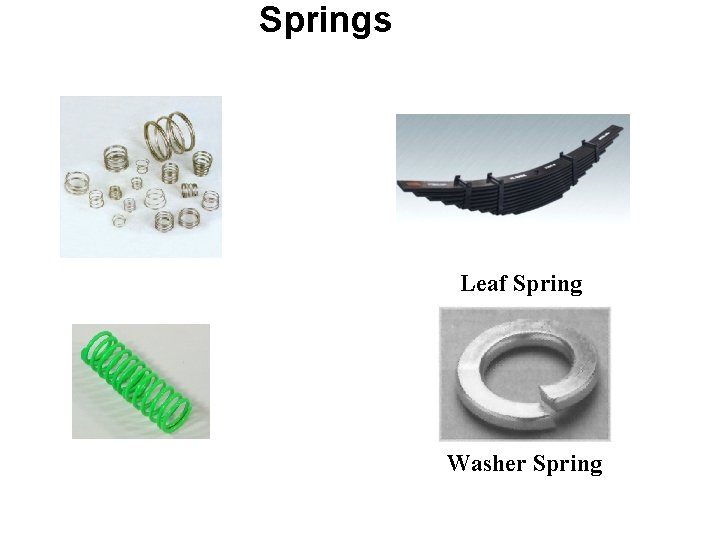
Springs Leaf Spring Washer Spring
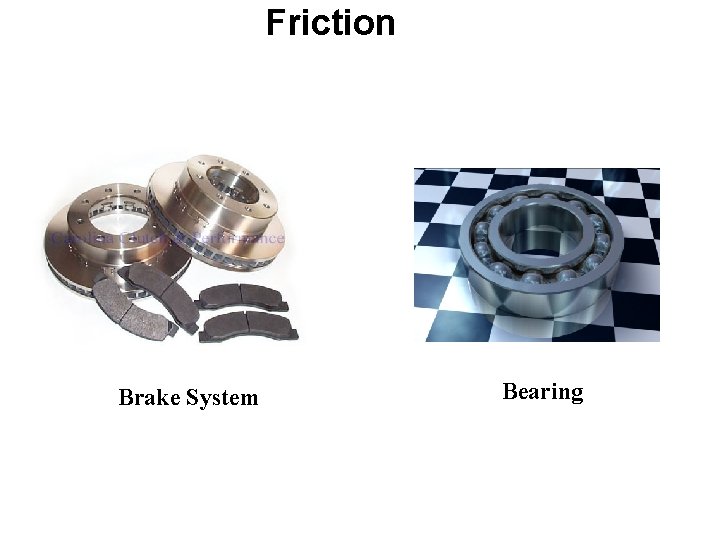
Friction Brake System Bearing
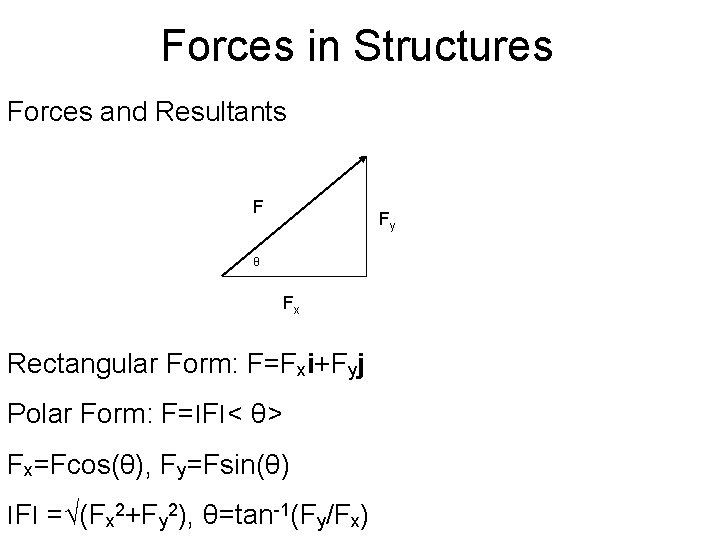
Forces in Structures Forces and Resultants F Fy θ Fx Rectangular Form: F=Fxi+Fyj Polar Form: F= ׀ F <׀ θ> Fx=Fcos(θ), Fy=Fsin(θ) ׀ F (√= ׀ Fx 2+Fy 2), θ=tan-1(Fy/Fx)
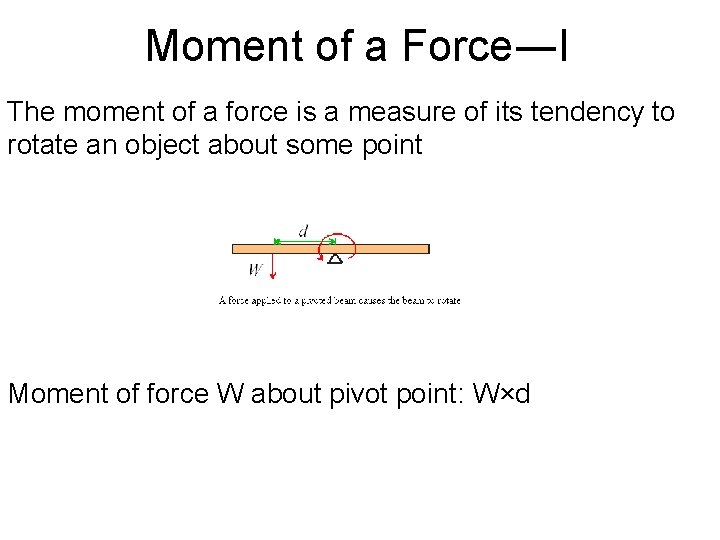
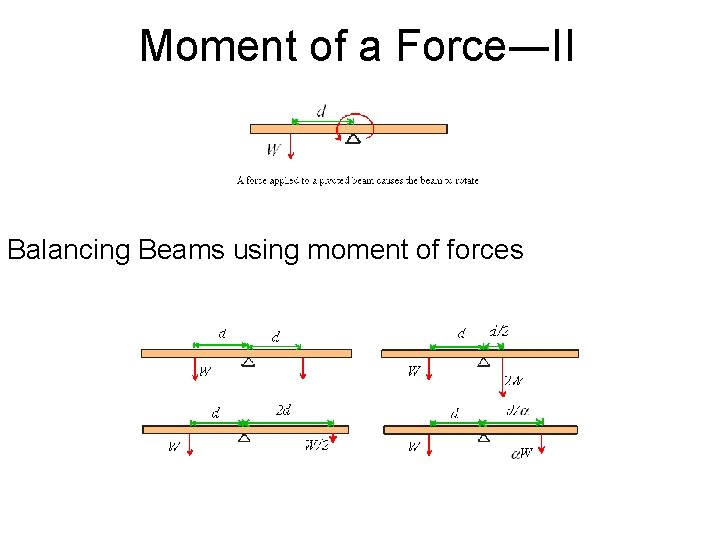
Moment of a Force―I The moment of a force is a measure of its tendency to rotate an object about some point Moment of force W about pivot point: W×d
Moment of a Force―II Balancing Beams using moment of forces
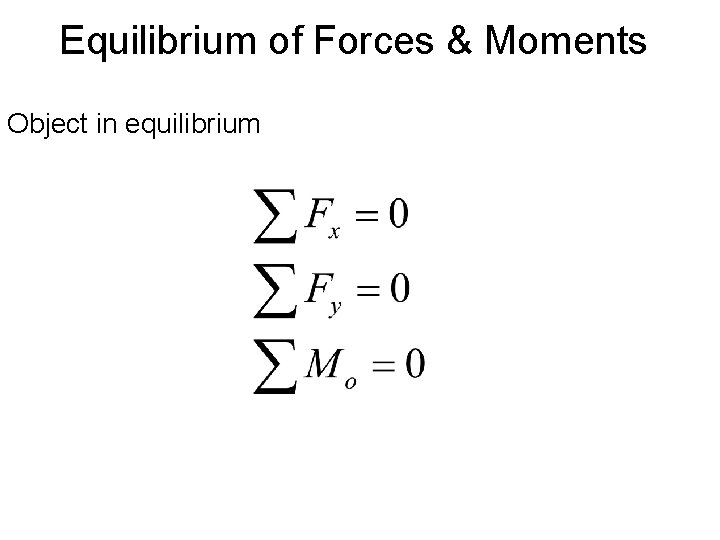
Equilibrium of Forces & Moments Object in equilibrium
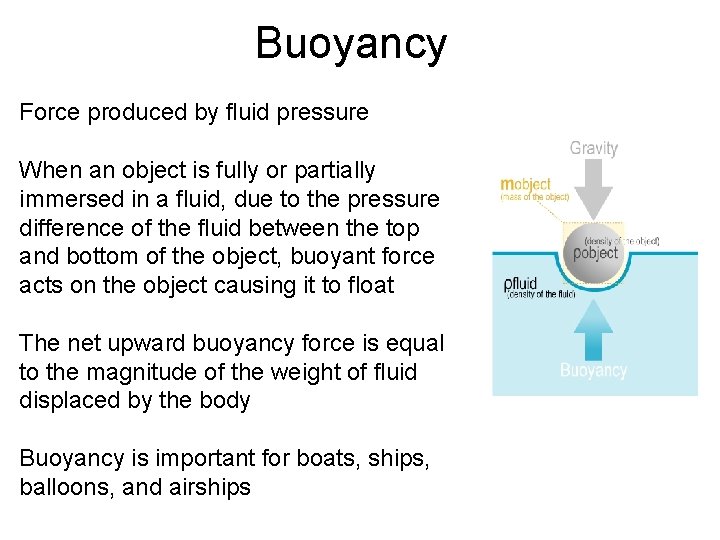
Buoyancy Force produced by fluid pressure When an object is fully or partially immersed in a fluid, due to the pressure difference of the fluid between the top and bottom of the object, buoyant force acts on the object causing it to float The net upward buoyancy force is equal to the magnitude of the weight of fluid displaced by the body Buoyancy is important for boats, ships, balloons, and airships
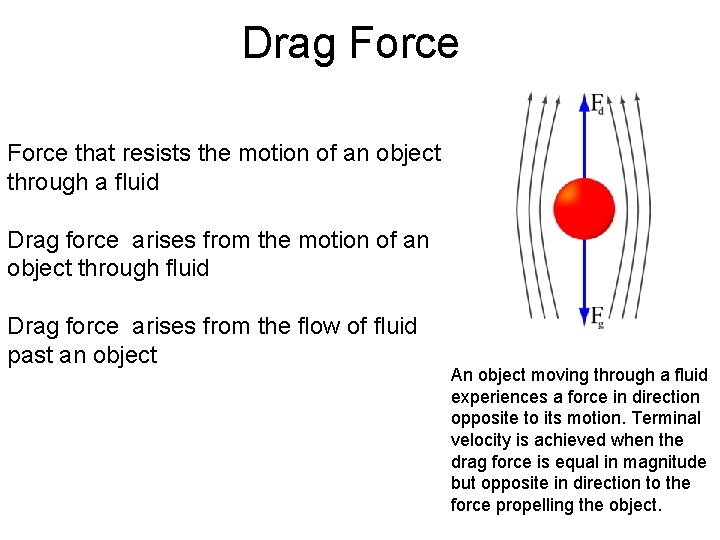
Drag Force that resists the motion of an object through a fluid Drag force arises from the motion of an object through fluid Drag force arises from the flow of fluid past an object An object moving through a fluid experiences a force in direction opposite to its motion. Terminal velocity is achieved when the drag force is equal in magnitude but opposite in direction to the force propelling the object.
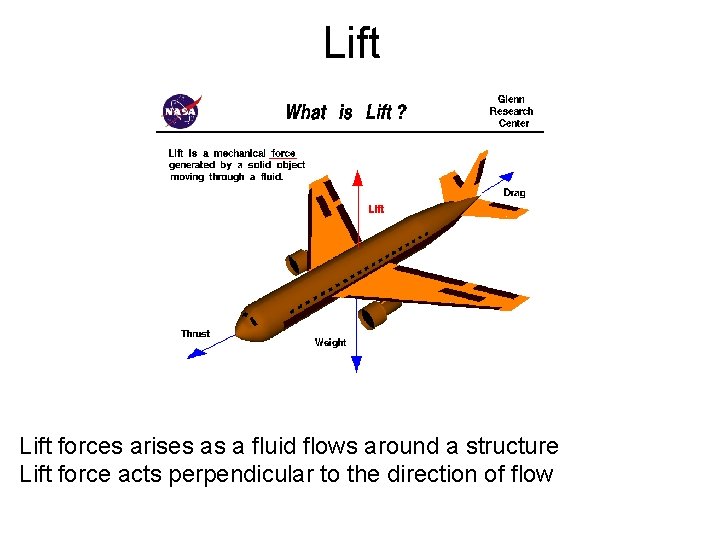
Lift forces arises as a fluid flows around a structure Lift force acts perpendicular to the direction of flow
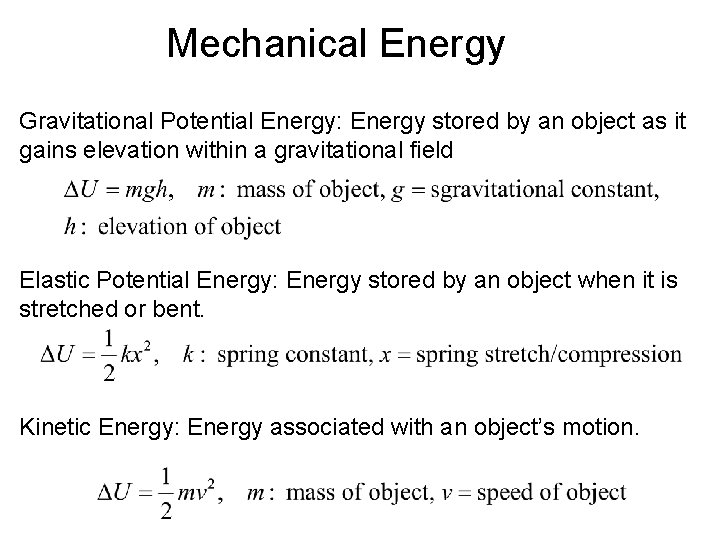
Mechanical Energy Gravitational Potential Energy: Energy stored by an object as it gains elevation within a gravitational field Elastic Potential Energy: Energy stored by an object when it is stretched or bent. Kinetic Energy: Energy associated with an object’s motion.
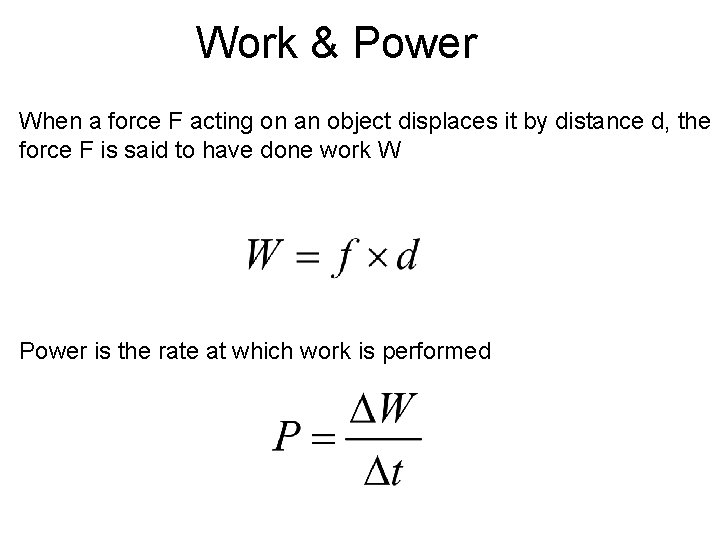
Work & Power When a force F acting on an object displaces it by distance d, the force F is said to have done work W Power is the rate at which work is performed
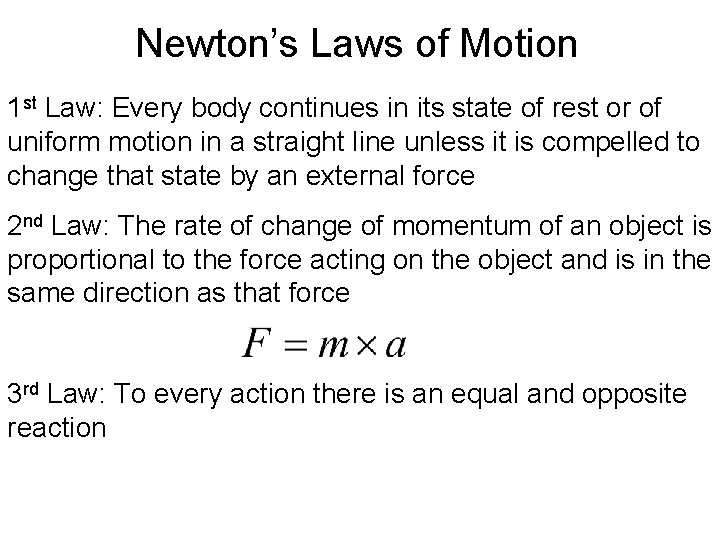
Newton’s Laws of Motion 1 st Law: Every body continues in its state of rest or of uniform motion in a straight line unless it is compelled to change that state by an external force 2 nd Law: The rate of change of momentum of an object is proportional to the force acting on the object and is in the same direction as that force 3 rd Law: To every action there is an equal and opposite reaction
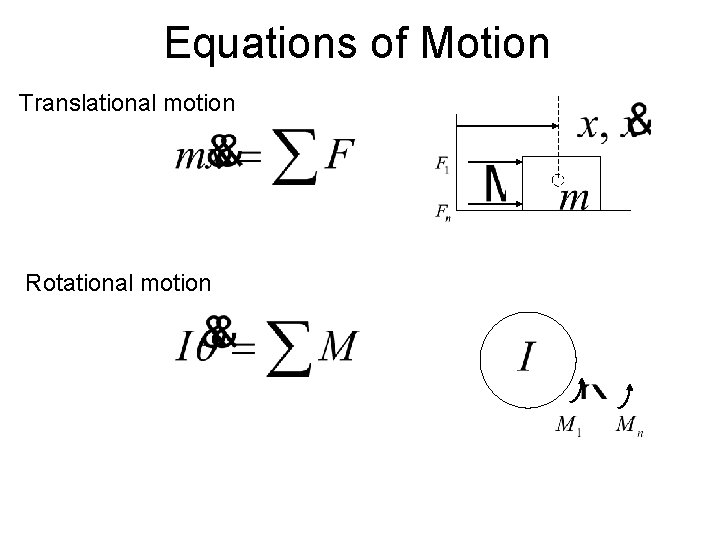
Equations of Motion Translational motion Rotational motion