
Intro to Health Sciences Chapter 20 Laboratory Science
Intro to Health Sciences Chapter 20 Laboratory Science in Health Care
Lab Science n n Many forensic investigators who work in CSI start their careers in medical laboratories. Approximately 70 -80% of all physician decisions are based on laboratory test results produced by medical laboratory professionals.
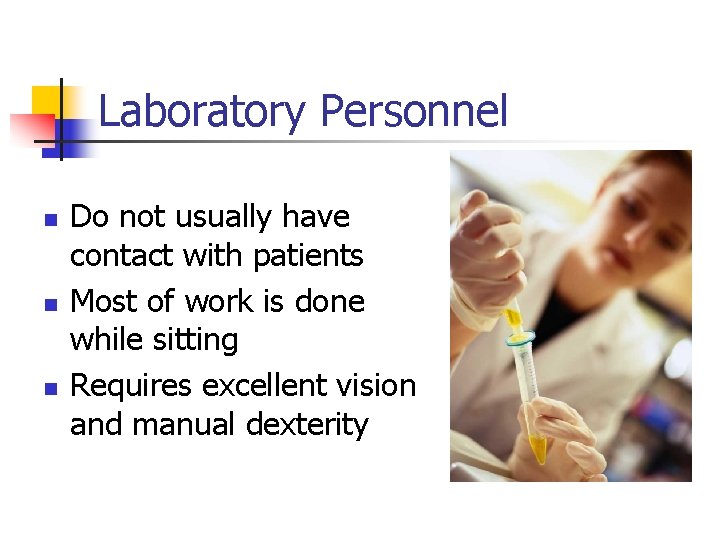
Laboratory Personnel n n n Do not usually have contact with patients Most of work is done while sitting Requires excellent vision and manual dexterity
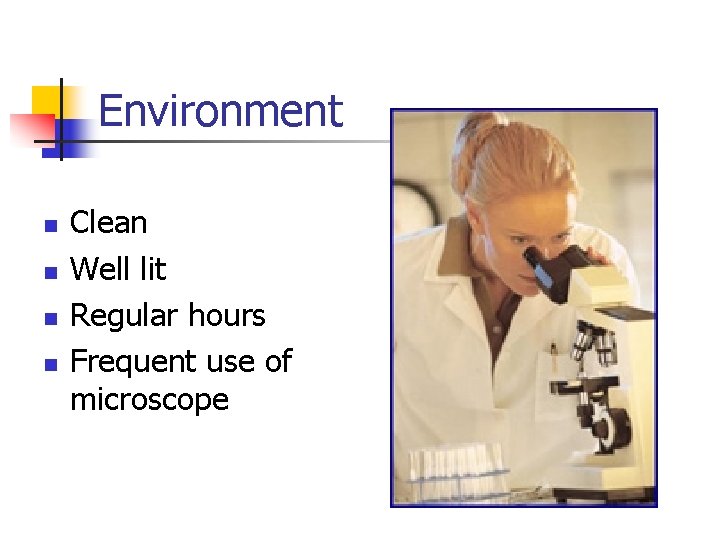
Environment n n Clean Well lit Regular hours Frequent use of microscope
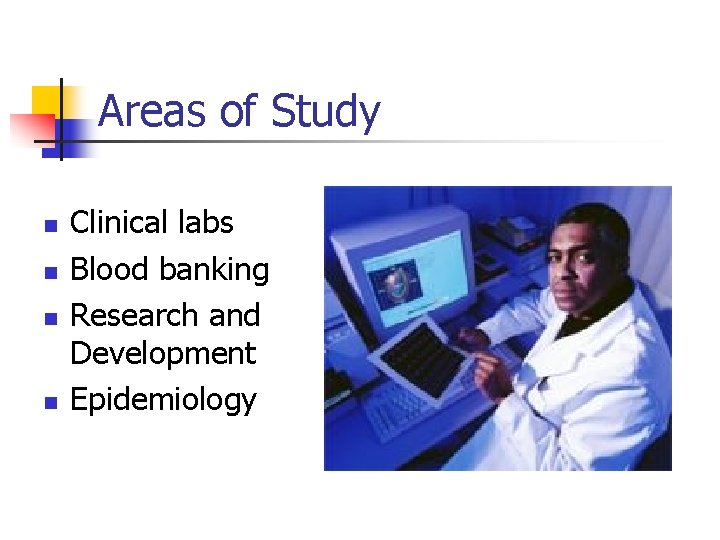
Areas of Study n n Clinical labs Blood banking Research and Development Epidemiology
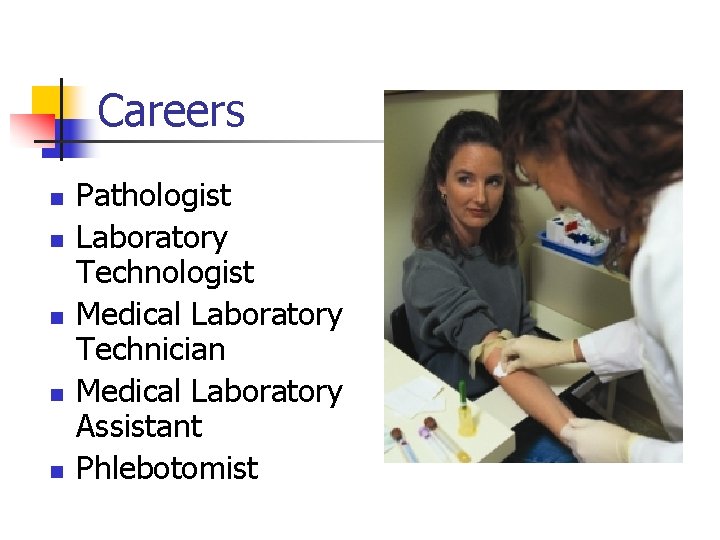
Careers n n n Pathologist Laboratory Technologist Medical Laboratory Technician Medical Laboratory Assistant Phlebotomist
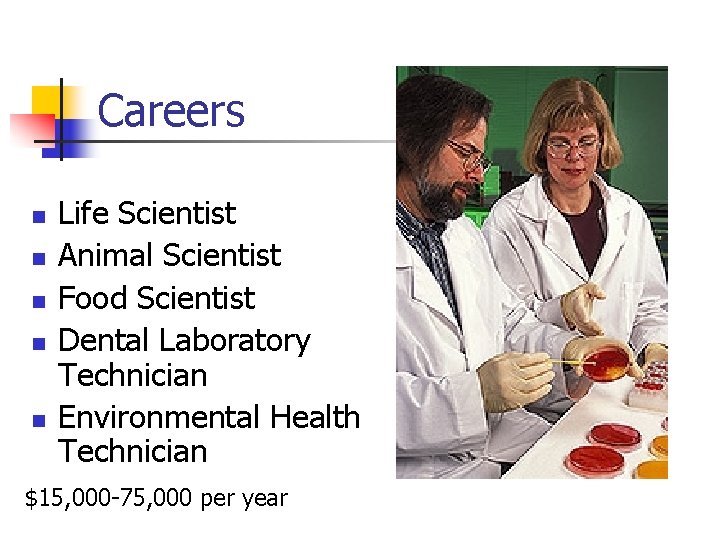
Careers n n n Life Scientist Animal Scientist Food Scientist Dental Laboratory Technician Environmental Health Technician $15, 000 -75, 000 per year
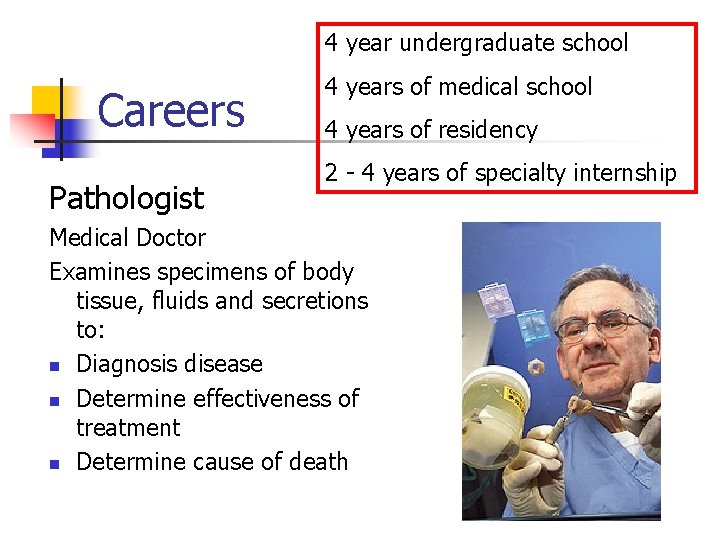
4 year undergraduate school Careers Pathologist 4 years of medical school 4 years of residency 2 - 4 years of specialty internship Medical Doctor Examines specimens of body tissue, fluids and secretions to: n Diagnosis disease n Determine effectiveness of treatment n Determine cause of death
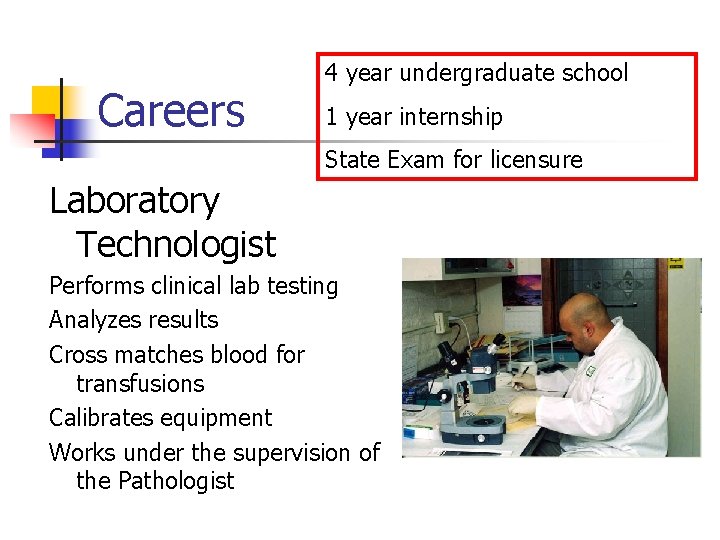
Careers 4 year undergraduate school 1 year internship State Exam for licensure Laboratory Technologist Performs clinical lab testing Analyzes results Cross matches blood for transfusions Calibrates equipment Works under the supervision of the Pathologist
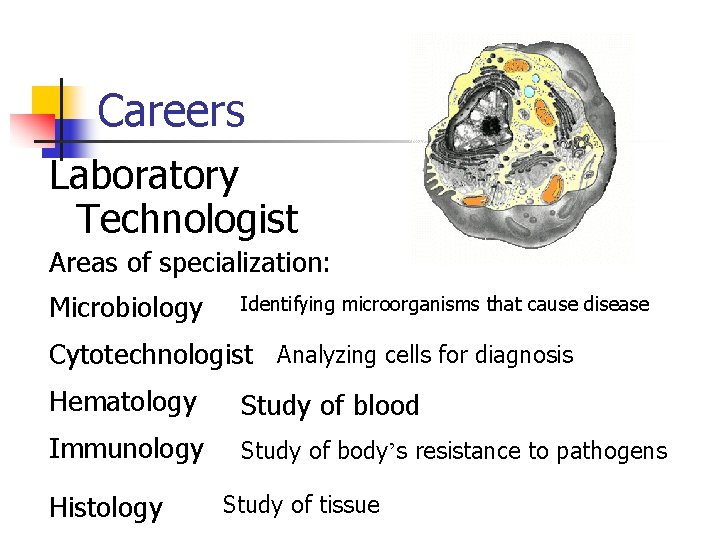
Careers Laboratory Technologist Areas of specialization: Microbiology Identifying microorganisms that cause disease Cytotechnologist Analyzing cells for diagnosis Hematology Study of blood Immunology Study of body’s resistance to pathogens Histology Study of tissue
Careers Medical Laboratory Technician (MLT) Works under the supervision of the Lab technologist or pathologist Prepares tissue slides Performs simple blood tests 2 - 4 years undergraduate school Some states require certification exams for licensure
Careers Medical Laboratory Assistant Perform routine tests under the supervision of the technologist Urinalysis, hematology, serology and bacteriology 1 year of education in a hospital or 2 years in a community college or vocational program Certification is possible with examination
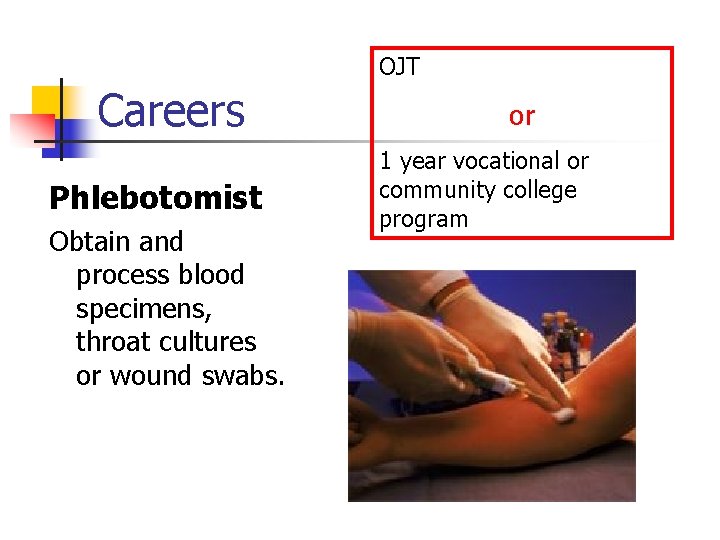
OJT Careers Phlebotomist Obtain and process blood specimens, throat cultures or wound swabs. or 1 year vocational or community college program
Blood Banking Careers Donor recruitment Phlebotomist Blood Bank Lab Supervisor Specialist in Blood Bank Technology (SBB)
Blood Banking Career Opportunities Donor Recruitment Organize and plan blood drives Publicity Incentive Programs Donated blood is good for 35 days. Frozen can be kept up to 3 years
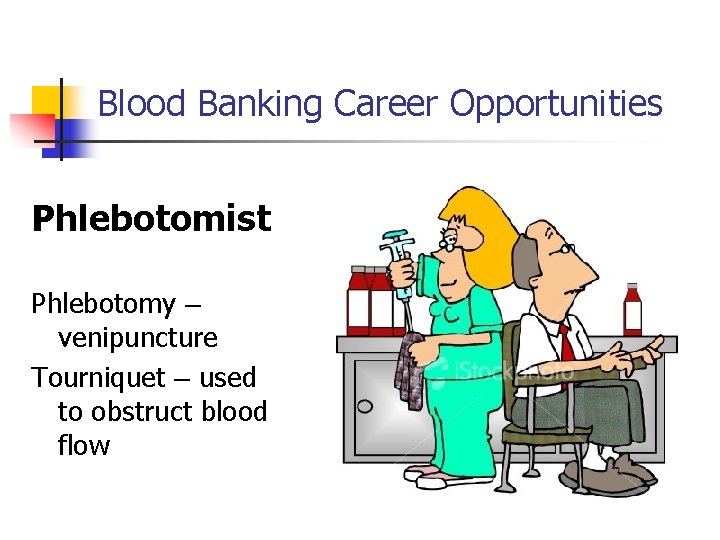
Blood Banking Career Opportunities Phlebotomist Phlebotomy – venipuncture Tourniquet – used to obstruct blood flow
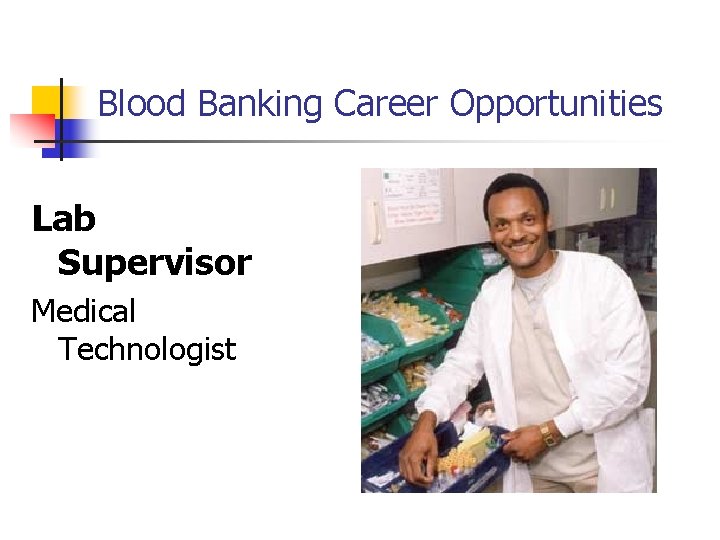
Blood Banking Career Opportunities Lab Supervisor Medical Technologist
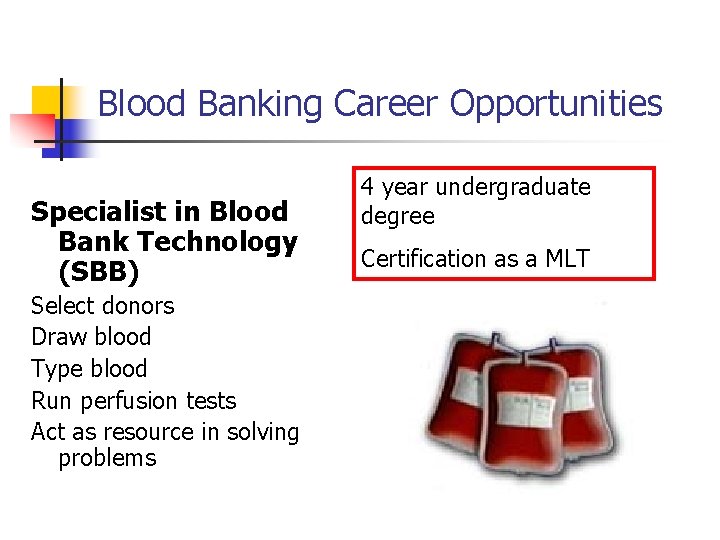
Blood Banking Career Opportunities Specialist in Blood Bank Technology (SBB) Select donors Draw blood Type blood Run perfusion tests Act as resource in solving problems 4 year undergraduate degree Certification as a MLT
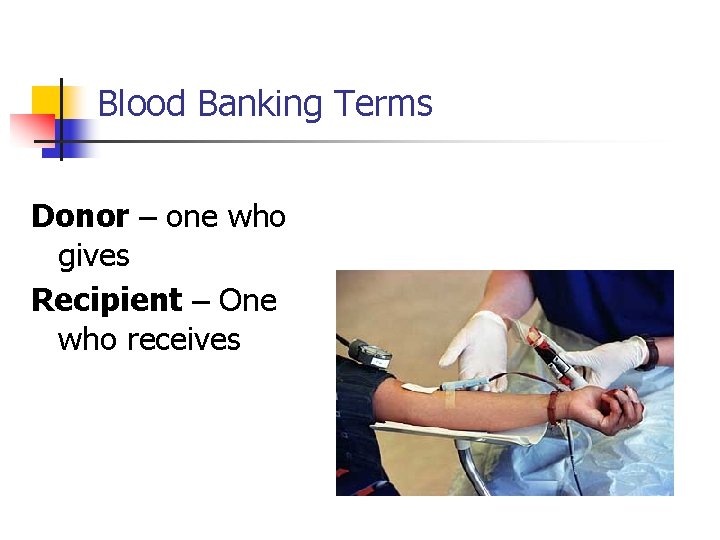
Blood Banking Terms Donor – one who gives Recipient – One who receives
Career Opportunities Life Scientists Researchers Study living organisms and life processes Many areas of specialization 4 year undergraduate degree 2 year Masters Degree 2 year Doctoral program
Career Opportunities Life Scientists Developing new drugs Methods of treatment Developing new plants Environmental protection ¼ work for the federal government 1/3 work for private industry The Rest are in Universities
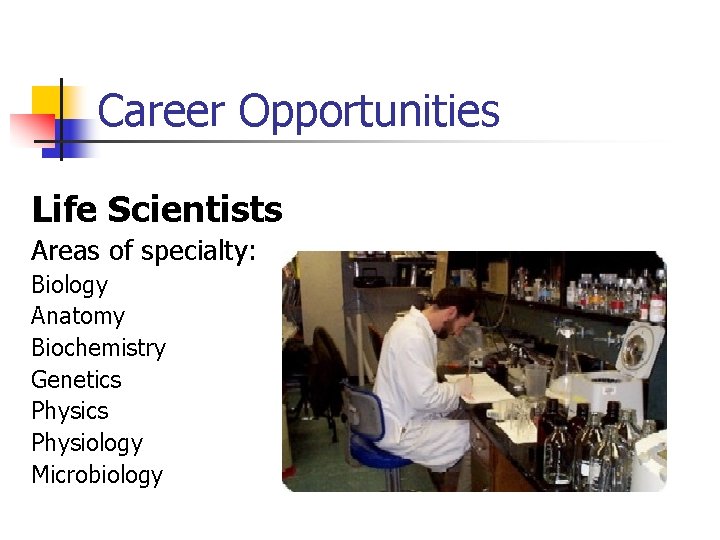
Career Opportunities Life Scientists Areas of specialty: Biology Anatomy Biochemistry Genetics Physiology Microbiology
Career Opportunities Life Scientists Microbiologist Virologists Immunologists Biochemists Study bacteria, algae, viruses, and other MO that cause disease. Develop vaccines and new drugs Specialize in viruses Genetics, use of antibodies Reproduction, growth and metabolism
Career Opportunities Animal Scientists Study animals to improve feeding, housing, and breeding. Zoologists 4 year undergraduate degree 2 year Masters Degree 2 year Doctoral program Develop new techniques in farming, drugs, pest control
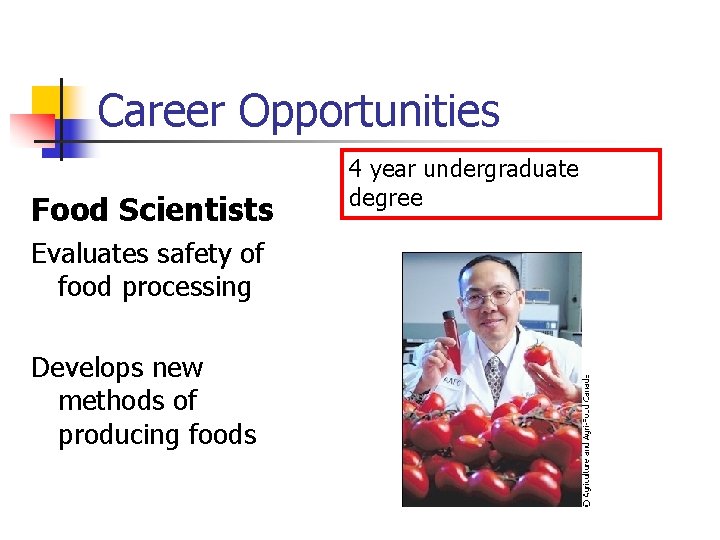
Career Opportunities Food Scientists Evaluates safety of food processing Develops new methods of producing foods 4 year undergraduate degree
Other Laboratory Personnel Dental Lab Technician Environmental Health Technician
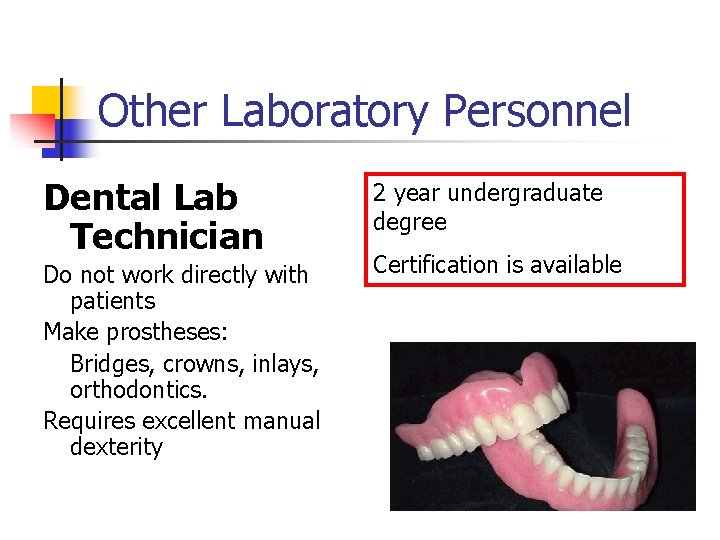
Other Laboratory Personnel Dental Lab Technician Do not work directly with patients Make prostheses: Bridges, crowns, inlays, orthodontics. Requires excellent manual dexterity 2 year undergraduate degree Certification is available
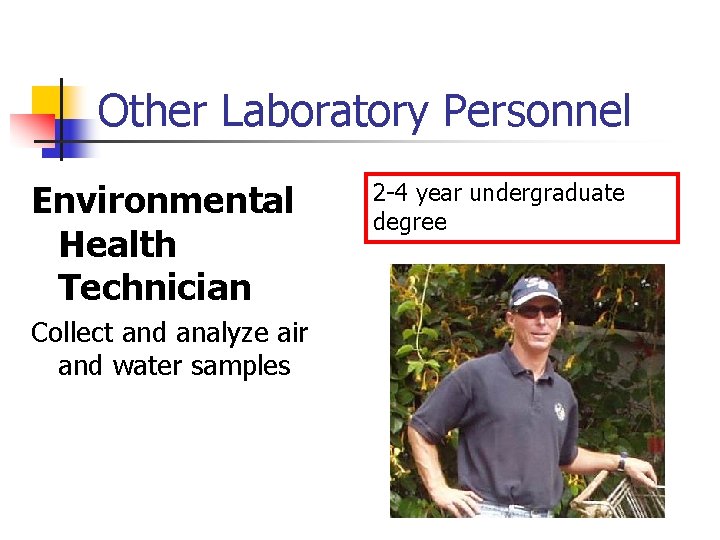
Other Laboratory Personnel Environmental Health Technician Collect and analyze air and water samples 2 -4 year undergraduate degree
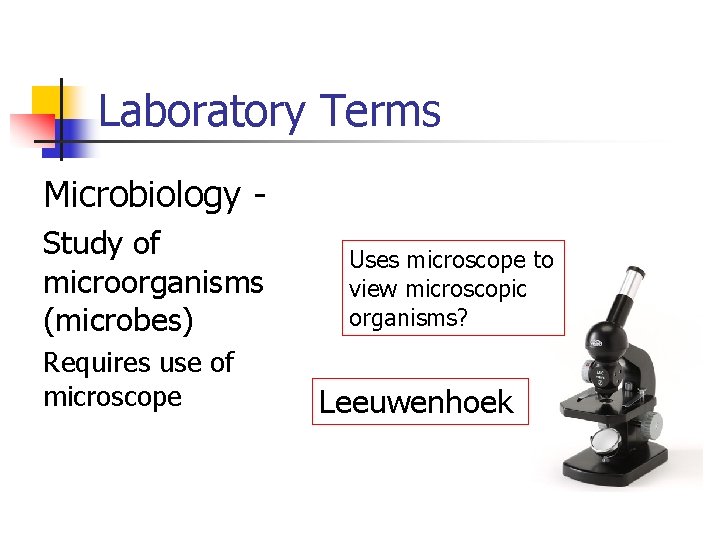
Laboratory Terms Microbiology Study of microorganisms (microbes) Requires use of microscope Uses microscope to view microscopic organisms? Leeuwenhoek
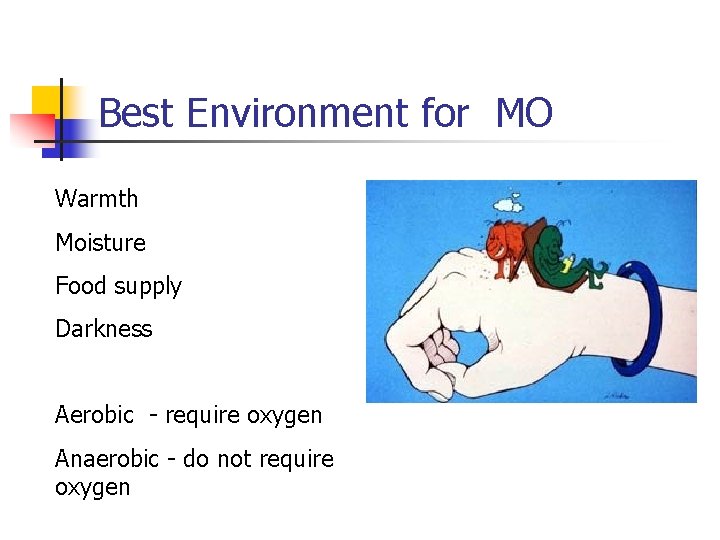
Best Environment for MO Warmth Moisture Food supply Darkness Aerobic - require oxygen Anaerobic - do not require oxygen
Terms in Microbiology Non-pathogens Pathogens Carrier Not harmful When an animal carries a MO w/o injury to self. Can still spread the disease Normal Flora Usually live in certain parts of the body w/o causing harm
Terms in Microbiology Resident Transient Parasites MO that are always present MO that are found temporarily MO that damage host where live they
Terms in Microbiology Infection Incubation Invasion of MO, causing disease Period of time when an infection shows its effects Communicable Able to be transmitted to others Chain of infection The infectious process
Chain of Infection Causative agent Reservoir Microorganism Where the agent lives (animal, human, couch, etc) Mode of transmission Mode of entry Susceptible host Direct contact, body secretions, air born, food, water, mosquitoes Break in skin, mucous membrane, any tract When you are sick, malnourished, very old, very young
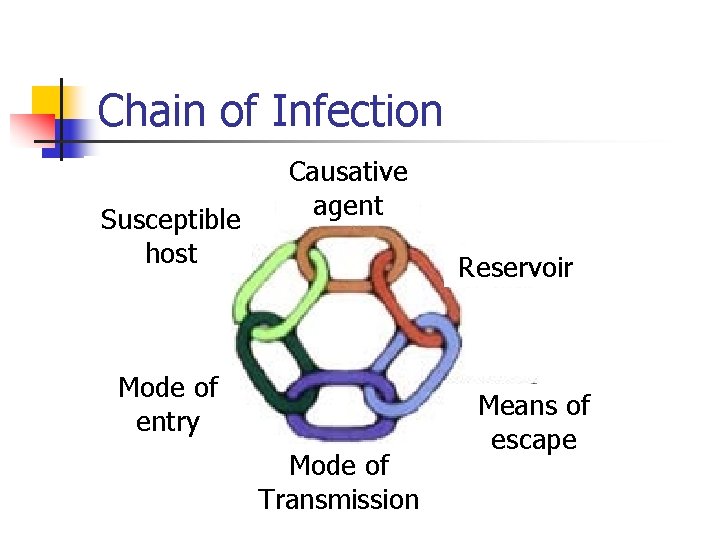
Chain of Infection Susceptible host Causative agent Reservoir Mode of entry Mode of Transmission Means of escape
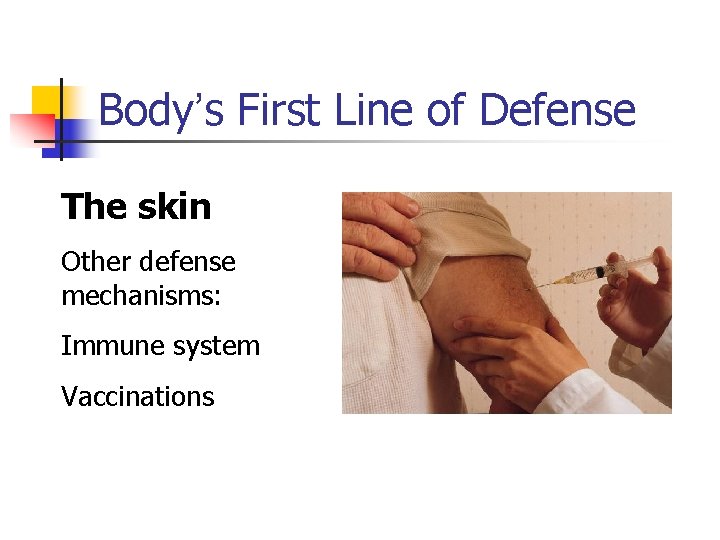
Body’s First Line of Defense The skin Other defense mechanisms: Immune system Vaccinations
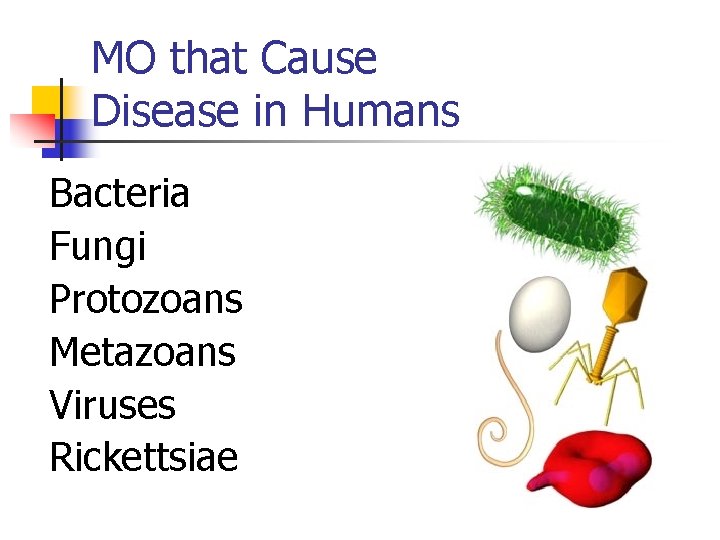
MO that Cause Disease in Humans Bacteria Fungi Protozoans Metazoans Viruses Rickettsiae
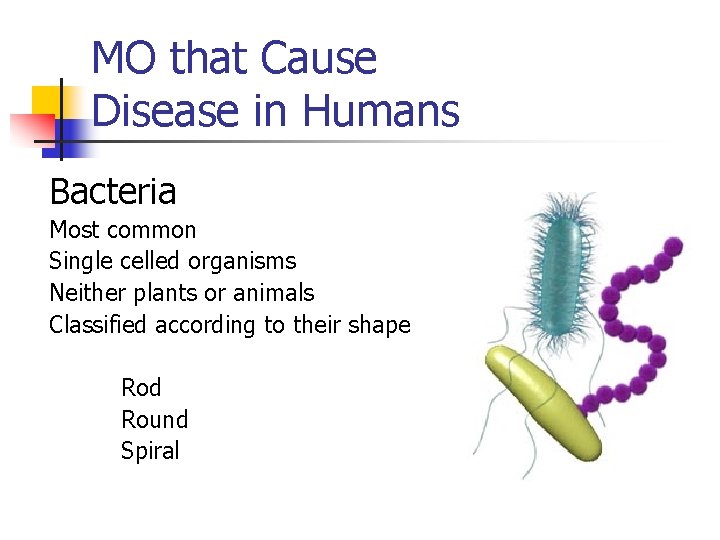
MO that Cause Disease in Humans Bacteria Most common Single celled organisms Neither plants or animals Classified according to their shape Rod Round Spiral
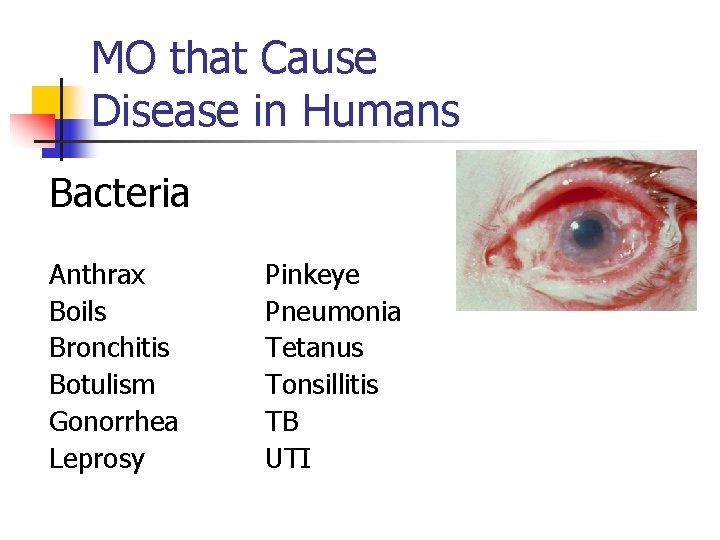
MO that Cause Disease in Humans Bacteria Anthrax Boils Bronchitis Botulism Gonorrhea Leprosy Pinkeye Pneumonia Tetanus Tonsillitis TB UTI
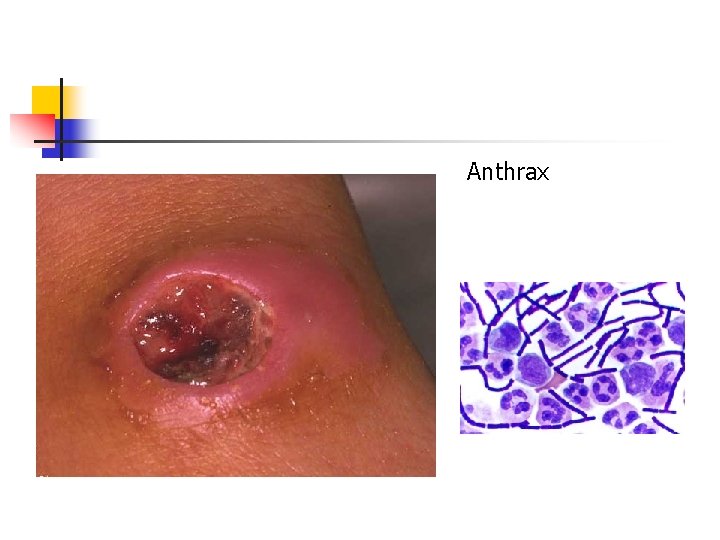
Anthrax
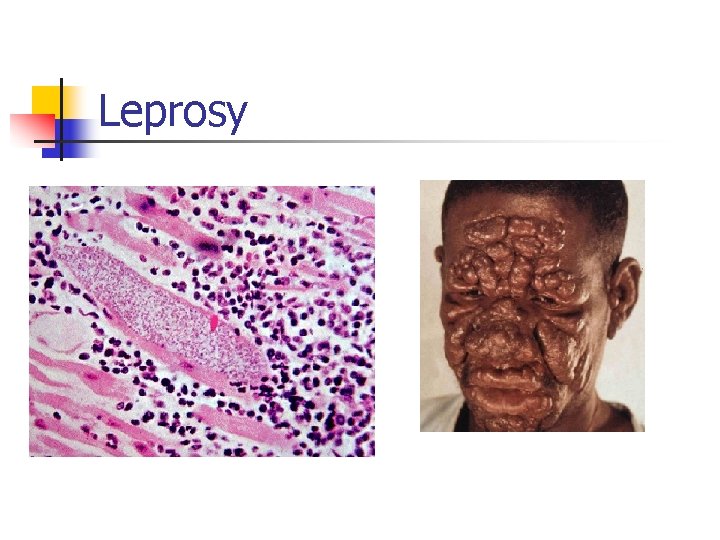
Leprosy
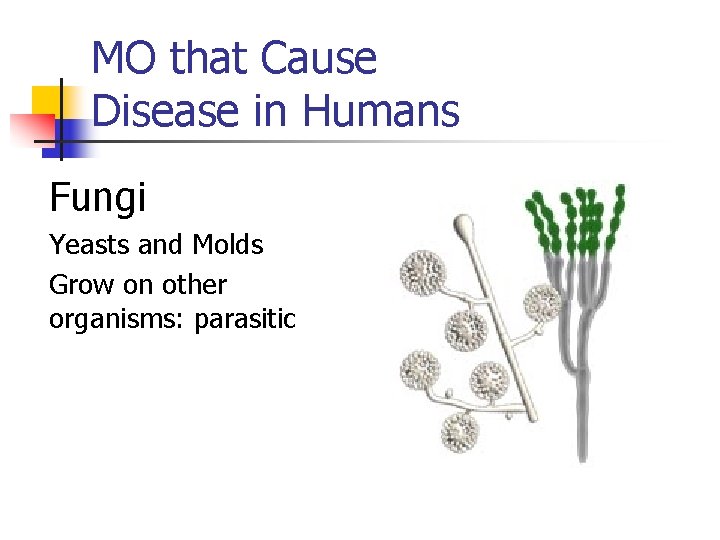
MO that Cause Disease in Humans Fungi Yeasts and Molds Grow on other organisms: parasitic
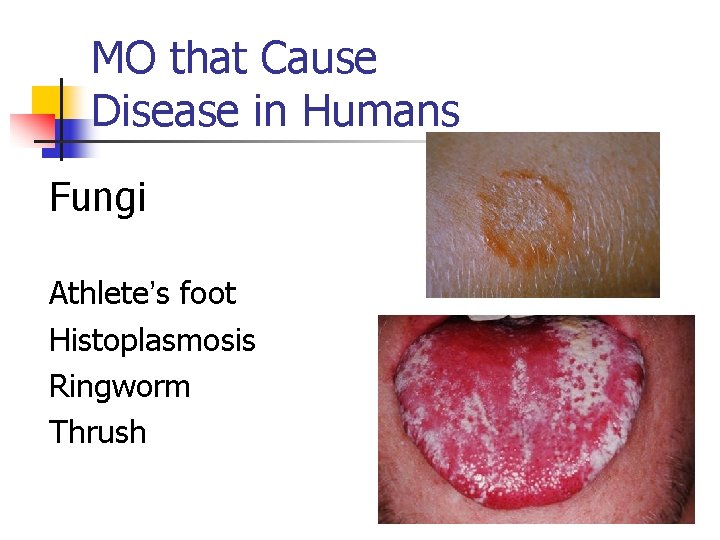
MO that Cause Disease in Humans Fungi Athlete’s foot Histoplasmosis Ringworm Thrush
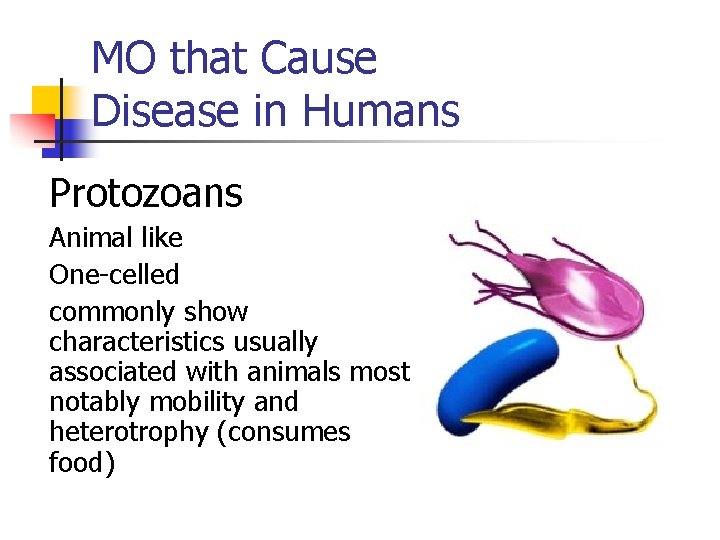
MO that Cause Disease in Humans Protozoans Animal like One-celled commonly show characteristics usually associated with animals most notably mobility and heterotrophy (consumes food)
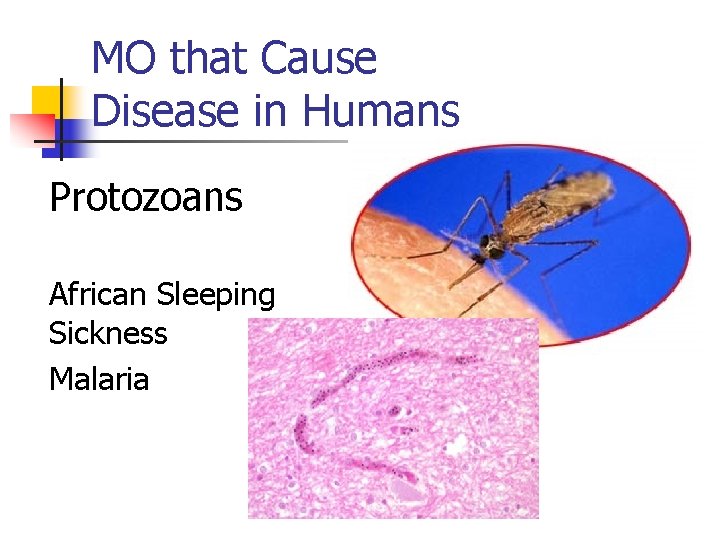
MO that Cause Disease in Humans Protozoans African Sleeping Sickness Malaria
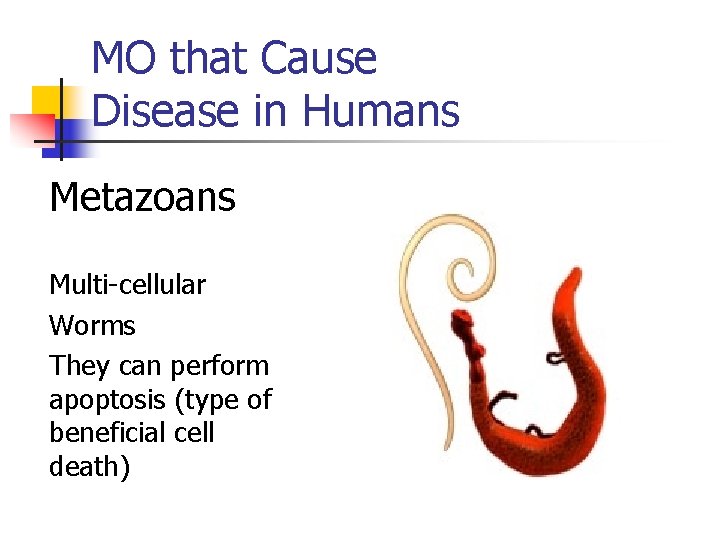
MO that Cause Disease in Humans Metazoans Multi-cellular Worms They can perform apoptosis (type of beneficial cell death)
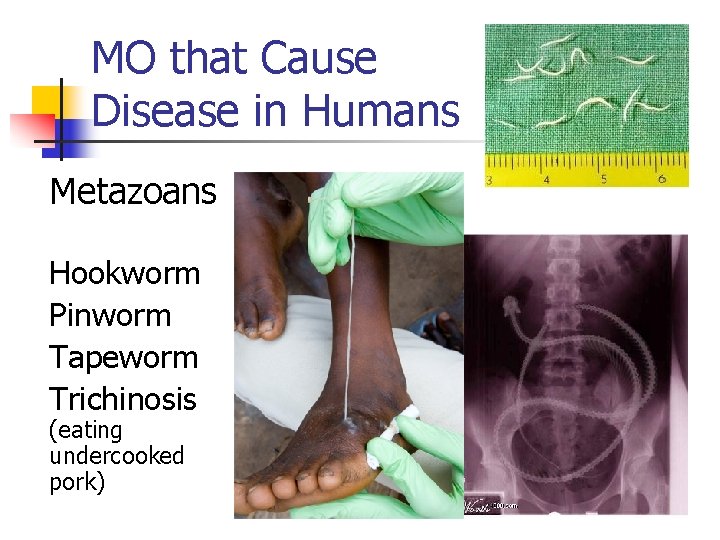
MO that Cause Disease in Humans Metazoans Hookworm Pinworm Tapeworm Trichinosis (eating undercooked pork)
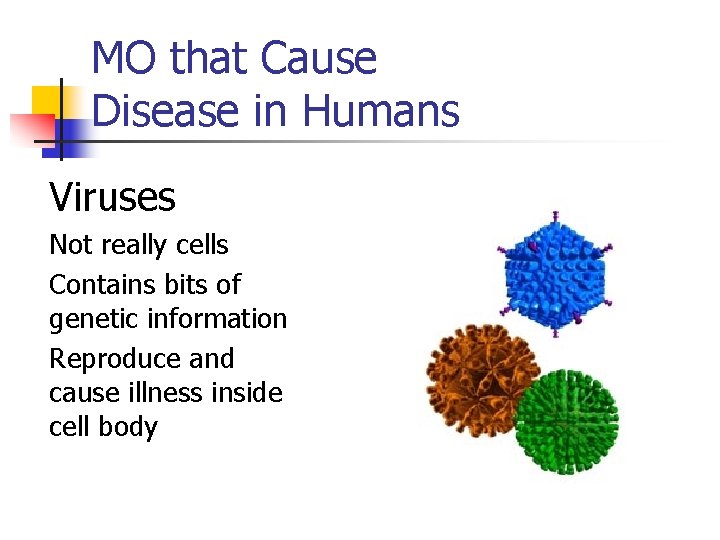
MO that Cause Disease in Humans Viruses Not really cells Contains bits of genetic information Reproduce and cause illness inside cell body
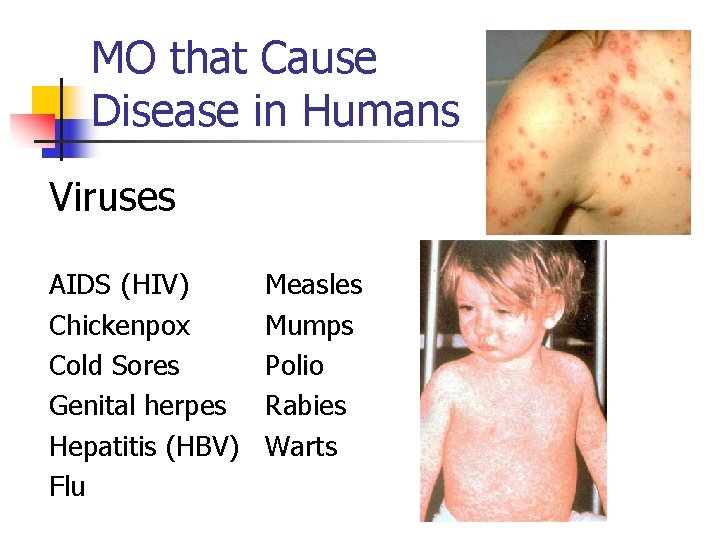
MO that Cause Disease in Humans Viruses AIDS (HIV) Chickenpox Cold Sores Genital herpes Hepatitis (HBV) Flu Measles Mumps Polio Rabies Warts
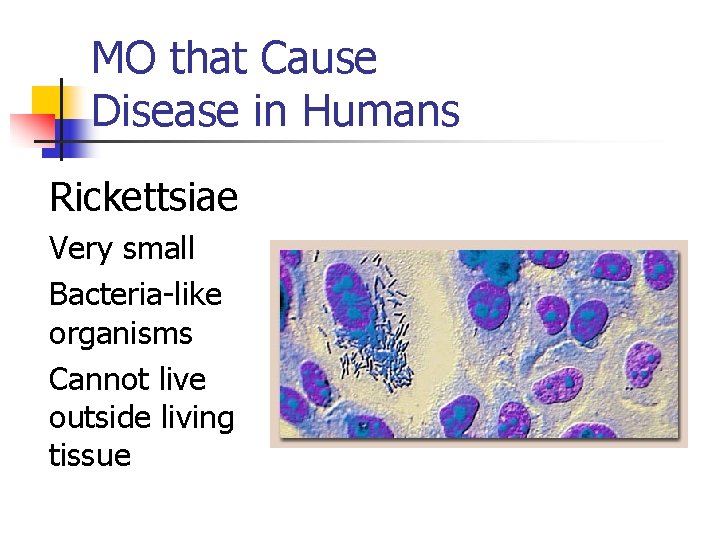
MO that Cause Disease in Humans Rickettsiae Very small Bacteria-like organisms Cannot live outside living tissue
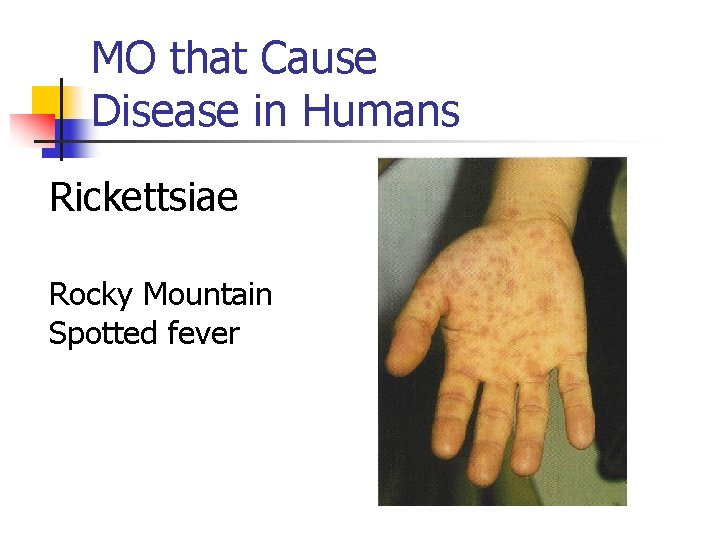
MO that Cause Disease in Humans Rickettsiae Rocky Mountain Spotted fever
Epidemiology Study of disease in humans Uses demographic data Helps control and prevent CDC Epidemic – outbreak of disease that effects large number of people in a certain area
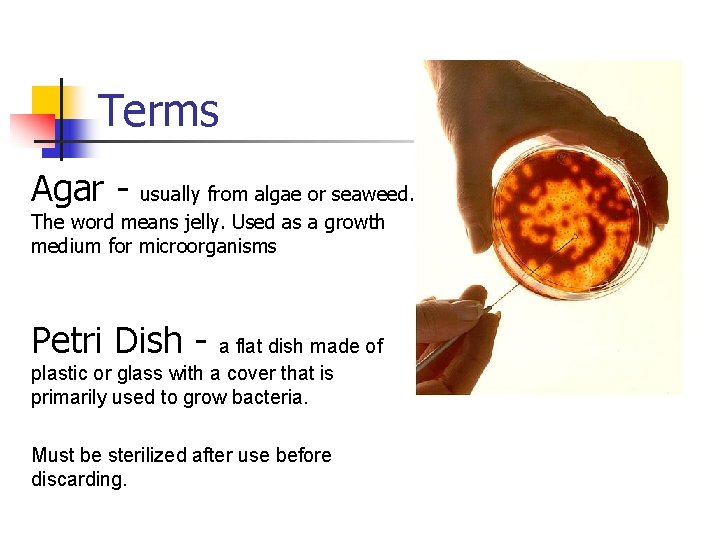
Terms Agar - usually from algae or seaweed. The word means jelly. Used as a growth medium for microorganisms Petri Dish - a flat dish made of plastic or glass with a cover that is primarily used to grow bacteria. Must be sterilized after use before discarding.
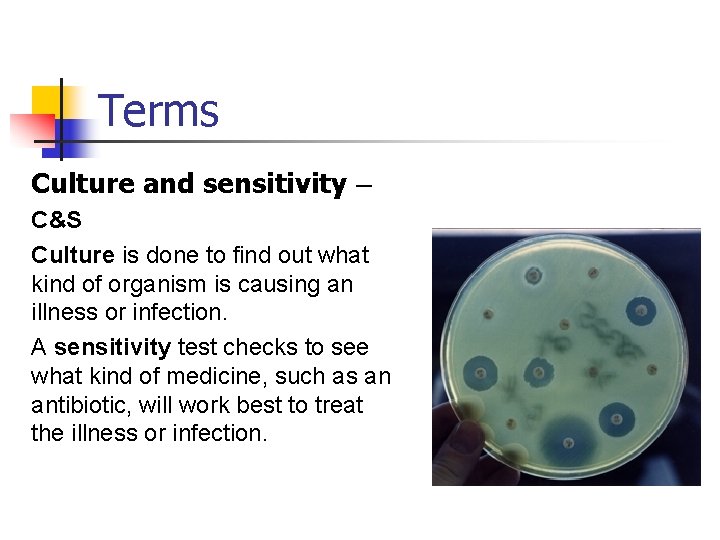
Terms Culture and sensitivity – C&S Culture is done to find out what kind of organism is causing an illness or infection. A sensitivity test checks to see what kind of medicine, such as an antibiotic, will work best to treat the illness or infection.
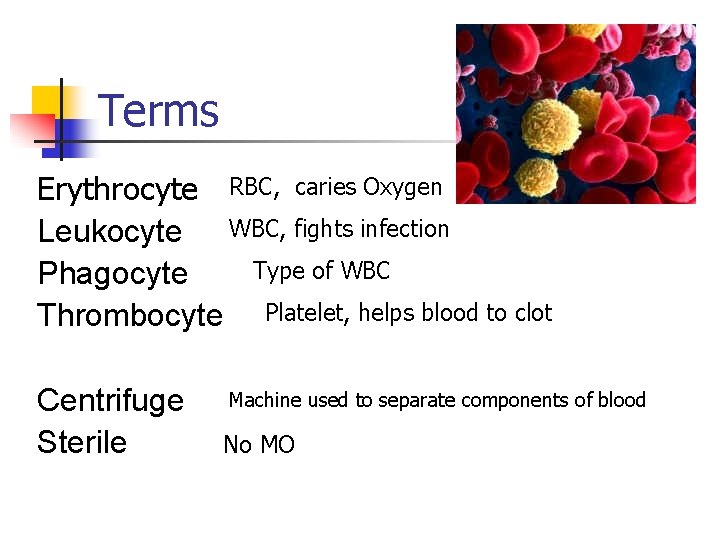
Terms Erythrocyte RBC, caries Oxygen Leukocyte WBC, fights infection Type of WBC Phagocyte Thrombocyte Platelet, helps blood to clot Centrifuge Sterile Machine used to separate components of blood No MO
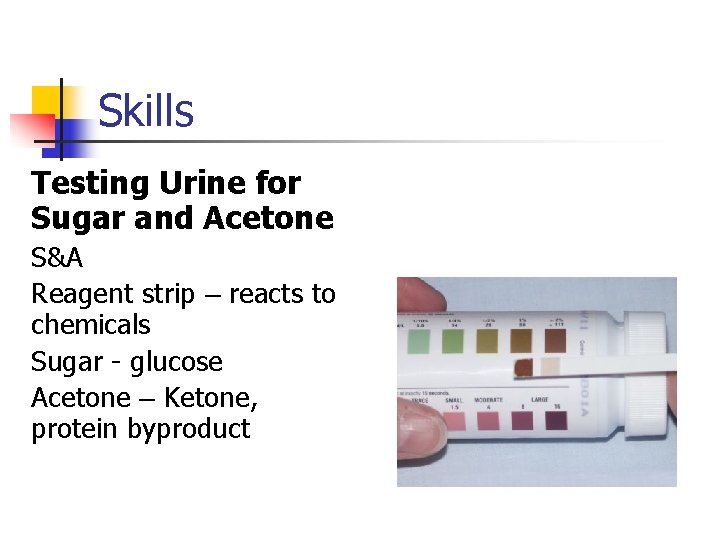
Skills Testing Urine for Sugar and Acetone S&A Reagent strip – reacts to chemicals Sugar - glucose Acetone – Ketone, protein byproduct
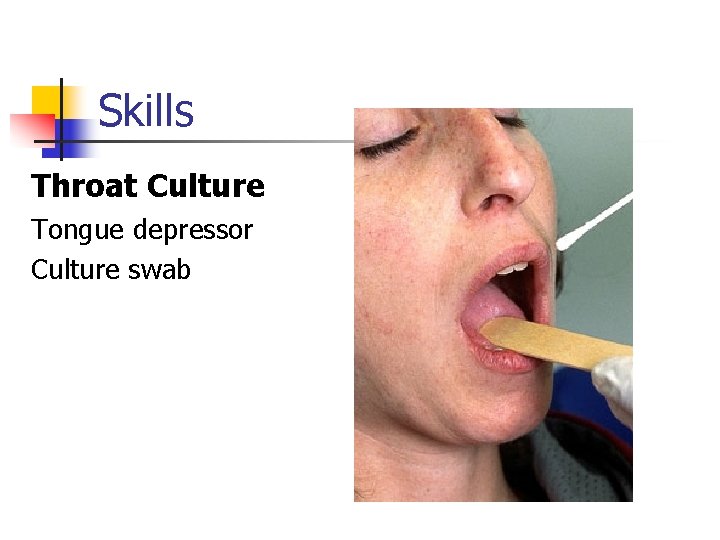
Skills Throat Culture Tongue depressor Culture swab
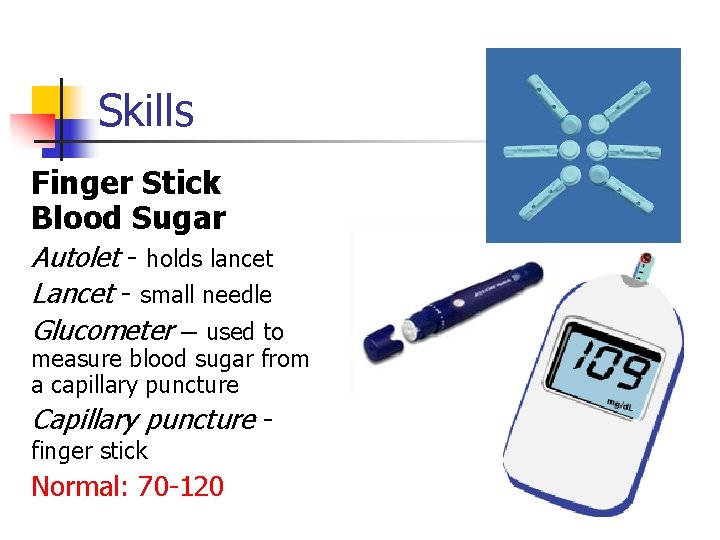
Skills Finger Stick Blood Sugar Autolet - holds lancet Lancet - small needle Glucometer – used to measure blood sugar from a capillary puncture Capillary puncture finger stick Normal: 70 -120
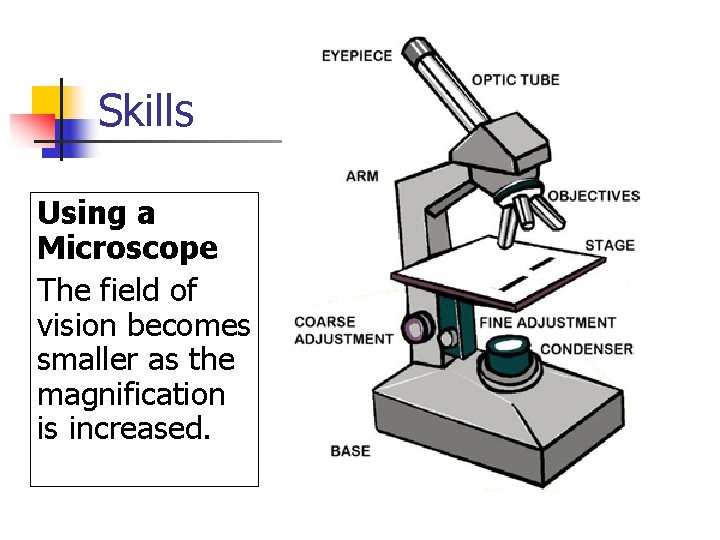
Skills Using a Microscope The field of vision becomes smaller as the magnification is increased.
Review Lab employee who is a medical doctor specializing in body tissue and fluid analysis? Pathologist
Review A laboratory technician requires _____ years of education ? 4 years plus 1 year internship
Review Educational training for a MLT ? 2 -4 years
Review Draws blood, can be educated with OJT? Phlebotomist
Review 4 year degree? Bachelors degree
Review Study of body tissues? Histology
Review Study of blood? hematology
Review One who receives a donation form another? recipient
Review Who invented the compound microscope? A. Janassen B. Fleming C. Leeuwenhook D. Lannec
Review MO prefer an environment that is ? A. warm B. dark C. dry
Review Harmful MO ? pathogens
Review Bacteria that is not harmful when it is found in a certain location ? Normal flora.
Review Washing your hands breaks what chain in the chain of infection ? Causative agent
Review Wearing gloves breaks what chain in the chain of infection ? Portal of entry
Review Getting 8 hours of sleep each night and eating healthy each day breaks what chain in the chain of infection ? Susceptible host
Review An invasion of MO, resulting in disease ? infection
Review Vaccinations are the body’s first line of defense. True False
Review Natural acquired immunity occurs as a result of having the disease. True or False
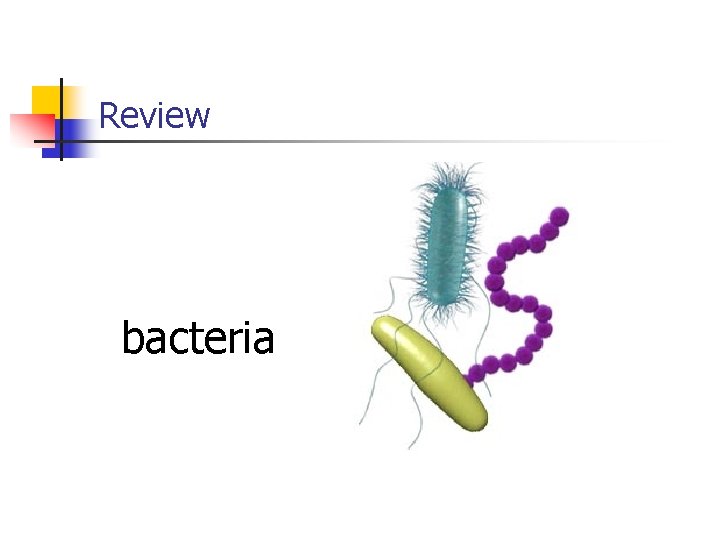
Review bacteria
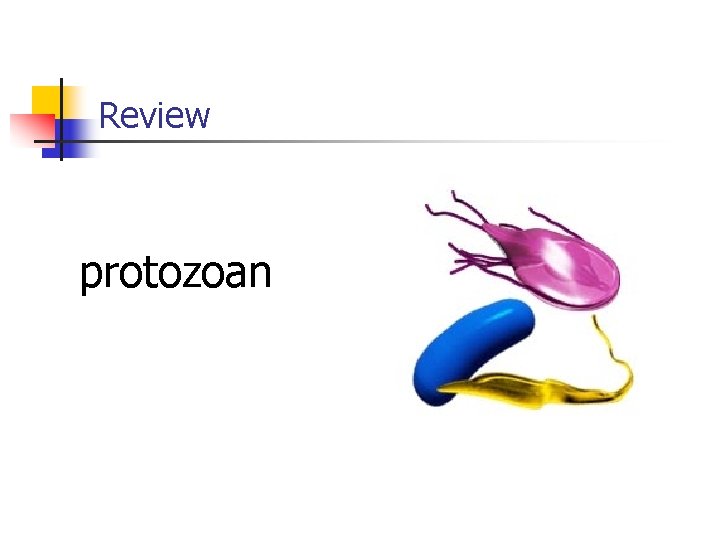
Review protozoan
Review TB, UTI, Pinkeye ? bacteria
Review Hepatitis, Aids, flu ? Virus
Review Tapeworm, pinworm? Metazoan
Review Athlete’s foot, ringworm? fungus
Review Rocky Mountain Spotted Fever? Rickettsiae
Review Outbreak of disease in a certain location ? epidemic
Review HCT ? Hematocrit H&H ? Hemoglobin and Hematocrit
Review HIV ? Human immunodeficiency virus HBV ? Hepatitis B
Review CDC ? Center for Disease Control
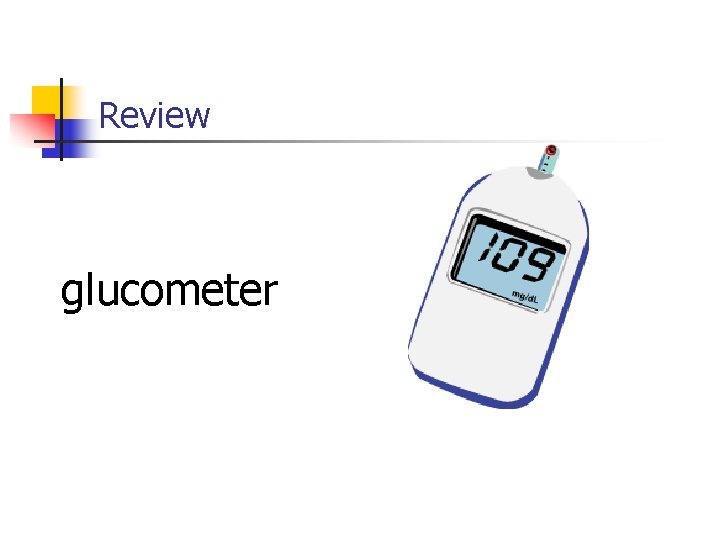
Review glucometer
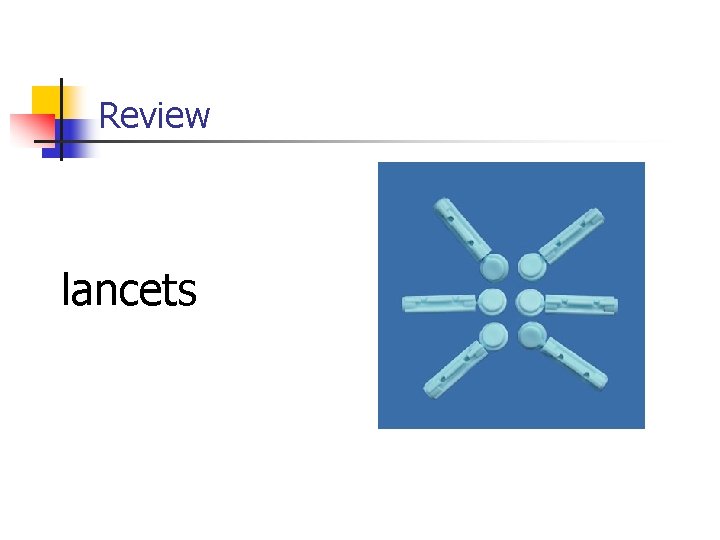
Review lancets
Review What is the most important way to prevent the spread of microorganisms? Hand washing

Questions? ?
- Slides: 92