
Intro to Expository writing What is expository writing
- Slides: 13
Intro to Expository writing
What is expository writing? Writing intended to inform, explain, and/or define the author’s subject to the reader Examples: essays, research papers, newspaper and magazine articles, biographies, etc.
Types of Essays There are many types of essays and people refer it as different things or titles. A few are…. Informal Persuasive Research Literary Argumentative Cause and Effect
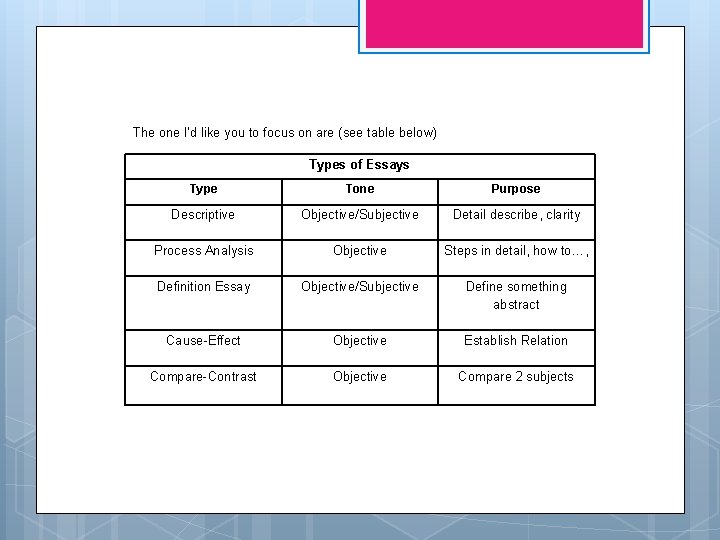
The one I’d like you to focus on are (see table below) Types of Essays Type Tone Purpose Descriptive Objective/Subjective Detail describe, clarity Process Analysis Objective Steps in detail, how to…, Definition Essay Objective/Subjective Define something abstract Cause-Effect Objective Establish Relation Compare-Contrast Objective Compare 2 subjects
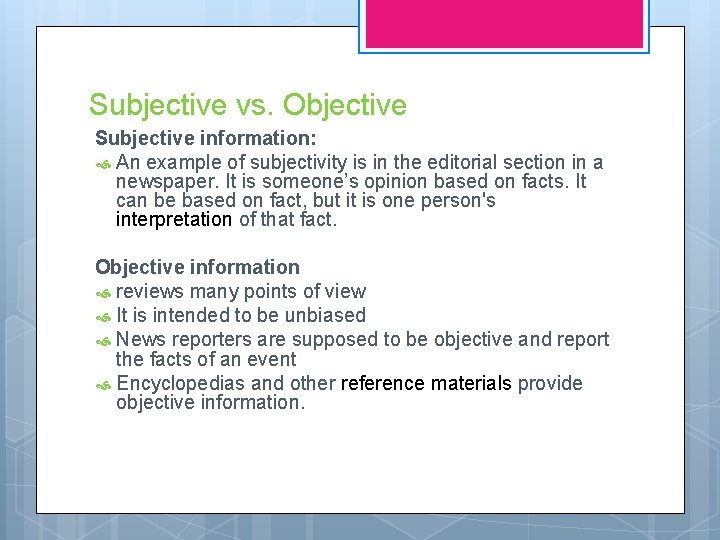
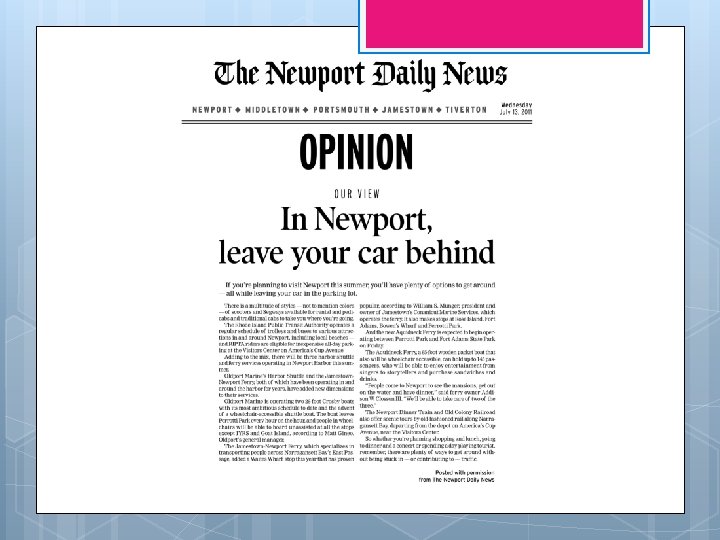
Subjective vs. Objective Subjective information: An example of subjectivity is in the editorial section in a newspaper. It is someone’s opinion based on facts. It can be based on fact, but it is one person's interpretation of that fact. Objective information reviews many points of view It is intended to be unbiased News reporters are supposed to be objective and report the facts of an event Encyclopedias and other reference materials provide objective information.
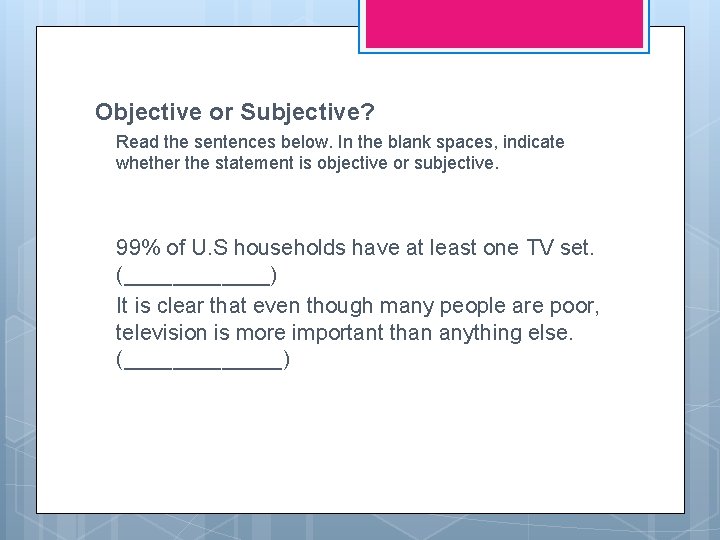
Objective or Subjective? Read the sentences below. In the blank spaces, indicate whether the statement is objective or subjective. 99% of U. S households have at least one TV set. (______) It is clear that even though many people are poor, television is more important than anything else. (_______)
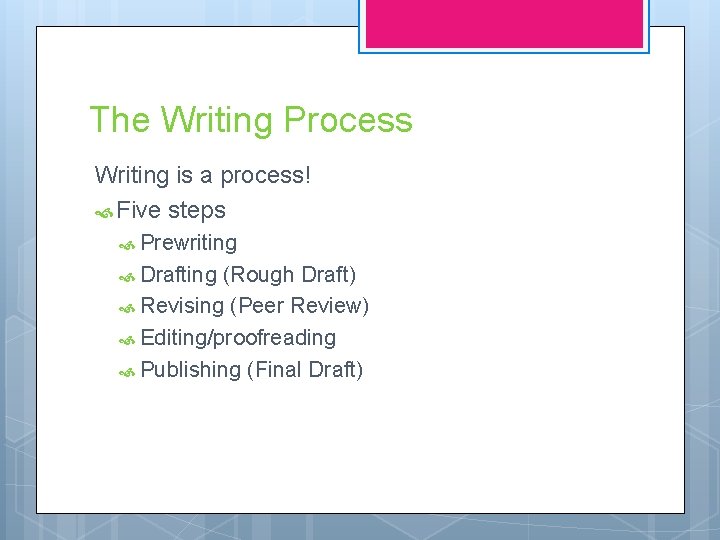
The Writing Process Writing is a process! Five steps Prewriting Drafting (Rough Draft) Revising (Peer Review) Editing/proofreading Publishing (Final Draft)
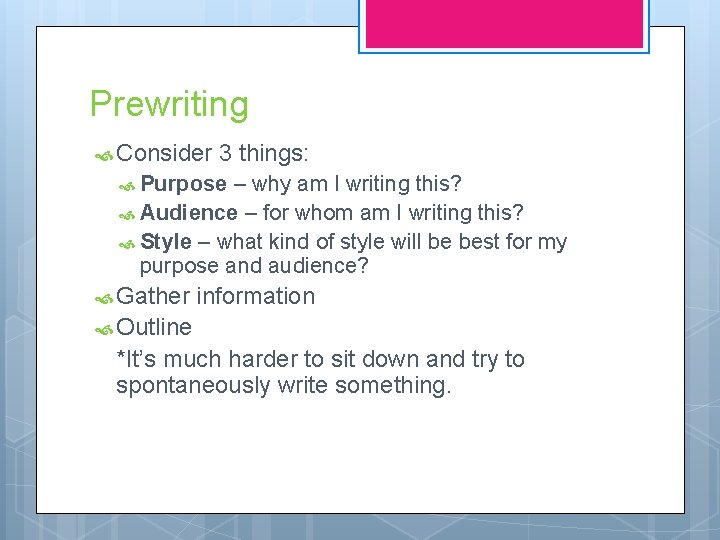
Prewriting Consider 3 things: Purpose – why am I writing this? Audience – for whom am I writing this? Style – what kind of style will be best for my purpose and audience? Gather information Outline *It’s much harder to sit down and try to spontaneously write something.
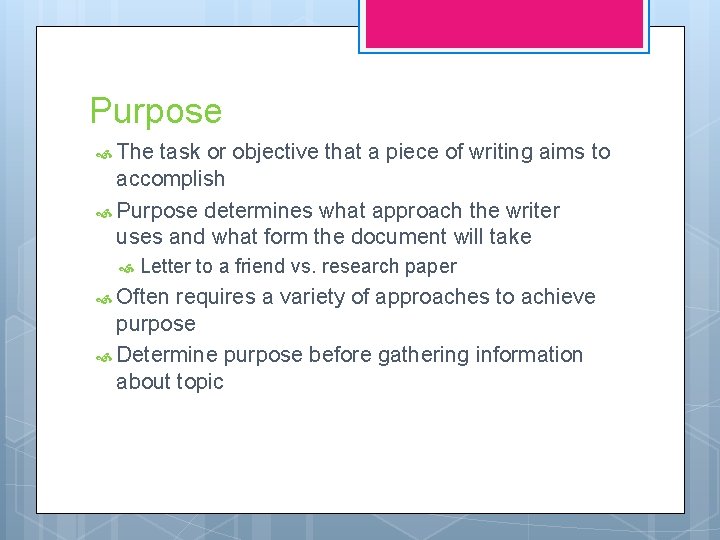
Purpose The task or objective that a piece of writing aims to accomplish Purpose determines what approach the writer uses and what form the document will take Letter to a friend vs. research paper Often requires a variety of approaches to achieve purpose Determine purpose before gathering information about topic
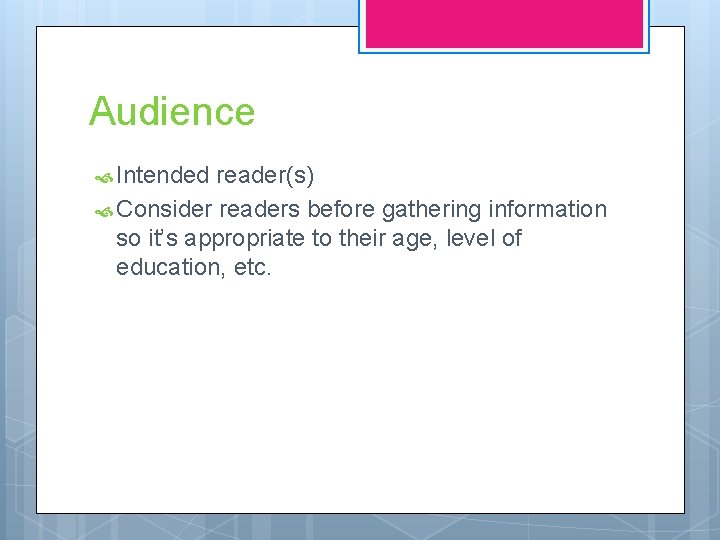
Audience Intended reader(s) Consider readers before gathering information so it’s appropriate to their age, level of education, etc.
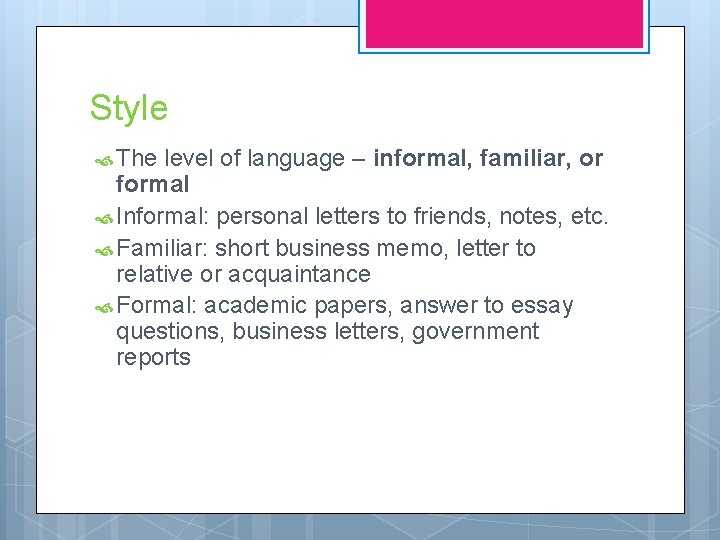
Style The level of language – informal, familiar, or formal Informal: personal letters to friends, notes, etc. Familiar: short business memo, letter to relative or acquaintance Formal: academic papers, answer to essay questions, business letters, government reports
Works Cited Buscemi, Santi V. A Reader for Developing Writers. New York: Mc. Graw-Hill, 2002. Print.