
Intro to Energy Photosynthesis Chapter 8 Ms Cole


- Slides: 18
Intro to Energy & Photosynthesis Chapter 8 Ms. Cole
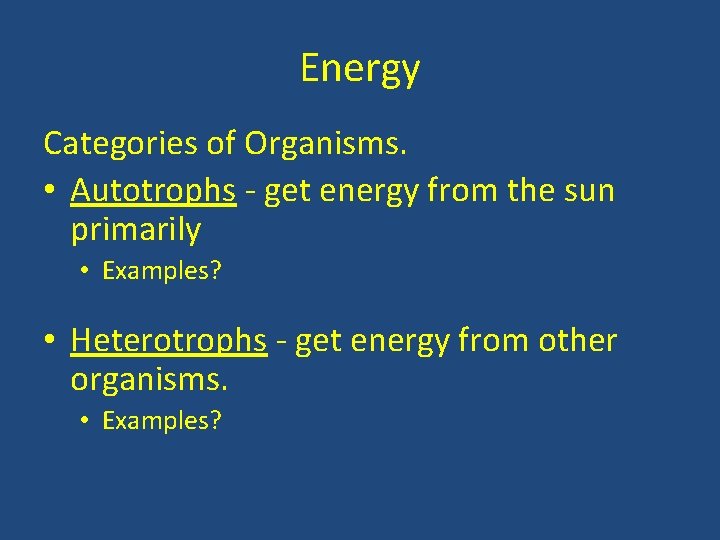
Energy Categories of Organisms. • Autotrophs - get energy from the sun primarily • Examples? • Heterotrophs - get energy from other organisms. • Examples?
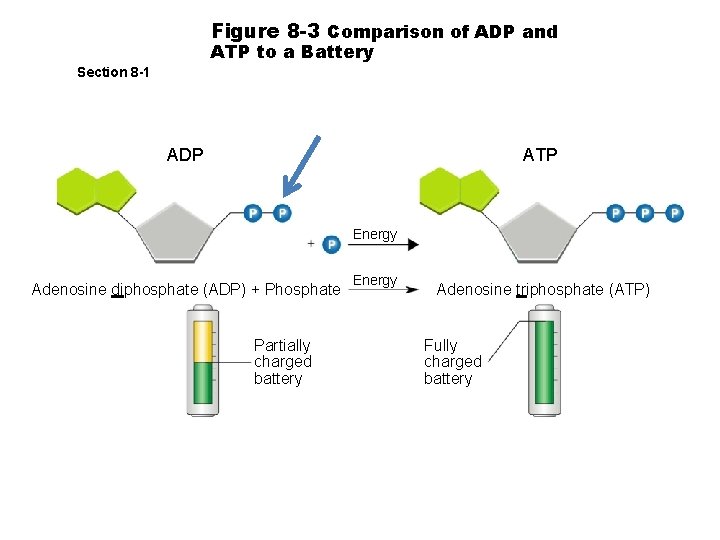
ATP • Living organisms use for energy. • Energy comes from the breaking of phosphate bonds.
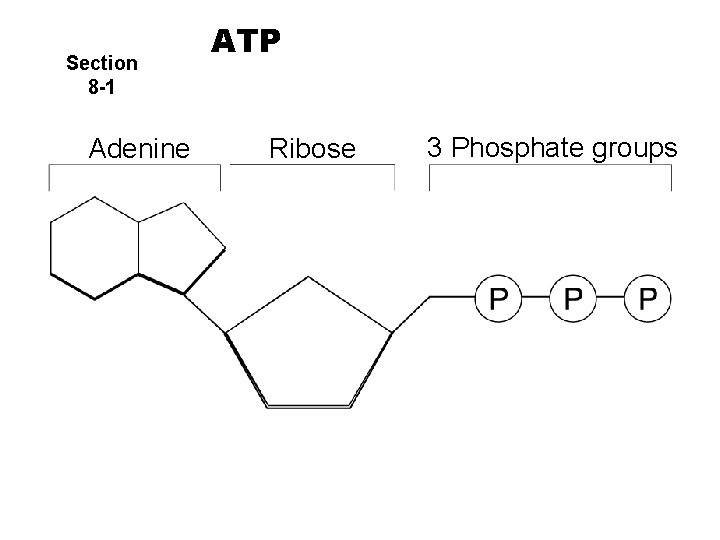
Section 8 -1 Adenine ATP Ribose 3 Phosphate groups
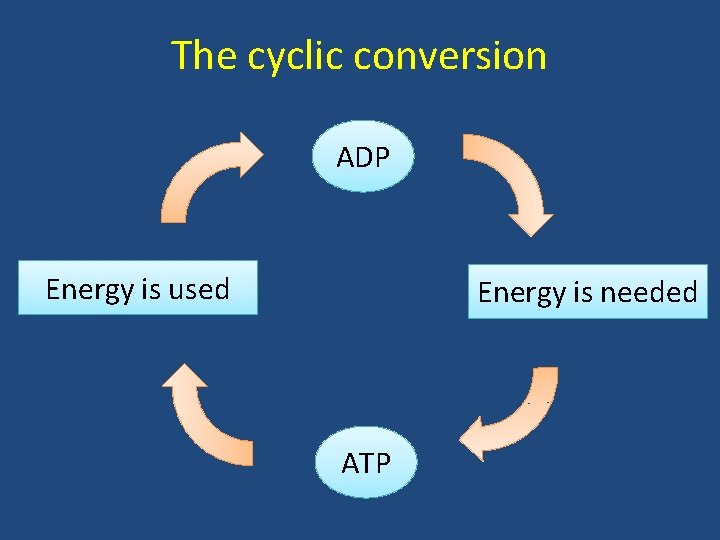
ADP • Used to store energy. • More stable molecule. • Convert it to ATP when energy is required.
Figure 8 -3 Comparison of ADP and ATP to a Battery Section 8 -1 ADP ATP Energy Adenosine diphosphate (ADP) + Phosphate Partially charged battery Energy Adenosine triphosphate (ATP) Fully charged battery
The cyclic conversion ADP Energy is used Energy is needed ATP
Rap • http: //youtu. be/4 CK 4 z 4 MDXu. E
Photosynthesis • The reaction that occurs in chloroplasts of plants. • Produces carbohydrates (sugars) for energy storage and use.
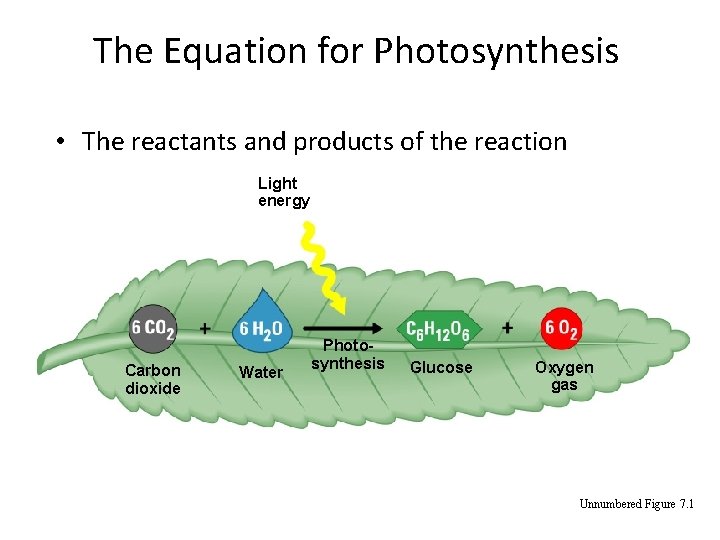
The Equation for Photosynthesis • The reactants and products of the reaction Light energy Carbon dioxide Water Photosynthesis Glucose Oxygen gas Unnumbered Figure 7. 1
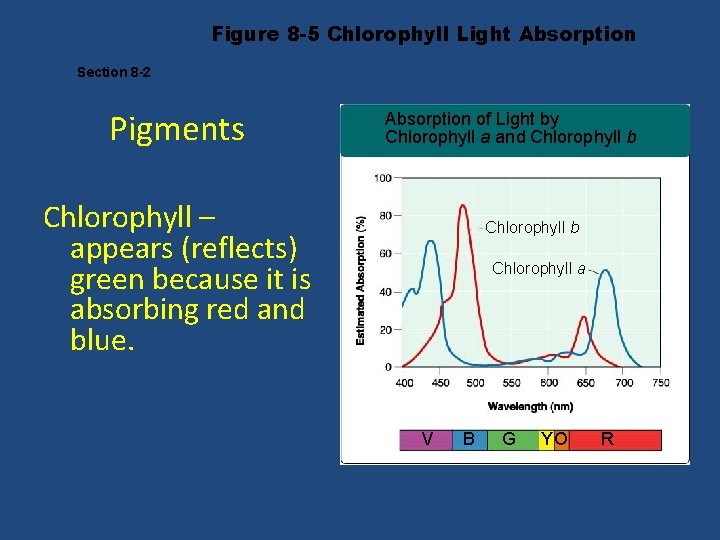
Figure 8 -5 Chlorophyll Light Absorption Section 8 -2 Pigments Absorption of Light by Chlorophyll a and Chlorophyll b Chlorophyll – appears (reflects) green because it is absorbing red and blue. Chlorophyll b Chlorophyll a V B G YO R
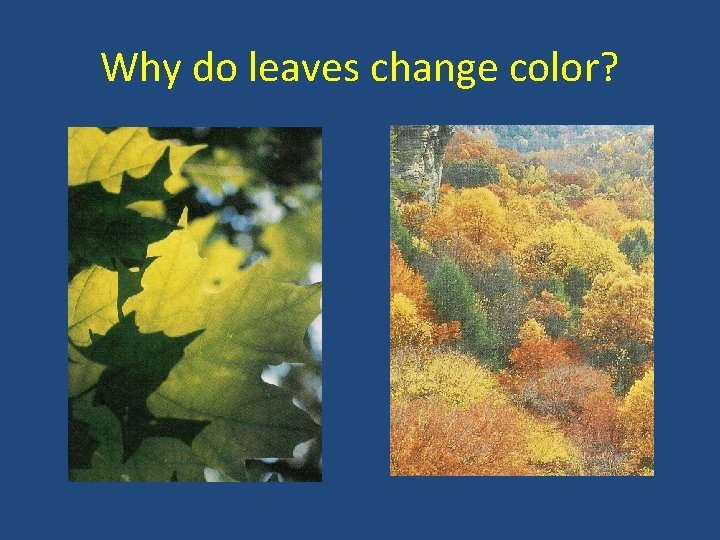
Why do leaves change color?
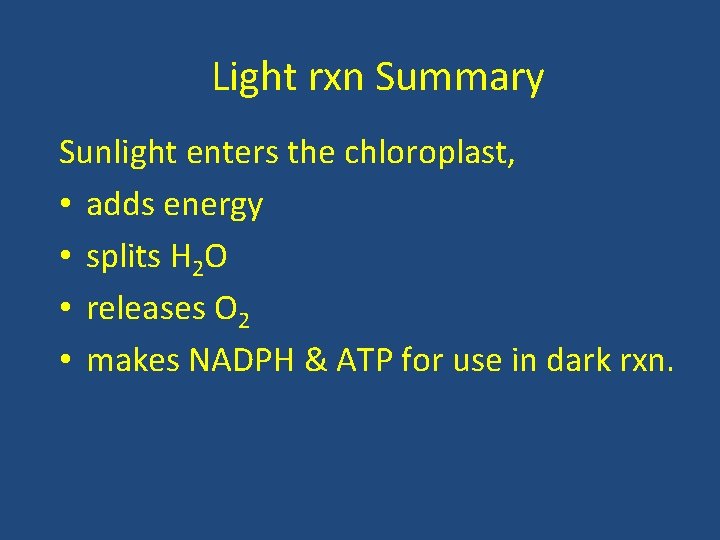
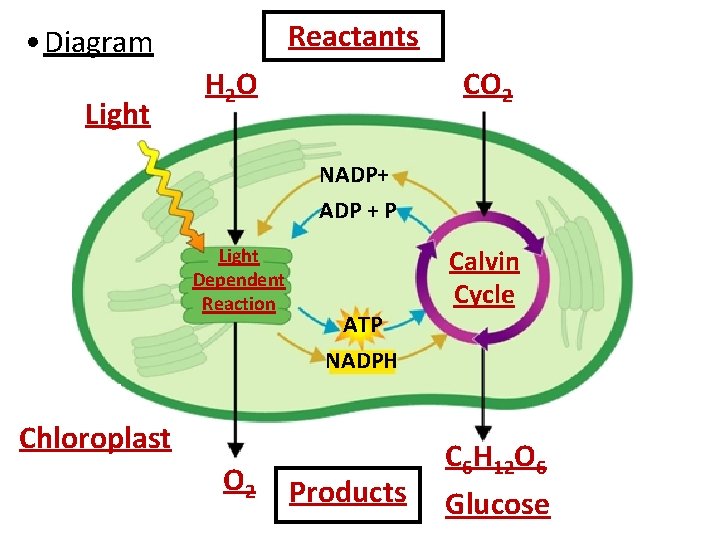
Light rxn Summary Sunlight enters the chloroplast, • adds energy • splits H 2 O • releases O 2 • makes NADPH & ATP for use in dark rxn.
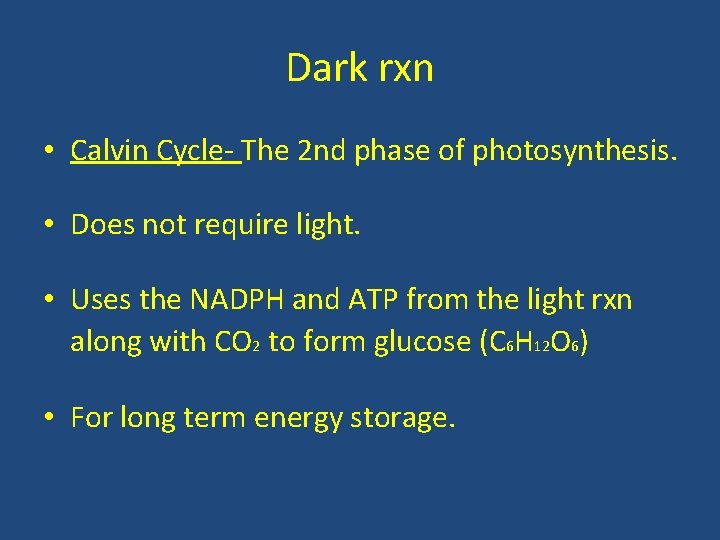
Dark rxn • Calvin Cycle- The 2 nd phase of photosynthesis. • Does not require light. • Uses the NADPH and ATP from the light rxn along with CO 2 to form glucose (C 6 H 12 O 6) • For long term energy storage.
Reactants • Diagram Light H 2 O CO 2 NADP+ ADP + P Light Dependent Reaction ATP NADPH Chloroplast O 2 Products Calvin Cycle C 6 H 12 O 6 Glucose
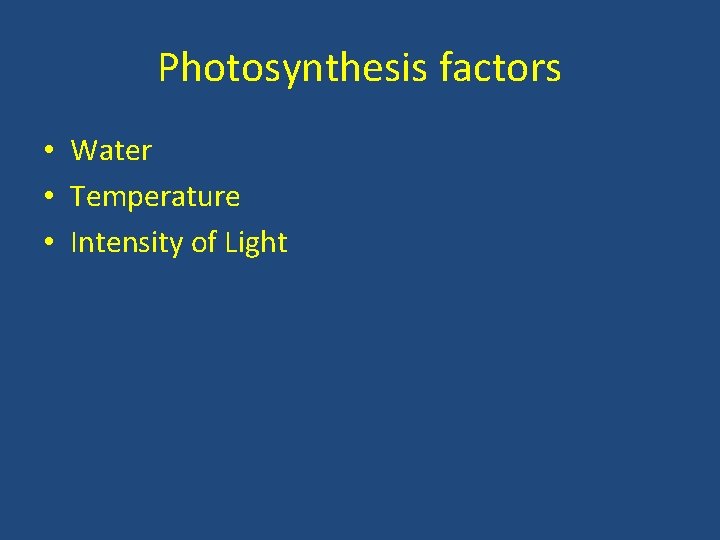
Photosynthesis factors • Water • Temperature • Intensity of Light
Main & Murky Points • Write 3 main points from today’s lesson. Must be content-based. • Write 1 or more murky points from today’s lesson. This is material that is unclear to you. • Write 1 favorite point from today’s lesson. What did you enjoy about class today?
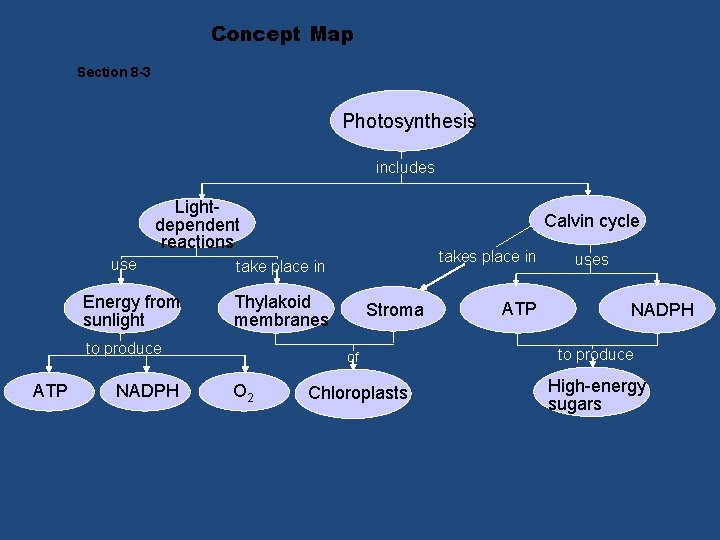
Concept Map Section 8 -3 Photosynthesis includes Lightdependent reactions use Energy from sunlight NADPH takes place in take place in Thylakoid membranes to produce ATP Calvin cycle Stroma of O 2 Chloroplasts ATP uses NADPH to produce High-energy sugars