
INTRO TO ECOSYSTEMS YEAR 7 SCIENCE WHAT IS
- Slides: 17
INTRO TO ECOSYSTEMS YEAR 7 SCIENCE
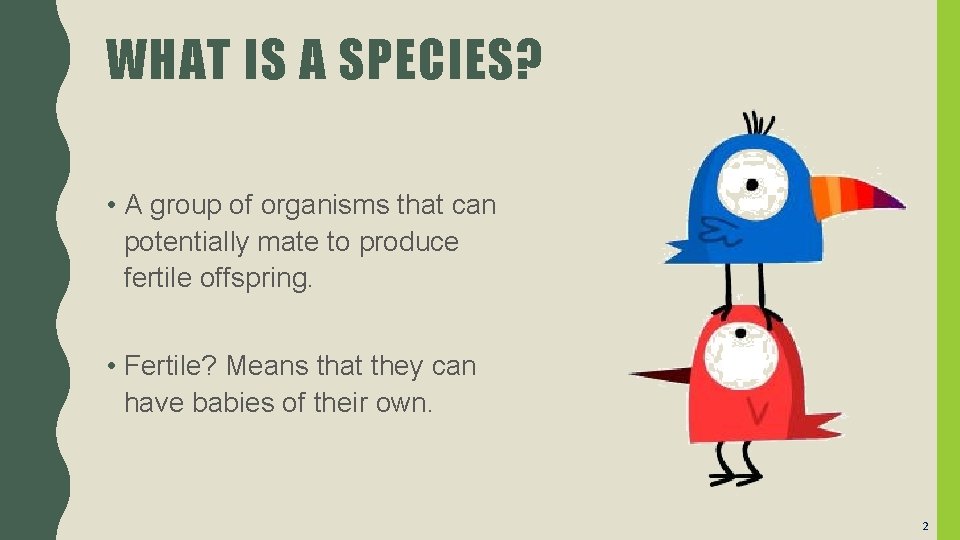
WHAT IS A SPECIES? • A group of organisms that can potentially mate to produce fertile offspring. • Fertile? Means that they can have babies of their own. 2
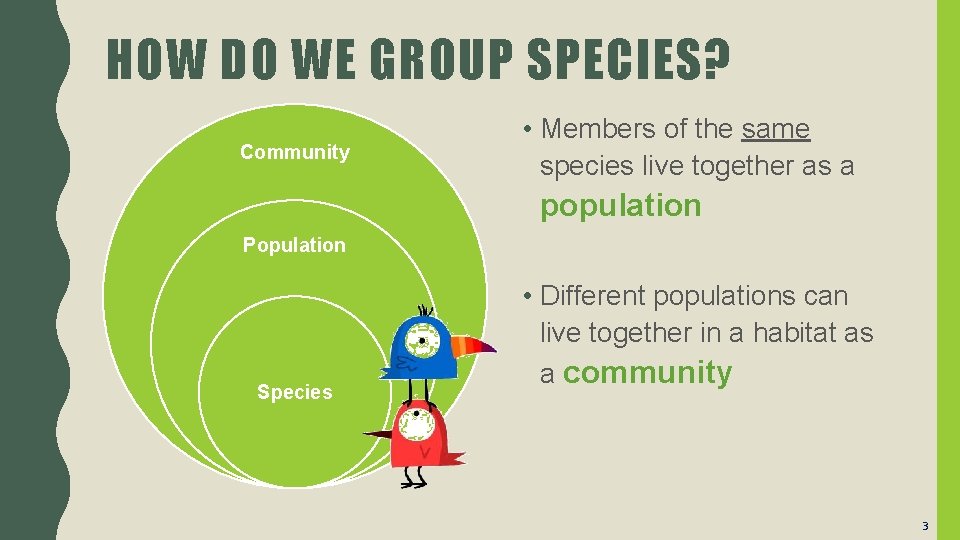
HOW DO WE GROUP SPECIES? Community • Members of the same species live together as a population Population Species • Different populations can live together in a habitat as a community 3
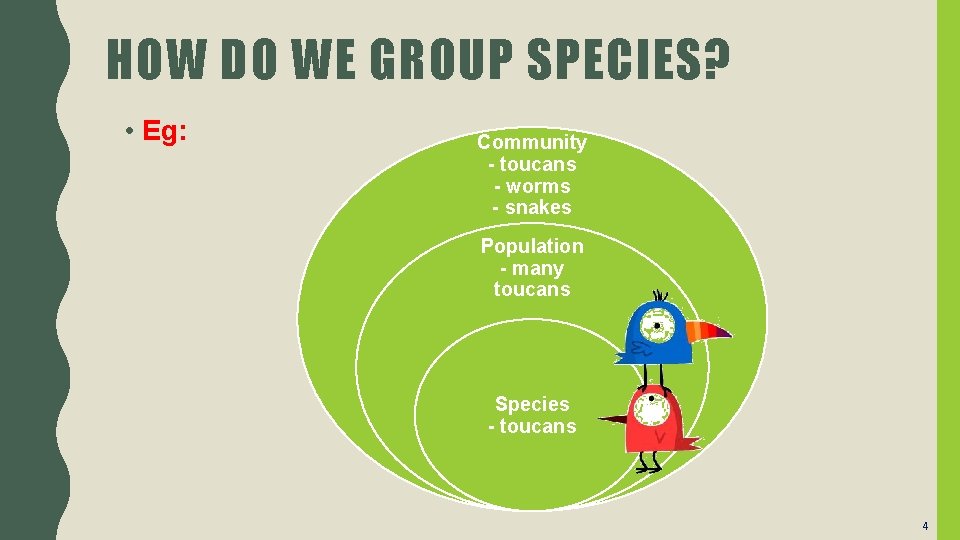
HOW DO WE GROUP SPECIES? • Eg: Community - toucans - worms - snakes Population - many toucans Species - toucans 4
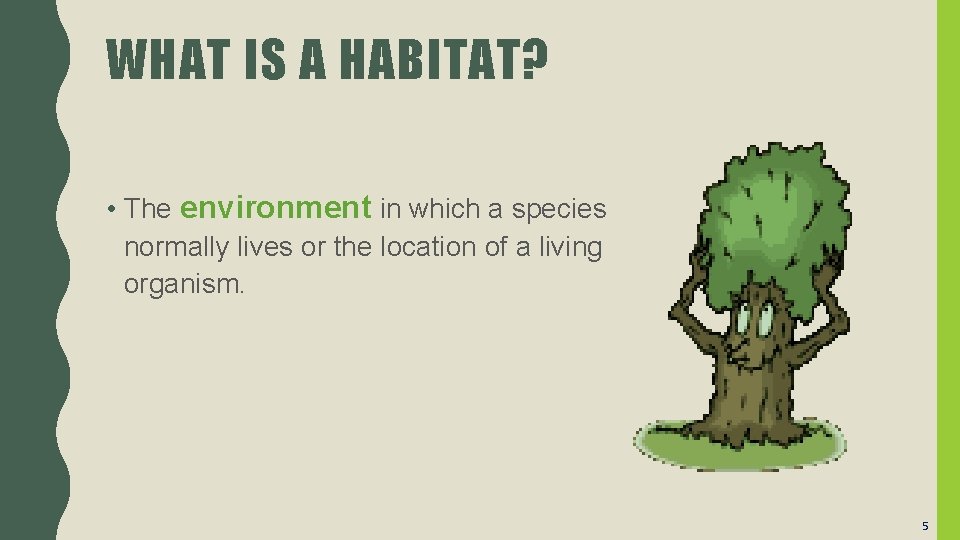
WHAT IS A HABITAT? • The environment in which a species normally lives or the location of a living organism. 5
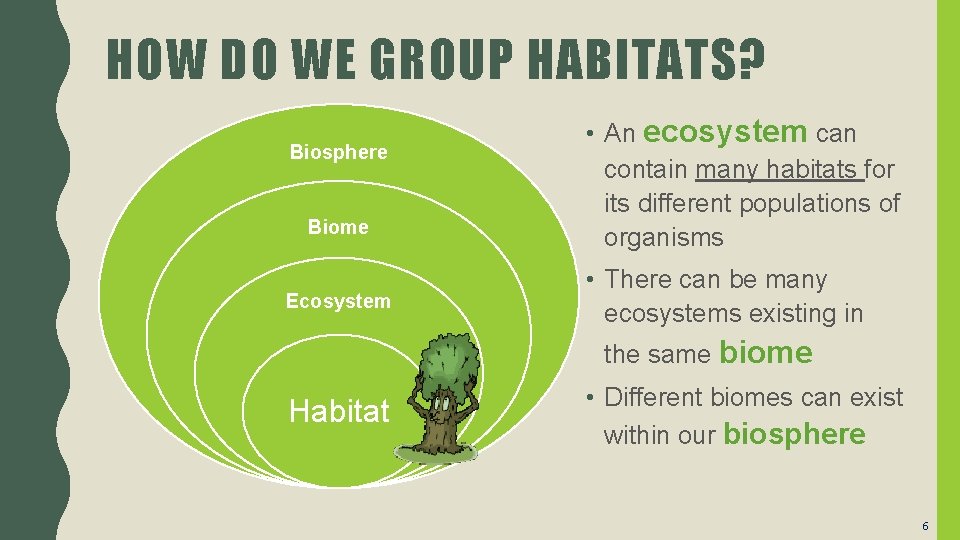
HOW DO WE GROUP HABITATS? Biosphere Biome Ecosystem • An ecosystem can contain many habitats for its different populations of organisms • There can be many ecosystems existing in the same biome Habitat • Different biomes can exist within our biosphere 6
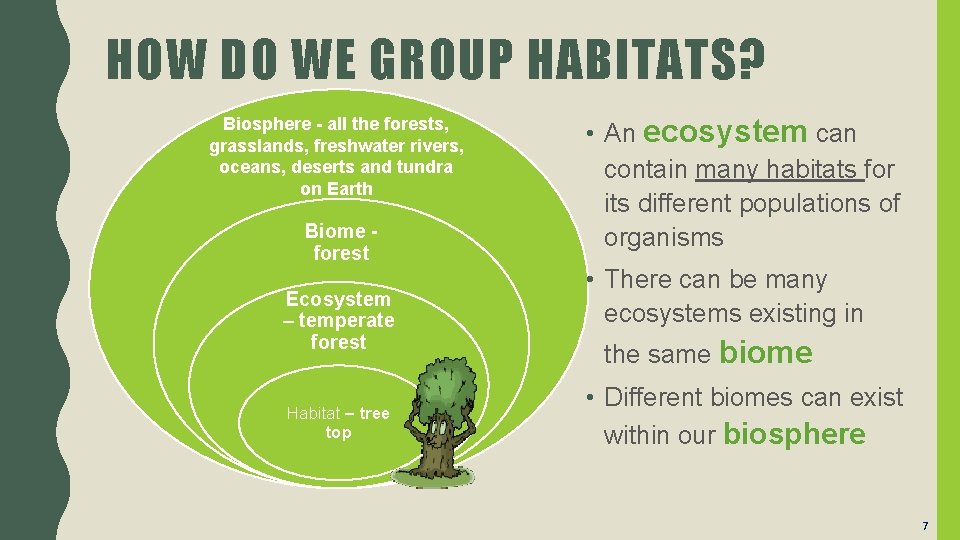
HOW DO WE GROUP HABITATS? Biosphere - all the forests, grasslands, freshwater rivers, oceans, deserts and tundra on Earth Biome forest Ecosystem – temperate forest Habitat – tree top • An ecosystem can contain many habitats for its different populations of organisms • There can be many ecosystems existing in the same biome • Different biomes can exist within our biosphere 7
ECOSYSTEMS
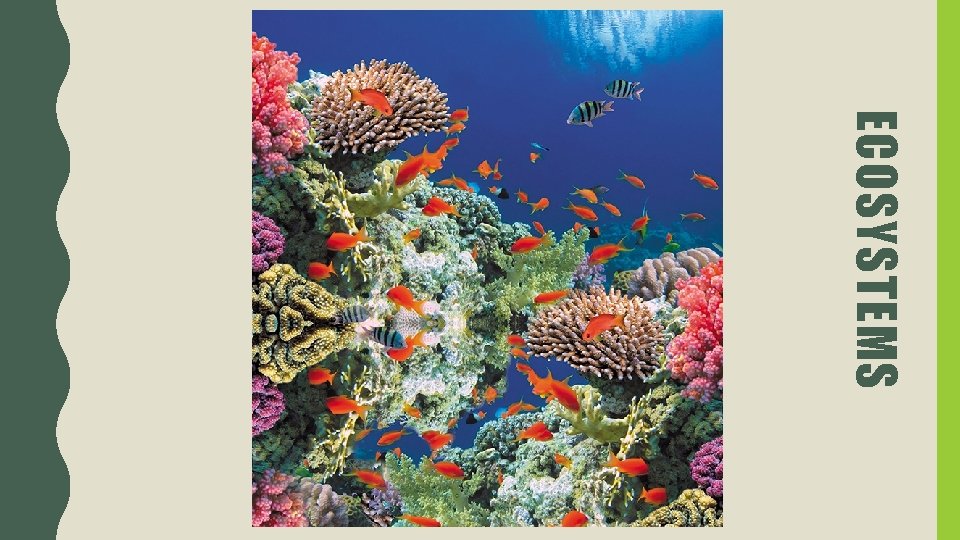
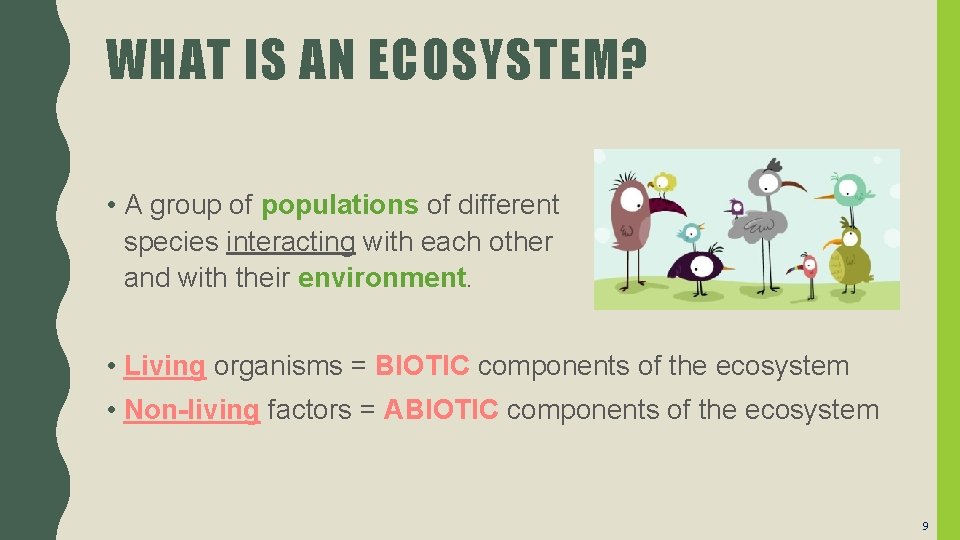
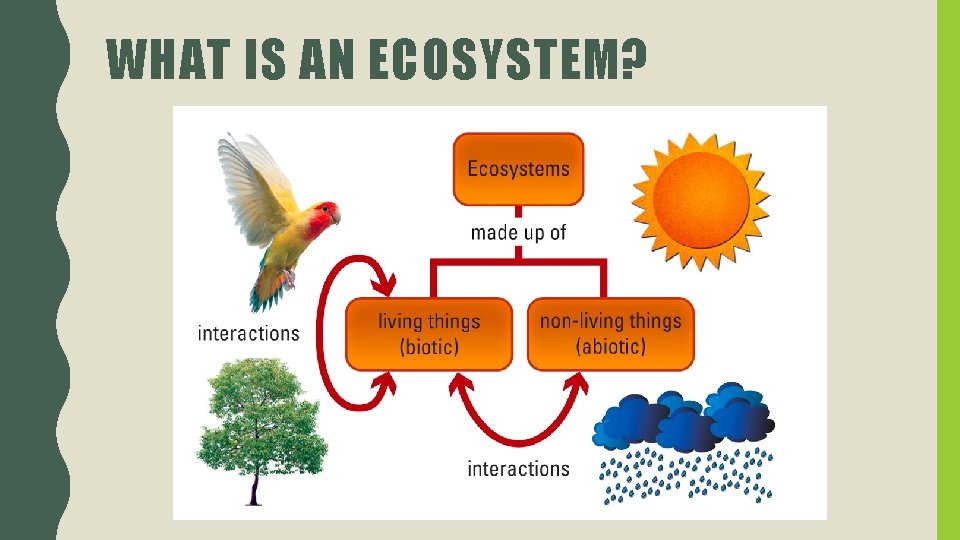
WHAT IS AN ECOSYSTEM? • A group of populations of different species interacting with each other and with their environment. • Living organisms = BIOTIC components of the ecosystem • Non-living factors = ABIOTIC components of the ecosystem 9
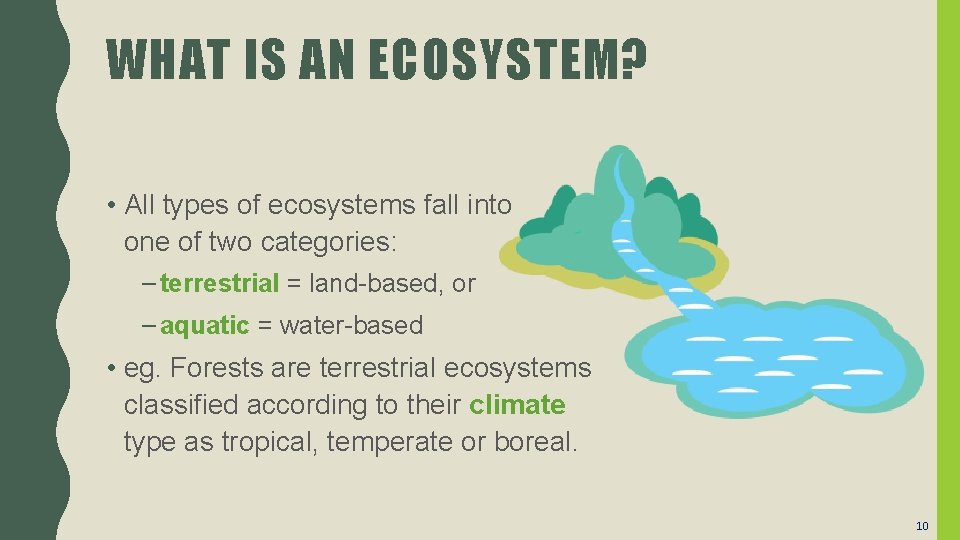
WHAT IS AN ECOSYSTEM? • All types of ecosystems fall into one of two categories: – terrestrial = land-based, or – aquatic = water-based • eg. Forests are terrestrial ecosystems classified according to their climate type as tropical, temperate or boreal. 10
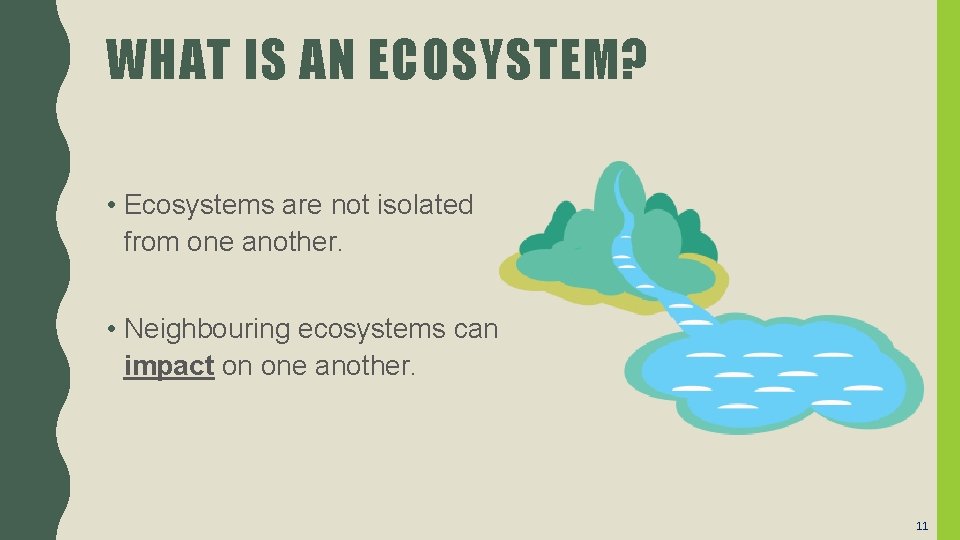
WHAT IS AN ECOSYSTEM? • Ecosystems are not isolated from one another. • Neighbouring ecosystems can impact on one another. 11
WHAT IS AN ECOSYSTEM?
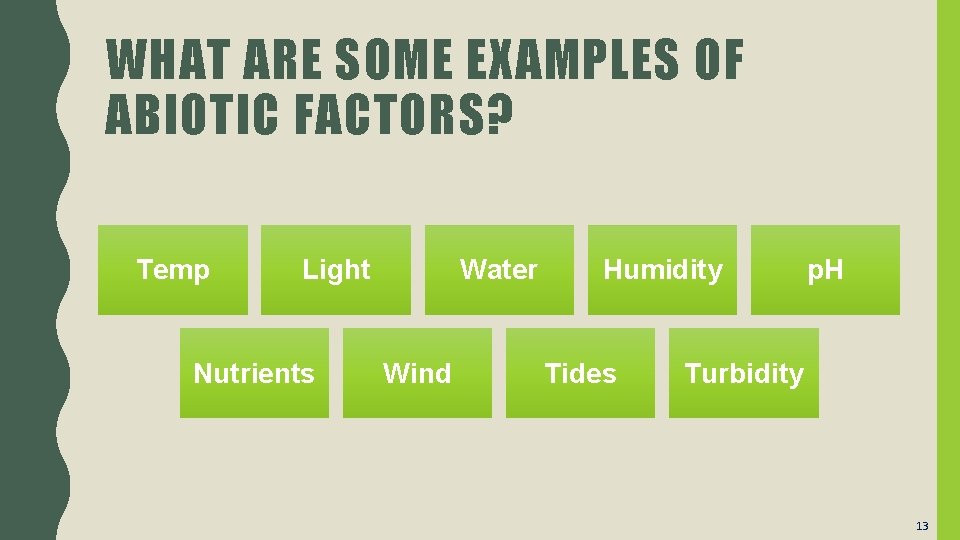
WHAT ARE SOME EXAMPLES OF ABIOTIC FACTORS? Temp Light Nutrients Water Wind Humidity Tides p. H Turbidity 13
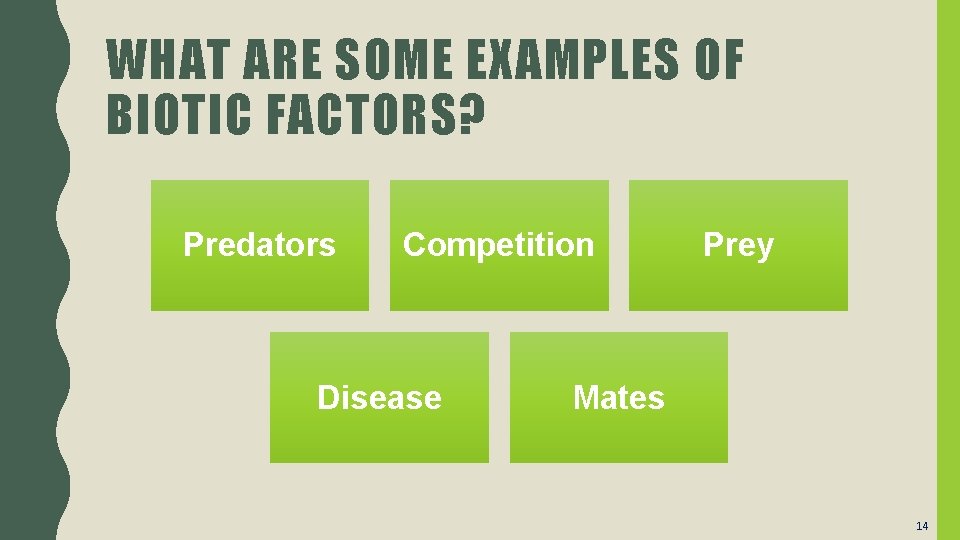
WHAT ARE SOME EXAMPLES OF BIOTIC FACTORS? Predators Competition Disease Prey Mates 14
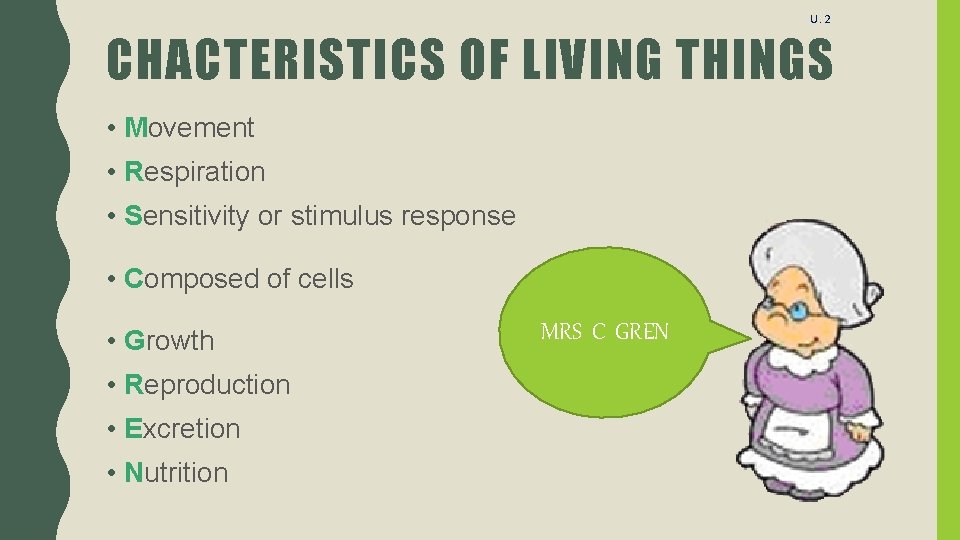
CHARACTERISTICS OF LIVING THINGS • All organisms or living things can perform share 8 main characteristics. • eg. bacteria do so they are considered to be living organisms • eg. viruses do not so they are not considered to be organisms 15
CHACTERISTICS OF LIVING THINGS • The 8 characteristics are summarised by MRS C GREN • What do you think each letter stands for? 16
U. 2 CHACTERISTICS OF LIVING THINGS • Movement • Respiration • Sensitivity or stimulus response • Composed of cells • Growth • Reproduction • Excretion • Nutrition MRS C GREN