
Intro to Ecology Ch 3 What Is Ecology

- Slides: 14
Intro to Ecology Ch. 3
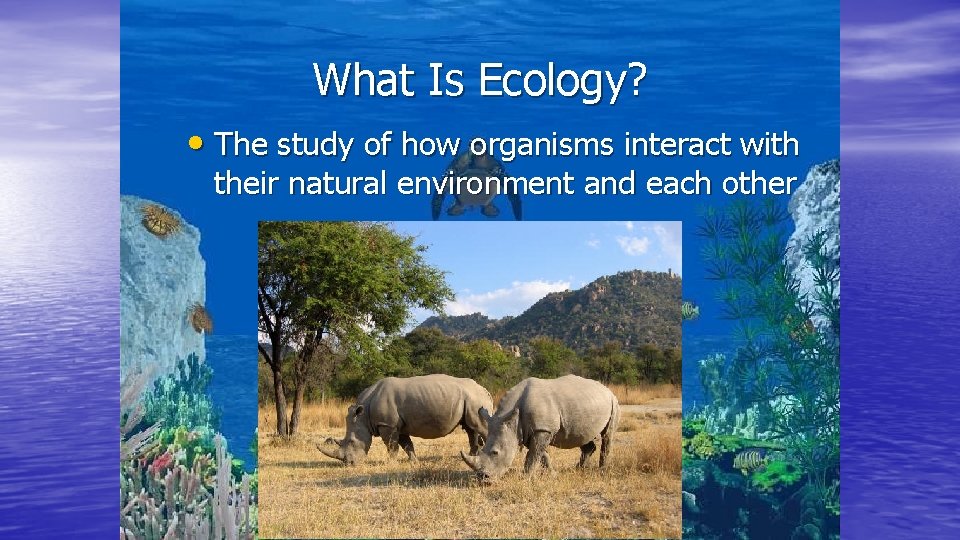
What Is Ecology? • The study of how organisms interact with their natural environment and each other
What do ecologists do? • Use observation and experimentation to learn more about organisms in their natural environment • Identify biotic and abiotic factors that affect the organisms they are studying
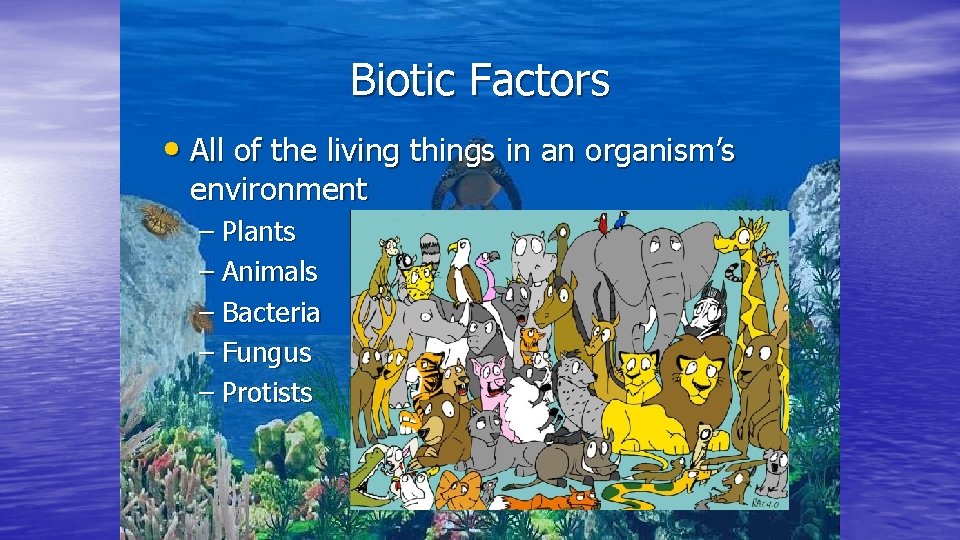
Biotic Factors • All of the living things in an organism’s environment – Plants – Animals – Bacteria – Fungus – Protists
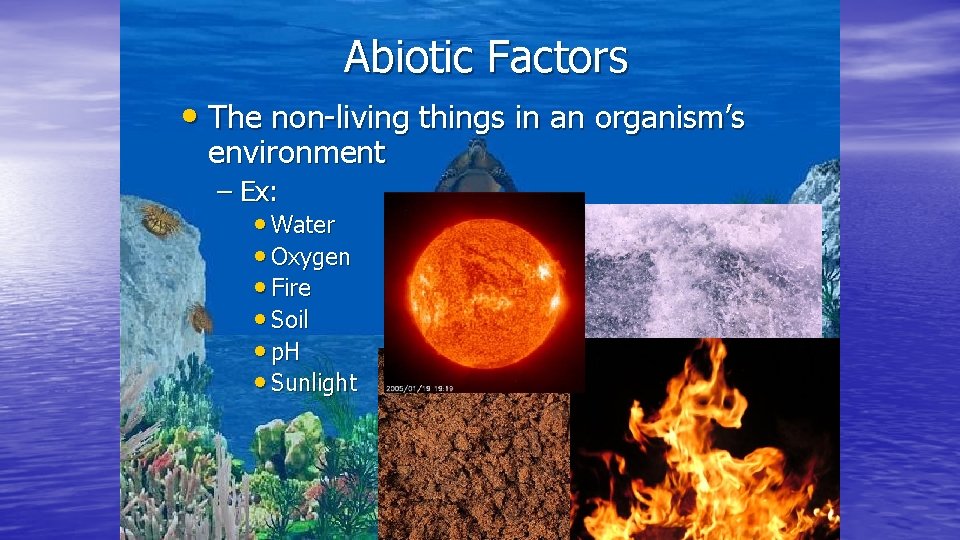
Abiotic Factors • The non-living things in an organism’s environment – Ex: • Water • Oxygen • Fire • Soil • p. H • Sunlight
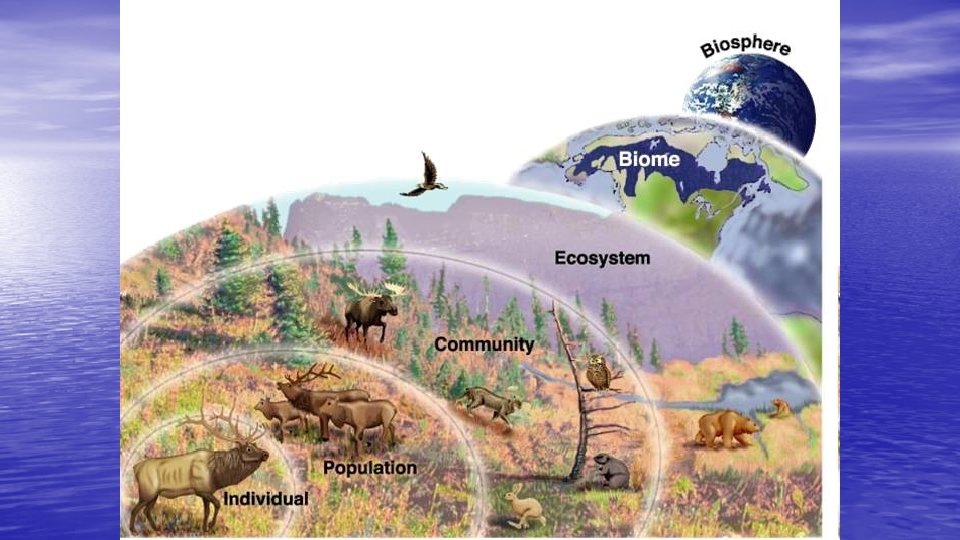
Levels of organization (smallest to largest) • Individual • Population • Community • Ecosystem • Biome • Biosphere
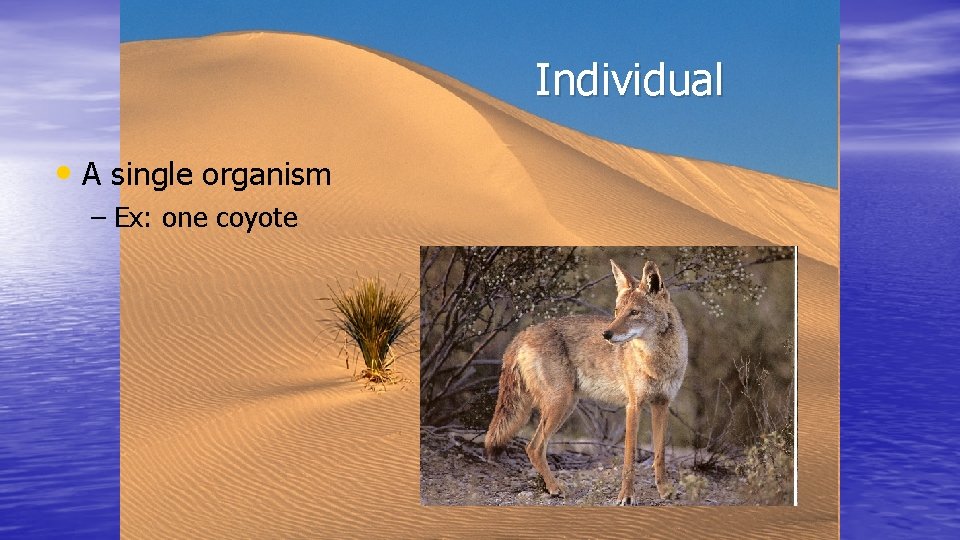
Individual • A single organism – Ex: one coyote
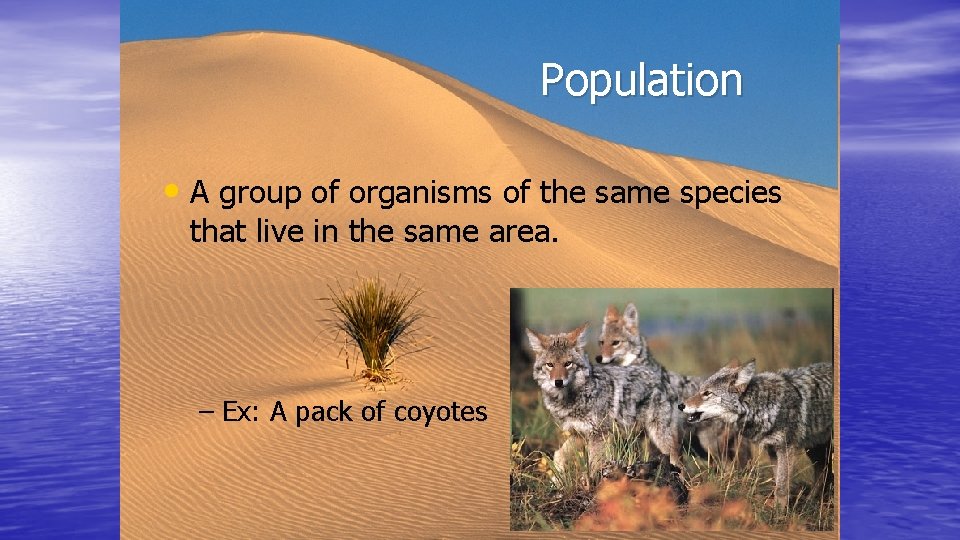
Population • A group of organisms of the same species that live in the same area. – Ex: A pack of coyotes
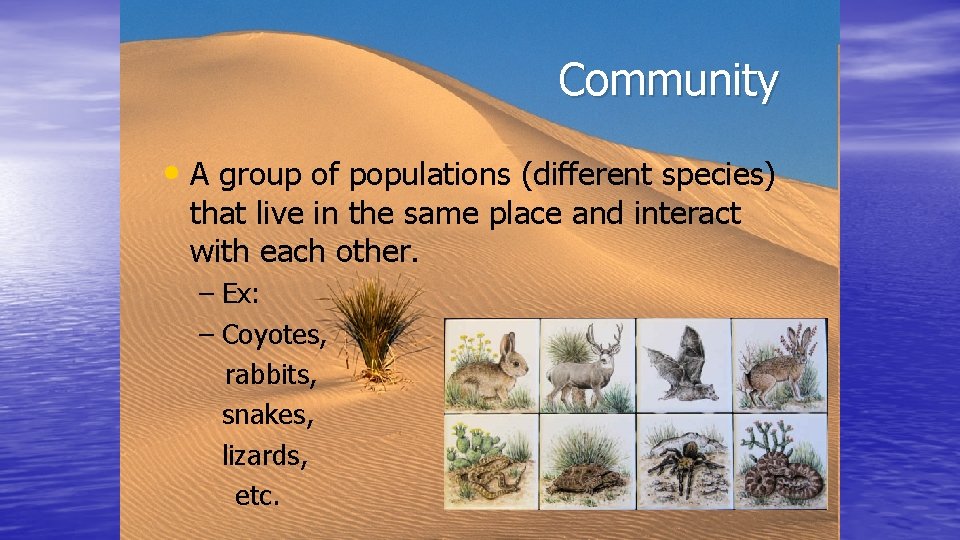
Community • A group of populations (different species) that live in the same place and interact with each other. – Ex: – Coyotes, rabbits, snakes, lizards, etc.
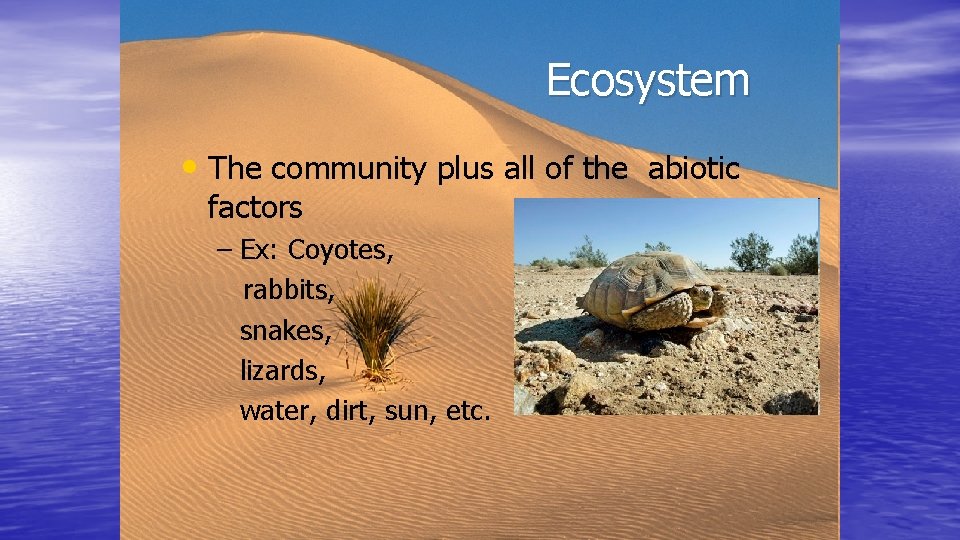
Ecosystem • The community plus all of the abiotic factors – Ex: Coyotes, rabbits, snakes, lizards, water, dirt, sun, etc.
Biome • A group of ecosystems that have the same climate (temperature and rainfall) and similar flora and fauna – Example: The deserts of California are similar to other deserts all over the world.
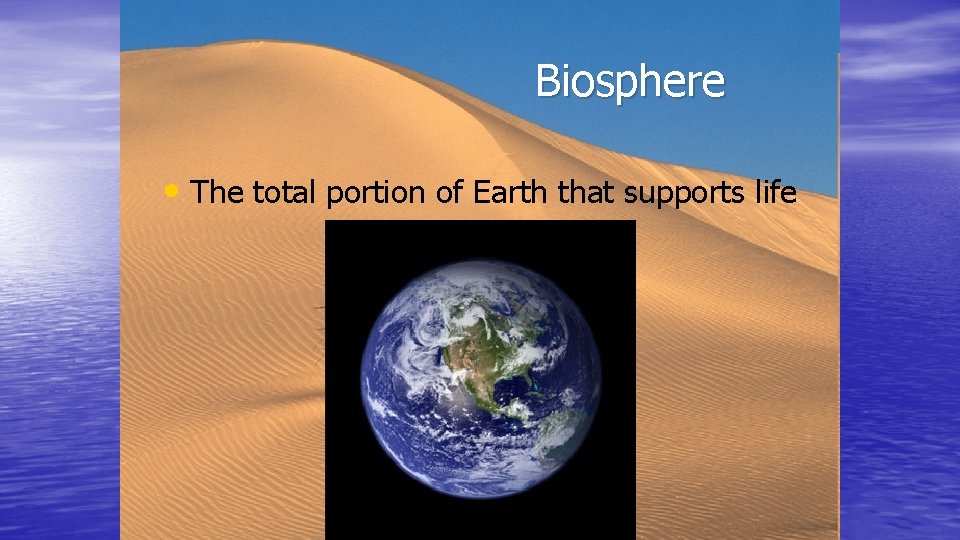
Biosphere • The total portion of Earth that supports life