
Intro to Earth Science What is used to



- Slides: 26
Intro to Earth Science
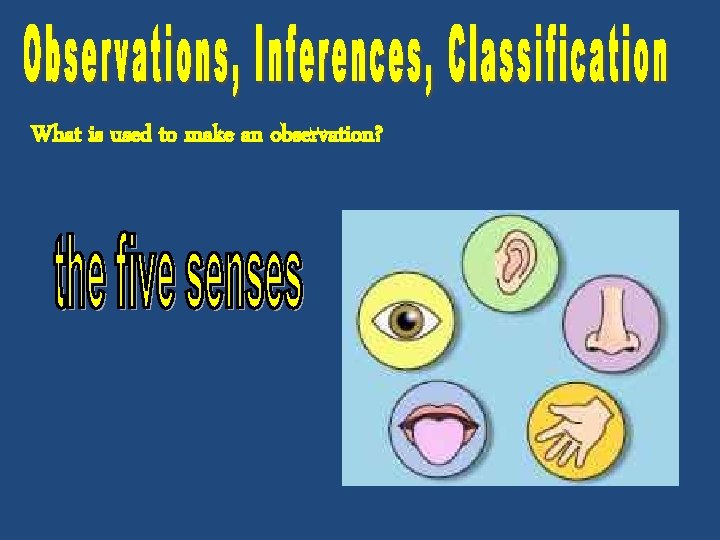
What is used to make an observation?
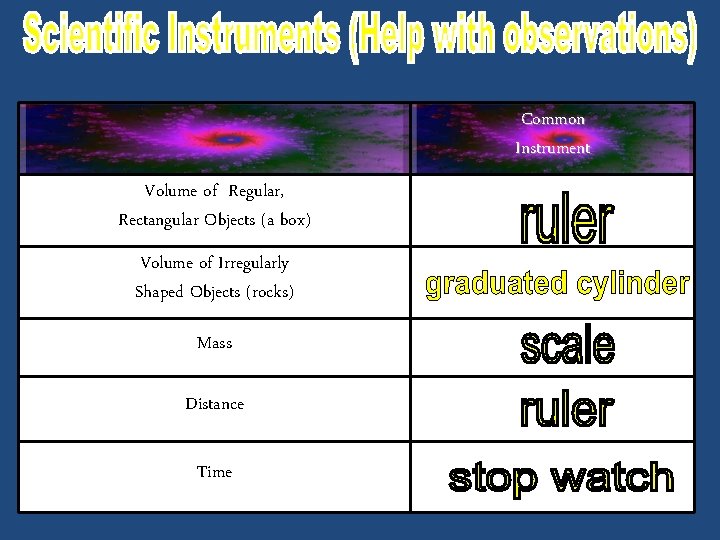
Common Instrument Volume of Regular, Rectangular Objects (a box) Volume of Irregularly Shaped Objects (rocks) Mass Distance Time
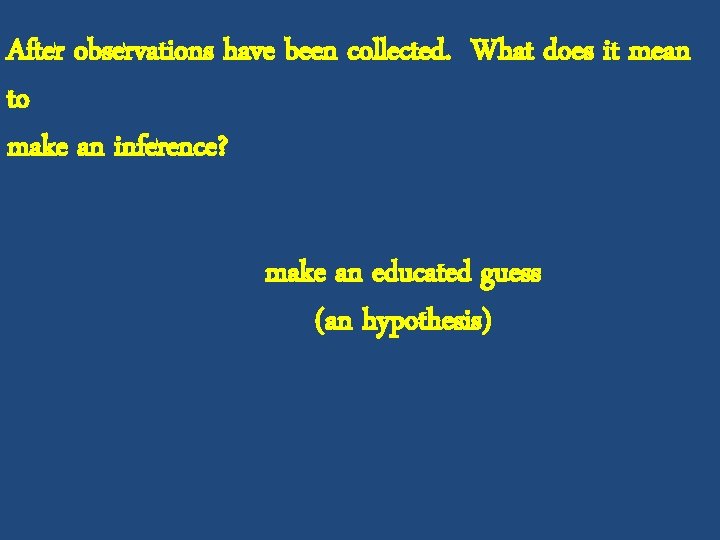
After observations have been collected. What does it mean to make an inference? make an educated guess (an hypothesis)
We use the observations made to classify objects. Give some examples of how you use classification systems.
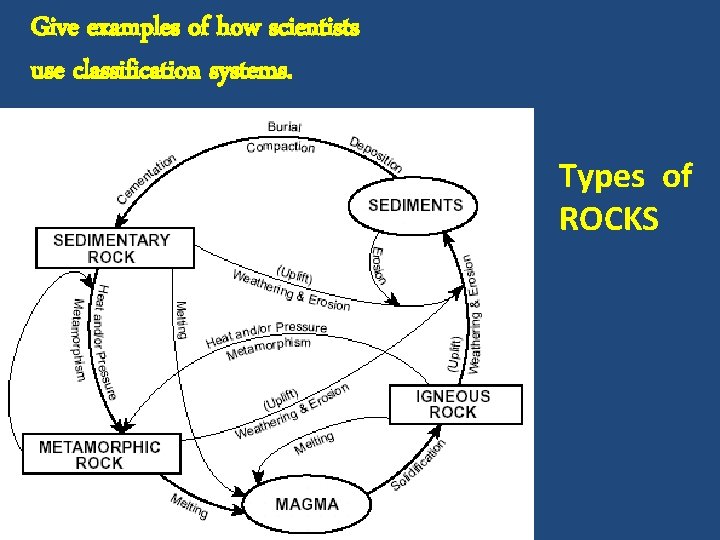
Give examples of how scientists use classification systems. Types of ROCKS
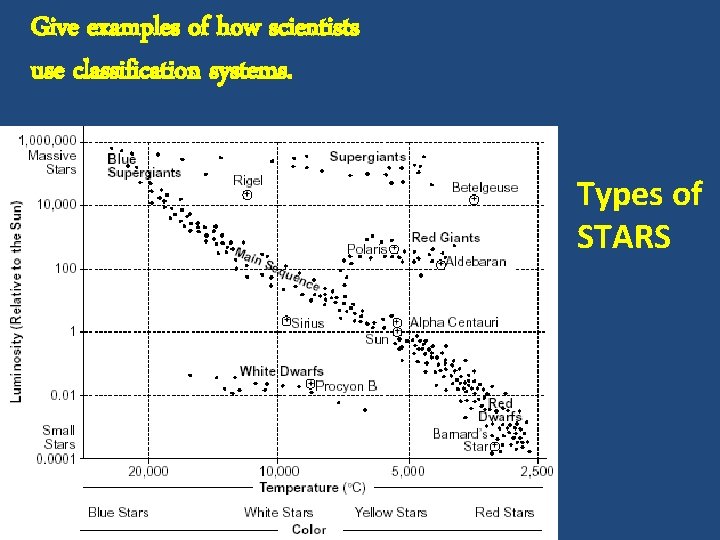
Give examples of how scientists use classification systems. Types of STARS
Complete pages 3 and 4 in Notes Packet
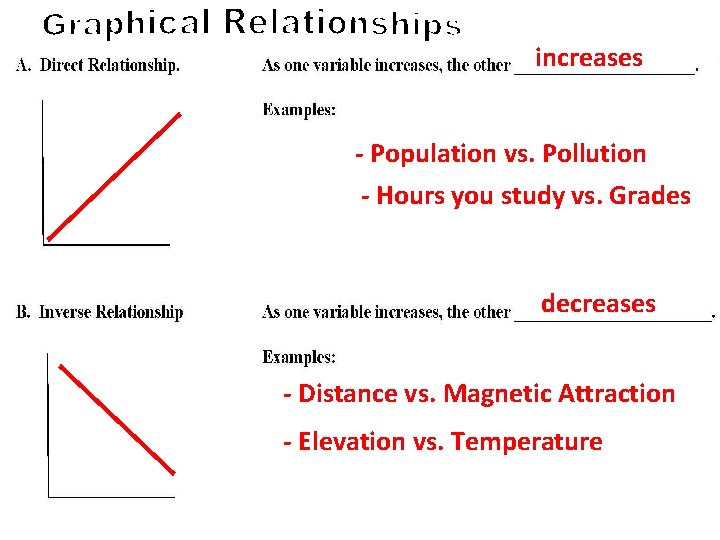
increases - Population vs. Pollution - Hours you study vs. Grades decreases - Distance vs. Magnetic Attraction - Elevation vs. Temperature
Changes in a Pattern - Moon Phases - Yearly Temperature Predictable Stays the same - Time vs. Mass - Times vs. # of Planets
Complete pages 6 -9 in notes packet
Earth Science Math and You (The Basic Math You Need to Know) 1)Rounding 2)Subtracting Time 3)Scientific Notation
Complete page 10 - 11 in notes packet
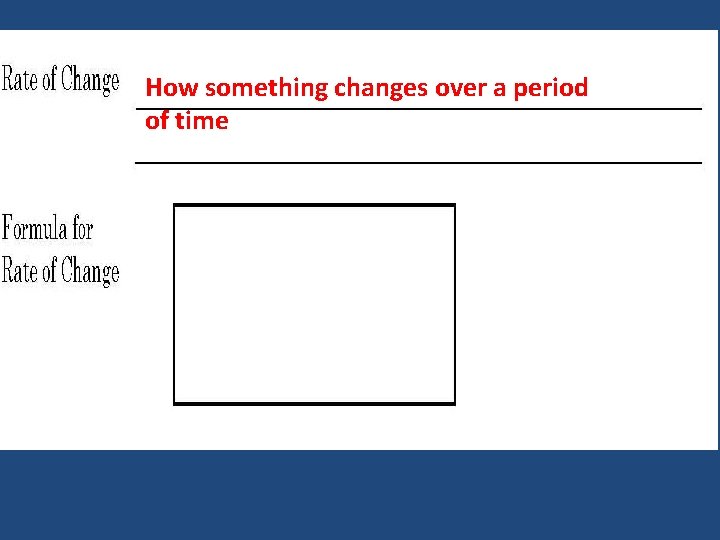
How something changes over a period of time
Complete page 12 and 13 in notes packet
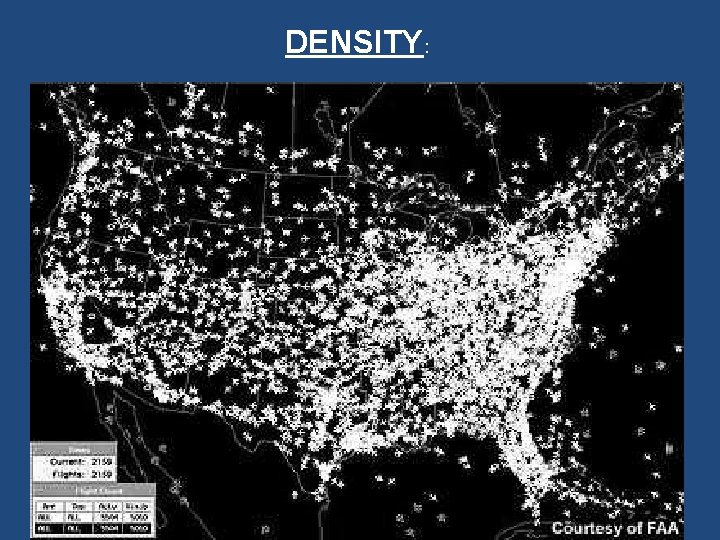
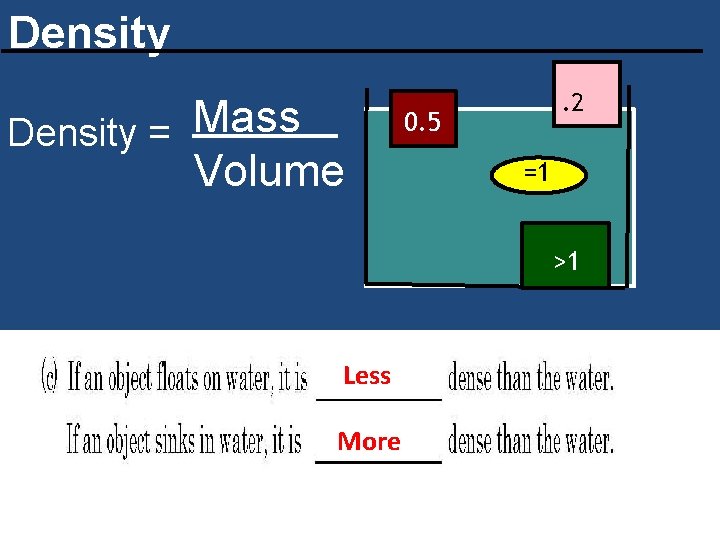
DENSITY:
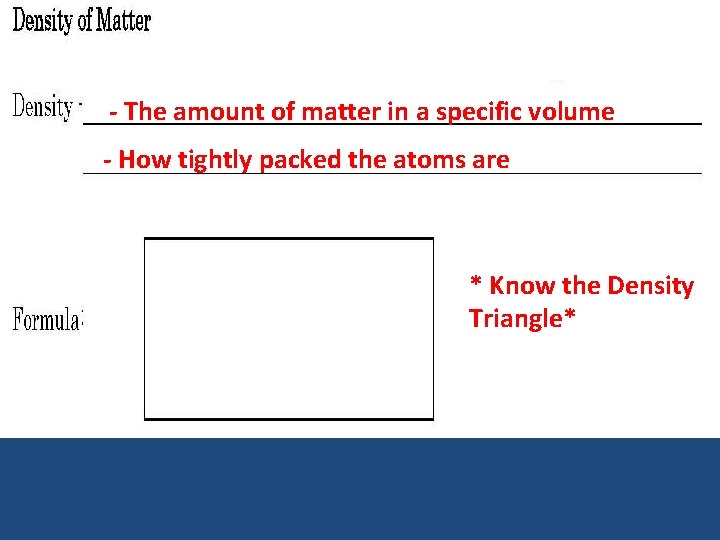
- The amount of matter in a specific volume - How tightly packed the atoms are * Know the Density Triangle*
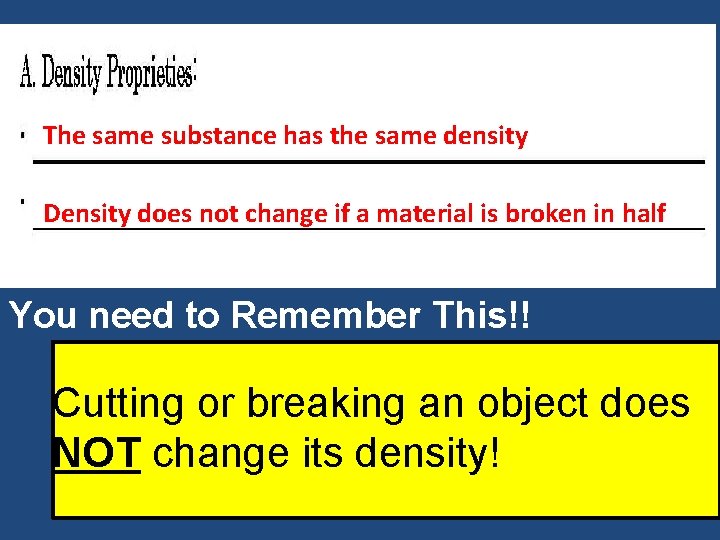
The same substance has the same density Density does not change if a material is broken in half You need to Remember This!! Cutting or breaking an object does NOT change its density!
Complete pg 14 and 15 in Notes Packet
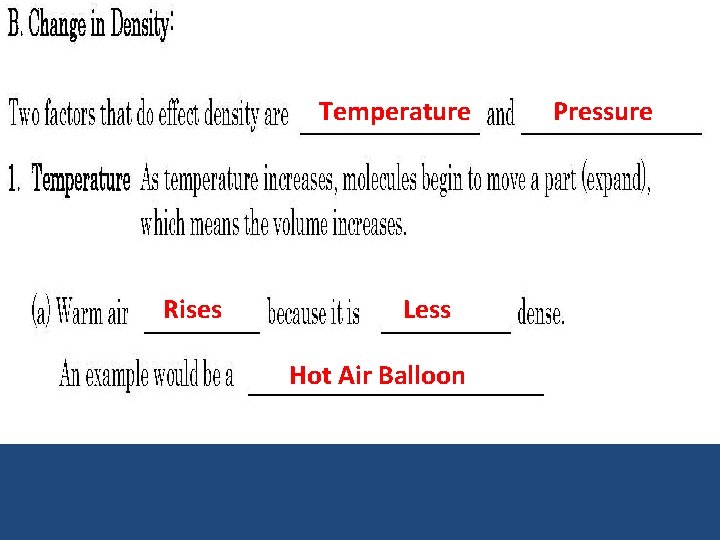
Temperature Rises Less Hot Air Balloon Pressure
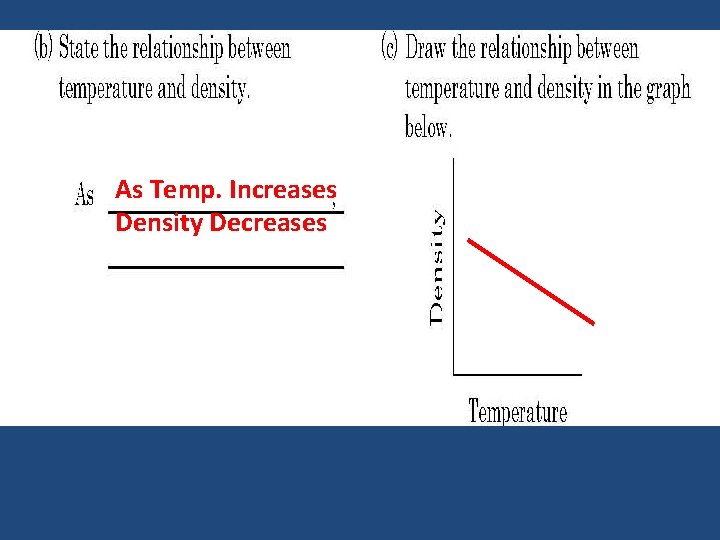
As Temp. Increases Density Decreases
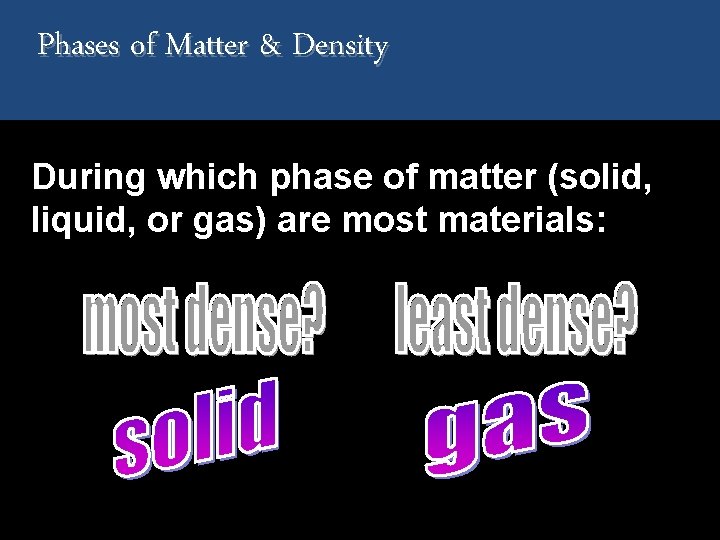
Phases of Matter & Density During which phase of matter (solid, liquid, or gas) are most materials:
Solid Expands 3. 98 1
Density Mass Density = Volume . 2 0. 5 =1 >1 Less More
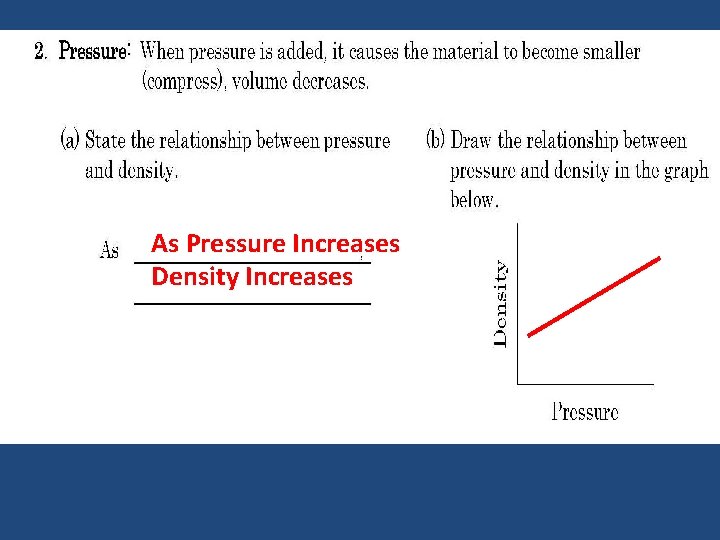
As Pressure Increases Density Increases
Complete pages 17– 22 in Notes Packet