
INTRO TO DIGESTION Macromolecules are large molecules polymers
- Slides: 27
INTRO TO DIGESTION
Macromolecules are large molecules (polymers) Macronutrients are macromolecules needed in our diet Provide the body with energy (for metabolism) and building blocks Regulate cell activities and build and repair tissues
4 major nutrients (macronutrients or “essential” nutrients) Carbohydrates Proteins Lipids (Fats and Oils) Nucleic Acids
Carbohydrates Composed of Carbon, hydrogen and oxygen in the ratio of 1: 2: 1 Provide short and long-term energy storage Provide materials to build cell membranes
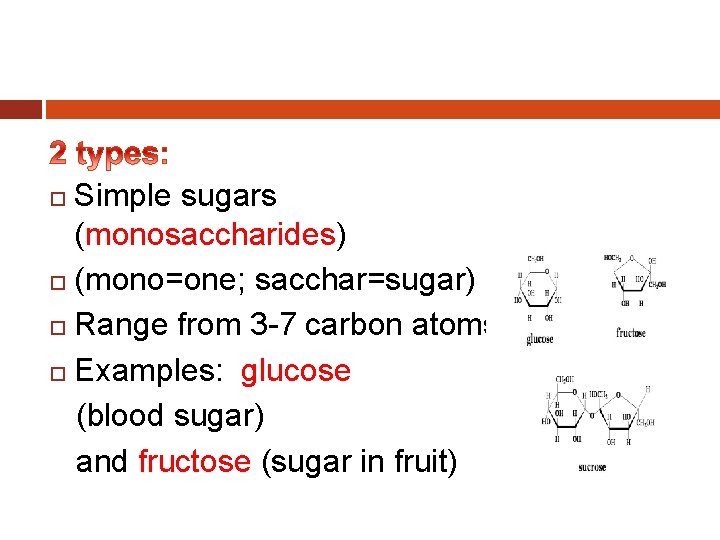
Simple sugars (monosaccharides) (mono=one; sacchar=sugar) Range from 3 -7 carbon atoms Examples: glucose (blood sugar) and fructose (sugar in fruit)
Polymers (Carbohydrates) Macromolecules are polymers Polymers are molecules of repeating subunits Disaccharides are made up of two simple sugars (di=two) Examples include sucrose (table sugar), maltose (in grains) and lactose (in dairy products)
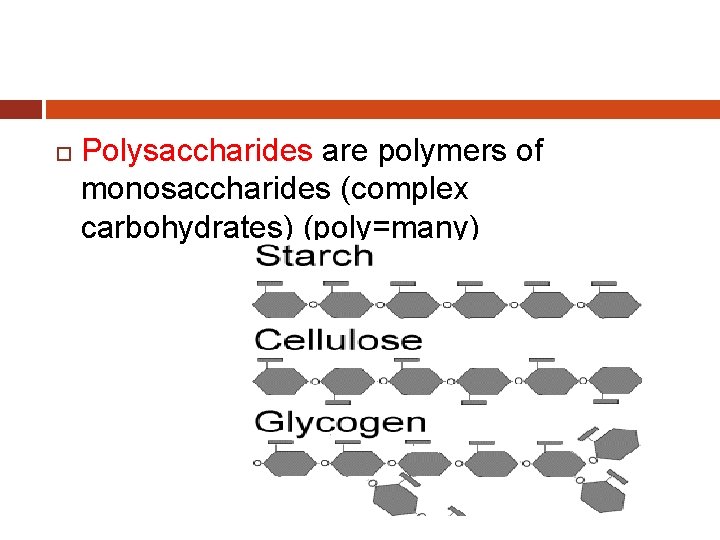
Polysaccharides are polymers of monosaccharides (complex carbohydrates) (poly=many)
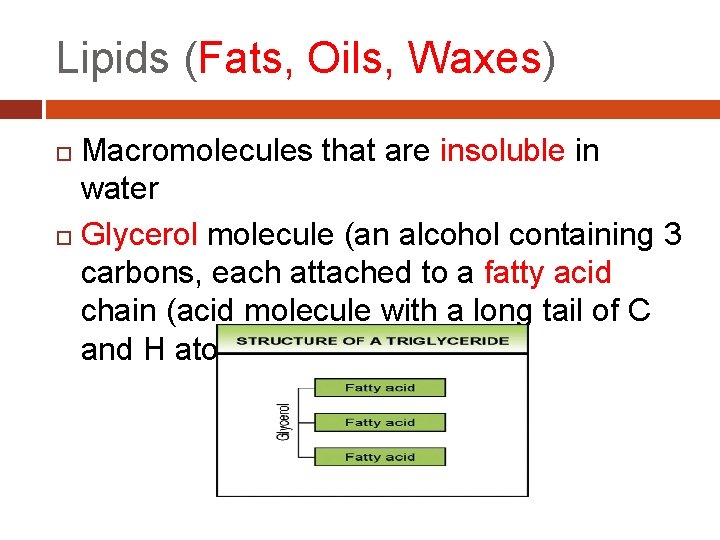
Lipids (Fats, Oils, Waxes) Macromolecules that are insoluble in water Glycerol molecule (an alcohol containing 3 carbons, each attached to a fatty acid chain (acid molecule with a long tail of C and H atoms)
Provide energy reserves (storage for later use) Build cell membranes (phospholipids) Cushion and insulate internal organs
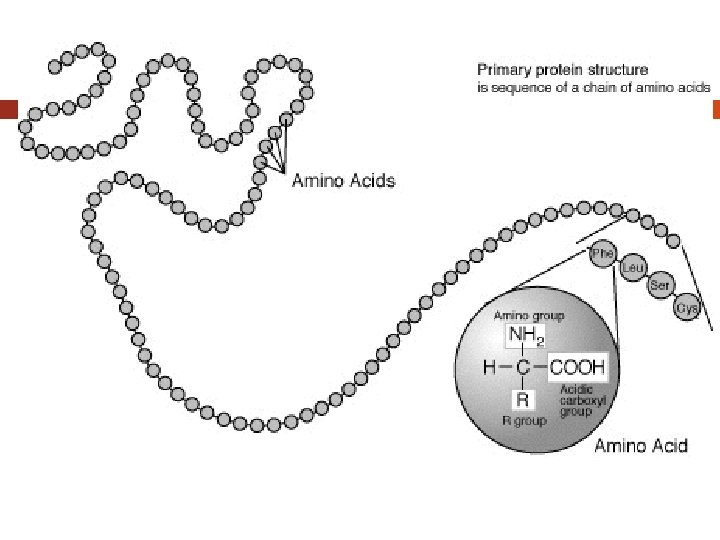
Proteins Made up of amino acids Some made up of hundreds of amino acids linked by peptide bonds in one or more chains Chains are known as polypeptides Examples: enzymes (speed up cell reactions), antibodies (provide immunity against infection and disease)
Help build and repair muscles and cell membranes Transport ions in cell membranes Provide structure and support for blood cells, body tissues and muscles
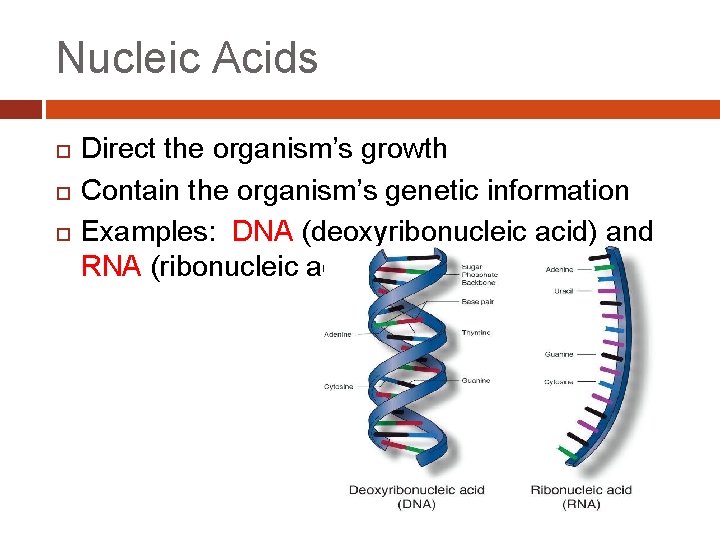
Nucleic Acids Direct the organism’s growth Contain the organism’s genetic information Examples: DNA (deoxyribonucleic acid) and RNA (ribonucleic acid)
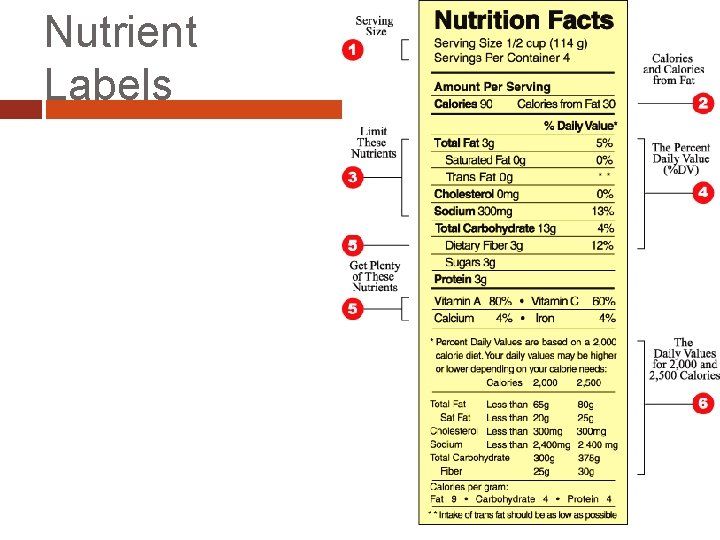
Nutrient Labels
Digestion of food is done extracellularly; that is, outside of cells. Digestive enzymes are secreted from cells The enzymes break down the macromolecules in food into small, soluble molecules that can be absorbed into the cells lining the small intestine. This process is known as hydrolysis (hydro=water, lysis=loosen)
Hydrolysis A water molecule is added to the macromolecule to break the chemical bonds that hold together the smaller units Enzymes (special proteins) are secreted by the cells in the digestive tract Enzymes act as “catalysts” to speed up the rate of chemical reactions without being used up
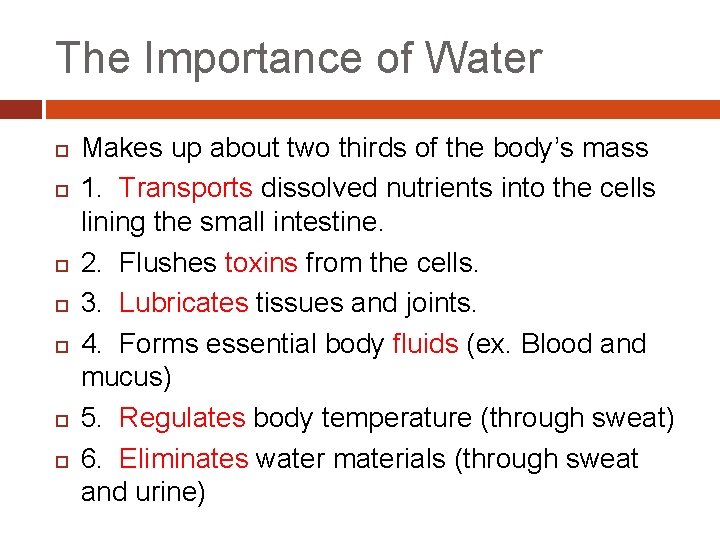
The Importance of Water Makes up about two thirds of the body’s mass 1. Transports dissolved nutrients into the cells lining the small intestine. 2. Flushes toxins from the cells. 3. Lubricates tissues and joints. 4. Forms essential body fluids (ex. Blood and mucus) 5. Regulates body temperature (through sweat) 6. Eliminates water materials (through sweat and urine)
4 Components of Digestion The purpose of digestion is to break food down into small, soluble units that can pass through cell membranes and eventually be absorbed by the circulatory system. 1)Ingestion – taking in the nutrients (eating) 2)Digestion – breaking the macronutrients down into subunits through mechanical and chemical processes
1) 2) Absorption – transporting products from digestive to circulatory systems (to be distributed to the rest of the body) Egestion – elimination of waste products
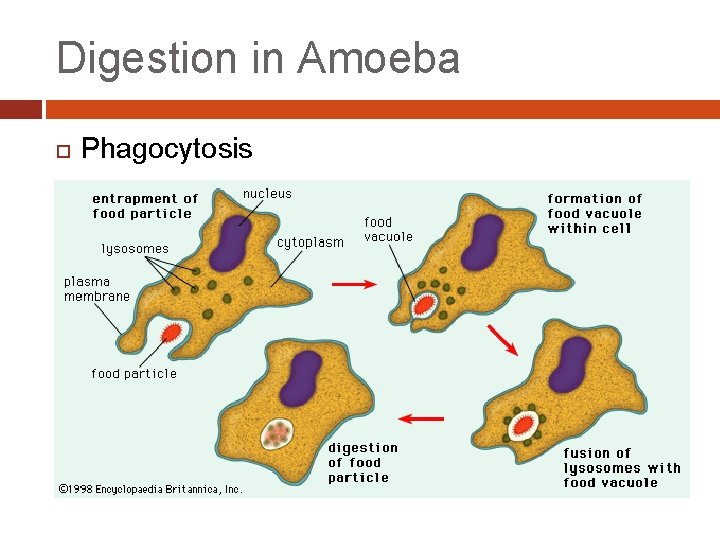
Digestion in Amoeba Phagocytosis
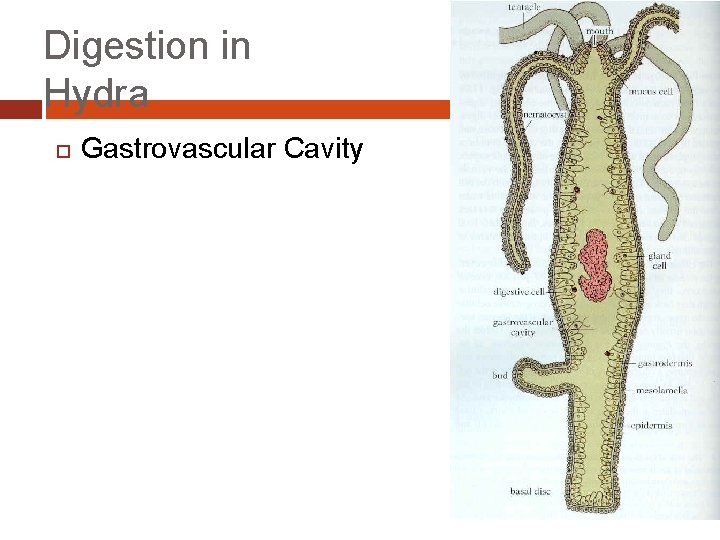
Digestion in Hydra Gastrovascular Cavity
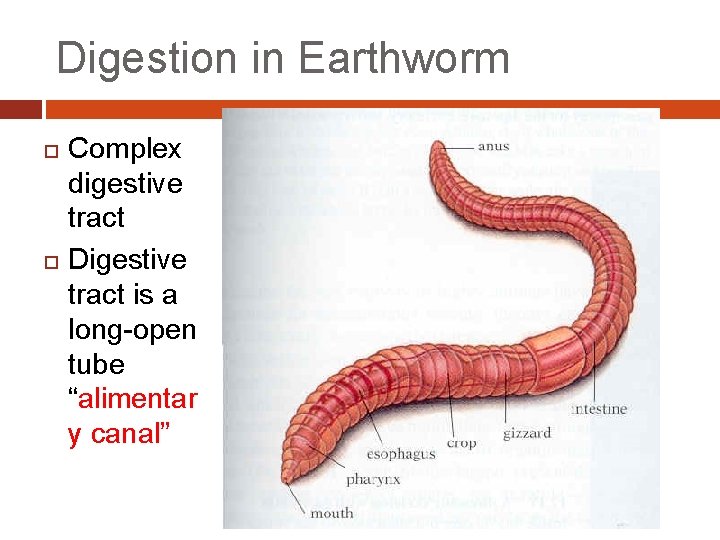
Digestion in Earthworm Complex digestive tract Digestive tract is a long-open tube “alimentar y canal”
One end of tube is for ingestion and the other end is for elimination Other organs help process the food as it moves along the tube Earthworm: 1. Food is pushed into the crop (where the food is softened and stored). 2. The muscular “gizzard” grinds the food. 3. Food is further digested in the intestine.
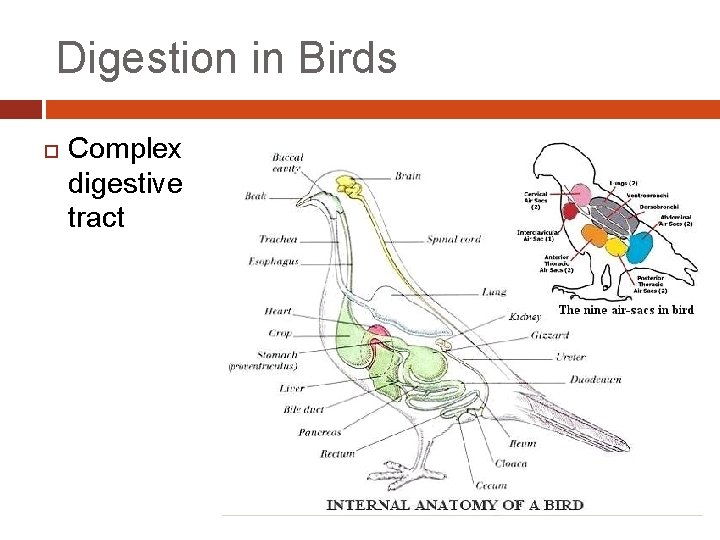
Digestion in Birds Complex digestive tract
Complex Animals Mechanical digestion: food is physically broken apart by teeth or through muscular contractions throughout the tube (food is physically broken into smaller pieces) Chemical digestion: begins in the mouth and continues along the digestive tract (enzymes help to break down the macromolecules into smaller molecules)
The length of the digestive tract varies according to the diet of the species Herbivores and omnivores have longer tracts than carnivores because the cellulose walls in plant tissues are harder to digest (See Figure 10. 5 p. 409)
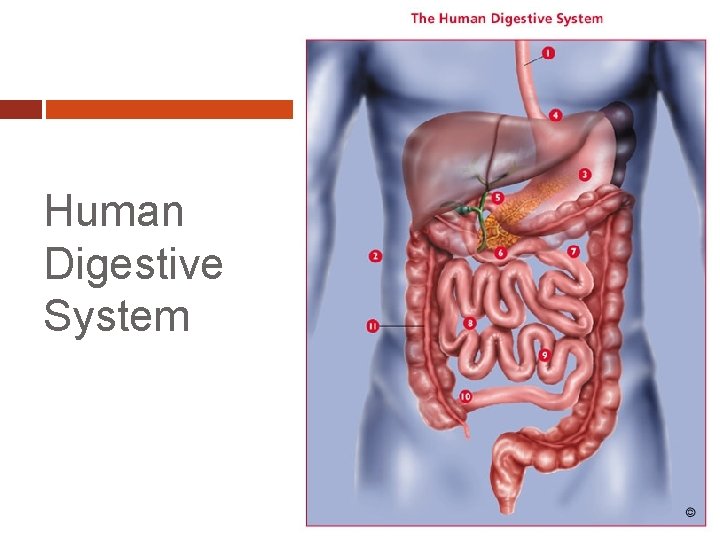
Human Digestive System