
Intro to Cardiovascular System The Cardiovascular System A
- Slides: 25
Intro to Cardiovascular System
The Cardiovascular System • A closed system of the heart and blood vessels • The function is transportation – Oxygen – Nutrients – Wastes – Hormones
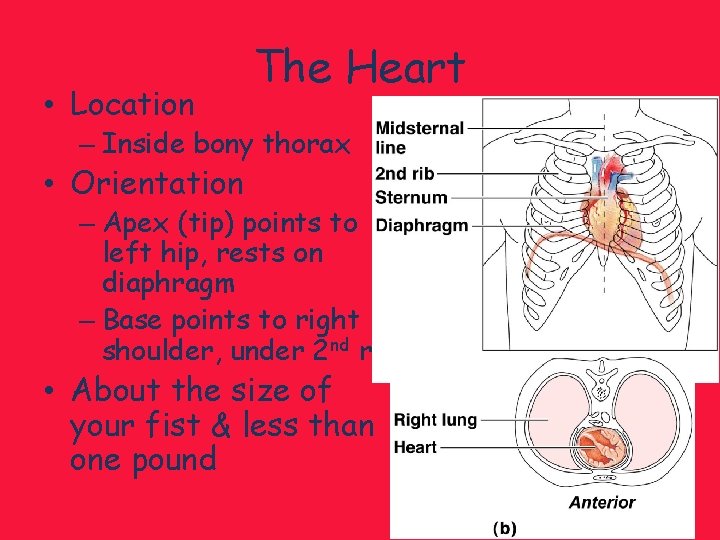
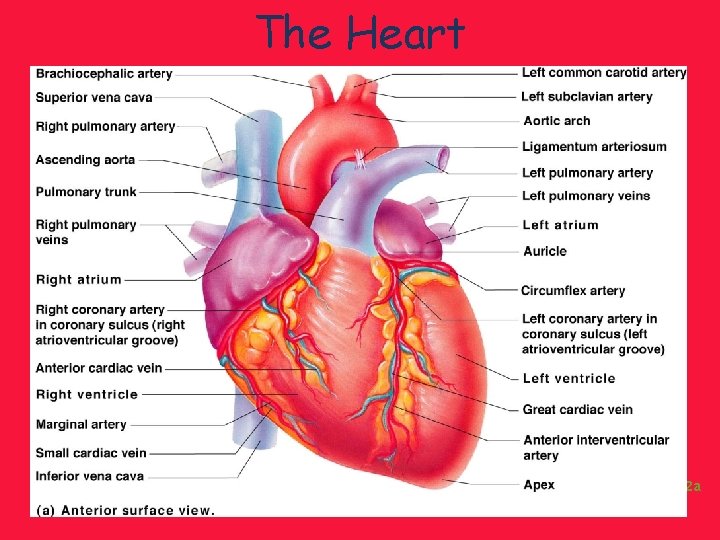
• Location The Heart – Inside bony thorax • Orientation – Apex (tip) points to left hip, rests on diaphragm – Base points to right shoulder, under 2 nd rib • About the size of your fist & less than one pound
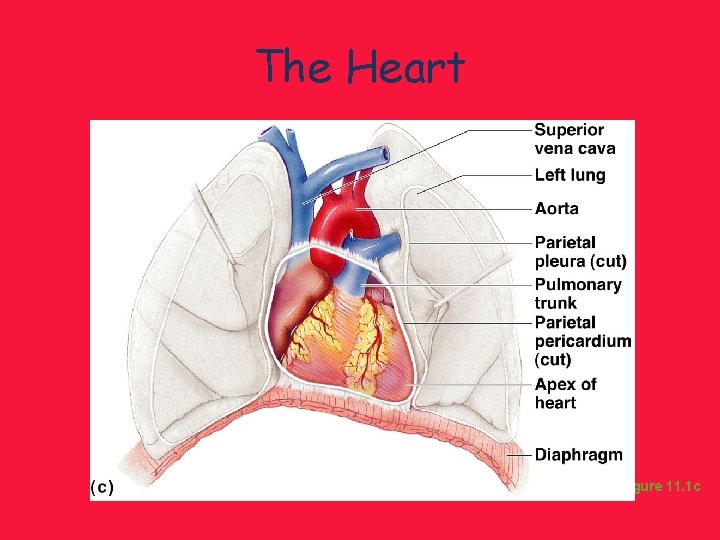
The Heart Figure 11. 1 c
The Heart Figure 11. 2 a
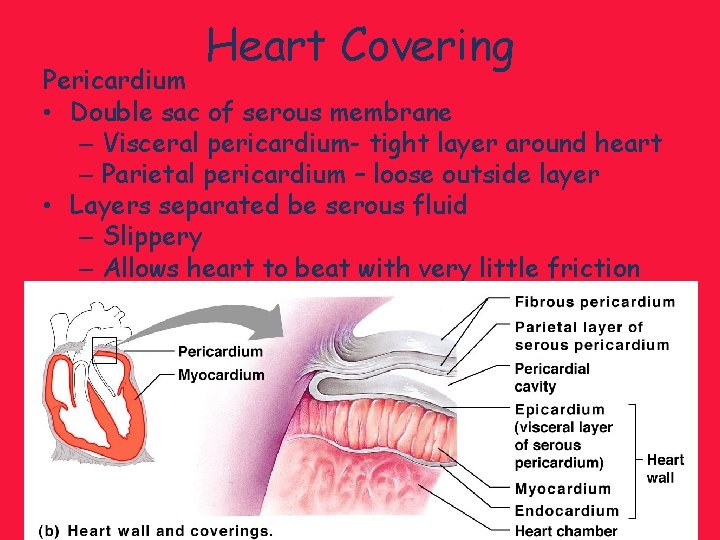
Heart Covering Pericardium • Double sac of serous membrane – Visceral pericardium- tight layer around heart – Parietal pericardium – loose outside layer • Layers separated be serous fluid – Slippery – Allows heart to beat with very little friction
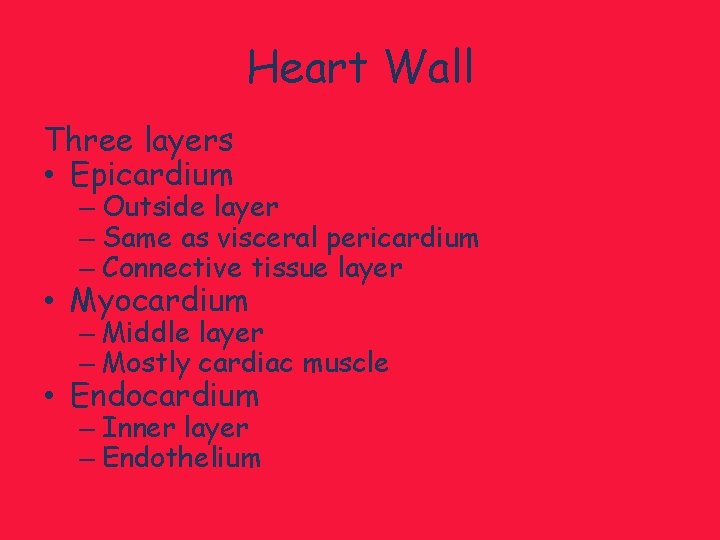
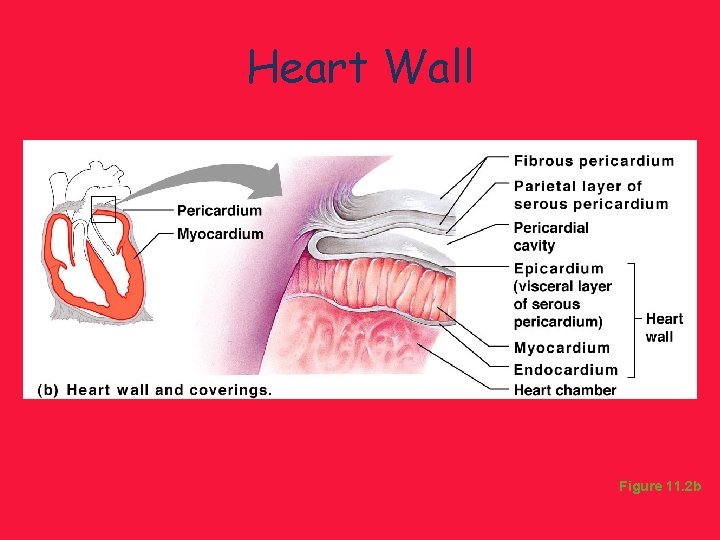
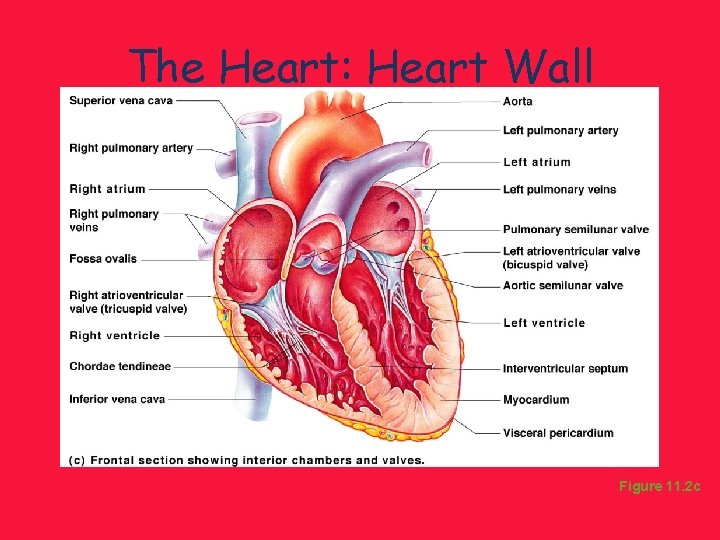
Heart Wall Three layers • Epicardium – Outside layer – Same as visceral pericardium – Connective tissue layer • Myocardium – Middle layer – Mostly cardiac muscle • Endocardium – Inner layer – Endothelium
Heart Wall Figure 11. 2 b
The Heart: Heart Wall Figure 11. 2 c
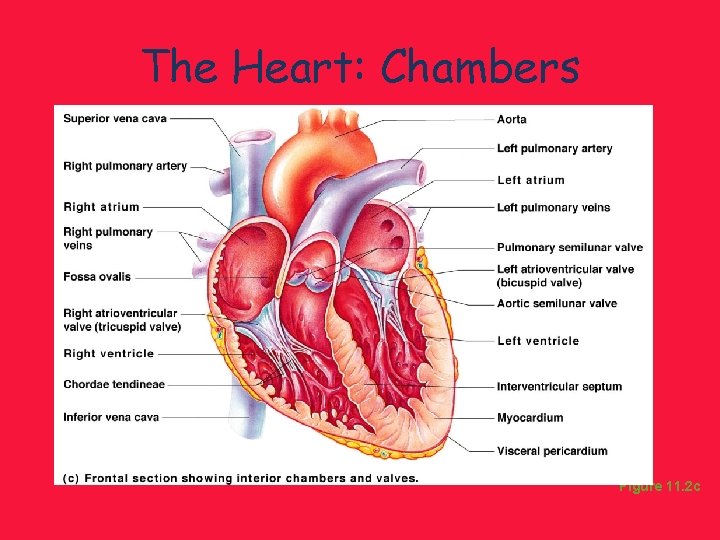
The Heart: Chambers • Right and left side act as separate pumps • Four chambers – Right & left atria • Superior chambers • Receives blood • Not important in pumping = thin muscles – Right & left ventricles • Inferior chambers • Discharges blood • Contracts to pump blood out = thick muscle
The Heart: Chambers Figure 11. 2 c
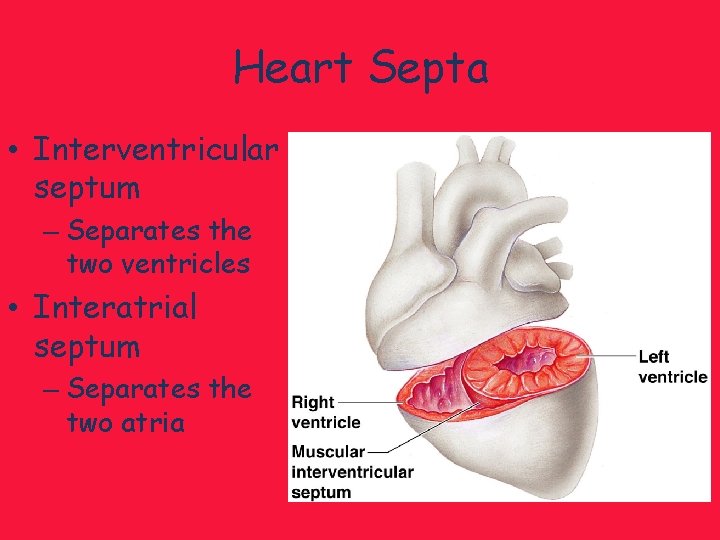
Heart Septa • Interventricular septum – Separates the two ventricles • Interatrial septum – Separates the two atria
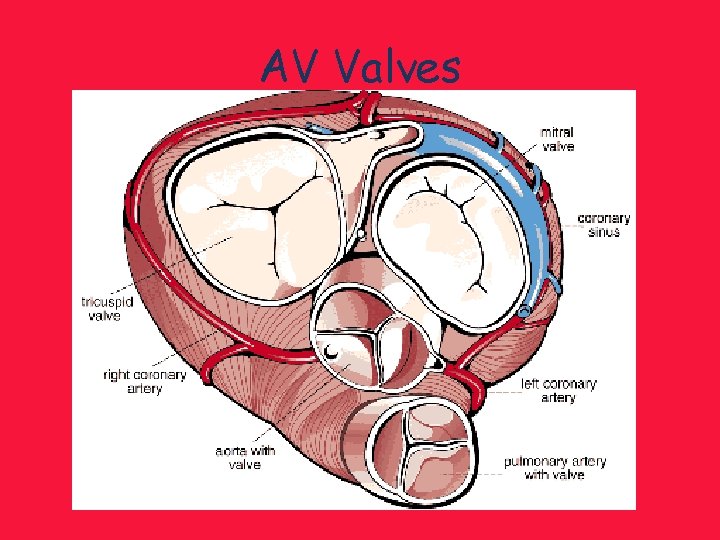
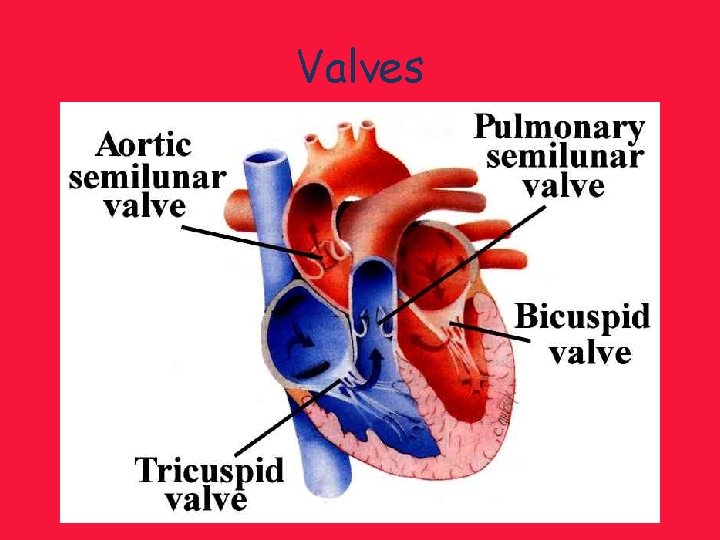
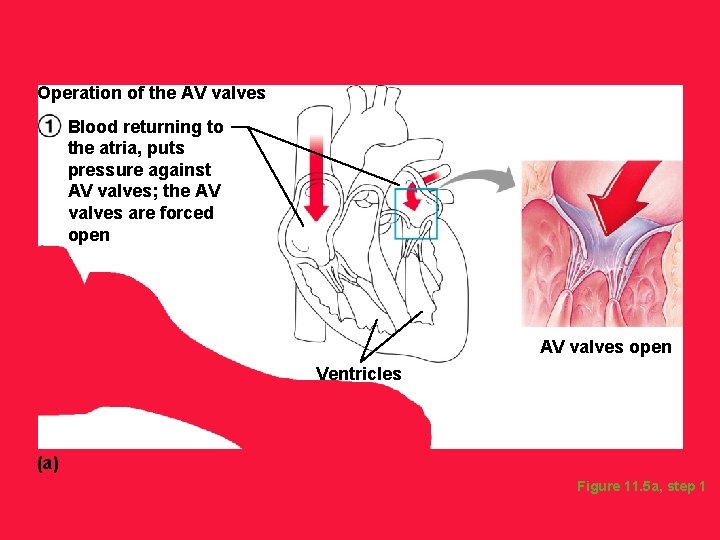
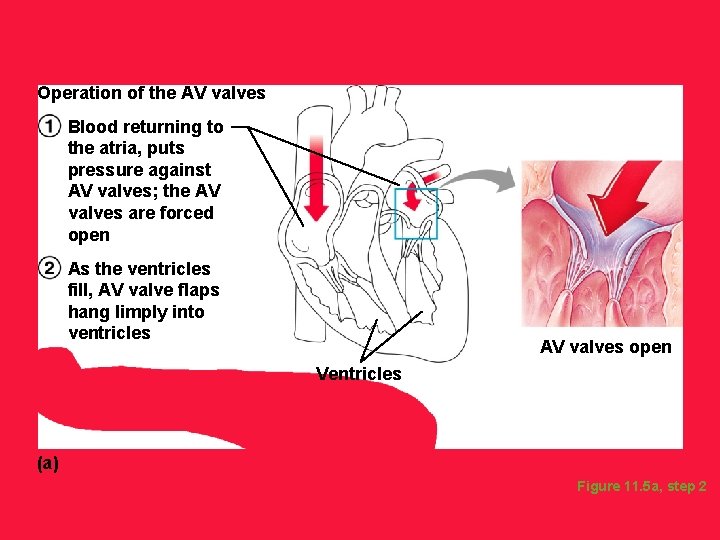
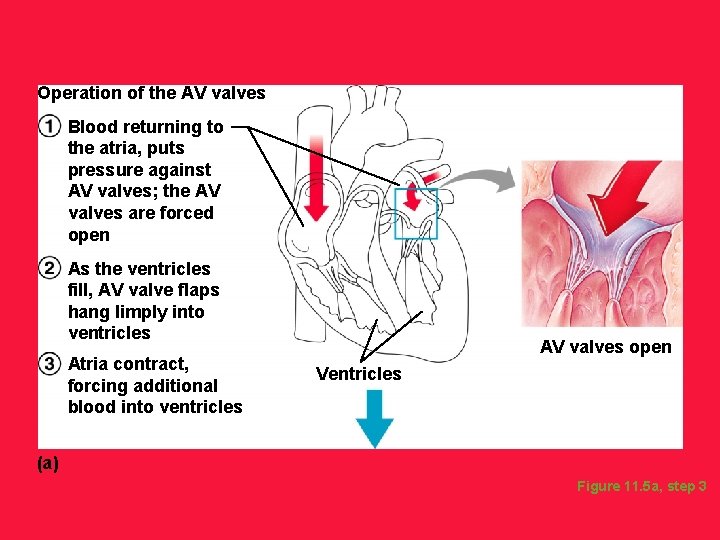
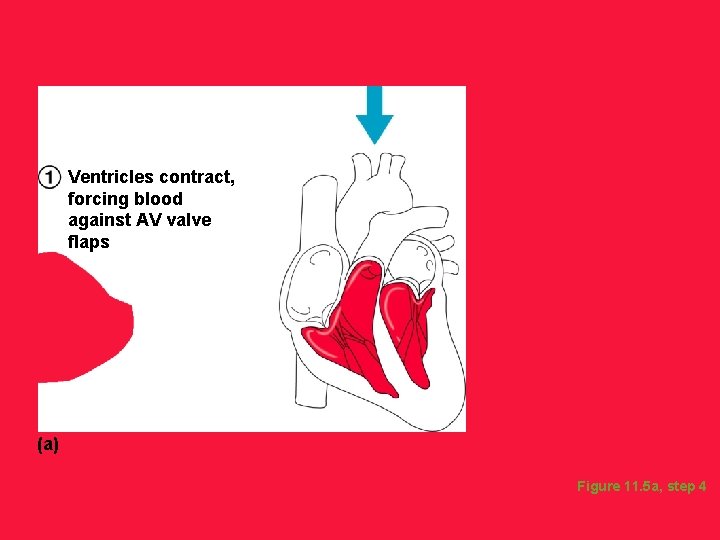
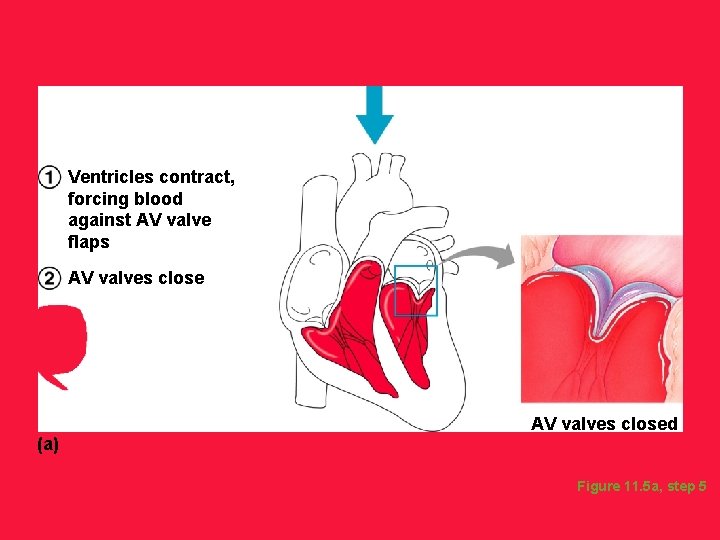
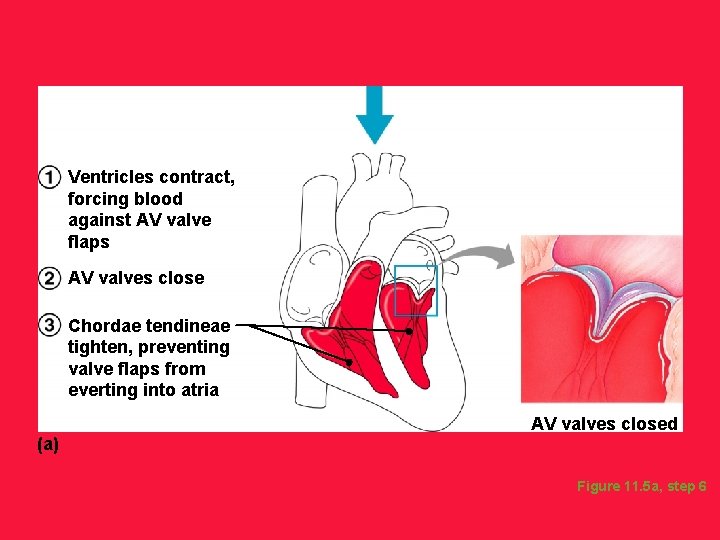
Heart Valves • Allow blood to flow in only one direction to prevent backflow • Four valves: – 2 Atrioventricular (AV) valves—between atria and ventricles • Bicuspid (2 flaps) or mitral valve on left • Tricuspid valve (3 flaps) on right • Anchored in place by chordae tendineae (“heart strings”) • Open during heart relaxation and closed during ventricular contraction
AV Valves
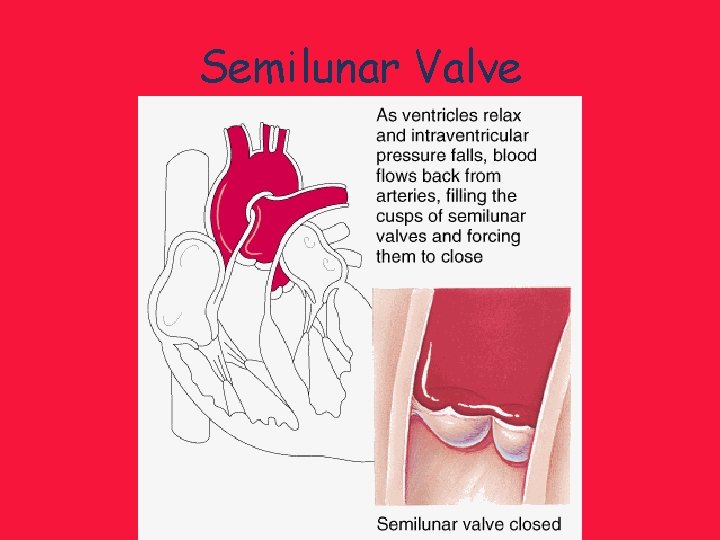
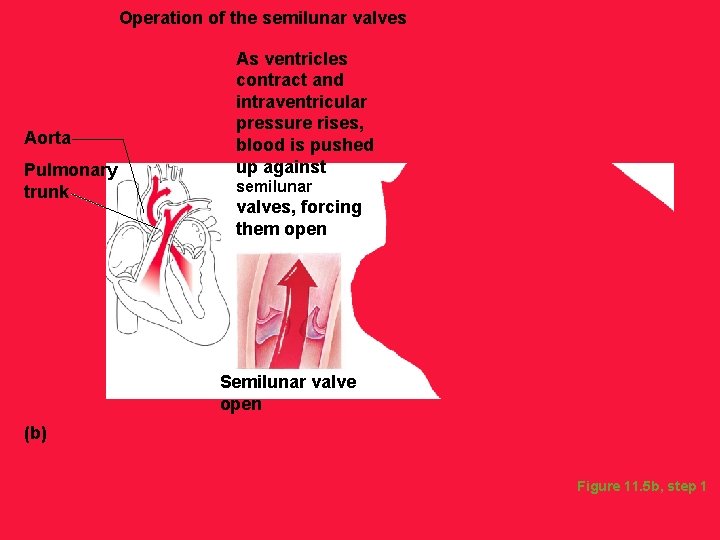
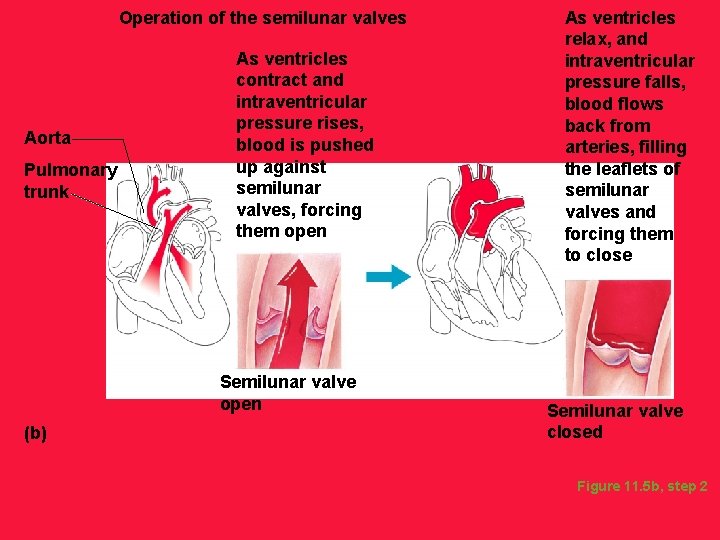
• 2 Semilunar valves—between ventricle and large arteries leaving heart – Pulmonary semilunar valve • Between right ventircle and pulmonary trunk – Aortic semilunar valve • Between left ventricle and aorta • Both valves are half moon shaped with 3 flaps – Closed during heart relaxation but open during ventricular contraction • Notice these valves operate opposite of one another to force a one-way path of blood through the heart
Semilunar Valve
Valves
Operation of the AV valves Blood returning to the atria, puts pressure against AV valves; the AV valves are forced open AV valves open Ventricles (a) Figure 11. 5 a, step 1
Operation of the AV valves Blood returning to the atria, puts pressure against AV valves; the AV valves are forced open As the ventricles fill, AV valve flaps hang limply into ventricles AV valves open Ventricles (a) Figure 11. 5 a, step 2
Operation of the AV valves Blood returning to the atria, puts pressure against AV valves; the AV valves are forced open As the ventricles fill, AV valve flaps hang limply into ventricles Atria contract, forcing additional blood into ventricles AV valves open Ventricles (a) Figure 11. 5 a, step 3
Ventricles contract, forcing blood against AV valve flaps (a) Figure 11. 5 a, step 4
Ventricles contract, forcing blood against AV valve flaps AV valves close (a) AV valves closed Figure 11. 5 a, step 5
Ventricles contract, forcing blood against AV valve flaps AV valves close Chordae tendineae tighten, preventing valve flaps from everting into atria (a) AV valves closed Figure 11. 5 a, step 6
Operation of the semilunar valves Aorta Pulmonary trunk As ventricles contract and intraventricular pressure rises, blood is pushed up against semilunar valves, forcing them open Semilunar valve open (b) Figure 11. 5 b, step 1
Operation of the semilunar valves Aorta Pulmonary trunk As ventricles contract and intraventricular pressure rises, blood is pushed up against semilunar valves, forcing them open Semilunar valve open (b) As ventricles relax, and intraventricular pressure falls, blood flows back from arteries, filling the leaflets of semilunar valves and forcing them to close Semilunar valve closed Figure 11. 5 b, step 2