
Intro to Arthropods Arthropods and Their Relatives Characteristics


- Slides: 39
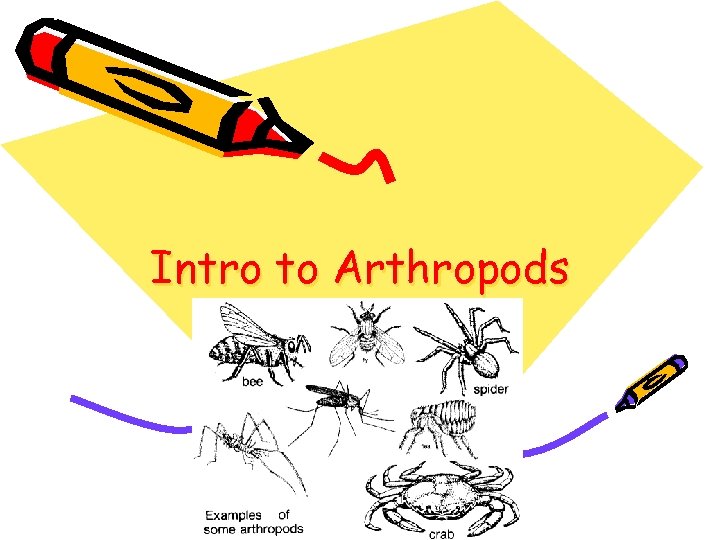
Intro to Arthropods
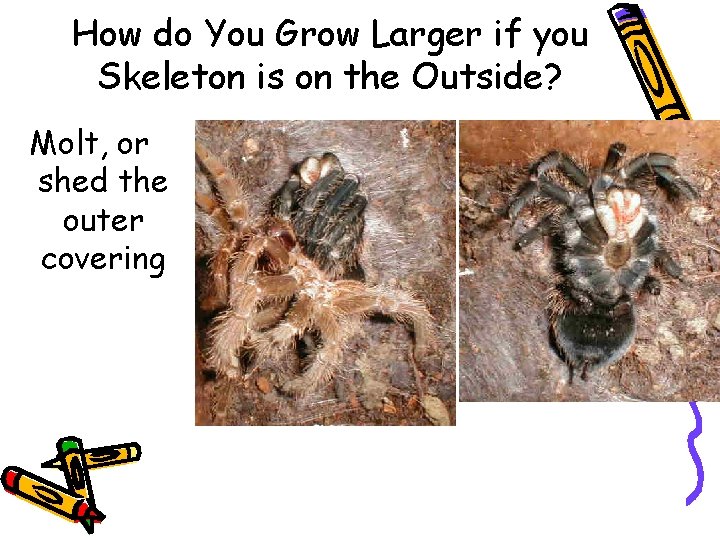
Arthropods and Their Relatives • Characteristics – Exoskeleton (external covering made of CHITIN) – Molts or sheds exoskeleton to grow – Jointed appendages - groups very often named in relation to number or type of feet. – Tend to undergo metamorphosis or pass through a number of distinct growth stages during their lives – Tendency toward high degree of cephalization, especially in Class Insecta
Arthropods • Relative abundance. – 3/4 of all known species of animals are arthropods. ( – More known species of arthropods than known species of plants and animals combined. Great diversity in form and habitat.
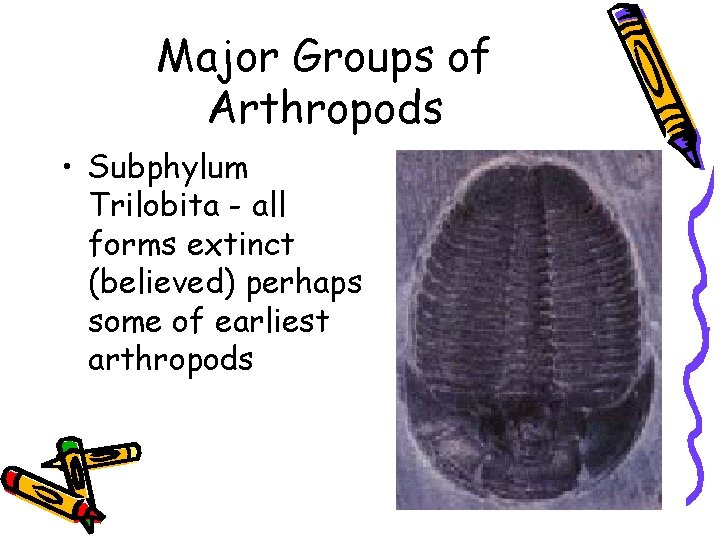
Major Groups of Arthropods • Subphylum Trilobita - all forms extinct (believed) perhaps some of earliest arthropods
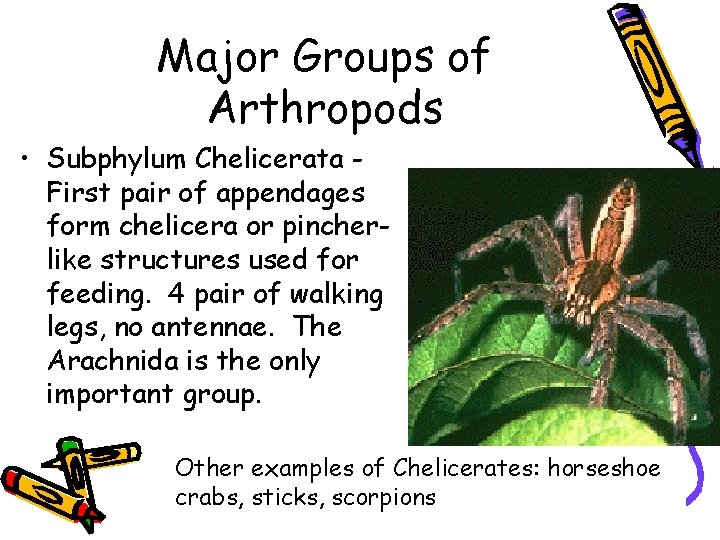
Major Groups of Arthropods • Subphylum Chelicerata First pair of appendages form chelicera or pincherlike structures used for feeding. 4 pair of walking legs, no antennae. The Arachnida is the only important group. Other examples of Chelicerates: horseshoe crabs, sticks, scorpions
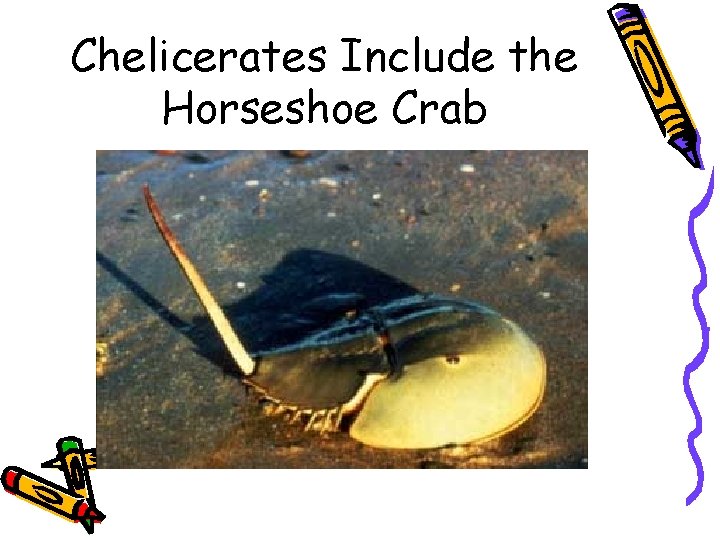
Chelicerates Include the Horseshoe Crab
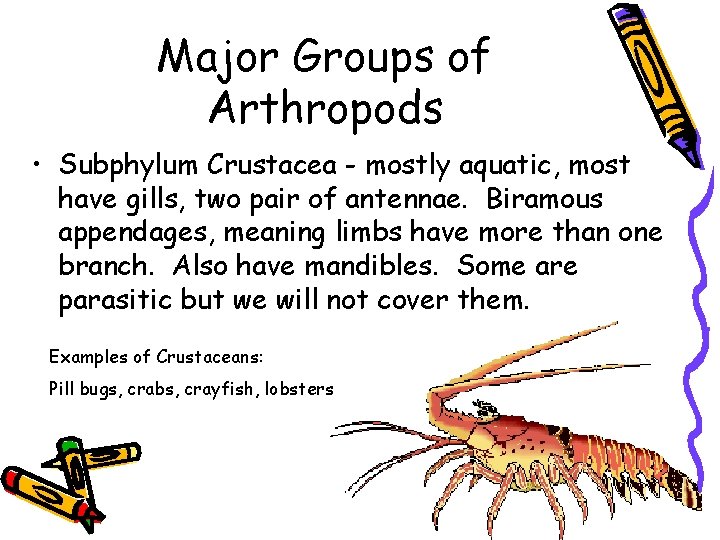
Major Groups of Arthropods • Subphylum Crustacea - mostly aquatic, most have gills, two pair of antennae. Biramous appendages, meaning limbs have more than one branch. Also have mandibles. Some are parasitic but we will not cover them. Examples of Crustaceans: Pill bugs, crabs, crayfish, lobsters
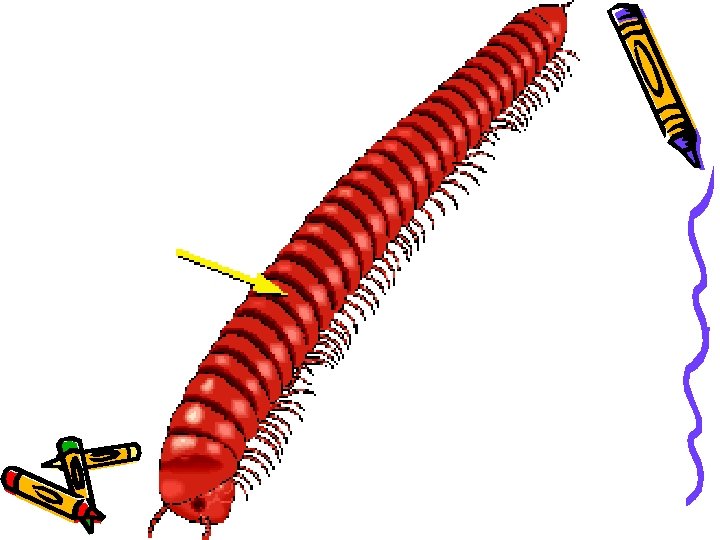
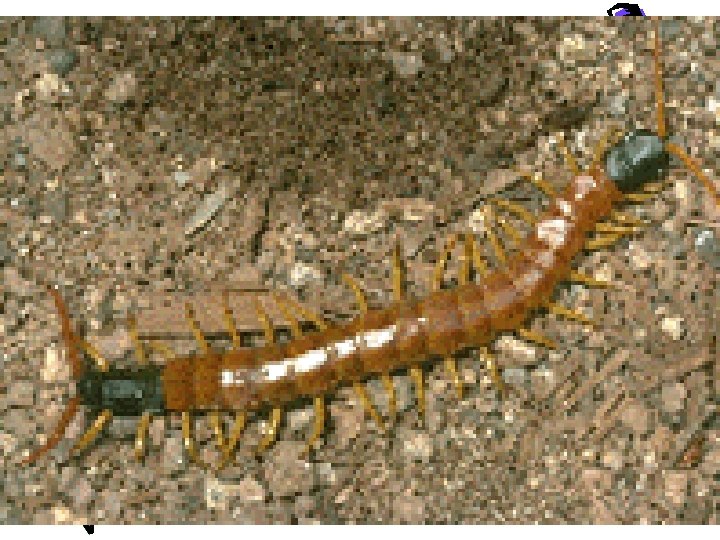
Major Groups of Arthropods • Subphylum Uriramia – single branch or uriramous appendages, mandibles, one pair of antennae • Diplopoda - Millipedes - two pair of legs per body segment • Chilopoda - Centipedes - one pair of legs per body segment • Insecta - 3 pair of legs on adults, many with wings, most important group
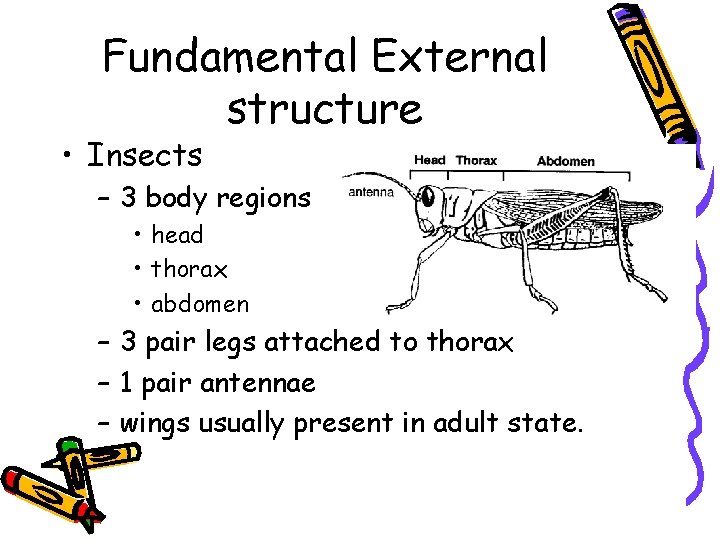
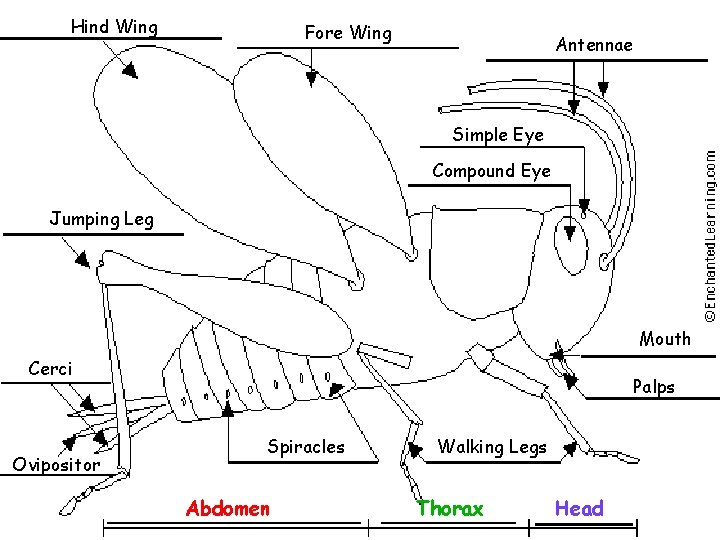
Fundamental External structure • Insects – 3 body regions • head • thorax • abdomen – 3 pair legs attached to thorax – 1 pair antennae – wings usually present in adult state.
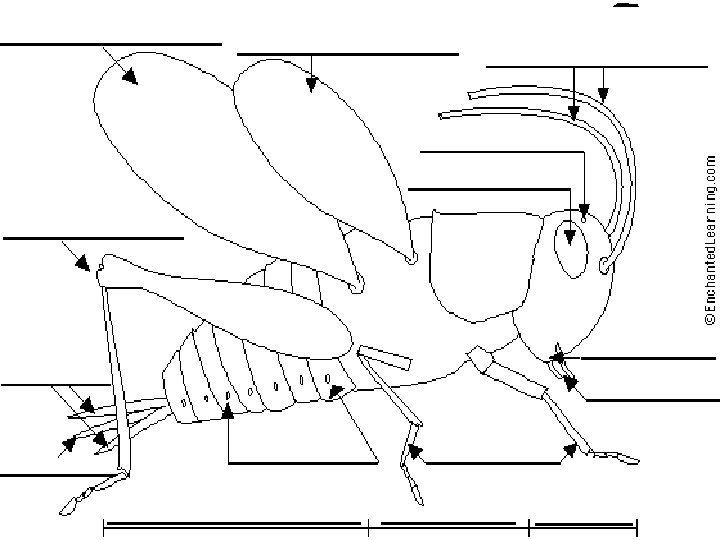
Hind Wing Fore Wing Antennae Simple Eye Compound Eye Jumping Leg Mouth Cerci Ovipositor Palps Spiracles Abdomen Walking Legs Thorax Head
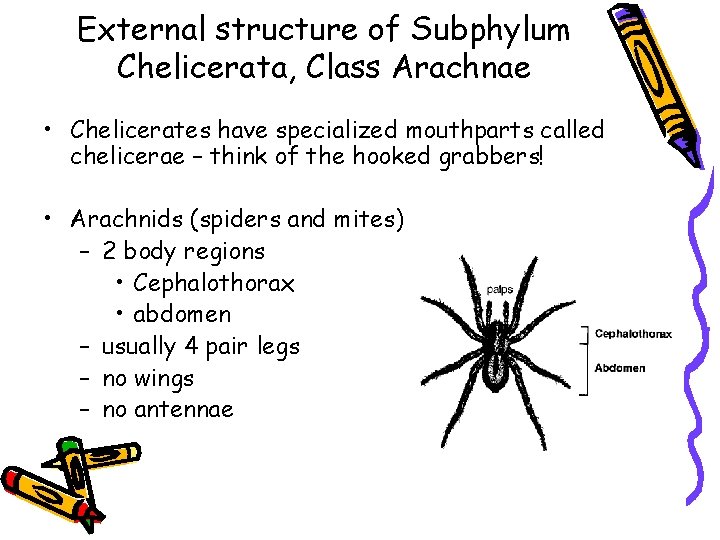
External structure of Subphylum Chelicerata, Class Arachnae • Chelicerates have specialized mouthparts called chelicerae – think of the hooked grabbers! • Arachnids (spiders and mites) – 2 body regions • Cephalothorax • abdomen – usually 4 pair legs – no wings – no antennae
Body of Arachnids The Spider Body A spider's body is divided into two parts: Cephalothorax - Fused head & thorax. The legs are located on the cephalothorax Abdomen - Similar to that of insects. .
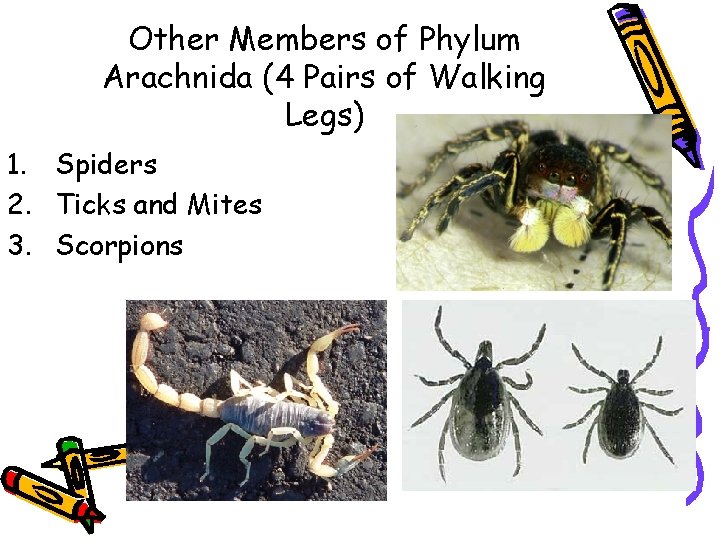
Other Members of Phylum Arachnida (4 Pairs of Walking Legs) 1. Spiders 2. Ticks and Mites 3. Scorpions
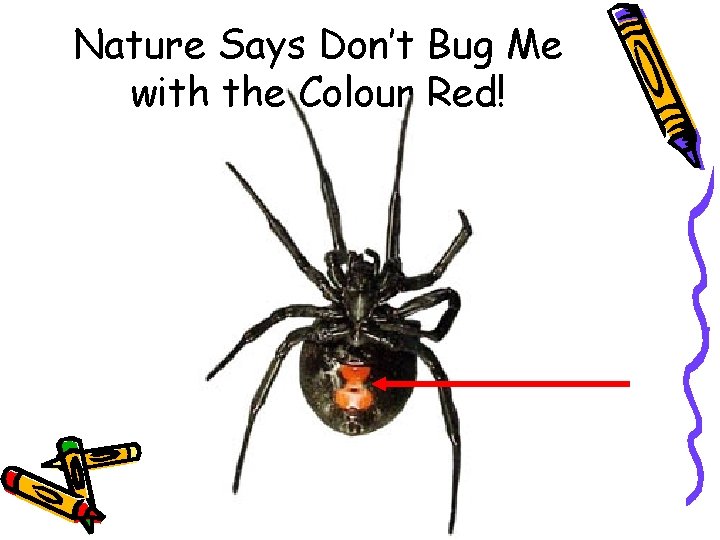
Nature Says Don’t Bug Me with the Colour Red!
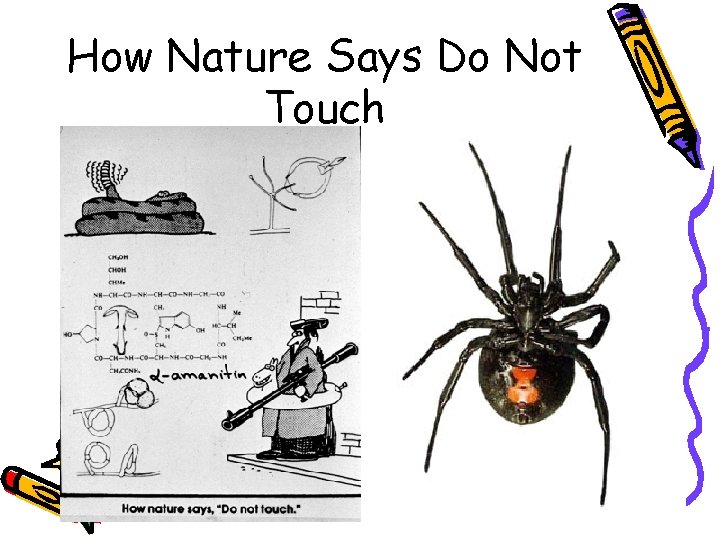
How Nature Says Do Not Touch
Feeding and Digestion -Arthropods can be herbivores, carnivores, and omnivores. -They can be bloodsuckers, filter feeders, detritivores, or parasites
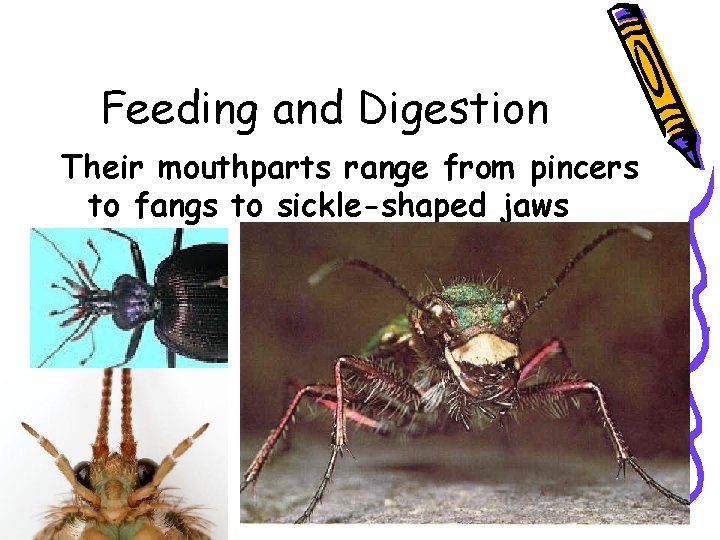
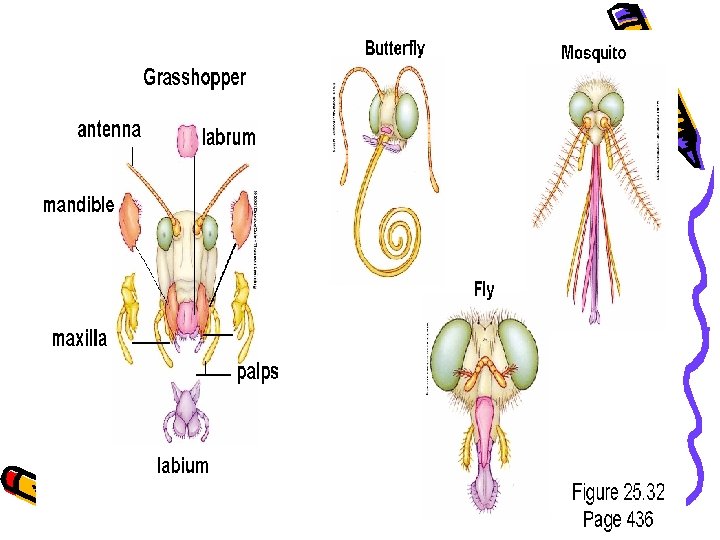
Feeding and Digestion Their mouthparts range from pincers to fangs to sickle-shaped jaws
Chelicera = Fangs, for example, on a Spider
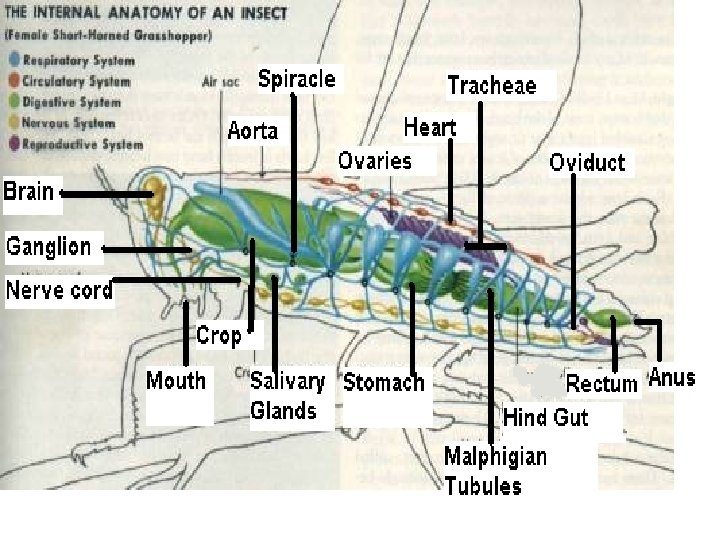
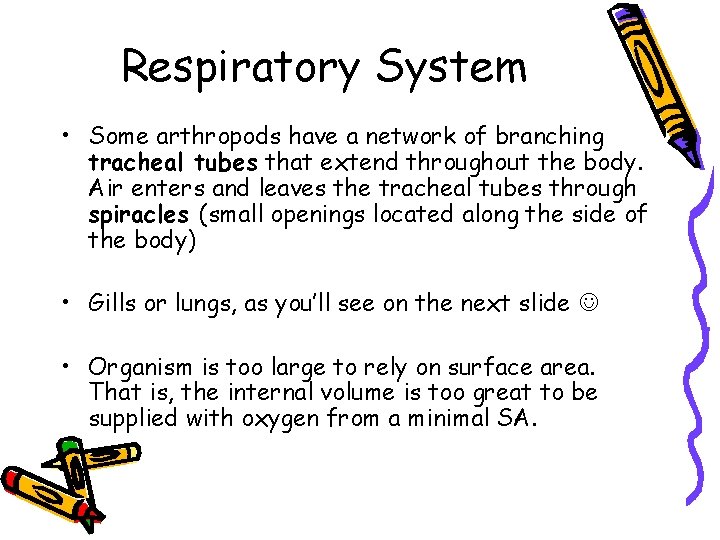
Respiratory System • Some arthropods have a network of branching tracheal tubes that extend throughout the body. Air enters and leaves the tracheal tubes through spiracles (small openings located along the side of the body) • Gills or lungs, as you’ll see on the next slide • Organism is too large to rely on surface area. That is, the internal volume is too great to be supplied with oxygen from a minimal SA.
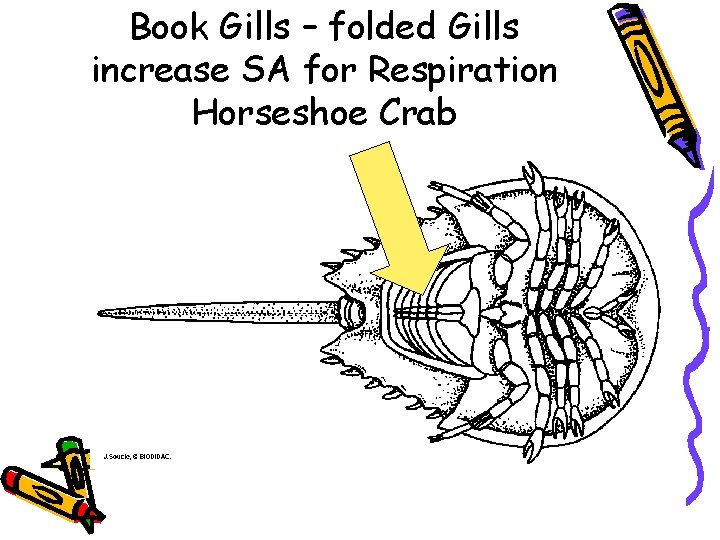
Book Gills – folded Gills increase SA for Respiration Horseshoe Crab
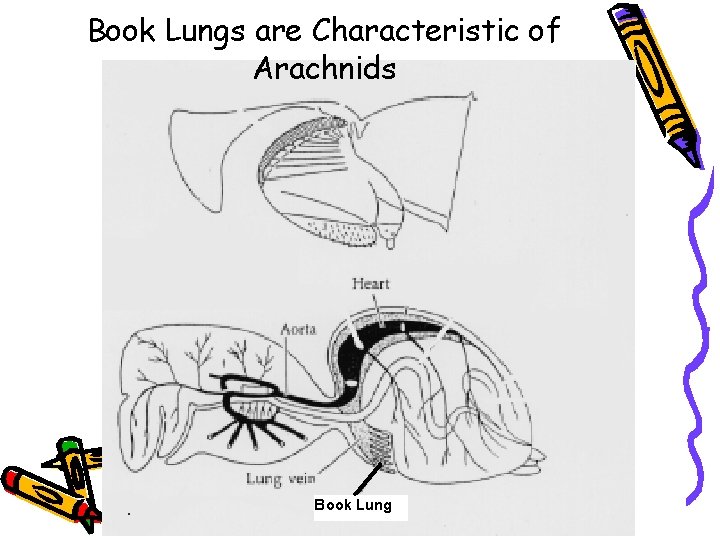
Book Lungs are Characteristic of Arachnids
Circulatory System • • Open circulatory system Well developed heart pumps blood Heart is long and narrow Arteries branch into blood vessels and return blood to the heart via veins – cool, just like us!
Excretion • Recall the Nephridia in Annelids • The Malphigian Tubules in Arthropods collect nitrogenous wastes in the tubules from blood • Wastes are concentrated (like a kidney does. ) • Excreted out anus - In aquatic arthropods, cellular wastes are diffused into the water
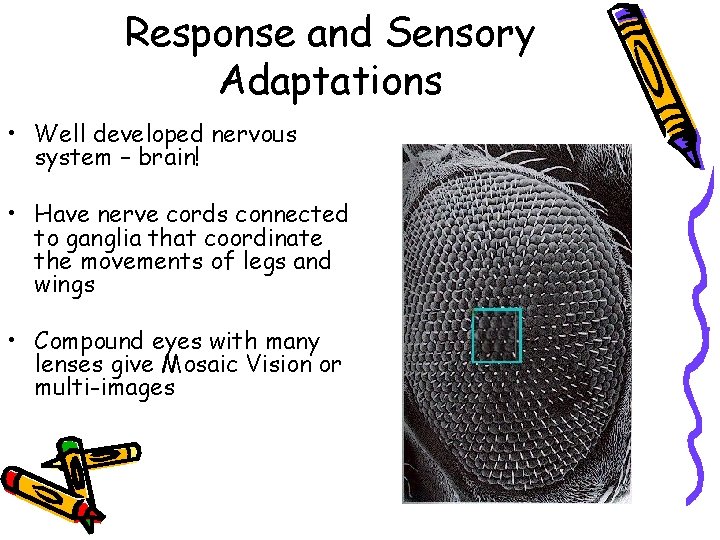
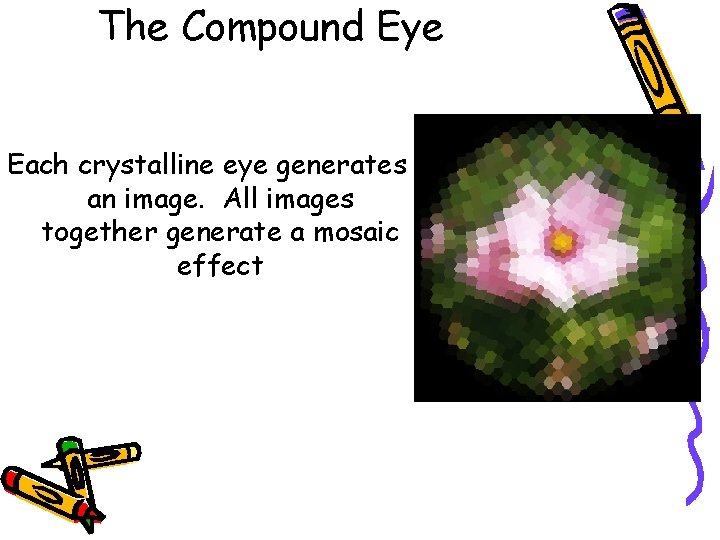
Response and Sensory Adaptations • Well developed nervous system – brain! • Have nerve cords connected to ganglia that coordinate the movements of legs and wings • Compound eyes with many lenses give Mosaic Vision or multi-images
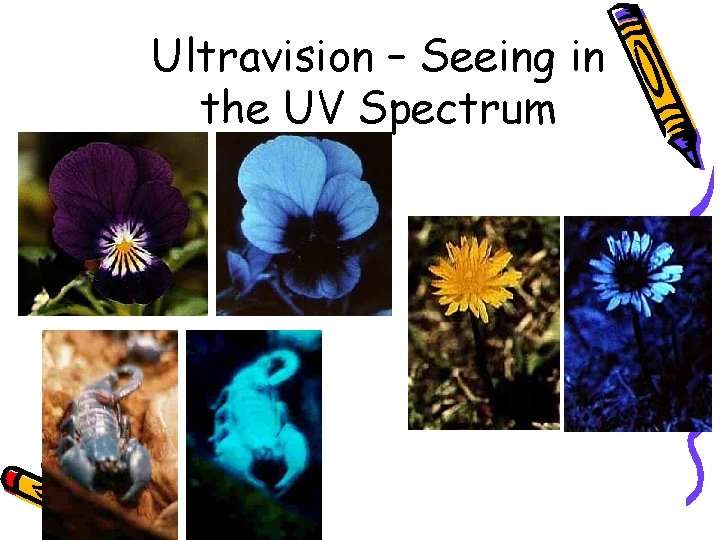
Ultravision – Seeing in the UV Spectrum
The Compound Eye Each crystalline eye generates an image. All images together generate a mosaic effect
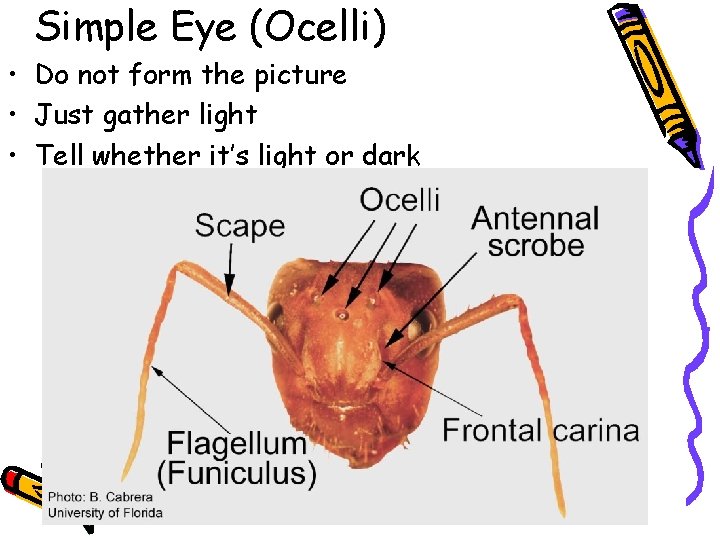
Simple Eye (Ocelli) • Do not form the picture • Just gather light • Tell whether it’s light or dark
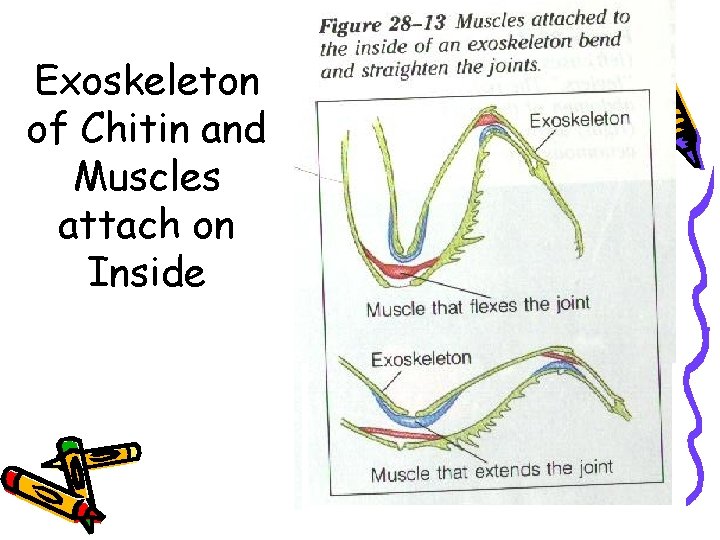
Movement • Arthropods have muscles coordinated by the nervous system • Different muscles flex or extend the joint, pulling on the exoskeleton
Exoskeleton of Chitin and Muscles attach on Inside
Reproduction • Terrestrial arthropods: internal fertilization male places sperm in female deposits sperm packed that is picked up by female • Aquatic arthropods: internal OR external fertilization
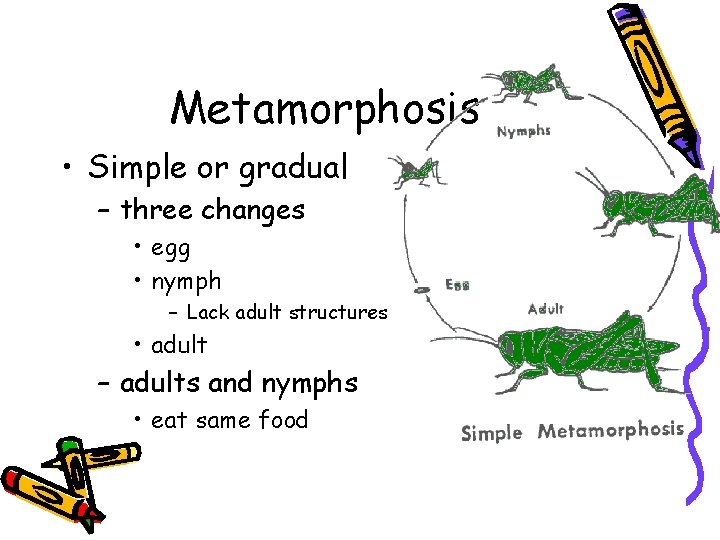
Metamorphosis • Simple or gradual – three changes • egg • nymph – Lack adult structures • adult – adults and nymphs • eat same food
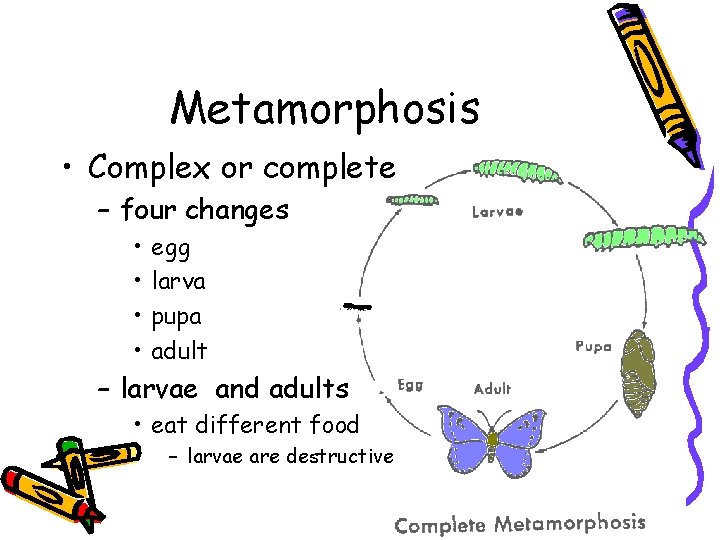
Metamorphosis • Complex or complete – four changes • • egg larva pupa adult – larvae and adults • eat different food – larvae are destructive
How do You Grow Larger if you Skeleton is on the Outside? Molt, or shed the outer covering
Today’s task • In your groups, summarize and present one of the following topics. Make sure to include labelled diagrams and key terms! Groups 1 + 2: Crustaceans (pp. 720 -721) Insects and Relatives (p. 725) Groups 3 + 4: Spiders and relatives (pp. 722724)