
Intro To Archeology Week 1 Notes What is



- Slides: 50
Intro To Archeology: Week #1 Notes
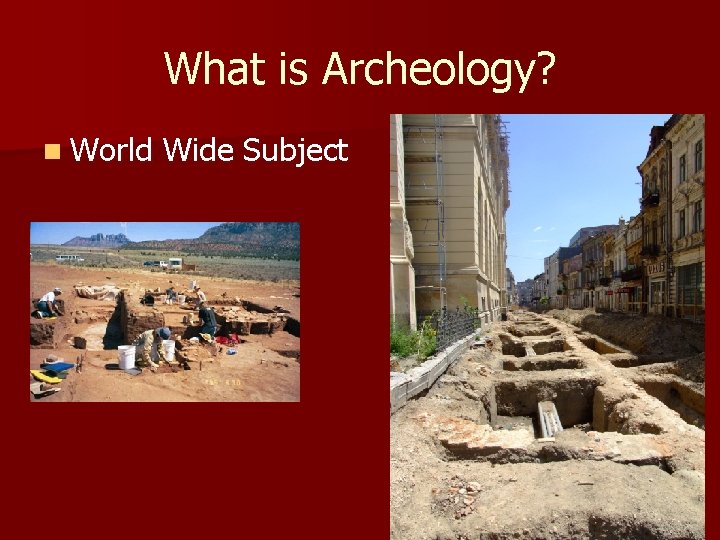
What is Archeology? n World Wide Subject
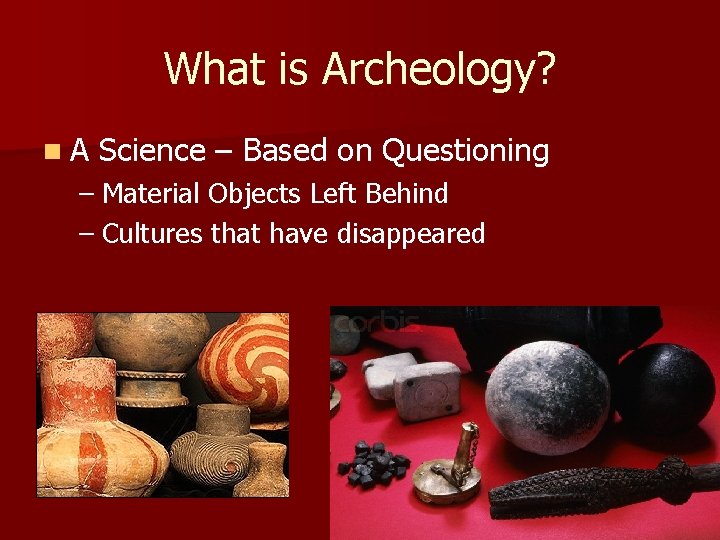
What is Archeology? n. A Science – Based on Questioning – Material Objects Left Behind – Cultures that have disappeared
Why Study Archeology? n Answer Questions Scientifically: – – Cultures Living Conditions Industrial Works Migration Habits of Societies
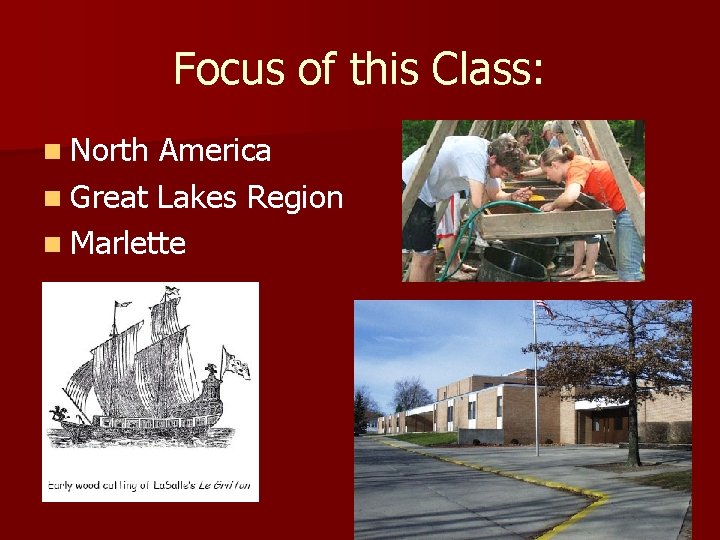
Focus of this Class: n North America n Great Lakes Region n Marlette
Key Terms: n Archeology: n Material Culture:
Discussion Question: n What comes to mind when you think about Archeology or Archeologists?
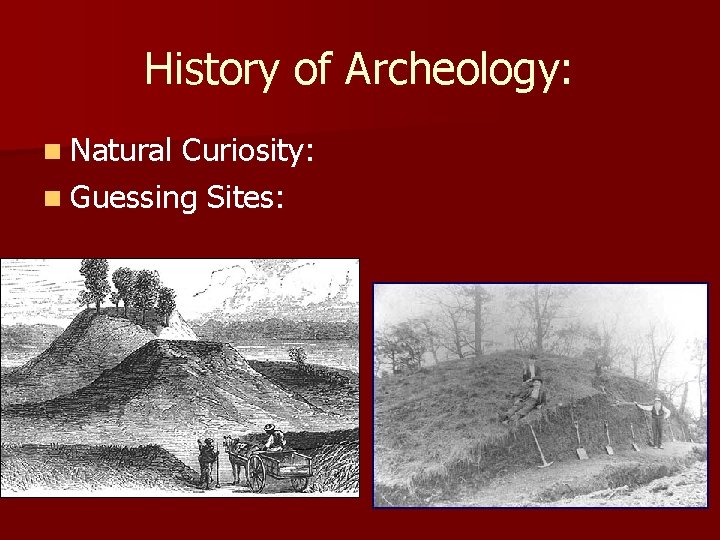
History of Archeology: n Natural Curiosity: n Guessing Sites:
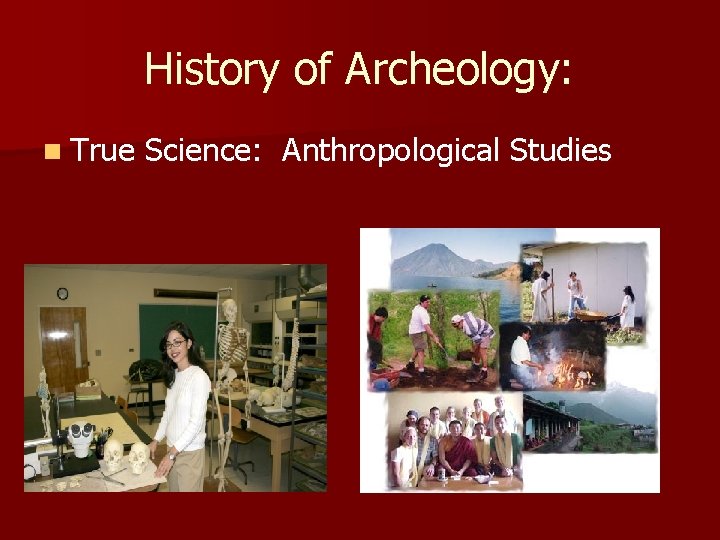
History of Archeology: n True Science: Anthropological Studies
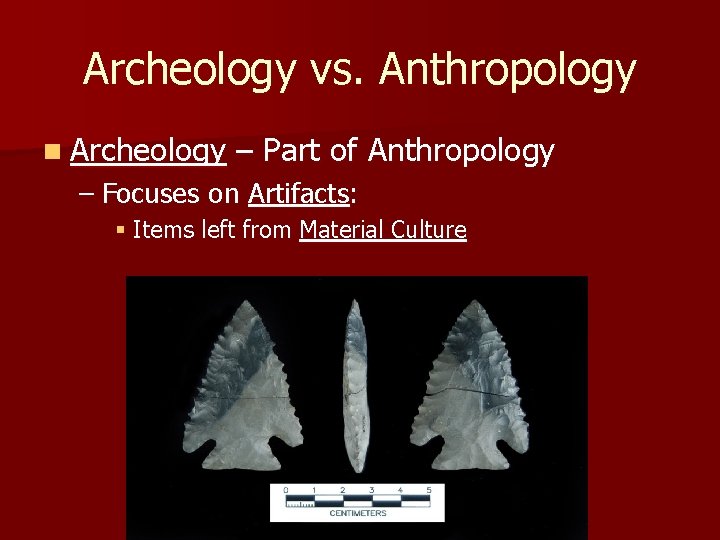
Archeology vs. Anthropology n Archeology – Part of Anthropology – Focuses on Artifacts: § Items left from Material Culture
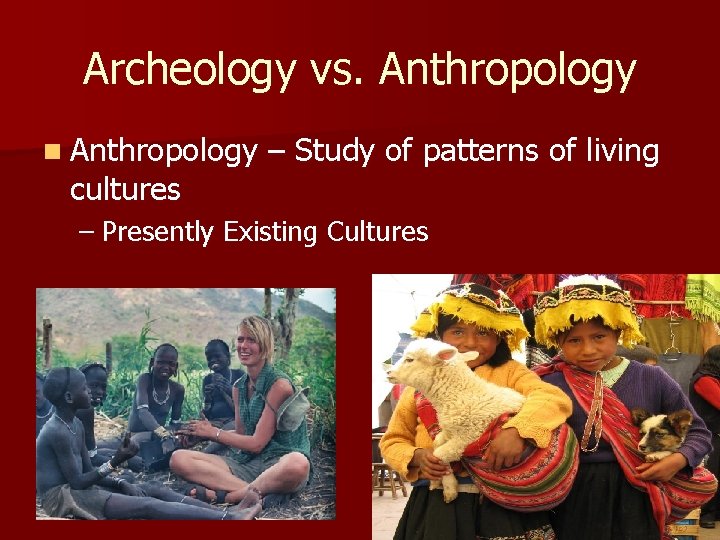
Archeology vs. Anthropology n Anthropology cultures – Study of patterns of living – Presently Existing Cultures
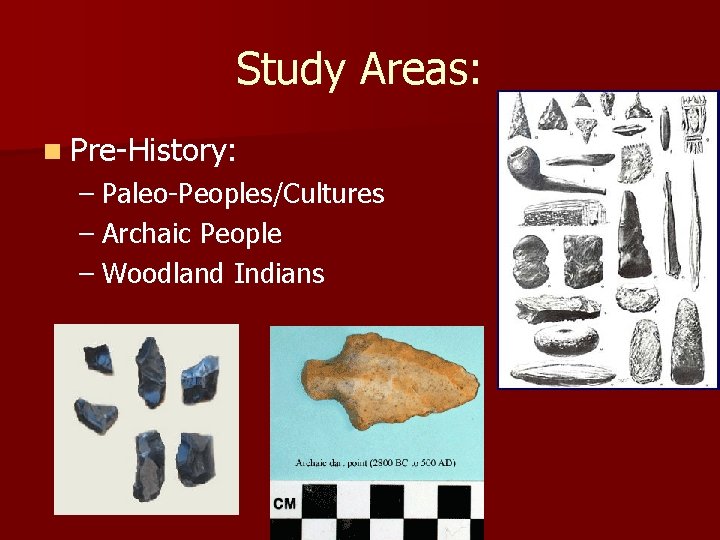
Study Areas: n Pre-History: – Paleo-Peoples/Cultures – Archaic People – Woodland Indians
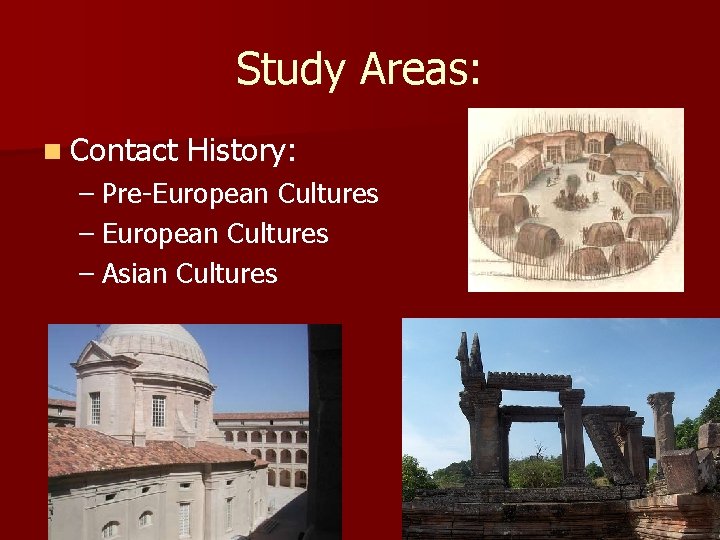
Study Areas: n Contact History: – Pre-European Cultures – Asian Cultures
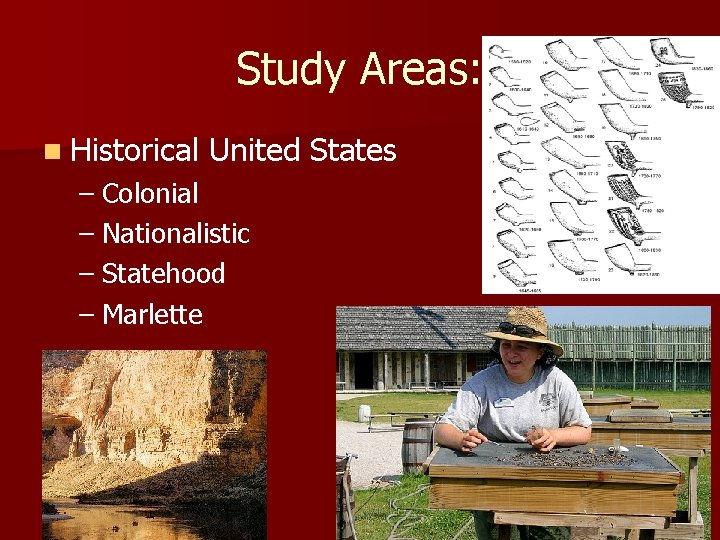
Study Areas: n Historical United States – Colonial – Nationalistic – Statehood – Marlette
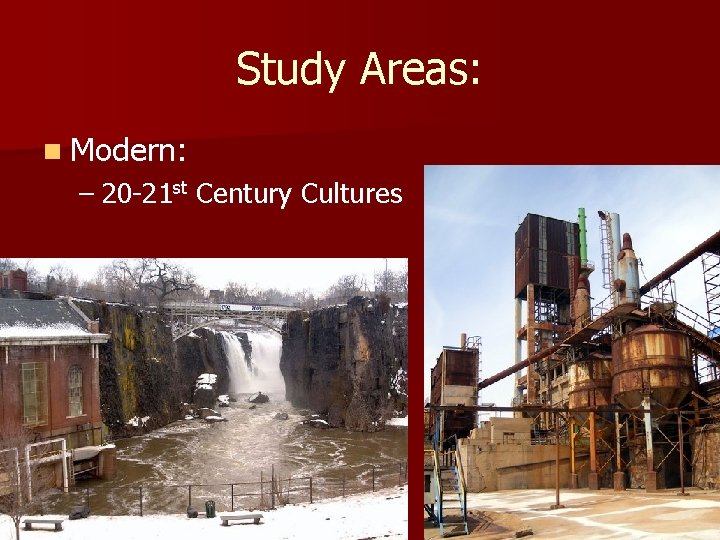
Study Areas: n Modern: – 20 -21 st Century Cultures
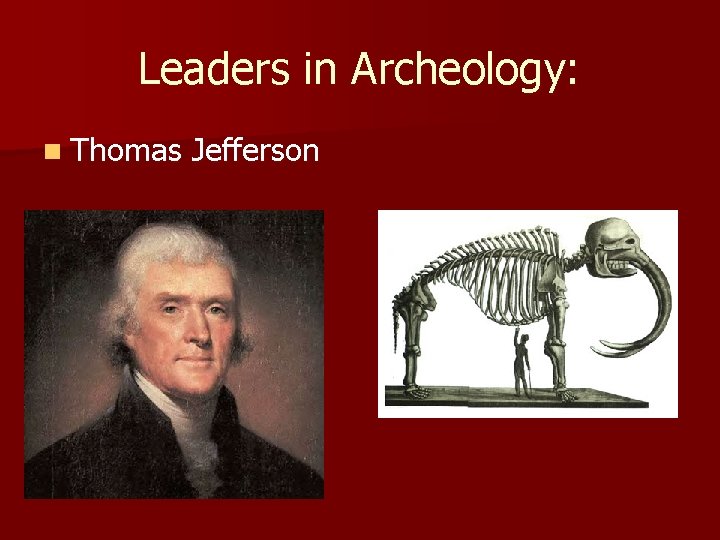
Leaders in Archeology: n Thomas Jefferson
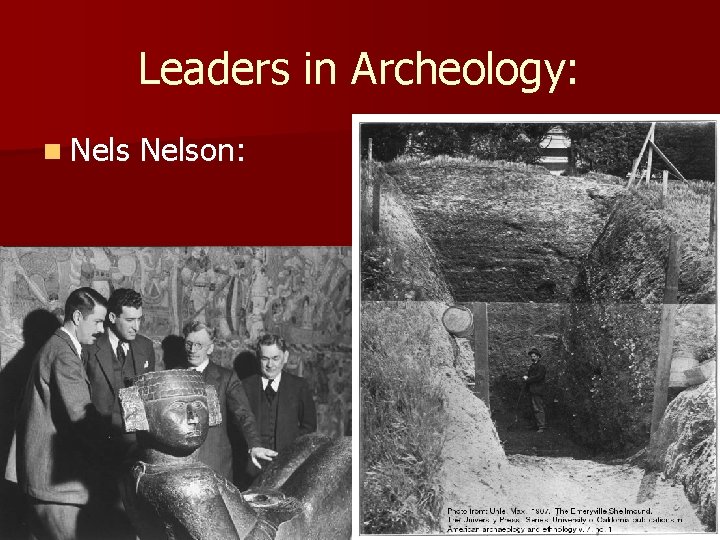
Leaders in Archeology: n Nelson:
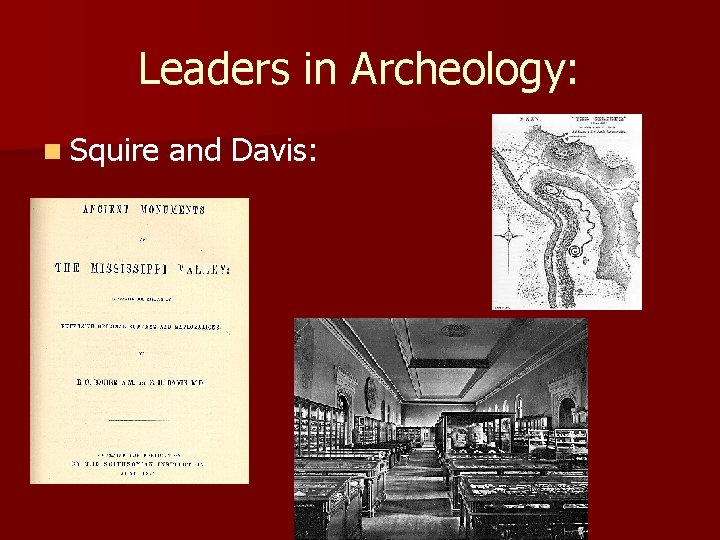
Leaders in Archeology: n Squire and Davis:
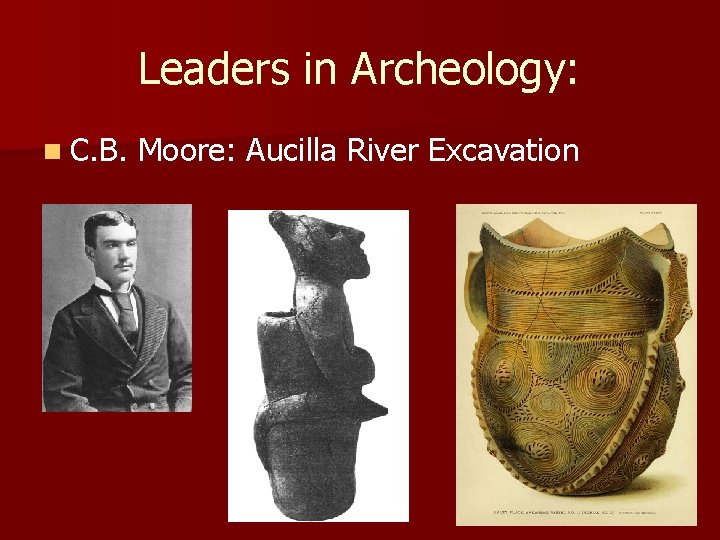
Leaders in Archeology: n C. B. Moore: Aucilla River Excavation
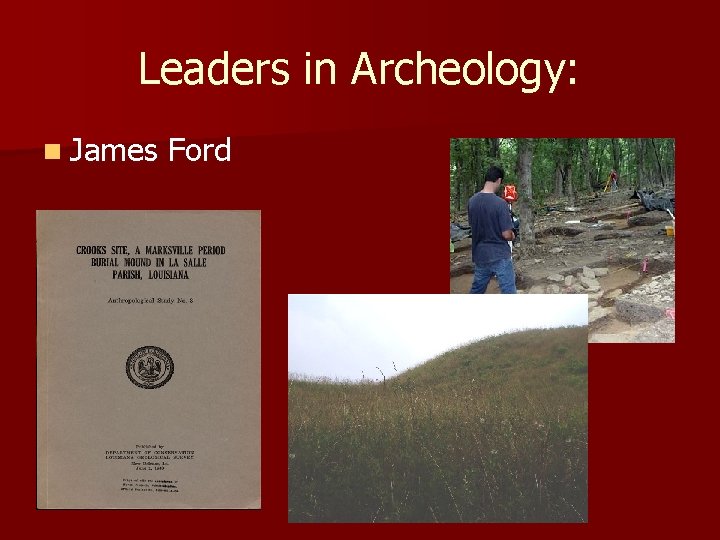
Leaders in Archeology: n James Ford
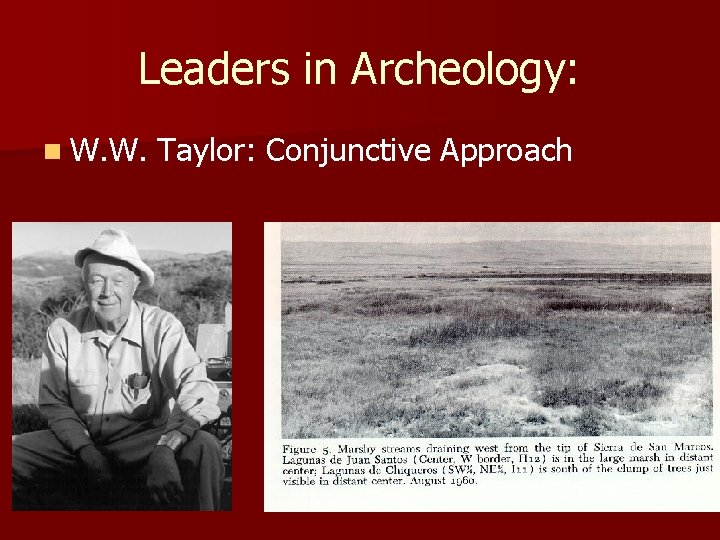
Leaders in Archeology: n W. W. Taylor: Conjunctive Approach
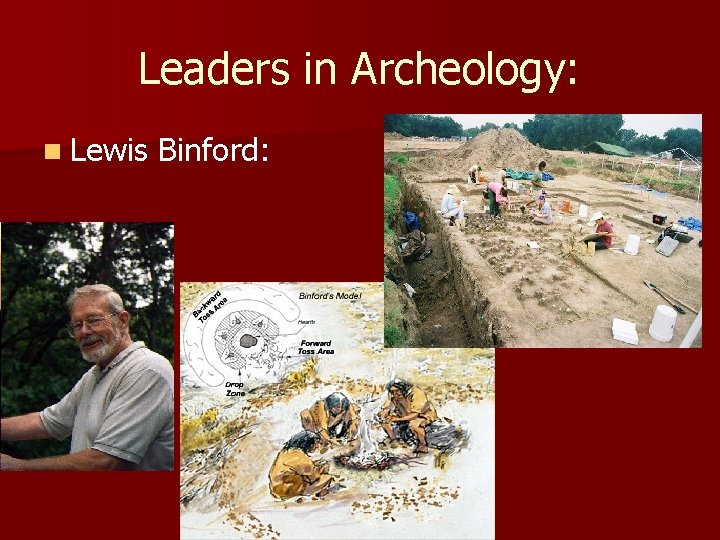
Leaders in Archeology: n Lewis Binford:
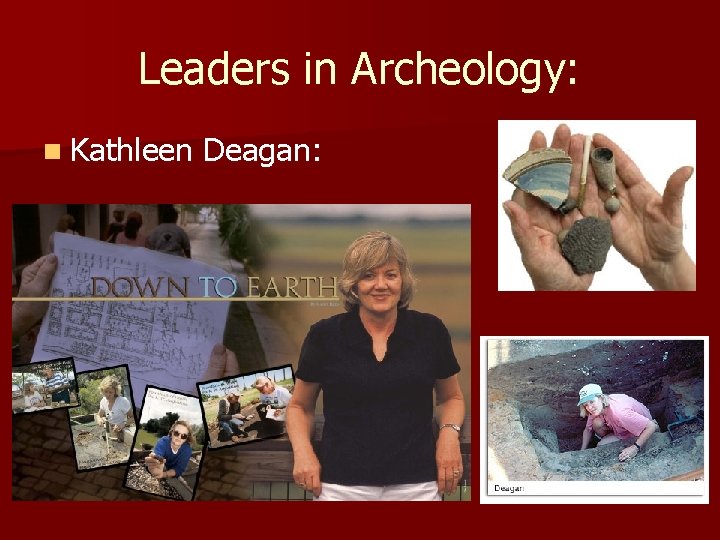
Leaders in Archeology: n Kathleen Deagan:
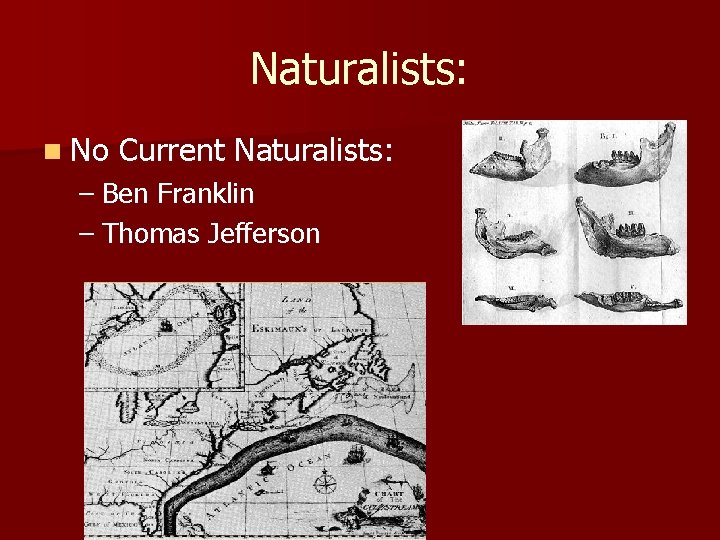
Naturalists: n No Current Naturalists: – Ben Franklin – Thomas Jefferson
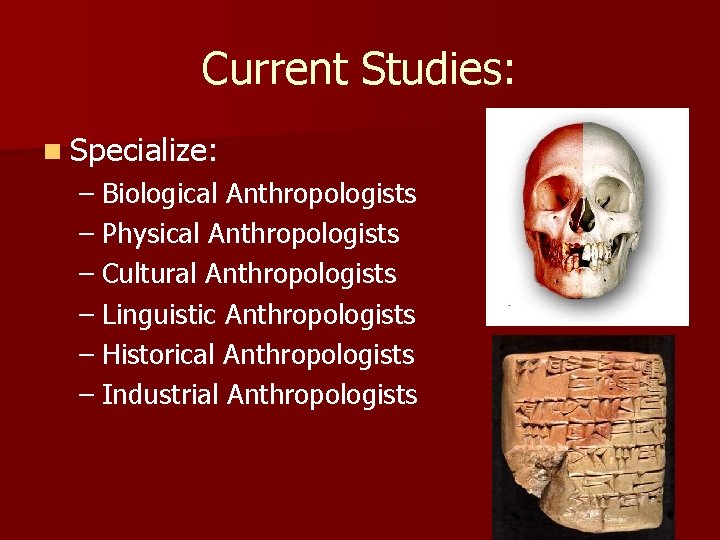
Current Studies: n Specialize: – Biological Anthropologists – Physical Anthropologists – Cultural Anthropologists – Linguistic Anthropologists – Historical Anthropologists – Industrial Anthropologists
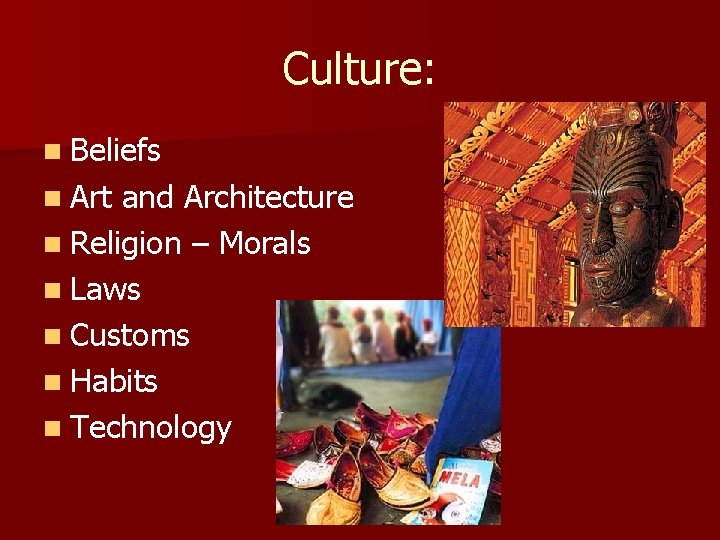
Culture: n Beliefs n Art and Architecture n Religion – Morals n Laws n Customs n Habits n Technology
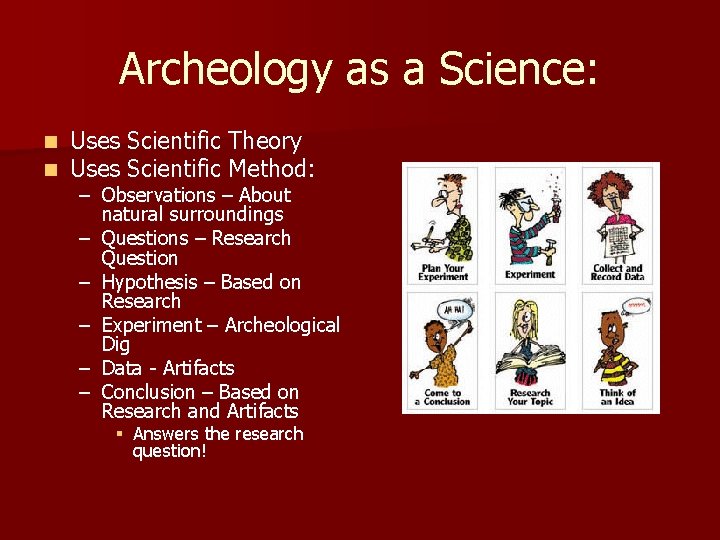
Archeology as a Science: n n Uses Scientific Theory Uses Scientific Method: – Observations – About natural surroundings – Questions – Research Question – Hypothesis – Based on Research – Experiment – Archeological Dig – Data - Artifacts – Conclusion – Based on Research and Artifacts § Answers the research question!
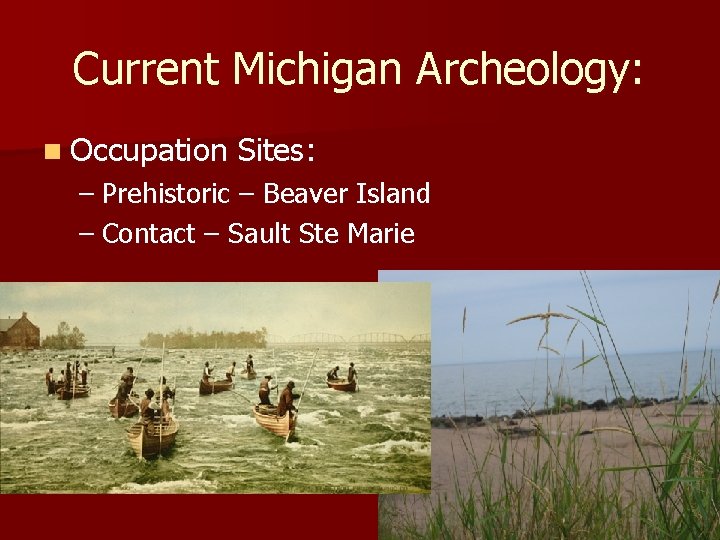
Current Michigan Archeology: n Occupation Sites: – Prehistoric – Beaver Island – Contact – Sault Ste Marie
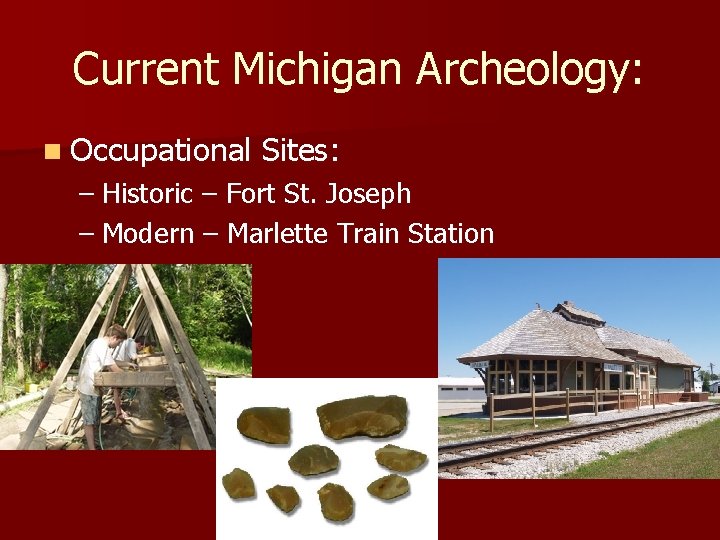
Current Michigan Archeology: n Occupational Sites: – Historic – Fort St. Joseph – Modern – Marlette Train Station
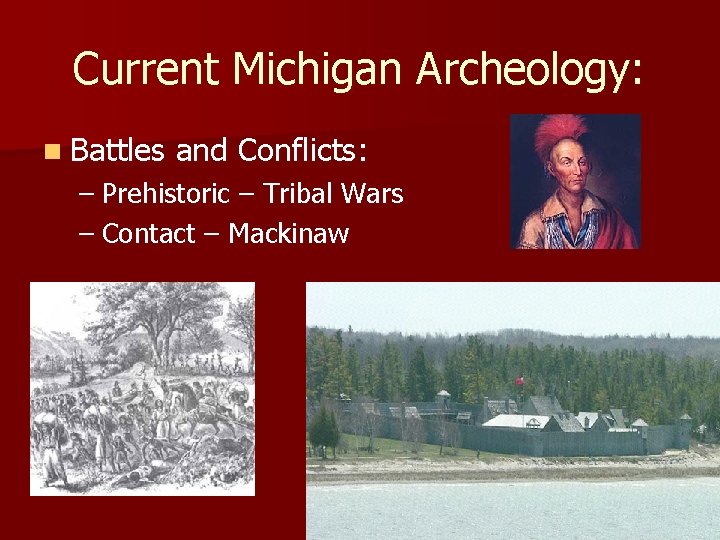
Current Michigan Archeology: n Battles and Conflicts: – Prehistoric – Tribal Wars – Contact – Mackinaw
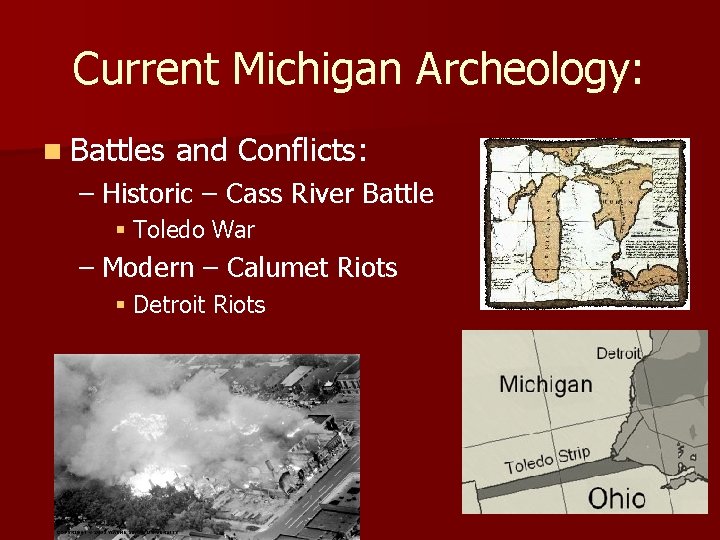
Current Michigan Archeology: n Battles and Conflicts: – Historic – Cass River Battle § Toledo War – Modern – Calumet Riots § Detroit Riots
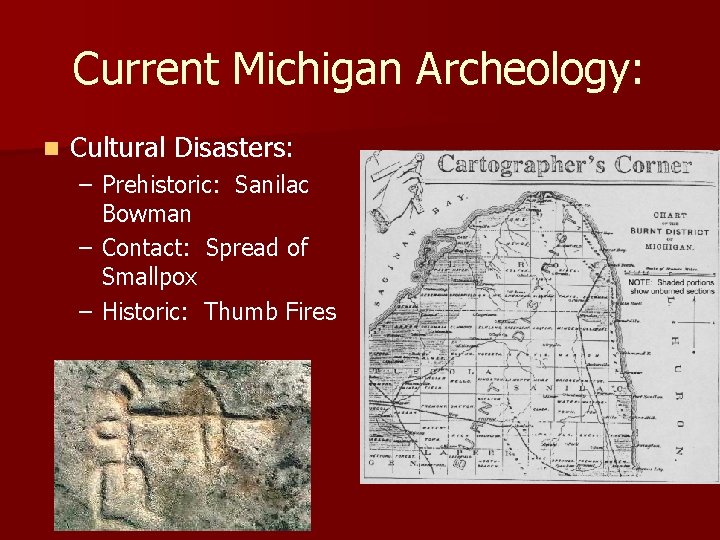
Current Michigan Archeology: n Cultural Disasters: – Prehistoric: Sanilac Bowman – Contact: Spread of Smallpox – Historic: Thumb Fires
Key Terms: n Anthropology n Artifact n Pre-History n Contact n Culture n Site n Occupational Site
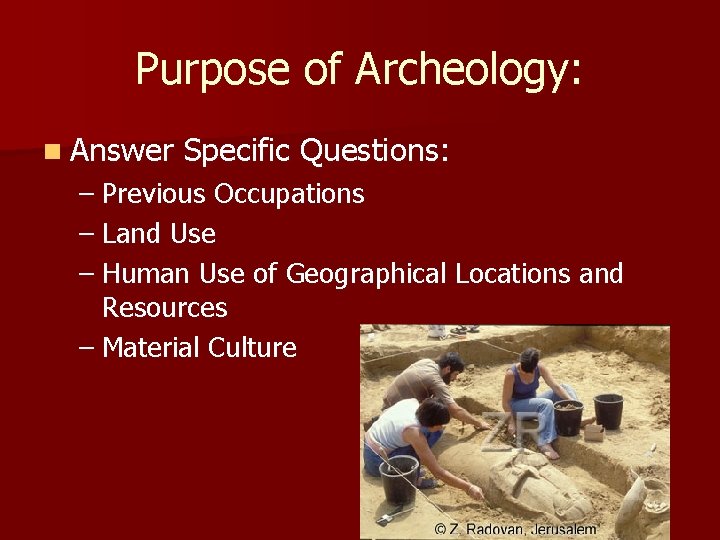
Purpose of Archeology: n Answer Specific Questions: – Previous Occupations – Land Use – Human Use of Geographical Locations and Resources – Material Culture
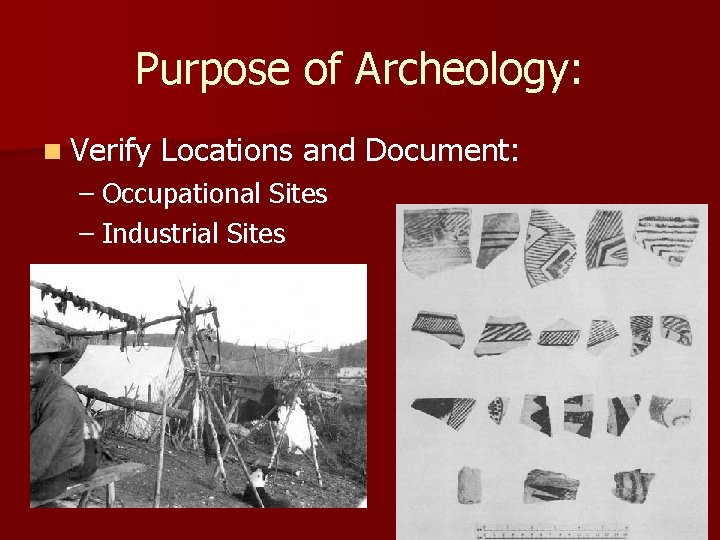
Purpose of Archeology: n Verify Locations and Document: – Occupational Sites – Industrial Sites
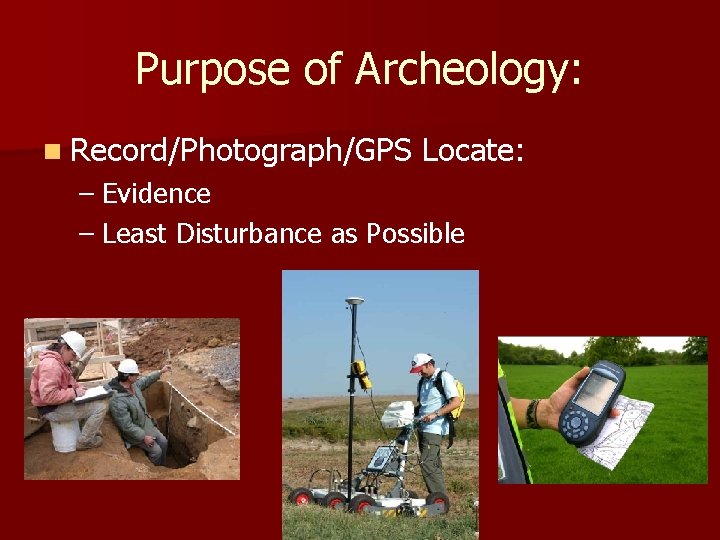
Purpose of Archeology: n Record/Photograph/GPS Locate: – Evidence – Least Disturbance as Possible
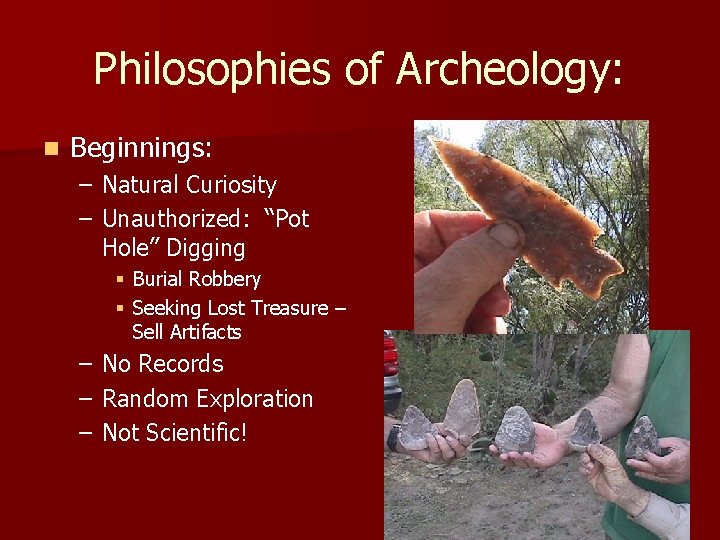
Philosophies of Archeology: n Beginnings: – Natural Curiosity – Unauthorized: “Pot Hole” Digging § Burial Robbery § Seeking Lost Treasure – Sell Artifacts – No Records – Random Exploration – Not Scientific!
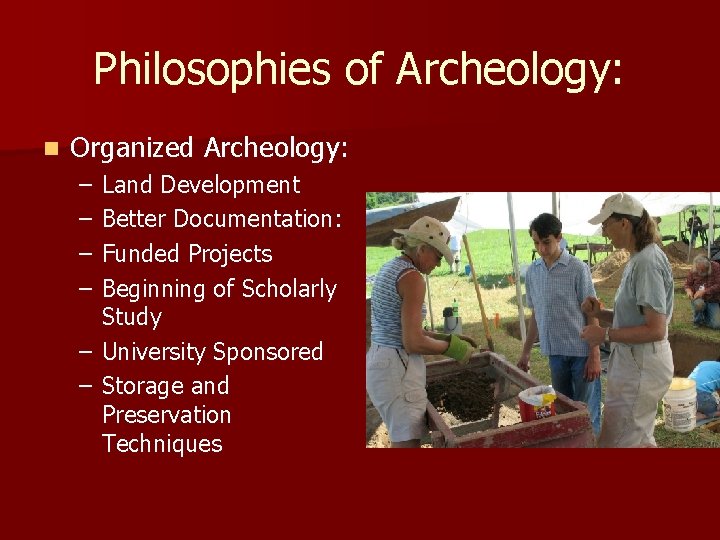
Philosophies of Archeology: n Organized Archeology: – – Land Development Better Documentation: Funded Projects Beginning of Scholarly Study – University Sponsored – Storage and Preservation Techniques
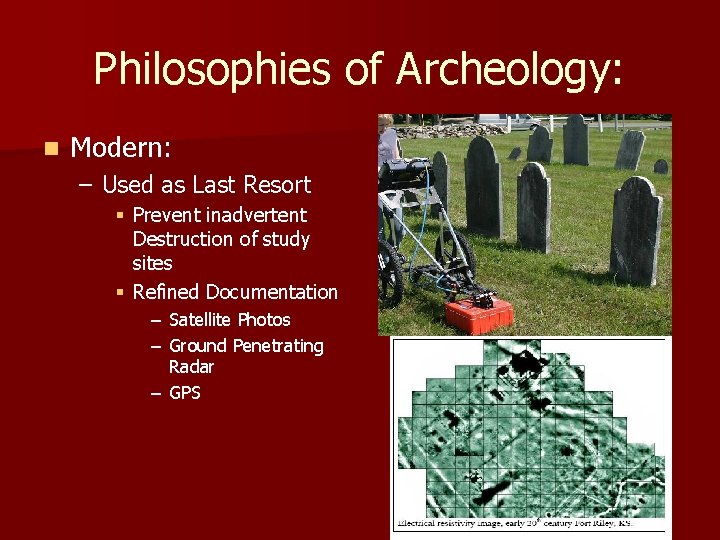
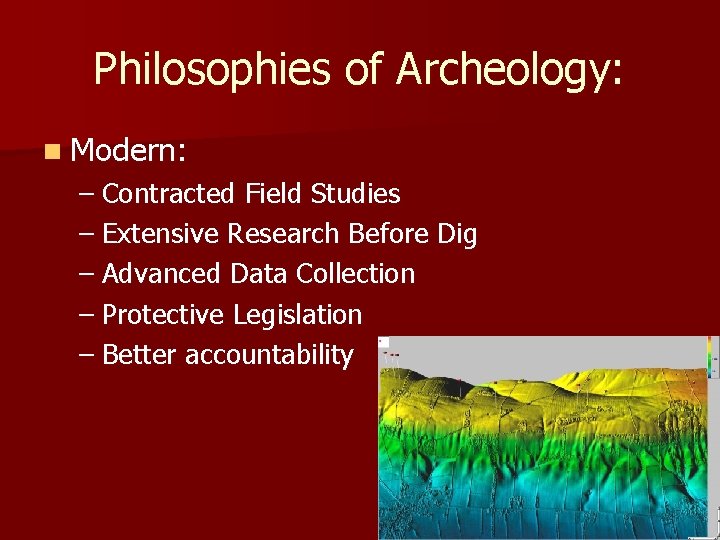
Philosophies of Archeology: n Modern: – Used as Last Resort § Prevent inadvertent Destruction of study sites § Refined Documentation – Satellite Photos – Ground Penetrating Radar – GPS
Philosophies of Archeology: n Modern: – Contracted Field Studies – Extensive Research Before Dig – Advanced Data Collection – Protective Legislation – Better accountability
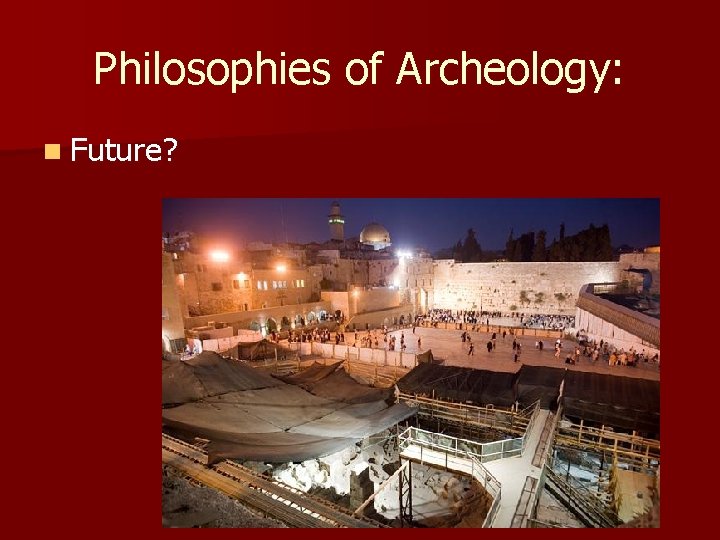
Philosophies of Archeology: n Future?
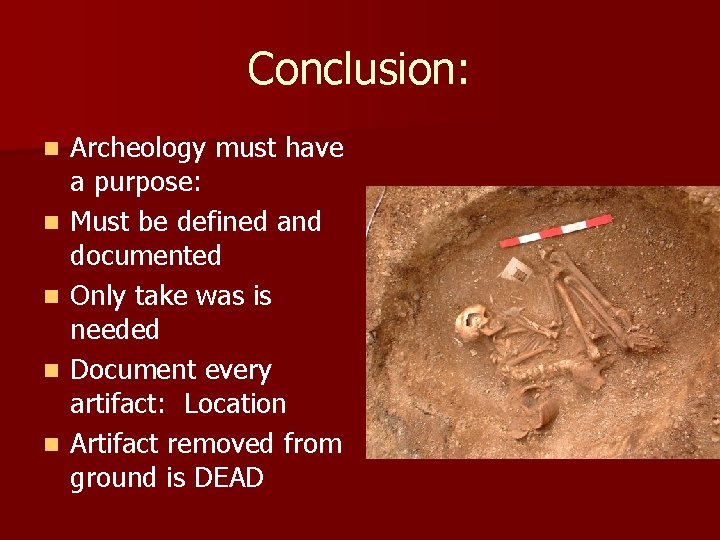
Conclusion: n n n Archeology must have a purpose: Must be defined and documented Only take was is needed Document every artifact: Location Artifact removed from ground is DEAD
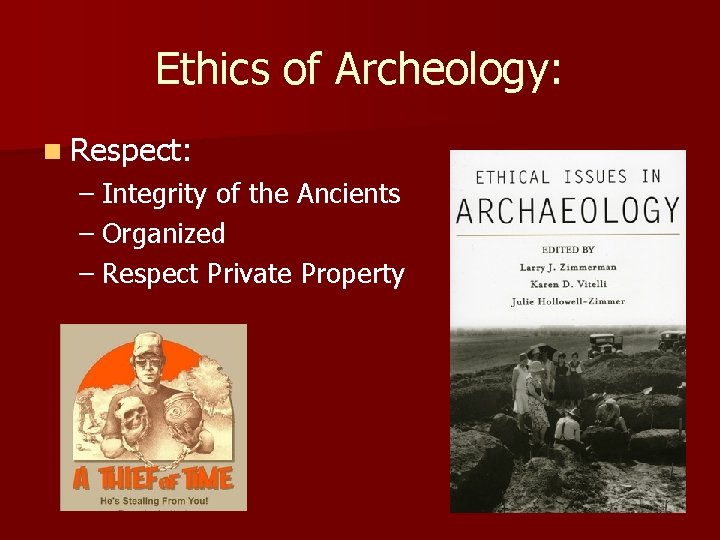
Ethics of Archeology: n Respect: – Integrity of the Ancients – Organized – Respect Private Property
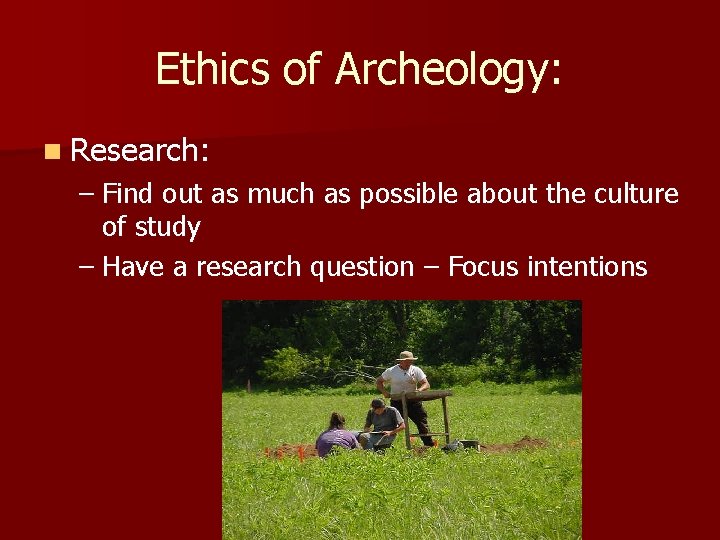
Ethics of Archeology: n Research: – Find out as much as possible about the culture of study – Have a research question – Focus intentions
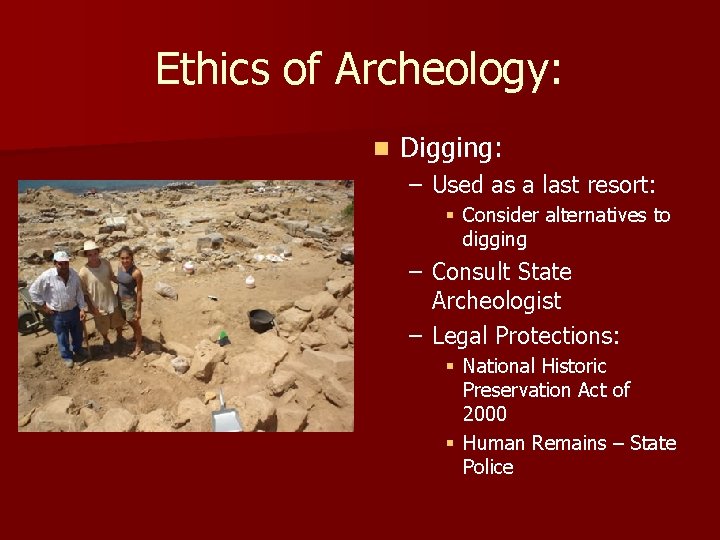
Ethics of Archeology: n Digging: – Used as a last resort: § Consider alternatives to digging – Consult State Archeologist – Legal Protections: § National Historic Preservation Act of 2000 § Human Remains – State Police
Ethics of Archeology: n Preservation: – Site: Do not dig more than necessary – Keep Comprehensive Records – Once opened the site is destroyed – Only remove items after complete descriptions and locations are documented – Use Photo documentation – Conserve artifacts
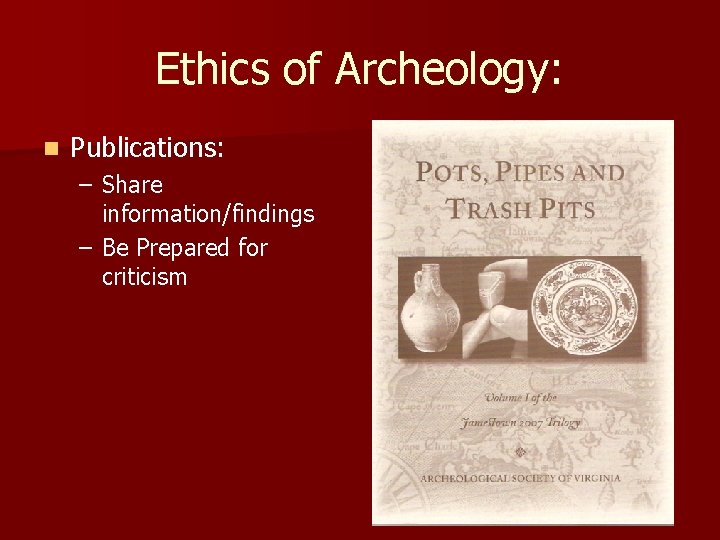
Ethics of Archeology: n Publications: – Share information/findings – Be Prepared for criticism
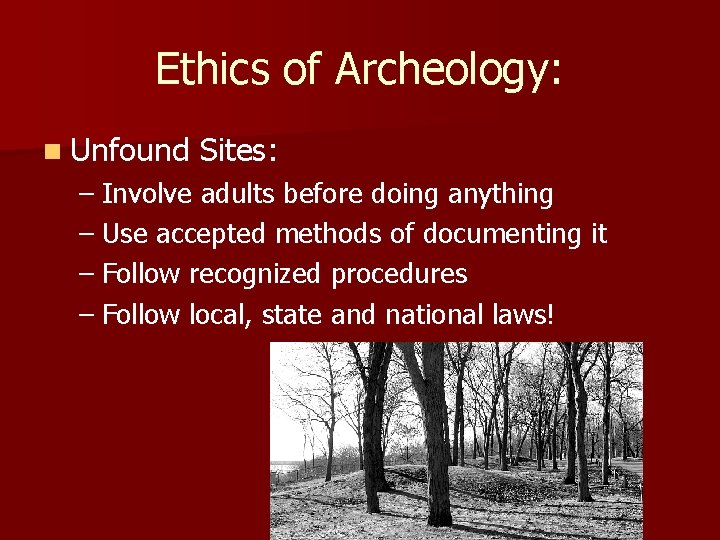
Ethics of Archeology: n Unfound Sites: – Involve adults before doing anything – Use accepted methods of documenting it – Follow recognized procedures – Follow local, state and national laws!
Key Terms: n Pot Hole Archeology n Field Study n Ethic n in situ
Assignment: n Describe an example of when you should dig and when you should not. What can you do if you do not choose to dig?