
INTRO TO AMERICAN POLITICAL THEORY Ch 1 Lets
- Slides: 16
INTRO TO AMERICAN POLITICAL THEORY (Ch. 1) Let’s look at the founding of the nation and the Constitution from a different lens.
WHITEBOARDS: HOW WOULD YOU DEFINE “DEMOCRACY? ”
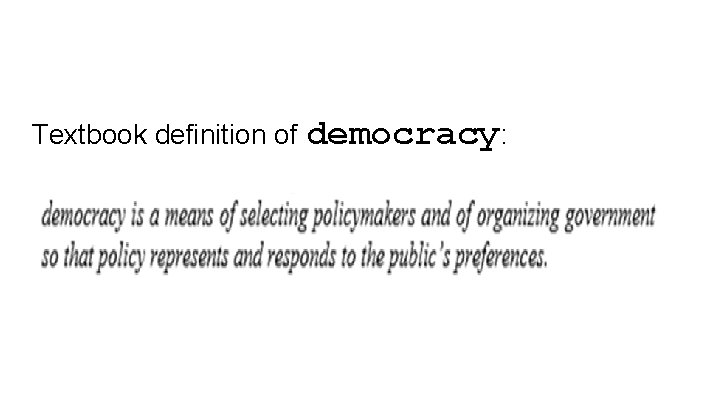
Textbook definition of democracy:
WHITEBOARDS: What are challenges to democracy?
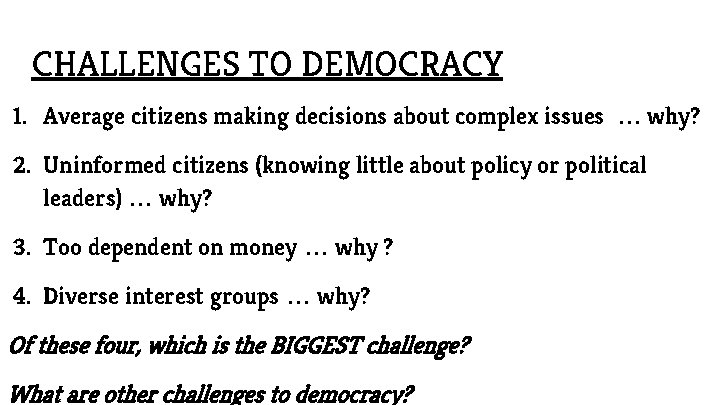
CHALLENGES TO DEMOCRACY 1. Average citizens making decisions about complex issues … why? 2. Uninformed citizens (knowing little about policy or political leaders) … why? 3. Too dependent on money … why ? 4. Diverse interest groups … why? Of these four, which is the BIGGEST challenge? What are other challenges to democracy?
WHITEBOARDS: What is one idea or concept that characterizes American political culture?
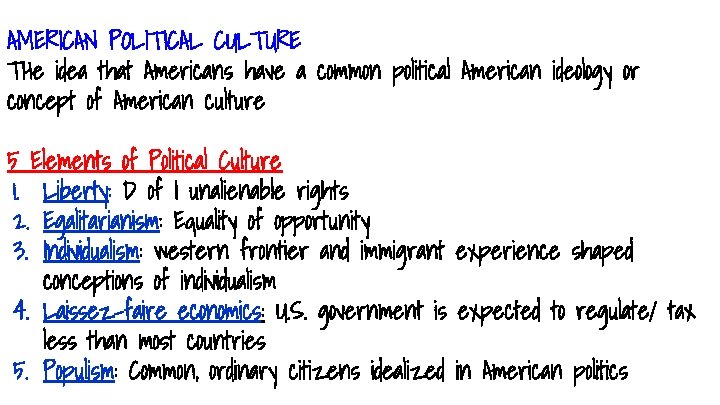
AMERICAN POLITICAL CULTURE THe idea that Americans have a common political American ideology or concept of American culture 5 Elements of Political Culture 1. Liberty: D of I unalienable rights 2. Egalitarianism: Equality of opportunity 3. Individualism: western frontier and immigrant experience shaped conceptions of individualism 4. Laissez-faire economics: U. S. government is expected to regulate/ tax less than most countries 5. Populism: Common, ordinary citizens idealized in American politics
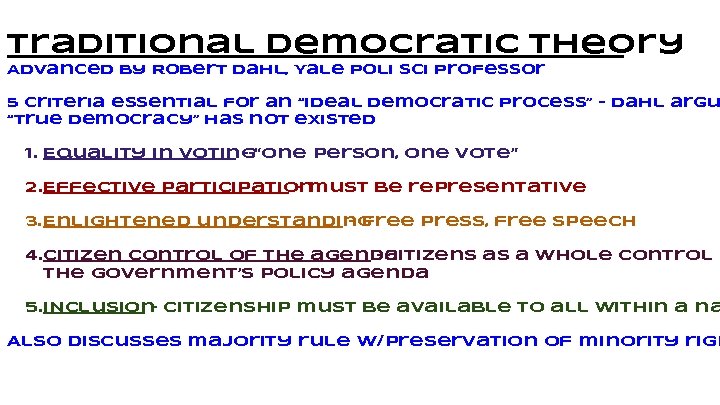
Traditional Democratic Theory Advanced by Robert Dahl, Yale poli sci professor 5 criteria essential for an “ideal democratic process” - dahl argu “true democracy” has not existed 1. Equality in voting - “one person, one vote” 2. Effective participation - must be representative 3. Enlightened understanding - free press, free speech 4. Citizen control of the agenda -citizens as a whole control the government’s policy agenda 5. INclusion- citizenship must be available to all within a na Also discusses majority rule w/preservation of minority righ
Contemporary Theories of American Democracy 1. Elite (Class) Theory 2. Pluralism 3. Hyperpluralism
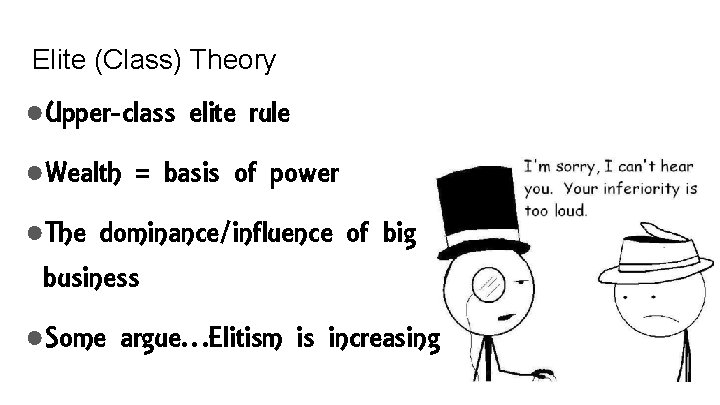
Elite (Class) Theory ●Upper-class elite rule ●Wealth = basis of power ●The dominance/influence of big business ●Some argue…Elitism is increasing
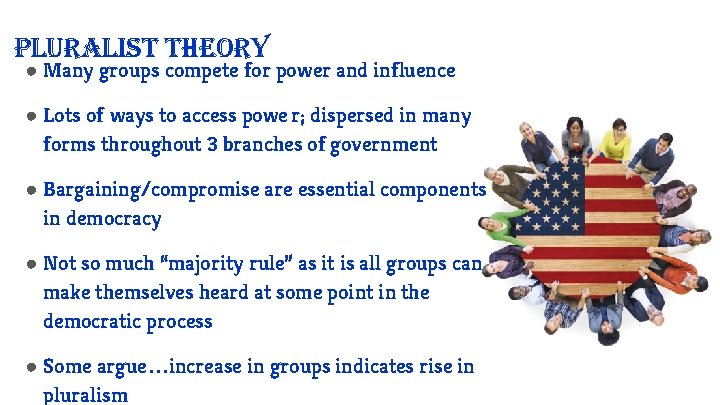
Pluralist theory ● Many groups compete for power and influence ● Lots of ways to access powe r; dispersed in many forms throughout 3 branches of government ● Bargaining/compromise are essential components in democracy ● Not so much “majority rule” as it is all groups can make themselves heard at some point in the democratic process ● Some argue…increase in groups indicates rise in pluralism
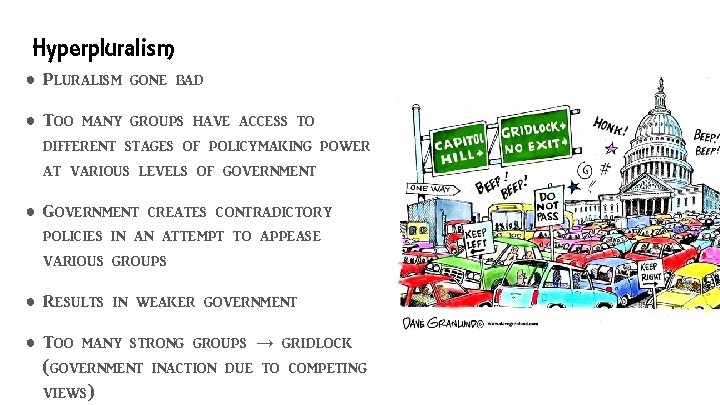
Hyperpluralism ● Pluralism gone bad ● Too many groups have access to different stages of policymaking power at various levels of government ● Government creates contradictory policies in an attempt to appease various groups ● Results in weaker government ● Too many strong groups → gridlock (government inaction due to competing views)
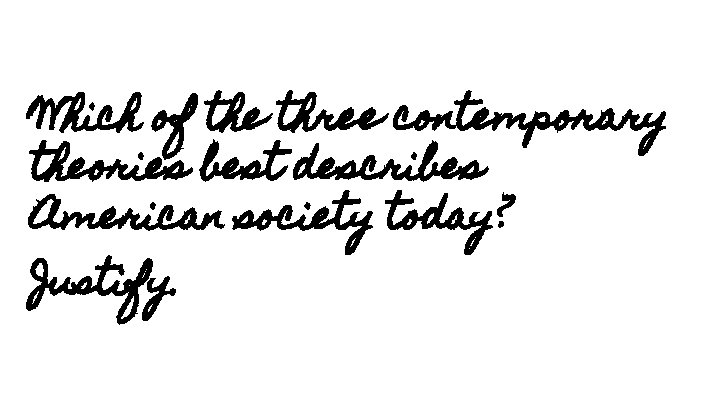
Which of the three contemporary theories best describes American society today? Justify.
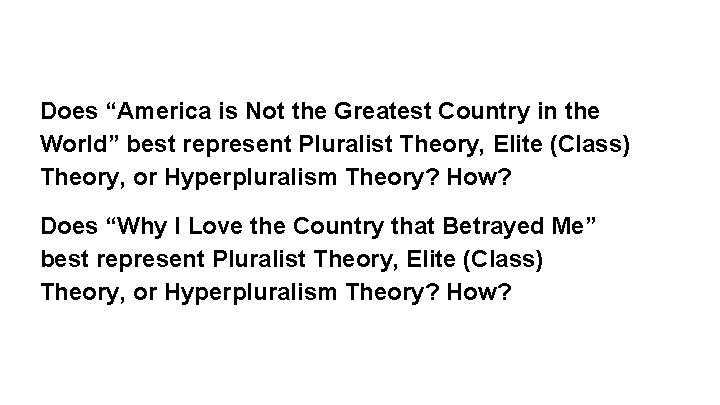
Does “America is Not the Greatest Country in the World” best represent Pluralist Theory, Elite (Class) Theory, or Hyperpluralism Theory? How? Does “Why I Love the Country that Betrayed Me” best represent Pluralist Theory, Elite (Class) Theory, or Hyperpluralism Theory? How?